Exercise Is Metabolic Medicine: The Hidden Benefits Most People Never Learn About
Discover how exercise acts as powerful metabolic medicine. Explore the latest 2023–2026 research on how movement improves glucose control, insulin sensitivity, cardiac remodeling, and long-term metabolic resilience for diabetes, heart health, and healthy aging
EXERCISEMETABOLISM
Dr. T.S. Didwal, M.D.(Internal Medicine)
6/14/202618 min read
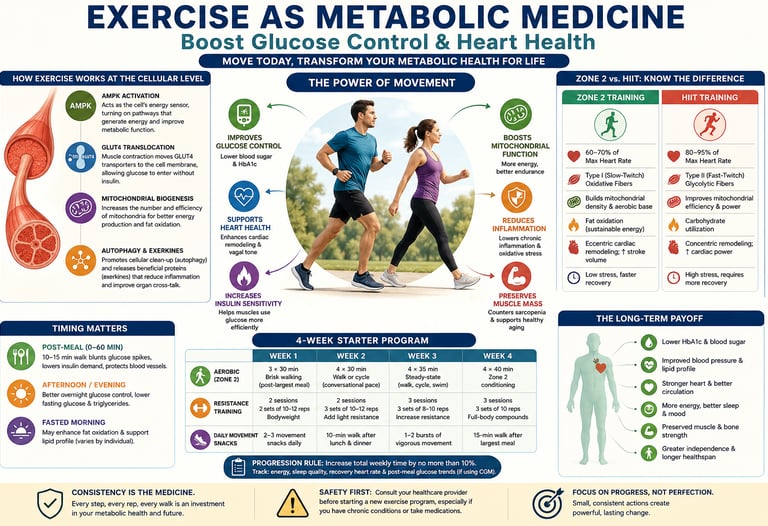
Exercise acts as metabolic medicine by triggering cellular signaling pathways—specifically AMPK activation—that force GLUT4 transport proteins to move directly to cell membranes. This process allows skeletal muscles to clear glucose from the bloodstream independently of insulin, reversing insulin resistance and lowering cardiometabolic risk without requiring significant weight loss.
Key Takeaways:
1. Cellular Reprogramming & Blood Sugar Clearance
The Clinical Science: Exercise acts as a systemic metabolic intervention primarily via AMPK-mediated signaling pathways. This triggers GLUT4 translocation—moving specialized glucose transport proteins directly to muscle cell membranes to clear blood sugar without relying on insulin.
The Practical Takeaway: Your muscles act like a high-efficiency biological sponge for glucose. Physical movement pulls sugar directly out of the bloodstream to be used as fuel, providing immediate glycemic control that begins during your workout and keeps insulin sensitivity elevated for 24 to 48 hours.
2. The Power of Combined Modalities
The Clinical Science: Network meta-analyses confirm that combining aerobic conditioning with progressive resistance training yields superior reductions in HbA1c, fasting plasma glucose, and systemic inflammatory markers compared to utilizing either single modality alone.
The Practical Takeaway: You get the best metabolic results by mixing cardiorespiratory movement (like walking, swimming, or cycling) with strength training. This dual-layered approach clears circulating blood sugar while simultaneously upgrading your heart and lung efficiency far better than cardio or weights alone.
3. Exercise-Induced Cardiac Remodeling (EICR)
The Clinical Science: Regular physical training drives adaptive eccentric hypertrophy (Van Ochten et al., 2025). This structural adaptation expands left ventricular volume, maximizes stroke volume, and elevates resting vagal tone, directly optimizing heart rate variability (HRV).
The Practical Takeaway: Consistent exercise literally reshapes and reinforces your heart muscle, transforming it into a highly efficient pump. By increasing the volume of blood delivered per beat, it reduces wear-and-tear on your arteries, lowers your resting heart rate, and makes your cardiovascular system highly resilient against stress.
4. Circadian and Post-Meal Timing Optimization
The Clinical Science: Chronobiological research (Bennett & Sato, 2023) demonstrates that exercise timing alters nutrient partitioning. Postprandial (post-meal) movement and late-afternoon training best align with the body's natural circadian rhythms to flatten glucose spikes and optimize lipid metabolism.
The Practical Takeaway: Timing matters. Taking a brief 10-to-15-minute brisk walk immediately after your largest meals acts as a vital glucose buffer, flatlining blood sugar spikes. Furthermore, scheduling dedicated exercise sessions in the late afternoon or early evening frequently yields superior overnight and next-morning fasting blood sugar stability.
5. Reversing Sarcopenia and Metabolic Decay
The Clinical Science: Systematic reviews (Feng et al., 2025) substantiate that progressive resistance exercise in older adults managing type 2 diabetes preserves lean skeletal muscle tissue, directly counteracting sarcopenia—the age-related loss of muscle mass and quality.
The Practical Takeaway: Skeletal muscle is your body's primary storage sink for blood sugar. Lifting weights or using resistance bands is essential as you age because it protects and builds this tissue, boosting your baseline metabolic rate, improving your cholesterol profiles, and helping you maintain physical independence.
6. Cellular Cleanup and Healthspan Extension
The Clinical Science: The physiological stress of muscle contraction releases signaling proteins called exerkines and myokines. When combined with structured nutritional windows, this strongly activates cellular autophagy and mitophagy (Cagigas et al., 2025).
The Practical Takeaway: Exercise turns on your body’s internal cellular recycling system, clearing out worn-out proteins and damaged, inefficient mitochondria. Pairing regular movement with mindful eating patterns helps slow down age-related tissue breakdown, focusing on adding vibrant, healthy years to your life rather than just a higher number on the clock.
7. Zone 2 Conditioning and Metabolic Flexibility
The Clinical Science: Continuous, steady-state Zone 2 training (60–70% of max heart rate) preferentially targets Type I slow-twitch muscle fibers. This maximizes mitochondrial density and fat oxidation capacity, restoring metabolic flexibility—the cellular ability to easily shift between burning carbs and fats.
The Practical Takeaway: Spending time in a comfortable, "conversational pace" cardio zone (Zone 2) trains your cells to burn body fat as its primary fuel source. Building this aerobic foundation optimizes your everyday energy production and creates a safe base that allows you to get more out of shorter, high-intensity workouts (HIIT) without burning out.
8. Consistency Outperforms Volume
The Clinical Science: Large-cohort epidemiological data confirms that cardiometabolic adaptations are highly dependent on exercise frequency and the law of progressive overload, showing a clear dose-response relationship with long-term habit consistency rather than sporadic, high-volume efforts.
The Practical Takeaway: Showing up regularly beats an occasional intense workout every single time. Small, predictable health habits—like a brief daily walk and a couple of simple strength sessions a week—accumulate massive biological benefits over time. Your body remains highly adaptable at any age, meaning it is never too late to start.
Introduction
Most people view exercise simply through the narrow lens of burning calories or losing weight. While energy expenditure is a natural byproduct of physical activity, modern clinical science reveals that exercise functions far more like a targeted, multi-pathway biological therapy. Movement reprograms cellular handling of glucose, fatty acids, and cellular energy at the deep molecular level—upregulating insulin sensitivity, attenuating chronic low-grade systemic inflammation, accelerating mitochondrial repair, and driving structural cardiac remodeling.
Crucially, these metabolic and cardiovascular benefits occur independently of changes on the scale. Patients navigating type 2 diabetes, metabolic syndrome, or elevated cardiovascular risk frequently show dramatic improvements in biomarker profiles, visceral fat reduction, and endothelial function even when their absolute body weight remains completely static.
Recent high-quality clinical data (2023–2026) positions structured physical activity as a first-line medical intervention for blood sugar optimization, cardiovascular risk reduction, age-related muscle preservation, and healthspan extension—the number of years lived in functional, vibrant health.
This comprehensive clinical guide breaks down the underlying cellular mechanisms, explains why the timing and modality of exercise matter, and provides evidence-based protocols to maximize your metabolic health.
Understanding Exercise as Metabolic Medicine
Exercise transcends the overly simplistic "calories in, calories out" model. When muscle fibers contract, they trigger an immediate, sophisticated network of intracellular signaling cascades. These pathways directly enhance mitochondrial efficiency, accelerate the translocation of glucose transporter type 4 (GLUT4) protein carriers to cell membranes, suppress inflammatory cytokines, and restore metabolic flexibility—the body's ability to seamlessly shift between oxidizing carbohydrates and fats based on nutrient availability.
Key Molecular Pathways Activated by Exercise
AMPK Activation: Acts as the master energy sensor of the cell, turning on pathways that generate ATP (adenular energy) while turning off energy-consuming storage processes. According to landmark work by Hawley and Hoffman (2025), AMP-activated protein kinase (AMPK) activation stands out as one of the most consistent, reproducible cellular responses to physical movement, serving as the primary driver for downstream metabolic reprogramming.
GLUT4 Translocation: Muscle contraction stimulates GLUT4 storage vesicles to move directly to the cell membrane, allowing glucose to enter the cell without requiring insulin.
Mitochondrial Biogenesis: Chronic exercise demands cellular energy, which forces the cell to synthesize new, highly efficient mitochondria via PGC-1α signaling, simultaneously clearing out damaged mitochondrial machinery via mitophagy.
Autophagy & Exerkine Secretion: Contraction stimulates cellular self-cleaning (autophagy) and releases specialized signaling proteins known as exerkines (such as apelin and myokines). These proteins coordinate cross-talk between the muscles, liver, bones, and fat tissue to systematically lower cardiometabolic risk, improve endothelial function, and directly combat age-associated tissue degradation (Chung, 2025).
How Exercise Improves Glucose Control and Insulin Sensitivity
Skeletal muscle is the body’s largest "metabolic sink," accounting for approximately 80% of postprandial (post-meal) glucose disposal. During and immediately following physical exertion, skeletal muscles dramatically accelerate glucose clearance through both insulin-dependent and insulin-independent mechanisms.
Clinical Pearl: Skeletal muscle quality is a primary driver of metabolic health. Even a modest 5% gain in functional muscle quality or lean mass significantly lowers insulin resistance and optimizes systemic glucose handling.
Following a single workout session, systemic insulin sensitivity remains significantly elevated for 24 to 48 hours. This prolonged window is driven by upgraded insulin receptor signaling and the muscle’s urgent requirement to synthesize glycogen to replenish depleted fuel stores.
After-Dinner Walks as Glucose Buffers
Implementing a short 10-to-15-minute brisk walk immediately following your largest meals of the day serves as a highly effective glucose buffer. This simple habit clears glucose directly from the bloodstream using contracting muscles, effectively blunting postprandial glucose spikes. By flattening these post-meal glycemic hills, you minimize total insulin demand, alleviate pancreatic stress, and reduce the vascular endothelial friction caused by rapid blood sugar swings. Clinical data indicate this simple behavioral intervention rivals the post-meal glycemic efficacy of several standard front-line oral medications.
Furthermore, network meta-analyses confirm that a combined approach—layering progressive resistance training directly alongside structured aerobic training—yields far superior glycated haemoglobin (HbA1c) and fasting plasma glucose improvements than either modality performed alone (Yu, 2026).
Exercise and Heart Health: Cardiac Remodeling Explained
Just as skeletal muscle adapts to loading, the myocardium (heart muscle) undergoes structural and functional adaptations in response to regular physical exertion. This process, known as Exercise-Induced Cardiac Remodeling (EICR), results in a highly efficient, resilient cardiovascular system characterized by:
Increased left ventricular internal diameter and volume (eccentric hypertrophy).
Enhanced myocardial compliance, resulting in a significantly elevated stroke volume (the amount of blood pumped per beat).
Enhanced resting vagal tone, leading to a lower resting heart rate and improved heart rate variability (HRV) metrics (Van Ochten et al., 2025).
Zone 2 Training Spotlight
Zone 2 training refers to continuous, steady-state exercise performed at an intensity closely matching 60–70% of an individual's maximum heart rate—often described as a "conversational pace" where you can speak in full sentences but notice your breathing is distinctly elevated.
This specific metabolic zone maximizes the cellular requirement on Type I (slow-twitch) muscle fibers, which are rich in mitochondria. Training in Zone 2 forces the body to rely primarily on fat oxidation rather than rapid carbohydrate breakdown, driving mitochondrial density and maximizing systemic aerobic capacity with minimal joint or central nervous system fatigue.
Cardiovascular & Metabolic Adaptation Profiles: Zone 2 vs. HIIT
Zone 2 (Continuous Steady-State):
Primary Cellular Target: Type I (Slow-Twitch) oxidative muscle fibers.
Mitochondrial Impact: Promotes large-scale mitochondrial biogenesis and enhances overall baseline density.
Fuel Utilization: Maximizes long-term fat oxidation and improves baseline metabolic flexibility.
Myocardial Adaptation: Drives eccentric remodeling, increasing left ventricular volume and maximizing stroke volume efficiency (Van Ochten et al., 2025).
Systemic Stress: Low sympathetic nervous system activation, allowing for rapid systemic recovery.
HIIT (High-Intensity Interval Training):
Primary Cellular Target: Type II (Fast-Twitch) glycolytic muscle fibers.
Mitochondrial Impact: Rapidly upgrades individual mitochondrial enzymatic efficiency and maximal respiration rates.
Fuel Utilization: Relies almost exclusively on rapid glycogen and carbohydrate utilization during effort.
Myocardial Adaptation: Concentric remodeling components, improving cardiac power output and peak contractility under load.
Systemic Stress: High sympathetic activation (adrenaline/cortisol spike), requiring deliberate rest periods between sessions.
Timing Matters: Strategic Exercise Optimization
The metabolic outcomes of exercise are deeply influenced by the timing of your sessions relative to meals and your biological clock (circadian rhythms). Emerging research suggests that aligning workout timing with specific metabolic goals can amplify your results (Bennett & Sato, 2023):
Immediate Post-Meal Windows: Excellent for flatlining postprandial glucose excursions, lowering peak insulin requirements, and protecting delicate blood vessels from oxidative stress.
Late Afternoon to Early Evening: Clinical trials demonstrate that afternoon or evening exercise sessions frequently lead to superior overall overnight glycemic control, marked drops in fasting blood glucose the following morning, and more pronounced reductions in systemic triglycerides for individuals with type 2 diabetes or insulin resistance.
Fasted Morning Windows: May favor acute fat oxidation rates and support minor shifts in lipid profiles for specific populations, though often at the expense of peak power output in resistance training.
Resistance Training for Metabolic Health
Resistance training is an indispensable pillar of metabolic medicine, especially as we navigate the physiological changes of aging. Sarcopenia—the progressive, age-related loss of skeletal muscle mass, strength, and quality—directly shrinks the body's primary glucose disposal sink, accelerating the path toward insulin resistance, elevated triglycerides, and metabolic dysfunction.
A definitive meta-analysis by Feng et al. (2025) focused on older adults managing type 2 diabetes highlights that progressive resistance exercise delivers sweeping clinical improvements:
Substantial reductions in HbA1c percentages.
Marked improvements in fasting lipid profiles (LDL-C reduction, HDL-C optimization).
Preservation and accumulation of lean skeletal muscle tissue.
Significant increases in functional neuromuscular strength and mobility, directly lowering fall risks.
Practical Clinical Tip: Aim for 2 to 3 dedicated resistance sessions per week. Focus on major, multi-joint compound movements (squats, modified push-ups or chest presses, rows, and deadlift or hinge variations) that recruit large volumes of muscle tissue simultaneously.
Metabolic Flexibility and Healthspan Extension
Metabolic flexibility represents the body's cellular agility—its ability to effortlessly match fuel oxidation to fuel availability, shifting smoothly between burning fats when fasting and burning carbohydrates when feeding. Chronic physical inactivity downregulates this system, leaving individuals in a state of metabolic inflexibility where glucose clearance is sluggish and fat oxidation is severely impaired.
Layering regular structured exercise alongside strategic energy restriction or focused nutritional windows yields a powerful, synergistic effect on healthspan (Cagigas et al., 2025):
AMPK-mTOR Balance: Exercise sharply activates AMPK, while energy restriction downregulates overactive nutrient sensors like mTORC1 and insulin-like growth factor 1 (IGF-1). This balance shifts cells out of a constant, stressful growth state into a restorative, stress-resistant maintenance mode.
Systemic Autophagy: This combination acts as a profound stimulus for systemic autophagy, clearing out senescent ("zombie") cells, misfolded proteins, and dysfunctional mitochondria. This deep cellular cleaning delays the onset of chronic, age-related metabolic and neurodegenerative diseases.
Practical Exercise Protocols and Action Plans
Comprehensive 4-Week Starter Program
This program is structured to safely achieve the clinical target of 150+ minutes of moderate aerobic activity coupled with progressive resistance training.
Week 1:
Aerobic Exercise (Zone 2): 3 sessions × 30 minutes of brisk, conversational walking. Aim to perform these immediately after your largest meal of the day.
Resistance Training: 2 sessions (Non-consecutive days). Focus on basic bodyweight movements: 2 sets of 10–12 repetitions of wall push-ups, chair squats, and glute bridges.
Daily Movement Snacks: Accumulate 2–3 "snacks" daily (e.g., taking the stairs or doing 1 minute of standing calf raises).
Week 2:
Aerobic Exercise (Zone 2): 4 sessions × 30 minutes of brisk walking or stationary cycling at a steady, conversational pace.
Resistance Training: 2 sessions. Progress to 3 sets of 10–12 repetitions. Introduce light resistance bands or light dumbbells for rows and goblet squats.
Daily Movement Snacks: Implement a brief 10-minute walk after both lunch and dinner.
Week 3:
Aerobic Exercise (Zone 2): 4 sessions × 35 minutes of steady-state aerobic movement (swimming, cycling, or brisk outdoor walking).
Resistance Training: 3 sessions (e.g., Monday, Wednesday, Friday). 3 sets of 8–10 repetitions, slightly increasing the resistance or weight to maintain a moderate effort level.
Daily Movement Snacks: Integrate 1–2 brief bursts of vigorous movement (e.g., 60 seconds of brisk stair climbing) during sedentary desk hours.
Week 4:
Aerobic Exercise (Zone 2): 4 sessions × 40 minutes of dedicated Zone 2 conditioning.
Resistance Training: 3 sessions. Full-body compound routines: 3 sets of 10 repetitions of dumbbell squats, floor-supported dumbbell chest presses, and supported dumbbell rows.
Daily Movement Snacks: Standardize a 15-minute brisk walk after your largest daily meal as a permanent habit.
Progression and Safety Guidelines
The Progression Rule: Prioritize consistency over intensity. Gradually increase your total weekly exercise duration by no more than 10% per week. Monitor your metrics closely: keep track of recovery heart rates, waking energy levels, sleep quality, and post-meal glucose trends if utilizing a continuous glucose monitor (CGM).
Clinical Safety: While exercise is incredibly safe and highly therapeutic, it is essential to collaborate with your healthcare team before beginning a new regimen—especially if you have established cardiovascular disease, advanced neuropathy, or are taking blood-sugar-lowering medications that may require close dose adjustments as your insulin sensitivity improves.
Evidence Summary: Key Studies and Meta-Analyses
Hawley & Hoffman (2025) — Molecular Mechanisms
Methodology: Comprehensive Molecular Review (Nature Reviews Endocrinology) synthesizing 20 years of exercise omics data.
Key Outcomes: Confirmed that AMPK activation and GLUT4 translocation serve as the foundational, weight-independent drivers of long-term metabolic healtH
Van Ochten et al. (2025) — Cardiovascular Adaptations
Methodology: Longitudinal Cardiac Imaging and Physiology Analysis tracking structural myocardial changes.
Key Outcomes: Maintained the high cellular plasticity of exercise-induced cardiac remodeling; proved that consistent Zone 2 steady-state training directly optimizes left ventricular stroke volume and upgrades baseline vagal tone and heart rate variability (HRV).
Feng et al. (2025) — Muscle Preservation & Aging
Methodology: Systematic Review and Meta-Analysis of progressive resistance exercise protocols.
Key Outcomes: Evaluated strength training in older diabetic populations; recorded marked reductions in systemic inflammatory markers alongside sustained preservation of lean muscle mass to halt age-related sarcopenia.
Bennett & Sato (2023) — Chronobiology & Exercise Timing
Methodology: Chronobiological and Circadian Alignment Clinical Trial matching movement to body clocks.
Key Outcomes: Analyzed exercise timing; discovered that late-afternoon and evening exercise windows consistently yield superior overnight and next-morning glycemic control profiles in insulin-resistant populations compared to morning sessions.
Cagigas et al. (2025) — Cellular Longevity & Healthspan
Methodology: Cellular Longevity and Synergy Analysis mapping anti-aging pathways.
Key Outcomes: Examined the cross-talk between physical movement and strategic energy restriction; demonstrated a potent upregulation of cellular autophagy, targeted mitochondrial clearance (mitophagy), and key validated healthspan markers
Critical Analysis of Limitations
While the clinical data supporting exercise as medicine is overwhelming, it is important to recognize key nuances:
Individual Heterogeneity: Human biology displays a wide range of responses to identical exercise inputs. Genetic variations, baseline capillary density, sleep quality, and chronic stress levels all influence how quickly an individual adapts.
The Consistency Requirement: Metabolic adaptations to exercise are highly temporary. The up-regulated GLUT4 activity and improved insulin sensitivity from a workout return to baseline within 48 to 72 hours of inactivity. Consistency is absolutely essential to maintain these cellular benefits.
Common Myths and Mistakes to Avoid
Myth 1: Exercise only works if you lose weight.
Fact: Weight loss is a poor proxy for metabolic health. Exercise drives massive, vital health shifts at the cellular level—such as clearing deep visceral fat surrounding your organs, reversing endothelial dysfunction, and restoring insulin sensitivity—even when your total body weight remains completely unchanged on the scale.
Myth 2: High-Intensity Interval Training (HIIT) is always superior to steady-state cardio.
Fact: HIIT is a powerful tool for accelerating peak aerobic power, but it requires a solid aerobic foundation. Over-indexing on high-intensity intervals without a strong base of Zone 2 steady-state training can overstimulate the sympathetic nervous system, drive up systemic cortisol, impair sleep, and increase your risk of injury or overtraining.
Mistake 1: Completely neglecting resistance training in favor of chronic cardio.
Correction: Aerobic training is wonderful for the heart, but it cannot stop age-related muscle wasting (sarcopenia). You must include progressive resistance training to preserve your body's primary glucose sink and maintain your resting metabolic rate.
Mistake 2: Missing the post-meal movement window.
Correction: Sitting completely sedentary for hours after a heavy meal forces your pancreas to produce massive amounts of insulin to manage the resulting blood sugar spike. Utilizing a brief 10-to-15-minute walk leverages muscle contractions to clear that glucose naturally, protecting your blood vessels from stress.
FAQs
Q: What is the absolute minimum amount of exercise required to see meaningful metabolic improvements?
Significant clinical benefits begin at lower thresholds than most people think. While the target is 150 minutes of moderate activity per week, breaking this down into brief, regular actions—such as a 10-minute walk after meals or inserting short, 2-minute movement breaks throughout a desk bound day—yields immediate improvements in post-meal glucose clearance and insulin efficiency.
Q: Is it safe to perform intensive resistance training if I am over 60 or have an established type 2 diabetes diagnosis?
It is highly safe and strongly recommended. Clinical trials consistently show that older adults and individuals with type 2 diabetes experience exceptional benefits from progressive resistance training (Yu, 2026). Building muscle directly treats the root cause of age-related metabolic decline. The key is starting with proper, controlled movements, focusing on smooth execution, and gradually increasing the resistance under appropriate guidance.
Q: How do I accurately determine if I am truly in "Zone 2" without expensive laboratory testing?
The simplest, most reliable field method is the "Talk Test." When you are training in Zone 2, your breathing rate is visibly elevated, but you can comfortably maintain a continuous conversation without gasping for air between sentences. If you can easily sing a song, your pace is a bit too slow; if you can only speak in short, disjointed fragments, you have crossed over into a higher, more intense training zone.
Q: Can a structured, long-term exercise regimen allow me to safely taper off or replace my current blood sugar or blood pressure medications?
Exercise is an incredibly potent front-line medical intervention that frequently allows patients to significantly reduce their long-term medication loads. However, any medication adjustments or tapers must be done in close collaboration with your prescribing doctor. As your muscles grow more insulin sensitive and your blood vessels become more compliant, your physician can safely adjust your dosages based on objective lab work and tracking.
Q: How long does it typically take for these cellular and structural changes to show up in real-world metrics?
Improvements in your post-meal blood sugar levels and insulin sensitivity happen almost immediately, often within the first 24 to 48 hours of starting regular movement. Visible gains in neuromuscular strength and improvements in blood lipid profiles typically take 4 to 6 weeks of consistent effort, while structural changes—like beneficial cardiac remodeling and muscle building—develop steadily over an 8-to-12-week macrocycle.
Q: How does combining a structured exercise routine with specific dietary interventions impact overall long-term metabolic health?
Pairing regular exercise with targeted nutritional strategies creates a powerful health synergy. While exercise enhances insulin-independent glucose clearance and upgrades mitochondrial function, a nutrient-dense diet focuses on reducing total systemic glycemic loads and downregulating overactive cellular growth pathways (Xu et al., 2026). This dual-layered lifestyle approach addresses both sides of the energy equation, maximizing metabolic flexibility, minimizing systemic inflammation, and extending overall healthspan.
Conclusion: Your Lifelong Metabolic Therapy
Exercise is not merely a tool for altering physical appearance or chasing weight loss goals; it is one of the most powerful, accessible, and evidence-based forms of metabolic medicine available to modern science. Every intentional step you take, every flight of stairs you climb, and every weight you lift directly optimizes your cellular machinery. Movement reshapes your heart, clears sugar from your bloodstream, preserves your vital muscle mass, and builds long-term systemic resilience.
Your 30-Day Metabolic Action Plan
Schedule Your Foundations: Block out 3 to 4 specific windows in your calendar this week for a dedicated 30-minute Zone 2 walk or stationary cycle.
Anchor Post-Meal Walks: Commit to a 10-to-15-minute brisk walk immediately following your largest meal of the day, turning movement into a natural glucose buffer.
Introduce Resistance: Add 2 brief full-body resistance sessions this week, focusing on foundational, multi-joint movements to protect and build your muscle tissue.
Track Functional Metrics: Shift your focus away from the daily scale. Instead, track objective markers of health: your baseline energy levels, the quality of your sleep, changes in your resting heart rate, and your post-meal blood sugar stability.
Start exactly where you are today. Consistency compounds over time. Your cellular machinery is incredibly adaptable, responsive, and ready to renew itself at any stage of life.
You can place this immediately after the Introduction section:
Author's Note (Clinician's Perspective)
As a clinician in internal medicine, one of the most common misconceptions I encounter is the belief that exercise only matters if it leads to visible weight loss. Many patients become discouraged when the scale does not move despite weeks of consistent physical activity. However, modern metabolic research and decades of clinical experience tell a very different story.
I often explain to patients that exercise is not merely a calorie-burning activity—it is a powerful biological therapy that influences nearly every organ system in the body. Long before substantial weight loss occurs, regular physical activity begins improving insulin sensitivity, enhancing glucose disposal, reducing inflammation, strengthening the cardiovascular system, and restoring metabolic flexibility at the cellular level.
I recall a patient in his late 50s with type 2 diabetes, hypertension, and central obesity who was frustrated because his body weight had changed very little after several months of exercise. He had expected dramatic weight loss and felt his efforts were failing. However, a closer look at his metabolic markers revealed a completely different story. His HbA1c had fallen from 8.2% to 6.9%, fasting glucose had improved significantly, triglyceride levels had decreased, and his blood pressure required less medication for control. Most notably, his continuous glucose monitor showed far fewer post-meal glucose spikes after he adopted a simple habit of taking a brisk 15-minute walk following dinner.
What changed was not merely his body weight but his physiology. His skeletal muscles became more efficient at absorbing glucose, his cardiovascular fitness improved, and his metabolic health moved in a profoundly positive direction. These benefits occurred despite only modest changes on the scale.
Experiences like this have reinforced an important lesson throughout my clinical practice: the true value of exercise cannot be measured solely by body weight. Movement acts as a form of metabolic medicine that improves health from the inside out. Every walk, resistance-training session, or cycling workout sends powerful signals that enhance mitochondrial function, improve insulin action, strengthen the heart, and support healthy aging.
The evidence presented throughout this article reflects what many clinicians observe every day: consistent physical activity remains one of the most effective, accessible, and underutilized therapies available for preventing and treating metabolic disease. For many patients, the journey toward better health begins not with dramatic weight loss, but with the first metabolic adaptations that occur every time they choose to move.
Medical Disclaimer
The information in this article, including the research findings is for educational purposes only and does not constitute medical advice, diagnosis, or treatment. Before starting any new exercise program, you must consult with a qualified healthcare professional, especially if you have existing health conditions (such as cardiovascular disease, uncontrolled hypertension, or advanced metabolic disease). Exercise carries inherent risks, and you assume full responsibility for your actions. This article does not establish a doctor-patient relationship.
Related Articles
Reversing Type 2 Diabetes: Skeletal Muscle as a Master Regulator of Metabolic Health | DR T S DIDWAL
How to Build a Disease-Proof Body: Master Calories, Exercise & Longevity | DR T S DIDWAL
Lower Blood Pressure Naturally: Evidence-Based Exercise Guide for Metabolic Syndrome | DR T S DIDWAL
Exercise vs. Diet Alone: Which is Best for Body Composition? | DR T S DIDWAL
Cardiorespiratory Fitness: The Most Important Predictor of Health and Longevity You Can Improve
Movement Snacks: How VILPA Delivers Max Health Benefits in Minutes | DR T S DIDWAL
Metabolic Health: Why Your Sleep Schedule Is Key to Fat Loss | DR T S DIDWAL
The Metabolic Triad: Why Diabetes, Obesity & CVD Are One Epidemic | DR T S DIDWAL
Breakthrough Research: Leptin Reduction is Required for Sustained Weight Loss | DR T S DIDWAL
HIIT Benefits: Evidence for Weight Loss, Heart Health, & Mental Well-Being | DR T S DIDWAL
References
Bennett, S., & Sato, S. (2023). Enhancing the metabolic benefits of exercise: Is timing the key? Frontiers in Endocrinology, 14, 987208. https://doi.org/10.3389/fendo.2023.987208
Cagigas, M. L., De Ciutiis, I., Masedunskas, A., & Fontana, L. (2025). Dietary and pharmacological energy restriction and exercise for healthspan extension. Trends in Endocrinology and Metabolism: TEM, 36(6), 521–545. https://doi.org/10.1016/j.tem.2025.04.001
Feng, M., Gu, L., Zeng, Y., Gao, W., Cai, C., Chen, Y., & Guo, X. (2025). The efficacy of resistance exercise training on metabolic health, body composition, and muscle strength in older adults with type 2 diabetes: A systematic review and meta-analysis. Diabetes Research and Clinical Practice, 222, 112079. https://doi.org/10.1016/j.diabres.2025.112079
Galván, B., Enriquez del Castillo, L. A., Flores, L. A., Quintana-Mendias, E., Torres-Rojo, F. I., Villegas-Balderrama, C. V., & Cervantes-Hernández, N. (2025). Effectiveness of physical exercise on indicators of metabolic syndrome in adults: A systematic review with meta-analysis of clinical trials. Journal of Functional Morphology and Kinesiology, 10(3), 244. https://doi.org/10.3390/jfmk10030244
Hawley, J. A., & Hoffman, N. J. (2025). Twenty years of progress in human exercise metabolism research. Nature Reviews Endocrinology, 21, 658–659. https://doi.org/10.1038/s41574-025-01181-1
Van Ochten, N. A., Suckow, E., Forbes, L., & Cornwell, W. K. (2025). The structural and functional aspects of exercise-induced cardiac remodeling and the impact of exercise on cardiovascular outcomes. Annals of Medicine, 57(1). https://doi.org/10.1080/07853890.2025.2499959
Fan J, Xu Y, et al. (2026). Molecular mechanisms underlying the lifespan and healthspan benefits of dietary restriction across species. Frontiers in Genetics, 17, Article 1771707. https://doi.org/10.3389/fgene.2026.1771707
Yu, J. (2026). Comparative effects of different intensities of aerobic and resistance exercise on glycemic control and cardiorespiratory fitness in middle-aged older patients with type 2 diabetes: A network meta-analysis. Frontiers in Public Health, 14, Article 1818686. https://doi.org/10.3389/fpubh.2026.1818686