Ectopic Fat Reduction: Diet, Exercise, or Both? New Science on Liver, Heart, and Visceral Fat
Ectopic fat drives diabetes, heart disease, and fatty liver (NAFLD). Learn which intervention—diet, exercise, or both—delivers the biggest reduction in organ fat and lowers your cardiovascular risk.
METABOLISM
Dr. T.S. Didwal, M.D.
12/6/202515 min read
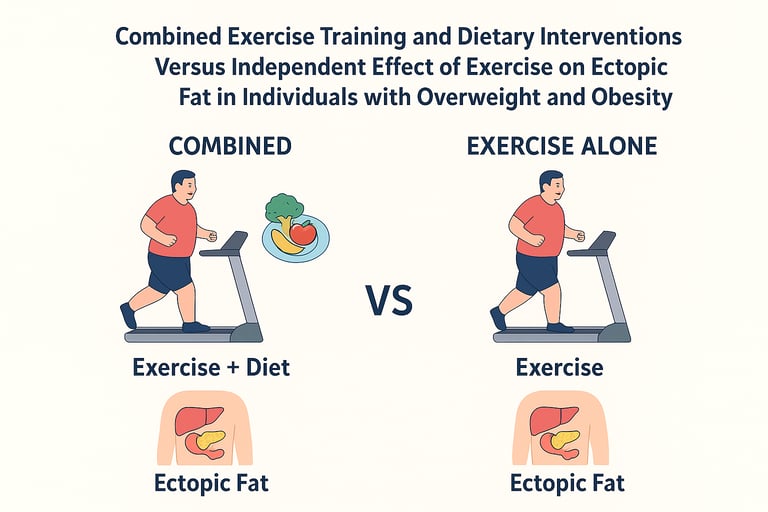

If you've been struggling with weight management and wondering whether you should hit the gym, overhaul your diet, or do both—you're not alone. The question of whether combined exercise training and dietary interventions work better than exercise alone for reducing ectopic fat (that's the dangerous fat stored in organs like your liver, heart, and pancreas) is one that researchers have been investigating extensively.
Here's the thing: ectopic fat accumulation isn't just about how you look in the mirror. This invisible threat lurks inside your body, wrapping around vital organs and significantly increasing your risk of metabolic diseases, cardiovascular disease, type 2 diabetes, and even non-alcoholic fatty liver disease (NAFLD). The good news? Recent research shows that lifestyle interventions—particularly combining exercise and diet—can effectively combat this dangerous fat depot (Kazeminasab et al., 2025).
Clinical Pearls: The Scientific Strategy for Ectopic Fat Reduction
1. Dual Action is Non-Negotiable: The Synergy Principle
The Science: The landmark Kazeminasab et al. (2025) meta-analysis proves that combined exercise and dietary intervention yields significantly greater reduction of ectopic fat (fat around organs like the liver and heart) compared to exercise alone. This is due to a synergistic effect, meaning 1+1 > 2
What It Means for You: Don't choose one or the other. For maximum therapeutic benefit against internal fat, you must use a dual-action approach. Diet initiates fat mobilization (clearing the cupboard), and exercise enhances your body's capacity to burn that mobilized fat (building a bigger furnace).
2. Targeting the Invisible Threat: Ectopic Fat Responds First
The Science: Ectopic fat, particularly hepatic fat (fatty liver) and visceral adipose tissue, is highly metabolically active and responds rapidly to lifestyle changes. The combined approach results in substantial reductions in these dangerous fat depots, often before dramatic weight loss is visible.
What It Means for You: Your metabolic health can improve dramatically even with modest weight loss (e.g., 5-10% of body weight). Focus on internal markers (like reduced waist circumference and better blood work) as your first signs of success, rather than solely relying on the scale or outward appearance.
3. The Metabolic Benefit of Muscle: Resistance Training's Role
The Science: While aerobic exercise is vital for burning fat and cardiovascular fitness, resistance training (weightlifting) is crucial. It builds and preserves lean muscle mass, which significantly improves insulin sensitivity and elevates basal metabolic rate, directly aiding in the clearance of intramuscular fat and the optimization of metabolic function.
What It Means for You: Cardiovascular exercise alone is insufficient. To optimize your health, you must incorporate 2-3 sessions per week of resistance training. Muscle is your primary metabolic engine; protecting and building it is key to long-term ectopic fat management.
4. Beyond Calories: Consistency and Duration Drive Results
The Science: Meta-regression analysis shows that the duration and consistency of the intervention are major modulators of success. Interventions lasting 12 weeks or longer showed progressively greater benefits in ectopic fat reduction.
What It Means for You: Be patient and sustainable. A moderate, consistent plan that you maintain for three months or more will achieve far greater ectopic fat reduction and health improvement than an aggressive, short-lived effort. Consistency is the active ingredient that dictates metabolic success.
5. Lipid Improvement Confirms Success: Track Your Biomarkers
The Science: The combined intervention's superior efficacy in improving lipid profiles (lowering total cholesterol, {LDL-C}, and triglycerides) directly reflects the deep metabolic changes achieved, including ectopic fat clearance (Khalafi et al., 2023). Elevated triglycerides are a key clinical indicator of excessive ectopic fat storage.
What It Means for You: Use your annual blood panel as a powerful monitoring tool. Significant drops in triglycerides and improvements in insulin/glucose readings are objective proof that your combined program is successfully reversing dangerous fat accumulation in your liver and organs.
Combined Exercise Training and Dietary Interventions Versus Independent Effect of Exercise on Ectopic Fat in Individuals with Overweight and Obesity
Understanding Ectopic Fat: The Hidden Health Threat
Before we explore the interventions, let's talk about what makes ectopic fat so problematic. Unlike subcutaneous fat (the fat you can pinch under your skin), ectopic fat accumulates in places it shouldn't be—your liver, heart, pancreas, and skeletal muscles. This visceral fat and organ-specific fat accumulation drives insulin resistance, inflammation, and metabolic dysfunction.
Think of ectopic fat as an unwanted tenant that takes up residence in organs designed for other purposes. When your liver becomes fatty (hepatic steatosis), it can't process nutrients efficiently. When fat infiltrates your heart, it increases cardiovascular disease risk. When it accumulates in your pancreas, it disrupts insulin production and glucose metabolism (Kazeminasab et al., 2025).
For individuals with overweight and obesity, addressing ectopic fat becomes crucial—not just for aesthetics, but for long-term health and disease prevention. The question becomes: what's the most effective strategy?
The Landmark Research: Direct Evidence on Ectopic Fat Reduction
Study 1: The Definitive Ectopic Fat Study (Kazeminasab et al., 2025)
This landmark systematic review and meta-analysis directly compared the effectiveness of combined exercise and dietary interventions versus exercise alone for reducing ectopic fat (fat stored around organs) in adults with overweight and obesity. The findings provided definitive evidence that the combined approach is significantly superior for reducing fat across multiple organ systems. Specifically, they found markedly greater reductions in hepatic fat (fatty liver disease), visceral adipose tissue (dangerous abdominal fat), and intramuscular fat. The study concluded that the synergistic effect of exercise and diet creates optimal conditions for fat mobilization, directly translating to enhanced therapeutic potential for metabolic diseases. The meta-regression further revealed that longer intervention durations (12+ weeks) and higher intensity/volume generally led to greater benefits, emphasizing the importance of consistency and personalization in treatment.
Study 2: Exercise, Diet, and Lipid Profiles (Khalafi et al., 2023)
Khalafi and colleagues conducted a comprehensive meta-analysis focusing on how different interventions—exercise alone, diet alone, and combined exercise and diet—impact lipid profiles (cholesterol and triglycerides) in adults with overweight and obesity. The research established that the combined approach produced significantly greater improvements in crucial cardiovascular risk factors. It was most effective at reducing Total Cholesterol and the "bad" cholesterol, LDL-C. While all interventions reduced triglycerides, the combination achieved the most substantial decrease. Exercise training, specifically, showed promise in increasing the protective "good" cholesterol, HDL-C, a benefit maintained in the combined group. This study's clinical significance lies in showing that the dramatic lipid improvements—biomarkers of cardiovascular health—are maximized when the synergistic benefits of combining exercise and dietary modifications are utilized, reflecting deeper metabolic and ectopic fat reductions.
Study 3: Exercise Training and Intermittent Fasting (Khalafi et al., 2024)
This timely systematic review and meta-analysis investigated the effects of combining exercise training with intermittent fasting (IF). The researchers found that this combined approach offers superior body composition changes compared to either intervention alone. The combination produced greater reductions in total body fat and fat mass while crucially preserving lean muscle mass, a critical outcome for long-term metabolic health. Beyond fat loss, the combined intervention also substantially improved multiple cardiometabolic markers, including insulin sensitivity, glucose metabolism, and blood pressure. Mechanistically, the synergy is likely due to IF shifting metabolism toward fat oxidation and enhancing cellular cleanup, while exercise increases energy expenditure and targets fat stores. The study strongly supports combining IF with exercise to maximize fat loss, preserve muscle, and improve overall cardiometabolic function.
Integrating the Evidence: A Comprehensive Picture
When we examine all three studies together, a powerful and consistent message emerges: combined exercise and dietary interventions represent the optimal strategy for addressing ectopic fat and metabolic dysfunction in individuals with overweight and obesity.
The Kazeminasab et al. (2025) study provides the direct evidence—combined interventions definitively reduce ectopic fat across multiple organ systems more effectively than exercise alone. The Khalafi et al. (2023) study demonstrates the accompanying improvements in lipid profiles and cardiovascular risk markers. The Khalafi et al. (2024) study offers a specific, increasingly popular dietary approach (intermittent fasting) that synergizes powerfully with exercise for body composition and metabolic improvements.
The Synergy Effect: Why Combined Exercise and Diet Excel
The superior efficacy of combined exercise and dietary interventions (including intermittent fasting) stems from their ability to activate complementary metabolic pathways that target ectopic fat more effectively than either intervention alone.
Creating Dual Pressure:
Dietary Interventions (Caloric Restriction/IF) primarily initiate fat loss by creating a caloric deficit, reducing nutrient influx, and shifting hormonal profiles towards fat mobilization (e.g., reducing insulin and hepatic fat production).
Exercise Training complements this by increasing energy expenditure, building lean muscle mass (boosting basal metabolism), and increasing the cellular machinery (mitochondria) needed for fat burning.
Optimizing Fat Mobilization:
Improved Insulin Sensitivity: Both components enhance how cells respond to insulin, reducing the inappropriate storage of fat in organs and making existing ectopic fat easier to access and use.
Increased Fat Oxidation: Exercise builds the "furnace" (mitochondria), and diet/fasting provides the mobilized "fuel" (fat stores), creating simultaneous supply and demand for fat utilization.
Reduced Lipogenesis: The combination suppresses the production of new fat in the liver and other organs while actively depleting existing ectopic fat deposits.
The combined approach creates an optimized metabolic environment for clearing harmful fat from organs, leading to substantially greater reductions in hepatic, visceral, and intramuscular fat.
Designing Your Combined Exercise & Diet Intervention
To maximize ectopic fat reduction and metabolic health, an evidence-based approach combines both exercise and dietary strategies.
I. Exercise Component:
Aerobic Training: Aim for 150-300 minutes/week of moderate intensity (e.g., brisk walking) or 75-150 minutes/week of vigorous intensity (e.g., running).
Resistance Training: Complete 2-3 sessions/week targeting all major muscle groups with progressive overload to preserve and build metabolically crucial lean muscle mass.
Combined Approach: Integrate both types, as this addresses both cardiovascular fitness and muscle health, optimizing total ectopic fat reduction.
II. Dietary Component:
Caloric Restriction: Create a modest deficit (300-500 calories) while focusing on nutrient-dense foods (lean protein, vegetables, whole grains). This deficit is crucial for mobilizing fat stores.
Intermittent Fasting (IF): Options like 16:8 or the 5:2 method can be incorporated with exercise for amplified fat loss and improved cardiometabolic markers, provided they fit your lifestyle.
Macronutrients: Prioritize adequate protein (1.6-2.2 g/kg) to protect muscle mass during the fat loss phase.
III. Timing:
Flexibility: While some exercise well fasted, others need fuel. Tailor your exercise and eating schedule (especially around intense workouts) to optimize performance and adherence.
Consistency across both diet and exercise is the most critical factor for long-term success.
Monitoring Progress: Tracking Ectopic Fat Reduction Beyond Weight
Since ectopic fat is invisible, tracking the success of combined interventions requires focusing on both clinical biomarkers and functional changes.
Clinical Measurements: These provide objective evidence of improved metabolic health, reflecting the reduction of fat in organs:
Blood Lipids: Monitor triglycerides, LDL, and HDL (Khalafi et al., 2023). Decreases in triglycerides are strongly linked to clearing hepatic fat.
Glucose & Insulin: Track fasting glucose and insulin levels to assess improvements in insulin sensitivity.
Liver Enzymes (ALT/AST): Reductions indicate improved hepatic fat and liver function.
Body Composition: Use DEXA or bioimpedance to ensure you're losing fat mass while preserving or gaining lean muscle mass.
Imaging: If available, MRI or ultrasound can directly measure reductions in hepatic and visceral fat.
Functional & Subjective Markers: These track practical, daily improvements that correlate with better health:
Waist Circumference: A critical, easy-to-measure marker strongly correlating with reduced visceral and ectopic fat.
Exercise Performance: Note improvements in strength, speed, and endurance.
Wellbeing: Assess improved energy levels, sleep quality, mental clarity, and better-fitting clothes.
Medication Needs: Consult a doctor regarding potential reduction in medications for chronic conditions, pending biomarker improvements.
Overcoming Common Challenges in Combined Interventions
Successfully implementing combined exercise and diet programs requires addressing common psychological and logistical hurdles.
"I Don't Have Time":
Solution: Focus on optimizing existing time. Implement meal prep for diet efficiency and choose time-efficient exercises like HIIT or home resistance training.
Reality: Daily 30-minute exercise is only 2% of your day, and the health return on investment is proven to be substantial.
"Dietary Changes Feel Too Restrictive":
Solution: Reframe the approach by focusing on adding nutrient-dense foods (protein, vegetables) before strict restriction. Intermittent Fasting (IF) can offer structure without eliminating food groups.
Goal: View diet as optimal fueling for ectopic fat reduction and long-term health, not punishment.
"Exercise Increases My Appetite":
Solution: Strategically ensure adequate protein intake for satiety and stay well-hydrated. Time meals strategically around workouts.
Adjustment: Give your body a few weeks to regulate; appetite control often improves as your metabolic function enhances.
"I've Tried Before and Failed":
Solution: Recognize past attempts as learning experiences. The research shows that the combined, synergistic approach is fundamentally more effective than single-modality attempts you may have tried previously (Kazeminasab et al., 2025).
Action: Seek professional guidance for a personalized, sustainable plan.
Frequently Asked Questions (FAQs)
Q: How long before I see results from combined exercise and diet interventions?
A: While individual responses vary, most people notice improvements in energy and exercise performance within 2-3 weeks. Measurable changes in body composition typically appear within 4-8 weeks, while significant improvements in blood lipids, insulin sensitivity, and other metabolic markers often require 8-12 weeks (Khalafi et al., 2023). Ectopic fat reduction (particularly hepatic fat) can occur relatively quickly—the Kazeminasab et al. (2025) meta-analysis showed substantial reductions within 12 weeks of combined interventions, with some studies showing 30-40% decreases in liver fat.
Q: Is intermittent fasting necessary, or can I use other dietary approaches?
A: Intermittent fasting is one effective dietary approach that shows strong synergy with exercise (Khalafi et al., 2024), but it's not mandatory. Other strategies like caloric restriction, Mediterranean diet, low-carbohydrate diets, or simply improving diet quality can all work when combined with exercise. The Kazeminasab et al. (2025) meta-analysis included various dietary approaches—all showed enhanced ectopic fat reduction when paired with exercise. The key is creating a sustainable caloric deficit while maintaining adequate nutrition. Choose the approach that best fits your lifestyle, preferences, and medical considerations.
Q: Can I reduce ectopic fat without losing significant body weight?
A: Yes! Research shows that exercise training can reduce ectopic fat (particularly liver and visceral fat) even with modest or no weight loss. This occurs because exercise improves how your body partitions nutrients and enhances fat oxidation. However, the Kazeminasab et al. (2025) findings clearly demonstrate that combined diet and exercise interventions produce both greater weight loss and more substantial ectopic fat reduction than exercise alone across multiple organ systems.
Q: What type of exercise is best for reducing ectopic fat?
A: The research suggests that both aerobic exercise and resistance training contribute to ectopic fat reduction, but through different mechanisms. Aerobic exercise (walking, jogging, cycling, swimming) directly increases fat oxidation during and after exercise. Resistance training builds muscle mass, which improves insulin sensitivity and increases resting metabolic rate. The most effective programs combine both types. For hepatic fat specifically, even moderate-intensity aerobic exercise (brisk walking) shows significant benefits, but the combination approach produces optimal results (Kazeminasab et al., 2025).
Q: How much weight loss is needed to see health improvements?
A: Good news—meaningful metabolic improvements often occur with just 5-10% body weight loss. For someone weighing 200 pounds, that's just 10-20 pounds. Research shows that even this modest weight loss significantly improves insulin sensitivity, blood lipids, blood pressure, and reduces ectopic fat (Khalafi et al., 2023). The Kazeminasab et al. (2025) study demonstrated that ectopic fat improvements can be disproportionately large relative to total weight loss, meaning internal metabolic health often improves more dramatically than external appearance suggests.
Q: Are supplements necessary for ectopic fat reduction?
A: While certain supplements may provide modest benefits (omega-3 fatty acids, vitamin D if deficient), they cannot replace the fundamental impact of exercise and dietary modification. The research reviewed here (Kazeminasab et al., 2025; Khalafi et al., 2023; Khalafi et al., 2024) focused on lifestyle interventions without relying on supplements, demonstrating substantial ectopic fat reductions through behavioral changes alone. Focus your efforts and resources on optimizing diet and exercise first. If considering supplements, consult a healthcare provider for personalized recommendations based on your specific needs and deficiencies.
Q: Can I target specific ectopic fat depots (like liver fat specifically)?
A: While you cannot "spot reduce" fat through specific exercises, ectopic fat—particularly hepatic fat—responds rapidly to lifestyle interventions. The liver is metabolically active and responds quickly to changes in diet and exercise. Interestingly, the Kazeminasab et al. (2025) findings showed that ectopic fat often decreases before substantial subcutaneous fat loss occurs, meaning your metabolic health can improve significantly before dramatic changes in appearance. Hepatic fat, visceral fat, and intramuscular fat are typically among the first depots to respond to combined interventions, with epicardial fat and pancreatic fat also showing favorable changes.
Q: What if I can only implement one intervention (diet OR exercise) right now?
A: While combined interventions are optimal based on all three studies (Kazeminasab et al., 2025; Khalafi et al., 2023; Khalafi et al., 2024), doing one is infinitely better than doing neither. If you must choose one initially: Exercise training provides unique benefits beyond fat loss (improved cardiovascular fitness, muscle preservation, mental health benefits, direct effects on ectopic fat). However, dietary modification often produces more rapid weight and fat loss. Consider starting with whichever feels more sustainable for you, then adding the other component within 4-8 weeks for synergistic benefits. Remember that Kazeminasab et al. (2025) showed exercise alone does reduce ectopic fat—just not as effectively as the combination.
Q: How do I prevent regaining ectopic fat after successful reduction?
A: Ectopic fat can return if lifestyle changes aren't maintained. The key is transitioning from an aggressive fat-loss phase to a sustainable maintenance phase that preserves your gains. Continue regular exercise (perhaps at slightly reduced intensity/frequency), maintain improved dietary patterns (though with more flexibility), and monitor key indicators (weight, waist circumference, energy levels, periodic blood work). Building these behaviors into your identity and routine—rather than viewing them as temporary interventions—predicts long-term success. Some degree of ongoing combined intervention appears necessary to prevent ectopic fat reaccumulation.
Key Takeaways: What You Need to Remember
✓ Combined interventions directly reduce ectopic fat: The Kazeminasab et al. (2025) meta-analysis provides definitive evidence that combined exercise and dietary interventions produce significantly greater ectopic fat reduction across multiple organ systems (liver, visceral, muscle, heart, pancreas) compared to exercise training alone.
✓ Ectopic fat is a crucial health target: Unlike visible subcutaneous fat, ectopic fat accumulation in organs like the liver, heart, and pancreas drives metabolic disease, cardiovascular disease, and type 2 diabetes—making it a priority target for intervention regardless of total body weight.
✓ Multiple ectopic fat depots respond favorably: Research demonstrates improvements in hepatic fat, visceral adipose tissue, intramuscular fat, epicardial fat, and pancreatic fat with combined interventions, offering comprehensive metabolic benefits (Kazeminasab et al., 2025).
✓ Lipid improvements reflect metabolic changes: The Khalafi et al. (2023) meta-analysis showed that combined interventions optimally improve lipid profiles, including reductions in total cholesterol, LDL cholesterol, and triglycerides, while maintaining or increasing protective HDL cholesterol—changes that correlate with ectopic fat reduction.
✓ Intermittent fasting shows promise: The Khalafi et al. (2024) study demonstrated that intermittent fasting combined with exercise training effectively reduces fat mass while preserving lean muscle mass and improving multiple cardiometabolic markers, offering a specific dietary approach with proven efficacy.
✓ Synergy exceeds addition: The benefits of combined interventions aren't simply additive—synergistic effects occur as exercise and diet modifications work through complementary pathways to maximize ectopic fat mobilization and metabolic improvements beyond what either intervention achieves independently.
✓ Both aerobic and resistance training contribute: Optimal exercise programs include both aerobic exercise (for cardiovascular fitness and fat oxidation) and resistance training (for muscle preservation and metabolic health), with the combination showing superior effects on ectopic fat reduction.
✓ Modest changes yield significant benefits: Even 5-10% body weight loss produces meaningful improvements in insulin sensitivity, blood pressure, and ectopic fat reduction—you don't need dramatic transformation for substantial health benefits, particularly given that ectopic fat responds disproportionately well.
✓ Time and consistency matter: The meta-regression by Kazeminasab et al. (2025) revealed that intervention duration influences outcomes, with 12+ weeks showing progressively greater benefits, suggesting patience and consistency are crucial for optimal ectopic fat reduction.
✓ Sustainability determines long-term success: The most effective intervention is the one you can maintain long-term. Building sustainable habits through gradual implementation and flexible consistency predicts lasting results and prevents ectopic fat reaccumulation.
✓ Individual customization matters: While research provides general principles, optimal protocols should be tailored to individual preferences, medical conditions, fitness levels, and lifestyle factors for maximum adherence and effectiveness.
✓ Professional guidance enhances outcomes: Working with healthcare providers, registered dietitians, and certified exercise professionals can help optimize your intervention strategy, ensure safety (particularly for those with pre-existing conditions), and provide accountability for better long-term results.
The research is unequivocal: combined exercise training and dietary interventions represent the gold standard for reducing ectopic fat and improving metabolic health in individuals with overweight and obesity. The landmark study by Kazeminasab et al. (2025) provides direct, definitive evidence that combined approaches substantially outperform exercise alone for reducing fat in the liver, visceral cavity, muscles, heart, and pancreas. The complementary findings from Khalafi et al. (2023) and Khalafi et al. (2024) demonstrate the broader metabolic benefits—improved lipid profiles, enhanced body composition, and better cardiometabolic health markers.
Ectopic fat isn't just a cosmetic concern—it's a metabolic threat that demands attention. This invisible fat wrapping around your vital organs increases your risk of type 2 diabetes, cardiovascular disease, non-alcoholic fatty liver disease, and numerous other conditions. But here's the empowering truth: this dangerous fat responds rapidly and substantially to lifestyle interventions. You have more control over your metabolic health than you might realize.
Whether you choose traditional caloric restriction or intermittent fasting for your dietary component, whether you prefer walking or weightlifting for your exercise component, the key is committing to both and maintaining consistency. The science shows that neither intervention alone maximizes the potential for transformation—but together, they create powerful synergies that address ectopic fat accumulation through multiple complementary pathways.
Your metabolic transformation starts now. Take the first step today.
Disclaimer: This article is for informational purposes only and does not constitute medical advice. Always consult with qualified healthcare professionals before starting any weight-loss treatment or making significant changes to your health regimen.
Related Articles
Movement Snacks: How VILPA Delivers Max Health Benefits in Minutes | DR T S DIDWAL
The BMI Paradox: Why "Normal Weight" People Still Get High Blood Pressure | DR T S DIDWAL
How Insulin Resistance Accelerates Cardiovascular Aging | DR T S DIDWAL
What’s New in the 2025 Blood Pressure Guidelines? A Complete Scientific Breakdown | DR T S DIDWAL
The Metabolic Triad: Why Diabetes, Obesity & CVD Are One Epidemic | DR T S DIDWAL
Lowering Cholesterol with Food: 4 Phases of Dietary Dyslipidemia Treatment | DR T S DIDWAL
Breakthrough Research: Leptin Reduction is Required for Sustained Weight Loss | DR T S DIDWAL
References
Kazeminasab, F., Mohebinejad, M., Mahboobi, M. H., Nojoumi, M., Belyani, S., Bagheri, R., & Dutheil, F. (2025). Combined exercise training and dietary interventions versus independent effect of exercise on ectopic fat in individuals with overweight and obesity: A systematic review, meta-analysis, and meta-regression. Journal of the International Society of Sports Nutrition, 22(1), 2528534. https://doi.org/10.1080/15502783.2025.2528534
Khalafi, M., Sakhaei, M. H., Kazeminasab, F., Rosenkranz, S. K., & Symonds, M. E. (2023). Exercise training, dietary intervention, or combined interventions and their effects on lipid profiles in adults with overweight and obesity: A systematic review and meta-analysis of randomized clinical trials. Nutrition, Metabolism, and Cardiovascular Diseases, 33(9), 1662–1683. https://doi.org/10.1016/j.numecd.2023.05.024
Khalafi, M., Symonds, M. E., Maleki, A. H., Sakhaei, M. H., Ehsanifar, M., & Rosenkranz, S. K. (2024). Combined versus independent effects of exercise training and intermittent fasting on body composition and cardiometabolic health in adults: A systematic review and meta-analysis. Nutrition Journal, 23(1), 7. https://doi.org/10.1186/s12937-023-00909-x