Metabolic Health: Why Your Sleep Schedule Is Key to Fat Loss
New 2025 studies reveal sleep schedule consistency governs fat-burning hormones (leptin/ghrelin) and insulin. Use evidence-based steps to fix your circadian rhythm and lose weight.
METABOLISM
Dr. T.S. Didwal, M.D.(Internal Medicine)
12/16/202513 min read

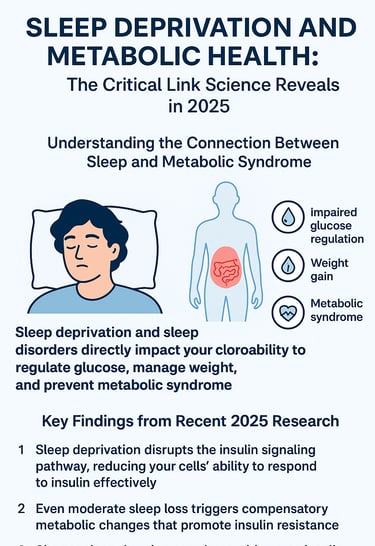
Most people believe diabetes begins with sugar, obesity begins with food, and metabolic syndrome begins with inactivity. Modern science now tells a more unsettling story. For millions of people, metabolic disease begins at night—quietly, invisibly, while they are asleep. Or more accurately, while they are not. Chronic sleep deprivation alters insulin signaling, rewires hormonal regulation, and disrupts circadian biology long before blood glucose rises or weight increases. By the time metabolic syndrome is diagnosed, sleep dysfunction has often been driving the disease process for years.
Sleep is not a passive state of rest. It is an active, highly regulated metabolic process. During healthy sleep, insulin sensitivity improves, appetite hormones reset, cortisol declines, and circadian clocks synchronize glucose metabolism across tissues. When sleep is fragmented or shortened, these processes fail. The result is a predictable biological cascade—insulin resistance, visceral fat accumulation, chronic inflammation, and progressive metabolic dysfunction. In this chapter, we examine how modern sleep disruption has become a primary upstream driver of metabolic disease.
Clinical Pearls
1. The 7–9 Hour Rule is Metabolic Medicine
Pearl: "Aim for 7 to 9 hours of restorative sleep nightly. Sleep is a modifiable risk factor for Type 2 Diabetes and Metabolic Syndrome. It’s not just about energy—it’s about protection."
Scientific Basis (Coleman et al., 2025): Large-scale, long-term data confirms that both short duration and poor quality independently predict the development of obesity, diabetes, and metabolic syndrome. Quantity and quality matter.
2. Sleep Controls Hunger Hormones
Pearl: "Poor sleep directly sabotages weight management by altering your appetite hormones. When you're sleep-deprived, your body increases Ghrelin (the hunger hormone) and decreases Leptin (the fullness hormone). You are literally hormonally programmed to overeat."
Scientific Basis (Jiao et al., 2025): Sleep disruption impairs the neuroendocrine system, promoting overeating and weight gain. Addressing sleep is a core strategy for breaking the obesity-sleep disorder cycle (Figorilli et al., 2025).
3. Insomnia Treatment is Blood Sugar Treatment
Pearl: "If you have prediabetes, treating your insomnia is a therapeutic intervention for your blood sugar. Treating sleep problems measurably improves glycemic control."
Scientific Basis (LeBlanc et al., 2025): The "Sleep for Health Study" (a randomized clinical trial) proved that participants receiving insomnia treatment showed significant improvements in blood sugar regulation (glycemia).
4. Sleep Deprivation Causes Insulin Resistance
Pearl: "Even moderate sleep loss makes your body ignore insulin, triggering the path toward diabetes. Sleep deprivation directly impairs insulin signaling, making your cells less responsive and promoting insulin resistance."
Scientific Basis (Pinheiro et al., 2025): This foundational research established a dose-dependent, direct link: shorter sleep correlates with worse insulin sensitivity.
5. Consistency is Key for Metabolism
Pearl: "Your Circadian Rhythm is your metabolic clock. Maintaining a regular sleep and wake schedule (even on weekends) is vital for hormonal balance, glucose processing, and efficient metabolism. Inconsistency is a form of metabolic stress."
Scientific Basis (Rasmussen et al., 2025; Jiao et al., 2025): Disrupted sleep misaligns the circadian rhythm, causing the body to process food less efficiently and store excess calories as fat more readily.
6. The Bidirectional Vicious Cycle
Pearl: "Sleep problems and metabolic issues (like obesity and high blood sugar) are not separate; they are causally linked in a vicious cycle. Metabolic dysfunction causes poor sleep, and poor sleep worsens metabolic dysfunction. You must treat them together."
Scientific Basis (Liao et al., 2025): Genetic analysis confirms this is a bidirectional causal relationship, strengthening the need for integrated care in diabetes and obesity treatment protocols.
7. Stress Management is Sleep and Metabolism Management
Pearl: "Chronic poor sleep elevates the stress hormone Cortisol. High cortisol levels promote the accumulation of dangerous visceral fat (belly fat), which directly increases your risk for heart disease and stroke."
Scientific Basis (Jiao et al., 2025): Sleep disruption impairs the HPA axis, leading to persistently elevated cortisol, which directly links stress, poor sleep, and visceral fat accumulation.
Sleep Deprivation and Metabolic Health: The Critical Link Science Reveals in 2025
What is Metabolic Syndrome and Why Does Sleep Matter?
Metabolic syndrome is a cluster of conditions—including high blood pressure, elevated blood sugar, excess body fat, and abnormal cholesterol levels—that increase your risk of heart disease, stroke, and type 2 diabetes. Until recently, researchers focused on diet and exercise while underestimating sleep's crucial role.
The 2025 research landscape has shifted dramatically. Sleep is now recognized as a cornerstone of metabolic health, operating through multiple biological pathways that influence hormonal regulation, glucose metabolism, and weight management (Jiao et al., 2025).
The Science Behind Insomnia and Metabolic Syndrome
The relationship between insomnia (persistent difficulty falling or staying asleep) and metabolic syndrome operates through several interconnected mechanisms. When you experience chronic sleep disruption, your body enters a stressed state that triggers cascade effects across multiple systems. Insomnia impairs the hypothalamic-pituitary-adrenal (HPA) axis, the central stress-response system, elevating cortisol levels persistently throughout the day and night. Elevated cortisol promotes visceral fat accumulation (dangerous belly fat), increases blood pressure, and worsens insulin resistance. Simultaneously, sleep loss suppresses leptin—the hormone that signals fullness—while elevating ghrelin—the hormone that drives hunger. This hormonal mismatch creates relentless appetite signals, particularly for high-calorie foods. Additionally, insomnia desynchronizes your circadian rhythm, the internal 24-hour clock that regulates metabolic rate, glucose processing, and hormone secretion. When this rhythm is disrupted, your body processes food less efficiently, stores excess calories as fat more readily, and struggles to maintain normal blood sugar regulation. Over time, this cascade of disrupted hormones, impaired glucose metabolism, and circadian misalignment culminates in the cluster of dysfunctions that define metabolic syndrome. The bidirectional nature means that once metabolic dysfunction develops, it further worsens sleep quality, creating a self-perpetuating cycle that becomes progressively harder to break without intervention.
2025 Research Findings: What the Studies Show
1. Sleep Deprivation and Insulin Resistance: The Direct Link
Study: Pinheiro et al. (2025) examined how sleep deprivation directly impacts insulin resistance in their groundbreaking research published in Endocrines.
Key Findings:
Sleep deprivation disrupts the insulin signaling pathway, reducing your cells' ability to respond to insulin effectively
Even moderate sleep loss triggers compensatory metabolic changes that promote insulin resistance
The relationship is dose-dependent: shorter sleep duration correlates with worse insulin sensitivity
Why This Matters: Insulin resistance is the precursor to type 2 diabetes. By addressing sleep quality early, you may prevent or delay diabetes development entirely. This foundational mechanism underscores why sleep optimization should be prioritized in diabetes prevention strategies.
2. Clinical Evidence: Treating Insomnia Improves Blood Sugar Control
Study: LeBlanc et al. (2025) conducted "The Sleep for Health Study," a randomized clinical trial published in Contemporary Clinical Trials, specifically designed to measure whether treating insomnia improves glucose control in people with prediabetes.
Key Findings:
Participants receiving insomnia treatment showed measurable improvements in glycemia (blood sugar levels)
The study provides clinical-grade evidence that sleep interventions are therapeutic for metabolic disease prevention
Treating sleep problems may be as important as traditional lifestyle modifications
Why This Matters: This is among the first large-scale trials proving that insomnia treatment directly improves metabolic health markers . It suggests sleep medicine should be integrated into diabetes prevention programs.
3. The Bidirectional Relationship: Obesity and Sleep Disorders
Study: Figorilli et al. (2025) explored the complex interplay between obesity and sleep disorders in Nutrition, Metabolism, and Cardiovascular Diseases, revealing a cyclical problem.
Key Findings:
Sleep disorders contribute to weight gain through increased appetite hormones and reduced energy expenditure
Obesity itself worsens sleep quality and triggers sleep-disordered breathing
This bidirectional relationship creates a self-perpetuating cycle: poor sleep → weight gain → worse sleep
Breaking the cycle requires addressing both conditions simultaneously
Why This Matters: If you're overweight and sleeping poorly, these conditions likely reinforce each other. Improving sleep may be the catalyst to break free from the obesity-sleep disorder cycle.
4. Genetic Evidence: Metabolic Syndrome Components Drive Insomnia
Study: Liao et al. (2025) used Mendelian randomization—a sophisticated genetic analysis—in Advances in Clinical and Experimental Medicine to establish causal links between metabolic syndrome and insomnia.
Key Findings:
The research confirms a bidirectional causal relationship: metabolic dysfunction contributes to insomnia, and insomnia worsens metabolic dysfunction
Genetic variants affecting glucose metabolism and lipid profiles influence sleep quality
This causal evidence strengthens arguments for integrated treatment approaches
Why This Matters: This isn't just correlation—genetic analysis proves that metabolic disease and sleep problems are causally linked, not merely coincidental (Liao et al., 2025). This supports treating them as interconnected systems rather than separate conditions.
5. Sleep Disorders and Metabolic Syndrome Development
Study: Pulatova (2025) reviewed the impact of sleep disorders on metabolic syndrome development in the VER Journal, synthesizing evidence on mechanisms and risk trajectories.
Key Findings:
Sleep disorders accelerate the progression toward metabolic syndrome through multiple pathways
Chronic sleep disruption alters hormone secretion patterns, particularly affecting cortisol, leptin, and ghrelin
The review emphasizes that addressing sleep early can prevent metabolic disease progression
Why This Matters: Early intervention on sleep problems may be preventive, stopping the cascade toward full-blown metabolic syndrome before it develops
6. Hormonal Mechanisms: How Sleep Disorders Disrupt Metabolism
Study: Jiao et al. (2025) published in Diabetology, Metabolic Syndrome and Related Diseases detailed precisely how sleep disorders disrupt hormonal regulation and trigger metabolic diseases.
Key Findings:
Sleep disruption impairs the hypothalamic-pituitary-adrenal (HPA) axis, affecting cortisol and stress hormone patterns
Poor sleep reduces leptin (satiety hormone) and increases ghrelin (appetite hormone), promoting overeating
Sleep disorders reduce adiponectin production, a protective hormone that enhances insulin sensitivity
Glucose metabolism is directly controlled by circadian rhythms; disrupted sleep misaligns these critical biological clocks
Why This Matters: Sleep doesn't just help you feel rested—it actively regulates the hormones that control hunger, stress response, and glucose processing Without adequate sleep, your hormonal environment literally works against weight loss and metabolic health.
7. Weight Management and Sleep: Treatment Implications
Study: Allison et al. (2024) reviewed insomnia, short sleep, and their treatments in relation to weight in Current Obesity Reports, examining therapeutic options.
Key Findings:
Both insomnia (difficulty sleeping) and short sleep duration independently predict weight gain
Standard sleep treatments improve not just sleep quality but also weight outcomes
Behavioral sleep interventions may be as effective as pharmacological approaches for weight management
Addressing sleep should be prioritized in comprehensive obesity treatment programs
Why This Matters: If you're trying to lose weight, improving your sleep might be more impactful than you realize . Sleep treatment isn't separate from weight loss—it's integral to it.
8. Understanding the Causal Mechanisms: Sleep and Obesity
Study: Wang et al. (2022) published in The Journal of Clinical Endocrinology & Metabolism established the causal mechanisms underlying the sleep-obesity relationship and identified novel therapeutic targets.
Key Findings:
The study identified specific molecular pathways where sleep deprivation promotes obesity development
Circadian disruption reduces metabolic rate and increases fat storage
Novel therapeutic interventions targeting sleep-metabolism pathways show promise for preventing weight gain
Why This Matters: Understanding the mechanisms opens doors to new treatments beyond simply "sleeping more" . This research supports development of targeted therapies for sleep-related metabolic dysfunction.
9. Type 2 Diabetes and Sleep Problems: A Cross-Sectional Analysis
Study: Li et al. (2025) examined insomnia and its risk factors in patients with type 2 diabetes in Sleep Medicine, revealing the prevalence and correlates of sleep problems in diabetic populations.
Key Findings:
Insomnia is highly prevalent in people with type 2 diabetes, affecting quality of life and glycemic control
Sleep disruption makes diabetes management more challenging, creating a vicious cycle
Identifying and treating sleep problems should be part of routine diabetes care
Poor sleep is associated with increased diabetes complications and worse long-term outcomes
Why This Matters: If you have diabetes, your sleep quality directly affects your disease control Addressing sleep problems may be among the most important steps you take for your health.
10. Sleep Duration and Quality: Long-Term Risk Assessment
Study: Coleman et al. (2025) published in Chronobiology International examined associations between sleep duration and quality with incident obesity, diabetes, and metabolic syndrome using long-term follow-up data from the Midlife in the United States study.
Key Findings:
Both short sleep duration AND poor sleep quality independently predict development of obesity, diabetes, and metabolic syndrome
The relationship persists even after controlling for baseline weight and metabolic markers
Both quantity and quality matter—it's not enough to simply spend time in bed; your sleep must be restorative
Optimizing sleep in midlife may have lasting protective effects for metabolic health in later years
Why This Matters: This large-scale study confirms that sleep is a modifiable risk factor for metabolic disease. Improving sleep now protects your metabolic health for decades to come.
11. Sleep Habits and the Future of Metabolic Disease Management
Study: Rasmussen et al. (2025) reviewed sleep habits in the pathogenesis and management of "diabesity" (the combination of diabetes and obesity) in the Journal of Diabetes Investigation, outlining practical management strategies.
Key Findings:
Sleep optimization should be considered a cornerstone treatment for diabesity, alongside diet and exercise
Practical sleep habit improvements—consistent sleep schedules, sleep environment optimization, and behavioral interventions—produce measurable metabolic benefits
Integrating sleep medicine into diabetes and obesity treatment protocols improves outcomes
Future management of metabolic disease will necessarily include sleep assessment and intervention
Why This Matters: This research advocates for a paradigm shift: sleep isn't optional for metabolic health—it's essential . Modern treatment of diabetes and obesity should formally include sleep interventions.
Frequently Asked Questions
How much sleep do I need for metabolic health?
Most research suggests 7-9 hours nightly is optimal for metabolic function. However, quality matters as much as quantity. The research emphasizes both adequate duration AND restorative sleep without fragmentation.
Can improving my sleep help me lose weight?
Absolutely. Multiple 2025 studies show that sleep improvement directly supports weight loss through hormonal mechanisms that reduce appetite, increase satiety, and improve metabolic rate.
I have prediabetes. Will treating my insomnia actually help?
Yes—the LeBlanc et al. (2025) randomized trial specifically studied this question and found that insomnia treatment improved glycemic control in people with prediabetes. It's one of the strongest evidence pieces in the research.
Does sleep affect insulin sensitivity?
Directly, yes. Pinheiro et al. (2025) demonstrated that sleep deprivation impairs insulin signaling, reducing your cells' ability to respond to insulin. Even moderate sleep loss triggers this effect.
What if I have diabetes? Is my poor sleep medically relevant?
Very much so. Li et al. (2025) found that insomnia is highly prevalent in people with type 2 diabetes and significantly impacts disease management and complications. Sleep assessment should be routine in diabetes care.
How do sleep disorders cause weight gain?
Through multiple mechanisms: poor sleep increases ghrelin (hunger hormone) while decreasing leptin (satiety hormone), reduces metabolic rate through circadian disruption, increases stress hormone cortisol (promoting fat storage), and impairs impulse control around food choices.
Are sleep medications necessary?
Not always. Research shows that behavioral sleep interventions—consistent schedules, sleep environment optimization, stress reduction, and other accessible modifications—produce measurable improvements comparable to medications for some people.
Can I reverse metabolic syndrome by improving sleep?
The research suggests sleep improvement is essential to any metabolic syndrome reversal strategy, working synergistically with diet and exercise. While sleep alone may not reverse established disease, it's a critical component of any comprehensive treatment plan.
Is the sleep-obesity relationship causal or just correlation?
Genetic studies by Liao et al. (2025) establish that it's bidirectionally causal—sleep and metabolic dysfunction actively cause each other, not merely correlate. This strengthens the case for treating them together.
I work irregular shifts. Can I still improve my metabolic health?
This is challenging since circadian misalignment is part of the problem. Rasmussen et al. (2025) suggest maximizing sleep quality and consistency within your schedule constraints, though stabilizing sleep timing is ideal.
Practical Steps to Optimize Sleep and Metabolic Health
Based on the 2025 research, here are evidence-supported actions you can take today:
Establish Consistency: Maintain regular sleep and wake times, even on weekends. Your circadian rhythm drives metabolic regulation, and consistency matters for hormonal balance.
Create a Sleep Sanctuary: Optimize your sleep environment—cool temperature, darkness, minimal noise. A poor sleep environment directly undermines sleep quality and metabolic benefit.
Address Insomnia: If you experience insomnia, seek evaluation and treatment. The clinical trial evidence shows that treating sleep problems directly improves metabolic markers.
Reduce Circadian Disruption: Limit evening screen time, maintain consistent meal timing, and get morning light exposure. These support your body's natural rhythm.
Manage Stress: Since stress hormones directly disrupt sleep and promote metabolic dysfunction, incorporate stress management practices—meditation, exercise, or other techniques that work for you.
Assess Sleep Quality: Don't just count hours. Evaluate whether your sleep is restorative. If you wake frequently, experience restless sleep, or don't feel refreshed, discuss this with your healthcare provider.
Integrate with Other Interventions: Sleep optimization works best alongside healthy diet and regular exercise. These three pillars of metabolic health are synergistic.
Seek Professional Evaluation: If you suspect a sleep disorder like sleep apnea, obtain proper diagnosis and treatment. Untreated sleep disorders significantly impair metabolic health.
The Bottom Line: Sleep as Metabolic Medicine
The 2025 research landscape presents a compelling message: sleep deprivation and sleep disorders are not luxuries or minor lifestyle factors—they're critical drivers of metabolic disease (Pinheiro et al., 2025; Jiao et al., 2025). From insulin sensitivity to weight regulation to hormonal balance, sleep influences virtually every aspect of metabolic health.
Whether you're trying to prevent metabolic syndrome, manage prediabetes, control weight, or optimize diabetes care, sleep deserves prominent attention in your health strategy. The research shows that insomnia treatment and sleep optimization produce measurable improvements in the very markers that predict metabolic disease.
The good news? Unlike many health challenges, you have significant control over your sleep. Behavioral interventions, environmental optimization, and professional treatment for sleep disorders all produce results supported by rigorous 2025 research.
Disclaimer: This article is for informational purposes only and does not constitute medical advice. Individual circumstances vary, and treatment decisions should always be made in consultation with qualified healthcare professionals.
Related Articles
How Insulin Resistance Accelerates Cardiovascular Aging | DR T S DIDWAL
Why You Can't Lose Weight: The Chronic Inflammation & Metabolic Vicious Cycle | DR T S DIDWAL
Physical Activity, Adiposity, and Metabolic Health: What Science Reveals | DR T S DIDWAL
HIIT Benefits: Evidence for Weight Loss, Heart Health, & Mental Well-Being | DR T S DIDWAL
Sleep & Hypertension: Duration, Quality, and Blood Pressure | DR T S DIDWAL
Lower Blood Pressure Naturally: Evidence-Based Exercise Guide for Metabolic Syndrome | DR T S DIDWAL
References
Allison, K. C., Parnarouskis, L., Moore, M. D., et al. (2024). Insomnia, short sleep, and their treatments: Review of their associations with weight. Current Obesity Reports, 13, 203–213. https://doi.org/10.1007/s13679-024-00570-3
Coleman, C., Grosicki, G., Jonnalagadda, S. S., Kiel, J., & Zhu, Y. (2025). Associations of sleep duration and quality with risk of incident obesity, diabetes, and metabolic syndrome: Results from the Midlife in the United States study. Chronobiology International, 42(11), 1528–1535. https://doi.org/10.1080/07420528.2025.2556840
Figorilli, M., Velluzzi, F., & Redolfi, S. (2025). Obesity and sleep disorders: A bidirectional relationship. Nutrition, Metabolism, and Cardiovascular Diseases: NMCD, 35(6), 104014. https://doi.org/10.1016/j.numecd.2025.104014
Jiao, Y., Butoyi, C., Zhang, Q., et al. (2025). Sleep disorders impact hormonal regulation: Unravelling the relationship among sleep disorders, hormones and metabolic diseases. Diabetology, Metabolic Syndrome and Related Diseases, 17, 305. https://doi.org/10.1186/s13098-025-01871-w
LeBlanc, E. S., Smith, N., Hwang, D., Young, D. R., Oshiro, C., Mayhew, M., Massimino, S., Catlin, C., & Clarke, G. (2025). The sleep for health study: A randomized clinical trial of the impact of insomnia treatment on glycemia in people with prediabetes. Contemporary Clinical Trials, 149, 107796. https://doi.org/10.1016/j.cct.2024.107796
Li, L., Xu, D., Xu, M., Ji, Y., Lou, Z., & Sun, J. (2025). Insomnia and its risk factors in patients with type 2 diabetes: A cross-sectional study. Sleep Medicine, 131, 106484. https://doi.org/10.1016/j.sleep.2025.106484
Liao, L., Zhou, J., Zhang, X., & Zhu, Y. (2025). The causal role of metabolic syndrome components in insomnia: A bidirectional two-sample Mendelian randomization. Advances in Clinical and Experimental Medicine: Official Organ Wroclaw Medical University, 34(10), 1669–1676. https://doi.org/10.17219/acem/195188
Pinheiro, M. C., Costa, H. E., Mariana, M., & Cairrao, E. (2025). Sleep deprivation and its impact on insulin resistance. Endocrines, 6(4), 49. https://doi.org/10.3390/endocrines6040049
Pulatova, D. (2025, December 8). The impact of sleep disorders on the development of metabolic syndrome. VER Journal. https://verjournal.com/index.php/ver/article/view/1395
Rasmussen, C. H., O, C. K., Chan, W. S., Magkos, F., & Kong, A. P. (2025). Sleep habits in the pathogenesis and management of diabesity. Journal of Diabetes Investigation, 16(7), 1202–1216. https://doi.org/10.1111/jdi.70075
Wang, J., Wu, N., & Zhang, L. (2022). The causal relationship between sleep and obesity: Novel insights and therapeutic target. The Journal of Clinical Endocrinology & Metabolism, 107(10), e4265–e4266. https://doi.org/10.1210/clinem/dgac372