HIIT Benefits: Evidence for Weight Loss, Heart Health, & Mental Well-Being
Discover the latest science-backed HIIT benefits in 2025–2026. Learn how HIIT workouts improve fat loss, insulin sensitivity, heart health, VO₂ max, anxiety, and longevity with evidence-based beginner and advanced protocols.
EXERCISE
Dr. T.S. Didwal, M.D.
5/10/202612 min read
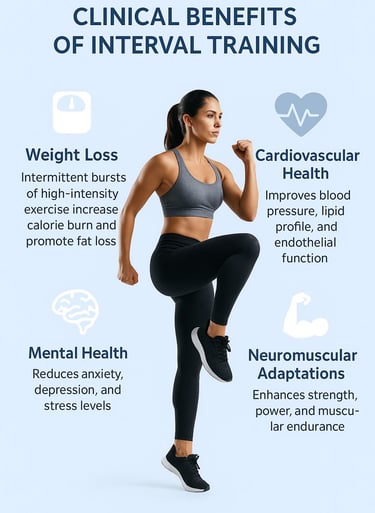
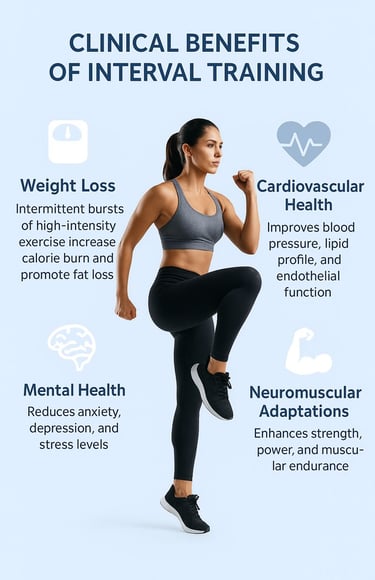
Current evidence from systematic reviews and meta-analyses indicates that HIIT is among the most time-efficient exercise strategies for improving cardiometabolic health, VO₂ max, insulin sensitivity, body composition, and mental well-being. For most adults, 2–3 weekly HIIT sessions combined with resistance training and low-intensity aerobic exercise provide a sustainable and evidence-based framework for long-term health.
What Is HIIT and Why Is It Effective?
High-intensity interval training (HIIT) is a form of exercise that alternates short bursts of intense activity with structured recovery periods. Most HIIT workouts last between 15 and 30 minutes and can involve running, cycling, rowing, or bodyweight exercises.
Research shows HIIT improves:
fat loss
insulin sensitivity
VO₂ max
blood pressure
cardiovascular fitness
anxiety symptoms
HIIT is often more time-efficient than traditional moderate-intensity cardio.
Most adults benefit from 2–3 HIIT sessions a week
Key Takeaways
VO₂ max improvements of 10–15%
HbA1c reductions of ~0.5–0.8%
24–48 hour EPOC elevation
HIIT improves cardiovascular fitness faster than many traditional cardio programs.
HIIT for fat loss is particularly effective for reducing visceral fat.
HIIT benefits extend beyond fitness to anxiety reduction, metabolic health, and healthy aging.
Beginners should start with shorter intervals and longer recovery periods.
Evidence Summary
For weight loss:
Evidence strength is strong, with HIIT consistently shown to reduce visceral fat and improve body composition.For Type 2 Diabetes and metabolic health:
Strong scientific evidence shows HIIT improves insulin sensitivity and glucose regulation.For heart health and cardiovascular fitness:
The evidence is very strong, with HIIT significantly increasing VO₂ max and cardiopulmonary capacity.For anxiety and mental well-being:
Moderate-to-strong evidence suggests HIIT reduces state anxiety and supports mood regulation.For healthy aging and functional fitness:
Strong evidence indicates HIIT improves physical function, mobility, and exercise capacity in older adults.
If you have ever searched for the best HIIT protocol, wondered whether HIIT vs cardio is truly superior for fat loss, or looked for a realistic HIIT workout for beginners, the newest evidence from 2025–2026 provides a clear answer: high-intensity interval training is one of the most time-efficient and scientifically validated exercise strategies available today. Recent systematic reviews and meta-analyses show that HIIT for fat loss can significantly reduce visceral adiposity, improve insulin sensitivity, increase VO₂ max, and enhance cardiovascular health in less time than traditional steady-state exercise (Jagsz & Sikora, 2025; Sert et al., 2025).
The modern understanding of HIIT benefits now extends far beyond calorie burning. Emerging research demonstrates that properly prescribed HIIT improves mitochondrial function, vascular health, metabolic flexibility, anxiety symptoms, and even functional capacity in older adults (Viderman et al., 2025; Wang et al., 2025). Whether your goal is weight reduction, diabetes management, heart health, or simply improving fitness despite a busy schedule, HIIT has evolved from a fitness trend into a clinically relevant lifestyle intervention supported by robust medical evidence.
Does HIIT Really Help With Fat Loss and Belly Fat?
HIIT vs. Traditional Cardio in Obesity
A 2025 systematic review by Jagsz and Sikora, published in the Journal of Clinical Medicine, directly compared HIIT against continuous aerobic exercise in patients with obesity. The findings were unambiguous: HIIT produced significantly greater reductions in body weight and body fat percentage within shorter timeframes than matched volumes of steady-state cardio (Jagsz & Sikora, 2025).
The mechanism behind this edge is excess post-exercise oxygen consumption (EPOC) — the elevated metabolic rate that persists for hours after an intense session. Steady-state cardio burns calories during exercise; HIIT continues burning calories after you have left the gym.
Is HIIT Better Than Traditional Cardio for Heart Health?
Cardiometabolic Benefits Across the Lifespan
A 2025 systematic review and meta-analysis by Sert et al., published in BMC Sports Science and Medicine Rehabilitation, examined HIIT's effects on cardiometabolic health and quality of life in older adults. The evidence showed meaningful improvements in blood pressure, lipid profiles, glucose metabolism, endothelial function, and aerobic capacity — all without the joint-loading impact of prolonged endurance training. Participants also reported higher energy levels, better sleep quality, and improved ability to perform everyday tasks (Sert et al., 2025).
A 2026 meta-analysis by published in Frontiers in Physiology, focused specifically on middle-aged and elderly women. This large-scale synthesis confirmed that HIIT significantly improved cardiopulmonary fitness and physical function in this population — a group historically underrepresented in exercise science research (Cai et al., 2026). The improvements in VO₂ max and functional capacity were clinically meaningful, reducing fall risk and cardiovascular disease burden.
Vascular and Myocardial Adaptations
A narrative review by Ko et al. (2025), published in the Journal of Cardiovascular Development and Disease, documented that HIIT reduces arterial stiffness, improves coronary circulation, and enhances myocardial function. These are not superficial fitness metrics — they represent measurable protection against coronary artery disease, arrhythmias, and heart failure.
Critically, a 2026 clinical commentary by Franklin and Zhu in the Journal of Science in Sport and Exercise placed these benefits in a risk context. While confirming that HIIT delivers superior cardiovascular adaptations compared to moderate-intensity continuous training, the authors emphasised that the risk-benefit balance depends on individual health status and appropriate supervision — a point we will revisit in the safety section (Franklin & Zhu, 2026).
Can HIIT Reduce Anxiety and Improve Mood?
A landmark 2025 comprehensive review by Viderman et al., published in the Journal of Clinical Medicine, synthesised evidence across systematic reviews covering HIIT's impact not just on cardiometabolic outcomes, but on neurological function, cancer-related outcomes, and chronic pain management (Viderman et al., 2025).
Key highlights from this landmark paper:
Neurologic: HIIT improved cognitive function, reduced depressive symptoms, and showed promise in neurological rehabilitation settings.
Oncologic: Exercise-oncology research documented improved quality of life and reduced cancer-related fatigue in patients undergoing treatment.
Pain-related: HIIT protocols were associated with improved pain thresholds and reduced chronic musculoskeletal pain scores.
This breadth of benefit — from blood sugar to brain function to cancer care — positions HIIT as a genuinely systemic health intervention, not merely a fitness tool.
The Mental Health Connection: HIIT and Anxiety
A scoping review by Wang et al. (2025), published in Frontiers in Psychiatry, examined HIIT's effects on anxiety across diverse clinical and non-clinical populations. The findings were consistent: HIIT significantly reduced both state anxiety (acute feelings of fear and tension) and trait anxiety (a person's general baseline level of anxiety) (Wang et al., 2025).
The neurobiological mechanisms involve elevated endorphin release, improved dopamine signalling, enhanced serotonin availability, and the structural resilience-building that comes from repeated physiological stress and recovery cycles. Psychologically, the clear on-off structure of interval training provides a cognitive anchor, pulling the mind away from rumination and into present-moment effort.
For anyone managing anxiety alongside a physical health condition, this dual benefit makes HIIT an exceptionally efficient intervention.
Why HIIT Works at the Cellular Level: Key Mechanisms
Understanding why HIIT delivers outsized benefits helps you trust the process and stay consistent. Here are the four core mechanisms:
1. AMPK–PGC-1α Activation Intense exercise depletes ATP rapidly, activating the enzyme AMPK, which in turn upregulates PGC-1α — the master regulator of mitochondrial biogenesis. This drives the creation of new energy-producing mitochondria and dramatically improves insulin sensitivity.
2. Mitochondrial Network Remodelling HIIT promotes adaptive mitochondrial fusion, improving energy efficiency, while also enabling strategic fission to clear out damaged mitochondria. The result: higher quality, more resilient cellular energy production.
3. Lactate as a Metabolic Signal Contrary to old thinking, lactate produced during intense exercise is not merely a waste product. It acts as a signalling molecule that stimulates PGC-1α expression, promotes angiogenesis (new blood vessel growth), and serves as fuel for the heart and oxidative tissues.
4. Selective Mitophagy HIIT preferentially activates mitophagy — the targeted removal of dysfunctional mitochondria — without degrading healthy mitochondrial mass. This quality-control mechanism is especially relevant in metabolic disease, aging, and sarcopenia.
HIIT vs Zone 2 vs Resistance Training — Quick Comparison
HIIT (High-Intensity Interval Training)
Best for: Rapid cardiometabolic gains, time efficiency
Key benefits: ↑ VO₂max, insulin sensitivity, visceral fat loss
Limitation: Higher stress; not ideal for all without supervision
Zone 2 Training
Best for: Metabolic base, fat oxidation, long-term endurance
Key benefits: ↑ mitochondrial density, metabolic flexibility
Limitation: Requires more time; slower visible results
Resistance Training
Best for: Muscle, strength, bone health, healthy aging
Key benefits: ↑ lean mass, glucose disposal, functional capacity
Limitation: Limited cardiovascular conditioning
Bottom line:
HIIT accelerates, Zone 2 sustains, Resistance training preserves — optimal health requires all three.
Practical Applications: How to Actually Get Started
Beginner Protocol (Weeks 1–4)
Format: 15 seconds effort / 45 seconds rest × 8 rounds
Activity: Brisk walking uphill, cycling at moderate effort, or bodyweight squats
Frequency: 2 sessions per week
Total time: ~15 minutes including warm-up and cool-down
Progression cue: When effort feels less than 7/10 intensity, shorten rest to 40 seconds
Intermediate Protocol (Weeks 5–12)
Format: 30 seconds effort / 60 seconds rest × 10 rounds
Activity: Jogging, cycling, jumping jacks, burpees, or rowing
Frequency: 2–3 sessions per week
Total time: ~20 minutes
Progression cue: Add one extra round every two weeks
Advanced / 4×4 Protocol (Evidence-Based)
Format: 4 minutes at 85–95% max heart rate / 3 minutes active recovery × 4 rounds
Activity: Running, cycling, rowing
Frequency: 2–3 sessions per week
Total time: ~35 minutes including warm-up and cool-down
Note: This is the protocol most studied in clinical cardiovascular research
Bodyweight-Only Home Protocol
Research confirms that bodyweight HIIT is as effective as equipment-based training for cardiometabolic outcomes (Jagsz & Sikora, 2025). A sample circuit:
30 seconds jumping jacks → 30 seconds rest
30 seconds push-ups → 30 seconds rest
30 seconds bodyweight squats → 30 seconds rest
30 seconds mountain climbers → 90 seconds full rest
Repeat 4–6 rounds
Practical tips for consistency:
Schedule sessions like medical appointments — block the time
Keep a session log: note rounds completed, perceived effort (1–10), and how you feel post-session
Use the "two-minute rule": on low-motivation days, commit only to the warm-up. Most people continue once they start
Pair HIIT with a post-session habit (e.g., a specific meal, shower playlist, or short walk) to anchor the routine
Who Should NOT Do HIIT Without Supervision
High-intensity interval training is effective—but not universally appropriate without professional oversight. The following individuals should avoid unsupervised HIIT and seek medical clearance and guided programming:
Known cardiovascular disease
History of coronary artery disease, myocardial infarction, heart failure, or cardiomyopathy
Uncontrolled arrhythmias or implanted cardiac devices without exercise clearance
Uncontrolled hypertension
Resting blood pressure ≥160/100 mmHg or hypertensive crisis risk
Marked blood pressure spikes during exertion
Metabolic disease with complications
Type 2 diabetes with autonomic neuropathy, advanced retinopathy, or severe hypoglycemia risk
Poorly controlled glycemia or recent medication changes
Severe pulmonary disease
Advanced COPD, uncontrolled asthma, pulmonary hypertension, or oxygen-dependent lung disease
High orthopedic or neuromuscular risk
Recent fractures, joint replacements, severe osteoarthritis, or unstable spine conditions
Neurological disorders affecting balance, coordination, or muscle control
Sedentary individuals with multiple risk factors
Long-term inactivity combined with obesity, smoking history, or strong family history of cardiovascular disease
Pregnancy (especially high-risk pregnancies)
Requires obstetric clearance and pregnancy-specific exercise modification
Acute illness or systemic inflammation
Fever, active infection, recent surgery, or inflammatory flare-ups
Bottom line:
HIIT is safe and highly beneficial when appropriately prescribed, but for these populations, medical clearance and supervised progression are essential to minimize risk and maximize benefit.
Frequently Asked Questions
Q1: How many times per week should I do HIIT? Most evidence supports 2–3 sessions per week with at least 48 hours of recovery between sessions. This frequency provides sufficient stimulus for physiological adaptation while protecting against overtraining and injury risk. More is not better with HIIT — recovery is where adaptation actually occurs.
Q2: How short can a HIIT session be and still produce benefits? Research consistently shows that 15–20 minutes total (including warm-up and cool-down) produces significant cardiometabolic benefits. Sprint interval training protocols as short as 10 minutes of active time have demonstrated VO₂max improvements comparable to much longer moderate-intensity sessions.
Q3: I am completely new to exercise. Can I safely start HIIT? Yes — with appropriate modification. Begin with 15-second effort intervals at a perceived intensity of 6–7 out of 10, paired with 45-second rest periods. As fitness builds over 4–6 weeks, gradually increase effort duration and reduce rest. If you have any health conditions, consult your physician before starting.
Q4: Is HIIT appropriate for older adults and people with chronic disease? Increasingly, yes. The meta-analyses by Sert et al. (2025) and Cai et al. (2026) specifically documented meaningful benefits in older adults, including improved cardiopulmonary fitness and quality of life. Viderman et al. (2025) further confirmed benefits across cardiometabolic and neurological conditions. Supervised prescription is essential for these populations, but the evidence strongly supports its use.
Q5: Does HIIT help with mental health, or is that overstated? The evidence is genuine. Wang et al. (2025) documented consistent reductions in both state and trait anxiety across multiple populations. Neurobiological mechanisms — including endorphin release, dopamine and serotonin signalling, and stress-adaptation — are well-characterised. HIIT also improves sleep quality, which independently benefits mental health.
Q6: When will I realistically see results? Physiological improvements in cardiovascular markers and insulin sensitivity are measurable within 2–4 weeks. Meaningful body composition changes typically become visible at 8–12 weeks. Sustained adherence — as demonstrated in the two-year Haganes et al. (2025) follow-up — produces compounding health benefits over time.
Q7: Do I need to change my diet for HIIT to work for weight loss? HIIT produces meaningful weight loss even without dietary changes, but the synergistic effect of combining HIIT with nutritional modification — as demonstrated by Haganes et al. (2025) with time-restricted eating — consistently outperforms either intervention alone. You do not need a perfect diet to start. Start moving first; dietary adjustments can follow as habits solidify.
Clinical Pearls
Time is Not the Enemy, Intensity is the Key:
Scientific Insight: HIIT protocols (like 4-6 rounds of 30 seconds high-effort/90 seconds recovery) achieve cardiovascular and metabolic improvements comparable to, or even better than, hours of traditional cardio.
Pearl: "You don't need endless time to transform your health. Just 15-30 minutes of high-intensity interval training, done a few times a week, delivers potent heart and metabolic benefits that rival long, steady workouts. Maximise your effort, minimize your time!"
Target the Deepest, Most Harmful Fat:
Scientific Insight: Research confirms HIIT is highly effective at preferentially reducing visceral adiposity (fat stored deep around abdominal organs), which is the most dangerous fat linked to metabolic syndrome.
Pearl: "HIIT is a highly effective tool for shedding the most critical type of belly fat. It specifically targets the deep, hidden fat around your organs (visceral fat), which is crucial for reducing your risk of diabetes and heart disease."
Power Up Your Cells' Energy Factories:
Scientific Insight: The fundamental mechanism involves significant improvements in mitochondrial function (cellular energy production), leading to a sharp increase in insulin sensitivity.
Pearl: "HIIT helps your body become much more efficient at using food for fuel. By optimizing your cells’ energy-making centers (mitochondria), we can dramatically improve how your body handles blood sugar, offering a powerful benefit for managing or preventing Type 2 diabetes."
Your Own Body is Your Best Equipment:
Scientific Insight: Studies validate that bodyweight HIIT protocols are equally effective for cardiometabolic benefits as equipment-based training, eliminating the barrier of needing a gym or gear.
Pearl: "No special equipment is required to start seeing real results. Whether you're at home or traveling, simple bodyweight high-intensity intervals are scientifically proven to deliver profound heart and metabolic benefits. Your own effort is the only tool you need!"
The Biggest Benefit is Often for Those Who Need It Most:
Scientific Insight: Evidence suggests that in middle-aged and elderly patients with established chronic diseases (e.g., Type 2 diabetes, metabolic syndrome), the beneficial effect sizes of appropriately prescribed HIIT are often larger than in healthy populations.
Pearl: "If you are managing a chronic condition, like diabetes or hypertension, HIIT can be an especially powerful therapy. Under medical guidance, this training often delivers even greater improvements in blood pressure and sugar control compared to starting in a healthy population.
Medical Disclaimer
The information in this article, including the research findings and suggested protocols for High-Intensity Interval Training (HIIT), is for educational purposes only and does not constitute medical advice, diagnosis, or treatment. Before starting any new exercise program, particularly HIIT, you must consult with a qualified healthcare professional, especially if you have existing health conditions (such as cardiovascular disease, uncontrolled hypertension, or advanced metabolic disease). Exercise carries inherent risks, and you assume full responsibility for your actions. This article does not establish a doctor-patient relationship.
Related Articles
Lower Blood Pressure Naturally: Evidence-Based Exercise Guide for Metabolic Syndrome | DR T S DIDWAL
Exercise and Mitochondrial Health: Why High-Intensity Training Reverses Cellular Aging | DR T S DIDWAL
Exercise vs. Diet Alone: Which is Best for Body Composition? | DR T S DIDWAL
Movement Snacks: How VILPA Delivers Max Health Benefits in Minutes | DR T S DIDWAL
The BMI Paradox: Why "Normal Weight" People Still Get High Blood Pressure | DR T S DIDWAL
How Insulin Resistance Accelerates Cardiovascular Aging | DR T S DIDWAL
What’s New in the 2025 Blood Pressure Guidelines? A Complete Scientific Breakdown | DR T S DIDWAL
Metabolic Health: Why Your Sleep Schedule Is Key to Fat Loss | DR T S DIDWAL
The Metabolic Triad: Why Diabetes, Obesity & CVD Are One Epidemic | DR T S DIDWAL
Breakthrough Research: Leptin Reduction is Required for Sustained Weight Loss | DR T S DIDWAL
References
Cai, L., Guo, J., Zhang, R., Gu, J., Zhao, L., Wu, J., Yu, Y., & Chen, S. (2026). Effects of high intensity interval training (HIIT) on cardiopulmonary fitness and physical function in middle-aged and elderly women: A systematic review and meta-analysis. Frontiers in Physiology, 17, 1778052. https://doi.org/10.3389/fphys.2026.1778052
Coates, A. M., Joyner, M. J., Little, J. P., Jones, A. M., & Gibala, M. J. (2023). A perspective on high-intensity interval training for performance and health. Sports Medicine, 53(Suppl 1), 85–96. https://doi.org/10.1007/s40279-023-01938-6
Danković, G., Lazić, A., Andrieieva, O., et al. (2025). Effects of high-intensity interval training on physical fitness and body composition in recreationally active females: A systematic review and meta-analysis. Scientific Reports, 15, 33982. https://doi.org/10.1038/s41598-025-11809-x
Franklin, B. A., & Zhu, W. (2026). High-intensity interval training: Benefits, risks, and clinical implications. Journal of Science in Sport and Exercise, 8, 1–8. https://doi.org/10.1007/s42978-025-00352-w
Haganes, K. L., Hawley, J. A., Lydersen, S., et al. (2025). Maintenance of time-restricted eating and high-intensity interval training in women with overweight/obesity 2 years after a randomized controlled trial. Scientific Reports, 15, 14520. https://doi.org/10.1038/s41598-025-95743-y
Hung, C.-H., Su, C.-H., & Wang, D. (2025). The role of high-intensity interval training (HIIT) in neuromuscular adaptations: Implications for strength and power development — A review. Life, 15(4), 657. https://doi.org/10.3390/life15040657
Jagsz, S., & Sikora, M. (2025). The effectiveness of high-intensity interval training vs. cardio training for weight loss in patients with obesity: A systematic review. Journal of Clinical Medicine, 14(4), 1282. https://doi.org/10.3390/jcm14041282
Ko, J.-M., So, W.-Y., & Park, S.-E. (2025). Narrative review of high-intensity interval training: Positive impacts on cardiovascular health and disease prevention. Journal of Cardiovascular Development and Disease, 12(4), 158. https://doi.org/10.3390/jcdd12040158
Little, J. P., & Gibala, M. J. (2025). Perspectives on interval training for health and performance. Applied Physiology, Nutrition and Metabolism, 50, 1–3. https://doi.org/10.1139/apnm-2025-0061
Sert, H., Gulbahar Eren, M., Gurcay, B., et al. (2025). The effectiveness of a high-intensity interval exercise on cardiometabolic health and quality of life in older adults: A systematic review and meta-analysis. BMC Sports Science and Medicine Rehabilitation, 17, 128. https://doi.org/10.1186/s13102-025-01176-5
Viderman, D., Rakhmanov, Y., Aubakirova, M., Kalikanov, S., & Fredericson, M. (2025). The impact of high-intensity interval training on cardiometabolic, neurologic, oncologic, and pain-related outcomes: A comprehensive review of systematic reviews. Journal of Clinical Medicine, 14(23), 8328. https://doi.org/10.3390/jcm14238328
Wang, Y., Zhang, X., Zhang, Y., & Zhang, H. (2025). The impact of high-intensity interval training on anxiety: A scoping review. Frontiers in Psychiatry, 16, 1515266. https://doi.org/10.3389/fpsyt.2025.151526