High-Intensity Interval Training in Type 2 Diabetes: Clinical Evidence for Metabolic Improvement
Explore the latest 2024-2025 research on High-Intensity Interval Training (HIIT) for Type 2 Diabetes. Learn how HIIT improves HbA1c, insulin sensitivity, and gut microbiota for superior metabolic control
EXERCISEDIABETES
Dr. T.S. Didwal, M.D.(Internal Medicine)
1/29/202614 min read
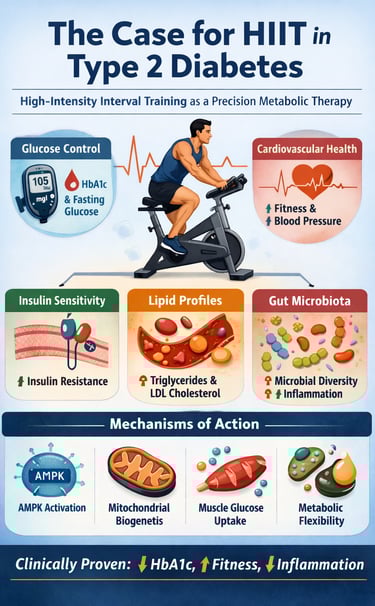
Type 2 diabetes is no longer viewed as a simple disorder of elevated blood sugar—it is now recognized as a complex disease of metabolic inflexibility, insulin resistance, chronic inflammation, and cardiovascular dysfunction. At the center of this dysfunction lies skeletal muscle, the body’s largest site of glucose disposal. Yet despite this understanding, exercise prescriptions for diabetes often remain conservative, time-intensive, and poorly adhered to. Emerging evidence suggests this approach may be outdated.
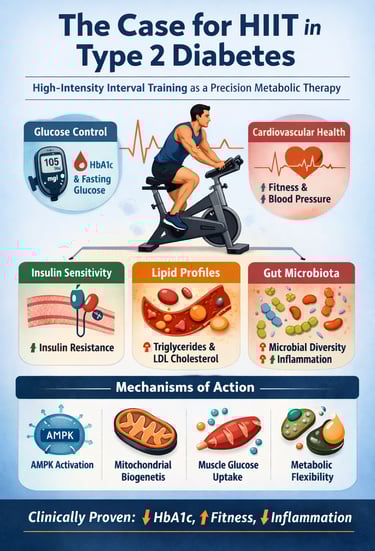
Over the past decade, high-intensity interval training (HIIT) has emerged as one of the most powerful non-pharmacologic interventions for improving metabolic health in people with type 2 diabetes and diabesity. Recent systematic reviews and meta-analyses demonstrate that HIIT produces clinically meaningful reductions in HbA1c, fasting glucose, insulin resistance, and atherogenic lipid profiles, often within 8–12 weeks and with substantially less time commitment than traditional moderate-intensity exercise (Feng et al., 2024; Al-Mhanna et al., 2025a). Importantly, these benefits extend beyond glycemic control to include improvements in cardiorespiratory fitness, endothelial function, blood pressure, and body composition—key determinants of cardiovascular risk in diabetes (Al-Mhanna et al., 2025b; Ko et al., 2025).
Even more compelling, emerging data reveal that HIIT favorably remodels the gut microbiota, increasing microbial diversity and reducing metabolic endotoxemia—an underappreciated driver of insulin resistance and systemic inflammation (Ribeiro et al., 2024). Mechanistically, HIIT activates AMP-activated protein kinase (AMPK), enhances mitochondrial biogenesis, improves skeletal muscle glucose uptake, and restores metabolic flexibility—addressing the root pathophysiology of type 2 diabetes rather than merely its symptoms.
Together, this growing body of evidence positions HIIT not as an extreme fitness trend, but as a precision metabolic therapy—one capable of transforming diabetes management when applied safely, progressively, and consistently
Clinical Pearls
1. The "GLUT4" Shortcut
HIIT stimulates the translocation of GLUT4 glucose transporters to the cell membrane through insulin-independent pathways (AMPK activation).
Think of HIIT as a "backdoor" into your cells. Even if your insulin isn't working well (insulin resistance), the sheer intensity of HIIT forces your muscles to open up and suck in blood sugar without needing a "key" from insulin.
2. Combatting the "Dawn Phenomenon"
High-intensity exercise can acutely increase hepatic glucose output due to catecholamine surges, potentially causing a temporary spike in post-exercise glycemia.
Don't panic if your blood sugar is slightly higher immediately after a hard workout. Your body is just releasing stored energy to fuel the effort. This "spike" is temporary and leads to much lower, more stable blood sugar levels for the next 24 to 48 hours.
3. The "Afterburn" (EPOC) Advantage
HIIT induces a significantly higher Excess Post-exercise Oxygen Consumption (EPOC) compared to steady-state cardio, extending the metabolic demand of the session.
With walking, you stop burning extra calories the moment you sit down. With HIIT, your metabolic engine stays "warm" for hours. You are essentially improving your diabetes even while you’re resting on the couch later that evening.
4. Preventing "The Lows" (Delayed Hypoglycemia)
Glycogen replenishment continues for 7–11 hours post-HIIT, which can lead to nocturnal hypoglycemia if medications aren't adjusted.
Because HIIT is so efficient at emptying your "sugar tanks," your body will be refilling them long after you finish. If you do HIIT in the evening, be extra careful with your bedtime blood sugar levels to make sure they don’t drop too low while you sleep.
5. Quality Over Quantity (The 80% Rule)
Maximal metabolic adaptations are achieved when exercise intervals reach ≥85% of VO₂peak, underscoring the primacy of intensity over total training volume.
You don’t need to spend an hour at the gym. In fact, 15 minutes where you actually feel "out of breath" is more effective for your A1c than 60 minutes of easy strolling. It’s about how hard you work, not how long you stay.igh-Intensity Interval Training for Type 2 Diabetes: A Science-Based Guide to Transforming Your Metabolic Health
Why HIIT Matters for Diabetes Management
If you're living with type 2 diabetes or struggling with diabesity (the intersection of diabetes and obesity), you've probably heard conflicting advice about exercise. Some sources recommend low-intensity walks; others tout high-intensity interval training. But what does the latest science actually say?
Recent systematic reviews and meta-analyses paint a compelling picture: high-intensity interval training (HIIT) isn't just another fitness trend. It's a scientifically validated approach that can meaningfully improve glucose metabolism, lipid profiles, and overall cardiometabolic health in people with type 2 diabetes.
What Is High-Intensity Interval Training (HIIT)?
Before diving into the research, let's clarify what we mean by high-intensity interval training. HIIT involves alternating short bursts of near-maximum effort exercise with recovery periods. Think 30 seconds of intense cycling followed by 90 seconds of easy pedaling—repeated several times.
This isn't traditional steady-state cardio. Instead of maintaining a moderate pace for 45 minutes, you might complete a HIIT session in just 15–20 minutes, yet achieve superior metabolic benefits.
The beauty of HIIT lies in how it challenges your body differently: it depletes muscle glucose stores rapidly, triggers robust hormonal responses, and stimulates profound metabolic adaptations that extend far beyond the workout itself.
Study 1: Comprehensive Effects on Glucose and Lipid Metabolism
Feng and colleagues (2024) conducted a rigorous systematic review and meta-analysis examining high-intensity intermittent exercise effects on glucose metabolism and lipid metabolism in type 2 diabetes patients. Published in Frontiers in Endocrinology, this landmark analysis synthesized data from multiple randomized controlled trials to provide robust evidence.
Key Takeaway: HIIT produced significant improvements in fasting glucose levels, HbA1c (a three-month average of blood sugar), and critical lipid markers including triglycerides and LDL cholesterol. These improvements occurred in relatively short timeframes—often within 8–12 weeks of consistent training.
Why This Matters: The Glucose Story
When you perform high-intensity interval exercise, your muscles contract with such force that they rapidly consume stored glucose (glycogen). This immediate depletion sends a powerful metabolic signal. Your body must become more efficient at managing blood glucose levels, and over time, your cells become more sensitive to insulin—the hormone responsible for glucose uptake.
For people with type 2 diabetes, where insulin resistance is the core problem, this effect is transformational. You're essentially retraining your body to better handle glucose.
Lipid Metabolism: Beyond the Scale
Equally important are improvements in lipid profiles. The study found that HIIT reduces triglyceride levels (blood fats linked to cardiovascular risk) and improves the cholesterol ratio. This is significant because type 2 diabetes patients typically have abnormal lipid metabolism, contributing to cardiovascular disease risk.
Study 2: HIIT vs. Moderate-Intensity Training—The Head-to-Head Comparison
Al-Mhanna, Poon, Franklin, and collaborators (2025) published a groundbreaking systematic review and meta-analysis comparing high-intensity interval training directly against moderate-intensity continuous training (MICT) in patients with diabesity. Their research, published in Diabetology & Metabolic Syndrome, offers crucial insights for anyone deciding which exercise approach to pursue.
Key Takeaway: While both HIIT and MICT improved cardiometabolic health markers, HIIT demonstrated superior effectiveness in reducing HbA1c, improving insulin sensitivity, and enhancing cardiovascular fitness—often in shorter time periods with smaller time commitments.
The Time-Efficiency Factor
One of HIIT's most appealing features is efficiency. Traditional advice recommends 150 minutes per week of moderate-intensity exercise. Yet HIIT achieves comparable or superior results in 75 minutes per week or less.
For people managing diabetes alongside work, family, and other commitments, this matters tremendously. Time barriers are one of the top reasons people abandon exercise programs. HIIT removes this excuse without sacrificing results.
Metabolic Advantages Beyond Exercise
The research suggests HIIT creates a larger afterburn effect (also called excess post-exercise oxygen consumption or EPOC). Your metabolic rate remains elevated for hours after exercise, continuing to burn calories and improve insulin sensitivity even while you rest.
Study 3: The Impact on Cardiometabolic Health in Diabesity
Diabesity—the coexistence of type 2 diabetes and obesity—presents unique challenges. These patients face compounded metabolic dysfunction, elevated cardiovascular risk, and complex treatment considerations. This is where Al-Mhanna and colleagues' comprehensive 2025 analysis in Diabetology & Metabolic Syndrome becomes invaluable.
Key Takeaway: In patients with diabesity, HIIT demonstrated substantial improvements in multiple domains: blood pressure, body composition (lean muscle preservation with fat loss), endotoxemia markers, and systemic inflammation—factors that often drive complications in this population.
The Inflammation Connection
Chronic low-grade inflammation is a hallmark of both obesity and type 2 diabetes. HIIT appears uniquely capable of reducing inflammatory markers like C-reactive protein and cytokines, essentially cooling down the inflammatory fires that damage blood vessels and impair metabolic function.
Cardiovascular Benefits Beyond Diabetes
While glucose control is critical, people with type 2 diabetes face disproportionate cardiovascular disease risk. The good news: HIIT improves arterial function, endothelial function, and cardiac output. These improvements translate to real-world benefits: better exercise capacity, reduced heart attack and stroke risk, and improved longevity.
Study 4: The Gut Microbiota Connection and Training Adaptations
Ribeiro and colleagues (2024) published a fascinating investigation in iScience exploring the relationship between high-intensity interval training, gut microbiota diversity, and metabolic outcomes. This study revealed something remarkable: stopping HIIT reversed many benefits, while retraining restored them.
Key Takeaway: HIIT increases gut microbiota diversity, and this diversity appears critical for maintaining metabolic improvements. Discontinuation of training led to dysbiosis (unhealthy microbial imbalance) and a return toward obesity-associated microbiota patterns, whereas retraining restored beneficial bacteria and metabolic health.
Why Your Gut Matters for Diabetes Control
Your gut microbiota—the trillions of bacteria in your digestive system—influence glucose metabolism, inflammation levels, metabolic endotoxemia, and even your hunger hormones. A diverse microbiota produces beneficial compounds like short-chain fatty acids that improve insulin sensitivity and reduce intestinal permeability (leaky gut).
HIIT appears to be a potent tool for cultivating this microbial diversity, creating a positive feedback loop: better exercise tolerance supports more consistent training, which maintains microbiota diversity, which supports better metabolic control.
The Importance of Consistency
This study underscores a crucial lesson: metabolic benefits require ongoing training. This isn't a critique of HIIT but a reality of human physiology. However, the good news is that retraining quickly restores benefits, suggesting that even interrupted programs can recover their effects.
Study 5: HIIT for Cardiovascular Prevention—A Narrative Overview
Ko, So, and Park (2025) published a comprehensive narrative review in the Journal of Cardiovascular Development and Disease synthesizing evidence on HIIT's cardiovascular benefits. While broader in scope than disease-specific meta-analyses, it provides crucial context for understanding HIIT's role in disease prevention.
Key Takeaway: HIIT improves virtually every aspect of cardiovascular health: exercise capacity, vascular endothelial function, left ventricular function, heart rate variability, and arterial stiffness. For people with type 2 diabetes facing elevated cardiovascular mortality, these improvements are literally life-saving.
From Disease Management to Prevention
The progression from managing diabetes to preventing complications represents a paradigm shift. Rather than simply controlling blood sugar, we're talking about reversing the underlying vascular dysfunction and cardiac remodeling that accompany prolonged hyperglycemia.
HIIT accomplishes this through multiple mechanisms: improved coronary perfusion, enhanced endothelial nitric oxide production, reduced oxidative stress, and improved parasympathetic tone (the calming branch of your nervous system).
The Science Behind HIIT's Metabolic Magic
Mechanism 1: Enhanced Insulin Sensitivity
HIIT works through the AMPK pathway, a cellular energy sensor that, when activated, triggers improvements in glucose uptake and mitochondrial biogenesis (creating new energy-producing structures within cells). This creates lasting improvements in how efficiently your cells handle glucose.
Mechanism 2: Mitochondrial Adaptation
High-intensity exercise creates an energetic stress that forces your muscles to build more and better mitochondria. More mitochondria means greater aerobic capacity, improved glucose oxidation, and better metabolic flexibility (the ability to switch between burning glucose and fat efficiently).
Mechanism 3: Hormonal Optimization
HIIT produces acute spikes in hormones like epinephrine and growth hormone, which facilitate fat mobilization. Chronically, regular HIIT improves cortisol patterns, reduces insulin resistance, and optimizes thyroid function—all critical for metabolic health.
Mechanism 4: Skeletal Muscle Remodeling
HIIT stimulates shifts in muscle fiber composition toward more oxidative fibers and increases capillarization (blood vessel density). This improves oxygen delivery and glucose extraction, making muscles more efficient at utilizing glucose.
Comparing HIIT to Other Exercise Approaches
While the research strongly supports HIIT, it's worth understanding how it fits into a comprehensive approach:
HIIT vs. Moderate-Intensity Continuous Training: HIIT typically produces superior insulin sensitivity improvements and requires less time, but some people find continuous training more sustainable or enjoyable.
HIIT vs. Resistance Training: Strength training excels at building lean muscle mass and glucose storage capacity. Combining HIIT with resistance work may be optimal.
HIIT vs. Walking: Regular walking is better than sedentary living, but the research suggests HIIT produces more dramatic improvements in glycemic control and cardiovascular function.
The Optimal Approach: The best exercise program is one that combines modalities—mixing HIIT sessions with resistance training and moderate-intensity movement, tailored to your preferences and capacity.
Practical Implementation: HIIT for Type 2 Diabetes
Getting Started Safely
If you have type 2 diabetes, particularly if you take insulin or insulin secretagogues (medications that stimulate insulin release), consult your healthcare provider before starting HIIT. You may need to adjust medications to prevent hypoglycemia (low blood sugar).
CGM Users:
HIIT may cause rapid glucose fluctuations. Patients should monitor trend arrows, avoid starting sessions with glucose <100 mg/dL without carbohydrate access, and watch for delayed post-exercise hypoglycemia, especially overnight. Medication adjustments may be required.Autonomic Neuropathy:
Blunted heart rate and blood pressure responses increase risk. Use perceived exertion rather than heart rate targets, begin conservatively, and favor supervised initiation.Ischemic Heart Disease:
Given the risk of silent ischemia in diabetes, patients with known cardiovascular disease or multiple risk factors should undergo appropriate cardiac evaluation before HIIT. Gradual progression is essential.
The "Glycemic Window": Fueling for HIIT Success
High-intensity interval training (HIIT) creates a unique nutritional opportunity. Because HIIT rapidly depletes skeletal muscle glycogen (stored glucose), it triggers a state of heightened insulin sensitivity that lasts for hours after your session.
The Post-Workout Priority: Within 30 to 60 minutes post-exercise, your muscles are primed to "sponge up" glucose to replenish stores. This is the Glycemic Window. Consuming a combination of high-quality protein and complex carbohydrates during this time ensures that glucose is directed toward muscle recovery rather than remaining in the bloodstream or being stored as fat.
Preventing Hypoglycemia: For those on insulin or certain medications, this increased glucose uptake can lead to delayed hypoglycemia. Monitoring blood sugar levels and pairing your HIIT sessions with a balanced post-workout snack—such as Greek yogurt with berries or a small turkey wrap—is essential to stabilize levels.
Metabolic Flexibility: Over time, this synergy between HIIT and proper timing of nutrients improves your "metabolic flexibility," allowing your body to switch more efficiently between burning carbs for intensity and fats for recovery.
Sample HIIT Protocols
Beginner Protocol (8 weeks)
Warm-up: 3 minutes easy effort
Work intervals: 15 seconds high intensity, 60 seconds recovery (8 rounds)
Cool-down: 2 minutes easy effort
Frequency: 2–3 times per week
Intermediate Protocol (weeks 9+)
Warm-up: 3 minutes easy
Work intervals: 30 seconds high intensity, 60 seconds recovery (8–10 rounds)
Cool-down: 2 minutes easy
Frequency: 3–4 times per week
Advanced Protocol
Multiple intervals: 40 seconds high intensity, 40 seconds recovery (10 rounds)
Frequency: 4 times per week with adequate recovery
Modality Options
You can perform HIIT on virtually any equipment: cycling, running, rowing, swimming, or even bodyweight circuits. Choose something you enjoy—adherence is the ultimate success factor.
Key Takeaways: What the Research Tells Us
HIIT significantly improves type 2 diabetes markers: The evidence for HIIT's effect on HbA1c, fasting glucose, and insulin sensitivity is robust and consistent across multiple systematic reviews.
Lipid profiles improve substantially: Beyond glucose control, HIIT improves triglycerides and cholesterol ratios, reducing cardiovascular risk.
HIIT outperforms moderate-intensity training in many domains: While both are beneficial, HIIT typically produces superior insulin sensitivity improvements and cardiovascular adaptations in less time.
Time efficiency is real: HIIT achieves results comparable to traditional moderate-intensity exercise in roughly half the time.
Gut health matters: HIIT's benefits for microbiota diversity represent an underappreciated mechanism supporting metabolic health.
Consistency is essential: Stopping HIIT reverses benefits, emphasizing the importance of long-term adherence.
Cardiovascular protection is substantial: HIIT improves multiple aspects of cardiovascular function critical for people with type 2 diabetes facing elevated disease risk.
Frequently Asked Questions (FAQs)
Q: Is HIIT safe for people taking insulin? A: HIIT is safe when properly managed, but requires medical supervision. You may need to adjust insulin dosing to prevent hypoglycemia. Always consult your doctor before starting.
Q: How quickly will I see improvements in my blood sugar? A: Many studies show improvements in HbA1c within 8–12 weeks, with some improvements in insulin sensitivity visible within days to weeks of starting.
Q: Can I do HIIT if I have joint problems? A: Many HIIT protocols can be modified using low-impact modalities like cycling or rowing. Work with a qualified trainer to adapt exercises to your needs.
Q: How much HIIT do I need? A: Research suggests 2–4 sessions per week of 15–20 minutes produces meaningful benefits. More isn't always better; consistency and adequate recovery matter tremendously.
Q: Will HIIT help me lose weight? A: While HIIT can support weight loss through improved metabolic rate and appetite regulation, sustainable weight loss requires combined approaches: HIIT, resistance training, moderate-intensity movement, and nutritional changes.
Q: Is HIIT better than strength training for diabetes? A: Both are valuable. HIIT excels at improving cardiovascular fitness and insulin sensitivity; strength training excels at building lean muscle mass and glucose storage capacity. Combining both is likely optimal.
Q: Can I do HIIT every day? A: No. High-intensity exercise requires recovery. Most research supports 2–4 sessions per week, with adequate rest between sessions to prevent overtraining.
Moving Forward: Your Action Plan
Step 1: Consult Your Healthcare Team
Discuss HIIT with your doctor, particularly if you take diabetes medications. Review your current fitness level and any contraindications.
Step 2: Choose Your Modality
Select an exercise form you genuinely enjoy—cycling, running, rowing, swimming, or circuit training. You're more likely to stick with something you find engaging.
Step 3: Start Conservatively
Begin with beginner protocols and progress gradually over weeks and months. Rapid progression increases injury risk without improving results.
Step 4: Monitor Your Response
Track blood glucose readings, particularly around exercise times, to understand your individual response. Keep a brief exercise log noting how you feel and any patterns you notice.
Step 5: Build a Sustainable Practice
Integrate HIIT into a broader lifestyle approach that includes balanced nutrition, stress management, adequate sleep, and other moderate-intensity movement. HIIT is powerful but not a standalone solution.
Step 6: Consider Professional Guidance
Working with a certified diabetes educator, personal trainer, or exercise physiologist familiar with diabetes can accelerate progress and ensure safety.
Author’s Note
This article was written to bridge the gap between exercise science and clinical diabetes care. As a physician, I routinely encounter patients with type 2 diabetes who are overwhelmed by medication escalation yet under-informed about the therapeutic power of targeted physical activity. High-intensity interval training (HIIT) is often dismissed as unsafe or unsuitable for metabolic disease—an assumption not supported by contemporary evidence.
The research synthesized here draws primarily from recent systematic reviews, meta-analyses, and mechanistic studies published between 2024 and 2025. Wherever possible, emphasis has been placed on clinically meaningful outcomes—HbA1c, insulin sensitivity, lipid profiles, cardiovascular function, and inflammatory markers—rather than surrogate fitness metrics alone. Importantly, this article does not advocate HIIT as a replacement for medical therapy, but as a potent adjunct capable of addressing the root pathophysiology of type 2 diabetes when applied judiciously and safely.
Exercise is not merely lifestyle advice; it is metabolic medicine. When prescribed with the same rigor as pharmacotherapy, HIIT has the potential to transform diabetes management from glucose control to true cardiometabolic risk reduction.
Medical Disclaimer
The information in this article, including the research findings, is for educational purposes only and does not constitute medical advice, diagnosis, or treatment. Before starting any high intensity exercise program, you must consult with a qualified healthcare professional, especially if you have existing health conditions (such as cardiovascular disease, uncontrolled hypertension, or advanced metabolic disease). Exercise carries inherent risks, and you assume full responsibility for your actions. This article does not establish a doctor-patient relationship.
Related Articles
How to Build a Disease-Proof Body: Master Calories, Exercise & Longevity | DR T S DIDWAL
How to Maximize Muscle Growth: Evidence-Based Strength Training Strategies | DR T S DIDWAL
Lower Blood Pressure Naturally: Evidence-Based Exercise Guide for Metabolic Syndrome | DR T S DIDWAL
Exercise vs. Diet Alone: Which is Best for Body Composition? | DR T S DIDWAL
Movement Snacks: How VILPA Delivers Max Health Benefits in Minutes | DR T S DIDWAL
References
Al-Mhanna, S. B., Franklin, B. A., Tarnopolsky, M. A., Hawley, J. A., Jakicic, J. M., Stamatakis, E., Little, J. P., Pescatello, L. T., Riebe, D., Thompson, W. R., Skinner, J. S., Colberg, S. R., Metsios, G. S., Douda, H. T., Omar, N., & Alghannam, A. F. (2025). Impact of high-intensity interval training on cardiometabolic health in patients with diabesity: A systematic review and meta-analysis of randomized controlled trials. Diabetology & Metabolic Syndrome, 17(1), Article 19XXX. https://doi.org/10.1186/s13098-025-01974-4
Al-Mhanna, S. B., Poon, E. T. C., Franklin, B. A., & et al. (2025). Comparative effectiveness of high-intensity interval training and moderate-intensity continuous training on cardiometabolic health in patients with diabesity: A systematic review and meta-analysis of randomized controlled trials. Diabetology & Metabolic Syndrome, 17, 331. https://doi.org/10.1186/s13098-025-01909-z
Feng, J., Zhang, Q., Chen, B., Chen, J., Wang, W., Hu, Y., Yu, J., & Huang, H. (2024). Effects of high-intensity intermittent exercise on glucose and lipid metabolism in type 2 diabetes patients: A systematic review and meta-analysis. Frontiers in Endocrinology, 15, 1360998. https://doi.org/10.3389/fendo.2024.1360998
Ko, J.-M., So, W.-Y., & Park, S.-E. (2025). Narrative review of high-intensity interval training: Positive impacts on cardiovascular health and disease prevention. Journal of Cardiovascular Development and Disease, 12(4), 158. https://doi.org/10.3390/jcdd12040158
Ribeiro, F. M., Petriz, B., Anderson, M., Assis, V., Rosa, T. D. S., Correa, H. D. L., Oliveira, N. C. D., Passos, L., Fonseca, A., Brito, L. A., Silva, O., Castro, A., & Franco, O. L. (2024). Discontinuation of HIIT restores diab obesity while retraining increases gut microbiota diversity. iScience, 27(8), 110365. https://doi.org/10.1016/j.isci.2024.110365