Improving VO₂ Max Through Exercise: Evidence-Based Strategies for Cardiovascular Health and Longevity
Implement the optimal weekly program for higher VO2 Max. We detail the power of high-intensity aerobic work and metabolic resistance training.
EXERCISE
Dr. T.S. Didwal, M.D.
1/23/202615 min read
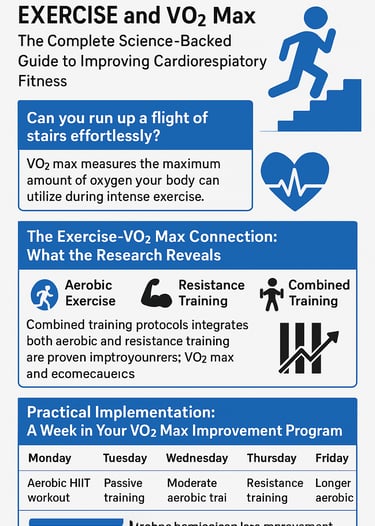
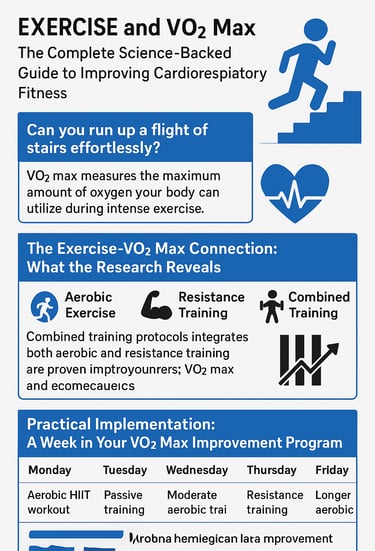
If cardiorespiratory fitness were a drug, it would be considered one of the most powerful longevity interventions ever discovered. At the center of this fitness–health relationship lies VO₂ max, the maximal capacity of the body to transport and utilize oxygen during intense exercise. Far more than a marker of athletic performance, VO₂ max is now recognized as a robust, independent predictor of all-cause mortality, cardiovascular disease risk, and metabolic health (Abdalla et al., 2025). Individuals with higher VO₂ max levels live longer, function better with age, and exhibit dramatically lower rates of cardiometabolic disease.
Yet despite its clinical significance, VO₂ max remains widely misunderstood outside elite sports science. Many still believe improving aerobic capacity requires endless hours of steady-state cardio, or that resistance training plays little role in cardiovascular fitness. Contemporary research decisively challenges these assumptions. Evidence from randomized trials and meta-analyses now demonstrates that exercise intensity, not duration, is the primary driver of VO₂ max improvement, with high-intensity interval training (HIIT) producing superior adaptations compared with moderate-intensity continuous exercise (Crowley et al., 2022). Even more compelling, combined aerobic and resistance training consistently outperforms single-modality programs across young adults, older populations, and individuals with excess body weight (Kumari et al., 2025; Azimkhani et al., 2025).
Resistance training itself has emerged as a potent cardiovascular stimulus when designed to induce local metabolic stress, activating mitochondrial biogenesis and systemic oxygen-utilization pathways traditionally attributed to aerobic exercise alone (Curovic, 2025). Importantly, these benefits extend beyond healthy individuals—VO₂ max improvements remain achievable and safe even in older adults and patients with coronary artery disease when exercise is properly prescribed (Azimkhani et al., 2025; Nazir et al., 2025).
Understanding how exercise modality, intensity, and physiology converge to improve VO₂ max is no longer optional—it is central to modern preventive medicine, exercise prescription, and healthy aging.
Clinical Pearls
1. The Optimal Prescription is Combined Training 🥇
Based on the research (Kumari et al., 2025; Azimkhani et al., 2025), the single most effective strategy for maximizing VO 2 Max is combined aerobic and resistance training, rather than either modality alone.
Clinical Pearl: Combined programs offer synergistic benefits. Aerobic training improves oxygen delivery (cardiovascular adaptations like increased stroke volume), while resistance training, especially when inducing metabolic stress, enhances oxygen utilization at the muscular level (mitochondrial biogenesis and enzyme activity). This dual approach yields superior, comprehensive cardiorespiratory fitness gains across diverse populations, including the overweight and older adults.
2. Exercise Intensity Trumps Duration for VO2 Max⚡
The effect of exercise intensity is the most critical variable determining cardiorespiratory fitness improvement (Crowley et al., 2022).
Clinical Pearl: To maximize VO2 max gains, prioritize High-Intensity Interval Training (HIIT) (short bursts of near-maximal effort) over long, slow, steady-state exercise. Even a modest number of high-intensity sessions (2-3 per week) generates superior cardiovascular adaptations by activating powerful mechanisms like mitochondrial biogenesis. Prescription should focus on progressive intensity overload, not just volume overload.
3. Resistance Training is a Cardiovascular Stimulus, Not Just Strength Training 💪
Resistance exercise, when performed strategically, contributes meaningfully to VO2 max improvement, acting as a direct cardiovascular stimulus (Curovic, 2025; Azimkhani et al., 2025).
Clinical Pearl: Design resistance protocols to create local metabolic stress (the "burn"). This is achieved by using moderate loads (12-20 repetitions) and short rest periods (l e, 60 seconds). This stress triggers systemic adaptive responses that enhance cardiovascular function and oxygen utilization, explaining its vital role in a comprehensive VO2 max program.
4. Cardiorespiratory Fitness is Inversely Correlated with Mortality Risk
VO2 max is not merely a fitness metric; it is a powerful, independent clinical marker inversely correlated with all-cause mortality and disease burden (Abdalla et al., 2025).
Clinical Pearl: Higher VO2 max translates directly into enhanced longevity and reduced risk of cardiovascular diseases and metabolic disorders. Assessing and tracking VO2 max provides valuable prognostic information in clinical settings, making its improvement a health imperative, not just a performance goal.
5. Age and Cardiac Disease Do Not Preclude Significant Improvement
Substantial VO2 max improvements are achievable even in older adults and safely managed in medically complex populations (Azimkhani et al., 2025; Nazir et al., 2025).
Clinical Pearl: Do not accept cardiovascular decline as inevitable in older adults; they respond robustly to combined training. Furthermore, resistance exercise is safe and effective for improving quality of life and function in patients with coronary artery disease when appropriately prescribed and supervised, challenging historical concerns about this modality in cardiac rehabilitation.
Exercise and VO2 Max: The Complete Science-Backed Guide to Improving Cardiorespiratory Fitness
Understanding VO2 Max: The Foundation of Cardiovascular Fitness
VO2 max, also known as maximal oxygen uptake, represents your body's aerobic capacity—essentially, how efficiently your heart, lungs, and muscles work together to deliver and utilize oxygen. This measurement is considered the gold standard for assessing cardiovascular fitness and has become increasingly important in clinical cardiology for evaluating patient risk and designing personalized exercise training programs.
According to Abdalla et al. (2025), VO2 max serves multiple critical functions in clinical practice. Beyond being a simple fitness metric, VO2 max assessment provides valuable insights into overall cardiovascular health, metabolic function, and longevity. The research indicates that VO2 max levels are inversely correlated with mortality risk—meaning higher cardiorespiratory fitness translates directly into longer lifespan and reduced disease burden (Abdalla et al., 2025). However, despite its clinical importance, significant evidence gaps remain regarding optimal exercise prescription strategies for maximizing VO2 max improvements across diverse populations.
The practical implications are striking: individuals with higher VO2 max levels demonstrate enhanced resistance to cardiovascular diseases, metabolic disorders, and age-related functional decline. This is why understanding and implementing effective exercise training becomes not just a fitness goal, but a health imperative.
The Exercise-VO2 Max Connection: What the Research Reveals
Combined Aerobic and Resistance Training: The Synergistic Approach
One of the most exciting findings in recent exercise science research concerns the power of combined training protocols that integrate both aerobic exercise and resistance training. Kumari et al. (2025) conducted a rigorous randomized controlled trial examining the effect of combined aerobic and resistance training on VO2 max and body mass index (BMI) in an overweight collegiate population.
Study Overview and Key Findings:
The Kumari et al. (2025) investigation compared groups engaging in combined training versus control conditions, providing compelling evidence for the superiority of integrated exercise prescription. The study found that combined aerobic and resistance training produced significant improvements in VO2 max while simultaneously reducing body weight and BMI—a critical advantage for the overweight demographic, where weight loss itself can impair performance if not carefully managed through proper exercise training (Kumari et al., 2025).
Key Takeaways from Kumari et al. (2025):
Combined training programs produced synergistic effects superior to single-modality exercise
Participants experienced simultaneous VO2 max improvements and body composition changes
The overweight collegiate population showed particularly robust responses to combined training
Structured resistance training complemented aerobic exercise by preserving muscle mass during cardiorespiratory improvements
This research directly addresses a common challenge in fitness: many people fear that improving cardiovascular fitness requires sacrificing muscle mass. The Kumari findings demonstrate that combined exercise programs solve this dilemma elegantly.
The Aging Population: Resistance, Aerobic, and Combined Training Effects
A comprehensive systematic review and meta-analysis by Azimkhani et al. (2025) examined the effect of aerobic, resistance, and combined exercise training on cardiorespiratory fitness in healthy adults aged 60 years and older. This research becomes increasingly vital as global populations age and the importance of maintaining cardiovascular health in later life grows.
Study Overview and Key Findings:
The Azimkhani et al. (2025) meta-analysis synthesized data from multiple randomized controlled trials to determine which exercise training modalities prove most effective for older adults. The findings challenge conventional wisdom that aerobic training alone optimizes VO2 max improvements.
Key Takeaways from Azimkhani et al. (2025):
Aerobic exercise training produced significant improvements in cardiorespiratory fitness, increasing VO2 max by meaningful margins
Resistance training demonstrated unexpected effectiveness in improving cardiovascular fitness, not just strength
Combined training protocols consistently delivered superior outcomes compared to single-modality approaches (Azimkhani et al., 2025)
Older adults (60+ years) responded robustly to all three exercise training types, debunking age-related limitations
The evidence supported combined training as the optimal strategy for maximizing cardiorespiratory fitness improvements
For aging populations, particularly, these findings carry profound implications. Rather than accepting cardiovascular decline as inevitable, older adults can expect substantial VO2 max improvements through appropriately designed exercise programs.
Exercise Training Intensity: The Critical Variable
While exercise type matters, how hard you work might matter more. Crowley et al. (2022) conducted an overview of systematic reviews and meta-analyses specifically examining the effect of exercise training intensity on VO2 max in healthy adults.
Study Overview and Key Findings:
The Crowley et al. (2022) analysis reveals that exercise intensity represents perhaps the single most important variable determining VO2 max improvements. High-intensity training protocols consistently outperformed moderate-intensity approaches in generating cardiorespiratory fitness gains (Crowley et al., 2022).
Key Takeaways from Crowley et al. (2022):
High-intensity exercise training produces the largest VO2 max improvements across populations
High-intensity interval training (HIIT) delivers superior results compared to steady-state aerobic exercise
Even modest increases in exercise training intensity generate meaningful improvements in cardiovascular fitness
Intensity-based prescription should form the foundation of VO2 max improvement programs
The dose-response relationship between exercise intensity and VO2 max remains robust even in individuals with baseline limitations
This research democratizes fitness improvement. You don't need to exercise for hours daily—strategic intensity matters far more than duration alone.
Resistance Exercise and Metabolic Stress: Beyond Strength Gains
An innovative perspective on resistance training emerges from Curovic (2025), who explores the role of resistance exercise-induced local metabolic stress in mediating systemic health and functional adaptations. This research asks whether condensed training volume with strategic metabolic stress might unlock health benefits exceeding what time-efficiency alone would suggest.
Study Overview and Key Findings:
Curovic (2025) examines the mechanisms through which resistance exercise generates systemic adaptations far beyond localized muscle hypertrophy. The research highlights how metabolic stress created during resistance training—essentially the cellular "burn" experienced during high-repetition sets—triggers profound physiological adaptations (Curovic, 2025).
Key Takeaways from Curovic (2025):
Resistance exercise-induced metabolic stress activates systemic adaptive responses
Local metabolic stress stimulates improvements in cardiovascular function and oxygen utilization
Condensed training protocols emphasizing metabolic stress may provide exceptional benefits relative to time investment
Resistance training shouldn't be viewed merely as a strength modality but as a comprehensive cardiovascular stimulus
This mechanism explains why combined training often outperforms single-modality approaches
These findings suggest that time-constrained individuals needn't abandon VO2 max improvements—strategically designed resistance protocols can contribute meaningfully to cardiorespiratory fitness.
Resistance Training for Clinical Populations: The Safety Advantage
Finally, Nazir et al. (2025) present critical evidence regarding resistance exercise as a safe modality for quality of life improvement in patients with coronary artery disease. This research is essential because it extends resistance training benefits beyond healthy populations to medically complex individuals.
Study Overview and Key Findings:
The Nazir et al. (2025) review demonstrates that contrary to historical concerns, resistance exercise presents a safe, effective approach for cardiac patients seeking cardiovascular fitness improvements and enhanced quality of life (Nazir et al., 2025).
Key Takeaways from Nazir et al. (2025):
Resistance training is safe for coronary artery disease patients when appropriately prescribed
Resistance exercise generates meaningful quality of life improvements in cardiac populations
Cardiac patients experience cardiovascular function improvements through resistance training
Structured resistance protocols should be incorporated into cardiac rehabilitation programs
Safety monitoring and proper exercise prescription make resistance training feasible across disease severity levels
Designing Your Optimal VO2 Max Improvement Program
The Case for Combined Training
Based on converging evidence across multiple studies, combined exercise programs integrating aerobic training and resistance exercise emerge as the optimal strategy for VO2 max improvements. This approach offers several advantages:
Synergistic Physiological Adaptations: When properly designed, combined programs stimulate complementary adaptations. Aerobic training enhances oxygen delivery through cardiovascular improvements, while resistance exercise improves oxygen utilization at the muscular level and creates metabolic stress that triggers systemic adaptations.
Body Composition Management: As demonstrated in the Kumari et al. (2025) research, combined training simultaneously improves VO2 max while managing body weight, critical for overweight populations where VO2 max improvements alone might be undermined by weight gain.
Age-Appropriate Effectiveness: The Azimkhani et al. (2025) meta-analysis confirms that older adults benefit substantially from combined exercise protocols, making this approach viable across the lifespan.
Implementing Exercise Intensity Strategically
Crowley et al. (2022) evidence emphasizes that exercise intensity drives VO2 max improvements. Practically, this means:
High-Intensity Interval Training (HIIT): Incorporating high-intensity intervals where you work near maximal capacity for short bursts followed by recovery periods generates superior cardiovascular adaptations compared to moderate-intensity steady-state work alone. Even 2-3 weekly HIIT sessions produce measurable VO2 max improvements.
Intensity Progression: Rather than simply exercising longer, progressively challenging your cardiovascular system through increased training intensity ensures continued VO2 max improvements and prevents adaptation plateaus.
Periodization: Varying exercise intensity across training weeks—cycling between higher-intensity days and moderate-intensity recovery sessions—optimizes adaptations while managing fatigue and injury risk.
Leveraging Metabolic Stress in Resistance Training
Curovic (2025) research suggests that resistance training designed to create substantial metabolic stress contributes meaningfully to VO2 max improvements. Implementation strategies include:
Higher Repetition Ranges: Rather than always emphasizing heavy weight with low repetitions, incorporating sessions with moderate loads and higher repetitions (12-20 reps) creates metabolic stress that drives systemic adaptations.
Shorter Rest Periods: Reducing rest intervals between resistance sets maintains elevated metabolic stress and cardiovascular demand, essentially turning strength training into a cardiovascular stimulus.
Compound Movement Emphasis: Multi-joint exercises like squats, deadlifts, and rowing movements create greater metabolic stress and cardiovascular demand than isolated movements.
Population-Specific Considerations
For Overweight Individuals: Kumari et al. (2025) evidence supports combined training with careful exercise prescription balancing cardiovascular improvements with sustainable weight management. Progress-tracking should emphasize fitness metrics alongside weight, preventing discouragement from slower weight loss during VO2 max improvements.
For Older Adults: Azimkhani et al. (2025) demonstrates that age alone shouldn't limit VO2 max improvement expectations. Combined programs with appropriate progression and recovery prove both safe and highly effective, supporting continued independence and longevity.
For Cardiac Patients: Nazir et al. (2025) evidence validates resistance exercise as a safe component of cardiac rehabilitation and disease management. Medical supervision during exercise prescription and initial training sessions ensures safety while enabling meaningful quality of life improvements.
The Science of VO2 Max Improvement: Understanding the Physiology
VO2 max improvements result from adaptations across three critical systems:
Cardiovascular Adaptations: Aerobic exercise training stimulates cardiac hypertrophy, increased stroke volume, and enhanced blood vessel density. These changes improve oxygen delivery to working muscles. The heart essentially becomes a more efficient pump, circulating more oxygen-rich blood with each beat.
Mitochondrial Adaptations: Exercise training, particularly high-intensity exercise, triggers mitochondrial biogenesis—the creation of new mitochondria within muscle cells. Since mitochondria are essentially cellular power plants responsible for oxygen utilization, more mitochondria directly increase muscle oxygen extraction capacity.
Metabolic Enzyme Changes: Exercise training increases the activity of oxidative enzymes responsible for aerobic metabolism. These biochemical adaptations enhance muscle cells' ability to extract oxygen from circulating blood and convert it into usable energy.
Hemoglobin and Oxygen Carrying Capacity: While less dramatic than cardiovascular adaptations, exercise training can increase red blood cell production and hemoglobin concentration, marginally enhancing oxygen carrying capacity.
The beauty of combined training becomes apparent when considering these mechanisms. Aerobic training optimizes delivery systems, while resistance exercise and its induced metabolic stress enhance utilization machinery. Together, they create comprehensive cardiorespiratory fitness improvements.
Practical Implementation: A Week in Your VO2 Max Improvement Program
Here's how a combined training week might look, incorporating evidence-based principles:
Monday - Aerobic High-Intensity Interval Training: 5-minute warm-up, 8 × (3 minutes near maximal effort, 2 minutes easy recovery), 5-minute cool-down. Total time: 35 minutes.
Tuesday - Resistance Training with Metabolic Stress: Full-body session emphasizing compound movements with 12-15 repetitions and 60-second rest intervals between sets. Include squats, deadlifts, rows, and presses. Total duration: 45 minutes.
Wednesday - Moderate Aerobic Training: 30-45 minutes of steady-state aerobic activity (running, cycling, swimming) at conversational intensity
.
Thursday - Resistance Training (Lower Body Focus): Emphasis on lower-body compounds with progressive intensity and strategic metabolic stress through reduced rest periods.
Friday - HIIT and Core Work: Shorter high-intensity interval session combined with core strengthening.
Saturday - Longer Aerobic Session: 60+ minutes of lower-intensity aerobic activity promoting aerobic base adaptations.
Sunday - Rest or Active Recovery: Light walking, stretching, or mobility work.
This structure incorporates high-intensity exercise stimulus, resistance training with metabolic stress emphasis, and adequate recovery—the formula supported by converging research evidence.
Addressing Common VO2 Max Improvement Questions
FAQ: How Long Before I See VO2 Max Improvements?
Research indicates measurable VO2 max improvements typically emerge within 3-4 weeks of consistent exercise training, with more substantial gains appearing after 8-12 weeks. However, individual response rates vary based on training age, genetics, and exercise program compliance.
FAQ: Can VO2 Max Improvement Happen at Any Age?
Emphatically yes. Azimkhani et al. (2025) demonstrate robust VO2 max improvements across healthy adults 60+ years old. While aging may reduce maximum achievable VO2 max, the capacity for improvement persists throughout life.
FAQ: Is High-Intensity Exercise Safe for Everyone?
While high-intensity exercise drives superior VO2 max improvements per Crowley et al. (2022), individuals with medical conditions—particularly cardiac disease—require medical clearance and potentially supervised initiation. Nazir et al. (2025) evidence suggests even cardiac patients can safely engage in appropriately prescribed resistance training, but medical supervision remains essential.
FAQ: Can Resistance Training Alone Improve VO2 Max?
While Azimkhani et al. (2025) confirms resistance training produces meaningful cardiorespiratory fitness improvements, combined training outperforms single-modality approaches. Resistance exercise contributes via metabolic stress and systemic adaptations, but optimal outcomes require aerobic training integration.
FAQ: How Often Should I Do HIIT Workouts?
Most evidence supports 2-3 high-intensity interval training sessions weekly. More frequent HIIT risks overtraining and inadequate recovery. The Crowley et al. (2022) analysis suggests this frequency optimizes VO2 max improvements while maintaining sustainability.
FAQ: Can I Improve VO2 Max With Limited Time?
Yes. Curovic (2025) suggests strategically designed resistance training with metabolic stress emphasis can deliver significant adaptations relative to time investment. Additionally, high-intensity interval training generates superior VO2 max improvements per minute compared to steady-state aerobic work.
FAQ: Should My VO2 Max Improvement Program Change Over Time?
Absolutely. Progressive overload through gradually increasing exercise intensity, complexity, or volume prevents adaptation plateaus. Additionally, periodization—cycling through different exercise training stimuli—prevents boredom and overuse injuries while maintaining improvement trajectories.
Key Takeaways: Your VO2 Max Improvement Action Items
Embrace Combined Training: Evidence overwhelmingly supports combined aerobic and resistance training programs over single-modality approaches for maximizing VO2 max improvements.
Prioritize Exercise Intensity: High-intensity exercise training, particularly HIIT, generates superior cardiorespiratory fitness gains compared to moderate-intensity protocols.
Leverage Metabolic Stress: Design resistance training to create metabolic stress through moderate loads, higher repetitions, and shortened rest periods—turning strength work into a cardiovascular stimulus.
Age Is No Barrier: Robust evidence confirms that older adults achieve substantial VO2 max improvements through appropriately prescribed combined exercise programs.
Medical Clearance Matters: While exercise training benefits span populations, individuals with medical conditions should obtain professional guidance before initiating new exercise programs, particularly high-intensity protocols.
Consistency Trumps Perfection: Modest, sustainable exercise consistency outperforms sporadic intense efforts. Building adherence through enjoyable training modalities ensures long-term cardiorespiratory fitness improvements.
Progressive Adaptation: Continuously challenging your cardiovascular and muscular systems through progressive exercise intensity or complexity prevents plateaus and maintains improvement trajectories.
Track Your Progress: Regular VO2 max assessment through lab testing or fitness tracker estimates provides objective feedback and motivation for continued adherence.
Author’s Note
This article was written to bridge the persistent gap between exercise science, clinical medicine, and real-world application. While VO₂ max has long been recognized as a cornerstone of athletic performance, its far greater importance lies in its role as a powerful, independent predictor of longevity, cardiovascular health, and metabolic resilience. Despite this, VO₂ max remains underutilized and frequently misunderstood in preventive medicine and public health discourse.
The content presented here is grounded exclusively in peer-reviewed evidence, with particular emphasis on randomized controlled trials, systematic reviews, and meta-analyses published in leading journals. Wherever possible, mechanistic physiology has been integrated with clinical outcomes to ensure that exercise prescriptions are not only effective, but biologically plausible and medically sound. The growing evidence supporting combined aerobic and resistance training, the primacy of exercise intensity, and the cardiovascular relevance of resistance-induced metabolic stress represents a meaningful shift away from outdated, single-modality approaches.
Importantly, this article intentionally challenges the notion that declining cardiorespiratory fitness is an inevitable consequence of aging or chronic disease. Data from older adults and patients with coronary artery disease clearly demonstrate that substantial improvements in VO₂ max are achievable, safe, and clinically meaningful when exercise is properly prescribed and supervised.
This work is intended for clinicians, exercise professionals, researchers, and scientifically curious readers who seek more than generic fitness advice. It aims to promote evidence-based exercise prescription as a central pillar of preventive and rehabilitative healthcare, while empowering individuals to view cardiorespiratory fitness not as an athletic luxury, but as a modifiable determinant of long-term health and functional independence.
Medical Disclaimer
The information in this article, including the research findings, is for educational purposes only and does not constitute medical advice, diagnosis, or treatment. Before starting any new exercise program, you must consult with a qualified healthcare professional, especially if you have existing health conditions (such as cardiovascular disease, uncontrolled hypertension, or advanced metabolic disease). Exercise carries inherent risks, and you assume full responsibility for your actions. This article does not establish a doctor-patient relationship.
Related Articles
How Exercise Reverses Leptin Resistance and Restores Metabolic Health | DR T S DIDWAL
How to Build a Disease-Proof Body: Master Calories, Exercise & Longevity | DR T S DIDWAL
How to Maximize Muscle Growth: Evidence-Based Strength Training Strategies | DR T S DIDWAL
Lower Blood Pressure Naturally: Evidence-Based Exercise Guide for Metabolic Syndrome | DR T S DIDWAL
Exercise vs. Diet Alone: Which is Best for Body Composition? | DR T S DIDWAL
Movement Snacks: How VILPA Delivers Max Health Benefits in Minutes | DR T S DIDWAL
Breakthrough Research: Leptin Reduction is Required for Sustained Weight Loss | DR T S DIDWAL
HIIT Benefits: Evidence for Weight Loss, Heart Health, & Mental Well-Being | DR T S DIDWAL
References
Abdalla, H. M., Dreher, L., VanDolah, H., et al. (2025). VO2 max in clinical cardiology: Clinical applications, evidence gaps, and future directions. Current Cardiology Reports, 27, 130. 5
Azimkhani, A., Kasraei, R., Sabeti, H., & Almasoodi, A. (2025). The effect of aerobic, resistance, and combined exercise training on cardiorespiratory fitness in healthy people aged 60 years and over: A systematic review and meta-analysis of randomized controlled trials. Biological Research For Nursing, 28(1), 72–90. https://doi.org/10.1177/10998004251348605
Crowley, E., Powell, C., Carson, B. P., & Davies, R. W. (2022). The effect of exercise training intensity on VO2max in healthy adults: An overview of systematic reviews and meta-analyses. Translational Sports Medicine, 2022, 9310710. https://doi.org/10.1155/2022/9310710
Curovic, I. (2025). The role of resistance exercise-induced local metabolic stress in mediating systemic health and functional adaptations: Could condensed training volume unlock greater benefits beyond time efficiency? Frontiers in Physiology, 16, 1549609. https://doi.org/10.3389/fphys.2025.1549609
Kumari, A., Gujral, T., Sidiq, M., Kashoo, F., Hanif, H., & Rai, R. H. (2025). Effect of combined aerobic and resistance training exercise on VO2 max and BMI in overweight collegiate population a randomized controlled trial. Journal of Bodywork and Movement Therapies, 42, 221–226. https://doi.org/10.1016/j.jbmt.2024.12.023
Nazir, A., Heryaman, H., Juli, C., Ugusman, A., Martha, J. W., Moeliono, M. A., & Atik, N. (2025). Resistance exercise as a safe modality for quality of life improvement in patients with coronary artery diseases: A review. Journal of Multidisciplinary Healthcare, 18, 2813–2823. https://doi.org/10.2147/JMDH.S516441