How Exercise Reverses Leptin Resistance and Restores Metabolic Health
Struggling to lose weight? Leptin resistance may be the reason. Learn how aerobic and resistance training improve leptin sensitivity, lower ghrelin, and restore satiety.
EXERCISE
Dr. T.S. Didwal, M.D.(Internal Medicine)
1/26/202614 min read
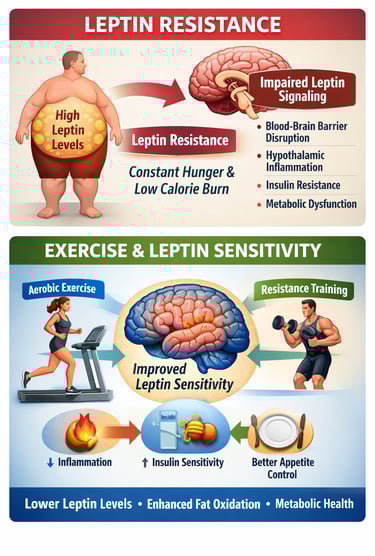
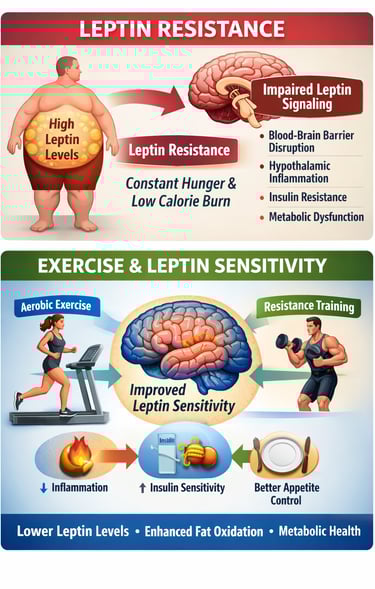
What if your weight struggles aren’t about willpower, calories, or even metabolism—but about a broken hormonal signal? Deep inside your body, a powerful hormone called leptin acts as your biological “fuel gauge,” telling your brain when you’ve eaten enough, how much energy to burn, and whether to store or release fat. In a healthy system, leptin keeps appetite and metabolism in balance. But modern lifestyles have disrupted this signal, creating a condition now recognized as leptin resistance—where the brain no longer responds to leptin’s message, even when leptin levels are high (Hu et al., 2025).
This is why many people with obesity feel constantly hungry, fatigued, and metabolically “stuck” despite dieting and exercise. Their bodies aren’t lacking leptin—they’re ignoring it.
Now the science is clear: exercise doesn’t just burn calories—it repairs leptin signaling itself. Large systematic reviews, randomized trials, and network meta-analyses show that physical activity improves leptin sensitivity, restores hormonal communication between fat tissue and the brain, and recalibrates appetite control—even without major weight loss (de Assis & Murawska-Ciałowicz, 2023; Xin et al., 2026). Resistance training, aerobic exercise, and interval training each activate different biological pathways that enhance leptin transport, receptor sensitivity, and central nervous system signaling (Mitoiu et al., 2024; Hu et al., 2025).
Even more striking, studies in adolescents show that structured exercise can reverse early leptin resistance, preventing long-term metabolic dysfunction before it becomes permanent (Jeong et al., 2026).
This means weight control isn’t just about eating less—it’s about reprogramming your hormonal biology. And exercise is one of the most powerful tools science has discovered to do exactly that.
Clinical Pearls
1. The "Signal vs. Volume" Distinction
It is a common misconception that weight struggles are caused by a lack of leptin. In reality, most people struggling with weight have an abundance of it. The issue is leptin resistance, where the "cellular ears" of the brain have become deaf to the hormone's "satiety shout." Exercise acts like a hearing aid, clearing the inflammatory "noise" so your brain can finally hear the signal to stop eating.
2. The "Metabolic Pre-Game" Effect
One of the most empowering findings is that exercise improves leptin sensitivity before you lose a single pound. Think of exercise as a metabolic "tune-up" that happens under the hood. Even if the scale doesn't move in the first three weeks, your internal hormonal environment is becoming significantly more efficient, setting the stage for easier, more sustainable weight loss later.
3. The Power of the "Hybrid Protocol"
While cardio is often the "go-to" for weight loss, the science suggests a hybrid approach is superior. Endurance training (cardio) is excellent at lowering the hunger hormone ghrelin, while resistance training (lifting weights) helps manage leptin levels by improving the health of your muscle tissue. By doing both, you attack hunger from two different biological angles.
4. Consistency Over Intensity
Your hormones crave "biological predictability." The research indicates that consistent, moderate-intensity movement (like a brisk 30-minute walk) is often more effective for long-term leptin regulation than sporadic, "all-out" sessions that lead to burnout. To your brain, 150–300 minutes of steady weekly activity is a safety signal that stabilizes your metabolism.
5. The Adolescent Window of Opportunity
Metabolic "habits" are often hard-coded during puberty. Because the adolescent brain is highly plastic, introducing structured exercise during these years can "reset" the leptin-sensitivity set point. This acts as a powerful preventative measure, potentially shielding the individual from chronic leptin resistance and metabolic dysfunction in adulthood.
Exercise and Leptin Management: The Complete Science-Based Guide to Weight Control and Metabolic Health
Have you ever wondered why some people seem to naturally maintain a healthy weight while others struggle despite their best efforts? The answer might lie in a hormone you've never heard of: leptin. This fascinating molecule plays a crucial role in regulating hunger, metabolism, and weight management—and exercise might be the key to optimizing how it works in your body.
Leptin resistance, a condition where your body doesn't respond properly to leptin signals, has emerged as a significant factor in modern obesity management and metabolic dysfunction. The good news? Recent research reveals that strategic exercise interventions can help restore leptin sensitivity and improve your body's natural weight regulation systems.
In this comprehensive guide, we'll explore the latest scientific evidence on how different types of exercise affect leptin levels, hormonal responses, and overall metabolic health. Whether you're managing your weight, dealing with obesity, or simply curious about optimizing your fitness routine, this article will equip you with practical, evidence-based strategies.
What Is Leptin? The Hormone You Need to Understand
Leptin is a hormone produced primarily by adipose tissue (fat cells) that acts as a messenger between your body's fat stores and your brain. Often called the "satiety hormone," leptin tells your hypothalamus (the appetite-control center of your brain) that you have sufficient energy stores, which typically suppresses hunger and increases energy expenditure.
In a well-functioning system, leptin creates a beautiful feedback loop:
More body fat → more leptin production → decreased appetite and increased calorie burn
Less body fat → less leptin production → increased appetite and decreased calorie burn
However, in individuals with obesity, something goes wrong with this elegant system. Despite having high leptin concentrations, the body doesn't respond appropriately to leptin signals—a phenomenon known as leptin resistance. This means the brain doesn't receive the "I'm full" message, leading to continued overeating and difficulty losing weight.
Leptin isn't the villain in obesity—resistance to leptin is. Understanding this distinction is crucial for developing effective weight management strategies.
The Comprehensive Research: What Recent Studies Tell Us
1. Exercise and Weight Management: The Role of Leptin—A Systematic Review (de Assis & Murawska-Ciałowicz, 2023)
De Assis and Murawska-Ciałowicz (2023). Conducted an extensive systematic review examining two decades of clinical data (2000-2022) on the relationship between exercise interventions and leptin regulation in weight management.
This landmark review synthesized evidence demonstrating that physical activity directly influences leptin secretion and leptin sensitivity. The researchers identified that both the type and duration of exercise significantly impact leptin concentrations, with particular benefits observed in individuals with obesity and metabolic dysfunction.
The systematic review emphasized that aerobic exercise and combined training protocols showed promising results in improving leptin-mediated appetite suppression and enhancing overall metabolic health. Importantly, the review highlighted that exercise-induced changes in leptin are often accompanied by improvements in insulin sensitivity and glucose metabolism, suggesting that leptin management is part of a broader metabolic optimization process.
Key Takeaway: Long-term exercise participation can help restore leptin sensitivity even when body weight changes are modest, indicating that leptin improvement isn't purely dependent on weight loss.
2. Effect of Exercise on Hormonal Responses in Adolescents with Obesity and Leptin Resistance (Jeong et al., 2026)
Jeong et al. (2026) conducted a randomized trial focusing specifically on adolescents, a population particularly vulnerable to leptin resistance and metabolic dysfunction.
This groundbreaking study examined how exercise interventions affect hormonal responses in young people with obesity and documented leptin resistance. The researchers found that structured exercise programs produced significant improvements in leptin sensitivity and hormonal signaling in adolescents—a critical finding because restoring proper hormonal function during adolescence may prevent long-term metabolic complications.
The trial demonstrated that even without dramatic weight loss, regular physical activity improved the brain's responsiveness to leptin signals, resulting in more effective appetite regulation and improved metabolic control. This finding is particularly important because it shows that the benefits of exercise extend beyond simple calorie expenditure.
The study also revealed that exercise-induced improvements in leptin resistance were accompanied by changes in other metabolic hormones, suggesting that physical activity works through multiple hormonal pathways to improve overall metabolic health.
Key Takeaway: Starting exercise interventions early in adolescence may be particularly effective for preventing or reversing leptin resistance before it becomes entrenched, offering hope for preventing adult obesity.
3. Impact of Resistance and Endurance Training on Ghrelin and Plasma Leptin Levels (Mitoiu et al., 2024)
Mitoiu et al.(2024) compared two fundamentally different exercise modalities—resistance training and endurance training—to determine which approach more effectively modulates leptin and ghrelin (the hunger hormone).
Key Findings:
This important study directly compared the effects of resistance training versus endurance training on leptin concentrations and ghrelin levels in overweight and obese subjects. The research found that both training types produced favorable changes in hormonal profiles, but with interesting differences:
Resistance training appeared particularly effective at improving body composition while favorably altering leptin secretion, possibly through mechanisms related to muscle mass development
Endurance training demonstrated effectiveness at improving leptin sensitivity and reducing ghrelin levels, potentially through enhanced cardiovascular adaptations
Combined approaches incorporating both resistance and endurance training produced the most comprehensive improvements in hormonal regulation
The study highlighted that the choice between resistance training and endurance exercise shouldn't be either-or—instead, combining both modalities addresses leptin management through complementary mechanisms, optimizing metabolic health.
Key Takeaway: A comprehensive exercise program combining resistance and endurance training provides superior benefits for leptin regulation compared to either modality alone.
4. Exercise Alone or Combined with Dietary Restriction (Xin et al., 2025)
Xin et al.(2025) conducted a network meta-analysis examining whether exercise alone or exercise combined with dietary restriction produces superior improvements in leptin and adiponectin levels in overweight or obese individuals.
Key Findings:
This sophisticated meta-analysis synthesized data from multiple studies to determine the most effective approach for leptin management. The research revealed nuanced findings:
Exercise alone produced meaningful improvements in leptin levels and adiponectin concentrations (another important metabolic hormone), even without caloric restriction
Combined exercise and dietary restriction produced more dramatic reductions in leptin levels, suggesting synergistic effects between the two interventions
The timing and quality of dietary choices appeared to amplify the leptin-improving effects of physical activity, indicating that lifestyle interventions work best when coordinated
This finding has practical implications: while exercise alone is beneficial and should be encouraged, combining structured physical activity with thoughtful nutritional changes optimizes metabolic hormone regulation and weight management outcomes.
Key Takeaway: For maximum leptin regulation and weight management benefits, combining exercise with dietary modifications creates synergistic improvements beyond either intervention alone.
5. Leptin and Leptin Resistance in Obesity: Current Evidence and Mechanisms (Hu et al., 2025)
Hu, Zhu, and Gong provided a comprehensive mechanistic review exploring the biological mechanisms underlying leptin resistance and its relationship to obesity and metabolic disease.
This authoritative review illuminated the biological mechanisms explaining why leptin resistance develops and how interventions—including exercise—can counteract it. The researchers identified several key mechanisms:
Chronic inflammation associated with obesity impairs leptin signaling pathways, and physical activity reduces this inflammation
Insulin resistance often occurs alongside leptin resistance, creating a vicious cycle of metabolic dysfunction that regular exercise can interrupt
Exercise-induced improvements in mitochondrial function and cellular energy metabolism enhance the body's ability to respond to leptin signals
Physical activity modulates inflammatory markers and improves the integrity of the blood-brain barrier, allowing leptin signals to reach the brain more effectively
The review emphasized that understanding these leptin resistance mechanisms is essential for developing targeted interventions, with exercise emerging as one of the most effective tools for restoring leptin signaling at multiple biological levels.
Key Takeaway: Leptin resistance isn't simply about leptin levels—it's about the biological mechanisms that impair leptin signaling, and exercise addresses these mechanisms at fundamental molecular and cellular levels.
6. Optimal Exercise Modalities and Dose Selection for Leptin Reduction (Xin et al., 2026)
Building on their earlier meta-analysis, Xin and colleagues conducted a sophisticated dose-response analysis to answer the practical question: What type and amount of exercise most effectively reduces leptin levels in overweight or obese individuals?
This cutting-edge research identified optimal exercise prescriptions for leptin reduction:
Moderate-intensity aerobic exercise (50-70% of maximum heart rate) performed 150-300 minutes per week produced consistent, dose-dependent improvements in leptin concentrations
High-intensity interval training (HIIT) demonstrated efficiency, producing substantial leptin improvements in shorter timeframes, suggesting potential benefits for time-constrained individuals
Progressive resistance training (2-3 sessions weekly, with progressive load increases) effectively improved leptin sensitivity while building metabolic lean mass
Combined exercise protocols (mixing aerobic, resistance, and interval training) provided the most robust leptin regulation across diverse body types and fitness levels
Consistency trumped intensity—individuals who maintained moderate activity levels across time showed better long-term leptin improvements than those alternating between high and low activity
Critically, the research revealed a dose-response relationship: more exercise generally produced greater improvements, but diminishing returns occurred at extremely high volumes, suggesting an optimal range rather than "more is always better."
Key Takeaway: Effective leptin management requires regular, moderate-intensity exercise (150-300 minutes weekly), with flexibility to use intensity, resistance training, or interval approaches based on individual preferences and constraints.
Understanding Key Concepts: Hormonal Interactions and Metabolic Effects
The Leptin-Ghrelin Axis
Understanding leptin requires knowing about ghrelin, its hormonal counterpart. While leptin suppresses appetite, ghrelin stimulates it. This leptin-ghrelin axis acts like a biological seesaw:
Leptin ↑ = Appetite ↓ and Energy expenditure ↑
Ghrelin ↑ = Appetite ↑ and Energy expenditure ↓
Research shows that exercise favorably modulates both hormones simultaneously—increasing leptin sensitivity while typically reducing ghrelin levels. This dual action creates a powerful appetite-regulating effect.
Leptin Resistance: How It Develops and Why It's Problematic
Leptin resistance develops through several interconnected mechanisms:
Chronic inflammation reduces leptin receptor sensitivity
Elevated triglycerides impair leptin transport across the blood-brain barrier
Oxidative stress damages leptin signaling machinery
Chronic overeating leads to sustained high leptin that desensitizes receptors (similar to how loud noises become background)
The tragic consequence is a "leptin paradox": individuals with obesity have abundant leptin, yet their brains act as if they have too little, perpetuating hunger and metabolic dysfunction. Exercise addresses each of these mechanisms, making it a comprehensive therapeutic intervention.
Adiponectin: The Companion Hormone
Beyond leptin, exercise improves adiponectin, another crucial metabolic hormone produced by adipose tissue that enhances insulin sensitivity and reduces inflammation. The synergistic improvements in both leptin and adiponectin create comprehensive metabolic benefits extending far beyond simple weight loss.
The Circadian Connection: Sleep as the "Reset Button"
While exercise repairs the leptin signal and diet manages the load, sleep is when the brain actually recalibrates. Leptin levels typically peak during the night, telling your brain to suppress hunger so you can rest rather than forage for food.
The Sleep-Deprivation Trap: Research shows that just one or two nights of poor sleep can drop leptin levels by 15–20% and spike the hunger hormone ghrelin. This creates a "false starvation" signal, leading to intense cravings for high-calorie "reward" foods the next day.
Light Exposure: Morning sunlight exposure helps set your "master clock" in the hypothalamus—the same area of the brain that processes leptin. By syncing your light exposure with your exercise, you optimize the brain's receptivity to satiety signals.
The "Midnight Snack" Paradox: Eating late at night disrupts the natural nocturnal leptin peak, essentially "blunting" the signal and contributing to next-morning insulin and leptin resistance.
Practical Implementation: How to Apply This Science to Your Life
Choosing Your Exercise Approach
Based on the research, here's a practical framework for selecting exercise modalities aligned with your goals and circumstances:
For Maximum Leptin Improvement:
Combine moderate-intensity aerobic activity (150-300 minutes weekly)
Add resistance training (2-3 sessions weekly)
Consider high-intensity interval training if time is limited
For Time-Constrained Individuals:
High-intensity interval training (20-30 minutes, 2-3 times weekly) provides substantial leptin improvements efficiently
Even brief resistance training sessions (20-30 minutes, 2 times weekly) contribute meaningfully
For Beginners or Deconditioned Individuals:
Start with moderate-intensity aerobic activity (walking, cycling, swimming) at 50-60% effort
Gradually progress toward 150 minutes weekly
Add gentle resistance training once aerobic base is established
The Synergistic Power of Combined Interventions
The research consistently shows that exercise combined with dietary modifications produces superior leptin regulation compared to either approach alone. This doesn't mean extreme dieting—thoughtful nutritional changes (reducing processed foods, increasing whole foods, managing portion sizes) amplify exercise-induced improvements in leptin sensitivity.
Progressive Adaptation: The "Start and Persist" Principle
Research reveals that significant leptin improvements don't require dramatic transformations. Rather, consistent moderate-intensity activity maintained over weeks and months produces sustained benefits. The key is finding sustainable exercise patterns you'll maintain long-term rather than pursuing extreme approaches you'll abandon.
FAQs: Answering Your Burning Questions About Leptin and Exercise
Q: How quickly does exercise improve leptin levels?
A: Research indicates initial improvements in leptin sensitivity can occur within 2-4 weeks of consistent exercise participation, though more dramatic changes typically emerge over 8-12 weeks. Importantly, leptin improvements often precede significant weight loss, demonstrating that exercise benefits operate through multiple mechanisms.
Q: Do I need to lose weight for exercise to improve my leptin?
A: No—this is one of the most encouraging findings from recent research. Physical activity improves leptin sensitivity and hormonal function even when body weight remains stable. While combined exercise and dietary approaches produce greater weight loss, exercise alone meaningfully improves how your body responds to leptin signals.
Q: Which exercise type is best for leptin improvement: cardio or weights?
A: Research suggests the answer isn't either-or but both-and. Endurance exercise excels at improving leptin sensitivity and reducing ghrelin, while resistance training builds metabolic lean mass and favorably alters leptin production. Combining both modalities produces superior results compared to either alone.
Q: Can diet alone improve leptin without exercise?
A: While dietary modifications can contribute to leptin management, the research consistently shows that exercise provides unique benefits—including improved leptin sensitivity, reduced inflammation, and enhanced metabolic health—that dietary changes alone don't fully replicate. The most effective approach combines both strategies.
Q: How much exercise is "enough" for meaningful leptin improvement?
A: Research suggests 150-300 minutes of moderate-intensity aerobic activity weekly, combined with 2-3 sessions of resistance training, produces consistent improvements. However, even modest increases in physical activity from a sedentary baseline provide measurable benefits.
Q: Will exercise improve leptin even if I'm still obese?
A: Absolutely. One of the most important findings is that exercise-induced leptin improvements don't depend on achieving ideal body weight. Individuals can restore significant leptin sensitivity while still in the overweight or obese category, indicating that physical activity addresses the underlying biological dysfunction, not just the weight itself.
Q: How do I know if I have leptin resistance?
A: Common signs include persistent hunger despite eating adequate calories, difficulty losing weight despite effort, fatigue, and metabolic dysfunction. While leptin blood tests exist, they're not routinely ordered; working with a healthcare provider experienced in metabolic health is most helpful.
Q: Can leptin improvement prevent future weight regain?
A: Yes—by restoring leptin sensitivity, your body's natural appetite regulation improves, making weight maintenance more sustainable long-term. This is why exercise-induced leptin improvements have such profound implications for preventing weight regain after weight loss.
Key Takeaways: The Essential Lessons from Latest Research
Leptin resistance, not leptin deficiency, drives obesity-related metabolic dysfunction in most cases, and exercise effectively restores leptin sensitivity.
Exercise improves leptin function even without significant weight loss, indicating benefits operate through multiple biological mechanisms beyond simple calorie burning.
Combined exercise approaches (mixing aerobic, resistance, and interval training) produce superior leptin regulation compared to single-modality approaches.
Moderate-intensity aerobic activity (150-300 minutes weekly) combined with resistance training (2-3 times weekly) represents the evidence-based sweet spot for leptin optimization.
Exercise combined with dietary modifications creates synergistic improvements beyond either intervention alone, though exercise alone provides meaningful benefits.
Early intervention matters—starting exercise programs during adolescence may be particularly effective at preventing entrenched leptin resistance.
Consistency trumps perfection—sustainable moderate-intensity activity produces better long-term leptin improvements than unsustainable extreme approaches.
Leptin improvements trigger beneficial changes in multiple metabolic hormones, creating cascading health benefits extending well beyond appetite regulation.
Author’s Note
This article is intended for educational purposes and reflects current scientific evidence on leptin physiology, leptin resistance, and exercise-induced metabolic adaptations. The interpretations presented integrate findings from randomized trials, systematic reviews, and mechanistic studies in endocrinology and exercise science. While the content emphasizes evidence-based lifestyle interventions—particularly aerobic and resistance training—it is not a substitute for individualized medical advice. As metabolic research continues to evolve, recommendations may be refined with emerging data.
Medical Disclaimer
The information in this article, including the research findings, is for educational purposes only and does not constitute medical advice, diagnosis, or treatment. Before starting any new exercise program, you must consult with a qualified healthcare professional, especially if you have existing health conditions (such as cardiovascular disease, uncontrolled hypertension, or advanced metabolic disease). Exercise carries inherent risks, and you assume full responsibility for your actions. This article does not establish a doctor-patient relationship.
Related Articles
How to Build a Disease-Proof Body: Master Calories, Exercise & Longevity | DR T S DIDWAL
How to Maximize Muscle Growth: Evidence-Based Strength Training Strategies | DR T S DIDWAL
Age-Proof Your Muscle: How Leucine Reawakens Muscle Growth After 40 | DR T S DIDWAL
Lower Blood Pressure Naturally: Evidence-Based Exercise Guide for Metabolic Syndrome | DR T S DIDWAL
Exercise vs. Diet Alone: Which is Best for Body Composition? | DR T S DIDWAL
Movement Snacks: How VILPA Delivers Max Health Benefits in Minutes | DR T S DIDWAL
Breakthrough Research: Leptin Reduction is Required for Sustained Weight Loss | DR T S DIDWAL
HIIT Benefits: Evidence for Weight Loss, Heart Health, & Mental Well-Being | DR T S DIDWAL
References
de Assis, G. G., & Murawska-Ciałowicz, E. (2023). Exercise and weight management: The role of leptin—A systematic review and update of clinical data from 2000-2022. Journal of Clinical Medicine, 12(13), 4490. https://doi.org/10.3390/jcm12134490
Hu, W., Zhu, H., & Gong, F. (2025). Leptin and leptin resistance in obesity: Current evidence, mechanisms and future directions. Endocrine Connections, 14(9), e250521. https://doi.org/10.1530/EC-25-0521
Jeong, D., Valentine, R. J., Park, K., Jeong, H., Hong, J., & Kang, S. (2026). Effect of exercise on hormonal responses in adolescents with obesity and leptin resistance: A randomized trial. Scientific Reports, 10. Advance online publication. https://doi.org/10.1038/s41598-026-36045-9
Mitoiu, B. I., Nartea, R., & Miclaus, R. S. (2024). Impact of resistance and endurance training on ghrelin and plasma leptin levels in overweight and obese subjects. International Journal of Molecular Sciences, 25(15), 8067. https://doi.org/10.3390/ijms25158067
Xin, X., Guo, Y., Kong, Z., et al. (2026). Optimal exercise modalities and dose selection to reduce leptin levels in overweight or obese individuals: A network meta-analysis and dose–response relationship study. BMC Sports Science, Medicine and Rehabilitation, 18, 7. https://doi.org/10.1186/s13102-025-01395-w
Xin, X., Guo, Y., Liu, L., et al. (2025). Effects of exercise alone or combined with dietary restriction on leptin and adiponectin in overweight or obese individuals: A network meta-analysis. BMC Sports Science, Medicine and Rehabilitation, 17, 295. https://doi.org/10.1186/s13102-025-01316-x