How to Maximize Muscle Growth: Evidence-Based Strength Training Strategies
Learn how to maximize muscle growth using evidence-based strength training strategies grounded in exercise physiology, hypertrophy science, and recovery principles.
EXERCISE
Dr. T.S. Didwal, M.D.(Internal Medicine)
12/24/202513 min read

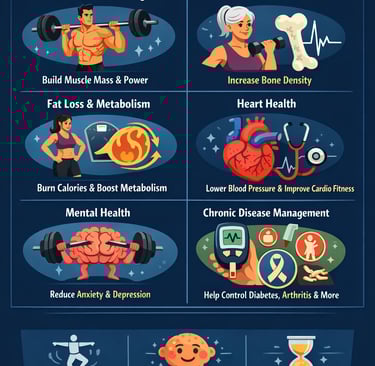
Most people think muscle growth is simply about lifting heavier weights or spending more time in the gym. Modern science tells a far more precise—and empowering—story. Muscle growth is not accidental; it is a predictable biological response to the right kind of stimulus applied consistently over time. Understanding this process allows anyone, regardless of age or experience, to train smarter rather than harder.
Research over the past two decades shows that muscle growth depends on how effectively resistance exercise communicates with your muscles and nervous system. When muscles are challenged appropriately, they respond by strengthening their fibers, improving coordination, and enhancing metabolic health. These adaptations do not happen randomly. They follow well-defined principles such as progressive overload, adequate recovery, and targeted movement patterns—principles grounded in physiology, not gym myths.
Importantly, building muscle is not only about appearance or athletic performance. Stronger muscles improve blood sugar control, protect joints, strengthen bones, reduce the risk of falls, and support healthy aging. Even modest increases in muscle mass can lead to meaningful improvements in daily function, energy levels, and long-term health outcomes.
This article translates the science of muscle growth into clear, practical strategies you can apply immediately. By understanding how your body adapts to resistance training, you can design a strength program that is safe, effective, and sustainable—whether your goal is improved health, better performance, or lifelong physical independence.
Clinical pearls
1. Strength is a "Skill" Before it is a Size
Many beginners worry because they don't see their muscles growing in the first three weeks, even though they feel much stronger. Science shows that your brain and nervous system "wake up" first. This is called neuromuscular adaptation. You aren't just building tissue; you are teaching your brain how to fire your muscles more efficiently.
2. The "Eccentric" Secret to Growth
The part of the lift where you lower the weight (the eccentric phase) is actually more responsible for muscle growth and strength than the lifting part. Resisting gravity creates microscopic tears in the muscle fibers that, when repaired, lead to hypertrophy. Pearl: Never "drop" the weight; control it on the way down to double your results.
3. Muscle is Your "Metabolic Currency"
Think of muscle as a high-maintenance engine. Unlike fat, which is metabolically quiet, muscle tissue is "expensive" for your body to keep. By increasing your muscle mass, you are essentially increasing your Basal Metabolic Rate (BMR). This means you burn more energy even while sleeping or sitting at a desk—a phenomenon sometimes called the "afterburn" effect.
4. Bone Density is a "Mechanical Bank Account"
Strength training is one of the few ways to "deposit" density into your bones. When muscles pull on bone during resistance exercise, it triggers osteoblasts (bone-building cells) to lay down new minerals. This makes strength training a clinical gold standard for preventing osteoporosis and fractures as we age.
5. The 48-Hour Recovery Rule
Growth doesn't actually happen in the gym; it happens while you sleep. Research suggests that the "protein synthesis" window—the time your body spends repairing muscle—is most elevated for about 48 hours after a session. Training the same muscle group every single day actually interrupts the repair process, leading to "diminishing returns."
The Science-Backed Guide to Strength Training: Research-Driven Strategies for Peak Performance
Understanding Strength Training: The Fundamentals
Strength training, also called resistance training or resistance exercise, represents one of the most powerful tools for transforming your body and health. At its core, strength training involves making your muscles work against external force to build muscular strength, endurance, and overall fitness. Rather than vague gym-going, it's a scientifically-grounded approach to progressive challenge that creates lasting results.
Recent research emphasizes that strength training isn't just for athletes or bodybuilders—it's an essential practice for everyone (Cao & Li, 2025). Systematic reviews and meta-analyses demonstrate that when you challenge your muscles with progressive overload, your body adapts in remarkable ways, improving not just muscle but cardiovascular health, metabolic function, and mental wellbeing.
The Three Types of Muscle Contractions Explained
To truly understand how strength training works, you need to know the three primary types of muscle contractions:
Concentric contractions occur when your muscle shortens as it contracts—like lifting a weight upward during a bicep curl. This is the most common type and where most people feel the primary "pump" sensation.
Eccentric contractions happen when your muscle lengthens while remaining under tension—like slowly lowering a weight. Research shows eccentric training creates significant strength gains and muscle hypertrophy (muscle growth).
Isometric contractions involve creating tension without changing muscle length—think holding a plank position. These are particularly valuable for core strength and injury prevention.
Each contraction type plays a vital role in building functional strength and preventing injury (Currier et al., 2023), making a well-rounded program incorporate all three.
Weight Training vs. Strength Training: The Critical Distinction
Many fitness enthusiasts confuse these terms, so let's clarify: weight training specifically uses external weights like dumbbells, barbells, or weight machines as resistance. It's one tool within the broader strength training toolkit.
Strength training, conversely, encompasses a much wider range of methods including bodyweight exercises (push-ups, squats, pull-ups), free weights (dumbbells, kettlebells), weight machines, resistance bands, suspension training, and plyometrics. Think of weight training as one powerful technique, but definitely not the only path to muscle strength and fitness.
The Mechanism: How Strength Training Increases Muscle Strength
The magic underlying strength development comes from a principle called progressive overload. When you consistently challenge your muscles with resistance greater than they're accustomed to, two primary adaptations occur:
Neuromuscular adaptations happen first. Your nervous system becomes more efficient at recruiting muscle fibers and coordinating movement patterns. This is why beginners often see rapid strength improvements in their first 2-4 weeks—before any visible muscle growth occurs.
Muscle hypertrophy develops with continued training. Your muscle fibers grow larger and develop more contractile proteins, providing lasting strength gains. This process typically becomes visible after 6-8 weeks of consistent training.
Additionally, strength training significantly increases your basal metabolic rate (BMR), meaning you burn more calories even at rest. Since muscle tissue is metabolically active, it requires substantial energy for maintenance and function—a major advantage for weight management and body composition improvement.
Five Core Principles of Successful Strength Training Programs
Progressive Overload Principle
The progressive overload principle is non-negotiable. You must continually increase demands on your muscles to see improvement. This can mean:
Adding more weight
Increasing repetitions or sets
Reducing rest periods between sets
Increasing training frequency
Improving exercise technique and range of motion
Research consistently demonstrates that systematic progression beats random increases in intensity (Morton et al., 2019).
Specificity Principle
The specificity principle states that your body adapts specifically to the demands you place on it. If you want to improve your squat, you need to practice squatting movements and similar patterns. Your training program should directly align with your specific goals.
Progression and Periodization
Periodization in strength training prevents plateaus and reduces injury risk. Research supports methodical increases in training load rather than haphazard intensity spikes. Strategic planning around competition schedules—emphasizing maximal strength development during off-season and maintaining strength during in-season—maximizes athletic performance.
Individuality
Everyone responds differently to training stimuli. Your optimal strength training program considers:
Your current fitness level
Your training history
Your specific goals
Your recovery capacity
Your personal preferences and lifestyle
One-size-fits-all programming simply doesn't work.
Reversibility ("Use It or Lose It")
Strength gains diminish if you stop training—the reversibility principle reminds us that fitness isn't permanent. However, muscle memory helps you regain strength more quickly when returning to training, which is encouraging for those taking breaks.
Evidence-Based Health Benefits: What Research Actually Shows
The research supporting strength training benefits is truly overwhelming. Let's explore what science reveals:
Musculoskeletal Benefits
Resistance exercise produces:
Significant increases in muscle strength
Improved muscle mass and composition
Better balance and coordination
Enhanced bone density (critical for preventing osteoporosis)
Reduced fall risk, particularly in older adults
Cardiovascular Health Improvements
Strength training delivers impressive cardiovascular benefits:
Blood pressure reductions of 5-6 mmHg systolic and 3-4 mmHg diastolic
18% reduction in major cardiovascular events
Improved blood lipid profiles
Enhanced cardiovascular efficiency
This challenges the outdated notion that only aerobic exercise benefits heart health.
Metabolic and Weight Management Benefits
Research demonstrates resistance exercise is incredibly effective for:
Body fat reduction—often more effective than aerobic exercise alone
Increased muscle-to-fat ratio
Improved insulin sensitivity
Better glucose utilization
Enhanced metabolic rate and daily caloric expenditure
Mental Health and Cognitive Benefits
The psychological advantages are substantial:
Reduced symptoms of depression and anxiety
Improved self-confidence and body image
Better sleep quality
Enhanced mood stability
Potential cognitive protection in older adults
Chronic Disease Management
Strength training shows remarkable promise for managing numerous conditions:
Type 2 Diabetes management benefits significantly from resistance exercise, which improves glycemic control sometimes more effectively than medication alone.
Arthritis management improves through regular strength training, reducing joint pain and improving functional mobility.
Osteoporosis prevention gains from weight-bearing resistance exercises that stimulate bone formation and reduce fracture risk.
Cancer management shows emerging evidence that resistance exercise may reduce cancer risk, recurrence, and mortality while improving treatment outcomes.
Optimal Training Frequency: How Often Should You Train?
Research provides clear guidance on training frequency:
For Beginners
2-3 sessions per week for maximum benefit
Focus on full-body workouts
Allow 48-72 hours recovery between sessions
This frequency optimizes muscle adaptation while allowing adequate recovery.
For Experienced Trainees
Research indicates that training volume (total sets × reps × weight) may be more important than frequency. You can achieve similar results with:
3 sessions of moderate volume
2 sessions of higher volume
This flexibility allows experienced athletes to customize their schedules while maintaining effectiveness.
Strength Training Equipment: Choosing Your Tools Wisely
Bodyweight Exercises
Bodyweight training is perfect for beginners and those without gym access:
Exercises like squats, push-ups, and pull-ups require no equipment
Excellent for learning proper movement patterns
Limited progression potential without modifications
Great for injury rehabilitation
Free Weights
Free weights represent the gold standard for many professionals:
Dumbbells, barbells, and kettlebells require stabilization
Demand significant coordination and core engagement
Offer unlimited progression potential
Support functional movement patterns that transfer to daily life
Weight Machines
Weight machines are ideal for beginners and targeted work:
User-friendly and safer for novices
Allow isolated muscle targeting
Reduce stabilization requirements
May not address muscle imbalances as effectively as free weights
Resistance Bands
Resistance bands provide versatile, portable options:
Offer variable resistance throughout your range of motion
Excellent for rehabilitation and recovery
Portable and affordable
Subjective resistance levels require careful attention
Program Design: Different Goals, Different Approaches
Your strength training program should align precisely with your goals. Here's what research recommends:
Strength Development
Objective: Maximum force production
Load: 85%+ of 1-rep max (1RM)
Sets: 2-6
Reps: ≤6
Rest: 2-5 minutes
This approach maximizes neuromuscular adaptation and pure strength gains.
Power Training
Objective: Explosive force development and athletic performance
Load: 80-90% of 1RM
Sets: 3-5
Reps: 1-2 (single effort) or 3-5 (multiple efforts)
Rest: 2-5 minutes
Essential for athletes requiring explosive movements.
Hypertrophy (Muscle Growth)
Objective: Increased muscle size and aesthetics
Load: 67-85% of 1RM
Sets: 3-6
Reps: 6-12
Rest: 30-90 seconds
This range optimizes muscle hypertrophy and metabolic stress.
Muscular Endurance
Objective: Fatigue resistance and local muscular endurance
Load: <67% of 1RM
Sets: 2-3
Reps: 12+
Rest: <30 seconds
Perfect for endurance athletes and functional fitness goals.
Recent Research Insights: What 2025 Studies Reveal
Cao & Li (2025): Evidence-Based Strength Training for Athletic Performance
According to Cao and Li (2025), evidence-based strength training represents the foundation for enhancing athletic performance. This study emphasizes applying scientific principles to training design rather than relying on anecdotal approaches. The key takeaway is that athletic performance improvements depend on consistent application of research-validated training principles, particularly progressive overload, specificity, and periodization aligned with competition schedules.
Ramos-Campo et al. (2025): Strength Training's Impact on Endurance Performance
Research by Ramos-Campo and colleagues (2025) demonstrates the significant impact strength training exerts on endurance performance determinants in middle- and long-distance athletes. This comprehensive umbrella review synthesizes multiple systematic reviews and meta-analyses, revealing that resistance training enhances critical endurance performance factors including running economy, lactate threshold, and maximal oxygen uptake (VO₂ max). The critical takeaway is that endurance athletes shouldn't neglect strength training—it complements aerobic work and significantly improves competitive outcomes. Specifically, 2-3 sessions weekly of targeted strength training enhances performance determinants without compromising aerobic adaptations.
Haraldson et al. (2025): Therapeutic Potential of Powerlifting for Physical and Mental Health
The scoping review by Haraldson, Sjöberg, and Berglund (2025) explores the therapeutic potential of powerlifting exercises in addressing physical and mental health challenges. This research highlights that powerlifting and strength training offer applications beyond aesthetics or athletic performance—they serve therapeutic functions for various populations. The key takeaway is that resistance exercise, particularly structured strength training, shows promise as an intervention for multiple health conditions. The research emphasizes safety considerations and proper progression, particularly for individuals managing health challenges, suggesting that strength training deserves consideration as a complementary therapeutic approach.
Age Across the Lifespan: Strength Training for Everyone
With aging comes sarcopenia (age-related muscle loss), osteoporosis (bone loss), and increased fall risk. Resistance exercise is particularly crucial for older adults because it:
Counters muscle mass decline
Improves bone density
Enhances balance and coordination
Maintains functional independence and quality of life
Research also demonstrates that strength training benefits extend to individuals with cardiovascular disease, type 2 diabetes, arthritis, cancer (during and after treatment), and COPD. Age is never a barrier—it's a reason to prioritize strength training even more.
Debunking Common Misconceptions
Myth: "Women Will Get Bulky from Strength Training"
Research Reality: Many women avoid strength training due to fears of excessive muscle growth. However, women typically lack sufficient testosterone for significant muscle mass increases without extensive training and specialized nutrition. In fact, strength training helps women achieve lean, toned physiques while boosting metabolism.
Myth: "Cardio is Best for Fat Loss"
Research Reality: Multiple studies demonstrate that strength training can be more effective for fat loss than aerobic exercise alone due to increased metabolic rate, muscle preservation during weight loss, and EPOC (excess post-exercise oxygen consumption).
Myth: "Strength Training Doesn't Burn Calories"
Research Reality: Resistance exercise burns significant calories during and after exercise. The increased muscle mass from consistent training raises your daily caloric expenditure, making strength training a powerful tool for body composition improvement and weight management.
Safety and Form: Training Smart
Proper Progression Strategy
Start with bodyweight or light resistance
Master movement patterns before adding load
Increase resistance by 5-10% when current weight becomes manageable
Listen to your body and allow adequate recovery
1-Rep Max Testing Safety Protocol
If testing your one-repetition maximum (1RM):
Warm up thoroughly (15-30 minutes)
Start with 50% of the estimated 1RM for 6-10 reps
Progress to 80% of estimated 1RM for 3 reps
Increase in 10% increments with adequate rest
Always prioritize perfect form over maximum weight
Perfect technique trumps heavy weight every single time.
Sample Training Programs
Beginner Total Body Program (3x/week)
TRX Squats: 3 sets × 12-15 reps
Hamstring Curls (stability ball): 3 sets × 12-15 reps
Lat Pulldowns: 3 sets × 12-15 reps
Push-ups: 3 sets × 12-15 reps
Bicep Curls: 3 sets × 12-15 reps
Tricep Extensions: 3 sets × 12-15 reps
This program emphasizes movement pattern mastery and establishes foundational strength.
Advanced Athlete Program (Off-season)
Barbell Back Squats: 3 sets × 8-12 reps @ 75% 1RM
Romanian Deadlifts: 3 sets × 8-12 reps @ 75% 1RM
Lateral Lunges: 3 sets × 10 each leg
Dumbbell Bench Press: 3 sets × 8-12 reps @ 75% 1RM
Cable Rows: 3 sets × 8-12 reps @ 75% 1RM
Core Circuit: Planks, side planks, dead bugs
This program emphasizes hypertrophy and maximal strength development.
Frequently Asked Questions
Q: How long before I see results from strength training?
A: Neuromuscular improvements can occur within 2-4 weeks, while visible muscle changes typically appear after 6-8 weeks of consistent training. Mental health benefits often appear even faster—many people report mood improvements within 2-3 weeks.
Q: Can I do strength training every day?
A: Your muscles need 48-72 hours to recover and adapt. You can train daily by alternating muscle groups, but full-body sessions require rest days for optimal results.
Q: Is strength training safe for older adults?
A: Absolutely! Research overwhelmingly shows resistance exercise is particularly beneficial for older adults, helping maintain independence and quality of life while preventing falls and sarcopenia.
Q: Should I do cardio or strength training first?
A: Prioritize your primary goal. For strength gains, lift weights first when you're fresh. For cardiovascular improvements, do cardio first. Both provide benefits regardless of order, though one performed first receives your peak energy.
Q: How much weight should I start with?
A: Begin with a weight that allows 12-15 perfect repetitions, with the last 2-3 reps being challenging but achievable. This ensures proper form while providing sufficient stimulus for adaptation.
Q: Can strength training help with weight loss?
A: Yes! Strength training burns calories, increases metabolic rate, and preserves muscle mass during weight loss, making it highly effective for body composition improvement. Many find it more effective than diet alone.
Key Takeaways
Strength training is essential for everyone, not just athletes—research supports this unequivocally.
Progressive overload is the key to continuous improvement and avoiding plateaus.
2-3 sessions per week is optimal for beginners; experienced trainees can achieve results with fewer sessions if training volume is sufficient.
Both free weights and bodyweight exercises are effective—choose based on your situation.
Perfect form trumps heavy weight every single time for safety and long-term results.
Strength training provides extensive health benefits far beyond muscle building.
Recent research (2025) confirms that endurance athletes benefit from strength training, powerlifting offers therapeutic applications, and evidence-based approaches maximize results.
Individual program design tailored to your goals and situation maximizes results.
Consistency matters more than perfection—regular training beats sporadic intensity.
Take Action: Start Your Strength Training Journey Today
The evidence from recent research is overwhelming—strength training is one of the most powerful tools for improving your health, fitness, and quality of life. Whether you're 18 or 80, a complete beginner or experienced athlete, there's a strength training program that can transform your life.
Your Next Steps:
Assess your current fitness level and define your specific goals
Choose your preferred training method (bodyweight, free weights, machines, or a combination)
Start with 2-3 sessions per week focusing on major movement patterns
Progress gradually and prioritize proper form
Track your improvements to stay motivated and ensure progression
Consider consulting a qualified fitness professional for personalized guidance and form checking
Remember, the best strength training program is the one you'll actually follow consistently. Start where you are, use what you have, and do what you can. Your future self will thank you for taking this powerful step toward better health and fitness.
The science is absolutely clear—strength training transforms bodies, minds, and lives. Stop waiting. The time to start your strength training journey is now.
Medical Disclaimer
The information in this article, including the research findings, is for educational purposes only and does not constitute medical advice, diagnosis, or treatment. Before starting any new strength training exercise program, you must consult with a qualified healthcare professional, especially if you have existing health conditions (such as cardiovascular disease, uncontrolled hypertension, or advanced metabolic disease). Exercise carries inherent risks, and you assume full responsibility for your actions. This article does not establish a doctor-patient relationship.
Related Articles
Biomechanics of Lifting: How Proper Technique Improves Strength and Prevents Injury | DR T S DIDWAL
How to Build a Disease-Proof Body: Master Calories, Exercise & Longevity | DR T S DIDWAL
Exercise vs. Diet Alone: Which is Best for Body Composition? | DR T S DIDWAL
Movement Snacks: How VILPA Delivers Max Health Benefits in Minutes | DR T S DIDWAL
Anabolic Resistance: Why Muscles Age—and How to Restore Their Growth Response | DR T S DIDWAL
Breakthrough Research: Leptin Reduction is Required for Sustained Weight Loss | DR T S DIDWAL
The Psychology of Strength Training: Building Resilience Beyond the Gym | DR T S DIDWAL
HIIT Benefits: Evidence for Weight Loss, Heart Health, & Mental Well-Being | DR T S DIDWAL
References
Cao, Y., & Li, J. (2025). Evidence-based strength training: Best practices for enhancing athletic performance. International Journal of Education and Humanities, 5(2), 187–196. https://doi.org/10.58557/(ijeh).v5i2.298
Currier, B. S., McLeod, J. C., Banfield, L., Beyene, J., Welton, N. J., D'Souza, A. C., Keogh, J. A. J., Lin, L., Coletta, G., Yang, A., Colenso-Semple, L., Lau, K. J., Verboom, A., & Phillips, S. M. (2023). Resistance training prescription for muscle strength and hypertrophy in healthy adults: A systematic review and Bayesian network meta-analysis. British Journal of Sports Medicine, 57(18), 1211–1220. https://doi.org/10.1136/bjsports-2023-106807
Haraldson, C., Sjöberg, P., & Berglund, L. (2025). Exploring the therapeutic potential of powerlifting exercises: A scoping review on their application and safety in addressing physical and mental health problems. Physical Therapy Reviews, 30(1), 62–74. https://doi.org/10.1080/10833196.2025.2459537
Morton, R. W., Colenso-Semple, L., & Phillips, S. M. (2019). Training for strength and hypertrophy: An evidence-based approach. Current Opinion in Physiology, 10, 90–95. https://doi.org/10.1016/j.cophys.2019.04.006
Physio-pedia. (n.d.). Strength training. https://www.physio-pedia.com/index.php?title=Strength_Training&oldid=368519
Ramos-Campo, D. J., Andreu-Caravaca, L., Clemente-Suárez, V. J., & Rubio-Arias, J. Á. (2025). The effect of strength training on endurance performance determinants in middle- and long-distance endurance athletes: An umbrella review of systematic reviews and meta-analysis. Journal of Strength and Conditioning Research, 39(4), 492–506. https://doi.org/10.1519/JSC.0000000000005056
Schoenfeld, B. J., Grgic, J., Van Every, D. W., & Plotkin, D. L. (2021). Loading recommendations for muscle strength, hypertrophy, and local endurance: A re-examination of the repetition continuum. Sports, 9(2), 32. https://doi.org/10.3390/sports9020032
Suchomel, T. J., Nimphius, S., Bellon, C. R., & Stone, M. H. (2018). The importance of muscular strength: Training considerations. Sports Medicine, 48(4), 765–785. https://doi.org/10.1007/s40279-018-0862-z