Lactate Explained: How Exercise-Driven Lactate Boosts the Brain, Metabolism, and Performance
Discover how lactate boosts brain function, improves fat metabolism, enhances endurance, and supports metabolic health. Evidence-based exercise science guide for performance and longevity.
EXERCISEMETABOLISM
Dr. T.S. Didwal, M.D.(Internal Medicine)
5/28/202628 min read
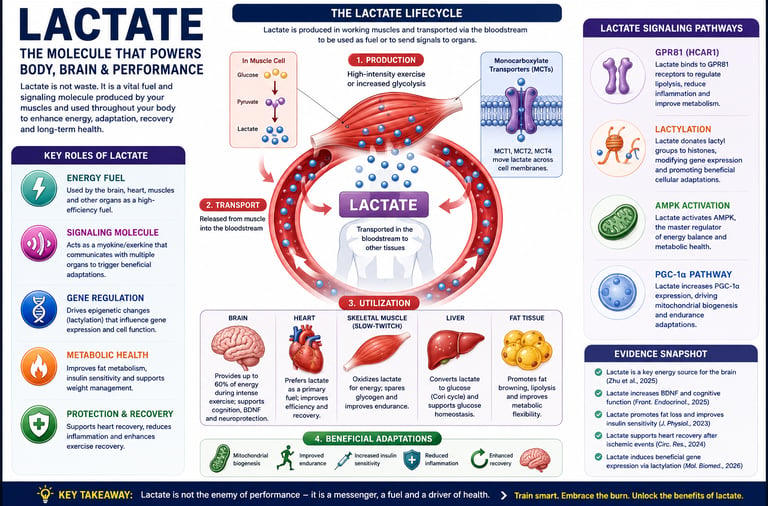
Lactate produced during exercise is not a waste product but a powerful signaling molecule and fuel. It serves as brain fuel (supplying up to 60% of energy during intense activity), stimulates BDNF for neuroplasticity and mood, acts as a myokine/exerkine for multi-organ communication, promotes fat metabolism and mitochondrial biogenesis, and triggers beneficial lactylation for improved insulin sensitivity and anti-inflammation.
Modern science shows controlled lactate elevation through proper training enhances cognitive function, endurance performance, metabolic health, and cardiac recovery — shifting lactate from “villain” to essential exercise-induced wonder molecule.
Clinical pearls
1. The Energy Substrate Paradigm (The Lactate Shuttle)
Scientific Perspective: Lactate is not an obligate metabolic waste product of anaerobic glycolysis born of tissue hypoxia. Rather, via the Cell-to-Cell Lactate Shuttle, it functions as a primary, highly mobile carbohydrate energy substrate. It is continuously synthesized at rest and during aerobic conditions by fast-twitch glycolytic fibers, extruded via monocarboxylate transporters (MCT4), and actively cleared via counter-transport (MCT1) into slow-twitch oxidative fibers, myocardial tissue, hepatic tissue, and neurons for oxidative phosphorylation.
For decades, we were told that "lactic acid" is a metabolic trash product that builds up when your muscles run out of oxygen. That’s completely wrong. Lactate is actually a premium fuel source. Your body makes it constantly—even when you're sitting still. During a workout, your fast-twitch muscles make it and instantly "shuttle" it into your bloodstream to feed your heart, liver, and brain. It’s not waste; it’s wireless energy.
2. Neuroenergetics & The Blood-Brain Barrier (BBB)
Scientific Perspective: During sustained high-intensity physiological stress, systemic blood glucose availability fluctuates. Peripheral muscle-derived lactate readily crosses the BBB via endothelial MCT1 and astrocytic MCT2 transport systems. In the cerebral cortex, lactate acts as a crucial metabolic lifeline, accounting for up to 60% of neuronal energy requirements during peak metabolic demand while simultaneously activating GPR81/HCAR1 receptors to downregulate neuroinflammation and oxidative stress.
When you exercise hard, your brain's usual fuel (sugar) can start running low. To prevent a crash, your brain shifts gears and starts running on the lactate pumping out of your working muscles. It can supply up to 60% of your brain's energy during intense exercise. Even better, when lactate hits the brain, it flips a switch that lowers brain inflammation and protects your neurons from age-related decline.
3. Epigenetic Remodeling via Lactylation
Scientific Perspective: Lactate acts as a pleiotropic signaling molecule capable of driving post-translational modifications (PTMs) via histone lactylation. Acute, exercise-induced lactate surges introduce a lactyl group to lysine residues on histone proteins, functioning as a spatiotemporal rheostat that transiently upregulates the AMPK/PGC-1α/GLUT4 axis to enhance insulin sensitivity and promote anti-inflammatory M2 macrophage polarization. Conversely, sustained, pathological hyperlactatemia in critical illness drives maladaptive transcriptional networks.
Scientists recently discovered that lactate can physically attach itself to your DNA’s structural proteins in a process called "lactylation." Think of it as a volume dial for your genes. The short, sharp spikes of lactate you get from a good workout turn up the genes that burn fat, build new cellular powerhouses, and make you highly sensitive to insulin. (Note: This is completely different from the permanent, high lactate levels seen in ICU patients, which is a sign of severe illness).
4. The "Burn" vs. DOMS (Delayed Onset Muscle Soreness)
Scientific Perspective: Intramuscular lactate clearance kinetics are highly efficient; systemic and local concentrations return to resting physiological baselines within 30 to 60 minutes post-exercise. Acute metabolic acidosis (the transient intra-workout "burn") is driven by accumulated hydrogen ions (H^+) and inorganic phosphate (P i) from rapid ATP hydrolysis—not lactate. Delayed Onset Muscle Soreness (DOMS), occurring 24–48 hours post-exercise, is entirely independent of lactate, stemming instead from mechanical micro-tears in sarcomeres and subsequent localized inflammatory cascades.
Lactate does not cause muscle soreness the next day. The burning feeling you get during a hard sprint is actually caused by an accumulation of acid and chemical waste from burning energy rapidly—and lactate is actually trying to help clear that acid out. Furthermore, any lactate you produce is completely gone from your body within an hour of stopping exercise. The soreness you feel 2 or 3 days later is just tiny, microscopic muscle damage and healing—not "trapped" acid.
5. Active Kinetic Clearance (The Muscle Pump)
Scientific Perspective: Active recovery executed at 30–40% of VO2max significantly accelerates systemic lactate clearance compared to passive rest. Sustained, low-intensity skeletal muscle contraction preserves local capillary perfusion, prevents venous pooling, and maintains high-velocity circulation through oxidative beds (slow-twitch fibers and myocardium), optimizing the rate of enzymatic conversion of lactate back to pyruvate for aerobic clearance or hepatic gluconeogenesis.
If you sit or collapse on the floor right after a grueling workout, your recovery will actually take longer. If you do an "active recovery"—like a slow walk or a gentle spin on a bike for 10 to 15 minutes—your lactate clears out twice as fast. Keeping your muscles gently moving keeps your blood circulating, allowing your heart and other muscles to rapidly vacuum up that circulating lactate and burn it off as fuel.
6. Metabolic Cross-Talk (Adipose Tissue Browning)
Scientific Perspective: Lactate acts as an endocrine messenger that modulates the intersection of carbohydrate and lipid metabolism. By binding to adipocyte GPR81 receptors, exercise-induced lactate precisely regulates peripheral lipolysis to prevent free fatty acid toxicity. Concurrently, it activates peroxisome proliferator-activated receptor alpha PPAR \alpha driving mitochondrial biogenesis in white adipose tissue and stimulating the phenotypic transition of white adipocytes to metabolically active beige adipocytes ("tissue browning").
Patient-Friendly Translation: Lactate acts like a hormone that talks directly to your fat cells. It tells them exactly how much fat to release so your body doesn't get overwhelmed. Even cooler, it turns on a master switch that can transform stubborn, dormant "white fat" into metabolically active "beige fat." Beige fat acts more like muscle—it actively burns calories to generate heat, boosting your baseline metabolism over time.
Lactate & Exercise: Benefits for Brain, Body & Performance
That “burn” you feel midway through a sprint isn’t your body failing — it’s your body talking. For decades, we blamed lactic acid for fatigue, soreness, and the reason you had to stop. We were wrong.
Lactate is not metabolic trash. It’s a wonder molecule you produce at rest, and one that floods your bloodstream the moment your muscles contract (Brooks et al., 2023). Once it leaves fast-twitch fibers, it becomes premium fuel for your heart, slow-twitch muscle, and — most surprisingly — your brain. During high-intensity exercise, lactate can supply up to 60% of the brain’s energy needs (Zhu et al., 2025).
But fuel is only the start. Lactate is now classified as a myokine and exerkine: a hormone-like messenger released by working muscle that coordinates metabolism across your entire body (Brooks et al., 2023). It activates the PGC-1α pathway to build new mitochondria, flips the PPARα switch to burn fat more efficiently, and even stimulates BDNF — “Miracle-Gro for the brain” — driving neurogenesis and mood (Zhu et al., 2025; Huang et al., 2025).
Then came the 2019 discovery that rewrote textbooks: lactylation. Lactate physically tags your histone proteins, changing which genes get turned on or off (Chen et al., 2025). Exercise-induced lactylation restores insulin sensitivity, resolves inflammation, and remodels metabolism at the epigenetic level (Wang et al., 2026). Chronic, uncontrolled lactate in disease is harmful. But the sharp, controlled spikes you create during training? That’s molecular medicine.
So the burn isn’t a warning to quit. It’s a signal that your body is adapting, communicating, and getting smarter, stronger, and metabolically healthier. And if you know how to harness it, you can train your brain, burn fat, and boost performance — all from one misunderstood molecule.
1. What Is Lactate? The Science Behind the "Burn"
Picture this: you're midway through a sprint, your legs are on fire, your lungs are burning, and every instinct tells you to stop. That familiar sensation has, for decades, been blamed on "lactic acid buildup." But here's what exercise science now tells us — that explanation is wrong, and the real story is far more interesting.
Lactate is a molecule your body produces continuously — not just during all-out sprints, but even at complete rest. It is the ionized form of lactic acid at normal physiological pH, meaning the terms are not interchangeable. What you measure in the blood and what matters for health is lactate, not lactic acid. This distinction is more than semantic: it changes everything about how we interpret what happens inside your muscles during a workout.
For a long time, lactate was treated as an inconvenient metabolic trash product — the body's way of dealing with oxygen debt during intense exercise. That view is now scientifically obsolete.
According to a landmark 2023 paper by Dr George Brooks and colleagues at UC Berkeley, published in the Journal of Applied Physiology, lactate functions as:
A primary energy substrate shuttles between cells and organs
A myokine (a signaling molecule released by contracting muscle)
An exerkine (an exercise-induced hormone-like factor that communicates with multiple organs)
And a 2026 review in Molecular Biomedicine (Wang, Liu, Chen et al.) adds yet another layer: lactate is now understood as a pleiotropic signaling molecule that drives epigenetic remodeling through a process called lactylation — essentially, lactate chemically modifies your DNA-associated proteins to change which genes get expressed.
This article unpacks all of it — clearly, scientifically, and practically — so you can train smarter and live healthier.
2. The Lactate Paradigm Shift: From Villain to Wonder Molecule
Why the Old Model Failed
The "oxygen debt" theory, popularized in the early 20th century, painted a simple picture: when muscles outrun their oxygen supply, they produce lactic acid as a byproduct, which then accumulates and causes fatigue. For decades, this framing dominated fitness culture and even clinical medicine.
But that model had a critical flaw — it didn't match what scientists were actually seeing in the blood, in muscle biopsies, or in brain imaging studies.
The reality, as understood today:
Lactate is produced even during aerobic, low-intensity exercise and at rest
It is immediately shuttled out of producing cells and consumed as fuel by the heart, brain, liver, and slow-twitch muscle fibers
Rising lactate during intense exercise is a signal, not a symptom — it tells your body to adapt, grow, and become more efficient
The discomfort you feel during exercise is caused largely by hydrogen ion accumulation and inorganic phosphate, not lactate itself
The Cell-to-Cell Lactate Shuttle
Dr. Brooks' "Cell-to-Cell Lactate Shuttle" hypothesis — first proposed in the 1980s and now firmly supported by modern research — describes how lactate is a preferred fuel that flows between cells via monocarboxylate transporters (MCTs). Fast-twitch glycolytic muscle fibers produce it; slow-twitch oxidative fibers, the heart, and the brain consume it.
This shuttling system is so efficient that during high-intensity exercise, lactate can account for up to 60% of the brain's energy supply (Zhu et al., 2025).
Key Takeaway: Lactate is not a sign that your body is failing. It is a sign that your body is working — and communicating.
3. Lactate as Brain Fuel: Cognitive Benefits of Exercise
The Neuroscience of the "Runner's High"
One of the most striking discoveries of the past five years is how powerfully exercise-induced lactate affects the brain. A comprehensive 2025 review published in Frontiers in Endocrinology (Zhu, Chen, Pinho & Thirupathi) investigated the mechanisms by which lactate reshapes brain function — and the findings are remarkable.
How Lactate Crosses the Blood-Brain Barrier
During exercise, lactate produced in contracting muscles travels through the bloodstream and is actively transported into brain cells via MCT1 and MCT2 receptors on astrocytes and neurons. This lactate shuttle to the brain acts as a metabolic lifeline when glucose availability becomes variable, which happens regularly during sustained high-intensity effort.
Zhu et al. (2025) identified three key mechanisms:
1. Neuroenergetic Flexibility The brain normally runs on glucose. During intense exercise, the fuel supply can fluctuate. Lactate fills the gap, providing up to 60% of neuronal energy during peak activity. This is why experienced athletes often report increased mental clarity mid-workout — the brain is literally running on a richer fuel.
2. Neuroprotective Signaling via GPR81/HCAR1 Lactate activates a receptor on neurons called GPR81 (also known as HCAR1). When triggered, this receptor suppresses inflammation and oxidative stress — two of the primary drivers of age-related cognitive decline and neurodegenerative diseases like Alzheimer's. Think of it as a built-in neural shield that exercise switches on.
3. BDNF Release and Neuroplasticity Perhaps the most exciting finding: lactate directly stimulates the production of Brain-Derived Neurotrophic Factor (BDNF) — often called "Miracle-Gro for the brain." BDNF promotes:
Neurogenesis (the birth of new brain cells, primarily in the hippocampus)
Synaptic plasticity (stronger, faster connections between neurons)
Memory consolidation and enhanced learning
Mood regulation and reduced depression symptoms
Practical Tip: The 30-Minute Post-Workout Window
The BDNF surge triggered by lactate peaks during and immediately after exercise but requires continued circulation to be effective. Don't abruptly stop exercising. A 10–15 minute light cool-down — walking, slow cycling, gentle stretching — keeps blood circulating and extends the window during which lactate reaches the brain and continues driving neuroplastic benefits.
4. Lactate as a Myokine and Exerkine: Your Body's Master Messenger
What Are Myokines?
Myokines are signaling proteins and molecules secreted by contracting skeletal muscle that communicate with other tissues. You've probably heard of interleukin-6 (IL-6) or irisin. Lactate is now firmly in this category — released by working muscles, it acts like a hormone, carrying metabolic instructions to distant organs.
Brooks et al. (2023) — in what may be the most cited lactate paper of the decade — established three landmark findings:
1. Multi-Organ Communication
When your legs contract during a cycling sprint, muscle-derived lactate signals simultaneously to your:
Liver (to regulate gluconeogenesis and metabolic rate)
Heart (to enhance contractility and fuel cardiac muscle)
Adipose tissue (to coordinate fat breakdown and storage)
Brain (see above)
Immune system (to modulate inflammation)
This explains a long-puzzling observation: why leg exercises improve metabolic markers throughout the entire body. It's not just about burning calories — it's about lactate-driven cross-organ communication.
2. Hormetic Signaling and Mitochondrial Biogenesis
Lactate functions as a hormetic stressor — a beneficial challenge that provokes adaptive responses. Moderate elevation of blood lactate activates the PGC-1α pathway, the master switch for mitochondrial biogenesis (the creation of new mitochondria). More mitochondria means:
Greater capacity to burn fat and carbohydrate
Enhanced endurance and power output
Better insulin sensitivity
Slower cellular aging
3. Epigenetic Gene Regulation
Perhaps the most paradigm-shattering finding: lactate influences which genes your cells express. It does this by modulating histone acetylation patterns and transcription factor activity — essentially acting as a biological editor of your genome's behavior in real time. This is the conceptual bridge to the next section.
5. Lactylation: The Newest Frontier in Lactate Science
A Discovery That Changes Everything
In 2019, researchers discovered that lactate doesn't just float around as fuel or a signal — it can physically attach itself to histone proteins (the protein spools that DNA wraps around). This process, called lactylation, is a post-translational modification (PTM) — meaning lactate chemically tags proteins, changing their activity.
By 2025–2026, the implications of this discovery are becoming clear.
A 2025 review in the International Journal of Molecular Sciences (Chen, Liu, Guo & Sun) describes how lactylation functions as a spatiotemporal rheostat — a dial that can be turned up or down depending on context:
Beneficial, acute lactylation (from exercise):
Transiently enhances insulin sensitivity via AMPK/PGC-1α/GLUT4 signaling
Resolves inflammation through GPR81-mediated M2 macrophage polarization (shifting immune cells from inflammatory to anti-inflammatory mode)
Restores mitochondrial function in metabolically compromised tissues
Remodels transcriptional networks to restore metabolic homeostasis
Problematic, chronic lactylation (from disease states):
Chronic hyperlactatemia (persistent high lactate, as in severe illness) suppresses mitochondrial biogenesis
Drives metabolic cardiomyopathy via epigenetic silencing of oxidative metabolism genes
May contribute to inflammation and organ dysfunction in critical illness
The critical distinction: Exercise-induced lactate surges are short, sharp, and controlled — they trigger beneficial lactylation. Pathological lactate elevations are sustained, uncontrolled, and harmful. This is why context matters enormously in interpreting lactate levels.
A comprehensive 2026 review in Molecular Biomedicine (Wang, Liu, Chen et al.) further identifies lactylation as active in cardiovascular disease, neuroinflammation, reproductive health, and even cancer biology — positioning it as one of the most significant epigenetic discoveries of the decade.
6. Lactate, Fat Metabolism & Metabolic Disease
Lactate as a Metabolic Switch
One of the most practically important — and most misunderstood — aspects of lactate is its relationship with fat metabolism. The common assumption is that lactate and fat burning are opposites: lactate represents carbohydrate dominance, fat burning represents aerobic efficiency. The truth is far more nuanced.
Huang, Shangguan, Chen et al. (2025), publishing in Sports Medicine - Open, reveal that lactate acts as a metabolic coordinator between carbohydrate and fat systems:
1. Regulated Lipolysis Lactate signals fat cells to modulate — not maximize — fat release during exercise. This prevents excessive free fatty acid flood into the blood (which would create metabolic dysfunction) while still mobilizing fat as needed. It's precision metabolism, not chaos.
2. PPARα Activation Lactate activates peroxisome proliferator-activated receptor alpha (PPARα), a nuclear receptor that turns on genes governing fat oxidation and lipid transport. This is why consistent exercise that regularly elevates lactate leads to long-term improvements in lipid profiles, even in people with metabolic syndrome.
3. Mitochondrial Biogenesis in Fat Tissue, not just in muscle — lactate stimulates mitochondrial growth in adipose tissue itself. This fundamentally changes how fat cells handle energy.
4. Fat Tissue "Browning" Perhaps the most striking finding: lactate may promote the conversion of white adipose tissue (WAT) to "beige" adipose tissue — a metabolically active form that burns energy and generates heat. This "browning" effect, if confirmed at scale in human trials, would represent a significant mechanism for exercise-induced fat loss beyond simple calorie expenditure.
5. Insulin Sensitivity Via AMPK/PGC-1α/GLUT4 signaling (confirmed in the 2025 Chen et al. review), exercise-induced lactate surges meaningfully improve insulin sensitivity — with implications for Type 2 diabetes prevention and management.
Summary
Insulin Sensitivity — ↑ Improved
Activates AMPK/PGC-1α/GLUT4 signaling
Enhances glucose uptake into muscle cells
Improves metabolic flexibility and glycemic control
Fat Oxidation Capacity — ↑ Enhanced
Stimulates PPARα activation
Promotes mitochondrial biogenesis
Increases the body's ability to burn fat for energy
Adipose Tissue Function — ↑ Improved
Encourages fat browning (white-to-beige adipose conversion)
Enhances mitochondrial growth within fat tissue
Improves overall metabolic efficiency
Inflammation — ↓ Reduced
Mediated through GPR81-driven M2 macrophage polarization
Shifts immune response toward anti-inflammatory pathways
Reduces chronic low-grade metabolic inflammation
Lipid Profile (Triglycerides, HDL) — ↑ Improved
Modulates lipid-related gene expression
Helps reduce triglycerides
Supports healthier HDL metabolism
Mitochondrial Density in Muscle — ↑ Increased
Activates the PGC-1α pathway
Stimulates the formation of new mitochondria
Improves endurance, aerobic efficiency, and energy production
7. Cardiac Recovery: Lactate's Role After Heart Events
Exercise-Induced Lactate and the Heart
In clinical medicine, elevated lactate is typically a warning sign — a marker of tissue hypoperfusion in shock states. But exercise science reveals a very different picture for exercise-induced lactate in healthy or recovering individuals.
A 2026 study published in Frontiers in Medicine (Chen Z, Du J, Zuo S and Wan C) provides compelling evidence that aerobic exercise reduces pathological lactate accumulation and improves cardiac function after myocardial infarction (heart attack). Specifically:
Structured aerobic exercise post-MI was associated with improved lactate clearance kinetics
This translated to measurable improvements in cardiac output and left ventricular function
Patients who exercised showed enhanced mitochondrial efficiency in cardiac muscle compared to sedentary controls
This finding aligns with the broader principle: the heart is one of lactate's primary consumers. A trained heart is a more lactate-efficient heart — capable of extracting and utilizing lactate as fuel under high metabolic demand, rather than letting it accumulate.
⚠️ Safety Note: If you have a history of heart disease, myocardial infarction, or are in cardiac rehabilitation, exercise prescription must be supervised by a qualified cardiologist or cardiac rehab specialist. Do not self-prescribe high-intensity training post-cardiac event.
8. Understanding Your Lactate Threshold (LT1 & LT2)
The Most Powerful Predictor of Endurance Fitness
Your Lactate Threshold (LT) is one of the most informative metrics in exercise physiology — more predictive of endurance performance than VO₂max in many populations. It represents the exercise intensity at which your body can no longer clear lactate as quickly as it produces it.
Scientists describe two distinct thresholds:
Threshold Also Known As What Happens Fuel Dominant Talk Test LT1 Aerobic Threshold Lactate first rises above resting baseline Fat-dominant Comfortable conversation LT2 Anaerobic Threshold / MLSS Lactate accumulates rapidly; effort becomes unsustainable Carbohydrate-dominant Short, broken sentences
A higher lactate threshold — occurring at a greater percentage of your VO₂max — indicates better mitochondrial efficiency, oxygen utilization, and metabolic conditioning. This is the physiological signature of elite endurance athletes.
The good news: LT is highly trainable. Regular training at or just above LT1 improves lactate clearance enzymes, MCT transporter density, and mitochondrial density — all of which push LT2 higher.
The Talk Test: Your Free Field Estimate of LT
You don't need a lab to estimate your lactate threshold. The "Talk Test" is a validated, practical field tool:
Below LT1: You can speak in full, comfortable sentences. ("I'm feeling pretty good right now.")
Around LT2: You can only manage short, fragmented phrases. ("Going... okay... hard though.")
Above LT2: Speaking more than a few words is impossible.
Training at the LT2 zone — where speech is difficult but still possible — is the sweet spot for driving the most powerful lactate adaptations.
9. How to Measure Lactate: From Labs to Wearables
Gold Standard: Laboratory Lactate Testing
An incremental exercise test with blood lactate sampling (typically from the fingertip or earlobe) at each stage remains the most accurate method for identifying LT1 and LT2. This is standard practice in elite sports and increasingly available in sports medicine clinics and universities.
What a lactate test looks like:
Exercise begins at low intensity (e.g., 100W on a cycle ergometer)
Intensity increases in stages (e.g., every 3–5 minutes)
A blood sample is taken at the end of each stage
Lactate concentration (mmol/L) is plotted against intensity
LT1 and LT2 are identified from the curve's inflection points
Emerging Technology: Wearable Lactate Sensors
A 2026 study in Scientific Reports (Lee, Moon, Kim et al.) demonstrated that blood lactate during incremental exercise can be predicted non-invasively using a combination of heart rate, core body temperature, and sweat-derived biomarkers. This opens the door to real-time lactate estimation via wearables — a technology that could democratize lactate-guided training within the next few years.
Practical Self-Monitoring Tools
If laboratory testing isn't accessible, these proxy metrics provide reasonable LT estimates:
Laboratory Lactate Curve
Accessibility: Low (requires specialist equipment and trained personnel)
Accuracy: ★★★★★
Considered the gold standard for identifying LT1 and LT2
Uses serial blood lactate measurements during incremental exercise testing
VO₂max Testing
Accessibility: Low to Medium
Accuracy: ★★★★☆
Lactate threshold strongly correlates with a percentage of VO₂max
Commonly used in sports medicine and endurance physiology labs
Heart Rate at Threshold
Accessibility: Medium
Accuracy: ★★★☆☆
Practical for field-based training prescription
Accuracy may vary with:
heat
dehydration
fatigue
caffeine intake
emotional stress
Talk Test
Accessibility: High (free and simple)
Accuracy: ★★★☆☆
Scientifically validated for estimating exercise intensity
Useful for general fitness and recreational athletes
Based on ability to comfortably speak during exercise
RPE (Rate of Perceived Exertion)
Accessibility: High (free)
Accuracy: ★★☆☆☆
Subjective method based on personal effort perception
More useful when combined with heart-rate monitoring
Commonly uses the Borg Scale (6–20 or 1–10)
Sweat-Based Wearable Lactate Sensors
Accessibility: Emerging technology
Accuracy: ★★★★☆
Non-invasive estimation of lactate dynamics
Measures sweat biomarkers alongside physiologic data
Not yet widely available commercially but rapidly developing
10. Lactate-Guided Training Protocols (Beginner to Advanced)
How to Deliberately Harness Lactate Signaling
Understanding lactate science is only valuable if it changes how you train. Here are evidence-based protocols across experience levels.
✅ Beginner Protocol: Build the Aerobic Base
Goal: Develop mitochondrial density, improve LT1, and establish the metabolic foundation for lactate signaling.
Frequency: 3–4 sessions/week
Key Sessions:
Zone 2 Training (3 × per week): 30–45 min at a pace where you can hold a full conversation. This is just below LT1. Builds fat-burning infrastructure and elevates basal lactate just enough to initiate signaling without overload.
1 × Threshold Effort (per week): 20 min at a pace where speaking becomes difficult (LT2 zone). This directly stimulates mitochondrial biogenesis and MCT upregulation.
Progression: Add 5 min per week to Zone 2 sessions. After 4–6 weeks, introduce one HIIT session.
✅ Intermediate Protocol: Lactate Threshold Development
Goal: Raise LT2, improve lactate clearance rate, and enhance cross-organ lactate signaling.
Frequency: 4–5 sessions/week
Key Sessions:
2 × Zone 2 (aerobic base, 45–60 min)
1 × Tempo Run/Ride (30–40 min at LT2 pace): Sustained discomfort. Short sentences only. This is "lactate threshold training" in its classic form.
1 × HIIT (6–8 × 3-min intervals at above-LT2, 2-min active recovery): Generates high lactate peaks, driving robust BDNF release, mitochondrial biogenesis, and fat tissue browning signals.
1 × Active Recovery (20–30 min very easy)
✅ Advanced Protocol: Polarised Training for Maximum Adaptation
Basis: The 80/20 model (Seiler, widely replicated) — where elite endurance athletes do ~80% of volume below LT1 and ~20% at or above LT2. This preserves recovery capacity while maximizing the lactate signaling stimulus.
Weekly Structure (example):
Monday – Zone 2 Aerobic Training
Lactate Zone: Below LT1
Duration: 60 minutes
Focus on steady conversational-pace aerobic exercise to build mitochondrial efficiency and fat oxidation.
Tuesday – HIIT Session
Workout: 10 × 1-minute hard efforts with 1-minute easy recovery
Lactate Zone: Above LT2
Duration: ~45 minutes total
Designed to generate high lactate peaks and stimulate VO₂max, BDNF release, and mitochondrial biogenesis.
Wednesday – Active Recovery
Lactate Zone: Zone 1
Duration: 30 minutes
Light movement such as walking, cycling, or mobility work to enhance lactate clearance and recovery.
Thursday – Tempo / Threshold Training
Lactate Zone: LT2
Duration: 40 minutes
Sustained moderately hard effort to improve lactate threshold and endurance performance.
Friday – Long Zone 2 Session
Lactate Zone: Below LT1
Duration: 75–90 minutes
Prolonged aerobic training to strengthen cardiovascular fitness and metabolic flexibility.
Saturday – HIIT or Race-Pace Intervals
Lactate Zone: LT2 and above
Duration: ~60 minutes
High-intensity intervals aimed at improving speed, power, and lactate tolerance.
Sunday – Rest or Very Light Movement
Lactate Zone: Zone 1
Duration: Optional
Focus on recovery, mobility, gentle walking, or complete rest to support adaptation and prevent overtraining.⚠️ Safety Note: High-intensity training increases injury risk and cardiovascular demand. Consult your physician before beginning an advanced program, particularly if you are over 40, sedentary, or have cardiovascular risk factors.
11. Active Recovery vs. Passive Rest: What Science Says
Why Sitting Still Slows You Down
One of the most counterintuitive findings in lactate science is that doing something easy after intense exercise removes lactate faster than doing nothing. This has been replicated consistently across studies.
Huang, Liang, Wang, Miao & Zheng (2025) confirmed in Frontiers in Physiology that active recovery — low-intensity movement in the 30–40% of maximum heart rate range — significantly accelerates lactate clearance compared to complete rest. The mechanisms:
Maintained blood flow keeps lactate in circulation and exposed to oxidative tissues (heart, liver, slow-twitch fibers) that can use it as fuel
Continued muscle pump action prevents lactate pooling in local tissue
Low-intensity oxidative muscle contraction provides aerobic capacity that actively oxidizes circulating lactate
Optimal Active Recovery Activities
Walking
Intensity: Comfortable, conversational pace
Duration: 10–20 minutes
Ideal for most individuals
Promotes gentle circulation and effective lactate clearance
Easy Cycling
Intensity: Approximately 30–40% of maximum heart rate
Duration: 10–15 minutes
Low-impact recovery option
Highly effective for maintaining blood flow and reducing post-exercise fatigue
Light Swimming
Intensity: Very easy pace without breathlessness
Duration: 10–15 minutes
Provides hydrostatic pressure benefits that may support circulation and recovery
Gentle on joints and muscles
Yoga or Gentle Stretching
Intensity: Non-strenuous and relaxed
Duration: 15–20 minutes
Limited direct effect on lactate clearance
Excellent for mobility, flexibility, and muscle relaxation
Practical Protocol: After your next hard training session, replace the first 10–15 minutes of "sitting and recovering" with a slow walk or easy spin. You'll feel noticeably better faster — and the science explains exactly why.
12. Lactate and Fatigue Monitoring in Athletes
Reading the Warning Signs
For athletes training at high volume, aberrant lactate responses can be early warning signals of overtraining or under-recovery — often detectable before subjective fatigue becomes obvious.
Huang et al. (2025) propose that the following patterns warrant a training load reduction and recovery intervention:
Unusually High Lactate at a Given Workload
May indicate:
insufficient glycogen stores
illness or infection
poor sleep or incomplete recovery
Recommended Response:
reduce exercise intensity
prioritize sleep, hydration, and nutrition
monitor recovery status before resuming hard training
Delayed Lactate Clearance After Exercise
May suggest:
accumulated fatigue
low aerobic conditioning
early overtraining
Recommended Response:
reduce training volume temporarily
increase recovery days and active recovery sessions
Rightward Shift in Lactate Curve Over Time
Indicates:
positive physiological adaptation
improved lactate threshold (LT)
better aerobic efficiency
Recommended Response:
maintain current training program
consider modest progression in training load
Leftward Shift in Lactate Curve
Lactate threshold occurs at lower exercise intensity
May indicate:
overtraining
under-fueling
inadequate recovery
Recommended Response:
immediately reduce training load
reassess nutrition, sleep, and recovery strategies
Practical fatigue checklist (weekly self-assessment for athletes):
Morning resting heart rate elevated >5–7 bpm above baseline?
Sleep quality declining?
Perceived effort higher than usual at standard training intensities?
Motivation to train significantly reduced?
Performance metrics declining over 2+ consecutive sessions?
Three or more "yes" answers warrant a recovery week, regardless of the training plan.
13. Evidence Summary: Key Studies at a Glance
Here is a chronological breakdown of the landmark studies defining modern lactate science, rewritten in crisp, high-impact bullet points:
Brooks et al. (Journal of Applied Physiology, 2023)
Established that lactate functions as a powerful myokine and exerkine (muscle-derived hormone), acting as the body's master messenger to coordinate multi-organ metabolism and directly alter gene expression.
Zhu, Chen, Pinho & Thirupathi (Frontiers in Endocrinology, 2025)
Discovered that lactate crosses the blood-brain barrier to supply up to 60% of the brain's energy during intense exercise, simultaneously triggering the release of BDNF ("Miracle-Gro for the brain") to protect neurons and boost cognitive health.
Huang, Shangguan, Chen et al. (Sports Medicine - Open, 2025)
Revealed that lactate is a major regulator of fat metabolism. It activates the PPARα receptor and promotes adipose browning, transforming lazy white fat into metabolically active, calorie-burning beige fat.
Huang, Liang, Wang et al. (Frontiers in Physiology, 2025)
Confirmed that active recovery (light, post-workout movement) clears lactate significantly faster than sitting still, and showed that circulating lactate is actively recycled to rebuild muscle glycogen stores.
Mandadzhiev (Folia Medica, 2025)
Demonstrated that an individual's lactate threshold is a far more accurate predictor of endurance performance than $\text{VO}_2\text{max}$, proving that personalized lactate profiling is the gold standard for optimizing athletic training.
Chen, Liu, Guo & Sun (International Journal of Molecular Sciences, 2025)
Identified lactylation as a groundbreaking epigenetic mechanism. They proved that short, exercise-induced spikes in lactate physically modify DNA proteins to rapidly restore insulin sensitivity and quench systemic inflammation.
Wang, Liu, Chen et al. (Molecular Biomedicine, 2026)
Uncovered the vast, systemic reach of lactylation, mapping out exactly how lactate signaling pathways directly impact cardiovascular health, neuroinflammation, reproduction, and cancer biology.
Chen Z., Du J., Zuo S. & Wan C. (Frontiers in Medicine, 2026)
Found that structured aerobic exercise post-heart attack (myocardial infarction) significantly improves how efficiently the heart clears pathological lactate, leading to direct improvements in cardiac output and healing.
Lee, Moon, Kim et al. (Scientific Reports, 2026)
Validated new technology showing that blood lactate levels can be accurately predicted non-invasively by tracking a combination of heart rate, core temperature, and sweat biomarkers—paving the way for commercial lactate-tracking wearables.
Quittmann (European Journal of Applied Physiology, 2026)
Provided a comprehensive master framework for measuring (maximal lactate accumulation rate), establishing it as a crucial metric for fine-tuning interval training and monitoring fatigue in elite athletes.
The Clinical Takeaway: In just three years (2023–2026), the medical literature has completely rewritten the narrative on lactate. It has transitioned from a maligned waste product into a critical endocrine, neurological, and epigenetic regulator of human health.
14. Common Myths & Mistakes About Lactate
Myth 1: "Lactic acid causes muscle soreness"
False. Delayed onset muscle soreness (DOMS) — the achiness 24–48 hours after exercise — is caused by microscopic muscle fiber damage and subsequent inflammation. Lactate returns to baseline levels within 30–60 minutes of exercise cessation. It cannot cause DOMS. Confusing the two leads people to avoid the productive discomfort of threshold training unnecessarily.
Myth 2: "You should avoid lactate buildup"
Dangerously wrong from a fitness perspective. Deliberate, controlled lactate elevation during exercise is the mechanism by which you become fitter, smarter, and more metabolically healthy. Avoiding the burn means avoiding the stimulus for adaptation.
Myth 3: "High lactate always means something is wrong"
Context is everything. In a critically ill patient in the ICU, elevated lactate is a sign of tissue hypoperfusion and is a medical emergency. In a cyclist 4 minutes into a maximal effort, elevated lactate is expected, beneficial, and a sign of hard work. Same molecule; completely different meaning.
Myth 4: "Carbohydrates and fat are always competing fuels"
Oversimplified. Lactate acts as a metabolic bridge between carbohydrate and fat systems, helping coordinate their use via PPARα and AMPK signaling. They are integrated, not simply competing.
Myth 5: "Lactate testing is only for elite athletes"
False. Mandadzhiev (2025) explicitly argues that lactate profiling has valuable applications in recreational athletes, older adults, and clinical populations — particularly cardiac rehabilitation and metabolic disease management.
Myth 6: "Passive rest is the best recovery"
Wrong. As detailed above, active recovery (light movement at 30–40% max HR) clears lactate significantly faster and prepares you better for subsequent training sessions.
Common Training Mistakes Related to Lactate:
Training exclusively in Zone 2 or exclusively at high intensity — both extremes miss the full spectrum of lactate-driven adaptations
Ignoring cool-down — reduces the post-exercise window for BDNF and lactate-to-brain transport
Over-relying on subjective soreness as a training guide — soreness is not a reliable indicator of productive training stress
Neglecting sleep and nutrition — both critically affect lactate clearance kinetics and recovery capacity
Faqs
Q1: What is lactate and is it the same as lactic acid?
Lactate is the ionized form of lactic acid at normal physiological pH. At the pH inside your body (around 7.4), lactic acid almost immediately loses a hydrogen ion and becomes lactate. The two terms are often used interchangeably in casual contexts, but physiologically, lactate is what matters — and it is a beneficial energy source and signaling molecule, not an acid burning your muscles.
Q2: Does lactate cause the burning sensation during exercise?
Not directly. The burning sensation during intense exercise is primarily caused by hydrogen ion accumulation (lowering local pH) and the buildup of inorganic phosphate from ATP breakdown, which interfere with muscle contraction. Lactate production often correlates with this, which is why it was blamed — but it is largely a bystander, not the cause.
Q3: How can I raise my lactate threshold?
The most effective training strategies include:
Zone 2 training (4–5 hours/week) to build aerobic base and mitochondrial density
Threshold intervals (20–40 min at LT2 pace, 1–2x/week) to directly adapt clearance enzymes
HIIT (above LT2 intervals with active recovery, 1x/week) to maximize mitochondrial stimulus
Adequate sleep and nutrition — especially carbohydrate availability to support threshold efforts
Progress is typically measurable within 6–12 weeks of consistent training.
Q4: Is lactate testing worth it for recreational athletes?
Yes — especially if you have specific performance or health goals. Knowing your LT1 and LT2 zones ensures you are training at the right intensities to maximize adaptation without overtraining. Many sports medicine clinics, physiology labs, and even some gyms now offer this service. Cost varies ($50–$200 USD depending on location).
Q5: How does lactate affect brain health long-term?
Regular exercise-induced lactate elevation appears to provide cumulative neuroprotective benefits through repeated BDNF stimulation, GPR81 activation (reducing neuroinflammation), and enhanced cerebral blood flow. Epidemiologically, regular vigorous exercise is one of the strongest protective factors against Alzheimer's disease, depression, and age-related cognitive decline — and lactate is now understood to be a key mechanistic driver of these benefits.
Q6: What foods support lactate metabolism and clearance?
While no specific food dramatically changes lactate metabolism, several nutritional factors matter:
Adequate carbohydrate intake ensures glycogen availability for threshold training
B vitamins (especially B1/thiamine) support mitochondrial function and pyruvate metabolism
Magnesium is a cofactor for many enzymes in the lactate-to-energy pathway
Antioxidant-rich foods (berries, leafy greens) may support the anti-inflammatory aspects of GPR81 signaling
Hydration — even mild dehydration impairs lactate clearance by reducing blood volume and cardiac output
Q7: Can lactate supplements improve performance or cognitive function?
Sodium lactate and polylactate supplements have been studied primarily in military contexts and some endurance sports. Evidence for a meaningful performance or cognitive benefit in healthy, well-trained individuals is not yet robust compared to evidence for exercise-induced lactate. This remains an active area of research. Do not rely on supplements as a substitute for exercise.
Q8: Is it dangerous to have high lactate during exercise?
In healthy individuals, lactate elevation during exercise is normal, expected, and beneficial. It typically returns to baseline within 30–60 minutes of stopping. Pathologically elevated lactate (>4 mmol/L at rest, not explained by exercise) is a medical red flag and should be evaluated by a physician — but this is entirely different from exercise-induced lactate.
Q9: How does lactate interact with intermittent fasting or fasted exercise?
During fasted exercise, glycogen availability is reduced, which can alter lactate production kinetics. Some research suggests that fasted training at low-to-moderate intensity enhances fat oxidation — but for high-intensity or threshold training, adequate carbohydrate fueling is important for optimal lactate-driven adaptation and BDNF release.
Q10: What is lactylation and why does it matter?
Lactylation is a recently discovered epigenetic modification in which lactate chemically attaches to histone proteins, changing which genes are active. Research from 2025–2026 shows this process plays roles in insulin sensitivity, inflammation resolution, mitochondrial function, and potentially cancer biology. It represents a direct molecular link between your physical activity and your gene expression — one of the most profound mechanisms discovered in exercise science in recent years.
Q11: Does lactate metabolism change with age?
Yes. Aging is associated with reduced mitochondrial density, decreased MCT transporter expression, and impaired lactate clearance — all of which contribute to the decline in endurance capacity and metabolic health with age. However, these changes are substantially reversible with regular exercise. Older adults who engage in consistent aerobic training maintain significantly better lactate metabolism than sedentary peers.
Q12: What is the maximal lactate accumulation rate (ċLamax)?
ċLamax is a measure of how quickly your glycolytic (fast-twitch, anaerobic) energy system can produce lactate. A 2026 review by Quittmann in the European Journal of Applied Physiology details how this metric is valuable in sports science: a high ċLamax indicates strong sprint/power capacity but can actually lower the lactate threshold by flooding the aerobic system, impairing endurance. Training strategies can selectively modify ċLamax to optimize the power-endurance balance for specific sports.
16. Conclusion & Action Steps
Lactate is one of the most misunderstood molecules in human physiology — and one of the most powerful.
Far from being a waste product of hard exercise, it is a sophisticated fuel source, hormonal messenger, epigenetic regulator, and neuroprotective agent. Every time you push hard enough to feel that burn, you are triggering a cascade of adaptations that strengthen your brain, regulate your metabolism, improve your insulin sensitivity, and reshape your gene expression.
The science from 2023 to 2026 has made this unambiguously clear: exercise is one of the most powerful molecular medicines available to humans, and lactate is a primary mechanism through which it works.
Your Actionable Take-Home Checklist
Include Zone 2 training (conversational pace) 2–3x/week for aerobic base and lactate signaling
Add one threshold or HIIT session weekly to deliberately elevate lactate and drive BDNF, mitochondrial biogenesis, and PPARα activation
Always cool down actively for 10–15 minutes rather than stopping abruptly — to extend the post-exercise window for brain lactate delivery and BDNF
Use the Talk Test as a free, validated field estimate of your lactate threshold zones
Consider lactate threshold testing if you have specific performance or metabolic health goals
Practice active recovery (walking, easy cycling) between hard sessions — not passive rest
Monitor for overtraining signs (rising resting HR, declining performance, poor sleep) as indicators of dysregulated lactate metabolism
[Support your metabolism with adequate carbohydrates, sleep, hydration, and micronutrients to optimize lactate clearance and response
If you have cardiac history or metabolic disease, discuss lactate-optimized exercise with your physician or a certified exercise physiologist
Medical Disclaimer
The information in this article, including the research findings, is for educational purposes only and does not constitute medical advice, diagnosis, or treatment. Before starting any new exercise program, you must consult with a qualified healthcare professional, especially if you have existing health conditions (such as cardiovascular disease, uncontrolled hypertension, or advanced metabolic disease). Exercise carries inherent risks, and you assume full responsibility for your actions. This article does not establish a doctor-patient relationship.
Related Articles
Heart Rate Variability (HRV): Why Doctors, Athletes, and Researchers Are Paying Attention
Fasted vs. Fed Exercise: Does Training on an Empty Stomach Really Burn More Fat? | DR T S DIDWAL
How to Build a Disease-Proof Body: Master Calories, Exercise & Longevity | DR T S DIDWAL
Exercise vs. Diet Alone: Which is Best for Body Composition? | DR T S DIDWAL
Movement Snacks: How VILPA Delivers Max Health Benefits in Minutes | DR T S DIDWAL
Anabolic Resistance: Why Muscles Age—and How to Restore Their Growth Response | DR T S DIDWAL
Breakthrough Research: Leptin Reduction is Required for Sustained Weight Loss | DR T S DIDWAL
The Psychology of Strength Training: Building Resilience Beyond the Gym | DR T S DIDWAL
HIIT Benefits: Evidence for Weight Loss, Heart Health, & Mental Well-Being | DR T S DIDWAL
References
Bonen, A. (2001). The expression of lactate transporters (MCT1 and MCT4) in heart and muscle. European Journal of Applied Physiology, 86(1), 6–11. https://doi.org/10.1007/s004210100516
Brooks, G. A., Osmond, A. D., Arevalo, J. A., Duong, J. J., Curl, C. C., Moreno-Santillan, D. D., & Leija, R. G. (2023). Lactate as a myokine and exerkine: Drivers and signals of physiology and metabolism. Journal of Applied Physiology, 134(3), 529–548. https://doi.org/10.1152/japplphysiol.00497.2022
Chen, G., Liu, J., Guo, Y., & Sun, P. (2025). Mechanisms for regulatory effects of exercise on metabolic diseases from the lactate–lactylation perspective. International Journal of Molecular Sciences, 26(8), Article 3469. https://doi.org/10.3390/ijms26083469
Chen, Z., Du, J., Zuo, S., & Wan, C. (2026). Aerobic exercise reduces lactate accumulation and improves cardiac function after myocardial infarction. Frontiers in Medicine, 13, Article 1816790. https://doi.org/10.3389/fmed.2026.1816790
Cotter, D. G., d'Avignon, D. A., Wentz, A. E., Weber, M. L., & Crawford, P. A. (2011). Obligate role for ketone body oxidation in neonatal metabolic homeostasis. Journal of Biological Chemistry, 286(9), 6902–6910. https://doi.org/10.1074/jbc.M110.192369
Ferguson, B. S., Rogatzki, M. J., Goodwin, M. L., Kane, D. A., Rightmire, Z., & Gladden, L. B. (2018). Lactate metabolism: Historical context, prior misinterpretations, and current understanding. European Journal of Applied Physiology, 118(4), 691–728. https://doi.org/10.1007/s00421-017-3795-6
Hashimoto, T., Hussien, R., Cho, H. S., Kaufer, D., & Brooks, G. A. (2008). Evidence for the mitochondrial lactate oxidation complex in rat neurons: Demonstration of an essential component of brain lactate shuttles. PLOS ONE, 3(8), Article e2915. https://doi.org/10.1371/journal.pone.0002915
Huang, S., Shangguan, R., Chen, S., Liu, Y., Liao, Y., Ye, X., & Huang, C. (2025). Mechanism of fatty acid metabolism and regulation by lactate during exercise in white adipose and skeletal muscle tissue: A review. Sports Medicine - Open, 11, Article 76. https://doi.org/10.1186/s40798-025-00862-5
Huang, T., Liang, Z., Wang, K., Miao, X., & Zheng, L. (2025). Novel insights into athlete physical recovery concerning lactate metabolism, lactate clearance and fatigue monitoring: A comprehensive review. Frontiers in Physiology, 16, Article 1459717. https://doi.org/10.3389/fphys.2025.1459717
Juel, C., & Halestrap, A. P. (1999). Lactate transport in skeletal muscle – role and regulation of the monocarboxylate transporter. Journal of Physiology, 517(3), 633–642. https://doi.org/10.1111/j.1469-7793.1999.0633s.x
Lee, J., Moon, J., Kim, Y., Park, J., Choi, S., & Lee, H. (2026). Minimally invasive prediction of blood lactate during incremental exercise via heart rate, core body temperature, and sweat-derived indices. Scientific Reports, 16, Article 16547. https://doi.org/10.1038/s41598-026-47148-8
Magistretti, P. J., & Allaman, I. (2018). Lactate in the brain: From metabolic end-product to signalling molecule. Nature Reviews Neuroscience, 19(4), 235–249. https://doi.org/10.1038/nrn.2018.19
Mandadzhiev, N. (2025). The contemporary role of lactate in exercise physiology and exercise prescription – a review of the literature. Folia Medica, 67(1), Article e144693. https://doi.org/10.3897/folmed.67.e144693
Morales-Alamo, D., & Calbet, J. A. (2014). AMPK signaling in skeletal muscle during exercise: Role of reactive oxygen and nitrogen species. Free Radical Biology and Medicine, 71, 159–168. https://doi.org/10.1016/j.freeradbiomed.2014.03.019
Pedersen, B. K., & Febbraio, M. A. (2012). Muscles, exercise and obesity: Skeletal muscle as a secretory organ. Nature Reviews Endocrinology, 8(8), 457–465. https://doi.org/10.1038/nrendo.2012.49
Quittmann, O. J. (2026). Maximal lactate accumulation rate (V˙Lamax): Current evidence and future directions for exercise testing and training. European Journal of Applied Physiology, 126(1), 1–36. https://doi.org/10.1007/s00421-025-06022-7
Seiler, S. (2010). What is best practice for training intensity and duration distribution in endurance athletes? International Journal of Sports Physiology and Performance, 5(3), 276–291. https://doi.org/10.1123/ijspp.5.3.276
Wang, X., Liu, C., Chen, Y., Zhang, J., Wu, X., Zhao, Y., & Liu, Y. (2026). Lactate and lactylation: Mechanisms, function, diseases, and therapeutic targets. Molecular Biomedicine, 7Tracker, Article 71. https://doi.org/10.1186/s43556-026-00472-x
Zhang, D., Tang, Z., Huang, H., Chou, T. L., Cui, C., Wang, Y., Zhang, W., Liu, X., Han, K., Xie, Y., & Zhao, Y. (2019). Metabolic regulation of gene expression by histone lactylation. Nature, 574, 575–580. https://doi.org/10.1038/s41586-019-1678-1
Zhu, X., Chen, W., Pinho, R. A., & Thirupathi, A. (2025). Lactate-induced metabolic signaling is the potential mechanism for reshaping the brain function – role of physical exercise. Frontiers in Endocrinology, 16, Article 1598419. https://doi.org/10.3389/fendo.2025.1598419
Last updated: June 2026 | Author: Dr. T.S. Didwal, M.D. (Internal Medicine)