The Athlete’s Heart: Can Extreme Exercise Affect Heart Health? What New Research Reveals
Can intense exercise harm the heart? Learn how endurance training reshapes the athlete’s heart, affects coronary calcium, and what science says about heart ris
HEARTEXERCISE
Dr. T.S. Didwal, M.D.(Internal Medicine)
7/1/202617 min read
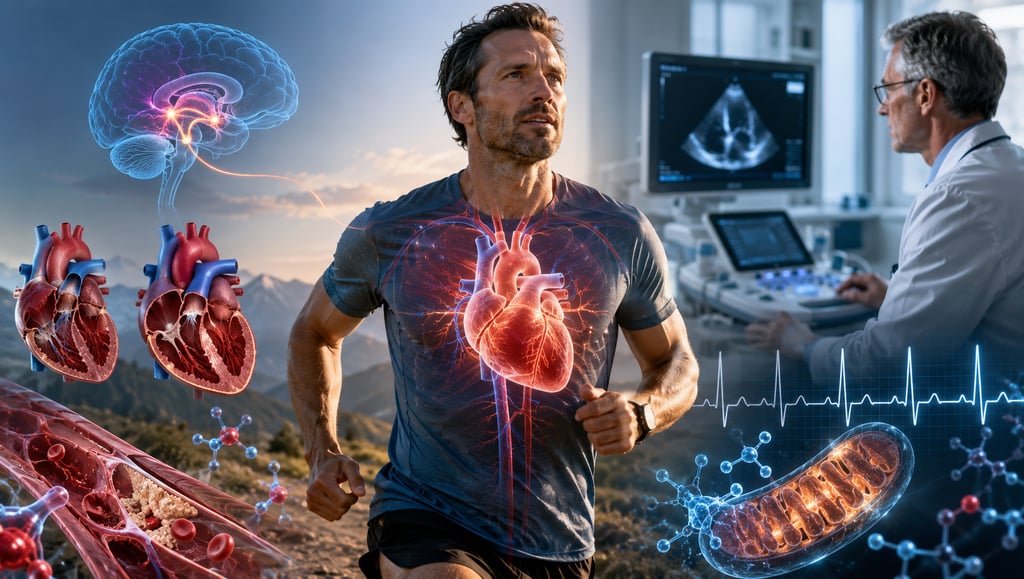

Regular endurance exercise strengthens the heart by improving stroke volume, cardiovascular efficiency, and overall fitness. However, recent research shows that lifelong high-intensity endurance training can also lead to unique adaptations known as the athlete’s heart, including cardiac remodeling and higher coronary artery calcium levels in some athletes. Most of these changes are healthy and reversible, and for the vast majority of people, regular exercise remains one of the most powerful ways to protect long-term heart health.
This question lies at the center of a fascinating field in modern medicine known as exercise cardiology. Scientists studying the athlete’s heart—the set of structural and functional changes that occur in response to long-term endurance training—have discovered that the heart is remarkably adaptable. With regular aerobic exercise, the main pumping chamber of the heart, the left ventricle, gradually becomes larger and more efficient, allowing it to pump more blood with each beat. This improvement in stroke volume and cardiovascular efficiency explains why trained athletes often have a lower resting heart rate and greater endurance during physical activity (Van Ochten et al., 2025).
At the same time, new research is revealing that the story is more complex than simply “more exercise is always better.” Recent studies examining exercise-induced cardiac remodeling, coronary artery calcium in endurance athletes, and even the brain circuits that regulate cardiovascular performance are reshaping how doctors understand the limits of human performance (Dausin et al., 2026; Yamanaka et al., 2026). In some lifelong endurance athletes, imaging studies show higher levels of coronary artery calcium, raising important questions about how extreme training interacts with long-term heart health (Guarnieri et al., 2025).
The reassuring news is that for the vast majority of people—from recreational runners to weekend cyclists—exercise remains one of the most powerful tools for protecting cardiovascular health. Understanding how the athlete’s heart adapts to training simply helps physicians and patients interpret these changes more accurately and train more safely.
Key Points
• Exercise strengthens the heart and improves cardiovascular efficiency
• Endurance training can cause reversible cardiac remodeling
• Lifelong extreme endurance athletes may have higher coronary calcium levels
• High cardiorespiratory fitness still strongly protects against heart disease
Matching exercise levels to how the heart adapts and the associated risks:
Sedentary
Heart Adaptation: Poor conditioning
Risk: High
Moderate
Heart Adaptation: Healthy remodeling
Risk: Lowest
Competitive Endurance
Heart Adaptation: Athlete's heart
Risk: Usually beneficial
Extreme Lifelong Endurance
Heart Adaptation: Higher CAC (coronary artery calcium) in some athletes
Risk: Requires individualized assessment
Should You See a Sports Cardiologist? In case of
✅ Chest pain
✅ Syncope
✅ Family history of sudden death
✅ Palpitations
✅ Age >40 with decades of endurance sport
Clinical pearls
1. The Dynamic Nature of Remodeling
Scientific Perspective: Exercise-induced cardiac remodeling (EICR) is a highly plastic, longitudinal process. As shown by the Pro@Heart Consortium (2026), chamber dimensions and stroke volume fluctuate in direct correlation with training cycles (macrocycles).
Your heart isn't "permanently" changed after one marathon season. It’s like any other muscle; it grows when you train hard and shrinks back slightly when you rest. This "flexibility" is actually a sign of a healthy, athletic heart.
2. The "Detraining" Diagnostic
Scientific Perspective: To differentiate physiological remodeling from Dilated Cardiomyopathy (DCM), clinicians should observe the heart during a period of reduced load. Pathological changes are static or progressive, whereas athletic adaptations show partial reversibility within weeks.
If a scan shows your heart is enlarged, don't panic. A doctor might ask you to take a few weeks off training. If the heart starts to return to a normal size during that break, it proves the enlargement was a healthy response to exercise, not a disease.
3. Plaque Morphology vs. Plaque Volume
Scientific Perspective: High Coronary Artery Calcium (CAC) scores in lifelong endurance athletes (Guarnieri et al., 2025) are often characterized by high-density calcified plaques. These are statistically more stable and less prone to rupture than the lipid-rich "soft" plaques found in sedentary populations.
Long-term athletes may have more calcium in their arteries, but it’s often "hard" calcium, which acts like a stable scab. In inactive people, plaque is often "soft" and more likely to break off and cause a heart attack. A high score for a runner doesn't always mean the same thing as a high score for a couch potato.
4. The Brain as a Cardiovascular Governor
Scientific Perspective: The amygdala–hypothalamus–brainstem circuit acts as a central command center that calibrates autonomic outflow during maximal exertion. Cardiovascular "failure" at peak intensity may be a neural regulatory ceiling rather than a primary cardiac limitation.
When you hit your absolute limit during a sprint, it’s not just your heart or legs giving up—your brain is actively pulling the emergency brake to protect you. This circuit links your emotional state and stress levels directly to your peak physical performance.
5. The "Fitness Paradox" in Outcomes
Scientific Perspective: Cardiorespiratory fitness (CRF) is a more potent predictor of longevity than CAC burden. High-fit individuals with elevated coronary calcium frequently have lower all-cause mortality rates than low-fit individuals with zero calcium.
Being "fit" provides a massive safety buffer. Even if an athlete has some signs of heart disease, their high level of fitness often protects them from the worst outcomes. It is almost always better to be a fit person with some plaque than an unfit person with "clean" arteries.
6. The "Golden Standard" of Personalization
Scientific Perspective: Population averages for heart size and heart rate are often misleading when applied to elite endurance cohorts. Clinical assessment must be interpreted against a baseline of sport-specific norms and individual training history (Van Ochten et al., 2025).
There is no "normal" heart rate or "normal" heart size for an athlete. What is considered "bradycardia" (slow heart rate) in a typical patient is often the gold standard of efficiency for a triathlete. Your doctor should treat you based on your training log, not just a textbook average.
Why the Athlete's Heart Matters — for Everyone
Athlete heart syndrome
Regular exercise is one of the most powerful medicines human beings have access to. Decades of research confirm that physically active people live longer, experience fewer heart attacks, and recover better from illness than their sedentary counterparts. Yet exercise is not a perfectly safe, one-size-fits-all prescription. The heart that adapts beautifully to a moderate training programme may be pushed into unfamiliar territory when training loads become extreme — and understanding exactly where the benefits end and the risks begin is one of the most active frontiers in cardiovascular medicine today.
A remarkable cluster of new research published in 2025 and 2026 sheds fresh light on this question from four distinct angles: how the heart changes in real time as training load rises and falls; how exercise-induced remodelling ultimately affects long-term cardiovascular outcomes; what happens deep inside the brain when endurance exercise reaches its physiological ceiling; and whether years of extreme endurance sport genuinely raises the risk of coronary artery disease. Together, these four studies paint the most detailed portrait yet of the athlete's cardiovascular system — and carry important messages for recreational runners, competitive triathletes, and anyone who has ever wondered whether their training habit is helping or hurting their heart.
40%Greater stroke volume in trained endurance athletes
20+Years of evidence linking exercise to reduced cardiac events
2×Difference in CAD prevalence between extreme athletes & moderate exercisers
Athlete’s Heart vs Heart Disease: Key Differences Explained
Understanding the difference between physiological adaptations from exercise and true cardiac disease is one of the most important challenges in sports cardiology. While both conditions can sometimes appear similar on imaging tests, several clinical features help physicians distinguish a healthy athlete’s heart from pathological heart disease.
Key Differences
• Left Ventricular (LV) Enlargement
Athlete’s Heart: Mild and proportional enlargement of the left ventricle due to long-term endurance training. This adaptation allows the heart to pump more blood efficiently during exercise.
Heart Disease: Enlargement is often excessive or abnormal and may reflect conditions such as cardiomyopathy or chronic cardiac stress
• Cardiac Function
Athlete’s Heart: Heart function is normal or even enhanced, with strong pumping ability and improved diastolic filling.
Heart Disease: Pumping efficiency is often reduced, and the heart may struggle to deliver adequate blood flow to the body.
• Reversibility
Athlete’s Heart: Structural changes are partially reversible when training intensity decreases or during periods of detraining.
Heart Disease: Structural changes usually persist or progress, even when physical activity is reduced.
Why This Distinction Matters
Recognizing these differences helps clinicians avoid misdiagnosing healthy athletes with heart disease while also ensuring that genuine cardiac conditions are identified early. In most cases, the athlete’s heart represents a beneficial and reversible adaptation to regular endurance training, not a sign of cardiovascular pathology.
Key Physiological Mechanisms Behind the Athlete’s Heart
• Increased Stroke Volume
Physiological change: Enlargement of the left ventricular (LV) chamber and improved ventricular filling during diastole.
Cardiovascular benefit: The heart pumps more blood with each beat, allowing a lower resting heart rate and greater exercise efficiency.
• Enhanced Vagal Tone (Autonomic Adaptation)
Physiological change: Increased parasympathetic nervous system activity and reduced sympathetic dominance at rest.
Cardiovascular benefit: Produces the classic low resting heart rate seen in trained athletes and may contribute to improved heart rhythm stability.
• Vascular Remodeling and Endothelial Function
Physiological change: Exercise stimulates endothelial nitric oxide production, improving blood vessel dilation and vascular flexibility.
Cardiovascular benefit: Leads to better arterial compliance, improved blood flow, and lower cardiovascular strain during exercise
.
• Mitochondrial Biogenesis in Skeletal Muscle
Physiological change: Increased number and efficiency of mitochondria in muscle cells, driven by exercise-induced metabolic signaling pathways.
Cardiovascular benefit: Enhances aerobic capacity, oxygen utilization, and metabolic efficiency, reducing cardiovascular stress during prolonged activity.
• Improved Cardiorespiratory Fitness (VO₂max)
Physiological change: Integrated adaptation involving the heart, lungs, muscles, and vascular system.
Cardiovascular benefit: Higher VO₂max is strongly associated with lower cardiovascular mortality and improved long-term heart health.
Clinical perspective:
Together, these mechanisms form the biological foundation of the athlete’s heart, demonstrating how regular endurance exercise produces coordinated adaptations across the cardiovascular, autonomic, and metabolic systems. For most individuals, these changes represent protective and reversible physiological remodeling rather than disease.
How Exercise Reshapes the Heart: Understanding Exercise-Induced Cardiac Remodeling
Regular endurance exercise triggers a series of structural and functional adaptations in the cardiovascular system known as exercise-induced cardiac remodeling, often referred to as the athlete’s heart. Rather than being a fixed condition, this remodeling is a dynamic and reversible process that evolves in response to training intensity, duration, and recovery.
A comprehensive review published in Annals of Medicine highlights how sustained physical training reshapes the heart in ways that generally improve cardiovascular performance and long-term health (Van Ochten et al., 2025).
At the center of this adaptation is the left ventricle, the heart’s primary pumping chamber. Repeated aerobic exercise increases the heart’s workload, stimulating the ventricle to expand slightly and become more efficient. This enlargement allows the heart to fill with more blood during diastole and eject a larger volume with each contraction.
The result is an increase in stroke volume, one of the defining characteristics of trained endurance athletes. Because each heartbeat pumps more blood, the heart does not need to beat as frequently at rest. This explains the lower resting heart rate commonly seen in runners, cyclists, and other endurance athletes.
Importantly, these structural changes are associated with measurable improvements in cardiovascular outcomes, including lower risks of heart failure, arrhythmias, and premature death across diverse populations (Van Ochten et al., 2025).
A key insight from modern exercise cardiology is that cardiac enlargement alone does not indicate disease. In athletes, the heart often becomes not just larger but also more elastic, more efficient, and more responsive to physiological demands.
Physiological vs Pathological Cardiac Remodeling
One of the most important challenges in sports cardiology is distinguishing between healthy athletic adaptation and underlying heart disease.
Researchers describe two major types of cardiac remodeling:
Physiological Cardiac Remodeling
This form of remodeling represents normal adaptation to endurance training.
Key features include:
Mild enlargement of cardiac chambers
Improved diastolic filling and pumping efficiency
Normal or enhanced cardiac function
Partial reversal during periods of detraining
This type of remodeling is considered beneficial and reversible.
Pathological Cardiac Remodeling
In contrast, pathological remodeling results from cardiovascular disease rather than training.
Typical features include:
Abnormal wall thickening or dilation
Reduced cardiac function
Persistent structural changes that do not reverse with rest
Because these patterns can appear superficially similar on imaging, physicians must interpret echocardiograms alongside training history, exercise volume, and recovery patterns.
What Endurance Athletes Should Ask Their Doctor
If an echocardiogram reveals an enlarged heart, endurance athletes should discuss several key questions with their physician:
Are the findings consistent with athlete’s heart syndrome?
Do the changes match my training volume and history?
Would a short period of detraining help clarify the diagnosis?
Physiological remodeling typically partially reverses when training intensity decreases, while disease-related changes usually persist.
Training Load and the Athlete’s Heart: Evidence From Longitudinal Research
One of the most important recent contributions to exercise cardiology comes from the Pro@Heart Consortium, whose longitudinal study was published in the European Heart Journal (Dausin et al., 2026).
Unlike traditional studies that capture only a single “snapshot” of the heart, this research followed endurance athletes over time, repeatedly measuring cardiac structure and function as training loads increased or decreased.
The findings revealed that cardiac adaptation is highly dynamic.
During periods of intensive training:
Cardiac chambers expand
Stroke volume increases
Cardiovascular efficiency improves
When training volume decreases:
Chamber dimensions partially regress
Cardiac structure returns closer to baseline
This reversibility is a hallmark of healthy exercise adaptation.
Another key finding is that athletes show substantial individual variability in how their hearts respond to identical training loads. This suggests that personalized cardiovascular monitoring may be more informative than relying solely on population averages.
What This Means for Recreational Athletes
For most people who exercise regularly, these findings are reassuring.
Even at relatively high training volumes, the cardiac adaptations observed in the Pro@Heart study remained within normal physiological ranges and demonstrated appropriate reversibility.
For recreational runners, cyclists, and fitness enthusiasts, the evidence strongly supports the safety of structured endurance exercise for cardiovascular health.
However, athletes who train at very high volumes for decades may benefit from periodic cardiovascular assessments conducted by physicians familiar with sports cardiology and athlete-specific physiology.
The Brain–Heart Connection During Maximal Exercise
While most research on the athlete’s heart focuses on the heart itself, new work suggests that the brain plays a crucial role in regulating cardiovascular responses during intense exercise.
A study published in Frontiers in Physiology identified a neural circuit involving three key brain regions that coordinate cardiovascular responses at the limits of endurance performance (Yamanaka et al., 2026):
Amygdala
Hypothalamus
Brainstem
Together, these regions function as a central cardiovascular control network.
How the Brain Regulates Cardiovascular Performance
This neural circuit acts as a command center that regulates the heart and blood vessels during extreme physical effort.
Each region plays a specific role:
Amygdala
Initiates anticipatory cardiovascular responses
Contributes to emotional and stress-related regulation of heart activity
Hypothalamus
Integrates physiological signals from across the body
Coordinates autonomic nervous system output
Brainstem
Executes cardiovascular commands
Adjusts heart rate, blood pressure, and blood flow in real time
This discovery suggests that the limits of endurance exercise are shaped not only by muscle fatigue and oxygen delivery, but also by central neural regulation.
Extreme Endurance Exercise and Coronary Artery Disease
is too much exercise bad for the heart
One of the most debated questions in sports cardiology is whether lifelong extreme endurance training increases coronary artery disease risk.
A large systematic review and meta-analysis published in the International Journal of Cardiology examined this issue in depth (Guarnieri et al., 2025).
The analysis found that veteran endurance athletes—particularly those who have participated in marathons, ultra-distance cycling, and Ironman triathlons for many years—often have higher coronary artery calcium (CAC) scores compared with moderately active individuals.
Coronary calcium is a marker of atherosclerotic plaque buildup in coronary arteries.
However, the story is more complex than it first appears.
Researchers observed that the plaques found in endurance athletes tend to be:
More calcified
More stable
Less likely to rupture
In contrast, plaques that cause most heart attacks are typically soft, lipid-rich, and unstable.
Understanding the Coronary Calcium Paradox in Athletes
This phenomenon is sometimes called the fitness paradox.
Even when coronary calcium levels are elevated, highly fit individuals often experience lower cardiovascular event rates than sedentary individuals with similar calcium scores.
Possible explanations include:
Better endothelial function
Improved metabolic health
Lower systemic inflammation
Higher cardiorespiratory fitness (VO₂max)
In other words, high fitness levels may offset some of the risks associated with structural coronary plaque changes.
When Should Endurance Athletes Consider Heart Screening?
exercise and coronary artery calcium
Although endurance training is overwhelmingly beneficial, certain athletes may benefit from proactive cardiovascular evaluation, particularly if they have:
Decades of high-volume endurance training
Age over 40
High cholesterol or hypertension
A family history of coronary artery disease
In these individuals, physicians may consider coronary calcium scanning and cardiovascular risk assessment.
Interpreting CAC scores in athletes requires expertise because the clinical meaning may differ from that in sedentary populations.
The Athlete’s Heart: What Modern Science Wants Every Exerciser to Know
1. Exercise Strengthens the Heart—Literally
With regular aerobic training, the heart becomes more efficient. The left ventricle—the main pumping chamber—gradually enlarges and pumps more blood with each beat. This increase in stroke volume allows the heart to work less at rest while delivering more oxygen during activity. For most people, this adaptation—often called the athlete’s heart—is a sign of a healthy cardiovascular system.
2. Heart Adaptations Are Dynamic and Reversible
One important discovery from recent research is that the athlete’s heart is not permanent. When training volume increases, the heart adapts. When training decreases, the heart gradually returns closer to its baseline structure. This reversibility helps doctors distinguish healthy athletic adaptation from heart disease, which typically does not reverse with rest.
3. The Brain Plays a Surprising Role in Exercise Limits
Scientists now understand that the brain helps regulate how the heart responds to extreme physical effort. Specialized circuits involving the amygdala, hypothalamus, and brainstem act like a central command system, adjusting heart rate, blood pressure, and blood flow during intense exercise. In other words, the limits of endurance are shaped not only by muscles and lungs—but also by the brain.
4. Extreme Endurance Training Raises Important Questions
Lifelong endurance athletes sometimes show higher levels of coronary artery calcium, a marker of plaque buildup in the arteries. However, these plaques often appear more stable and less likely to rupture compared with those seen in sedentary individuals. Fitness itself may provide important protection against cardiovascular events.
5. The Big Picture Remains Reassuring
For the vast majority of people, regular exercise dramatically lowers the risk of heart disease, stroke, diabetes, and early death. The key lesson from modern exercise cardiology is simple: move often, train wisely, and monitor your heart if you pursue extreme endurance sports.
Frequently Asked Questions
Is an enlarged heart in an athlete always a cause for concern?▾
Not at all. Cardiac enlargement is one of the hallmarks of athletic remodelling and is considered a completely normal physiological response in trained endurance athletes. The key question clinicians ask is whether the changes are proportionate to the level of training, whether function is normal or enhanced, and — crucially — whether the changes reverse partially when training volume drops. Pathological cardiac enlargement, caused by disease rather than exercise, tends not to reverse with rest and is associated with impaired function. Van Ochten et al. (2025) emphasise that understanding the difference requires interpreting imaging findings alongside a full clinical history. Always discuss any concerns with a cardiologist who has experience assessing athletes.
How much exercise is "extreme" — and when should I start monitoring my heart more carefully?▾
There is no universally agreed threshold, but most exercise cardiology research defines "extreme" endurance sport as activities like full Ironman triathlons, ultra-marathons, multi-day cycling events, or decades of competitive marathon running — typically involving many hours of vigorous training per week over years or decades. Guarnieri et al. (2025) suggest that proactive cardiac assessment, including coronary calcium scoring, is most relevant for men over 40 who have trained at high volumes for more than ten years and who have additional risk factors such as high cholesterol, hypertension, or a strong family history of heart disease. If you are unsure whether you fall into this group, a conversation with your GP is a good starting point.
Can exercise actually damage the heart in the long run?▾
The overwhelming evidence is that regular exercise protects the heart rather than damages it. The concern raised by recent research applies specifically to the small fraction of the population engaged in extreme, lifelong endurance sport — and even in that group, the risks appear to be attenuated by fitness-related protective mechanisms. Guarnieri et al. (2025) found that while coronary artery calcium scores tend to be higher in veteran extreme endurance athletes, these deposits are predominantly stable, calcified plaques rather than the rupture-prone soft plaques most closely linked to heart attacks. For the vast majority of exercisers — including those training vigorously several times a week — the cardiovascular benefits far outweigh any theoretical risk.
What does the brain have to do with heart performance during exercise?▾
More than most people realise. Yamanaka et al. (2026) identified a specific neural circuit — connecting the amygdala, hypothalamus, and brainstem — that actively governs cardiovascular responses when exercise approaches its physiological limits. This circuit regulates heart rate, blood pressure, and blood flow distribution in real time during maximal effort. The amygdala, best known for processing emotional responses like fear, also plays a role in the anticipatory cardiovascular preparation before intense exercise begins. This research helps explain why psychological factors — including anxiety, stress, and mental fatigue — can genuinely influence physical performance and cardiovascular responses during exercise, not just in the imagination but at a measurable, biological level.
Should I get a coronary calcium scan if I exercise a lot?▾
For most recreational exercisers, a coronary calcium scan is not routinely recommended and is unlikely to change clinical management. However, for veteran male endurance athletes — particularly those over 40 with cardiovascular risk factors — it can provide useful information when interpreted in the right context. The crucial point, highlighted by Guarnieri et al. (2025), is that a high calcium score in a fit, active individual carries different prognostic meaning than the same score in a sedentary person. It should never be interpreted in isolation. If you are interested in a calcium scan, discuss it with a cardiologist or sports medicine physician who is familiar with athlete-specific norms and can help you understand what the result does — and does not — mean for your health.
Do women's hearts respond to endurance training differently than men's?▾
Yes, there are meaningful sex-based differences in cardiac remodelling, and they are an area of active research. In general, female athletes tend to show smaller absolute chamber dimensions than male athletes at equivalent training loads, partly due to differences in body size, and their coronary artery calcium burdens at extreme training volumes also appear to be lower — a finding noted in the Guarnieri et al. (2025) meta-analysis. The mechanisms behind these differences are not fully understood but likely involve hormonal, anatomical, and haemodynamic factors. This also means that cardiac imaging reference ranges derived predominantly from male athletes may not apply directly to women, and there is a growing call in the field for sex-specific normative data to guide clinical decision-making in female athletes.
How often should a competitive endurance athlete have their heart checked?▾
There is no single universal recommendation, but most sports medicine and cardiology societies suggest that athletes engaged in vigorous training have at least a baseline cardiovascular evaluation — including a history, physical examination, resting ECG, and blood pressure — before taking up competitive sport and periodically thereafter. The longitudinal data from Dausin et al. (2026) and the Pro@Heart Consortium suggest that cardiac structure and function can change meaningfully in response to shifting training loads, which makes regular monitoring more informative than a single snapshot. Competitive athletes over 35, those with any cardiovascular symptoms (palpitations, unexplained breathlessness, chest discomfort, or syncope during exercise), and those with a family history of cardiac disease or sudden death should be assessed with additional testing and at greater frequency. When in doubt, seek a referral to a sports cardiology clinic.
Author’s Note
Exercise has long been recognized as one of the most powerful tools for protecting cardiovascular health. Yet the physiology of the human heart—particularly in individuals who train intensively for many years—remains a fascinating and evolving area of medical research. This article was written to help bridge the gap between emerging scientific evidence and the practical questions many patients, athletes, and clinicians now face about the limits and benefits of endurance exercise.
The studies discussed here represent a new generation of research in exercise cardiology, examining the athlete’s heart from multiple perspectives: structural cardiac adaptation, longitudinal responses to training load, the neural circuits that regulate cardiovascular performance, and the complex relationship between extreme endurance exercise and coronary artery disease. Taken together, these findings highlight the remarkable adaptability of the cardiovascular system while also reminding us that physiology rarely follows simple “more is always better” rules.
For most people, the message remains overwhelmingly positive. Regular physical activity—whether brisk walking, cycling, swimming, or running—remains one of the most effective strategies for preventing heart disease, improving metabolic health, and supporting healthy aging. The goal of discussing topics such as cardiac remodeling or coronary calcium in athletes is not to discourage exercise, but rather to help patients and clinicians interpret these findings accurately and make informed decisions about training intensity and cardiovascular monitoring.
Medicine advances by refining our understanding of the human body. As new research continues to explore how the heart adapts to lifelong physical training, one principle remains constant: movement is fundamental to human health. Understanding the science behind that movement simply helps us harness its benefits more safely and effectively.
Disclaimer: This article is for informational purposes only and does not constitute medical advice. Individual circumstances vary, and treatment decisions should always be made in consultation with qualified healthcare professionals.
Related Articles
Bone as an Endocrine Organ: Does Osteocalcin Influence Weight Regulation? | DR T S DIDWAL
The Metabolic Engine: Why Lower Body Strength Is Central to Fat Oxidation | DR T S DIDWAL
How Exercise Rewires Metabolism: Molecular Control of Lipolysis and Lipid Metabolism | DR T S DIDWAL
References
Dausin, C., Ruiz-Carmona, S., Cauwenberghs, N., De Bosscher, R., Ntalianis, E., Kuznetsova, T., Foulkes, S., Janssens, K., Mitchell, A., Vanderschueren, W., Ghekiere, O., Bogaert, J., Van De Heyning, C. M., Herbots, L., Heidbuchel, H., Willems, R., La Gerche, A., Claessen, G., & Pro@Heart Consortium. (2026). Cardiovascular adaptation to training load in endurance athletes: a longitudinal study. European Heart Journal. https://doi.org/10.1093/eurheartj/ehaf1018
Van Ochten, N. A., Suckow, E., Forbes, L., & Cornwell, W. K. (2025). The structural and functional aspects of exercise-induced cardiac remodeling and the impact of exercise on cardiovascular outcomes. Annals of Medicine, 57(1). https://doi.org/10.1080/07853890.2025.2499959
Yamanaka, K., Kim, J., Tsukioka, K., Ezure, S., Ichihara, H., Pham, L. T., & Waki, H. (2026). Amygdala–hypothalamus–brainstem circuits underlying cardiovascular responses associated with the limits of high-intensity endurance exercise. Frontiers in Physiology, 16, 1714093. https://doi.org/10.3389/fphys.2025.1714093
Guarnieri, G., Pozzi, F. E., Conte, E., Righetto, M., Bartorelli, A., & Andreini, D. (2025). Extreme endurance training and coronary artery disease: A systematic review and a meta-analysis. International Journal of Cardiology, 429, 133172. https://doi.org/10.1016/j.ijcard.2025.133172