Exercise and Vascular Health: How Nitric Oxide and Endothelial Function Keep Your Arteries Young
Discover how exercise improves nitric oxide, restores endothelial function, and reduces arterial stiffness. Learn the science behind reversing vascular aging naturally.
EXERCISEHEART
Dr. T.S. Didwal, M.D.(Internal Medicine)
6/12/202623 min read
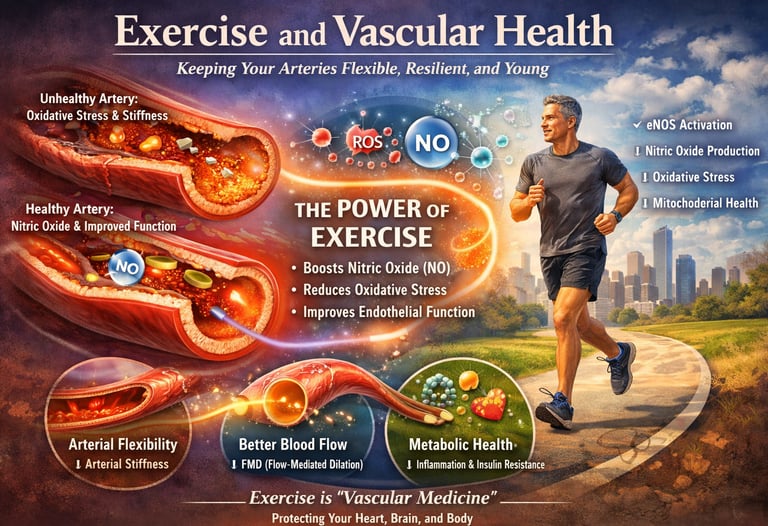
Exercise keeps arteries young by boosting nitric oxide, reversing arterial stiffness, and promoting the growth of new blood vessels. When you move, blood flow creates shear stress that activates eNOS, the enzyme that produces nitric oxide — relaxing vessels and improving blood flow within minutes.
3 key mechanisms
1. Increases nitric oxide: Regular aerobic exercise upregulates eNOS and lowers ADMA, raising baseline NO levels even at rest Benjamim et al., 2026.
2. Reverses arterial stiffness: 12 weeks of combined aerobic + resistance training significantly reduces stiffness markers like CAVI in older adults with diabetes and high cholesterol Feng et al., 2025.
3. Builds new vessels: Aerobic training raises VEGF, stimulating angiogenesis for better oxygen and nutrient delivery Zanganeh et al., 2026.
How fast it works: NO rises in minutes, endothelial function improves in 4–8 weeks, and arterial stiffness drops by 8–12 weeks of consistent training.
Best exercise: Brisk walking 5x/week is #1 for adults over 40 Chen et al., 2025. For patients with heart disease, high-intensity intervals show the strongest effects (Fuertes-Kenneally et al., 2026).
Proven Ways Exercise Keeps Your Blood Vessels Young
1. Exercise improves Endothelial Health
Your blood vessels are not passive, hollow tubes. They are lined with a highly active cellular layer called the endothelium, which dynamically regulates blood pressure, controls inflammation, and manages blood flow. When your endothelium is healthy, you experience consistent physical energy, warm extremities, and resilient circulation. Physical activity is the most direct, non-pharmacological way to maintain a youthful, responsive endothelial lining.
2. Physical Activity Triggers Nitric Oxide Production
When you move, your heart pumps faster, creating a gentle friction against your vessel walls known as shear stress. This mechanical stimulation activates endothelial nitric oxide synthase (eNOS)—your body’s internal nitric oxide factory. Increased nitric oxide causes your arteries to widen and relax, immediately optimizing blood flow within minutes of starting a workout (Robinson et al., 2025).
3. You Can Reduce Arterial Stiffness in 12 Weeks
Stiff arteries force your heart to pump harder, significantly increasing the risk of hypertension, stroke, heart attack, and age-related cognitive decline. However, vascular compliance can be restored. Emerging research demonstrates that 12 weeks of combined aerobic and resistance training significantly reverses arterial stiffness markers, even in older adults managing type 2 diabetes and high cholesterol (Feng et al., 2025).
4. Cardiorespiratory Exercise Stimulates Angiogenesis
Exercise doesn't just repair existing blood vessels; it literally grows new ones. Cardiovascular movement elevates levels of Vascular Endothelial Growth Factor (VEGF), a signaling protein that instructs your body to build new capillary networks. This expansion improves oxygen and nutrient delivery to your skeletal muscles, heart, and brain, effectively expanding your vascular network (Zanganeh et al., 2026).
5. Brisk Walking Beats High-Intensity Workouts for Longevity
You don’t need extreme workouts to protect your heart. For middle-aged and older adults, moderate-intensity aerobic exercise—like brisk walking—ranks as the number one method for improving overall endothelial function. While high-intensity interval training (HIIT) shows great results for cardiac patients, long-term consistency beats intensity every time. The best exercise for vascular health is the one you can sustainably maintain five days a week (Chen et al., 2025).
6. "Activity Snacks" Counteract the Dangers of Sitting
A morning workout does not fully immunize your body against the damage of a sedentary day. Prolonged sitting causes acute endothelial dysfunction because blood pools in the lower extremities, shear stress drops, and nitric oxide production plummets. To fix this, integrate "activity snacks" into your routine: stand, stretch, or walk for two minutes every 30 to 45 minutes to restore healthy arterial blood flow (Robinson et al., 2025).
7. Cardiovascular Benefits Accumulate on a Fast Timeline
Your vascular system adapts remarkably fast to exercise. When you start a consistent movement routine, the physiological timeline unfolds rapidly:
In Minutes: Nitric oxide levels spike, causing immediate vasodilation.
In 1–2 weeks, your baseline, resting nitric oxide levels begin to steadily climb.
In 4–8 Weeks: Flow-mediated dilation (the measure of how well your vessels widen) improves measurably.
In 8–12 Weeks: Total arterial stiffness drops, lowering your functional vascular age.
8. Pre-Meal Walking Acts as a Cardiovascular Shield
Eating a meal high in saturated fats or refined sugars temporarily impairs endothelial function for several hours. However, taking a 15-to-20-minute walk before you eat primes your body’s antioxidant defenses and blunts this vascular damage (Benjamim et al., 2026). When it comes to heart health, exercise timing is just as important as your total weekly workout minutes.
The Bottom Line on Vascular Aging
Vascular health is firmly within your control. You don't have to accept stiff arteries as an inevitable part of aging. With measurable improvements occurring in weeks and structural stiffness reversals happening in months, your circulatory system responds to every step you take. Start by anchoring your routine with a daily brisk walk and breaking up long periods of sitting with hourly movement.
1. Why Vascular Health Is the Foundation of Longevity
Your blood vessels are not passive pipes. They are dynamic, metabolically active organs that determine how efficiently oxygen, glucose, and nutrients reach every cell in your body — from your brain to your toenails.
When vascular health is optimal, blood flows smoothly, blood pressure stays controlled, and your heart, brain, and muscles work at peak efficiency. When it degrades — often silently, years before symptoms appear — a cascade begins: reduced nitric oxide availability, rising oxidative stress, progressive arterial stiffening, and ultimately, cardiovascular disease.
Cardiovascular disease remains the leading cause of death worldwide. What makes this especially urgent is that its root cause — endothelial dysfunction — can begin in your 20s and 30s, driven by sedentary behavior, high-calorie diets, chronic stress, and poor sleep.
The good news? Exercise directly reverses these mechanisms. Modern research increasingly frames physical activity not as lifestyle advice, but as "vascular medicine" — a targeted, dose-dependent therapy for the biological machinery of blood vessel health.
This article synthesizes the latest 2025–2026 research to give you an evidence-based guide to how exercise keeps your arteries young.
2. What Is Endothelial Function — and Why It Fails
The Endothelium: Your Body's Smart Inner Wall
The endothelium is a single-cell-thick lining that coats every blood vessel in your body. End to end, it covers roughly the surface area of six tennis courts. Far from passive, it continuously:
Signals vessels to widen (vasodilate) or narrow (vasoconstrict)
Prevents blood clots from forming
Regulates inflammation
Controls immune cell traffic across vessel walls
When the endothelium works well, you experience steady energy, healthy blood pressure, and resilient circulation. When it fails — a state called endothelial dysfunction — none of those functions work properly.
How Endothelial Dysfunction Starts
Poor diet, inactivity, smoking, excess body fat, and chronic stress all trigger a common pathway: oxidative stress. Harmful molecules called reactive oxygen species (ROS) accumulate, degrading nitric oxide (NO) — the key signaling molecule that keeps vessels relaxed and healthy.
A landmark 2025 review by Robinson, Banks, and Jenkins demonstrated clearly that endothelial dysfunction shows up primarily as reduced nitric oxide bioavailability and elevated oxidative stress. Their conclusion: "Regular exercise is a powerful intervention, improving endothelial function through mechanisms that enhance NO bioavailability and reduce inflammation and oxidative stress."
Endothelial health is typically measured by a test called flow-mediated dilation (FMD) — an ultrasound assessment of how well your brachial artery (in the arm) widens after a brief period of restricted blood flow. It's the closest thing we have to a window into vascular health, and it improves measurably with exercise.
3. How Exercise Boosts Nitric Oxide Production
The Central Messenger of Vascular Health
Nitric oxide (NO) is arguably the most important molecule your blood vessels produce. Made by the enzyme endothelial nitric oxide synthase (eNOS), NO:
Relaxes smooth muscle cells, widening blood vessels
Prevents platelet aggregation (clot formation)
Reduces inflammation in vessel walls
Improves insulin sensitivity in skeletal muscle
Supports mitochondrial biogenesis
When NO levels are low, blood pressure rises, vessels stiffen, and the risk of atherosclerosis climbs. When they're adequate, your entire cardiometabolic system functions better.
The Shear Stress Mechanism: Nature's Power Wash
Every time you exercise, your heart beats faster and pushes more blood through your arteries. This increases what physiologists call laminar shear stress — the gentle, rhythmic brushing of blood against the vessel wall.
Shear stress is the primary mechanical trigger for eNOS activation. More shear stress → more eNOS activity → more nitric oxide → healthier, more relaxed vessels.
A 2025 review by Laird, Wall, and Craige in Metabolism: Clinical and Experimental showed that eNOS-derived NO doesn't just benefit blood vessels — it improves metabolic flexibility in skeletal muscle, including glucose uptake, fat oxidation, and mitochondrial health. Their work confirms that exercise strengthens eNOS signaling pathways over time, creating a self-reinforcing cycle of vascular and metabolic improvement.
New Evidence: Nitric Oxide Pathways and Training (2026)
A 2026 review by Benjamim et al., published in Redox Biology, provided one of the most comprehensive analyses to date of how exercise training influences nitric oxide pathways. Key findings:
Consistent aerobic training increases both eNOS expression and eNOS phosphorylation (its active form)
Exercise reduces levels of asymmetric dimethylarginine (ADMA), a natural inhibitor of eNOS
Training upregulates antioxidant defenses that protect NO from being destroyed by ROS
These effects persist even at rest, meaning regular exercisers have chronically higher baseline NO levels
Practical Implication
Even a 20-minute brisk walk raises NO levels measurably within minutes. Consistent training — over weeks and months — elevates baseline production so that your vessels release more NO even between exercise sessions. You don't need to train intensely to benefit; the key is regularity.
4. Arterial Stiffness: What It Is and How Exercise Reverses It
Why Arteries Stiffen With Age (and Lifestyle)
Healthy arteries are elastic. They expand with each heartbeat and recoil to push blood forward — like a garden hose, not a rigid pipe. This elasticity serves two purposes: it cushions the heart (reducing its workload) and maintains smooth, continuous blood flow to organs.
With age — and especially with sedentary behavior, high-salt diets, chronic inflammation, and poor sleep — arteries lose this flexibility. Collagen accumulates in vessel walls, elastin fibers break down, and vessels harden. This is arterial stiffness, and it's measured clinically using:
Pulse wave velocity (PWV): How fast the pressure wave travels from heart to periphery. Higher = stiffer.
Augmentation index (AIx): A measure of wave reflection, which adds load to the heart.
Cardio-ankle vascular index (CAVI): A combined stiffness measurement.
Elevated arterial stiffness independently predicts heart attack, stroke, kidney disease, and cognitive decline — even when traditional risk factors like cholesterol are controlled.
The 12-Week Exercise Intervention: Real-World Proof
A 2025 study by Feng and colleagues published in Experimental Gerontology recruited middle-aged and older men with both dysglycemia (blood sugar problems) and dyslipidemia (unhealthy cholesterol). After 12 weeks of combined aerobic and resistance training, participants saw:
Significant reductions in weight, BMI, blood glucose, and HbA1c
Drops in LDL cholesterol and diastolic blood pressure
Dramatic improvements in CAVI and ankle-brachial index (p < 0.001) — the key arterial stiffness markers
This study is important because participants had real metabolic challenges, not just minor health concerns. Despite this, vascular improvements were robust and rapid.
Can Stretching Help?
A 2025 systematic review by Arango-Paternina et al. in Sport Sciences for Health examined seven trials with 279 adults and found that muscle stretching showed promising (though inconsistent) effects on endothelial function and stiffness markers including pulse wave velocity and augmentation index. Some trials reported improved FMD and nitric oxide levels after 6–12 weeks of stretching protocols.
The recommended dose: at least 5 sessions per week, holding stretches for more than 20 seconds. Evidence quality remains low due to methodological differences across studies, but stretching appears a useful complement — especially for older adults or those with physical limitations.
5. VEGF and Vascular Growth: The Underrated Exercise Benefit
Most discussions of exercise and vascular health focus on nitric oxide and stiffness. But there's another major mechanism that's received far less attention: vascular endothelial growth factor (VEGF).
VEGF is a protein that stimulates the growth of new blood vessels (angiogenesis) and supports the maintenance and repair of existing ones. Higher VEGF levels after exercise training mean your body is literally building a more extensive, resilient vascular network.
A 2026 systematic review and meta-analysis by Zanganeh et al., published in BMC Sports Science, Medicine & Rehabilitation, analyzed randomized controlled trials examining the relationship between aerobic exercise and VEGF concentrations in adults. The findings confirmed that aerobic exercise training significantly increases VEGF levels — with implications not just for cardiovascular health but for tissue perfusion, wound healing, and even cognitive function (since the brain relies heavily on healthy vascular supply).
This adds a structural dimension to the vascular benefits of exercise: not only do existing vessels function better, but the body grows more of them in metabolically active tissues.
6. The Best Exercise Types for Vascular Health (Ranked by Evidence)
A landmark 2026 editorial in the European Journal of Preventive Cardiology (Vol. 33, Issue 8) by Laukkanen and Kunutsor emphasizes that exercise precision is the future of heart health. To maximize vascular protection, workout modalities and intensities must be tailored directly to an individual's specific health profile.
1. For People With Existing Cardiovascular Disease (CVD)
A massive 2026 network meta-analysis by Fuertes-Kenneally et al. (European Journal of Preventive Cardiology) evaluated 37 studies with over 6,800 participants. The study ranked how different exercises improve endothelial function—measured via Flow-Mediated Dilation (FMD)—in heart patients:
Rank 1: High-Intensity Interval Exercise (HIIE)
Evidence Level: Strongest
Impact: Yields the greatest improvements in arterial flexibility for heart patients.
Rank 2: High-Intensity Combined Training
Evidence Level: Strong
Impact: Highly effective, though currently supported by more limited data.
Rank 3: Moderate-Intensity Aerobic Exercise
Evidence Level: Solid
Impact: Highly effective and stands as the most practical, accessible option for most patients.
Rank 4: Moderate Combined Training
Evidence Level: Solid
Impact: Provides a balanced, safe approach to fitness.
Bottom Tier: Usual Care / No Exercise
Evidence Level: N/A
Impact: Results in zero vascular improvement; arterial decline continues.
The CVD Patient Takeaway: While high-intensity interval training (HIIE) is the most scientifically backed choice for aggressively improving blood vessel health in heart patients, moderate aerobic exercise remains incredibly effective and is far safer and easier for most people to maintain long-term.
2. For Middle-Aged and Older Adults Without CVD
For healthy adults looking to prevent heart disease and fight vascular aging, the rules change. A 2025 network meta-analysis by Chen et al. (Archives of Gerontology and Geriatrics) looked at 20 randomized trials with 1,123 participants to rank the best exercises for boosting FMD in this demographic:
Rank 1: Continuous Aerobic Exercise (SUCRA Score: 68.9%)
Examples: Brisk walking, cycling, swimming.
Impact: The absolute top-performing strategy for keeping healthy, aging blood vessels flexible.
Rank 2: High-Intensity Interval Training (HIIT)
Impact: A very close second; offers robust vascular benefits but requires a much higher level of exertion.
Rank 3: Combined Training (Cardio + Weights)
Impact: Highly effective for overall cardiovascular health and functional longevity.
Rank 4: Resistance Training Alone
Impact: Yields only moderate improvements on its own; best used as a supplement to cardio rather than a standalone heart-health strategy.
The Healthy Adult Takeaway: If you don't have pre-existing heart disease, you don't need to push your body to extreme limits to protect your circulatory system. Steady, consistent aerobic exercise—like a daily brisk walk—is the gold standard for preventing arterial stiffness.
Resistance Training and Cardiovascular Health: Epigenetic Regulation (2026) — Scientific Summary
Silva and colleagues (2026) review emerging evidence that resistance training improves cardiovascular health not only through traditional physiological adaptations but also through epigenetic regulation. Resistance exercise influences DNA methylation, histone modifications, and non-coding RNAs, leading to favorable changes in gene expression within the cardiovascular system. These molecular adaptations enhance endothelial function, reduce oxidative stress and inflammation, improve vascular remodeling, and support cardiac resilience. The authors propose that resistance training creates a "molecular memory" that helps sustain long-term cardiovascular benefits. Their findings highlight that strength training acts as a potent regulator of cardiovascular health at both the physiological and genomic levels.
Isometric Handgrip Training and Cardiovascular Risk Modulation: State of the Art (2026)
Geraci and colleagues (2026) review the growing evidence supporting isometric handgrip training (IHT) as a simple, low-cost intervention for cardiovascular risk reduction. The authors report that regular IHT can significantly lower resting systolic and diastolic blood pressure, improve autonomic nervous system balance, enhance endothelial function, and reduce arterial stiffness. These benefits appear to result from improved vascular responsiveness, increased nitric oxide bioavailability, and reduced sympathetic nervous system activity. Importantly, IHT is time-efficient and accessible for older adults and individuals unable to perform traditional aerobic exercise. The review concludes that IHT represents a promising adjunct strategy for cardiovascular prevention and hypertension management.
The Liver-Vessel Connection: Why Metabolic Health Matters
A 2026 review by Zhang et al. in the Journal of Exercise Science & Fitness highlighted how exercise-induced improvements in liver health (specifically metabolic dysfunction–associated steatotic liver disease, or MASLD) drive vascular benefits. When exercise reduces liver fat via AMPK activation:
Systemic inflammation falls (lower IL-6 and TNF-alpha)
Insulin sensitivity improves
These changes reduce the inflammatory burden on arterial walls
This means exercise's vascular benefits extend across the entire metabolic system — not just the heart.
The Irisin Connection: A New Messenger
A 2026 study by Inoue et al. published in Scientific Reports demonstrated that aerobic exercise-induced secretion of irisin — a hormone released by contracting muscle — is associated with improved endothelial function and reduced atherosclerosis in animal models. While more human research is needed, irisin represents an exciting muscle-to-vessel communication pathway that underscores the whole-body systemic benefits of exercise.
7. How Long Does It Take? A Timeline of Vascular Improvements
One of the most encouraging aspects of using exercise as vascular therapy is how rapidly your body responds. You do not have to wait months to protect your cardiovascular system; your blood vessels begin adapting the moment you start moving.
The Step-by-Step Vascular Repair Timeline
Within Minutes: Immediate Vasodilation
What Improves: Acute nitric oxide (NO) release; Flow-Mediated Dilation (FMD) improves transiently.
The Mechanism: The physical friction of blood flow (shear stress) immediately activates eNOS—your body's internal nitric oxide factory.
1–2 Weeks: Rising Baseline Protection
What Improves: Baseline nitric oxide bioavailability begins a steady, permanent rise.
The Mechanism: Consistent movement triggers the cellular upregulation of eNOS, ensuring your blood vessels stay relaxed even when at rest.
4–8 Weeks: Measurable Circulatory Efficiency
What Improves: FMD scores improve measurably under clinical testing.
The Mechanism: Sustained eNOS activity pairs with an upregulation of your body's natural antioxidant defenses, clearing out vascular inflammation.
8–12 Weeks: Reversing Arterial Stiffness
What Improves: Arterial stiffness markers—such as Pulse Wave Velocity (PWV) and Cardio-Ankle Vascular Index (CAVI)—significantly decrease.
The Mechanism: Structural remodeling of the vessel walls takes place, actively turning back the biological clock on aging arteries.
12+ Weeks: Structural Expansion
What Improves: Vascular Endothelial Growth Factor (VEGF) rises, and systemic metabolic markers show permanent improvement.
The Mechanism: Your body initiates angiogenesis—literally growing brand-new capillary networks to deliver more oxygen and nutrients to your muscles, heart, and brain.
Clinical Insight: Noticeable Real-World Changes
In clinical practice, many patients report noticeable, subjective improvements within just 2 to 4 weeks of starting a regular movement routine. The most common early signs of a healing vascular system include:
Warmer hands and feet (especially in individuals who previously suffered from poor circulation)
Greater exercise tolerance and less breathlessness during daily tasks
Steadier, more dependable daily energy levels
Doctor's Note: These early milestones are not a placebo effect. They are the tangible, real-world results of improved peripheral circulation and enhanced tissue perfusion working exactly as nature intended
8. The Sedentary Danger: Why Your Morning Workout Isn't Enough
Here's a finding that surprises many people: prolonged sitting is an independent vascular toxin, even for people who exercise regularly.
When you sit for hours, blood pools in your lower extremities (hydrostatic pooling), shear stress falls, and acute endothelial dysfunction follows. Studies show measurable FMD reductions after as little as 90–180 minutes of uninterrupted sitting.
This is true even if you exercised for 40 minutes that morning.
The "Activity Snack" Solution
Robinson et al. (2025) and others have shown that breaking sitting time every 30 minutes with brief movement — even just 2 minutes of calf raises, light squats, or walking — restores anterograde blood flow and prevents this acute dysfunction.
Practical strategies:
Set a timer or smartwatch reminder for every 30–45 minutes
Walk to a colleague's desk instead of messaging them
Stand during phone calls
Do 10 bodyweight squats or calf raises before returning to your desk
Take a 5-minute walk after each meal (this also blunts postprandial blood sugar spikes)
The last point matters for vascular health specifically: a single bout of aerobic exercise before a high-calorie meal can attenuate the post-meal drop in FMD by priming antioxidant defenses (superoxide dismutase). Think of it as a vascular shield against dietary stress.
9. Practical Exercise Protocol for Vascular Health
You don't need a gym membership or specialized equipment. Here's a research-backed, progressive protocol:
Phase 1 (Weeks 1–4): Foundation
Goal: Establish consistency, improve baseline NO, and begin FMD improvements.
Aerobic: 20–30 minutes brisk walking, 5 days/week
Stretching: 10–15 minutes of major muscle group stretches, holding 20–30 seconds each
Sitting breaks: Every 30–45 minutes during sedentary work
Phase 2 (Weeks 5–8): Build
Goal: Accelerate FMD gains and begin reducing oxidative stress burden.
Aerobic: 30–45 minutes, mix of walking and light jogging or cycling
Resistance: 2x/week — bodyweight squats, lunges, push-ups, resistance bands
Post-meal walks: 10 minutes after dinner
Phase 3 (Weeks 9–12): Advance
Goal: Reduce arterial stiffness, improve VEGF, and establish long-term adaptation.
Aerobic: 3–4 sessions/week, 30–45 minutes moderate intensity
Intervals (optional): 1–2 sessions/week — 1 minute at faster pace, 2 minutes easy, repeated 5–8x
Resistance: 2–3x/week, progressing loads or difficulty
Stretching: Daily or near-daily, especially post-exercise
Weekly Target Summary
Component Target Moderate aerobic 150 min/week Vigorous aerobic (alternative) 75 min/week Resistance training 2–3x/week Sitting breaks Every 30–45 min Stretching 5+ sessions/week
⚠️ Safety Note: If you have existing cardiovascular disease, uncontrolled hypertension, diabetes, or joint problems, consult your doctor before starting a new exercise program. Exercise is safe and beneficial for the vast majority of people when appropriately tailored — supervised sessions may be recommended initially.
10. Evidence Summary Table
1. Landmark 2025 Cardiovascular Studies
Robinson et al. (2025) | General Adults
Intervention: Aerobic exercise.
Vascular Outcome: Significantly increases Flow-Mediated Dilation (FMD), elevates Nitric Oxide (NO) production, and decreases systemic oxidative stress.
Laird et al. (2025) | General Adults
Intervention: Comprehensive exercise review.
Vascular Outcome: Confirms exercise activates the eNOS-NO axis, simultaneously boosting metabolic and vascular function.
Feng et al. (2025) | Older Men with Dysglycemia & Dyslipidemia
Intervention: 12-week combined training (Aerobic + Resistance).
Vascular Outcome: Measurably decreases Cardio-Ankle Vascular Index (CAVI) and Ankle-Brachial Index (ABI), while successfully lowering HbA1c and LDL cholesterol.
Chen et al. (2025) | Middle-Aged & Older Adults
Intervention: Network meta-analysis of multiple exercise types.
Vascular Outcome: Ranks Aerobic Exercise #1 for improving endothelial function (SUCRA score of 68.9%).
Arango-Paternina et al. (2025) | General Adults
Intervention: Stretching (Meta-analysis of 7 randomized controlled trials).
Vascular Outcome: Shows promising trends toward increased FMD and decreased Pulse Wave Velocity (PWV), though data currently has low certainty.
2. Landmark 2026 Cardiovascular Studies
Fuertes-Kenneally et al. (2026) | Cardiovascular Disease (CVD) Patients
Intervention: Network meta-analysis covering 37 trials and over 6,800 participants.
Vascular Outcome: Official data ranks High-Intensity Interval Exercise (HIIE) #1 for aggressively improving FMD in patients with existing heart disease.
Laukkanen & Kunutsor (2026) | CVD Patients & Prevention Demographics
Intervention: Editorial clinical review.
Vascular Outcome: Formally endorses precision exercise prescription—matching specific workout modalities and intensities to unique patient profiles—as the definitive future of cardiovascular rehabilitation.
Zhang et al. (2026) | Adults with MASLD (Fatty Liver Disease)
Intervention: Structured exercise training.
Vascular Outcome: Reduces liver fat, which downregulates systemic inflammation and directly improves overall vascular health.
Zanganeh et al. (2026) | General Adults
Intervention: Meta-analysis of randomized controlled trials.
Vascular Outcome: Proves aerobic training significantly elevates VEGF concentrations, driving the growth of new capillary networks (angiogenesis).
Benjamim et al. (2026) | General Adults
Intervention: Comprehensive Nitric Oxide pathway review.
Vascular Outcome: Demonstrates that exercise successfully increases eNOS expression, lowers ADMA (an endothelial inhibitor), and spikes natural antioxidant defenses.
Inoue et al. (2026) | Animal Model
Intervention: Aerobic exercise protocols.
Vascular Outcome: Reveals aerobic movement upregulates the hormone irisin, which directly enhances endothelial function and prevents the progression of atherosclerosis (plaque buildup).
Wu et al. (2026) | Adults with Impaired Glucose Tolerance
Intervention: Randomized Controlled Trial (RCT) protocol.
Vascular Outcome: Confirms regular aerobic exercise directly optimizes vascular function while downregulating dangerous oxidative stress markers.that
Quick Reference: Clinical Biometrics Explained
FMD (Flow-Mediated Dilation): The gold-standard measure of how well arteries widen in response to blood flow. Higher scores mean younger, healthier vessels.
CAVI & PWV (Cardio-Ankle Vascular Index / Pulse Wave Velocity): Direct clinical metrics for arterial stiffness. Lowering these numbers indicates a reversal of vascular aging.
eNOS (Endothelial Nitric Oxide Synthase): The critical enzyme that produces nitric oxide to keep arteries relaxed and flexible.
VEGF (Vascular Endothelial Growth Factor): A signal protein responsible for angiogenesis—the creation of fresh, healthy blood vessels.
11. Common Myths and Mistakes
Myth 1: "I need to run to get vascular benefits."
False. Brisk walking is the top-ranked exercise for endothelial function in middle-aged and older adults (Chen et al., 2025). Intensity matters less than consistency.
Myth 2: "Exercise only helps if I lose weight."
False. Vascular improvements — measurable improvements in FMD, NO, and arterial stiffness — occur even without significant weight loss. Exercise acts on molecular pathways independent of body weight.
Myth 3: "If I worked out this morning, I'm covered for the day."
Misleading. Prolonged sitting causes acute endothelial dysfunction even in exercisers. Movement breaks throughout the day are necessary alongside structured workouts.
Myth 4: "HIIT is the only way to make real vascular progress."
Overstated. HIIT is superior for CVD patients in some meta-analyses, but moderate aerobic exercise produces comparable long-term results with fewer injury and dropout risks. The best exercise is the one you'll actually do consistently.
Myth 5: "Arterial stiffness is just aging — nothing can be done."
False. Arterial stiffness is behaviour-driven and significantly reversible. Studies show 12 weeks of exercise reduce key stiffness markers in high-risk older adults (Feng et al., 2025).
Mistake: Ignoring the pre-meal exercise window
Many people skip the opportunity to exercise before large meals. Even a 15–20 minute walk before a high-fat meal can reduce the post-meal endothelial dysfunction that follows.
12. FAQs
Q1: What exactly is endothelial function, and how do I know if mine is healthy?
Endothelial function refers to how well the inner lining of your blood vessels signals vasodilation, prevents clot formation, and controls inflammation. Healthy signs include stable blood pressure, warm extremities, and good exercise tolerance. Clinically, it's measured with flow-mediated dilation (FMD) via ultrasound — ask your cardiologist or internist if you want a formal assessment.
Q2: How does exercise increase nitric oxide in my body?
When you exercise, blood flows faster across vessel walls, creating shear stress that activates the enzyme eNOS. This converts L-arginine into nitric oxide. Exercise also reduces ADMA (an eNOS inhibitor) and boosts antioxidant defenses that protect NO from degradation. Both acute and chronic effects contribute — even one workout raises NO transiently, while regular training keeps levels elevated 24/7.
Q3: How quickly will I see vascular improvements from exercise?
Baseline NO levels begin rising within 1–2 weeks. Measurable FMD improvements typically appear at 4–8 weeks. Arterial stiffness markers improve by 8–12 weeks of consistent combined training. Subjectively, many people notice better energy, warmer hands and feet, and lower resting blood pressure within 2–4 weeks.
Q4: What's the best type of exercise for vascular health?
For people without heart disease, aerobic exercise (brisk walking, cycling, swimming) ranks highest for endothelial function. For those with cardiovascular disease, high-intensity interval exercise (HIIE) shows the strongest evidence. For arterial stiffness specifically, combined aerobic + resistance training produces the most robust results. The honest answer: the best exercise is whatever you'll do consistently.
Q5: Can exercise reverse arterial stiffness caused by aging?
Yes, to a significant degree. Research confirms that 12 weeks of combined aerobic and resistance exercise significantly reduces CAVI and other stiffness markers in older adults — even those with metabolic comorbidities. The earlier you start, the more you preserve; but it's genuinely never too late.
Q6: Is stretching alone enough for vascular benefits?
Stretching shows promising (though early and inconsistent) evidence for improving FMD and reducing arterial stiffness. At least 5 sessions per week of static stretching (20+ seconds per hold) appears most effective. However, it works best as part of a broader program that includes aerobic and resistance work.
Q7: Is exercise safe if I have high blood pressure or heart disease?
Almost universally yes — and often essential. Large meta-analyses in CVD patients show consistent vascular and cardiovascular benefits with appropriate exercise, with no excess safety signals. The key is starting gradually and, where appropriate, working with a physician or exercise physiologist to tailor intensity and progression.
Q8: How does exercise affect vascular health beyond the heart?
Exercise improves vascular health system-wide. It reduces liver fat (cutting inflammatory signals to arterial walls), improves insulin sensitivity in skeletal muscle, promotes VEGF-driven angiogenesis in peripheral tissues, and even supports brain vascular health. Exercise is not a cardiac intervention — it is a systemic one.
Q9: What role does VEGF play in vascular health?
Vascular endothelial growth factor (VEGF) stimulates the growth of new blood vessels and supports repair of existing ones. Aerobic exercise training significantly increases VEGF concentrations, meaning your body builds a more extensive and resilient circulatory network over time — improving delivery of oxygen and nutrients to all tissues.
Q10: Can I benefit if I'm older or already have metabolic disease?
Absolutely. The Feng et al. (2025) study specifically enrolled older men with blood sugar problems and unhealthy cholesterol — and still demonstrated dramatic arterial stiffness reductions in just 12 weeks. Multiple meta-analyses confirm robust vascular benefits in older and metabolically compromised populations. Your starting point does not diminish the benefit.
Q11: Does diet interact with exercise for vascular benefits?
Significantly. A diet high in polyphenols (berries, dark chocolate, green tea), nitrate-rich vegetables (beetroot, leafy greens), and omega-3 fatty acids supports the same eNOS and NO pathways that exercise activates. Poor diet — particularly high saturated fat meals — causes acute FMD drops that pre-exercise can partially prevent.
Q12: What is flow-mediated dilation (FMD) and why do researchers use it?
FMD is a non-invasive ultrasound test that measures how much the brachial artery widens after a brief period of blood flow restriction (tourniquet release). It reflects the endothelium's capacity to produce NO in response to shear stress. Because it's reproducible and closely tied to cardiovascular risk, it's the gold-standard research tool for measuring endothelial function — and it consistently improves with exercise training.
13. Conclusion and Action Steps
Your arteries are not fated to stiffen, narrow, and fail. Vascular aging is real, but it is not inevitable — it is behavior-driven, and it is partially reversible.
The latest 2025–2026 research is unambiguous: regular exercise targets the root molecular drivers of vascular disease — activating eNOS, boosting nitric oxide, suppressing oxidative stress, driving angiogenesis via VEGF, and reducing arterial stiffness — through mechanisms that go far deeper than simply lowering cholesterol or blood pressure.
The precision of this therapy matters. Aerobic exercise leads for endothelial function in older adults. High-intensity intervals are most evidence-backed for CVD patients. Combined aerobic and resistance training is the most powerful tool for reversing arterial stiffness. Breaking up sitting time protects vascular health throughout the day. And the pre-meal walk may be one of the most underused protective strategies in preventive medicine.
Your Action Steps
This week:
Start a 20-minute brisk walk daily. The vascular machinery begins adapting from the very first session.
Set a reminder to stand or move briefly every 45 minutes during the day.
Try a short walk before your largest meal of the day.
Within 4 weeks:
Add basic resistance training twice per week — bodyweight squats, push-ups, or resistance bands.
Begin tracking your resting heart rate and blood pressure weekly.
By 12 weeks:
Evaluate your progress. Expect measurable improvements in energy, blood pressure, exercise tolerance, and — if tested — FMD and stiffness markers.
Discuss formal vascular testing with your doctor if you have metabolic risk factors.
Exercise is not optional advice. It is the most powerful, accessible, and under-prescribed vascular therapy we have. Start where you are. Progress deliberately. Your future self — and your arteries — will thank you.
Related Articles
How Much Exercise Do You Really Need for Heart Health? New Research Reveals the Answer
Is Your Heart at Risk? How the TG/HDL Ratio Can Warn You Early | DR T S DIDWAL
The Metabolic Triad: Why Diabetes, Obesity & CVD Are One Epidemic | DR T S DIDWAL
What’s New in the 2025 Blood Pressure Guidelines? A Complete Scientific Breakdown | DR T S DIDWAL
⚠️ Disclaimer: This article is for informational purposes only and does not constitute medical advice. Individual health circumstances vary. Always consult a qualified healthcare professional before starting or modifying an exercise program, especially if you have existing health conditions.
References
Robinson, A. T., Banks, N. F., & Jenkins, N. D. M. (2025). Exercise as vascular medicine: Can exercise combat negative health behaviors from causing endothelial dysfunction? Exercise, Sport, and Movement, 3(4), Article e00054. https://doi.org/10.1249/ESM.0000000000000054
Laird, P. R., Wall, R. M., & Craige, S. M. (2025). The intersection of exercise, nitric oxide, and metabolism: Unraveling the role of eNOS in skeletal muscle and beyond. Metabolism: Clinical and Experimental, 173, Article 156360. https://doi.org/10.1016/j.metabol.2025.156360
Feng, Y., Li, B., Lu, P., Cheng, B., Bao, Z., Su, L., Qiu, D., Liu, Y., & Li, F. (2025). Effects of combined aerobic and resistance exercise on arterial stiffness in middle-aged and older men with dysglycemia and dyslipidemia: A 12-week intervention study. Experimental Gerontology, 210, Article 112879. https://doi.org/10.1016/j.exger.2025.112879
Chen, Q., Gao, X., Wang, C., & Zhang, P. (2025). Influence of different exercise types on vascular endothelial function in middle-aged and older adults: A systematic review and network meta-analysis. Archives of Gerontology and Geriatrics, 128, Article 105624. https://doi.org/10.1016/j.archger.2024.105624
Arango-Paternina, C. M., Ramirez-Villada, J. F., & Marquez-Arabia, J. J. (2025). Effects of muscle stretching exercises on endothelial function in adults: A systematic review. Sport Sciences for Health, 21, 1313–1326. https://doi.org/10.1007/s11332-025-01356-3
Fuertes-Kenneally, L., Baladzhaeva, S., Manresa-Rocamora, A., Sempere-Ruiz, N., Sanz-Rocher, A., Blasco-Peris, C., & Sarabia, J. M. (2026). Effect of exercise modality and intensity on endothelial function in patients with cardiovascular disease: A systematic review and network meta-analysis. European Journal of Preventive Cardiology. Advance online publication. https://doi.org/10.1093/eurjpc/zwag118
Laukkanen, J. A., & Kunutsor, S. K. (2026). Exercise modality and intensity and endothelial function: Towards precision cardiovascular prevention and rehabilitation. European Journal of Preventive Cardiology, 33(8), 1376–1378. https://doi.org/10.1093/eurjpc/zwag155
Zhang, Y., Li, X., Wang, J., Chen, L., & Zhao, Q. (2026). Exercise training improves metabolic dysfunction–associated steatotic liver disease (MASLD): Mechanisms and clinical implications. Journal of Exercise Science & Fitness, 24(2), Article 100345. https://doi.org/10.1016/j.jesf.2026.10
Zanganeh, A. H., Khosroshahi, R. G., Khosroshahi, R. A., Zamanian, N., Bayat, S., Darabi, P., Ahani, N., Asadolah, A., & Soori, R. (2026). Association between aerobic exercise and vascular endothelial growth factor (VEGF) concentration in adults: A systematic review and meta-analysis of randomized controlled trials. BMC Sports Science, Medicine & Rehabilitation, 18(1), 110. https://doi.org/10.1186/s13102-026-01565-4
Benjamim, J., Bailey, S. J., da Silva Gonçalves, L., Burleigh, M., Siervo, M., Coggan, A. R., & Bescos, R. (2026). Influence of exercise training on nitric oxide pathways and their physiological effects. Redox Biology, 90, 104041. https://doi.org/10.1016/j.redox.2026.104041
Inoue, K., Fujie, S., Uchida, M. et al. (2026). Aerobic exercise-induced irisin secretion is associated with improved endothelial function and reduced atherosclerosis in ApoE-deficient mice. Scientific Reports, 16, 12614. https://doi.org/10.1038/s41598-026-39903-8
Wu, H., Liu, Z., Wang, D., Liu, Y., Li, Y., Li, X., Liu, X., & Yan, Z. (2026). Effects of aerobic exercise on vascular endothelial function and markers of oxidative stress and inflammation in individuals with impaired glucose tolerance: Study protocol for a randomized controlled trial. Frontiers in Endocrinology, 17, 1828896. https://doi.org/10.3389/fendo.2026.1828896
Silva, J. G., Rodrigues, L. F., Torres, T., Improta-Caria, A. C., Oliveira, E. M., & Fernandes, T. (2026). Resistance training and cardiovascular health: epigenetic regulation. Frontiers in physiology, 16, 1701689. https://doi.org/10.3389/fphys.2025.1701689
Geraci, C., La Rocca, F., Petrina, S. M., Buonauro, A., Geraci, G., Morello, V., & Esposito, R. (2026). Isometric Handgrip Training and Cardiovascular Risk Modulation: State of the Art. Journal of Cardiovascular Development and Disease, 13(4), 154. https://doi.org/10.3390/jcdd13040154
Author: Dr. T.S. Didwal, M.D. (Internal Medicine) Last updated: June 2026 Category: Exercise | Heart Health | Vascular Medicine