How Polyphenols Improve Insulin Sensitivity: The Gut-Metabolite Connection That's Revolutionizing Metabolic Health
Discover how polyphenols fight obesity and reverse insulin resistance. Learn how the gut metabolite -PPA is revolutionizing the management of metabolic health.
NUTRITION
Dr. T.S. Didwal, M.D.
11/27/202517 min read
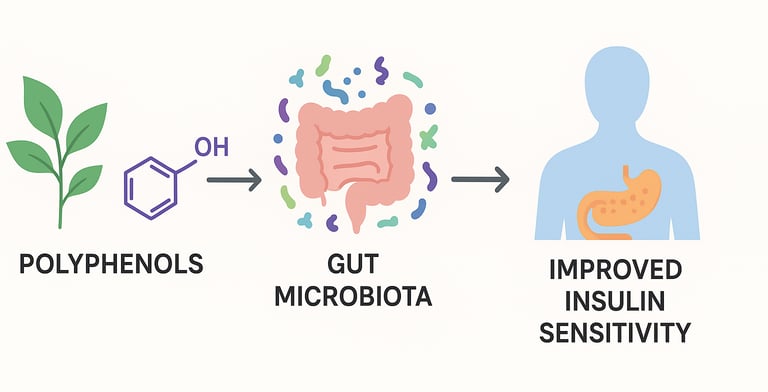
If you've been paying attention to health headlines lately, you've probably heard the term polyphenols tossed around with growing enthusiasm. But what exactly are these compounds, and why are researchers getting so excited about their ability to improve insulin sensitivity? The answer lies in an unexpected place: your gut microbiota.
For years, we've understood insulin resistance as a straightforward metabolic problem—your cells simply don't respond well to insulin anymore. But emerging research reveals something far more nuanced and hopeful. When you consume dietary polyphenols, your gut bacteria don't just process them passively. Instead, they actively transform these plant compounds into powerful metabolites that can reverse insulin resistance and restore metabolic function (Alqudah et al., 2025).
This isn't theoretical science. Multiple peer-reviewed studies now demonstrate that gut microbial metabolism of polyphenols produces bioactive compounds capable of reshaping how your body handles glucose, manages inflammation, and regulates energy storage. For anyone struggling with cardiometabolic disease, metabolic syndrome, or simply wanting to optimize their metabolic health, understanding this mechanism could be genuinely life-changing.
Let's dive into what the latest research tells us about how polyphenols, gut microbiota, and insulin sensitivity form an intricate biological dance—and how you can harness this knowledge to improve your health.
Based on the current, cutting-edge research presented in your article, here are five scientific clinical pearls emphasizing the polyphenol-gut metabolite connection and their practical implications for metabolic health:
Clinical Pearls on Polyphenols and Metabolic Health
1. 3-Phenylpropionic Acid is a Causal Agent
Pearl: The therapeutic benefit of certain dietary polyphenols in reversing insulin resistance is not merely correlative; it is causally linked to the production of specific gut microbial metabolites, most notably 3-phenylpropionic acid (3-PPA). 3-PPA has been shown to restore normal metabolic function in models of obesity-associated metabolic dysfunction.
Suggestion:
Focus on Substrate Delivery: Therapeutic strategies should focus on consistently delivering diverse polyphenol precursors to the colon where the gut bacteria reside. This is best achieved by consuming whole, varied plant foods (berries, nuts, cocoa, tea) combined with fiber/prebiotics to optimize the bacterial machinery necessary for 3-PPA synthesis.
2. The Two-Front Attack on Insulin Resistance
Pearl: Polyphenol metabolites improve insulin sensitivity through a multi-pronged mechanism that simultaneously addresses two primary drivers of resistance: direct cellular signaling (e.g., enhancing mitochondrial function) and reducing systemic inflammation. The anti-inflammatory effect includes strengthening the intestinal barrier, thereby preventing the "leaky gut" that triggers metabolic endotoxemia.
Suggestion:
Treat the Ecosystem, Not Just the Symptom: Advise patients that polyphenol-rich diets are effective because they are an anti-inflammatory intervention as much as a glucose-regulating one. Encourage food preparation methods that preserve polyphenol integrity and combine them with other anti-inflammatory fats (like olive oil).
3. Microbiota is the Rate-Limiting Step
Pearl: The clinical response to polyphenol consumption is highly individualized because the efficiency and diversity of metabolite production depend entirely on the patient's unique gut microbiota composition—a concept known as microbiota individuality. A patient with a dysbiotic or low-diversity gut may fail to generate adequate quantities of therapeutic metabolites even with high polyphenol intake.
Suggestion:
Test and Support the Microbiota: If a patient with insulin resistance shows limited response to increased polyphenol intake, investigate potential microbiota dysfunction (e.g., recent antibiotic use, low-fiber intake). Prioritize interventions that improve gut diversity first, such as broad-spectrum fermented foods or targeted prebiotics, before concluding the polyphenol strategy is ineffective.
4. Whole Foods Trump Isolation
Pearl: While polyphenol supplements are widely available, whole polyphenol-rich foods offer superior metabolic benefits. Whole foods provide the necessary fiber and prebiotic compounds that feed the beneficial bacteria, creating the synergistic environment required for efficient polyphenol metabolism and metabolite production.
Suggestion:
Prioritize the Matrix: Guide patients to focus on incorporating whole foods (e.g., ground flaxseed, cocoa nibs, whole berries) rather than relying on high-dose, isolated extracts. Emphasize the importance of the food matrix for optimizing the delivery and subsequent microbial transformation of polyphenols into bioactive compounds.
5. Consistency is Key to Ecosystem Shift
Pearl: Metabolic improvements linked to polyphenols require the consistent, chronic adaptation of the gut microbiota. The beneficial bacteria needed to efficiently metabolize these compounds thrive under regular feeding patterns, meaning occasional "dosing" is less effective than daily, sustained intake.
Suggestion:
Establish Daily Habits: Design dietary plans that ensure a small, consistent daily intake of varied polyphenol sources (e.g., tea with breakfast, nuts for a snack, olive oil on dinner) rather than encouraging sporadic, large amounts. Stress that they are managing a living ecosystem that responds best to routine maintenance.
What Are Polyphenols? Understanding Nature's Most Powerful Antioxidants
Before we explore the mechanisms, let's establish what we're actually talking about. Polyphenols are naturally occurring organic compounds found abundantly in plant-based foods (Kumar Singh et al., 2019). They're the pigments responsible for the vibrant colors in berries, the bitterness in dark chocolate, and the robust character of red wine. Chemically, they're characterized by multiple phenolic hydroxyl groups attached to aromatic rings—but what matters more than the chemistry is their biological power.
You'll find dietary polyphenols in foods like:
Berries (blueberries, raspberries, blackberries)
Apples and other stone fruits
Red grapes and red wine
Green and black tea
Dark chocolate and cocoa
Whole grains
Legumes
Nuts and seeds
Olive oil
Coffee
These compounds represent one of the most abundant classes of plant metabolites, and humans have consumed them throughout history. Yet only recently have we begun to understand their sophisticated mechanisms of action—particularly their role in improving insulin sensitivity through an unexpected intermediary: your gut microbiota .Prasain & Barnes,(2024)
The Gut Microbiota Revolution: Your Secret Metabolic Allies
Here's where things get truly fascinating. When you eat dietary polyphenols, something remarkable happens inside your digestive tract. Your gut bacteria—the trillions of microorganisms living in your intestines—possess enzymes that humans lack. These microbial enzymes can break down and metabolize polyphenols into entirely different compounds: secondary metabolites with their own distinct biological properties (Alqudah & Claesen, 2024).
This gut microbial metabolism represents a fundamental paradigm shift in how we think about nutrition. You're not just eating the polyphenol itself; you're essentially providing your gut bacteria with raw materials to synthesize bioactive compounds tailored to improve your metabolic health. According to recent research, dietary polyphenols serve as substrates for bacterial enzymes that generate unique metabolic byproducts (Gade & Kumar, 2023).
The implications are profound. The exact composition of your gut microbiota influences which metabolites get produced and in what quantities. This helps explain why identical polyphenol intake might produce different health outcomes in different people—their unique microbial communities generate unique metabolic profiles. This personalized aspect of gut-derived metabolites opens exciting possibilities for targeted dietary interventions.
The Star Player: 3-Phenylpropionic Acid and Insulin Resistance
Among all the microbial metabolites produced from dietary polyphenols, one compound has emerged as a particular star: 3-phenylpropionic acid (3-PPA). Recent research reveals this metabolite to be remarkably potent at reversing insulin resistance and addressing obesity-associated metabolic dysfunction.
A groundbreaking 2025 study found that 3-phenylpropionic acid reverses both insulin resistance and the metabolic dysfunction typically associated with obesity (Alqudah et al., 2025). This isn't merely incremental improvement—we're talking about genuine reversal of pathological metabolic states. The researchers demonstrated that this single microbial metabolite of dietary polyphenols could restore normal glucose handling and metabolic efficiency.
What makes this discovery particularly exciting is the specificity. Scientists can now point to an exact molecular mechanism linking polyphenol consumption to improved insulin sensitivity. The pathway runs through your gut bacteria, which metabolize the polyphenols you consume into 3-phenylpropionic acid and other bioactive compounds. These metabolites then exert effects on glucose metabolism, insulin signaling, and energy regulation at the cellular level.
The implications for anyone with metabolic syndrome, type 2 diabetes risk, or obesity are genuinely significant. Rather than viewing polyphenols as just another antioxidant, we should recognize them as substrates for microbial metabolism—precursors to powerful therapeutic metabolites (Alqudah & Claesen, 2024).
Understanding Gut Microbial Metabolite Pathways
The journey from dietary polyphenol to functional metabolite follows specific biochemical pathways that vary considerably based on bacterial composition. Different polyphenols undergo different transformations depending on your unique gut microbiota composition. Flavonoids get metabolized into different end products than phenolic acids, which differ from the metabolites generated from tannins and other polyphenol classes (Gade & Kumar, 2023).
Research demonstrates that mechanisms of gut bacterial metabolism are sophisticated and species-specific, with particular bacterial taxa possessing unique enzymatic capabilities for converting polyphenolic compounds (Alqudah & Claesen, 2024). This complexity is actually advantageous for health outcomes. A diverse polyphenol-rich diet, combined with a healthy and diverse gut microbiota, generates a rich array of bioactive metabolites. Some of these metabolites improve insulin sensitivity directly through cellular signaling pathways. Others reduce inflammation—a major driver of insulin resistance. Still others enhance the integrity of the intestinal barrier, preventing "leaky gut" that can trigger systemic inflammation and metabolic dysfunction.
The cardiometabolic disease connection becomes clearer when you understand this system. Insulin resistance doesn't occur in isolation; it accompanies chronic inflammation, dyslipidemia, and impaired endothelial function. By producing multiple bioactive metabolites simultaneously, gut microbial metabolism of polyphenols addresses the entire constellation of abnormalities that define cardiometabolic disease (Cano et al., 2024).
The Microbiota-Polyphenol Synergy: A Two-Way Relationship
Here's something that makes the gut microbiota story even more elegant: the relationship between polyphenols and gut bacteria isn't one-directional. It's genuinely symbiotic. Your gut bacteria benefit from dietary polyphenols as an energy source and obtain compounds useful for their own survival and proliferation. In return, they produce metabolites beneficial to your health (Kumar Singh et al., 2019).
Research on polyphenol-gut microbiota cross-talk reveals that consuming polyphenols selectively promotes the growth of beneficial bacterial species while inhibiting pathogenic ones. This shifts your gut microbiota composition toward a more health-promoting profile. The molecular and therapeutic perspectives of this interaction demonstrate how dietary polyphenols reshape microbial ecosystems (Cano et al., 2024). At the same time, a healthy and diverse microbiota can more efficiently metabolize the polyphenols you consume, creating a virtuous cycle of improving metabolic function.
This dynamic is why simply taking isolated polyphenol supplements may not produce the same benefits as consuming whole polyphenol-rich foods. Whole foods provide fiber that also feeds beneficial gut bacteria, prebiotic compounds that promote their growth, and the full spectrum of polyphenol structures for metabolism. They support the entire ecosystem rather than just providing isolated compounds (Kumar Singh et al., 2019).
For anyone focused on insulin sensitivity improvement, this underscores an important principle: you're not just changing what you eat, you're reshaping your entire gut ecosystem. And that ecosystem then produces the exact metabolites your metabolism needs for improved glucose handling and metabolic function.
Molecular and Therapeutic Mechanisms: How Polyphenols Restore Metabolic Health
The molecular pathways connecting polyphenol-derived metabolites to improved insulin sensitivity involve multiple mechanisms operating simultaneously. Understanding these helps explain why polyphenols are so remarkably effective at addressing metabolic dysfunction.
Direct Cellular Signaling: Many gut microbial metabolites of dietary polyphenols interact directly with cellular receptors involved in glucose metabolism. Some bind to nuclear receptors like PXR and AhR, triggering gene expression changes that improve insulin signaling. Others enhance mitochondrial function, allowing cells to more efficiently process glucose. These direct effects happen at the molecular level, changing how your cells respond to insulin (Alqudah & Claesen, 2024).
Inflammation Reduction: Chronic low-grade inflammation drives insulin resistance by impairing insulin signaling cascades. Multiple polyphenol metabolites possess anti-inflammatory properties, reducing the cytokine production that undermines metabolic health. This inflammation reduction appears particularly important in obesity-associated metabolic dysfunction, where excess adipose tissue drives systemic inflammation (Alqudah et al., 2025).
Intestinal Barrier Integrity: Polyphenol-derived metabolites strengthen the tight junctions that form the intestinal barrier. This prevents bacterial lipopolysaccharides from translocating across the gut wall—a major trigger of metabolic endotoxemia and systemic inflammation. By maintaining barrier integrity, polyphenols prevent inflammation that would otherwise impair insulin sensitivity (Cano et al., 2024).
Microbiota Composition Shifts: As mentioned, polyphenol consumption promotes beneficial bacteria while reducing pathogenic species. This compositional shift improves the overall metabolic capacity of your microbiota. A microbiota optimized for metabolizing dietary polyphenols generates more and higher-quality metabolites, creating a positive feedback loop of improving insulin sensitivity (Gade & Kumar, 2023).
The convergence of these mechanisms explains why research consistently shows polyphenol-rich diets improve metabolic parameters. It's not one isolated effect; it's a coordinated shift across multiple metabolic systems, all pointing toward improved insulin sensitivity and better glucose control.
Key Research Studies: What the Evidence Actually Shows
Recent peer-reviewed research has generated compelling evidence for the polyphenol-microbiota-insulin sensitivity connection. Let's examine the major studies that have shaped our current understanding.
3-Phenylpropionic Acid: The Breakthrough Finding (2025)
The most recent and arguably most significant study demonstrated that 3-phenylpropionic acid—a gut microbial metabolite generated from dietary polyphenols—actively reverses both insulin resistance and obesity-associated metabolic dysfunction (Alqudah et al., 2025). This wasn't observational data suggesting a correlation; researchers directly tested whether administering this metabolite could restore normal metabolic function in compromised systems. The results were compelling: 3-phenylpropionic acid reversed the pathological metabolic state, demonstrating causal rather than merely correlative relationships.
This research fundamentally validates the therapeutic potential of polyphenol consumption. If a specific microbial metabolite can reverse insulin resistance, and if we know that dietary polyphenols generate this metabolite through gut microbial metabolism, then consuming polyphenols becomes a rational therapeutic strategy for metabolic disease.
Gut Microbial Metabolites in Human Health (2023)
A comprehensive analysis explored the potential roles of gut microbial metabolites in both health maintenance and disease prevention (Gade & Kumar, 2023). The researchers catalogued how different dietary polyphenols generate distinct metabolite profiles depending on microbiota composition, intestinal transit time, and other factors. Their key takeaway: the metabolic fate of dietary polyphenols depends entirely on your individual gut microbiota, explaining individual variation in health responses to the same foods.
This study emphasized that personalized approaches to polyphenol consumption might eventually allow people to optimize their metabolite production based on their unique microbial profile. Testing someone's gut microbiota composition could theoretically indicate which polyphenol-rich foods would generate the most therapeutic metabolites for their particular metabolic situation.
Polyphenol Metabolism Mechanisms (2024)
A detailed mechanistic study examined exactly how gut bacteria metabolize dietary polyphenols into bioactive compounds (Alqudah & Claesen, 2024). The researchers identified specific bacterial enzymes responsible for cleaving polyphenol structures, reducing aromatic rings, and generating the diverse metabolites produced in the colon. Understanding these specific biochemical pathways revealed that bacterial species differ significantly in their metabolic capabilities—a key reason why microbiota composition influences health outcomes.
This research suggests that promoting the growth of polyphenol-metabolizing bacteria through specific dietary strategies might enhance the health benefits of polyphenol consumption. If your microbiota lacks efficient polyphenol metabolizers, you might not generate adequate quantities of beneficial metabolites despite consuming plenty of dietary polyphenols.
Polyphenol Delivery and Bioavailability (2019)
An earlier but still highly relevant study examined strategies to improve the delivery and bioavailability of dietary polyphenols (Kumar Singh et al., 2019). The researchers noted that while whole polyphenol-rich foods effectively promote health through the gut microbiota mechanism, some polyphenols are absorbed in the small intestine before reaching the colon where gut bacteria reside. Formulation strategies—such as nanoparticle delivery systems or combination with other compounds—can direct more polyphenols to the colon, where microbial metabolism occurs. This distinction matters: polyphenols that get absorbed early produce different effects than those reaching the colon intact.
The research emphasized that polyphenol bioavailability should be considered when designing dietary interventions for metabolic disease. Simply consuming polyphenol-rich foods might not optimize the quantity reaching your gut bacteria. Thoughtful combinations of foods or strategic supplementation could enhance polyphenol delivery to sites of microbial metabolism (Kumar Singh et al., 2019).
The Broader Cardiometabolic Disease Picture (2024)
The most recent comprehensive review integrated findings on polyphenol-gut microbiota cross-talk with their therapeutic potential for cardiometabolic disease (Cano et al., 2024). This study emphasized that insulin resistance doesn't occur in isolation—it represents one component of a broader metabolic dysfunction syndrome. Polyphenol-derived metabolites address multiple aspects of this dysfunction simultaneously: improving glucose metabolism, reducing inflammation, enhancing lipid profiles, and improving endothelial function. The interconnected nature of these benefits explains why polyphenol consumption shows consistent improvements across multiple cardiometabolic parameters.
This research highlighted that polyphenols should be understood as addressing the root causes of metabolic disease rather than just ameliorating symptoms. By restoring a healthy gut microbiota composition and generating beneficial metabolites, polyphenols potentially prevent disease progression rather than merely managing existing pathology (Cano et al., 2024).
Recent Updates on Diet-Derived Metabolites (2024)
Recent comprehensive summaries of diet-derived gut microbial metabolites highlight the rapidly evolving understanding of how food components are transformed by microbial communities (Prasain & Barnes, 2024). These updates emphasize that the polyphenol-metabolite connection represents just one aspect of a broader field examining how dietary compounds create therapeutic compounds through bacterial metabolism. This expanding research base validates the precision of polyphenol-microbiota interactions and their role in metabolic health restoration.
Bridging the Gap: Why Individual Responses Vary
One observation emerging from research on polyphenols and insulin sensitivity is that people don't respond identically to identical interventions. Some individuals show dramatic improvements in glucose control after increasing polyphenol intake, while others show modest changes. Why?
The answer lies in microbiota individuality. Your unique constellation of bacterial species, their specific metabolic capabilities, and their relative proportions determine what metabolites get produced from dietary polyphenols you consume (Gade & Kumar, 2023). Someone with a microbiota rich in efficient polyphenol metabolizers will generate more therapeutic metabolites than someone whose bacteria lack these metabolic talents.
Additionally, genetic factors, other dietary components, medications (particularly antibiotics), stress, sleep, and physical activity all influence gut microbiota composition and function. Polyphenol consumption exists within this broader context of overall lifestyle. Someone eating polyphenol-rich foods while chronically sleep-deprived and sedentary might not experience the same insulin sensitivity improvement as someone consuming the same foods with good sleep and regular exercise.
This highlights an important message: polyphenols are powerful, but they're not magic pills. They work best as part of a comprehensive approach to metabolic health. However, research clearly demonstrates their unique contribution to improving insulin sensitivity through mechanisms unavailable from other dietary interventions (Alqudah et al., 2025).
Practical Application: Optimizing Your Polyphenol Consumption
Understanding the science is valuable, but how do you actually apply this knowledge? Here are evidence-based strategies for maximizing the metabolic benefits of polyphenol consumption:
Emphasize Diversity: Different polyphenol-rich foods contain different polyphenol structures, which generate different metabolites through gut microbial metabolism (Alqudah & Claesen, 2024). Consuming a diverse range of polyphenol sources—berries, tea, chocolate, coffee, legumes, nuts, olive oil, and whole grains—ensures your microbiota receives varied substrates for metabolite production. This diversity principle also promotes a healthier, more diverse gut microbiota composition.
Combine with Prebiotics and Fiber: Feeding your gut bacteria means consuming adequate fiber and prebiotic compounds alongside polyphenols. Fiber serves as food for beneficial bacteria, while prebiotics specifically promote the growth of health-promoting species. This synergy optimizes the microbial ecosystem's ability to metabolize polyphenols into therapeutic metabolites (Kumar Singh et al., 2019).
Consistency Matters More Than Quantity: Rather than occasional large doses of polyphenol-rich foods, consistent daily intake appears more beneficial for maintaining a healthy gut microbiota adapted to metabolizing polyphenols. Your bacteria respond to regular feeding patterns, developing stable communities optimized for processing the compounds you regularly consume.
Consider Whole Foods First: While polyphenol supplements might have a role, whole foods provide fiber, prebiotics, phytonutrients, and numerous other compounds that support both the polyphenol metabolism process and overall metabolic health. The comprehensive benefit of whole polyphenol-rich foods exceeds what isolated supplements typically provide (Kumar Singh et al., 2019).
Mind the Overall Dietary Context: Polyphenols show maximal benefit when consumed as part of an otherwise healthy diet. High refined carbohydrate intake, excessive added sugars, and unhealthy fats can impair the beneficial effects of polyphenols by promoting dysbiosis—an unhealthy gut microbiota composition. The Mediterranean diet, which emphasizes polyphenol-rich plant foods alongside healthy fats and adequate protein, demonstrates how polyphenols fit within optimal dietary patterns (Cano et al., 2024).
Frequently Asked Questions
How long does it take for polyphenols to improve insulin sensitivity?
Research suggests improvements can begin within weeks of consistent polyphenol consumption as your gut microbiota composition shifts (Gade & Kumar, 2023). However, more substantial metabolic improvements typically require 8-12 weeks. Remember, you're rebuilding your bacterial ecosystem—this takes time. Consistency matters more than expecting overnight transformation.
Can I take polyphenol supplements instead of eating polyphenol-rich foods?
While some benefits might transfer, whole foods provide superior results because they include fiber and prebiotics that simultaneously feed your gut bacteria (Kumar Singh et al., 2019). Isolated supplements deliver polyphenols without the supporting compounds that optimize gut microbial metabolism. Whole foods represent the most evidence-supported approach.
Do polyphenols help if I have type 2 diabetes?
Yes, research demonstrates that polyphenol consumption improves glucose control in type 2 diabetes, though usually as part of a comprehensive approach rather than as monotherapy (Alqudah et al., 2025). If you have diabetes, discuss polyphenol-rich diet modifications with your healthcare provider, especially if taking blood glucose medications—improved insulin sensitivity might require medication adjustments.
What's the best source of polyphenols?
Different sources offer different polyphenol profiles (Prasain & Barnes, 2024). Berries provide anthocyanins, green tea provides catechins, red wine provides resveratrol, and olive oil provides secoiridoids. A varied approach consuming multiple sources optimizes the diversity of gut microbial metabolites produced. No single source is "best"—variety is the principle (Alqudah & Claesen, 2024).
How much should I consume daily?
Research on polyphenol consumption typically shows benefits with 200-400 mg of polyphenols daily, though more isn't necessarily better. This roughly translates to incorporating several servings of polyphenol-rich foods into your daily diet: a handful of berries, a cup of tea, a square or two of dark chocolate, some nuts, and plenty of vegetables. Real food easily provides adequate amounts (Kumar Singh et al., 2019).
Do gut health medications or probiotics interfere with this process?
Antibiotics can disrupt the gut microbiota, reducing polyphenol-metabolizing bacteria (Gade & Kumar, 2023). Probiotics might help rebuild these communities, though research is still evolving. If you've recently taken antibiotics, prioritize polyphenol consumption and prebiotic foods to restore the bacterial communities essential for generating therapeutic metabolites.
Will polyphenols help me lose weight?
By improving insulin sensitivity, polyphenols address a major metabolic driver of weight gain (Alqudah et al., 2025). Better glucose control and reduced inflammatory signaling both support healthy weight management. However, weight loss requires overall caloric balance. Polyphenols improve the metabolic conditions favoring weight loss but don't bypass the fundamental energy balance equation.
Key Takeaways: Remember These Essential Points
The science connecting polyphenols to improved insulin sensitivity through gut microbial metabolism represents a fascinating intersection of nutrition, microbiology, and metabolic health. Here's what you should remember:
Polyphenols aren't just antioxidants—they're substrates for gut bacterial metabolism, generating bioactive compounds that improve insulin sensitivity and address multiple aspects of cardiometabolic disease simultaneously (Alqudah & Claesen, 2024).
Your gut bacteria perform the heavy lifting—the therapeutic benefits of dietary polyphenols depend entirely on having a healthy gut microbiota capable of metabolizing them into beneficial metabolites like 3-phenylpropionic acid (Alqudah et al., 2025).
Individual variation is real but manageable—differences in microbiota composition explain why identical polyphenol intake produces different results in different people (Gade & Kumar, 2023). You can optimize your microbiota through consistent dietary choices and lifestyle factors.
Specificity matters—understanding that 3-phenylpropionic acid reverses insulin resistance shows how precisely polyphenol metabolites address metabolic dysfunction. This specificity supports the therapeutic potential of polyphenol consumption (Alqudah et al., 2025).
Whole foods outperform supplements—providing your microbiota with fiber and prebiotics alongside polyphenols optimizes the entire system. The comprehensive whole-food approach remains superior to isolated supplementation (Kumar Singh et al., 2019).
Consistency trumps perfection—regular daily consumption of polyphenol-rich foods matters more than occasional large amounts. Build sustainable dietary habits supporting your gut microbiota (Cano et al., 2024).
Integration matters most—polyphenols show maximal benefit within a comprehensive approach emphasizing healthy overall diet, adequate sleep, regular physical activity, and stress management. They're powerful, not magical (Cano et al., 2024).
The Bottom Line: Take Action Today
The research is clear: polyphenol consumption improves insulin sensitivity through one of nature's most elegant mechanisms—the collaboration between your diet and your gut bacteria (Alqudah et al., 2025). By understanding this process, you're equipped to make informed dietary choices that reshape your metabolism at the cellular level.
This isn't about following restrictive rules or chasing the latest nutrition trend. It's about recognizing that foods like berries, dark chocolate, tea, and olive oil contain compounds your gut bacteria have evolved to metabolize into powerful therapeutic metabolites. You're not just eating food; you're literally changing your biology (Alqudah & Claesen, 2024).
If you've been struggling with blood sugar control, facing metabolic syndrome, or simply wanting to optimize your metabolic health, polyphenol-rich foods represent an evidence-backed, delicious approach to genuine improvement. The barrier to getting started is remarkably low: simply incorporate more diverse plant foods into your daily diet.
Start today by making one simple change: replace one processed snack with berries, swap your coffee for green tea, enjoy a square of dark chocolate, or add legumes to your lunch. Your gut bacteria will thank you by producing the metabolites that restore your insulin sensitivity and reshape your metabolic future (Kumar Singh et al., 2019).
The science is compelling, the benefits are real, and the implementation is straightforward. Your journey toward better metabolic health and improved insulin sensitivity through polyphenol consumption can begin with your very next meal.
Disclaimer: This article is for informational purposes only and does not constitute medical advice. Individual circumstances vary, and treatment decisions should always be made in consultation with qualified healthcare professionals.
Related Articles
How Insulin Resistance Accelerates Cardiovascular Aging | DR T S DIDWAL
Scrambled Brain Proteins? How Diet Can Slow Age-Related Cognitive Decline | DR T S DIDWAL
The Role of Cholesterol in Health and Disease: Beyond the "Bad" Label | DR T S DIDWAL
References
Alqudah, S., & Claesen, J. (2024). Mechanisms of gut bacterial metabolism of dietary polyphenols into bioactive compounds. Gut Microbes, 16(1), 2426614. https://doi.org/10.1080/19490976.2024.2426614
Alqudah, S., DeLucia, B., Osborn, L. J., Markley, R. L., Bobba, V., Preston, S. M., Thambidurai, T., Hamidi Nia, L., Fulmer, C. G., Sangwan, N., Nemet, I., & Claesen, J. (2025). The diet-derived gut microbial metabolite 3-phenylpropionic acid reverses insulin resistance and obesity-associated metabolic dysfunction. Molecular Metabolism, 102, 102272. https://doi.org/10.1016/j.molmet.2025.102272
Cano, R., Bermúdez, V., Galban, N., Garrido, B., Santeliz, R., Gotera, M. P., Duran, P., Boscan, A., Carbonell-Zabaleta, A.-K., Durán-Agüero, S., Rojas-Gómez, D., González-Casanova, J., Díaz-Vásquez, W., Chacín, M., & Angarita Dávila, L. (2024). Dietary polyphenols and gut microbiota cross-talk: Molecular and therapeutic perspectives for cardiometabolic disease: A narrative review. International Journal of Molecular Sciences, 25(16), 9118. https://doi.org/10.3390/ijms25169118
Gade, A., & Kumar, M. S. (2023). Gut microbial metabolites of dietary polyphenols and their potential role in human health and diseases. Journal of Physiology and Biochemistry, 79, 695–718. https://doi.org/10.1007/s13105-023-00981-1
Kumar Singh, A., Cabral, C., Kumar, R., Ganguly, R., Kumar Rana, H., Gupta, A., Rosaria Lauro, M., Carbone, C., Reis, F., & Pandey, A. K. (2019). Beneficial effects of dietary polyphenols on gut microbiota and strategies to improve delivery efficiency. Nutrients, 11(9), 2216. https://doi.org/10.3390/nu11092216
Prasain, J. K., & Barnes, S. (2024). Recent updates on diet-derived gut microbial metabolites. eFood, 5(4). https://doi.org/10.1002/efd2.181