Scrambled Brain Proteins? How Diet Can Slow Age-Related Cognitive Decline
Unchecked protein alteration and mislocalization accelerate brain aging. Explore 2025 science showing how anti-inflammatory and whole-food diets help your brain manage proteins and reduce cellular stress for better long-term cognition.
AGING
Dr. T.S. Didwal, M.D.
11/29/202513 min read
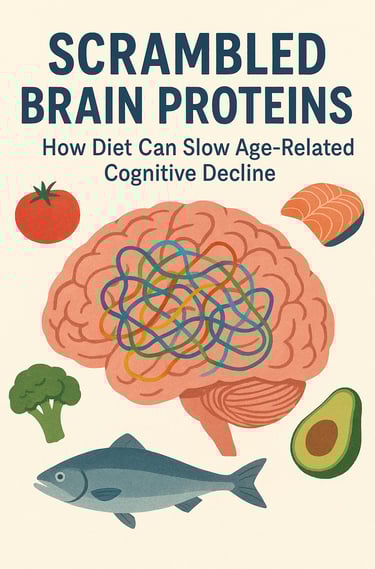

Your brain is constantly working to maintain thousands of proteins that keep you thinking, remembering, and functioning. But here's what researchers are discovering: aging scrambles these proteins, creating a molecular chaos that contributes to cognitive decline and neurodegenerative diseases. The question isn't whether this happens—it does. The exciting news is that emerging research suggests diet could partially reverse this damage.
This might sound like science fiction, but it's backed by rigorous 2024-2025 studies that are reshaping our understanding of aging and the brain. In this comprehensive guide, we'll explore what happens to your brain's protein landscape as you age, dive into the latest research findings, and discover practical ways you might slow or even reverse some of this age-related protein deterioration
Clinical Pearls
1. Your Diet is a Molecular Tagging System Manager
The Science: Aging disrupts protein ubiquitylation—your brain's crucial system for tagging old, damaged proteins for recycling. This leads to molecular chaos and cellular waste accumulation. Research (Marino et al., 2025) shows that dietary components can actively modulate, or "tune up," this tagging system.
The Pearl: Think of your food as providing the maintenance crew for your brain's cellular factory. By choosing a diet rich in polyphenols and antioxidants (found in berries, nuts, and olive oil), you are directly helping your brain correctly tag and clear out cellular debris, essentially slowing the molecular "scrambling" of essential proteins.
2. Location, Location, Location: Keep Brain Proteins from Wandering
The Science: As neurons age, essential proteins, like those involved in splicing (processing genetic information), often become mislocalized—they end up in the wrong part of the cell (Rhine et al., 2025). This positional error triggers immense, unmanageable cellular stress.
The Pearl: Protein mislocalization is like a breakdown in your cell's postal service. To help keep these critical workhorses where they belong, prioritize foods that support cell membrane integrity and signaling, such as sources of Omega-3 fatty acids (fatty fish, flaxseed). Proper membrane health and cellular structure are key to maintaining protein organization.
3. Measure Your True Brain Age, Not Just Your Calendar Age
The Science: Not all brains age at the same rate. Researchers are identifying specific plasma biomarkers (proteins found in your blood) that correlate with the "brain age gap"—whether your brain is functionally older or younger than your chronological age (Johnson, 2025).
The Pearl: Your brain's biological age is measurable. As these blood tests become clinically available, they will offer an objective metric of your cognitive health. This means interventions like diet and exercise can eventually be tracked scientifically, proving whether your efforts are truly slowing your brain's aging trajectory
4. Your Brain Needs Building Blocks, Not Just Energy
The Science: The maintenance of your brain's proteins requires constant turnover—old ones are degraded, and new ones are synthesized. Inadequate or poor-quality protein intake can hinder this vital repair process, accelerating the accumulation of damaged proteins.
The Pearl: Don't neglect high-quality protein. Focus on diverse sources like legumes, eggs, fish, and nuts. This provides the essential amino acid building blocks your brain needs to construct fresh, functional proteins, supporting the overall protein quality control system.
5. Caloric Restriction: Activating the Cellular Housekeeper
The Science: Strategies like caloric restriction and intermittent fasting are thought to benefit brain protein health by activating a process called autophagy. Autophagy is the cell's internal housekeeping mechanism that proactively cleans up and recycles damaged cellular components, including misfolded and aggregated proteins.
The Pearl: Strategic periods of fasting or modest calorie reduction (while maintaining nutritional adequacy) can prompt your cells to "take out the trash." This boosts the efficiency of your cellular recycling system, providing a powerful, non-dietary way to help clear the very protein accumulations that drive age-related cognitive decline.
Understanding Brain Proteins and Aging: The Fundamentals
What Are Proteins and Why Do They Matter?
Your brain operates on proteins. These microscopic workhorses handle everything from transmitting signals between neurons to protecting brain cells from damage. Over 100,000 different proteins exist in your body, and many are essential for cognitive function and brain health.
When we talk about aging-related protein alterations, we're discussing how these critical molecules become damaged, misplaced, or malfunctioning as you grow older. This isn't a normal consequence—it's a process that researchers can now observe, measure, and potentially influence.
The Three-Part Problem: Scrambling, Mislocalization, and Accumulation
Recent research identifies three interconnected ways that aging disrupts your brain's protein quality control system:
Protein scrambling and modification: Aging changes how proteins are chemically tagged and processed
Protein mislocalization: Essential proteins end up in the wrong place within brain cells
Accumulation of cellular stress: Damaged proteins pile up, creating toxic conditions
Understanding these mechanisms is crucial because they directly impact conditions like Alzheimer's disease, cognitive decline, and other neurodegenerative diseases.
The Latest Research: Four Key Studies Reshaping Our Understanding
Study 1: Comprehensive Mapping of Aging-Related Protein Alterations
The Big Picture:
Syed and colleagues (Syed et al., 2024) conducted an extensive analysis of how protein alterations develop throughout the aging process. This foundational research mapped out the specific ways proteins change their structure and function as we age.
Key Findings:
The study identified that aging causes systematic protein deterioration that extends beyond simple wear-and-tear. Instead, aging triggers specific molecular pathways that alter protein chemistry. These changes don't happen randomly—they follow predictable patterns that researchers are now documenting.
Why It Matters:
Understanding these patterns is like having a roadmap. If we know exactly how proteins change during aging, we can develop interventions to intercept that process. This research provides the foundation for all subsequent studies looking at how to reverse or slow these alterations.
Key Takeaway: Ageing produces measurable, systematic changes in brain proteins that follow predictable patterns, creating targets for targeted interventions.
Study 2: How Diet Reshapes Your Brain's Protein Chemistry
The Breakthrough:
This is where things get genuinely exciting. Marino and colleagues (Marino et al., 2025) discovered that diet modulates protein ubiquitylation—essentially, what you eat changes how your brain's protein tagging system works.
Understanding Ubiquitylation:
Think of ubiquitylation as a molecular tagging system. Your cells use ubiquitin (a small protein) to tag other proteins, marking them for recycling, relocation, or modification. With age, this tagging system becomes chaotic. Proteins that should be tagged aren't, and proteins that shouldn't be tagged get marked incorrectly.
What the Research Showed:
The groundbreaking finding: dietary interventions can reshape this entire landscape. By modifying diet, researchers could influence which proteins get tagged and how the brain's protein quality control system operates.
The study examined aging mice and found that specific dietary components altered the pattern of protein ubiquitylation (Marino et al., 2025). More importantly, these dietary changes weren't superficial—they actually changed how the brain processed and managed its protein landscape at a fundamental level.
Why This Matters for You:
This isn't theoretical. This means that the food you consume directly influences your brain's molecular processes. Your diet isn't just affecting your waistline or your energy levels; it's actively reshaping how your brain maintains and manages its proteins.
Key Takeaway: Dietary modifications can partially reverse age-related changes in how brain proteins are tagged and processed, offering a potential non-pharmaceutical intervention for cognitive health.
Study 3: Uncovering the Mislocalization Crisis in Aging Neurons
The Problem Identified:
Rhine and colleagues (Rhine et al., 2025) made a critical discovery: as neurons age, splicing proteins become mislocalized. These proteins are crucial for processing genetic information, and when they end up in the wrong location, cellular havoc ensues.
What is Protein Mislocalization?
Imagine a library where books are essential to the organization. But with age, important books start appearing in random locations. Some are in the kitchen, some in the basement. The library system breaks down. Your brain cells experience something similar when proteins become mislocalized (Rhine et al., 2025).
The Cellular Stress Response:
When proteins are mislocalized, your cells can't perform their normal functions. This triggers unchecked cellular stress—a cascading problem where the cell becomes overwhelmed by dysfunction. The cellular stress response systems that normally fix these problems become exhausted.
The Insight:
This study reveals that aging disrupts not just proteins themselves, but the cellular organization system that keeps proteins where they belong. It's a systemic problem requiring systemic solutions.
Key Takeaway: Age-related mislocalization of critical splicing proteins creates uncontrolled cellular stress that standard cellular repair mechanisms can't handle, contributing to cognitive decline.
Study 4: Reading Your Brain's Age Through Blood Proteins
The Discovery:
Johnson's research (Johnson, 2025) on the "brain age gap" revealed something profound: your brain might be aging faster or slower than your chronological age suggests. More importantly, this brain age can be detected through plasma proteins—proteins in your blood.
The Brain Age Gap Concept:
Not all 60-year-old brains are biologically the same age. Some people have brain structures and functions of a much younger brain, while others show more advanced aging. This brain age gap matters enormously for cognitive function and disease risk.
How Blood Proteins Reveal Brain Age:
Johnson identified specific plasma biomarkers associated with this brain age gap (Johnson, 2025). This means doctors might eventually draw a simple blood test to determine whether your brain is aging faster than your body.
The Practical Implication:
If we can detect brain age through a blood test, we have an objective measure of whether interventions (like diet changes) are working. This transforms brain aging from something vague and invisible to something measurable and trackable.
Key Takeaway: Specific plasma proteins can indicate whether your brain is aging faster than your chronological age, providing measurable targets for intervention and monitoring.
The Protein Aging Mechanism: How It All Connects
The Cascade of Molecular Events
These four studies reveal an interconnected cascade grounded in recent findings on aging-related protein alterations and protein ubiquitylation:
Stage 1: Protein Alteration begins as normal aging processes initiate changes to the brain's protein structure and chemistry. This isn't necessarily pathological yet—it's part of normal aging.
Stage 2: Tagging System Dysfunction follows, where the ubiquitylation process becomes impaired (Marino et al., 2025). Proteins that should be recycled aren't, and cellular waste accumulates.
Stage 3: Mislocalization Crisis develops as proteins end up in wrong locations, disrupting cellular function. The brain's organization breaks down at a molecular level (Rhine et al., 2025).
Stage 4: Cellular Stress Overwhelm occurs when damage becomes too extensive for repair mechanisms to handle. This is where cognitive decline accelerates and neurodegenerative disease risk increases.
Where Diet Intervenes
Here's the crucial insight: diet acts at multiple stages of this cascade. Dietary components can:
Reduce the rate of initial protein alteration
Support the ubiquitylation system, helping tag proteins correctly (Marino et al., 2025)
Provide molecular support that keeps proteins in correct locations
Supply antioxidants and anti-inflammatory compounds that reduce cellular stress
This explains why dietary intervention doesn't reverse all aging—it works at specific molecular points in this cascade, but it provides meaningful reduction in age-related protein deterioration.
Which Foods Support Your Brain's Protein System?
Evidence-Based Dietary Approaches
While the studies don't specify exact foods (animal research comes first, then human validation follows), the mechanisms suggest several dietary strategies:
Antioxidant-Rich Foods: These support the cellular stress response system that becomes overwhelmed with age. Think colorful vegetables, berries, and green tea—compounds that combat oxidative stress.
Protein-Rich Foods: Your body constantly constructs new proteins to replace damaged ones. Adequate protein intake provides the building blocks for this renewal. Fish, legumes, eggs, and nuts offer complete amino acid profiles.
Anti-Inflammatory Foods: Chronic inflammation accelerates aging-related protein alterations. Omega-3 fatty acids, turmeric, and olive oil offer anti-inflammatory benefits.
Polyphenol-Rich Foods: These plant compounds influence how cells manage protein processing. Red wine, coffee, chocolate, and berries contain beneficial polyphenols.
NAD+-Supporting Foods: NAD+ is a critical molecule in cellular energy and protein management. Niacin, mushrooms, and whey protein support NAD+ levels.
What About Caloric Restriction?
Research increasingly suggests that caloric restriction and intermittent fasting may support cellular protein quality control by activating autophagy—the cellular "housekeeping" system that removes damaged proteins. However, this must be balanced against adequate nutrition for protein synthesis.
From Laboratory to Your Life: Translating the Science
Why This Research Matters for Humans
You might wonder: if this research involved mice, how does it apply to you? This is a fair question with an important answer.
Mouse brains share fundamental biological mechanisms with human brains. When researchers observe changes in mouse protein ubiquitylation (Marino et al., 2025), they're studying processes that exist identically in your brain. The cellular mechanisms are essentially universal across mammals.
However, human studies require time. The 2025 research on brain age plasma biomarkers (Johnson, 2025) represents the bridge between mouse studies and human application. This research validates that mechanisms discovered in mice are relevant to human aging.
The Timeline for Real-World Application
Here's what this research trajectory suggests for practical applications:
Now (2025): Blood tests measuring brain age biomarkers are approaching clinical availability (Johnson, 2025). These could help identify individuals whose brains are aging faster than normal.
Next 2-3 Years: Clinical trials will test whether dietary interventions specifically targeting protein ubiquitylation slow brain aging in humans.
5-10 Years: If successful, dietary recommendations specifically designed to support brain protein health will likely be incorporated into cognitive health guidelines.
10+ Years: More targeted pharmaceutical interventions might emerge from understanding these mechanisms—though dietary approaches may remain first-line interventions.
FAQ: Your Questions About Brain Proteins and Aging Answered
Q1: Can diet completely reverse aging-related protein changes?
A: No, and that's important to understand. While dietary interventions show promise in modulating protein ubiquitylation (Marino et al., 2025), diet can partially reverse some changes and significantly slow others, but aging itself isn't reversible. Think of it like maintenance: good diet prevents accelerated damage, but it doesn't restore youth. However, slowing the aging process by even 20-30% could have substantial benefits for cognitive function over decades.
Q2: At what age should I start paying attention to brain protein health?
A: The short answer: now. Brain protein changes begin in middle age and accelerate after 60. However, establishing good dietary habits earlier makes adherence easier. If you're over 40, prioritizing brain-healthy eating is increasingly supported by research on aging-related protein alterations.
Q3: Are supplements better than whole foods for supporting brain proteins?
A: Whole foods contain complex combinations of compounds that work synergistically. While targeted supplements might help, they haven't demonstrated superiority over whole food approaches in most research. Mediterranean and MIND diets (which emphasize whole foods) show the strongest cognitive health benefits.
Q4: How do I know if my brain is aging faster than normal?
A: Currently, this requires specialized cognitive testing and brain imaging. However, emerging research on plasma biomarkers (Johnson, 2025) suggests blood tests will soon be available to assess brain age gap. Talk to your doctor about whether these emerging tests might be relevant for you.
Q5: Can you get too much protein? Could this harm brain protein management?
A: Excessive protein intake might stress kidneys but won't directly harm brain protein management. The studies suggest adequate protein supports protein synthesis and turnover. Moderate protein intake (0.8-1.0g per pound of body weight) supports most people's needs.
Q6: Do all diets work equally for brain protein health?
A: No. Research on aging and diet increasingly shows that specific dietary patterns matter. Mediterranean-style diets, MIND diets, and diets rich in plant compounds appear superior to highly processed, high-sugar diets for supporting brain protein quality control systems.
Q7: How quickly would dietary changes affect my brain?
A: Cellular changes happen gradually. You wouldn't notice acute improvements, but consistent dietary modifications for 6-12 months could theoretically influence protein ubiquitylation patterns (Marino et al., 2025). Cognitive benefits would take longer to manifest—think in terms of years, not weeks.
Q8: If my brain age is "older" than my chronological age, can I reverse it?
A: Partially. While research on protein ubiquitylation and aging-related protein alterations suggests interventions can slow acceleration, completely reversing a brain age gap isn't yet proven possible. Prevention (starting early) appears more effective than reversal.
Key Takeaways: What You Need to Know
Aging scrambles your brain's proteins through a predictable process involving alterations, tagging dysfunction, mislocalization, and cellular stress accumulation (Syed et al., 2024; Marino et al., 2025; Rhine et al., 2025).
Diet directly influences brain protein chemistry, specifically through the ubiquitylation process that tags proteins for recycling and processing (Marino et al., 2025).
Protein mislocalization creates unchecked cellular stress that accelerates cognitive decline, representing a significant aging mechanism (Rhine et al., 2025).
Your brain age can potentially be assessed through blood tests measuring specific plasma biomarkers, offering an objective measure of brain aging (Johnson, 2025).
Mediterranean-style and plant-rich diets appear to support brain protein health more effectively than highly processed alternatives.
Dietary interventions can partially slow or reverse age-related protein deterioration, though complete reversal remains unlikely (Marino et al., 2025).
Early adoption matters—establishing good dietary habits in middle age appears more effective than attempting reversal in advanced age.
Multiple mechanisms offer intervention points, meaning diet works alongside sleep, exercise, and cognitive engagement for optimal brain health.
Conclusion: You Have More Control Than You Think
The research emerging from 2024-2025 sends a hopeful message: your brain's protein aging isn't inevitable destiny. While you can't stop aging itself, evidence increasingly suggests you can meaningfully influence how your brain ages at the molecular level (Marino et al., 2025).
When researchers discover that diet alters protein ubiquitylation, they're revealing that your daily food choices directly influence your brain's molecular processes. This transforms brain aging from something mysterious and uncontrollable into something where your choices matter.
The studies on aging-related protein alterations, protein mislocalization, and brain age biomarkers provide the roadmap. The path forward involves establishing dietary patterns that support your brain's protein quality control systems before significant aging occurs—or if you're reading this later in life, beginning now.
Your brain's proteins are scrambled by age, but they're not beyond your influence. Through informed dietary choices, you're essentially helping your brain maintain order at the molecular level. That's not a miracle cure, but it might be something better: a practical, evidence-based approach to aging well.
Call to Action: Start Your Brain-Healthy Journey Today
Don't wait for perfect conditions or complete answers. The research is clear enough now: your diet influences your brain's molecular aging (Marino et al., 2025). Here's what you can do today:
Assess your current diet. Does it emphasize whole foods, plants, and antioxidants? Or processed foods and added sugars? Honesty here is important.
Explore the Mediterranean or MIND diet. These aren't restrictive diets—they're sustainable approaches to eating that support brain health while being delicious and practical.
Consult your doctor. If you're over 40 or have family history of cognitive decline, discuss your brain health with your healthcare provider. Ask about emerging brain age biomarkers when they become available (Johnson, 2025).
Make one dietary change this week. Not everything at once—just one improvement. Add berries to breakfast, swap white rice for brown rice, or try one new plant-based meal. Small changes compound over time.
Stay informed. This field is rapidly evolving. Follow reputable sources for updates on brain aging research and dietary recommendations.
Your present choices are writing your future cognition. The molecular machinery of your brain responds to what you feed it. Make it count.
Disclaimer: This article is for informational purposes only and does not constitute medical advice. Always consult with qualified healthcare providers before making significant dietary changes or starting supplementation, especially if you have existing health conditions or take medications.
Related Articles
It's Never Too Late: Midlife Exercise Cuts Dementia Risk by Decades | DR T S DIDWAL
References
Johnson, E.C.B. (2025). Plasma proteins associated with the brain age gap. Nature Aging, 5, 15–16. https://doi.org/10.1038/s43587-024-00780-3
Marino, A., Di Fraia, D., Panfilova, D., et al. (2025). Aging and diet alter the protein ubiquitylation landscape in the mouse brain. Nature Communications, 16, 5266. https://doi.org/10.1038/s41467-025-60542-6
Rhine, K., Li, R., Kopalle, H.M., et al. (2025). Neuronal aging causes mislocalization of splicing proteins and unchecked cellular stress. Nature Neuroscience, 28, 1174–1184. https://doi.org/10.1038/s41593-025-01952-z
Syed, R. A., Hayat, M., Qaiser, H., Uzair, M., Al-Regaiey, K., Khallaf, R., Kaleem, I., & Bashir, S. (2024). Aging-related protein alterations in the brain. Journal of Alzheimer's Disease: JAD, 99(s1), S5–S22. https://doi.org/10.3233/JAD-230801