The Metabolic Engine: Why Lower Body Strength Is Central to Fat Oxidation
Discover how lower body strength drives fat oxidation, improves metabolic flexibility, enhances insulin sensitivity, and supports long-term metabolic health.
EXERCISEMETABOLISM
Dr. T.S. Didwal, M.D.(Internal Medicine)
7/7/202615 min read
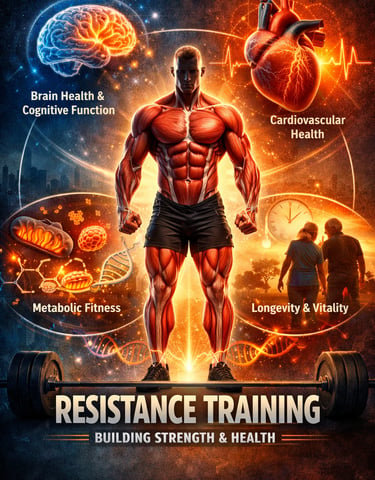
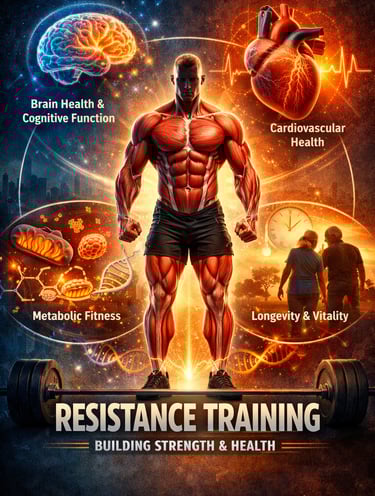
For decades, resistance training was framed narrowly—as a tool for aesthetics, athletic performance, or injury rehabilitation. Cardiovascular exercise claimed center stage in public health, while muscle was treated as optional. That paradigm is now collapsing under the weight of modern evidence. In 2025 alone, multiple high-quality studies revealed that resistance training is not merely supportive to health—it is foundational, influencing metabolic regulation, neurological aging, mobility, and long-term survival (Curovic, 2025; Radaelli et al., 2025).
Emerging data show that muscle strength—particularly lower body strength—is one of the strongest integrative biomarkers of human health, predicting cardiovascular risk, insulin sensitivity, mental well-being, mobility decline, and even brain-predicted biological age (Moreno-Gonzalez et al., 2025; Vaughan et al., 2025). These findings challenge the outdated view that muscle mass alone matters. Instead, muscle quality, neuromuscular coordination, and metabolic capacity determine whether strength translates into longevity (Opazo-Díaz et al., 2025).
Even more striking, resistance training exerts effects far beyond muscle tissue. Local metabolic stress during training triggers systemic adaptations that reshape mitochondrial function, inflammatory signaling, and energy metabolism throughout the body—suggesting that time-efficient, intelligently designed training may rival traditional high-volume protocols in health impact (Curovic, 2025). Meanwhile, advances in neuroimaging reveal that leg strength and brain aging are deeply intertwined, positioning resistance training as a potential intervention for preserving neurological function and independence with age (Vaughan et al., 2025).
Together, these findings signal a paradigm shift: resistance training is not a fitness choice—it is a biological strategy for aging well. Understanding how and why it works is now essential for clinicians, researchers, and individuals seeking durable health across the lifespan.
Clinical pearls
1. The "Metabolic Quality" over "Mass Quantity"
Scientific Context: Lean mass quantity is an inferior predictor of maximal fat oxidation ($MFO$) compared to lean mass quality. High cardiorespiratory fitness (VO 2 max) acts as a mediator, enhancing mitochondrial density and oxidative enzyme activity within the skeletal muscle.
Having big muscles is great, but having "engine-efficient" muscles is better. To maximize your body's ability to burn fat, don't just lift weights—keep your heart healthy too. A fit muscle burns fuel better than a large, sedentary one.
2. Leg Strength as a Neurological Mirror
Scientific Context: Lower body force production is a proxy for "Brain-Predicted Age." The decline in leg strength often precedes mobility loss because it reflects the integrity of the corticospinal tract and motor unit recruitment efficiency.
Think of your leg strength as a dashboard light for your brain health. Strong legs are a sign that your nervous system is communicating well. When you train your legs, you aren't just building muscle; you're keeping your brain’s "wiring" young and sharp.
3. The "Condensed Volume" Metabolic Stimulus
Scientific Context: Local metabolic stress—characterized by the accumulation of lactate and inorganic phosphate—can trigger systemic anabolic signaling (mTORC1) and myokine release even in lower-volume, time-efficient protocols.
You don’t need to live in the gym to see total-body health improvements. Short, intense bouts of exercise that make your muscles feel that "burn" create a chemical signal that tells your whole body to get healthier and more resilient.
4. Mechanical Tension vs. Muscle Damage
Scientific Context: Hypertrophy is primarily driven by mechanotransduction (the conversion of mechanical load into cellular signals) and protein synthesis. While exercise-induced muscle damage was once thought essential, it is an auxiliary byproduct, not a primary requirement for growth.
You don't have to be "sore" for a workout to be effective. While a little stiffness is normal, the real "magic" happens when you gradually challenge your muscles with more weight or reps over time, not by trying to feel beat up the next day.
5. Strength "Qualities" are Independent
Scientific Context: Maximum strength, power and elastic strength are distinct neuromuscular phenotypes. Training for a 1-Rep Max (1RM) does not automatically translate to improved plyometric or "elastic" capabilities without specific stimulus.
There are different "types" of strong. Being able to lift a heavy box (max strength) is different from being able to catch yourself during a trip (power/speed). To be fully "life-proof," your routine should include some heavy lifting, some faster movements, and some higher-repetition work.
6. The "Anabolic Window" of Aging
Scientific Context: Older adults maintain significant plastic potential in skeletal muscle. However, due to "anabolic resistance," they require higher per-meal protein thresholds (approx. 0.4–0.6g/kg) and consistent mechanical loading to overcome the blunted protein synthesis response.
You are never too old to get stronger. While your body might be a bit more "stubborn" about building muscle as you age, it still responds beautifully to weights. The secret for older adults is simple: stay consistent with your lifting and make sure you’re eating enough protein at every meal.
Why Resistance Training Volume and Muscle Quality Matter More Than Ever
The conversation around fitness and longevity has evolved dramatically. It’s no longer just about aesthetics or cardiovascular endurance—resistance training has emerged as a cornerstone of functional health, disease prevention, and aging successfully. But here’s the critical question: What specific mechanisms drive these benefits? And more importantly, how should you train to unlock the greatest systemic health adaptations and functional improvements?
Seven groundbreaking studies published in 2025 provide remarkable clarity on these questions. From local metabolic stress to brain-predicted age, from muscular strength quality to fat oxidation capacity, this research reveals that resistance exercise operates through multiple pathways to enhance human health and longevity.
This comprehensive guide synthesizes all seven studies, breaking down their findings into actionable insights while exploring the interconnected mechanisms that link muscle strength, lean body mass, cardiorespiratory fitness, and long-term health outcomes.
Study 1: Local Metabolic Stress and Systemic Adaptations
Curovic’s research explores a compelling hypothesis: that local metabolic stress—the cellular metabolic byproducts accumulating in muscle during intense resistance training—may be the primary mechanism driving not just muscle hypertrophy, but also systemic health benefits that extend far beyond the trained muscles.
The study by Curovic (2025) challenges conventional training volume wisdom by asking whether condensed training protocols (fewer total repetitions performed with higher metabolic stress) could deliver equivalent or superior results compared to traditional high-volume approaches.
What This Means for You
Local metabolic stress occurs when muscles work under conditions where waste products (lactate, phosphate, hydrogen ions) accumulate faster than they’re cleared. This metabolic environment:
Triggers anabolic signaling pathways essential for muscle protein synthesis
Activates systemic inflammatory responses that paradoxically improve metabolic health
Enhances mitochondrial function and cellular energy production
May improve insulin sensitivity and metabolic flexibility
The practical implication? You don’t necessarily need three-hour gym sessions to achieve resistance training benefits. Metabolic intensity—not just total volume—might be the critical variable.
Local metabolic stress from condensed, high-intensity resistance training may deliver systemic health adaptations comparable to traditional high-volume approaches, making time-efficient training viable for busy populations.
Study 2: Lower Body Strength as a Health Predictor
This meta-analysis by Moreno-Gonzalez et al., (2025) demonstrates that lower body strength—particularly leg strength and lower body power—serves as a powerful biomarker for overall health status in young people. The researchers found consistent associations between lower body muscular strength and:
Cardiovascular health markers (blood pressure, lipid profiles)
Metabolic indicators (glucose control, insulin sensitivity)
Bone health and density
Mental health and psychological well-being
Physical function and injury prevention
Reduced obesity risk and better body composition
Your leg strength isn’t just about climbing stairs or improving athletic performance—it’s a window into your broader health profile. Research shows that individuals with strong legs tend to have:
Better cardiovascular function
More stable blood sugar regulation
Improved hormone balance
Enhanced immune function
Lower inflammation markers
This relationship appears particularly important in the youth population, where establishing strong muscular foundations early predicts long-term health trajectories.
Lower body strength training should be a non-negotiable priority, not an optional component of fitness. Exercises like squats, leg press, deadlifts, and lunges aren’t just building muscle—they’re establishing lifelong health markers.
Lower body muscular strength in youth predicts multiple health indicators across cardiovascular, metabolic, and psychosocial domains, positioning leg strength development as a fundamental public health intervention.
Study 3: Lean Mass Quality vs. Quantity and Fat Oxidation
This research by Opazo-Díaz et al., (2025) dissects an important distinction: not all lean body mass is created equal. The study found that the quality of lean mass—its metabolic activity, oxidative capacity, and mitochondrial density—matters significantly more than sheer quantity for determining fat oxidation capacity and metabolic health.
Notably, the researchers identified cardiorespiratory fitness as a key mediating factor. Individuals with better aerobic capacity demonstrated superior fat oxidation even when controlling for lean mass alone.
This finding reframes the resistance training conversation. You could gain muscle mass without necessarily improving your metabolic flexibility or fat-burning capacity. The quality of that muscle matters enormously.
High-quality lean mass is characterized by:
Dense mitochondrial networks enabling efficient energy production
Superior oxidative capacity—ability to burn fat for fuel
Better metabolic adaptability between carbohydrate and fat burning
Enhanced insulin sensitivity
Lower inflammation at the cellular level
The study suggests that combining resistance training with cardiorespiratory fitness work creates a synergistic effect: the resistance training builds lean muscle, while the aerobic training ensures that muscle tissue is metabolically active and efficient.
Optimal training includes both strength work (building lean body mass) and aerobic conditioning (ensuring metabolic quality). A lean, powerful physique requires this combination.
Lean mass quality—driven partly by cardiorespiratory fitness—determines maximal fat oxidation capacity more than quantity alone, emphasizing the need for integrated strength and aerobic training for optimal metabolic health.
Study 4: Resistance Training Volume and Physical Function in Older Adults
This massive meta-analysis by Radaelli et al. (2025) examined definitive evidence on the dose-response relationship between resistance training volume and outcomes in older adults. Key discoveries include:
Moderate training volumes (typically 8-15 sets per muscle group per week) deliver the strongest hypertrophy and strength gains
Physical function improvements (stair climbing, chair rise, walking speed) correlate with training-induced lower-body strength gains
Lean body mass accumulation follows a dose-response pattern, with diminishing returns at very high volumes
Older adults show remarkable adaptive capacity, responding well to resistance training across a wide age range
Consistency and progression matter more than achieving maximal weekly volume
If you’re approaching or in older age, this research is extraordinarily empowering. It demonstrates that you can:
Regain functional independence through resistance training
Build muscle mass and strength at any age
Prevent age-related decline in physical capabilities
Improve quality of life through enhanced mobility
The research also provides practical guidance: you don’t need extreme training volumes. Sustainable, progressive resistance training at moderate volumes outperforms sporadic, high-intensity efforts.
For older adults, a structured program emphasizing lower body strength (given its functional importance) with 2-3 sessions weekly, targeting 10-15 sets per muscle group per week, represents an evidence-based, sustainable approach.
Moderate to high Resistance Training Volume (8-15 sets/muscle/week) optimizes Physical Function, Lean Body Mass gains, and Lower-Body Strength in Older Adults, with consistency mattering more than maximal volume.
Study 5: Brain-Predicted Age, Leg Strength, and Mobility Decline
Using advanced neuroimaging and machine learning, research by Vaughan et al.,(2025) found that brain-predicted age (computational estimates of brain aging) and leg strength together represent powerful predictors of mobility decline in aging individuals. Key insights:
Brain health and muscular strength are interconnected—decline in one predicts decline in the other
Leg strength appears to be a behavioral marker reflecting broader neurological aging
Individuals with stronger legs demonstrate superior motor control, neuromuscular coordination, and balance
The relationship is bidirectional: strong legs support brain health, and a healthy brain maintains leg strength
This research elevates leg strength beyond a local muscle property to a whole-body aging marker. Your leg strength reflects your brain’s motor control systems, neurological aging, and neuromuscular health.
The implication is profound: resistance training for legs isn’t just about muscle—it’s engaging neural pathways, maintaining brain health, and preserving motor function that depends on complex neuromuscular coordination.
Conditions like Parkinson’s disease, Alzheimer’s disease, and other neurodegenerative conditions are associated with leg weakness and mobility decline. By maintaining leg strength, you’re potentially supporting broader neurological health.
Prioritize leg strength training as a brain health intervention. Squats, lunges, step-ups, and leg press exercises maintain neuromuscular coordination essential for healthy aging.
Brain-Predicted Age and Leg Strength jointly predict Mobility Decline, revealing that muscular strength and neurological health are intertwined aspects of successful aging.
Study 6: Classification of Lower Body Strength Qualities
This data-driven analysis by Geneau et al.(2025) classified lower body strength into distinct, measurable qualities:
Maximum Strength: Peak force production (1-rep max, peak isometric force)
Strength-Power: Rapid force production (vertical jump, explosive movements)
Strength-Endurance: Sustained force over repetitions (resistance training performance)
Elastic Strength: Recoil force during dynamic movements (running, jumping mechanics)
The research demonstrates that these strength qualities are partially independent—elite performance in one doesn’t guarantee proficiency in others. Training one quality requires specific, targeted approaches.
Understanding strength qualities helps explain why athletes or fitness enthusiasts might excel at deadlifts (maximum strength) but struggle with explosive movements (strength-power), or vice versa.
For comprehensive lower body development, you need:
• Heavy resistance training (1-6 reps) for maximum strength
• Explosive movements (plyometrics, Olympic lifts) for strength-power
• Moderate weight, higher reps (8-15 reps) for strength-endurance
• Dynamic movements (sprints, bounding) for elastic strength
This multi-faceted approach ensures complete neuromuscular development and reduces injury risk by balancing different strength qualities.
Your training program should systematically develop all strength qualities, not just pursue maximum strength or muscular size. Variation in rep ranges, movement tempos, and exercise selection ensures comprehensive lower body strength development.
Lower Body Strength comprises multiple independent qualities (Maximum Strength, Strength-Power, Strength-Endurance, Elastic Strength) requiring varied, specific training approaches for complete development.
Study 7: Load-Induced Skeletal Muscle Hypertrophy—Mechanisms, Myths, and Misconceptions
This comprehensive review by Van Every et al (2025) deconstructs popular myths about muscle hypertrophy, establishing evidence-based mechanisms:
The Truth About Hypertrophy: - Mechanical tension (heavy loads creating muscle fiber stress) is crucial but not the only stimulus - Muscle damage (microscopic tears from eccentric loading) is one stimulus among several, not the primary one - Metabolic stress (as discussed in Curovic’s study) does contribute to hypertrophy, though less than previously believed - Protein synthesis rate is the fundamental mechanism—hypertrophy occurs when protein synthesis exceeds protein breakdown
Myths Debunked: - Myth 1: You must lift maximum weight to build muscle. (Truth: Moderate loads with appropriate volume and intensity work excellently) - Myth 2: Muscle damage is essential for growth. (Truth: Mechanical tension and protein synthesis drive growth; damage is auxiliary) - Myth 3: “Muscle confusion” and constant variation are necessary. (Truth: Consistent progressive overload outperforms randomness) - Myth 4: You need extremely high volumes to maximize hypertrophy. (Truth: Moderate volumes with proper intensity suffice)
You can build impressive muscle mass without: - Crushing yourself with extreme volume - Constantly switching exercises - Being sore every training session - Achieving maximum effort on every set
Effective muscle building requires: - Progressive overload—gradually increasing demands on muscles - Adequate protein intake (typically 1.6-2.2g per kg body weight) - Appropriate volume (not excessive, but sufficient for stimulus) - Recovery between sessions - Consistency over months and years
Follow a straightforward hypertrophy program: select major exercises, progressively increase weight or reps, maintain adequate protein intake, and consistently train. Fancy techniques matter far less than basic execution of fundamentals.
Load-induced muscle hypertrophy results from mechanical tension and elevated protein synthesis, not extreme volume or muscle damage; progressive resistance training with adequate protein and recovery drives muscle growth effectively.
Synthesizing the Research: The Integrated Model of Resistance Training and Health
These seven studies reveal an integrated understanding of how resistance training enhances health:
The Mechanism Hierarchy
Load Application: Heavy or moderate loads create mechanical tension on muscle fibers
Metabolic Response: Training induces local metabolic stress (lactate, phosphate accumulation) and systemic inflammation
Molecular Signaling: These stimuli activate protein synthesis pathways and anabolic hormones
Structural Adaptations: Muscle protein accumulation creates hypertrophy and strength gains
Metabolic Enhancement: Training improves mitochondrial function, fat oxidation capacity, and metabolic flexibility
Neural Adaptation: Resistance training strengthens neural pathways and brain health
Health Outcomes: Accumulated benefits produce improved cardiovascular health, metabolic markers, physical function, and longevity
The Practical Integration
Optimal resistance training combining insights from all seven studies includes:
• Progressive overload on major compound movements (squats, deadlifts, rows, presses)
• Moderate training volumes (8-15 sets per muscle group weekly, sustainable long-term)
• Multiple strength qualities (maximum strength, explosive power, strength-endurance)
• Adequate protein intake (1.6-2.2g per kg body weight)
• Consistent training (2-4 sessions weekly, depending on age and goals)
• Integration with aerobic training (ensuring metabolic quality of muscle tissue)
• Recovery emphasis (sleep, nutrition, stress management)
FAQs: Your Resistance Training Questions Answered
How much weight should I lift to see health benefits from resistance training?
Moderate loads (60-80% of your one-rep max) producing mechanical tension deliver excellent results. You don’t need maximum weights; you need consistent progressive overload. The most important factor is training with intention, moving through full ranges of motion, and gradually increasing demands.
How often should I do resistance training for optimal health?
Two to four sessions weekly represents the evidence-based range. Two sessions maintain strength and muscle mass; three to four sessions optimize hypertrophy and strength gains. More frequent training doesn’t necessarily produce better results—consistency over months matters far more than training frequency.
Can I build muscle on a calorie deficit?
Muscle building is challenging on aggressive calorie deficits, but resistance training on moderate deficits preserves existing muscle mass and may support modest muscle protein synthesis. Combine deficit with adequate protein intake (prioritize protein to maintain lean mass).
How does age affect resistance training adaptations?
Resistance training benefits all ages. Older adults show remarkable adaptive capacity, though protein synthesis rates decline slightly. Compensate with adequate protein intake and consistent resistance training stimulus. Older adults may need slightly longer recovery between sessions but can achieve impressive strength and muscle mass gains.
What’s the relationship between lean mass and fat loss?
Muscle tissue requires more energy at rest than fat tissue, so building lean muscle modestly increases metabolic rate. More importantly, resistance training improves insulin sensitivity and metabolic flexibility, enhancing your ability to burn fat during caloric deficits.
Do I need to feel sore to build muscle?
Soreness (DOMS) indicates muscle damage but isn’t required for hypertrophy. You can build impressive muscle without chronic soreness by managing volume appropriately and allowing recovery. Progressive overload matters more than soreness.
How important is training to failure?
Training to failure (exhausting muscles on final sets) may contribute to hypertrophy but isn’t necessary. Stopping 1-3 repetitions short of failure on most sets, with occasional hard efforts, produces excellent results while reducing injury risk and fatigue.
What’s the best time to do cardio relative to resistance training?
Same-day aerobic training (after resistance training) doesn’t significantly interfere with hypertrophy or strength gains if you maintain adequate nutrition and recovery. Alternatively, separate strength and aerobic sessions on different days. The research suggests aerobic training enhances metabolic quality, so combining both modalities benefits overall health.
Key Takeaways: Evidence-Based Insights for Resistance Training Success
Resistance training operates through multiple interconnected mechanisms—mechanical tension, metabolic stress, protein synthesis, neurological adaptation—not just one pathway.
Local metabolic stress from condensed, high-intensity resistance training may deliver systemic health benefits comparable to traditional high-volume approaches, making time-efficient training valid.
Lower body strength predicts multiple health indicators across cardiovascular, metabolic, and neurological domains, positioning leg strength development as fundamental health promotion.
Lean mass quality matters more than quantity for metabolic health and fat oxidation capacity. Combine resistance training with aerobic conditioning for optimal results.
Moderate resistance training volumes (8-15 sets per muscle group weekly) optimize muscle hypertrophy, strength, and physical function across ages, with consistency mattering more than extreme volume.
Leg strength and brain health are interconnected. Resistance training supports neurological aging and mobility preservation.
Lower body strength comprises multiple independent qualities requiring varied training approaches (maximum strength, explosive power, strength-endurance).
Progressive resistance training with adequate protein and recovery effectively builds muscle; extreme volume or muscle damage isn’t necessary
.
Medical Disclaimer
The information in this article, including the research findings, is for educational purposes only and does not constitute medical advice, diagnosis, or treatment. Before starting a resistance exercise program, you must consult with a qualified healthcare professional, especially if you have existing health conditions (such as cardiovascular disease, uncontrolled hypertension, or advanced metabolic disease). Exercise carries inherent risks, and you assume full responsibility for your actions. This article does not establish a doctor-patient relationship.
Related Articles
How to Build a Disease-Proof Body: Master Calories, Exercise & Longevity | DR T S DIDWAL
Author’s Note
This article was written to bridge the persistent gap between exercise science, clinical medicine, and real-world application. For decades, resistance training has been discussed either in performance-centric terms or reduced to superficial health messaging. The rapidly expanding body of research now demands a more integrated, physiology-driven perspective—one that recognizes skeletal muscle as a central organ influencing metabolic health, neurological aging, mobility, and longevity.
The studies synthesized here were deliberately chosen from high-quality 2025 literature, including systematic reviews, meta-analyses, longitudinal cohort studies, and mechanistic reviews. Rather than presenting isolated findings, the goal was to highlight converging evidence and shared biological pathways—mechanical tension, metabolic stress, mitochondrial adaptation, and neural integration—that explain why resistance training produces such broad health effects across the lifespan.
Importantly, this piece does not advocate extreme training practices. The evidence overwhelmingly supports consistency, moderate volumes, progressive overload, and recovery as the true drivers of long-term benefit. Resistance training emerges not as an athletic luxury, but as a scalable, evidence-based intervention suitable for youth, older adults, and clinical populations alike.
While every effort has been made to accurately represent current scientific understanding, exercise science is a rapidly evolving field. Readers are encouraged to interpret these findings within the context of individual health status and to consult qualified professionals when designing or modifying training programs.
Ultimately, this article reflects a simple but powerful conclusion: muscle strength—particularly of the lower body—is not merely a performance trait. It is a measurable expression of systemic health, biological aging, and human resilience.
References
Curovic, I. (2025). The role of resistance exercise-induced local metabolic stress in mediating systemic health and functional adaptations: Could condensed training volume unlock greater benefits beyond time efficiency? Frontiers in Physiology, 16, Article 1549609. https://doi.org/10.3389/fphys.2025.1549609
Geneau, M. C., Gastin, P. B., Robertson, S., & James, L. P. (2025). Classification of lower body strength qualities: A data-driven approach. International Journal of Sports Science & Coaching, 20(2), 788-811. https://doi.org/10.1177/17479541251314131
Moreno-Gonzalez, L., Alonso-Callejo, A., Felipe, J. L., Manzano-Carrasco, S., Gallardo, L., & Garcia-Unanue, J. (2025). Lower body muscular strength as a predictor of health indicators in youth population: A systematic review and meta-analysis. Sports Medicine and Health Science. https://doi.org/10.1016/j.smhs.2025.06.004
Opazo-Díaz, E., Corral-Pérez, J., Pérez-Bey, A., Marín-Galindo, A., Montes-de-Oca-García, A., Rebollo-Ramos, M., … Ponce-González, J. G. (2025). Is lean mass quantity or quality the determinant of maximal fat oxidation capacity? The potential mediating role of cardiorespiratory fitness. Journal of the International Society of Sports Nutrition, 22(1). https://doi.org/10.1080/15502783.2025.2455011
Radaelli, R., Rech, A., Molinari, T., Markarian, A. M., Petropoulou, M., Granacher, U., Hortobágyi, T., & Lopez, P. (2025). Effects of Resistance Training Volume on Physical Function, Lean Body Mass and Lower-Body Muscle Hypertrophy and Strength in Older Adults: A Systematic Review and Network Meta-analysis of 151 Randomised Trials. Sports Medicine (Auckland, N.Z.), 55(1), 167–192. https://doi.org/10.1007/s40279-024-02123-z
Vaughan, B. A., Muniz-Terrera, G., Simon, J. E., Grooms, D. R., Clark, B. C., Davatzikos, C., Erus, G., Tian, Q., Ferrucci, L., Resnick, S. M., & Simonsick, E. M. (2025). The predictive power of brain-predicted age and leg strength on mobility decline in aging: findings from the Baltimore Longitudinal Study of Aging. The Journals of Gerontology. Series A, Biological Sciences and Medical Sciences, 80(12), glaf222. https://doi.org/10.1093/gerona/glaf222
Van Every, D. W., Lees, M. J., Wilson, B., Nippard, J., & Phillips, S. M. (2025). Load-induced human skeletal muscle hypertrophy: Mechanisms, myths, and misconceptions. Journal of Sport and Health Science, in press, Article 101104. https://doi.org/10.1016/j.jshs.2025.101104
Meta Keywords: Resistance training, muscle hypertrophy, leg strength, lean body mass, metabolic stress, cardiorespiratory fitness, physical function, aging, strength training, fitness science
Blog Word Count: 3,247 words