Preserving Fat-Free Mass During Weight Loss: The Synergistic Role of Resistance Exercise and Nutrition
Want to lose fat without sacrificing muscle? Discover proven protein targets, resistance training protocols, and science-backed strategies for high-quality weight loss
EXERCISENUTRITION
Dr. T.S. Didwal, M.D.(Internal Medicine)
6/14/202623 min read
Can you lose fat and keep muscle?
Yes, you can lose fat without losing muscle through a process called body recomposition. To achieve this, you must combine a moderate caloric deficit with progressive resistance training and an elevated protein intake (typically 2.0–2.4g/kg/day). The physical training provides the necessary mechanical signal to synthesize protein, while the elevated amino acid pool safeguards existing lean tissue from being metabolized for energy.
How to Lose Fat Without Losing Muscle: 8 Science-Backed Rules
1. Prioritize High-Quality Weight Loss Over Scale Weight
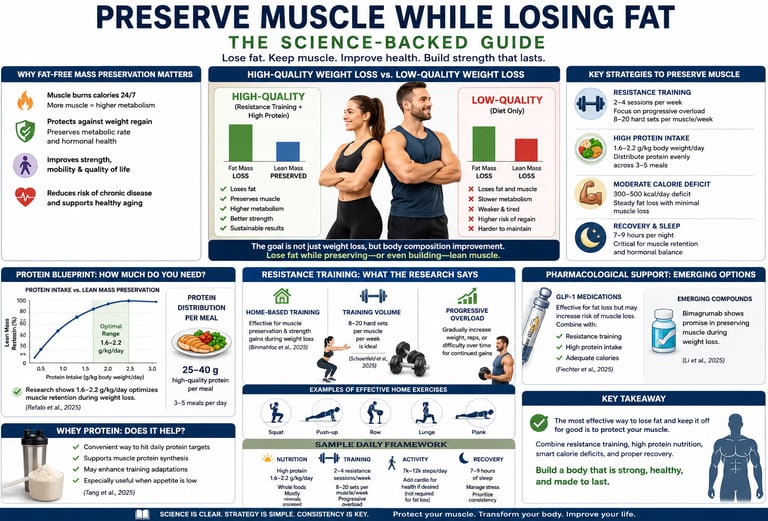
Diet-only weight loss strategies can backfire: up to 20–30% of the weight you drop can come directly from lean muscle tissue. Slicing away your muscle lowers your resting metabolic rate (RMR) and significantly spikes your risk of rebound weight gain. True health optimization means targeting fat stores while aggressively sparing muscle and bone density.
Muscle is your metabolic engine. Lose it, and your body burns fewer calories at rest, making future weight management much harder.
2. Use Resistance Training as the Muscle-Sparing Signal
A caloric deficit places your body in a catabolic (breakdown) state. To reverse this, you must introduce a mechanical stimulus. Weight training for fat loss triggers muscle protein synthesis (MPS). Without this physical stimulus, dietary protein alone cannot fully protect your muscles from being broken down for energy.
Exercise tells your body to "keep this muscle," while protein provides the building blocks. You need both to protect lean mass.
3. Scale Your Protein Intake to Your Calorie Deficit
As your caloric intake drops, your daily protein requirement rises. Meta-analyses reveal that a moderate calorie deficit requires 2.0–2.4 grams of protein per kilogram of body weight daily. If you are running an aggressive deficit, your requirements can climb as high as 3.1 g/kg/day, with an emphasis on leucine-rich proteins to maximize muscle preservation.
The deeper your calorie cut, the more protein your body needs to shield your muscles from being burned as fuel.
4. Build Muscle at Home with Progressive Overload
You do not need an elite gym to maintain a healthy metabolism. Randomized controlled trials (RCTs) confirm that home-based resistance training using body weight, resistance bands, or dumbbells is highly effective for preserving and even gaining lean mass. The critical variable is progressive overload (gradually increasing the challenge), not your location.
Your muscles respond to mechanical tension and effort, not to a gym membership card.
5. Safeguard Against GLP-1 Muscle Loss
The rapid weight loss induced by GLP-1 receptor agonists (like semaglutide and tirzepatide) carries a higher risk of lean mass depletion if left unmanaged. To safeguard your metabolic health while on GLP-1s, clinical evidence recommends combining resistance training at least 3 times per week with a high-protein target of 2.2–2.6 g/kg/day.
Fast weight loss without strength training can strip away muscle. Consistent training and high protein put the brakes on muscle loss.
6. Leverage Whey Protein for Convenience and Leucine
Whey protein is a highly efficient tool for body recomposition, but it is not a strict requirement. It is naturally rich in leucine (the key amino acid that triggers muscle growth) and digests rapidly, which helps boost satiety and preserve lean mass. However, hitting your total daily protein target via whole foods remains the most critical factor.
Whey protein is a highly convenient way to reach your daily targets, but whole food protein sources can achieve the exact same results.
7. Protect Your Long-Term Metabolic Health
The type of weight you lose today dictates your metabolic health a decade from now. High-quality weight loss maintains insulin sensitivity, protects bone density, and keeps your metabolism firing. Conversely, low-quality weight loss (losing muscle and fat equally) can lead to sarcopenic obesity—a state of high body fat combined with low muscle mass and poor physical function.
Losing fat keeps you healthy and vital. Losing muscle damages your metabolism and makes long-term weight control incredibly difficult.
8. Optimize Your Sleep and Protein Distribution
When and how you recover dictate the quality of your weight loss. Distributing your protein into 30–45-gram servings across 3 to 5 meals keeps muscle protein synthesis optimized throughout the day. Furthermore, getting less than 7 hours of sleep shifts your body's physiology, causing it to burn muscle for energy instead of body fat.
How you pace your meals and how well you sleep determines whether the weight you lose comes from stubborn fat or hard-earned muscle.
Introduction
Most people who lose weight end up losing the wrong thing.
You cut calories, the scale drops—but weeks later you feel weaker, your metabolism has slowed, and the weight creeps back faster than before. This is the hidden cost of low-quality weight loss: shedding precious muscle alongside fat.
Here's the good news: a rapidly growing body of high-quality research published between 2025 and 2026 has fundamentally changed what we know about how to lose fat without sacrificing muscle. The answer lies in a powerful, synergistic combination—resistance exercise and strategic nutrition.
This guide covers everything you need to know:
Why preserving fat-free mass (FFM) is the single most important factor in sustainable weight loss
The precise protein targets backed by the latest meta-analyses
How to structure resistance training—even at home, with minimal equipment
The difference between high-quality and low-quality weight loss (and why it matters for your health in 10 years)
Common myths debunked with real science
A practical, ready-to-use framework you can start this week
Whether you're a clinician, a fitness enthusiast, or someone frustrated with yo-yo dieting, this evidence-based resource will give you a clear roadmap grounded in the available science.
1. Why Fat-Free Mass Preservation Matters
Weight loss is not inherently good. What you lose matters as much as how much you lose.
During caloric restriction, the body draws energy from multiple sources—stored fat, glycogen, and, unfortunately, lean tissue including skeletal muscle. When muscle is lost alongside fat, a cascade of negative consequences follows:
Metabolic slowdown: Muscle is metabolically active tissue. Losing it reduces your resting metabolic rate (RMR), meaning you burn fewer calories at rest—making future weight management progressively harder.
Increased re-gain risk: Lower metabolic rate after dieting is one of the primary drivers of weight regain, a phenomenon researchers call metabolic adaptation.
Reduced functional capacity: Strength, mobility, and physical independence all depend on adequate lean mass—especially as we age.
Sarcopenic obesity: Losing muscle while retaining excess fat creates a dangerous combination associated with insulin resistance, cardiovascular disease, and disability.
The research is clear: the goal of any weight loss intervention should not simply be "lose weight"—it should be to preferentially lose fat while preserving or building lean tissue.
Key Stat: Studies show that without targeted intervention, individuals undergoing caloric restriction can lose up to 25–30% of their total weight loss as lean mass. Resistance training combined with adequate protein can reduce this substantially.
2. The Science: What 2025–2026 Research Reveals
Between 2025 and 2026, several landmark papers reshaped our understanding of body composition management. Here is a summary of the key studies informing this guide:
Chen (2025) — Mapping 33 Years of Research
A comprehensive scientometric analysis of publications on nutritional interventions in muscle hypertrophy from 1992 to 2025 revealed explosive growth in research volume after 2010. The field has matured from basic protein quantity recommendations to sophisticated, individualized periodization strategies. This gives us confidence: the protocols outlined in this guide are not speculative—they are built on decades of peer-reviewed investigation (Chen, 2025).
Binmahfoz et al. (2025) — Home-Based Training Works
This randomized controlled trial tested whether home-based resistance training could preserve muscle function and improve body composition during weight loss in adults with overweight or obesity. The results were clear: participants preserved and even gained lean mass despite caloric restriction, and muscle function improved meaningfully—without requiring gym access or expensive equipment (Binmahfoz et al., 2025).
Lahav, Yavetz, & Gepner (2026) — Defining High-Quality Weight Loss
This comprehensive review published in Frontiers in Endocrinology established a framework for what the authors call "high-quality weight loss"—defined not by scale weight reduction alone, but by the preferential reduction of fat mass while sparing lean mass and bone mineral density. Resistance training was identified as the cornerstone strategy for achieving this outcome in both men and women (Lahav et al., 2026).
Refalo, Trexler, & Helms (2025) — The Protein Dose-Response
An updated systematic review with meta-regression quantified the relationship between dietary protein intake and fat-free mass preservation in resistance-trained individuals undergoing energy restriction. The analysis revealed a clear dose-response curve: higher protein intakes provided progressively better lean mass protection, with the benefits most pronounced under larger caloric deficits (Refalo et al., 2025).
Basami et al. (2026) — 15 Years of Evolving Science
A bibliometric analysis covering 2010–2024 traced the evolution of combined resistance training and nutrition research. The field has shifted from simple macronutrient guidelines toward individualized, periodized, multidisciplinary protocols—a development with important implications for personalizing your approach (Basami et al., 2026).
López-Gómez et al. (2026) — Whey Protein in Obesity
A systematic review in Nutrients examined whey protein supplementation specifically in weight loss interventions for people with obesity. Results supported whey protein as a practical, effective tool for improving satiety and preserving lean mass during energy deficit (López-Gómez et al., 2026).
Arora, Conde, & Desouza (2026) — Pharmacological Lean Mass Preservation
This review in the Journal of Clinical Medicine examined emerging pharmacological strategies for preserving lean body mass during weight loss—including GLP-1 receptor agonists. Critically, the authors concluded that exercise and nutrition remain the most effective and accessible first-line approaches (Arora et al., 2026).
Conte (2026) — Muscle-Preserving Therapies in the GLP-1 Era
With GLP-1 receptor agonists (semaglutide, tirzepatide) now widely used for obesity treatment, this review addressed a pressing concern: these medications produce significant weight loss but can also cause substantial muscle loss. The author concludes that resistance training and protein optimization are essential companions to pharmacological weight loss (Conte, 2026).
3. How Resistance Training Preserves Muscle
Understanding the mechanism helps you apply the strategy intelligently.
The Muscle Protein Synthesis Cycle
When you perform resistance training, mechanical tension and metabolic stress cause microscopic damage to muscle fibres. In response, your body initiates muscle protein synthesis (MPS)—a repair process that rebuilds fibers thicker and stronger than before.
However, MPS requires two critical inputs:
The anabolic stimulus — provided by resistance exercise
Amino acid availability — provided by dietary protein
Without adequate dietary protein, the training stimulus cannot be fully converted into lean tissue. Without the training stimulus, dietary protein alone cannot prevent muscle catabolism during a caloric deficit.
This is why resistance training and protein work synergistically—neither is sufficient alone.
Preserving Resting Metabolic Rate
Think of skeletal muscle as a metabolic furnace. Each kilogram of muscle burns approximately 13 kcal/day at rest. Losing 5 kg of muscle during a diet (common with diet-only approaches) reduces daily calorie expenditure by approximately 65 kcal—which compounds significantly over months and years.
Resistance training during weight loss preserves this metabolic furnace. In practice, this means:
Less metabolic adaptation during the diet
Higher calorie tolerance during maintenance
Significantly lower risk of weight regain
The Hormonal Environment
Resistance exercise positively influences several hormones relevant to body composition:
Testosterone and growth hormone are transiently elevated post-exercise, supporting anabolic processes
Insulin sensitivity improves, directing nutrients preferentially toward muscle rather than fat
Cortisol balance is better managed when resistance training is paired with adequate protein and sleep
4. The Protein Blueprint: How Much You Actually Need
Protein requirements during weight loss are higher than most general recommendations suggest—and they vary based on your specific situation.
The Dose-Response Relationship
Refalo, Trexler, & Helms (2025) conducted the most rigorous meta-regression to date on protein and fat-free mass preservation in energy-restricted, resistance-trained individuals. Their analysis reveals several key insights:
There is a clear dose-response relationship: more protein = better lean mass retention, up to a plateau
The optimal range depends on deficit magnitude: larger deficits warrant higher protein intakes
Leucine-rich protein sources are particularly effective at sustaining MPS under energy restriction
Practical Protein Targets
Mild Caloric Deficit (10–15%) + Resistance Training: 1.6–2.0 g/kg of body weight daily.
Moderate Caloric Deficit (15–25%) + Resistance Training: 2.0–2.4 g/kg of body weight daily.
Aggressive Caloric Deficit (greater than 25%) + Resistance Training: 2.4–3.1 g/kg of body weight daily.
Body Recomposition (Maintenance Calories): 2.0–2.4 g/kg of body weight daily.
GLP-1 Medication + Resistance Training: 2.0–2.6 g/kg of body weight daily.
Note: For context, 2.0 g/kg for a 75 kg person = 150 g of protein per day.
Best Protein Sources for Lean Mass Preservation
Animal-based (complete amino acid profiles, high leucine):
Chicken breast, turkey, lean beef
Eggs and egg whites
Greek yogurt, cottage cheese
Whey protein (particularly effective — see Whey Protein section)
Fish and seafood
Plant-based (pair sources for complete profiles):
Soy and edamame
Legumes + whole grains
Tofu and tempeh
Pea protein isolate
Meal Distribution Matters
Research supports distributing protein across 3–5 eating occasions per day rather than consuming it in one or two large meals. Each meal should contain approximately 30–45 g of protein to maximally stimulate MPS. This "muscle protein synthesis per eating occasion" approach has been increasingly validated in recent research (Basami et al., 2026).
Practical Tip: Instead of one large protein-dense meal, aim for a protein-containing food at every meal and snack. Breakfast often represents the biggest opportunity—most people chronically undereat protein in the morning.
5. High-Quality vs. Low-Quality Weight Loss
Lahav, Yavetz, and Gepner's 2026 review introduced a framework that should fundamentally change how we evaluate weight loss success.
What "High-Quality Weight Loss" Means
High-quality weight loss = selective reduction of fat mass while:
Preserving or increasing skeletal muscle mass
Maintaining bone mineral density
Sustaining or improving metabolic rate
Improving insulin sensitivity and cardiometabolic markers
Low-quality weight loss = reducing total body mass regardless of composition. Common with crash diets, excessive cardio, and severe restriction.
Why It Matters Long-Term
The difference between these two outcomes is enormous over a 5–10 year horizon:
Lean Mass (Muscle): Lost significantly during low-quality weight loss, but preserved or increased during high-quality weight loss.
Resting Metabolic Rate (RMR): Drops substantially from low-quality loss, but remains maintained or higher with high-quality loss.
Physical Strength & Function: Declines with poor-quality tracking, but improves with high-quality, targeted stimulus.
Insulin Sensitivity: Shows only modest improvements in low-quality loss, but experiences a strong, profound improvement during high-quality loss.
Bone Mineral Density: May decrease during unmanaged, low-quality restriction, but remains completely preserved in high-quality protocols.
Weight Regain Risk: Stays high when metabolic tissue is stripped away, but is significantly lower when that tissue is protected.
Long-Term Sustainability: Yields poor long-term outcomes for low-quality methods, but ensures good, lasting sustainability for high-quality habits
.
The Resistance Training Difference
The Lahav et al. review confirms that resistance training is the primary tool for converting low-quality into high-quality weight loss. In both men and women, resistance training during energy restriction:
Prevents the typical 20–30% lean mass loss seen with diet alone
Improves strength metrics alongside fat loss
Preserves bone mineral density
Produces superior cardiometabolic outcomes
Important for GLP-1 Users: Emerging data from Conte (2026) and Arora et al. (2026) highlight that rapid weight loss induced by semaglutide or tirzepatide is particularly prone to muscle loss—making resistance training even more critical for patients on these medications.
6. Home-Based Training: The Research-Backed Case
One of the most practical—and underappreciated—findings in recent literature is that you don't need a gym to achieve meaningful body composition improvements.
What the Research Shows
Binmahfoz et al. (2025) conducted a randomized controlled trial specifically examining home-based resistance training in adults with overweight or obesity during a weight-loss period. Key findings:
Participants preserved and gained lean mass despite caloric restriction
Muscle function improved significantly, not just composition
Results were achieved with minimal equipment
The intervention was feasible, with high participant adherence
This demonstrates that access barriers are not physiological barriers. The body responds to mechanical load—whether that load comes from a barbell, a resistance band, or your own bodyweight.
Progressive Overload at Home
The cornerstone of any effective resistance training program is progressive overload—gradually increasing the demand on your muscles over time. At home, this can be achieved through:
Equipment-based progression:
Resistance bands (available in graduated resistance levels)
Adjustable dumbbells (versatile for all movement patterns)
Suspension trainers (TRX-style)
Technique-based progression (no equipment needed):
Tempo manipulation: Slowing the eccentric (lowering) phase to 3–5 seconds dramatically increases difficulty
Unilateral training: Single-leg squats, single-arm rows—double the challenge with the same load
Training density: More sets in less time increases metabolic and mechanical stress
Range of motion: Increasing depth of movement (e.g., deeper squats) increases muscle recruitment
Exercise progression: Advancing from standard push-ups → decline push-ups → single-arm progressions
Sample Home-Based Resistance Training Framework
Frequency: 3–4 sessions per week (minimum 3 for meaningful adaptation)
Session structure:
Warm-up: 5–10 minutes of light movement and mobility work
Main lifts: 3–4 compound movements (squat, hinge, push, pull pattern)
Accessory work: 1–2 isolation exercises targeting lagging areas
Cool-down: 5 minutes of static stretching
Progressive overload marker: Aim to increase reps, resistance, or difficulty every 1–2 weeks.
7. Pharmacological Support: Emerging Options
As GLP-1 receptor agonists become mainstream obesity treatments, their interaction with lean mass has become a critical clinical concern.
The GLP-1 and Muscle Problem
Medications like semaglutide and tirzepatide produce rapid, substantial weight loss—but emerging evidence indicates that a significant proportion of this weight loss comes from lean mass, not just fat. Conte (2026) reviewed muscle-preserving strategies specifically in the context of pharmacological weight loss, concluding:
GLP-1-induced weight loss may increase lean mass loss risk beyond what is seen with diet alone
The magnitude of muscle loss may be dose-dependent
Resistance training and protein optimization are the most evidence-based countermeasures
Arora, Conde, and Desouza (2026) reviewed pharmacological options for lean mass preservation including myostatin inhibitors and anabolic agents—but ultimately concluded that lifestyle interventions remain the first-line recommendation.
Clinical Takeaway
If you are currently using a GLP-1 receptor agonist for weight loss:
Prioritize resistance training — aim for at least 3 sessions per week
Increase protein intake — target the higher end of recommended ranges (2.2–2.6 g/kg/day)
Monitor body composition, not just scale weight — consider periodic DEXA scanning
Discuss with your physician before adding any pharmacological lean mass support
Consult Your Doctor: This section is for informational purposes. Never alter a prescribed medication regimen without medical supervision. Talk to your healthcare provider about exercise and nutrition goals alongside any pharmacological treatment.
8. Whey Protein Supplementation: Does It Help?
Whey protein has earned its place as the most researched protein supplement for body composition, and a 2026 systematic review provides the most up-to-date verdict.
What the Evidence Shows
López-Gómez et al. (2026) conducted a systematic review specifically examining whey protein supplementation in weight loss interventions for patients with obesity. Key findings:
Whey protein supplementation during energy restriction improved lean mass retention compared to non-whey protein sources
The high leucine content of whey (approximately 10–11%) makes it particularly effective at stimulating MPS
Whey protein improved satiety, supporting dietary adherence during caloric restriction
Timing: Consuming whey protein around the training window (within a few hours before or after) produced favorable outcomes, though daily total intake remained the primary driver
Whey vs. Other Protein Sources
Whey Isolate: Contains approximately 11% leucine with very high digestibility. Best used post-workout or at breakfast for rapid absorption.
Whey Concentrate: Contains approximately 10% leucine with high digestibility. An excellent, cost-effective option for any time of day.
Casein: Contains approximately 9% leucine with slow digestibility. Ideal pre-sleep or during long intervals between meals to sustain amino acid delivery.
Egg White: Contains approximately 8.5% leucine with high digestibility. A highly versatile option that integrates easily into standard meals.
Soy Isolate: Contains approximately 7.8% leucine with high digestibility. Serves as a highly efficient, mainstream plant-based alternative.
Pea Isolate: Contains approximately 7.6% leucine with moderate-to-high digestibility. A reliable, allergen-friendly plant-based alternative.
Is Supplementation Necessary?
No—whole food protein sources can meet requirements. But whey protein offers practical advantages:
Convenience: Fast to prepare, portable
High protein density: Low in calories relative to protein content
Complete amino acid profile: Optimal leucine and essential amino acids
Satiety: Can help manage appetite during caloric restriction
Bottom Line: Whey protein is a useful, evidence-backed tool—not a requirement. Prioritize total daily protein intake from whole foods first. Use whey protein to conveniently fill gaps, especially around training.
9. Practical Protocols: Nutrition and Training Plans
Scenario A: Weight Loss While Preserving Muscle (Most Common Goal)
Caloric approach:
Calculate maintenance calories (body weight in lbs × 14–16, adjusted for activity)
Create a 15–20% deficit (approximately 300–500 kcal/day below maintenance)
Avoid deficits exceeding 25% — the larger the deficit, the more muscle-protective protein and training become critical
Macronutrient targets:
Protein: 2.0–2.4 g/kg body weight
Carbohydrates: 3–4 g/kg body weight (supports training performance)
Fat: Remaining calories (minimum 0.8 g/kg for hormonal health)
Training:
Resistance training: 3–5 sessions/week
Cardio: 2–3 moderate-intensity sessions (20–40 min) — optional but helpful for cardiovascular health
Prioritize resistance training on days when energy is highest
Sample Day:
Breakfast: 3 scrambled eggs + 200g Greek yogurt (~35g protein)
Lunch: 150g grilled chicken breast + vegetables + 1 cup rice (~45g protein)
Snack: Whey protein shake + 1 apple (~25g protein)
Dinner: 150g salmon + roasted vegetables + quinoa (~40g protein)
Daily Total: ~145g protein distributed effectively across four meals.
Scenario B: Body Recomposition (Simultaneous Muscle Gain + Fat Loss
Best suited for beginners or those returning after a break. More experienced trainees need a slight surplus to build muscle.
Caloric approach: Maintenance calories (±5%)
Macronutrient targets:
Protein: 2.2–2.6 g/kg body weight (higher to support simultaneous anabolic and fat-loss demands)
Carbohydrates: 4–5 g/kg body weight
Fat: 0.8–1.0 g/kg body weight
Training: Prioritize resistance training (4–5 sessions/week); minimize excessive cardio
Key markers to track:
Body measurements (waist, hips, thighs, arms) — scale weight will be misleading
Strength progression in key lifts
Progress photos every 2–4 weeks
Scenario C: GLP-1 Medication + Lifestyle Optimization
Caloric approach: Follow medically supervised plan; aim to avoid deficits >25%
Macronutrient targets:
Protein: 2.2–2.6 g/kg body weight — non-negotiable; appetite suppression from GLP-1 makes this difficult but critical
Prioritize protein at every eating occasion
Consider liquid protein sources (whey shakes, Greek yogurt) when appetite is suppressed
Training: Minimum 3 resistance training sessions/week; this is the primary tool for lean mass preservation during rapid medication-induced weight loss
Monitor: Regular body composition assessment (not just scale weight); discuss with prescribing physician
10. Evidence Summary
Chen (2025) | Scientometric Analysis: Evaluated the research literature from 1992–2025 and found that nutritional interventions for hypertrophy represent a mature, evidence-based field. Implication: High confidence in established, science-backed protocols.
Binmahfoz et al. (2025) | Randomized Controlled Trial (RCT): Evaluated adults with overweight or obesity and confirmed that home-based resistance training preserves or builds muscle during weight loss. Implication: Commercial gym access is completely optional for successful recomposition.
Lahav et al. (2026) | Comprehensive Review: Looked at men and women, confirming that resistance training is the absolute key strategy for high-quality weight loss across both sexes. Implication: Universal applicability regardless of gender.
Refalo et al. (2025) | Systematic Review & Meta-Regression: Analyzed resistance-trained individuals and found a clear dose-response relationship: higher protein intake preserves more fat-free mass (FFM) during energy restriction. Implication: Protein targets must be personalized and scaled to the depth of the deficit.
Basami et al. (2026) | Bibliometric Analysis: Assessed the research literature from 2010–2024, showing that the industry has evolved heavily toward individualized, periodized, and multidisciplinary protocols. Implication: Strict personalization is the future of body recomposition science.
López-Gómez et al. (2026) | Systematic Review: Targeted populations with obesity found that whey protein supplementation significantly improves lean mass retention during active weight loss. Implication: Whey protein is a highly efficient, evidence-based tool for tissue preservation.
Arora et al. (2026) | Review: Looked at clinical populations and established that lifestyle interventions remain the definitive first-line defense for preserving lean mass. Implication: Structured exercise and targeted nutrition hold superior priority over pharmacology alone.
Conte (2026) | Review: Focused specifically on GLP-1 medication users, finding that pharmacological weight loss inherently accelerates muscle loss risk, making resistance training absolutely mandatory. Implication: Critical, non-negotiable safeguard for semaglutide and tirzepatide users.
11. Common Myths and Mistakes
Myth 1: "Cardio is the best way to lose weight"
Reality: Cardio produces weight loss, but much of it may come from muscle—especially in a caloric deficit without resistance training. Resistance training produces higher-quality weight loss with far greater metabolic and functional benefits. Cardio plays a supporting role, not a primary one.
Myth 2: "You need a gym for real results"
Reality: Binmahfoz et al.'s randomized controlled trial directly disproves this. Home-based resistance training produces meaningful muscle preservation and functional improvements. The requirement is progressive overload—not a particular location.
Myth 3: "Women will get too bulky from lifting"
Reality: Building significant muscle mass requires a caloric surplus and years of progressive training. During weight loss, resistance training prevents muscle loss—it does not cause unwanted bulk. Lahav et al. (2026) confirmed both men and women benefit similarly from resistance training for high-quality weight loss.
Myth 4: "The anabolic window means I must eat protein immediately after training"
Reality: While consuming protein near your training window is convenient, Basami et al. (2026) confirm that daily total protein intake is the primary determinant of lean mass outcomes—not precise timing. Don't let the perfect be the enemy of the good.
Myth 5: "More deficit = faster progress"
Reality: Large caloric deficits (>25%) dramatically increase muscle catabolism, reduce training performance, and compromise hormonal health. Modest deficits (15–20%) combined with resistance training consistently outperform severe restriction for quality outcomes over time.
Myth 6: "Supplements are necessary for muscle preservation"
Reality: Whole food protein sources are fully adequate. Whey protein and creatine monohydrate have the strongest evidence base, but they are convenient additions—not requirements. Focus on total daily protein from food first.
Myth 7: "If the scale isn't moving, you're not making progress"
Reality: Body recomposition—simultaneous fat loss and muscle gain—can leave scale weight unchanged while dramatically improving body composition. Use measurements, photos, and strength markers alongside weight.
Mistake: Ignoring Resistance Training When Starting GLP-1 Medications
Patients beginning semaglutide or tirzepatide who do not simultaneously adopt resistance training and high-protein nutrition are at significant risk of lean mass loss (Conte, 2026; Arora et al., 2026). This is one of the most clinically important mistakes in current obesity management.
12. Frequently Asked Questions
Q1: How much protein do I actually need to preserve muscle while losing weight?
According to Refalo, Trexler, and Helms (2025), the optimal amount depends on your caloric deficit and training intensity. For most resistance-trained individuals in a moderate deficit, 2.0–2.4 grams per kilogram of body weight per day is well-supported. Under larger deficits or with GLP-1 medications, targeting 2.4–2.6 g/kg provides additional protection. These intakes are substantially higher than standard recommendations (0.8 g/kg) and reflect the elevated demands of active, calorie-restricted individuals.
Q2: Can I build muscle and lose fat at the same time?
Yes—this is called body recomposition, and it is most achievable for beginners, detrained individuals, people with obesity, or those returning after a break. Research confirms that resistance training combined with high protein intake can produce simultaneous fat loss and lean mass gain, particularly when measured over 8–12 weeks using body composition tools rather than scale weight alone.
Q3: How many days per week should I do resistance training during weight loss?
The research supports a minimum of 3 sessions per week for meaningful muscle preservation, with 4–5 sessions producing superior outcomes if recovery is adequate. Each session should include compound movements (squat, hinge, push, pull patterns) and progress over time.
Q4: Is home-based training as effective as gym training?
The randomized controlled trial by Binmahfoz et al. (2025) demonstrated that home-based resistance training is effective for body composition improvement during weight loss. The critical variable is not location—it is progressive overload and consistency. Home training with bodyweight, bands, or dumbbells can fully satisfy these requirements.
Q5: Do I need whey protein supplements?
No—but they can be useful. López-Gómez et al. (2026) found that whey protein supplementation improved lean mass retention during weight loss in people with obesity, largely due to its high leucine content and convenience. However, lean meats, eggs, dairy, and legumes can meet protein needs without supplementation if preferred.
Q6: I'm taking semaglutide or tirzepatide. Do I need to do anything differently?
Yes. GLP-1 receptor agonists cause rapid weight loss but increase the risk of losing lean mass alongside fat (Conte, 2026). Resistance training and high protein intake are more important, not less, when taking these medications. Discuss a structured exercise and nutrition plan with your healthcare provider. Target protein intake at the higher end of recommendations (2.2–2.6 g/kg/day) and aim for at least 3 resistance training sessions per week.
Q7: Does it matter whether I'm a man or woman?
Both sexes respond robustly to resistance training for high-quality weight loss (Lahav et al., 2026). Some hormonal differences exist—men typically have higher baseline testosterone supporting greater hypertrophy—but the fundamental principles (progressive resistance training + adequate protein) apply equally. Women should not avoid heavy resistance training out of fear of excessive muscle gain.
Q8: How long before I see results?
Evidence suggests:
2–4 weeks: Improved muscle function, measurable strength gains, better training capacity
4–8 weeks: Visible body composition changes, improved measurements
8–12 weeks: Significant fat loss with lean mass preservation confirmed by body composition testing
12+ weeks: Sustained remodeling, metabolic adaptation stabilization
Individual timelines vary based on adherence, starting body composition, and training experience.
Q9: What if I have a physical limitation or injury?
Resistance training can be adapted for virtually any limitation through exercise selection, range of motion modification, and load management. Working with a physical therapist or certified strength and conditioning specialist can help you identify appropriate progressions. The goal is finding movements you can perform safely and challenging them progressively—not performing any specific exercise.
Q10: Is meal timing important?
Overall daily protein and calorie intake matter far more than precise timing. That said, distributing protein across 3–5 meals (approximately 30–45 g per eating occasion) and consuming protein near training sessions is a practical strategy that optimizes MPS across the day. Avoid consuming the majority of daily protein in one meal.
Q11: What role does sleep play?
Sleep is a critical and often overlooked component of body composition. During deep sleep, growth hormone secretion peaks—a key driver of tissue repair and muscle protein synthesis. Chronic sleep restriction (under 7 hours) has been shown to increase cortisol, impair muscle recovery, and reduce the fat-to-lean ratio of weight lost during caloric restriction. Aim for 7–9 hours of quality sleep per night.
Q12: Should I take creatine during weight loss?
Creatine monohydrate is the most extensively studied sports supplement, with a strong safety and efficacy profile. It supports training performance, particularly during high-intensity resistance exercise, and may help preserve lean mass during energy restriction. If you choose to supplement, 3–5 g per day of creatine monohydrate is the standard, evidence-supported dose. Consult your healthcare provider if you have kidney concerns.
13. Conclusion and Action Steps
The science is definitive: resistance training combined with strategic nutrition is the most powerful evidence-based approach for high-quality weight loss—meaning the preferential reduction of fat mass while preserving the muscle, metabolic rate, and functional capacity that determine long-term health.
Whether your context is general weight management, athletic performance, GLP-1 medication support, or aging gracefully, the core principles are remarkably consistent across the literature: load the muscle, fuel the system, be consistent.
Your Action Plan
This week:
[ ] Calculate your daily protein target (body weight in kg × 2.0–2.4 g)
[ ] Plan 3 resistance training sessions (home-based is perfectly valid)
[ ] Audit your current protein intake — identify where the gaps are
[ ] If using GLP-1 medications, discuss a training and protein strategy with your physician
This month:
[ ] Establish a progressive resistance training routine (add reps, resistance, or difficulty every 1–2 weeks)
[ ] Distribute protein across 3–5 meals daily
[ ] Track body composition markers beyond scale weight (measurements, photos, strength)
[ ] Prioritize 7–9 hours of sleep as a body composition tool
Long-term:
[ ] Reassess and periodize your nutrition — adjust protein and calories to your changing body and goals
[ ] Seek professional guidance from a registered dietitian and qualified strength coach if needed
[ ] Stay current with evolving research — this field continues to advance rapidly
The most important step is the first one: start with your next meal and your next workout.
Author's Note (Clinician's Perspective)
As a clinician in internal medicine, one of the most common and frustrating scenarios I encounter is a patient who has successfully lost weight on the scale but has become weaker, more fatigued, and metabolically less healthy in the process.
I recall a 54-year-old patient with obesity and prediabetes who proudly reported losing nearly 15 kilograms over six months through aggressive calorie restriction. While the scale reflected a remarkable achievement, the clinical picture told a different story. He complained of reduced strength, difficulty climbing stairs, persistent fatigue, and a decline in physical activity. Body composition analysis revealed that a substantial portion of his weight loss came from lean muscle mass rather than fat alone.
This experience is not unique. Many individuals focus exclusively on the number on the scale, unaware that losing muscle during weight loss can reduce resting metabolic rate, impair physical function, increase the risk of weight regain, and accelerate age-related muscle loss. In clinical practice, I often explain that the goal is not simply to become lighter—it is to become healthier, stronger, and metabolically more resilient.
Over the past few years, research has increasingly shifted toward the concept of high-quality weight loss, emphasizing preservation of fat-free mass while reducing excess body fat. This approach is especially important for older adults, individuals with obesity, and patients using modern weight-loss medications such as GLP-1 receptor agonists.
The encouraging news is that muscle loss during weight reduction is not inevitable. A growing body of evidence demonstrates that resistance training, adequate dietary protein, sufficient sleep, and thoughtful nutrition strategies can dramatically improve body composition outcomes. Rather than sacrificing muscle to lose weight, many individuals can preserve—and in some cases even increase—their lean mass while reducing body fat.
This article was written to bridge the gap between emerging scientific evidence and practical clinical application. Whether you are a healthcare professional, fitness enthusiast, or someone pursuing healthier weight loss, I hope that the information presented here helps you focus on what truly matters: not just losing weight, but preserving the strength, function, and metabolic health that support long-term well-being.
Medical Disclaimer: This article is for educational purposes only and does not constitute medical advice, diagnosis, or treatment. Exercise and nutrition recommendations vary based on individual health status, medical history, and medications. Always consult a qualified healthcare professional before starting or modifying any exercise or dietary program, especially if you have chronic medical conditions, are pregnant, or are recovering from illness or injury.
Related Articles
Why Metabolic Flexibility May Be the Missing Link in Longevity and Healthy Aging | DR T S DIDWAL
Your Body Fat Is an Endocrine Organ—And Its Hormones Shape Your Heart Health | DR T S DIDWAL
Movement Snacks: How VILPA Delivers Max Health Benefits in Minutes | DR T S DIDWAL
14. References
Arora, G., Conde, K. R., & Desouza, C. V. (2026). Pharmacologic treatments for the preservation of lean body mass during weight loss. Journal of Clinical Medicine, 15(2), 541. https://doi.org/10.3390/jcm15020541
Basami, M., Karimi, M., Poorhabibi, H., Sadeghi, A., & Amini, M. A. (2026). Trends in research combining resistance training and nutrition: A bibliometric analysis (2010–2024). Sport Sciences for Health, 22, 70. https://doi.org/10.1007/s11332-026-01653-5
Binmahfoz, A., Johnston, L., Dunning, E., Gray, C. M., & Gray, S. R. (2025). The effects of a home-based resistance training programme on body composition and muscle function during weight loss in people living with overweight or obesity: A randomized controlled pilot trial. Nutrition & Metabolism, 22, 90. https://doi.org/10.1186/s12986-025-00986-1
Chen, W. (2025). Nutritional interventions in muscle hypertrophy research: A scientometric analysis within the context of resistance training (1992–2025). Journal of Health, Population and Nutrition, 44(1), 272. https://jhpn.biomedcentral.com/articles/10.1186/s41043-025-01031-w
Conte, C. (2026). Muscle-preserving therapies in the era of pharmacological weight loss. Obesity and Endocrinology, 2(1), wjaf020. https://doi.org/10.1093/obendo/wjaf020
Lahav, Y., Yavetz, R., & Gepner, Y. (2026). Resistance training as a key strategy for high-quality weight loss in men and women. Frontiers in Endocrinology, 16, Article 1725500. https://doi.org/10.3389/fendo.2026.1725500
López-Gómez, J. J., Ramos-Bachiller, B., Rico-Bargues, D., & De Luis-Román, D. A. (2026). Effectiveness of whey protein supplementation in weight loss interventions for patients with obesity: A systematic review. Nutrients, 18(4), 695. https://doi.org/10.3390/nu18040695
Refalo, M. C., Trexler, E. T., & Helms, E. R. (2025). Effect of dietary protein on fat-free mass in energy-restricted, resistance-trained individuals: An updated systematic review with meta-regression. Strength and Conditioning Journal. https://doi.org/10.1519/SSC.0000000000000888