Skeletal Muscle as an Endocrine Organ: Myokine Signaling in Type 2 Diabetes and Obesity
Explore how skeletal muscle functions as an endocrine organ. Learn how myokine signaling regulates insulin sensitivity, inflammation, obesity, and type 2 diabetes.
DIABETESEXERCISE
Dr. T.S. Didwal, M.D.(Internal Medicine)
2/6/202612 min read
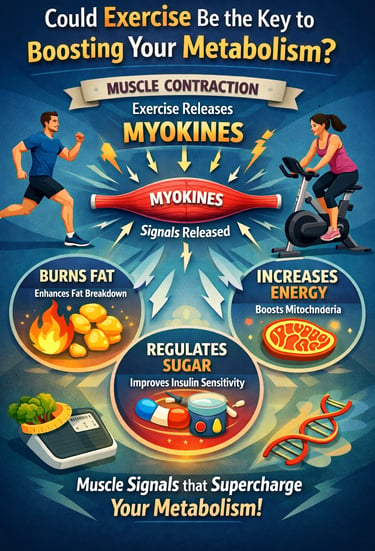
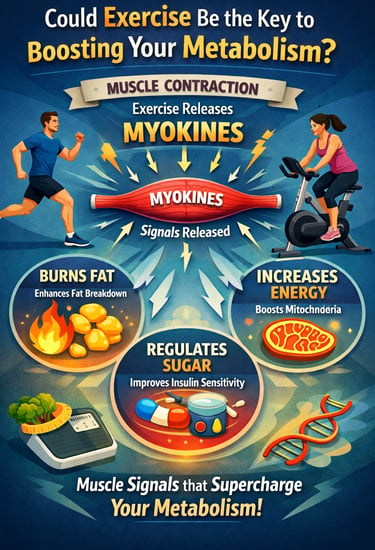
For decades, skeletal muscle was viewed primarily as a mechanical tissue—valuable for locomotion, posture, and strength, but largely passive in systemic physiology. This view has now been fundamentally overturned. Accumulating evidence reveals that skeletal muscle functions as a dynamic endocrine organ, capable of secreting hundreds of bioactive signaling molecules—collectively termed myokines—that exert widespread effects on the brain, liver, adipose tissue, pancreas, immune system, and cardiovascular network (Iglesias, 2025; Yi et al., 2025). Far from being secondary mediators, myokines are increasingly recognized as central regulators of metabolic homeostasis, inflammation, and cellular resilience.
Recent landmark reviews suggest that many of the protective effects traditionally attributed to physical activity—including improved insulin sensitivity, reduced chronic inflammation, enhanced mitochondrial function, and preserved cognitive health—are mediated largely through myokine and myometabolite signaling rather than energy expenditure alone (Chen et al., 2024; Dobre et al., 2026). This paradigm reframes physical inactivity not merely as a lack of movement, but as a state of endocrine deficiency characterized by impaired myokine production and signaling.
Perhaps most striking is emerging evidence linking muscle-derived factors to brain aging and neurodegeneration. Myokines such as IL-10, BDNF, FGF21, and cathepsin B have been shown to modulate neuroinflammation, synaptic plasticity, mitochondrial integrity, and blood–brain barrier function—mechanisms directly implicated in Alzheimer’s disease, Parkinson’s disease, and age-related cognitive decline (Rai & Demontis, 2026). In parallel, metabolic disorders such as obesity and type 2 diabetes are now understood to involve not only insulin resistance, but also myokine resistance, further unifying metabolic and neurodegenerative disease through a common muscle-centered framework (Chen et al., 2024).
Together, these findings position myokine biology at the intersection of exercise science, endocrinology, neurology, and preventive medicine—suggesting that the future of chronic disease management may begin not in the pharmacy, but in skeletal muscle itself.
Clinical pearls
1. Exercise as "Pulsatile" Endocrine Therapy
Scientific Perspective: Contracting skeletal muscle acts as a non-classical endocrine organ, releasing myokines like IL-6 and FGF21 in a pulsatile fashion. This transient increase in myokines mimics endogenous hormone signaling, regulating systemic glucose homeostasis and lipid metabolism.
Think of your muscles as your body’s internal pharmacy. Every time you exercise, your muscles "squeeze" out natural medicine that travels through your bloodstream to help your heart, liver, and brain stay healthy.
2. The "Myokine-Mediated Immunological Brake"
Scientific Perspective: Physical activity shifts the cytokine profile from a pro-inflammatory (M1) to an anti-inflammatory (M2) state. Myokines like IL-10 and IL-4 suppress NF-κB signaling, effectively acting as an "immunological brake" on chronic low-grade inflammation.
Chronic inflammation is like a small fire that never goes out, damaging your cells over time. Exercise acts like a built-in fire extinguisher, releasing proteins that calm the inflammation and protect your tissues.
3. Neuroprotection via the Muscle-Brain Axis
Scientific Perspective: Myokines such as Cathepsin B and BDNF cross the blood-brain barrier to promote hippocampal neurogenesis and synaptic plasticity. This axis is critical for mitigating the protein aggregation seen in Alzheimer’s and Parkinson’s.
Moving your legs actually helps your brain grow. When you walk or lift weights, your muscles send signals to your brain that help grow new connections and keep your memory sharp as you age.
4. Reversing "Myokine Resistance" in Obesity
Scientific Perspective: Obesity induces a state of "myokine resistance," where target tissues become less responsive to muscle-derived signals, analogous to insulin resistance. Restoring muscle quality through resistance training can resensitize these pathways.
When we carry extra weight, our body’s "receivers" for healthy muscle signals get clogged. By building muscle, we can "unclog" those receptors so your body can finally hear the healthy messages your muscles are trying to send.
5. Metabolic Flexibility and Fat "Browning"
Scientific Perspective: Myokine signaling (specifically via Irisin and FGF21) promotes the "browning" of white adipose tissue. This increases mitochondrial uncoupling protein 1 (UCP1) expression, enhancing thermogenesis and systemic metabolic flexibility.
Not all fat is the same. Healthy signals from your muscles can actually "turn on" your fat cells, teaching them to burn calories as heat instead of just storing them. This makes it easier for your body to manage energy.
Unlocking the Power of Myokines: How Muscle Communication Holds the Key to Brain Health, Metabolic Wellness, and Disease Prevention
Myokines are secreted muscle proteins—peptides and cytokines produced and released by contracting skeletal muscle fibers. Unlike traditional hormones synthesized in dedicated endocrine glands, myokines are synthesized throughout your muscle tissue and released directly into the bloodstream, where they exert both local and systemic effects.
Myometabolites, on the other hand, are metabolic byproducts of muscle metabolism—compounds like lactate, amino acids, and other small molecules generated during muscle contraction and exercise metabolism. While historically viewed as waste products, modern research has revealed that these molecules possess remarkable signaling properties and therapeutic potential.
This paradigm shift—recognizing skeletal muscle as a major endocrine organ—has profound implications for understanding muscle-organ crosstalk, metabolic regulation, and disease pathogenesis.
Study 1: Myokines as Neuroprotective Agents—Brain Aging and Neurodegeneration
This editorial by Rai & Demontis (2026) in Nature Reviews Endocrinology positions myokines and myometabolites as emerging therapeutic targets for combating neurodegenerative diseases and brain aging. The authors argue that the muscle-brain axis represents a fundamentally underexplored avenue for neuroprotection.
Key Mechanisms Highlighted
Neuroinflammation reduction: Myokines suppress pro-inflammatory cytokines in the central nervous system, mitigating neuroinflammatory processes implicated in Alzheimer's disease, Parkinson's disease, and other neurodegenerative conditions.
Mitochondrial support: Certain myokines enhance mitochondrial biogenesis and oxidative metabolism in neurons, improving neuroenergy metabolism and reducing oxidative stress.
Synaptic plasticity enhancement: Muscle-derived growth factors and myokine signaling promote long-term potentiation and synaptic remodeling, essential for cognitive function and neuronal resilience.
Blood-brain barrier integrity: Some myokines reinforce the blood-brain barrier, reducing pathological protein infiltration and neuroinflammatory cell infiltration.
Myokines and myometabolites represent a novel, untapped therapeutic frontier for age-related neurodegeneration.
The muscle-brain axis deserves equivalent research attention to established neurotrophic pathways like BDNF signaling.
Exercise-induced myokine secretion may provide non-pharmacological neuroprotection.
Therapeutic strategies targeting myokine production and signaling could supplement existing approaches to neurodegenerative disease management.
Study 2: The Endocrine Muscle—Hormone Regulation and Myokine Biology
This comprehensive review by Iglesias (2025) systematically examines how skeletal muscle functions as an endocrine organ, producing and secreting numerous bioactive molecules that regulate systemic metabolism, glucose homeostasis, and inflammatory status.
Major Myokines Discussed
IL-6 (Interleukin-6): Released during muscle contraction, acting as both pro- and anti-inflammatory depending on context.
TNF-α (Tumor Necrosis Factor-alpha): Modulating insulin sensitivity and systemic inflammation.
IL-10 (Interleukin-10): Exerts anti-inflammatory effects on immune cells and metabolic tissues.
FGF21 (Fibroblast Growth Factor 21): Regulating metabolic flexibility and fatty acid oxidation.
BDNF (Brain-Derived Neurotrophic Factor): Supporting neuronal survival and cognitive function.
Cathepsin B: Released during muscle contraction, linked to cognitive benefits and neuroprotection.
Implications for Endocrine-Metabolic Disease
Type 2 diabetes: Impaired myokine-mediated insulin signaling
Obesity: Altered myokine production and inflammatory myokine predominance
Metabolic syndrome: Disrupted myokine-adipokine crosstalk
Cardiovascular disease: Reduced cardioprotective myokine secretion
Skeletal muscle is a major regulator of endocrine homeostasis, not merely a contractile tissue.
Individual myokines have specific, sometimes context-dependent, physiological roles.
Impaired myokine production or myokine resistance characterizes multiple metabolic diseases.
Exercise prescription should be understood as a form of therapeutic myokine delivery.
Emerging therapies may include recombinant myokine administration or myokine signaling enhancement.
Study 3: The Inflammation-Insulin Resistance Nexus
This study by Dobre et al. (2026) provides crucial mechanistic insight into how myokines interface with the inflammation-insulin resistance axis, a central feature of metabolic disease pathogenesis.
Core Mechanisms
Pro-inflammatory myokine action:
TNF-α and IL-6 from dysfunctional muscle activate JNK and IKKβ pathways, leading to insulin receptor phosphorylation and insulin signaling impairment.
This triggers hepatic insulin resistance, impaired glucose uptake in skeletal muscle, and ultimately hyperglycemia.
Anti-inflammatory myokine action:
IL-10 and IL-4 from well-conditioned muscle suppress NF-κB activation and M1 macrophage polarization, promoting M2 macrophage differentiation.
This enhances insulin sensitivity, mitochondrial function, and metabolic flexibility.
Myokine-adipokine interaction:
Myokines regulate adipokine secretion from white adipose tissue. Healthy myokine signaling reduces leptin resistance and adipose tissue inflammation.
The Muscle-Inflammation-Metabolic Health Triangle
Sedentary behavior and physical inactivity reduce myokine production, particularly anti-inflammatory myokines.
This creates a vicious cycle: low myokine signaling → increased tissue inflammation → insulin resistance → metabolic dysfunction.
Exercise interrupts this cycle through enhanced myokine secretion, particularly IL-10, IL-4, and FGF21.
The study emphasizes that myokine-based interventions—whether through structured exercise, myokine mimetics, or genetic enhancement of myokine production—represent rational therapeutic approaches for:
Type 2 diabetes prevention and management
Obesity treatment
Cardiovascular disease prevention
Metabolic syndrome reversal
Chronic inflammation and insulin resistance are bidirectionally linked through myokine signaling.
Myokine balance—the ratio of anti-inflammatory to pro-inflammatory myokines—is a critical determinant of metabolic health.
Sedentary individuals experience myokine insufficiency, a treatable metabolic abnormality.
Physical activity is fundamentally a myokine delivery mechanism.
Therapeutic strategies should target myokine signaling restoration.
Study 4: Myokine-Mediated Organ Communication—Molecular Mechanisms and Clinical Applications
This comprehensive analysis by Yi et al. (2025) maps the intricate muscle-organ communication networks established through myokine signaling, detailing specific molecular pathways and their therapeutic implications.
Major Myokine-Mediated Organ Interactions
Muscle-Liver Axis:
Myokine IL-6 stimulates hepatic glucose production during exercise, supporting whole-body glucose homeostasis.
FGF21 from muscle promotes hepatic ketogenesis and lipid metabolism reprogramming.
Therapeutic relevance: Myokine-based therapies could improve hepatic insulin sensitivity in NAFLD (non-alcoholic fatty liver disease).
Muscle-Adipose Tissue Axis:
Myokine-mediated signaling reprograms white adipose tissue toward beige/brown adipocyte differentiation, enhancing metabolic flexibility.
Myokines suppress adipose tissue inflammation, reducing adipokine-driven systemic inflammation.
Clinical application: Obesity and metabolic dysfunction management.
Muscle-Pancreatic Islet Axis:
Myokines enhance pancreatic β-cell function and glucose-stimulated insulin secretion.
This improves glucose sensing and glycemic control.
Relevance: Type 2 diabetes prevention and reversal.
Muscle-Brain Axis (Expanded):
Beyond neuroprotection, myokines support cognitive function, mood regulation, and sleep-wake homeostasis.
Cathepsin B specifically enhances neurogenesis in the hippocampus.
Implication: Depression, cognitive decline, and neurodegenerative disease prevention.
Muscle-Immune System Axis:
Myokine signaling educates immune cell populations, promoting Th2 and Treg differentiation while suppressing Th1 and Th17 responses.
This immune-modulatory function of muscle contraction has been termed the "myokine-mediated immunological brake".
Key Takeaways
Myokines function as master regulators of inter-organ communication.
A single myokine often exerts pleiotropic effects across multiple organ systems.
Myokine signaling directly interfaces with immune tolerance, metabolic homeostasis, and neurological health.
Organ-specific myokine receptor expression determines tissue-specific responses.
Therapeutic development should consider systemic myokine effects to avoid off-target consequences.
Study 5: Myokines in Metabolic Disease—Obesity and Type 2 Diabetes
This review by Chen et al. (2024) focuses specifically on the role of myokines in the pathophysiology and therapeutic management of obesity and type 2 diabetes mellitus, two interconnected metabolic disorders of global health significance.
Myokine Dysregulation in Obesity
Reduced myokine production: Obese individuals show decreased IL-10, IL-4, and FGF21 production from muscle.
Altered myokine receptor expression: Obesity induces downregulation of myokine receptors on target tissues, creating a state of myokine resistance analogous to insulin resistance.
Myokine inflammatory shift: The balance tips toward pro-inflammatory myokines (TNF-α, IL-6), exacerbating systemic inflammation.
Impaired muscle quality: Obesity-associated sarcopenia (muscle wasting coupled with fat accumulation) further compromises myokine secretory capacity.
Myokine Dysfunction in Type 2 Diabetes
Defective myokine-mediated insulin signaling: Myokine-induced signaling pathways fail to enhance insulin sensitivity.
Impaired metabolic flexibility: Myokine-driven switching between glucose and fatty acid oxidation is compromised.
Reduced neuroprotective myokine production: Lower BDNF and cathepsin B contribute to diabetic neuropathy and cognitive impairment.
Therapeutic Myokine Strategies
Physical activity enhancement: Structured exercise programs to maximize myokine secretion.
Myokine mimetics: Pharmacological agents that replicate myokine signaling without requiring muscle contraction.
Genetic myokine enhancement: CRISPR and viral gene therapy approaches to enhance myokine production in muscle.
Myokine supplementation: Recombinant protein administration of key myokines (IL-10, FGF21, BDNF).
Myokine sensitizer development: Compounds enhancing myokine receptor responsiveness.
Clinical Evidence
Regular aerobic exercise increases circulating IL-10 and FGF21 by 2-10 fold.
Resistance training enhances BDNF and cathepsin B production.
Combination exercise programs produce synergistic myokine effects.
Even modest weight loss (5-10%) improves myokine signaling capacity.
Key Takeaways
Obesity and type 2 diabetes represent states of myokine insufficiency and myokine resistance.
Myokine dysregulation is a critical mechanistic link between obesity, metabolic dysfunction, and comorbidities.
Exercise therapy works partially through myokine-mediated mechanisms.
Myokine-directed therapies could augment or enhance conventional diabetes management.
Metabolic restoration requires both myokine production enhancement and myokine signaling restoration.
Integrated Analysis: The Convergence of Myokine Biology
Across all five studies, several unifying themes emerge:
1. Myokines as Master Metabolic Regulators
Myokines don't simply relay local muscle status—they orchestrate systemic metabolic adaptation across nervous, endocrine, immune, and metabolic organ systems. Their dysfunction is implicated in virtually every chronic metabolic disease.
2. **The Sedentary Phenotype as Myokine Insufficiency
Modern sedentary behavior is fundamentally a state of myokine deficiency. The research collectively demonstrates that physical inactivity creates a myokine-depleted metabolic environment promoting inflammation, insulin resistance, neurodegeneration, and accelerated aging.
3. Therapeutic Opportunities at Multiple Intervention Points
Prevention through exercise: Sustainable myokine elevation via physical activity.
Pharmacological enhancement: Myokine mimetics and signaling enhancers.
Genetic approaches: Myokine overexpression in muscle tissue.
Biological replacement: Recombinant myokine therapy.
4. Myokine Biology Unifies Exercise Science and Medicine
These studies collectively validate the notion that exercise is medicine—not metaphorically, but mechanistically. Exercise produces myokines, and myokines mediate the vast majority of exercise benefits.
Mechanisms of Action: How Myokines Work
Myokines exert their systemic effects by binding to specific cell-surface receptors and activating intracellular signaling cascades that coordinate metabolic, immune, and adaptive responses across multiple tissues. Key pathways include MAPK/ERK signaling, which promotes gene transcription, cellular growth, and tissue remodeling; the JAK/STAT pathway, central to cytokine-mediated communication and immune cell differentiation; and PI3K/AKT signaling, which enhances insulin sensitivity, glucose uptake, and overall metabolic efficiency. In parallel, many myokines activate AMPK, the cell’s primary energy sensor, triggering mitochondrial biogenesis and improving oxidative metabolism.
Beyond acute signaling, myokines also reprogram gene expression in target organs. They suppress NF-κB–driven transcription, thereby reducing chronic inflammatory signaling, while activating PPARγ, which supports metabolic flexibility and an anti-inflammatory phenotype. Additionally, myokine-induced upregulation of PGC-1α enhances mitochondrial content and oxidative capacity, reinforcing long-term improvements in energy metabolism and cellular resilience.
Frequently Asked Questions (FAQs)
Q1: How much exercise is needed to generate therapeutic myokine levels?
A: The research suggests that even moderate-intensity aerobic exercise (30 minutes, 5 days per week) substantially elevates myokine production. However, dose-response relationships vary by myokine type. BDNF and cathepsin B may require more intense or prolonged exercise bouts, while IL-10 responds to even light physical activity. Personalized exercise prescription based on myokine profiling is an emerging approach.
Q2: Can myokine benefits be obtained from pharmacological agents alone?
A: While myokine mimetics show promise, current evidence suggests they may not fully replicate exercise benefits. Myokine production during muscle contraction involves mechanical signaling, metabolic sensing, and nervous system activation not captured by isolated receptor signaling. Optimal therapeutics likely combine exercise with pharmacological enhancement.
Q3: Are there myokine-related biomarkers I can measure?
A: Yes. Circulating levels of IL-10, IL-6, TNF-α, FGF21, and BDNF can be measured via blood testing. Some research centers offer comprehensive myokine profiling, though this remains primarily a research tool. Healthcare providers can increasingly order individual myokine assessments for metabolic disease management.
Q4: Do myokine benefits decline with aging?
A: Yes. Aging is associated with impaired myokine responsiveness, a condition termed myokine resistance. Additionally, age-related sarcopenia reduces myokine secretory capacity. However, resistance and aerobic exercise can restore myokine production even in elderly populations, suggesting this is a modifiable risk factor.
Q5: Which myokine is most important?
A: There is no single "most important" myokine. Rather, myokine effects are interdependent and context-dependent. However, IL-10 (broadly anti-inflammatory), FGF21 (metabolic regulation), and BDNF (neuroprotection) are currently considered particularly significant. Future research may identify additional critical myokines.
Q6: Can myokine levels be depleted through overtraining?
A: There is emerging evidence suggesting extreme exercise stress without adequate recovery may impair adaptive myokine responses. This highlights the importance of exercise programming that includes recovery periods, appropriate training load progression, and periodization strategies.
Q7: How do myokines relate to muscle memory?
A: Myokines likely contribute to molecular mechanisms underlying muscle memory, the phenomenon where previously trained individuals regain muscle more rapidly. Myokine-induced epigenetic changes and satellite cell memory may be mechanistically involved.
Call to Action: Taking Myokine Science into Your Life
Prioritize physical activity: Implement a combined exercise program (aerobic + resistance training) to maximize myokine production. Aim for 150 minutes of moderate-intensity aerobic activity and 2+ days of resistance training weekly.
Monitor metabolic health: Work with healthcare providers to assess metabolic markers (glucose, insulin, inflammatory markers, lipid profile) as indirect indicators of myokine status.
Consider metabolic assessment: If available, explore myokine profiling to identify specific deficiencies that might be addressed through targeted exercise interventions or emerging myokine-based therapies.
Optimize recovery: Ensure adequate sleep (7-9 hours), stress management, and nutritional support to enable adaptive myokine responses.
Author’s Note
This article aims to synthesise rapidly evolving research on myokines and muscle-derived signalling into a coherent, clinically meaningful framework. While individual studies often focus on isolated pathways or specific diseases, the goal here was to highlight the systems-level role of skeletal muscle as an endocrine organ, integrating insights from exercise physiology, endocrinology, immunology, neurology, and metabolic medicine.
The evidence cited is drawn primarily from recent high-quality reviews and mechanistic studies (2024–2026), reflecting the current scientific consensus while acknowledging that myokine biology remains an actively developing field. Some concepts discussed—such as myokine resistance, pharmacological myokine mimetics, and gene-based myokine therapies—are emerging and should be interpreted as biologically plausible and experimentally supported, rather than fully established clinical practices.
Importantly, this work does not argue that myokines replace established therapies, but rather that they provide a unifying biological explanation for many of the benefits of physical activity and a promising target for future interventions. As research advances, our understanding of muscle–organ communication will likely reshape how we approach aging, metabolic disease, and neurodegeneration.
This article is written for clinicians, researchers, and scientifically engaged readers who seek a deeper, mechanism-driven understanding of why movement is foundational to human health.
Medical Disclaimer
The information in this article, including the research findings, is for educational purposes only and does not constitute medical advice, diagnosis, or treatment.
Related Articles
Bone as an Endocrine Organ: Does Osteocalcin Influence Weight Regulation? | DR T S DIDWAL
The Metabolic Engine: Why Lower Body Strength Is Central to Fat Oxidation | DR T S DIDWAL
How Exercise Rewires Metabolism: Molecular Control of Lipolysis and Lipid Metabolism | DR T S DIDWAL
How to Build a Disease-Proof Body: Master Calories, Exercise & Longevity | DR T S DIDWAL
How to Maximize Muscle Growth: Evidence-Based Strength Training Strategies | DR T S DIDWAL
Movement Snacks: How VILPA Delivers Max Health Benefits in Minutes | DR T S DIDWAL
References
Chen, Z.-T., Weng, Z.-X., Lin, J. D., & Meng, Z.-X. (2024). Myokines: Metabolic regulation in obesity and type 2 diabetes. Life Metabolism, 3(3), loae006. https://doi.org/10.1093/lifemeta/loae006
Dobre, M.-Z., Virgolici, B., Dunca-Stefan, D. C. A., Doicin, I.-C., & Stanescu-Spinu, I.-I. (2026). Inflammation—Insulin resistance crosstalk and the central role of myokines. International Journal of Molecular Sciences, 27(1), 60. https://doi.org/10.3390/ijms27010060
Iglesias, P. (2025). Muscle in endocrinology: From skeletal muscle hormone regulation to myokine secretion and its implications in endocrine-metabolic diseases. Journal of Clinical Medicine, 14(13), 4490. https://doi.org/10.3390/jcm14134490
Rai, M., & Demontis, F. (2026). Therapeutic potential of myokines and myometabolites for brain ageing and neurodegeneration. Nature Reviews Endocrinology, 22, 1–2. https://doi.org/10.1038/s41574-025-01195-9
Yi, J., Chen, J., Yao, X., Niu, X., Li, X., Sun, J., Ji, Y., & Shang, T. (2025). Myokine-mediated muscle-organ interactions: Molecular mechanisms and clinical significance. Biochemical Pharmacology, 12, S000629522500591X. https://doi.org/10.1016/j.bcp.2025.114