Is HIIT Superior for Aerobic Fitness? Insights from Meta-Analyses and Systematic Reviews
Evidence-based analysis of whether HIIT improves aerobic fitness, VO₂ max, and endurance compared with continuous training.
EXERCISE
Dr. T.S. Didwal, M.D.(Internal Medicine)
5/6/202611 min read
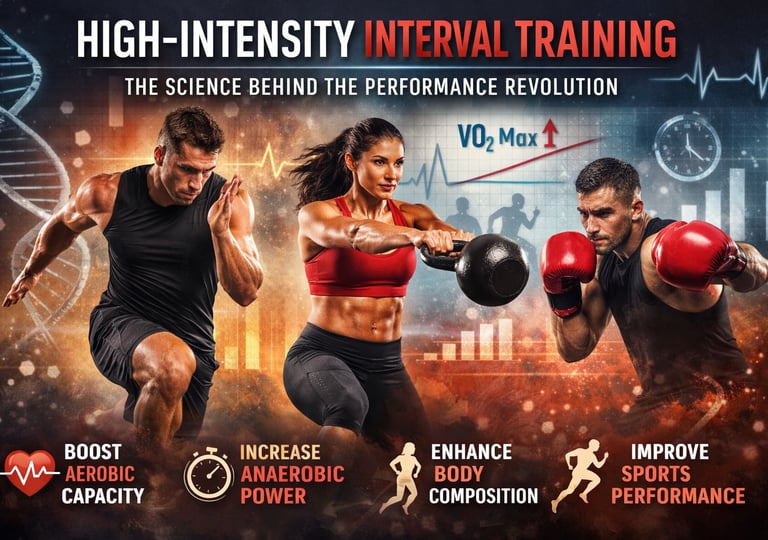
High-Intensity Interval Training (HIIT) is a time-efficient, evidence-based exercise method that alternates short bursts of near-maximal effort with brief recovery periods. Backed by multiple systematic reviews and meta-analyses (2024–2026), HIIT improves aerobic capacity (VO₂ max), fat loss, metabolic health, and athletic performance—often in significantly less time than traditional steady-state cardio.
Key Benefits of HIIT (Science-Based)
Boosts VO₂ max and cardiovascular fitness
Comparable or superior to moderate-intensity continuous training (MICT)Accelerates fat loss while preserving muscle mass
Supports body recomposition through increased fat oxidationEnhances metabolic health
Improves insulin sensitivity, blood pressure, and lipid profileSaves time (high efficiency)
Delivers results in ~40% less training time than steady-state cardioImproves athletic performance
Increases anaerobic power, lactate threshold, and recovery capacity
How HIIT Works (Physiology Simplified)
HIIT activates multiple energy systems simultaneously:
Phosphocreatine system (explosive power)
Anaerobic glycolysis (short bursts)
Aerobic metabolism (recovery and endurance)
At the cellular level, HIIT stimulates:
Mitochondrial biogenesis (via AMPK–PGC-1α pathways)
Improved oxygen utilization
Enhanced lactate clearance
Sample HIIT Workout (Beginner-Friendl
30 seconds fast walking or jogging
90 seconds slow walking
Repeat 6–10 cycles
Total duration: 15–25 minutes
Frequency: 2–3 sessions per week
Safety & Clinical Considerations
Not suitable for unstable cardiovascular disease without medical clearance
Requires adequate recovery (24–48 hours) between sessions
Intensity should be relative (85–95% max heart rate)
High-intensity interval training (HIIT) has rapidly evolved from a niche conditioning strategy used by elite athletes into one of the most scientifically validated and widely adopted training methods in modern exercise physiology. Characterized by brief, repeated bouts of near-maximal effort interspersed with short recovery periods, HIIT challenges the cardiovascular, metabolic, and neuromuscular systems simultaneously—delivering profound fitness adaptations in remarkably little time. In an era where training efficiency, athletic performance optimization, and cardiovascular health are paramount, HIIT stands at the intersection of science and practicality.
What sets HIIT apart from traditional moderate-intensity continuous training (MICT) is not merely its intensity, but its ability to induce rapid improvements in aerobic capacity (VO₂ max), anaerobic power, lactate threshold, and exercise economy across diverse populations. Recent systematic reviews and meta-analyses demonstrate that HIIT produces equivalent—or superior—gains in aerobic endurance compared with longer steady-state protocols, despite requiring substantially less training time (Wang & Wang, 2024). Importantly, these adaptations are not limited to untrained individuals; trained and elite athletes continue to show meaningful improvements in performance metrics following structured HIIT interventions (Qi et al., 2026).
Beyond endurance outcomes, emerging evidence highlights HIIT’s role in enhancing sport-specific performance, repeated-sprint ability, and recovery between high-intensity efforts, making it particularly effective for combat sports, team sports, and intermittent-demand activities (Yue et al., 2025). Simultaneously, HIIT favorably influences body composition, metabolic health, and cardiovascular risk markers, reinforcing its relevance beyond competitive sport and into general health promotion (Danković et al., 2025; Atakan et al., 2021).
HIIT is not just a trend—it is a scientifically validated, time-efficient training strategy that improves cardiovascular fitness, metabolic health, and athletic performance across populations. When applied correctly, it offers maximum results with minimal time investment, making it one of the most powerful tools in modern exercise science.
High-Intensity Interval Training: What Recent Research Reveals About Athletic Performance and Fitness Gains
Study 1: HIIT Effects on Trained Athletes' Aerobic Capacity
This 2026 meta-analysis by Tan et al.(2026) examined how HIIT interventions affect aerobic performance specifically in trained athletes. The research synthesized data from multiple randomized controlled trials to determine whether interval training genuinely outperforms traditional training methods for this population.
HIIT demonstrated significant improvements in aerobic capacity among athletes with existing training backgrounds
Cardiovascular adaptations occurred within relatively short intervention periods
Time efficiency was a major advantage—athletes achieved comparable or superior results in less training time
VO₂ max improvements were comparable to or exceeded those from continuous training protocols
The research emphasizes that trained individuals continue to benefit from interval training, challenging the assumption that HIIT only works for beginners
This study is particularly relevant for competitive athletes who often worry that HIIT might not be sophisticated enough for their advanced fitness levels. The data clearly shows otherwise.
Study 2: HIIT in Combat Sports—Olympic-Level Findings
This systematic review and meta-analysis by Yue et al.(2025) specifically targeted Olympic combat sports athletes, examining how HIIT protocols enhance both aerobic endurance and anaerobic power—two critical components for sports like boxing, wrestling, taekwondo, and judo.
Anaerobic capacity improvements were particularly pronounced in combat sports athletes
Sport-specific benefits emerged from interval-based training, improving explosive power alongside endurance
Recovery capacity between rounds improved significantly with HIIT conditioning
The research highlights that combat athletes face unique physiological demands—repeated high-intensity efforts with brief recoveries—making HIIT uniquely suited to their training needs
Training specificity mattered: protocols that mimicked competition pacing showed the strongest results
For athletes in combat sports, this finding validates using interval training as a cornerstone of their conditioning programs, not merely a supplementary tool.
Study 3: HIIT and Body Composition in Recreational Exerciser
This meta-analysis by Lazić et al. (2025) focused on recreationally active females, examining how HIIT programs influence both physical fitness markers and body composition changes. This is particularly important since much sports science research traditionally focused on male athletes.
Body composition improvements in females were significant, with notable reductions in fat mass
Lean muscle preservation occurred during fat loss—a critical consideration for those aiming for body recomposition
Physical fitness improvements extended across multiple domains: cardiovascular function, muscular strength, and metabolic health
Adherence rates were favorable, suggesting that females find HIIT accessible and sustainable
The research validates that women respond equally well to HIIT as their male counterparts, contradicting outdated training assumptions
This study is essential reading for women in fitness, demonstrating that HIIT isn't just "male-focused training" but equally effective across genders.
Study 4: Historical Perspective and Health Benefits of HIIT
This review by Atakan et al (2021) provided both a historical context for HIIT research and an evidence-based examination of its health and performance benefits. The "historical perspective" element is valuable for understanding how HIIT evolved from scientific theory to mainstream practice.
Exercise capacity improvements span cardiovascular, musculoskeletal, and metabolic systems
Health benefits extend beyond athletic performance, including improvements in insulin sensitivity, blood pressure, and lipid profiles
The evolution of HIIT protocols from laboratory settings to practical, field-based applications shows how research translates to real-world training
Cardiovascular health markers improve robustly, with implications for disease prevention
The historical review demonstrates that HIIT's effectiveness isn't a recent discovery—the science has been building for decades
For those concerned about HIIT's overall health impact beyond sport, this study provides reassurance that the benefits extend to chronic disease prevention and general health markers.
Study 5: HIIT and Sport-Specific Skills in Basketball Players
This study by Kumari et al.(2023). examined a critical question: Does HIIT training improve not just general fitness but actual sports-specific skills like shooting accuracy, agility, and court movement in basketball?
Aerobic capacity improvements directly translated to enhanced on-court performance
Sports-specific skill execution improved when athletes had better aerobic conditioning
Court movement efficiency was enhanced, allowing players to maintain positional play intensity
Speed-endurance benefits were particularly pronounced, improving sprint-recovery capacity during game play
The research shows that general conditioning improvements have direct sport-application, not just lab-based benefit
For team sport athletes, this validates that conditioning through HIIT produces tangible, game-relevant improvements beyond standard fitness metrics.
Study 6: HIIT vs. Moderate-Intensity Continuous Training
This study by Wang, & Wang (2024) directly compared HIIT versus moderate-intensity continuous training (MICT), a crucial comparison that helps athletes and coaches choose their training approach based on evidence.
HIIT showed equivalent or superior benefits for aerobic endurance compared to MICT
Training time efficiency was a major advantage—athletes required significantly less time on HIIT protocols
VO₂ max improvements were comparable or better with HIIT despite shorter total training duration
Adherence considerations matter: the shorter duration of HIIT may improve long-term compliance
The research suggests that time-efficient training protocols don't compromise results, a crucial finding for busy athletes
This comparative analysis is particularly valuable for athletes balancing training with other life demands.
Synthesizing the Research: What Do These Studies Tell Us?
HIIT Works Across Populations
Whether you're an elite Olympic athlete, a competitive basketball player, a combat sport specialist, or someone who exercises recreationally, HIIT delivers measurable results. The consistency across different populations suggests that interval training principles are fundamentally sound.
Aerobic Capacity and Athletic Performance Are Robust Improvements
Nearly every study documented significant gains in cardiovascular fitness and aerobic endurance. These aren't marginal improvements—we're talking about meaningful enhancements in VO₂ max, lactate threshold, and sustained performance capacity.
Time Efficiency Is Real
One of HIIT's most practical advantages is that athletes achieve superior or equal results in significantly less time compared to traditional steady-state cardio. For the time-constrained athlete, this is game-changing.
Anaerobic Capacity Improvements Matter for Sport Performance
Particularly relevant for combat sports athletes and team sport players, HIIT enhances anaerobic power—your ability to produce maximum effort in short bursts and recover quickly. This directly translates to competitive advantage.
Body Composition and Health Markers Improve
Beyond performance metrics, HIIT produces favorable changes in body composition, metabolic health, and disease prevention markers. It's not just about getting faster or stronger—it's about getting healthier.
Sport-Specific Benefits Emerge
The basketball study reminds us that fitness improvements transfer to actual sport performance—shooting accuracy, agility, court movement—not just treadmill metrics.
Practical Implementation: How to Apply This Research
Designing Your HIIT Program
Based on this research, here are evidence-based principles for effective HIIT training:
Work-to-Recovery Ratio: Most effective protocols use work intervals at 90-100% maximum effort lasting 20-60 seconds, followed by recovery periods at 40-50% effort lasting equal duration or slightly longer.
Frequency: 2-3 HIIT sessions per week appear optimal, particularly when combined with other training modalities. More isn't always better—recovery is where adaptation occurs.
Intervention Duration: Studies show significant improvements within 6-8 weeks, with continued gains through 12+ weeks. Don't expect overnight results, but do expect consistent progress.
Progressive Overload: Gradually increase work interval intensity, decrease recovery duration, or extend total session duration to maintain stimulus as fitness improves.
Combining HIIT with Other Training
The research doesn't suggest abandoning all other training in favor of HIIT. Rather, high-intensity interval training works best as a component of a comprehensive training program that includes:
Strength and power training for neuromuscular adaptation
Sport-specific skill work for technical development
Easy-paced recovery training for aerobic base building
Mobility and flexibility work for injury prevention
Individual Variation Matters
While the meta-analyses show consistent group-level improvements, individual responses vary. Some athletes show exceptional aerobic gains, others show greater anaerobic improvements. Monitoring your individual response—through performance testing, subjective readiness, and physiological markers—helps optimize your training.
FAQs: Common Questions About HIIT
Q: Isn't HIIT too intense for beginners?
A: While HIIT demands maximal effort during work intervals, beginners can scale intensity relative to their capacity. "Maximum effort" is personal—what's 90% effort for an elite athlete differs from a recreational exerciser. Start with longer recovery periods and shorter work intervals, then progress gradually.
Q: How often should I do HIIT?
A: The research supports 2-3 sessions weekly for most athletes. This frequency provides sufficient stimulus while allowing adequate recovery. More frequent sessions risk overtraining without proportional benefit.
Q: Can HIIT replace all my endurance training?
A: The research suggests HIIT is highly efficient but works best within a mixed training program. While HIIT produces aerobic improvements comparable to longer steady-state sessions, some easy-paced work helps build aerobic base and manage overall training stress.
Q: Is HIIT better than steady-state cardio?
A: Not universally "better"—but more time-efficient. The Wang and Wang (2024) study showed comparable aerobic improvements in less time. Your choice depends on your schedule, preferences, and specific performance goals.
Q: Are there safety concerns with HIIT?
A: HIIT is demanding cardiovascularly. Those with cardiovascular disease or uncontrolled health conditions should consult healthcare providers. For healthy individuals, HIIT is safe when progressed appropriately and combined with adequate recovery.
Q: Does gender affect HIIT effectiveness?
A: The Danković et al. (2025) research confirms that women respond equally well to HIIT as men. Gender differences in training response are minimal—individual variation exceeds gender-based variation.
Q: How do I know if HIIT is working?
A: Track objective measures like VO₂ max improvements, lactate threshold, sprint performance, and sport-specific metrics. Subjective markers matter too—you'll likely feel more energized, recover faster between efforts, and notice improved performance in sport or training.
Clinical Pearls
1. The "Efficiency Paradox"
The Science: High-Intensity Interval Training (HIIT) can trigger the same mitochondrial biogenesis (the creation of energy-producing structures in cells) as steady-state cardio, but in roughly 40% less time.
Clinical Pearl: You don’t need to spend hours on a treadmill to protect your heart. If you are short on time, increasing the intensity of a 20-minute workout can provide the same cardiovascular protection as a 50-minute moderate jog.
2. The "Metabolic Afterburn" (EPOC)
The Science: HIIT creates a larger "oxygen debt" than steady training, leading to higher Excess Post-exercise Oxygen Consumption (EPOC).
Clinical Pearl: Your body continues to burn calories at an elevated rate for hours after you leave the gym. Think of HIIT as a "metabolic thermostat" that stays turned up while you’re recovering on the couch.
3. Muscle Preservation during Fat Loss
The Science: Research shows HIIT promotes fat oxidation while maintaining lean muscle mass, unlike long-duration steady-state cardio which can sometimes lead to muscle catabolism (breakdown).
Clinical Pearl: If your goal is "body recomposition"—losing fat without looking "frail"—HIIT is your best tool. It signals your body to keep its muscle because that muscle is needed for those high-intensity bursts.
4. The "Specific Adaptation" Principle
The Science: For athletes, HIIT improves the lactate threshold—the point at which your muscles start to feel "the burn" and slow down.
Clinical Pearl: HIIT trains your body to clear metabolic waste more efficiently. In a game or race, this means you can go faster for longer before hitting a "wall." It’s essentially teaching your "engine" how to handle high speeds without overheating.
5. Heart Rate Variability (HRV) and Recovery
The Science: While HIIT is a powerful stimulus, it places a high demand on the Sympathetic Nervous System (the "fight or flight" response).
Clinical Pearl: More is not better. To see the gains found in the 2026 research, you must allow for 48 hours of recovery between sessions. If you do HIIT every day, you risk "systemic fatigue," where your performance plateaus because your nervous system hasn't recovered.
6. The "Intensity is Relative" Rule
The Science: Scientific "Maximum Effort" is based on an individual’s VO₂ max or Max Heart Rate, not a universal speed or weight.
Clinical Pearl: "High intensity" for an Olympic sprinter is a 10-second dash; for a sedentary beginner, it might be a brisk walk up a steep hill. As long as your heart rate is reaching 85–95% of its capacity, you are reaping the cellular benefits of HIIT.
Author’s Note
This article was written to bridge the gap between exercise science research and real-world training application. While high-intensity interval training (HIIT) is often promoted through trends and anecdotal success stories, its true value lies in a growing body of high-quality scientific evidence. To ensure accuracy and credibility, the content presented here is grounded primarily in systematic reviews and meta-analyses, which represent the highest level of evidence in sports and exercise physiology.
The goal was not to position HIIT as a universal replacement for all forms of training, but rather to present it as a powerful, evidence-based tool that—when applied intelligently—can enhance aerobic capacity, anaerobic performance, sport-specific skills, body composition, and cardiometabolic health across diverse populations. Special emphasis was placed on research involving trained athletes, women, and sport-specific contexts, groups that are often underrepresented or oversimplified in popular fitness discourse.
As a clinician-scientist and educator, I believe that training recommendations should be driven by data, not dogma. The studies referenced were selected for methodological rigor, contemporary relevance, and practical applicability, with findings translated into actionable principles for athletes, coaches, healthcare professionals, and informed exercisers.
Readers are encouraged to interpret HIIT not as a shortcut, but as a strategic stimulus—one that demands appropriate progression, adequate recovery, and integration within a comprehensive training program. When used thoughtfully, HIIT exemplifies how modern exercise science can deliver maximal physiological benefit with efficient use of time.
This piece ultimately aims to empower readers to train smarter, guided by science rather than trends.
Medical Disclaimer
The information in this article, including the research findings, is for educational purposes only and does not constitute medical advice, diagnosis, or treatment. Before starting any new exercise program, you must consult with a qualified healthcare professional, especially if you have existing health conditions (such as cardiovascular disease, uncontrolled hypertension, or advanced metabolic disease). Exercise carries inherent risks, and you assume full responsibility for your actions. This article does not establish a doctor-patient relationship.
Related Articles
How to Build Stronger Bones: Why Lean Muscle Mass Matters More Than Weight Loss for Bone Density
High-Intensity Interval Training in Type 2 Diabetes: Clinical Evidence for Metabolic Improvement
How to Build a Disease-Proof Body: Master Calories, Exercise & Longevity
Lactate Explained: How Exercise-Driven Lactate Boosts the Brain, Metabolism, and Performance
How to Maximize Muscle Growth: Evidence-Based Strength Training Strategies
Lower Blood Pressure Naturally: Evidence-Based Exercise Guide for Metabolic Syndrome
References
Atakan, M. M., Li, Y., Koşar, Ş. N., Turnagöl, H. H., & Yan, X. (2021). Evidence-based effects of high-intensity interval training on exercise capacity and health: A review with historical perspective. International Journal of Environmental Research and Public Health, 18(13), Article 7201. https://doi.org/10.3390/ijerph18137201
Danković, G., Lazić, A., Andrieieva, O., Korobeinikov, G., Stanković, D., & Trajković, N. (2025). Effects of high-intensity interval training on physical fitness and body composition in recreationally active females: A systematic review and meta-analysis. Scientific Reports, 15, Article 33982. https://doi.org/10.1038/s41598-025-11809-x
Kumari, A., Singh, P., & Varghese, V. (2023). Effects of high-intensity interval training on aerobic capacity and sports-specific skills in basketball players. Journal of Bodywork and Movement Therapies, 34, 46–52. https://doi.org/10.1016/j.jbmt.2023.04.032
Qi, K., Tan, L., Xu, Q., Xu, Y., Kawczyński, A., & Chen, A. (2026). Effects of high-intensity interval training on aerobic capacity and athletic performance in trained athletes: a systematic review and meta-analysis. BMC Sports Science, Medicine & Rehabilitation, 10, Article 1186/s13102-025-01479-7. https://doi.org/10.1186/s13102-025-01479-7
Wang, Z., & Wang, J. (2024). The effects of high-intensity interval training versus moderate-intensity continuous training on athletes' aerobic endurance performance parameters. European Journal of Applied Physiology, 124, 2235–2249. https://doi.org/10.1007/s00421-024-05532-0
Yue, F., Wang, Y., Yang, H., & Zhang, X. (2025). Effects of high-intensity interval training on aerobic and anaerobic capacity in Olympic combat sports: A systematic review and meta-analysis. Frontiers in Physiology, 16, Article 1576676. https://doi.org/10.3389/fphys.2025.1576676