SGLT2 Inhibitors Beyond Diabetes: Are We Prescribing Them Too Late?
SGLT2 inhibitors are no longer "just for diabetes." Discover why a multidisciplinary approach to early SGLT2i therapy is revolutionizing the treatment of heart failure and CKD.
DIABETES
Dr. T.S. Didwal, M.D.(Internal Medicine)
7/11/202613 min read
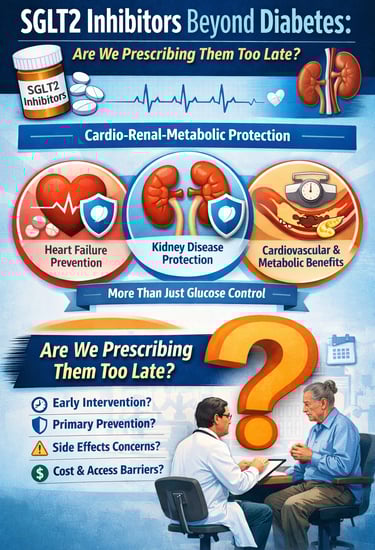
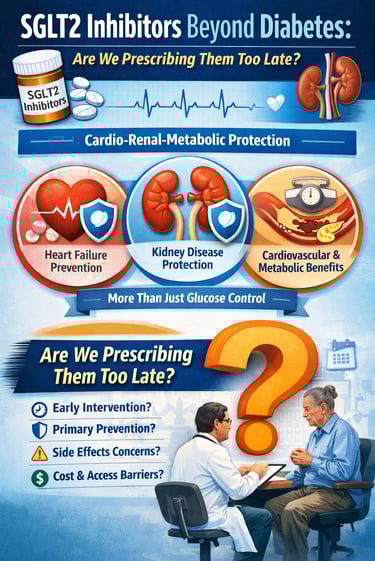
SGLT2 inhibitors, originally developed to lower blood sugar in type 2 diabetes, are now recognized as powerful cardio-renal-metabolic protective agents that work far beyond glucose control. Large clinical trials and real-world studies show that these medications reduce heart failure hospitalizations, slow chronic kidney disease (CKD) progression, and lower cardiovascular risk, even in people without diabetes (Kumar et al., 2025; Feng et al., 2025).
Unlike traditional diabetes drugs, SGLT2 inhibitors protect organs through multiple mechanisms—reducing kidney pressure, improving heart energy efficiency, lowering inflammation, and promoting mild diuresis. These benefits help explain why they are now recommended for patients with heart failure and CKD, regardless of diabetic status (McLean et al., 2025).
The key debate today is timing. Evidence for use in patients with established disease is strong, but growing data suggest that earlier initiation in high-risk individuals may prevent future heart and kidney damage (Wong & Nguyen, 2023). However, real-world prescribing often lags behind evidence due to concerns about side effects, cost, and limited primary-prevention trials (Alhomoud & Alamer, 2026).
Overall, SGLT2 inhibitors represent a shift from glucose-centric care to organ-protective medicine, emphasizing prevention, individualized risk assessment, and shared decision-making. When prescribed thoughtfully and monitored appropriately, they offer substantial long-term health benefits beyond diabetes management.
Clinical pearls
1. The "Kidney Gym" Effect
SGLT2 inhibitors exert a profound nephroprotective effect by restoring tubuloglomerular feedback (TGF). By inhibiting sodium-glucose reabsorption in the proximal tubule, these agents increase distal sodium delivery to the macula densa. This triggers afferent arteriolar vasoconstriction, effectively reducing intraglomerular hypertension and hyperfiltration.
While this mechanism causes an acute, hemodynamic "dip" in the estimated glomerular filtration rate (eGFR) upon initiation, it is a functional rather than structural change. By mitigating barotrauma within the glomerulus, SGLT2 inhibitors reduce albuminuria and significantly attenuate the long-term slope of renal function decline.
Think of SGLT2 inhibitors as a workout for your renal system that actually leads to long-term rest. Initially, you might see a slight, temporary dip in kidney filtration (eGFR). Scientifically, this is tubuloglomerular feedback—the drug is reducing the high pressure inside your kidney’s filters. While a dip sounds scary, it’s actually a sign that the medication is "offloading" the kidneys to preserve their function for years to come.
2 From Glucose Control to Pleiotropic Organ Protection
SGLT2 inhibitors have transitioned from simple antihyperglycemics to potent metabolic modulators. By lowering the insulin-to-glucagon ratio, these agents promote the production of beta-hydroxybutyrate, a "thrifty substrate" that is more oxygen-efficient than glucose or fatty acids.
This shift optimizes myocardial energetics and mitochondrial function, enhancing ATP production while reducing oxidative stress. Additionally, through the inhibition of the sodium-hydrogen exchanger (NHE), SGLT2i reduce intracellular sodium and calcium overload. These mechanisms provide systemic cardio-renal protection that is independent of glycemic status, justifying their use in euglycemic patients.
While these were born as diabetes drugs, we now view them as organ protectors. They change how your heart uses fuel, making it more efficient—almost like switching an engine from low-grade gasoline to high-performance electric power. Because of this metabolic shift, you don't need to have high blood sugar to reap the rewards for your heart and kidneys.
3.The "Hydration Equation"
SGLT2 inhibitors induce osmotic diuresis and natriuresis by inhibiting the coupled reabsorption of sodium and glucose. Unlike traditional loop diuretics, SGLT2 inhibitors preferentially reduce interstitial fluid volume with minimal impact on arterial circulating volume, which preserves organ perfusion. However, this shift necessitates proactive clinical management of the patient's hydration status to prevent compensatory activation of the renin-angiotensin-aldosterone system (RAAS) or symptomatic hypotension.
Because these medications work by flushing sugar out through the urine, water follows that sugar. This creates a mild natural diuretic (water pill) effect. It is a powerful tool for reducing swelling and blood pressure, but it means consistent hydration is non-negotiable. If you feel dizzy when standing up, your "fluid battery" might be low—always discuss your salt and water intake with your team.
4. Urogenital Microbiome Alterations and Infection Risk
The pharmacologic induction of sustained glycosuria—typically 60–100 grams of glucose per day—alters the microenvironment of the lower urogenital tract. This increased substrate availability promotes the colonization of commensal fungi, primarily Candida species. While these genital mycotic infections (GMIs) are common, they are typically superficial. Rigorous perineal hygiene protocols are evidence-based interventions that mitigate this risk without necessitating the discontinuation of therapy.
The most common side effect—yeast or fungal infections—happens because sugar is now present in the urinary tract, creating an environment where fungi love to grow. This shouldn't be a dealbreaker. Simple, proactive hygiene (like using a peri-bottle or rinsing after urination) can significantly reduce this risk, allowing you to stay on the medication safely.
5. Metabolic Stress and Euglycemic Diabetic Ketoacidosis (euDKA)
SGLT2 inhibitors carry a rare risk of euglycemic DKA, characterized by metabolic acidosis in the presence of near-normal serum glucose (<250 mg/dL). The mechanism involves a reduction in endogenous insulin secretion coupled with a rise in glucagon, shifting the metabolic profile toward ketogenesis. During periods of acute metabolic stress—such as major surgery, severe infection, or extreme carbohydrate restriction—the "Sick Day Rules" must be applied: therapy should be temporarily suspended to prevent the accumulation of ketoacids.
6 .The Expanding eGFR "Floor"
Historically, SGLT2 inhibitors were limited by high eGFR thresholds due to their glucose-lowering efficacy being dependent on filtration. However, because their organ-protective benefits are hemodynamically and metabolically driven, clinical guidelines have shifted.
Based on landmark trials like EMPA-KIDNEY and DAPA-CKD, clinicians can now confidently initiate therapy in patients with an eGFR as low as 20 mL/min/1.73m². Furthermore, once initiated, therapy is generally continued until the start of dialysis or kidney transplantation, even if the eGFR falls below 20. This "lower floor" allows for the inclusion of patients with advanced Stage 4 CKD, the very population at the highest risk for progression to end-stage renal disease (ESRD).
How SGLT2 Inhibitors Protect the Heart and Kidneys—Even Without Diabetes
The SGLT2i Paradigm Shift: Moving Beyond Glucose to Organ Protection
For years, SGLT2 inhibitors were considered a specialist tool for managing type 2 diabetes. Today, this perspective has fundamentally transformed. Healthcare providers are increasingly recognizing that these medications offer far more than glucose control—they provide cardio-renal-metabolic protection (Kumar et al., 2025) that could benefit millions of patients earlier in their disease trajectory.
But here's the critical question: Are we prescribing SGLT2 inhibitors too late?
This comprehensive guide explores the latest research on SGLT2 inhibitors and cardiovascular health, examines real-world prescribing patterns, and addresses the critical question: should we be initiating these medications earlier as primary prevention for high-risk patients?
Understanding SGLT2 Inhibitors: Beyond the Basics
What Are SGLT2 Inhibitors?
SGLT2 inhibitors (sodium-glucose cotransporter-2 inhibitors) are a class of medications that work through a novel mechanism: they inhibit the reabsorption of glucose in the kidneys, allowing excess glucose to be excreted in urine. Common drugs in this class include empagliflozin, dapagliflozin, canagliflozin, and ertugliflozin.
While initially developed as diabetes medications, emerging evidence reveals that SGLT2 inhibitors offer benefits entirely independent of glucose lowering (Feng et al., 2025). This discovery has opened entirely new therapeutic possibilities.
The Mechanism of Organ Protection
Recent research demonstrates that SGLT2 inhibitors provide cardio-renal protection through multiple mechanisms:
Improved cardiac energetics and myocardial efficiency
Reduction in intra-renal pressure and glomerular hyperfiltration
Anti-inflammatory effects on endothelial function
Enhanced natriuresis and reduction in preload
Metabolic benefits including improved insulin sensitivity
These mechanisms explain why SGLT2 inhibitors show benefits in heart failure, chronic kidney disease, and cardiovascular disease—even in non-diabetic populations.
The Research Landscape: Key Studies and Findings
Study 1: MedTechNews Comprehensive Review (2025)
Key Focus: Mechanisms and clinical applications across diverse patient populations.
What This Study Reveals:
MedTechNews's comprehensive analysis provides a thorough examination of how SGLT2 inhibitor mechanisms extend well beyond diabetes management. The review emphasizes the shift toward organ-protective prescribing, highlighting how these medications demonstrate efficacy in heart failure reduction, CKD progression prevention, and cardiovascular event reduction.
The critical takeaway is that SGLT2 inhibitors should no longer be viewed exclusively through a glucose-centric lens. Instead, clinicians should recognize their role in cardio-renal-metabolic protection as a primary therapeutic goal, regardless of baseline glucose levels (MedTechNews, 2025).
Key Takeaways:
SGLT2 inhibitors provide mechanism-based protection beyond glucose control
Cardio-renal benefits justify expanded use in non-diabetic populations
The shift from glucose-centric to organ-protective prescribing represents a paradigm shift in clinical practice
Study 2: Kumar et al. Critical Review (2025)
Key Focus: SGLT2 inhibitors for diabetes, renal health, and cardiovascular conditions.
What This Study Reveals:
Kumar and colleagues provide critical analysis of evidence supporting SGLT2 inhibitor use across three major therapeutic domains: type 2 diabetes management, renal disease treatment, and cardiovascular disease prevention. Their work particularly emphasizes the renal protective effects of SGLT2 inhibitors, demonstrating measurable slowing of CKD progression and albuminuria reduction (Kumar et al., 2025).
The review identifies a critical gap: while evidence for secondary prevention (in patients with established disease) is robust, primary prevention applications require more rigorous study. However, the mechanistic understanding is compelling enough to warrant careful consideration of early SGLT2 inhibitor initiation in high-risk populations.
Key Takeaways:
Strong evidence supports SGLT2 inhibitor efficacy in all three domains: diabetes, renal health, and cardiovascular protection
CKD progression can be meaningfully slowed with SGLT2 inhibitors
Primary prevention remains an evolving field requiring more robust long-term data
Individual risk stratification is essential for determining optimal timing of SGLT2 inhibitor initiation
Study 3: McLean, Bennett & Woods Precision Medicine Approach (2025)
Key Focus: Patient-centered, multidisciplinary approach to SGLT2 inhibitor prescribing.
What This Study Reveals:
McLean and colleagues champion a precision medicine perspective on SGLT2 inhibitor therapy. Rather than universal application, they advocate for individualized patient risk stratification, considering metabolic phenotype, cardiorenal disease status, side-effect tolerance, and patient preferences (McLean et al., 2025).
This study directly addresses the practical reality of patient side-effect mitigation. The authors emphasize that early initiation of SGLT2 inhibitors must be balanced against real-world tolerability issues including genital mycotic infections, diabetic ketoacidosis risk, and volume depletion concerns.
The multidisciplinary team approach recognizes that SGLT2 inhibitor prescribing extends beyond nephrology or cardiology alone—primary care physicians, pharmacists, and specialists must collaborate to optimize timing and selection of therapy.
Key Takeaways:
Precision medicine approach requires individual risk stratification rather than universal early prescribing
Multidisciplinary teams optimize SGLT2 inhibitor prescribing and patient side-effect management
Patient preferences regarding side effects must inform treatment decisions
Early initiation should be tailored to individual cardiorenal risk profiles
Study 4: Wong & Nguyen Case-Based Framework (2023)
Key Focus: Practical case-based approach to expanding SGLT2 inhibitor use.
What This Study Reveals:
Wong and Nguyen provide practical clinical guidance through case examples demonstrating how SGLT2 inhibitors can be effectively integrated into care plans beyond traditional diabetes management (Wong & Nguyen, 2023). Their case-based approach illustrates real-world decision-making around initiation timing, patient selection, and monitoring strategies.
For clinicians seeking concrete guidance on expanding SGLT2 inhibitor use, this framework offers actionable insights. The cases demonstrate how careful patient assessment, consideration of comorbid conditions, and attention to side-effect risk factors enable safe, effective early SGLT2 inhibitor initiation.
Key Takeaways:
Case-based learning enhances clinical understanding of SGLT2 inhibitor application beyond diabetes
Practical frameworks improve patient selection for SGLT2 inhibitor therapy
Real-world cases demonstrate feasibility and safety of early initiation
Monitoring protocols ensure safety even with expanded SGLT2 inhibitor use
Study 5: Alhomoud & Alamer Real-World Prescribing Patterns (2026)
Key Focus: Actual prescribing patterns in clinical practice—what clinicians are really doing.
What This Study Reveals:
While theoretical frameworks and clinical trials provide the evidence base, real-world prescribing data reveals a more complex picture. Alhomoud and Alamer examine how SGLT2 inhibitors and GLP-1 receptor agonists are actually prescribed in older adults with type 2 diabetes and cardiometabolic disease—the very populations most likely to benefit from early SGLT2 inhibitor initiation (Alhomoud & Alamer, 2026).
Their findings likely reveal gaps between evidence and practice. Many clinicians may not be initiating SGLT2 inhibitors as early as evidence supports, particularly in primary prevention settings. This real-world data is crucial for understanding barriers to expanded SGLT2 inhibitor use and identifying opportunities for practice improvement.
Key Takeaways:
Real-world prescribing patterns likely lag behind clinical evidence recommendations
Barriers to expanded SGLT2 inhibitor use include clinician knowledge gaps, cost concerns, and side-effect concerns
Older adults with cardiometabolic disease represent a population where SGLT2 inhibitor prescribing could be optimized
Practice-level interventions could improve appropriate SGLT2 inhibitor use and early initiation
Study 6: Feng, Wu & Mai Emerging Horizons (2025)
Key Focus: Multifaceted benefits and emerging clinical applications.
What This Study Reveals:
Feng, Wu, and Mai explore the expanding clinical horizons for SGLT2 inhibitors, examining how these medications address multiple aspects of cardio-renal-metabolic health simultaneously (Feng et al., 2025). Their work emphasizes that SGLT2 inhibitor benefits extend across interconnected systems—addressing not just glycemic control but blood pressure management, weight reduction, albuminuria decrease, and cardiovascular event reduction.
This systems-based perspective supports the case for earlier SGLT2 inhibitor initiation in high-risk patients without requiring a diabetes diagnosis. The multifaceted benefits suggest that even patients with borderline glycemic control but established cardiovascular risk could benefit from SGLT2 inhibitor therapy.
Key Takeaways:
Multifaceted benefits justify consideration of SGLT2 inhibitors beyond glucose management
Cardio-renal-metabolic protection occurs simultaneously across organ systems
Emerging clinical applications support expansion beyond traditional diabetes indication
Integrated organ protection represents the future direction of SGLT2 inhibitor prescribing
The Central Question: Are We Prescribing SGLT2 Inhibitors Too Late?
Current Prescribing Reality: Secondary Prevention
In secondary prevention scenarios—patients with established heart failure, chronic kidney disease, or prior cardiovascular events—we are generally not prescribing SGLT2 inhibitors too late. Major clinical guidelines increasingly recommend these medications for patients with HFrEF (heart failure with reduced ejection fraction), CKD, and cardiometabolic disease.
The Frontier: Primary Prevention Prescribing
The real question centers on primary prevention—initiating SGLT2 inhibitors in asymptomatic, high-risk patients before cardiovascular events or significant kidney disease develops.
Evidence in Favor of Early Initiation:
Mechanistic studies demonstrate organ protective effects independent of glucose
Cardiovascular risk reduction occurs even in non-diabetic populations
CKD progression slowing begins early with SGLT2 inhibitor therapy
Cost-effectiveness improves with early prevention approach
Barriers to Early Initiation:
Primary prevention trials remain limited compared to secondary prevention data
Side-effect concerns (genital infections, volume depletion, DKA risk)
Cost and insurance coverage limitations
Clinical inertia and familiarity with traditional approaches
Practical Framework: Patient Side-Effect Mitigation and Early Initiation
Successfully implementing earlier SGLT2 inhibitor prescribing requires systematic patient side-effect mitigation:
Preventing Genital Mycotic Infections
Provide detailed hygiene counseling at initiation
Educate patients on early warning signs
Consider prophylactic antifungal therapy in high-risk patients
Monitor adherence—side effects drive discontinuation
Diabetic Ketoacidosis Risk Management
Screen for type 1 diabetes and LADA before prescribing
Counsel on sick-day management and medication holding
Monitor high-risk patients more closely
Educate on warning signs requiring emergency evaluation
Volume Depletion Prevention
Assess baseline hydration status
Monitor orthostatic vitals and symptoms
Consider dose adjustments in dehydration-prone populations
Coordinate care with other diuretic-based therapies
Establishing Monitoring Protocols
Baseline renal function and eGFR assessment
Regular genital infection screening for symptomatic patients
Periodic metabolic reassessment
Patient-reported outcome monitoring
Frequently Asked Questions
Q: Should every patient with type 2 diabetes take SGLT2 inhibitors?
A: No. While SGLT2 inhibitors offer significant benefits for patients with cardiovascular disease, heart failure, or chronic kidney disease, they're not universally required for all type 2 diabetes patients. Individualized assessment based on cardiorenal risk and tolerability guides prescribing decisions.
Q: Can SGLT2 inhibitors be used in patients without diabetes?
A: Yes, increasingly. Evidence supports SGLT2 inhibitor use in non-diabetic patients with heart failure, chronic kidney disease, and significant cardiovascular risk. This represents a paradigm shift from diabetes-exclusive indications.
Q: What's the most common side effect of SGLT2 inhibitors?
A: Genital mycotic infections are the most frequent side effect, particularly in women. Proper hygiene education and monitoring minimize impact on adherence.
Q: Are SGLT2 inhibitors safe for older adults?
A: Generally yes, with appropriate patient selection and monitoring. Older adults with cardiometabolic disease often benefit, though volume status and orthostatic symptoms require closer attention.
Q: How early should SGLT2 inhibitor therapy begin?
A: Timing depends on individual risk assessment. Secondary prevention (established disease) justifies early initiation. Primary prevention (high-risk but asymptomatic) requires careful patient selection and shared decision-making.
Q: Can SGLT2 inhibitors cause diabetic ketoacidosis?
A: DKA risk is rare but real, primarily in type 1 diabetes and LADA. Proper screening and patient education minimize risk in appropriate candidates.
Q: How do SGLT2 inhibitors compare to GLP-1 receptor agonists?
A: Both offer cardio-renal benefits beyond glucose control. SGLT2 inhibitors work through renal glucose excretion; GLP-1 agonists enhance insulin secretion. Often used complementarily for enhanced metabolic benefits.
Author’s Note
The purpose of this article is to highlight a fundamental shift occurring in modern medicine—from a glucose-centric approach to diabetes care toward a broader, organ-protective strategy focused on long-term cardiovascular and renal health. SGLT2 inhibitors represent one of the most compelling examples of this evolution. What began as a class of glucose-lowering agents has emerged as a powerful tool for cardio-renal-metabolic protection, supported by robust clinical trials and real-world evidence.
As a clinician and academic, I have attempted to bridge mechanistic science with practical bedside decision-making. The discussion deliberately goes beyond trial outcomes to explore why these drugs work, when they should be initiated, and how clinicians can prescribe them safely and thoughtfully. Equal emphasis has been placed on patient-centered considerations—side-effect mitigation, hydration strategies, and shared decision-making—because evidence alone does not translate into outcomes without adherence and understanding.
Medicine advances not only by discovering new therapies, but by re-examining how and when we use the tools already available to us. If this article encourages clinicians to reflect on timing, risk stratification, and individualized care in the use of SGLT2 inhibitors, it has served its purpose.
Disclaimer: This article is for informational purposes only and does not constitute medical advice. Individual circumstances vary, and treatment decisions should always be made in consultation with qualified healthcare professionals.
Related Articles
Inflammation and Prediabetes: Can hs-CRP Predict Whether You’ll Develop Diabetes?
Stop the Clock: Proven Ways to Reverse Early Aging if You Have Diabetes | DR T S DIDWAL
Low-Fat vs. Low-Carb: Which Diet is Best for Weight Loss? | DR T S DIDWAL
5 Steps to Reverse Metabolic Syndrome: Diet, Habit, & Lifestyle Plan | DR T S DIDWAL
The Role of Cholesterol in Health and Disease: Beyond the "Bad" Label | DR T S DIDWAL
Lowering Cholesterol with Food: 4 Phases of Dietary Dyslipidemia Treatment | DR T S DIDWAL
High Triglyceride Levels: 5 New Facts to Help You Lower Your Risk | DR T S DIDWAL
The Best Dietary Fat Balance for Insulin Sensitivity, Inflammation, and Longevity | DR T S DIDWAL
Post-Meal Health: The Hidden 2-Hour Window That Predicts Heart Disease and Diabetes | DR T S DIDWAL
Manage Diabetes Naturally: How Beta-Glucans Control Blood Sugar | DR T S DIDWAL
Insulin vs. Blood Sugar: Why Fasting Insulin Detects Diabetes Years Earlier | DR T S DIDWAL
References
Alhomoud, I. S., & Alamer, K. A. (2026). Real-world prescribing patterns of SGLT2 inhibitors and GLP-1 receptor agonists in older adults with type 2 diabetes and cardiometabolic disease. Pharmaceuticals, 19(1), 9. https://doi.org/10.3390/ph19010009
Feng, Q., Wu, M., & Mai, Z. (2025). Emerging horizons: Clinical applications and multifaceted benefits of SGLT2-2 inhibitors beyond diabetes. Frontiers in Cardiovascular Medicine, 12, Article 1482918. https://doi.org/10.3389/fcvm.2025.1482918
Kumar, N., Kumar, B., Ashique, S., Yasmin, S., Venkatesan, K., Islam, A., Ghosh, S., Sahu, A., Bhui, U., & Ansari, M. Y. (2025). A critical review on SGLT2 inhibitors for diabetes mellitus, renal health, and cardiovascular conditions. Diabetes Research and Clinical Practice, 221, 112050. https://doi.org/10.1016/j.diabres.2025.112050
McLean, P., Bennett, J., Woods, E. et al. (2025). SGLT2 inhibitors across various patient populations in the era of precision medicine: the multidisciplinary team approach. npj Metabolic Health and Disease, 3, 29. https://doi.org/10.3792/s44324-025-00068-z
MedTechNews. (2025, March 4). SGLT2 inhibitors: A comprehensive review of mechanisms, clinical applications, and emerging therapeutic potential beyond diabetes. MedTechNews UK. https://medtechnews.uk/research-reports/sglt2-inhibitors-a-comprehensive-review-of-mechanisms-clinical-applications-and-emerging-therapeutic-potential-beyond-diabetes/
Wong, E., & Nguyen, T. V. (2023). Expanding the role of SGLT2 inhibitors beyond diabetes: A case-based approach. The Senior Care Pharmacist, 38(6), 233–238. https://doi.org/10.4140/TCP.n.2023.233
DAPA-CKD Trial (Dapagliflozin) Heerspink, H. J. L., Stefánsson, B. V., Correa-Rotter, R., Chertow, G. M., Greene, T., Hou, F. F., Mann, J. F. E., McMurray, J. J. V., Lindberg, M., Rossing, P., Sjostrom, C. D., Toto, R. D., Langkilde, A. M., & Wheeler, D. C. (2020). Dapagliflozin in patients with chronic kidney disease. New England Journal of Medicine, 383(15), 1436–1446. https://doi.org/10.1056/NEJMoa2024816
EMPA-KIDNEY Trial (Empagliflozin) The EMPA-KIDNEY Collaborative Group. (2023). Empagliflozin in patients with chronic kidney disease. New England Journal of Medicine, 388(2), 117–127. https://doi.org/10.1056/NEJMoa2204233