Low-Fat vs. Low-Carb: Which Diet is Best for Weight Loss?
Scientific review compares low-fat and low-carb diets for end body weight results. Find out why calories and adherence matter more than macronutrients.
NUTRITION
Dr. T.S. Didwal, M.D.
12/11/20259 min read
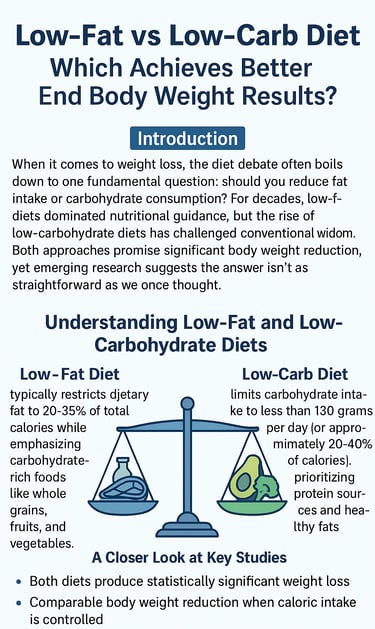
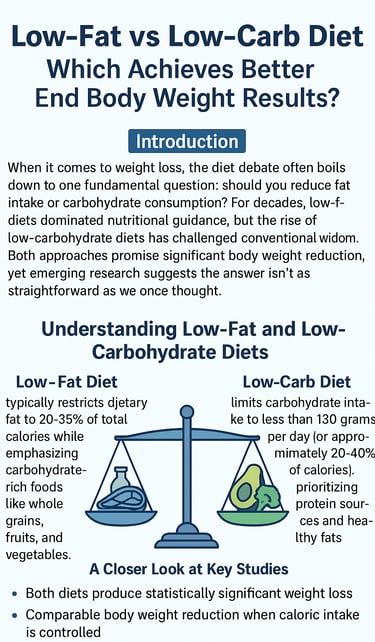
When it comes to weight loss, the diet debate often boils down to one fundamental question: Should you reduce fat intake or carbohydrate consumption? For decades, low-fat diets dominated nutritional guidance, but the rise of low-carbohydrate diets has challenged conventional wisdom. Both approaches promise significant body weight reduction, yet emerging research suggests the answer isn't as straightforward as we once thought.
This comprehensive guide examines the latest scientific evidence comparing low-fat vs low-carb diets for achieving optimal end body weight outcomes. We'll explore what rigorous randomized clinical trials and meta-analyses (Chawla et al., 2020; Gardner et al., 2018; Kazeminasab et al., 2025) reveal about these two popular diet approaches, helping you make an informed decision for your weight loss journey.
Clinical Pearls
End Body Weight Results are Equivalent (The Calorie Rule):
Pearl: When total calorie intake is controlled (creating an equal energy deficit), both low-fat and low-carbohydrate diets result in comparable long-term body weight loss (6 to 12 months).
Supporting Studies: Chawla et al. (2020) meta-analysis & Gardner et al. (2018) DIETFITS trial.
Adherence Trumps Macronutrient Ratio:
Pearl: The single most critical determinant for achieving and maintaining end body weight goals is dietary adherence and sustainability, not the specific ratio of fat to carbohydrates.
Supporting Studies: Gardner et al. (2018) found no significant difference in final weight, suggesting that the ability to stick to the plan matters most
.
Low-Carb Offers Superior Metabolic Lipid Benefits:
Pearl: While overall weight loss is similar, low-carbohydrate diets typically yield more favorable improvements in key cardiovascular markers, specifically superior reduction in triglycerides and better increases in HDL cholesterol.
Supporting Studies: Chawla et al. (2020) and Kazeminasab et al. (2025).
Low-Carb is Preferred for Glucose Control (T2DM):
Pearl: For individuals with metabolic dysfunction, specifically Type 2 Diabetes (T2DM) or insulin resistance, low-carbohydrate diets provide enhanced metabolic benefits, including superior reductions in $\text{HbA1c}$ and fasting glucose levels alongside weight loss.
Supporting Study: Tian et al. (2025) meta-analysis.
Genetics Do Not Predict Diet Success:
Pearl: Current high-quality evidence suggests that individual genetic profiles or baseline insulin secretion patterns do not reliably predict whether a low-fat or low-carbohydrate diet will be superior for personal weight loss success.
Supporting Study: Gardner et al. (2018) DIETFITS trial finding.
Low-Fat vs Low-Carb Diet: Which Achieves Better End Body Weight Results?
Understanding Low-Fat and Low-Carbohydrate Diets
Low-fat diets typically restrict dietary fat to 20-35% of total calories while emphasizing carbohydrate-rich foods like whole grains, fruits, and vegetables. This approach has been the cornerstone of public health recommendations for over 40 years.
Conversely, low-carbohydrate diets limit carbohydrate intake to less than 130 grams per day (or approximately 20-40% of calories), prioritizing protein sources and healthy fats. The theory underlying low-carb diets is that reducing insulin levels through carbohydrate restriction promotes fat loss and improves metabolic health.
What the Research Says: A Closer Look at Key Studies
Study 1: Chawla et al. (2020) Systematic Review and Meta-Analysis
Chawla and colleagues conducted a comprehensive systematic review and meta-analysis examining low-fat and low-carbohydrate diet effects on weight loss and lipid levels across multiple randomized controlled trials. This landmark study analyzed data from numerous studies to provide robust evidence about diet efficacy.
Key Findings: The analysis revealed that both low-fat diets and low-carbohydrate diets produce statistically significant weight loss over 6 to 24 months. However, the magnitude of body weight reduction was comparable between the two approaches when caloric intake was controlled. Participants following low-carb diets experienced slightly greater short-term weight loss, particularly in the first three months, but differences diminished over longer time periods.
Importantly, the meta-analysis examined lipid profile changes—a crucial marker of cardiovascular health. While low-fat diets improved LDL cholesterol levels, low-carbohydrate diets showed more favorable effects on triglyceride levels and HDL cholesterol, suggesting metabolic benefits beyond simple calorie restriction.
Takeaway: When calories are equal, both diet types achieve comparable end body weight outcomes, but they influence metabolic markers differently (Chawla et al., 2020).
Study 2: Gardner et al. (2018) DIETFITS Randomized Clinical Trial
The DIETFITS trial represents one of the most significant randomized clinical trials comparing low-fat vs low-carbohydrate diets. Conducted by Gardner and colleagues, this rigorous 12-month study enrolled overweight adults and examined whether genetic factors or insulin secretion patterns predicted which diet approach would be most effective for individual weight loss success.
Key Findings: Participants in both groups achieved substantial body weight reduction, with average losses of approximately 6-7 kilograms over one year. Remarkably, no significant difference in final body weight emerged between the low-fat and low-carbohydrate groups. This finding was revolutionary because it suggested that diet adherence and caloric deficit matter more than the specific macronutrient composition (Gardner et al., 2018).
Additionally, the researchers tested whether individual genetic profiles or insulin secretion levels could predict which diet would work better for each person. The results indicated that genetic variations and baseline insulin secretion did not significantly predict diet response, challenging the popular notion that people should choose diets based on their genetic makeup.
Takeaway: Over 12 months, low-fat and low-carbohydrate diets produce equivalent weight loss, and individual genetics don't predict which diet type will be superior for end body weight outcomes (Gardner et al., 2018).
Study 3: Kazeminasab et al. (2025) Meta-Analysis on Cardiovascular Biomarkers
This recent meta-analysis compared hypocaloric low-carbohydrate and low-fat diets while examining not just body weight changes but also flow-mediated dilation, blood pressure, cardiovascular biomarkers, and body composition in individuals with overweight or obesity.
Key Findings: The analysis of randomized clinical trials demonstrated that both diet approaches reduced body weight significantly, with no substantial difference in end body weight achievement. However, low-carbohydrate diets showed superior effects on blood pressure reduction and triglyceride levels—critical cardiovascular risk factors (Kazeminasab et al., 2025). The low-fat diet groups showed marginally better improvements in LDL cholesterol, though the clinical significance of this difference was modest.
Regarding body composition, both diets reduced fat mass, but the low-carbohydrate groups appeared to better preserve lean muscle mass during weight loss, an advantage for long-term metabolic health.
Takeaway: While body weight reduction is equivalent between diet types, low-carbohydrate diets may offer additional cardiovascular and metabolic benefits beyond simple weight loss (Kazeminasab et al., 2025).
Study 4: Tian et al. (2025) Low-Carbohydrate Diet Effects on Glucose and Lipid Metabolism
Tian and colleagues conducted a meta-analysis specifically examining low-carbohydrate diet effects on glucose metabolism and lipid profiles in overweight or obese patients with type 2 diabetes (T2DM). This analysis included multiple randomized controlled trials assessing metabolic outcomes.
Key Findings: In this population with diabetes, low-carbohydrate diets produced significant improvements in fasting glucose levels, HbA1c (a marker of long-term blood sugar control), and triglyceride concentrations (Tian et al., 2025). The body weight reduction achieved through low-carbohydrate diets was substantial, with additional metabolic improvements beyond simple weight loss.
The analysis suggested that carbohydrate restriction may be particularly beneficial for individuals with metabolic dysfunction or insulin resistance, offering dual benefits of weight loss and improved glucose control.
Takeaway: For individuals with metabolic disorders, low-carbohydrate diets achieve significant body weight reduction while providing enhanced glucose regulation and lipid improvements (Tian et al., 2025).
Comparing End Body Weight Outcomes: The Verdict
Based on comprehensive analysis of current research, end body weight outcomes are remarkably similar between low-fat and low-carbohydrate diets when energy intake is controlled. The critical determinant of weight loss success isn't the specific diet type but rather adherence, caloric deficit, and consistency.
However, the research reveals nuanced differences:
Low-carbohydrate diets demonstrate superior effects on triglyceride reduction, blood pressure improvement, and lean muscle preservation—outcomes that extend beyond the scale. These benefits are particularly pronounced in individuals with metabolic dysfunction or prediabetes.
Low-fat diets show modest advantages in LDL cholesterol reduction, though modern evidence suggests this concern matters less when triglycerides improve and HDL cholesterol increases (as often occurs with low-carb approaches).
Key Takeaways: What You Need to Know
Understanding Diet Efficacy: Both low-fat and low-carbohydrate diet approaches produce equivalent weight loss when calories are matched, suggesting that adherence is more important than macronutrient distribution.
The Adherence Factor: Your ideal diet is the one you can maintain long-term. If low-fat diets feel sustainable to you, they'll produce weight loss. Similarly, if low-carbohydrate diets align with your preferences, they're equally effective for body weight reduction.
Beyond the Scale: While end body weight may be similar, low-carbohydrate diets offer additional metabolic benefits including better blood pressure control, triglyceride reduction, and muscle preservation during caloric restriction.
Individual Variation: Genetics and baseline insulin secretion don't reliably predict which diet type will work best, meaning you may need to experiment to find your optimal approach.
Metabolic Health Matters: For individuals with type 2 diabetes or metabolic syndrome, low-carbohydrate diets may offer superior improvements in glucose control and lipid profiles alongside weight loss.
Frequently Asked Questions
Q: Will I lose more weight on a low-carb diet than a low-fat diet? A: Research shows equivalent weight loss on both diets when calories are controlled. Low-carb diets may show faster initial weight loss due to water loss, but end body weight outcomes are similar after 6-12 months.
Q: Which diet is better for heart health? A: Both improve cardiovascular health through weight loss, but they impact lipid profiles differently. Low-carb diets are superior for triglyceride reduction and blood pressure, while low-fat diets may reduce LDL cholesterol slightly more. The best diet for your heart is one you'll follow consistently.
Q: Can genetics determine which diet works better for me? A: Current research suggests no. The DIETFITS trial found that genetic patterns don't predict diet response, so you may need to experiment with both approaches to determine your personal preference.
Q: Which diet is better for people with diabetes? A: Low-carbohydrate diets show particular benefits for individuals with type 2 diabetes, offering superior glucose control and metabolic improvements alongside weight loss.
Q: Is low-fat or low-carb better for muscle preservation during weight loss? A: Low-carbohydrate diets appear superior for preserving lean muscle mass during caloric restriction, though adequate protein intake is essential regardless of diet type.
Q: How long does it take to see weight loss results? A: Most studies show significant body weight reduction within 3 months, with continued progress over 6-12 months. Low-carb diets typically show faster initial results due to water loss.
Q: Can I switch between low-fat and low-carb diets? A: Yes. If one approach isn't working for your body weight or lifestyle, switching is reasonable. The most effective diet is one you can sustain long-term.
Practical Implementation: Choosing Your Approach
For Low-Fat Diet Success: Focus on whole grains, lean proteins, legumes, fruits, and vegetables. Monitor fat intake to stay within 20-35% of total calories. Ensure adequate protein (0.8-1.2 g per pound of body weight) to prevent muscle loss during weight loss.
For Low-Carbohydrate Diet Success: Prioritize protein sources, healthy fats, and non-starchy vegetables. Carbohydrate restriction should come from eliminating refined carbs and added sugars, not fiber-rich whole foods. Aim for caloric deficit while maintaining nutrient density.
Universal Principles: Regardless of your chosen diet type, successful weight loss requires caloric deficit, consistency, whole food emphasis, adequate protein intake, and sustainable habits. Track progress beyond the scale, including energy levels, clothing fit, and health markers.
Call to Action
Ready to find your ideal diet approach? Start with a realistic assessment of your lifestyle, preferences, and health goals. Consider consulting with a registered dietitian who can personalize recommendations based on your individual metabolic health, body composition goals, and sustainability preferences.
Remember: the best diet is one you'll follow consistently. Track your body weight, energy levels, and overall health markers as you progress. If your chosen approach isn't producing results or feels unsustainable after 4-6 weeks, don't hesitate to adjust your strategy.
**Take the first step toward your weight loss goals today—whether through a low-fat or low-carbohydrate approach—and commit to the consistency that transforms research findings into real-world results.
Conclusion
The low-fat vs low-carbohydrate diet debate has captivated researchers and the public for decades, yet the science consistently demonstrates that both approaches achieve comparable end body weight outcomes when caloric intake is controlled. The DIETFITS trial, combined with multiple recent meta-analyses, confirms that the best diet is the one you'll follow.
However, the research also reveals that diet choice matters beyond simple weight loss. Low-carbohydrate diets offer superior effects on blood pressure, triglycerides, and glucose control, particularly for individuals with metabolic disorders. Low-fat diets remain effective and sustainable for many people seeking body weight reduction.
The real key to achieving your weight loss goals isn't choosing between low-fat or low-carbohydrate approaches—it's selecting the diet that aligns with your preferences, lifestyle, and health goals while maintaining a caloric deficit consistently.
Disclaimer: This article is for informational purposes only and does not constitute medical advice. Individual circumstances vary, and treatment decisions should always be made in consultation with qualified healthcare professionals.
Related Articles
Can a Low-Carb Diet Reverse Metabolic Syndrome? Latest Research Explained | DR T S DIDWAL
What’s New in the 2025 Blood Pressure Guidelines? A Complete Scientific Breakdown | DR T S DIDWAL
Vegan vs. Non-Vegan Diet : Cardiometabolic Disease Evidence Review | DR T S DIDWAL
The Role of Cholesterol in Health and Disease: Beyond the "Bad" Label | DR T S DIDWAL
Lowering Cholesterol with Food: 4 Phases of Dietary Dyslipidemia Treatment | DR T S DIDWAL
References
Chawla, S., Tessarolo Silva, F., Amaral Medeiros, S., Mekary, R. A., & Radenkovic, D. (2020). The effect of low-fat and low-carbohydrate diets on weight loss and lipid levels: A systematic review and meta-analysis. Nutrients, 12(12), 3774. https://doi.org/10.3390/nu12123774
Gardner, C. D., Trepanowski, J. F., Del Gobbo, L. C., Hauser, M. E., Rigdon, J., Ioannidis, J. P. A., Desai, M., & King, A. C. (2018). Effect of low-fat vs low-carbohydrate diet on 12-month weight loss in overweight adults and the association with genotype pattern or insulin secretion: The DIETFITS randomized clinical trial. JAMA, 319(7), 667–679. https://doi.org/10.1001/jama.2018.0245
Kazeminasab, F., Baharlooie, M., Bagheri, R., Rosenkranz, S. K., & Santos, H. O. (2025). Hypocaloric low-carbohydrate versus low-fat diets on flow-mediated dilation, blood pressure, cardiovascular biomarkers, and body composition in individuals with overweight or obesity: a systematic review and meta-analysis of randomized clinical trials. European journal of clinical nutrition, 79(10), 945–958. https://doi.org/10.1038/s41430-025-01626-w
Tian, W., Cao, S., Guan, Y., Zhang, Z., Liu, Q., Ju, J., Xi, R., & Bai, R. (2025). The effects of low-carbohydrate diet on glucose and lipid metabolism in overweight or obese patients with T2DM: A meta-analysis of randomized controlled trials. Frontiers in Nutrition, 11, 1516086. https://doi.org/10.3389/fnut.2024.1516086