Manage Diabetes Naturally: How Beta-Glucans Control Blood Sugar
Discover how beta-glucans in oats and barley naturally lower blood sugar spikes. Explore the latest research on diabetes management and metabolic health.
NUTRITION
Dr. T.S. Didwal, M.D.
5/13/202612 min read
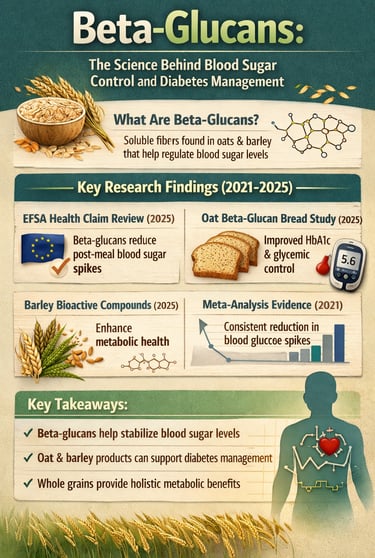
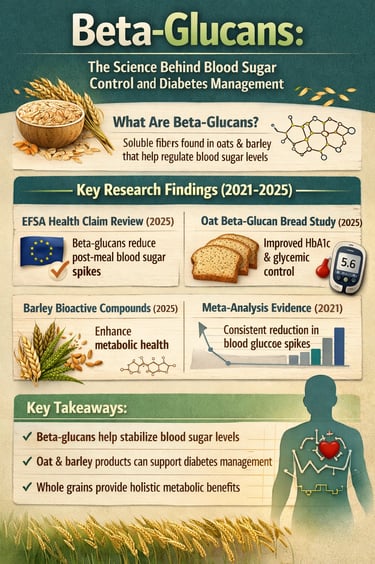
Can a simple bowl of oats help control blood sugar, improve insulin sensitivity, and reduce the risk of type 2 diabetes? Modern metabolic research increasingly says yes.
In the rapidly evolving field of metabolic endocrinology, scientists are moving beyond calorie counting and focusing instead on how specific foods influence postprandial glycemic response—the rise in blood glucose that occurs after meals. Repeated glucose spikes are now recognized as a major driver of insulin resistance, chronic inflammation, endothelial dysfunction, and eventually type 2 diabetes mellitus (T2DM).
Among the most promising nutritional compounds receiving attention is β-glucan, a naturally occurring soluble fiber found primarily in oats (Avena sativa) and barley (Hordeum vulgare). Unlike conventional dietary fibers, cereal β-glucans possess a unique molecular structure that allows them to create a highly viscous gel within the gastrointestinal tract. This “viscous shield” fundamentally changes how nutrients are absorbed and metabolized.
Over the past few years, a growing body of evidence—including randomized controlled trials, systematic reviews, and updated guidance from the European Food Safety Authority (EFSA)—has confirmed that β-glucans can significantly reduce postprandial blood glucose excursions, improve insulin dynamics, support gut microbiota diversity, and potentially lower long-term diabetes risk (Turck et al., 2025; Zurbau et al., 2021).
Today, β-glucans are no longer viewed as merely another dietary fiber. They are increasingly recognized as functional metabolic modulators capable of influencing glucose homeostasis, appetite regulation, lipid metabolism, and gut-derived hormonal signaling.
Key Takeaways: What Science Says About Beta-Glucans and Blood Sugar
Beta-glucans from oats and barley help reduce post-meal blood sugar spikes by slowing glucose absorption.
The European Food Safety Authority (EFSA) supports the role of beta-glucans in improving postprandial glycemic response.
Regular intake of oat beta-glucan foods may improve HbA1c and long-term blood sugar control in people at risk of type 2 diabetes.
Meta-analyses show consistent improvements in glucose and insulin responses after beta-glucan consumption.
Beta-glucans act as prebiotic fibers, supporting beneficial gut bacteria linked to improved insulin sensitivity and metabolic health.
Fermentation of beta-glucans produces short-chain fatty acids (SCFAs) that help regulate appetite, inflammation, and glucose metabolism.
Whole grains like oats and barley provide additional antioxidants and polyphenols that work
What Are Beta-Glucans?
Beta-glucans are complex non-starch polysaccharides composed of glucose molecules linked together in specific patterns. The type found in cereal grains such as oats and barley contains mixed β-(1→3) and β-(1→4) glycosidic bonds, a structure that gives these fibers exceptional water-binding and gel-forming properties (Muthuraman et al., 2026).
This structural arrangement is critically important because it determines how β-glucans behave inside the digestive tract. When exposed to water, they absorb fluid and swell into a thick, viscous matrix that slows nutrient diffusion and carbohydrate absorption.
Importantly, not all β-glucans are identical. Beta-glucans derived from fungi and yeast contain different β-(1→3)/(1→6) linkages and are known more for their immunomodulatory effects than their metabolic actions. In contrast, cereal β-glucans primarily exert metabolic benefits related to glycemic regulation, cholesterol reduction, and gut microbiome modulation (Dhahri et al., 2025).
The “Kitchen Sponge” Effect: How Beta-Glucans Slow Glucose Absorption
One of the simplest ways to understand β-glucan physiology is to imagine a kitchen sponge expanding inside the digestive tract.
After ingestion, β-glucans rapidly hydrate and form a viscous gel that increases the thickness of the chyme—the semi-liquid mixture of food moving through the intestine. This increased viscosity slows gastric emptying and creates a physical barrier that reduces the rate at which glucose molecules reach intestinal absorptive surfaces.
The result is a slower and more gradual rise in blood sugar after eating.
This mechanism has profound metabolic consequences:
Reduced postprandial glucose spikes
Lower insulin secretion requirements
Improved satiety
Reduced glycemic variability
Decreased oxidative stress following meals
The European Food Safety Authority recently reaffirmed these effects in its 2025 updated scientific opinion regarding health claims for oat and barley β-glucans. EFSA concluded that sufficient evidence exists demonstrating that β-glucans reduce postprandial glycemic responses when consumed as part of carbohydrate-containing meals (Turck et al., 2025).
This is important because modern research increasingly shows that glycemic variability—not merely fasting glucose—is strongly associated with endothelial dysfunction, cardiovascular disease, and progression toward diabetes.
Why Postprandial Glucose Spikes Matter More Than Ever
For decades, diabetes screening focused heavily on fasting blood glucose levels. However, newer evidence suggests that many individuals experience significant post-meal hyperglycemia years before fasting glucose becomes abnormal.
Repeated glucose spikes trigger several harmful physiological processes:
Excess insulin secretion
Oxidative stress
Advanced glycation end-product (AGE) formation
Endothelial injury
Chronic low-grade inflammation
Mitochondrial dysfunction
Over time, these processes impair insulin signaling pathways and contribute to metabolic syndrome and type 2 diabetes.
Postprandial hyperglycemia is now considered one of the earliest detectable abnormalities in metabolic disease progression. Consequently, interventions that blunt glucose spikes may provide significant preventive benefits long before overt diabetes develops.
This is precisely where β-glucans appear to be especially valuable.
The 2025 Oat Beta-Glucan Bread Trial: Real-World Clinical Evidence
One of the most practically relevant studies published in 2025 examined whether simply replacing standard bread with oat β-glucan-enriched bread could improve long-term glycemic control in adults at elevated risk for type 2 diabetes (Hjorth et al., 2025).
Researchers conducted a randomized controlled trial comparing:
Oat β-glucan-enriched bread
vs.Conventional whole-grain wheat bread
Participants consumed these products regularly over several months while investigators monitored HbA1c and other metabolic biomarkers.
The findings were clinically significant:
Improved long-term glycemic control
Better glucose regulation
Favorable metabolic changes compared with standard whole-grain bread
Perhaps most importantly, the intervention required no extreme dietary restriction or complicated behavioral program. Participants simply incorporated β-glucan-rich bread into their daily routine.
This highlights a key principle in preventive medicine: sustainable dietary changes are often more effective than highly restrictive interventions.
The study also reinforces the concept that consistent exposure to β-glucans may produce cumulative metabolic benefits over time.
Dose Matters: What the Hossain 2025 Study Revealed
A separate randomized crossover study by Hossain et al.(2025) investigated the dose-response effects of oat β-glucans in healthy young adults.
Participants consumed breakfast beverages containing:
0 g β-glucan (control)
2 g β-glucan
3 g β-glucan
4 g β-glucan
Researchers then measured glucose and insulin responses after breakfast and again after a standardized lunch several hours later.
The results were remarkable.
The 4 g β-glucan dose:
Reduced glucose peak by 28%
Lowered early postprandial glucose exposure
Reduced insulin responses
Increased satiety
Improved glycemic response after lunch
This phenomenon—where one healthy meal improves glucose handling at the next meal—is known as the second-meal effect.
The study suggests that β-glucans do not merely slow digestion temporarily. They may induce broader metabolic changes involving:
Gut hormone signaling
Hepatic glucose metabolism
Microbiome-derived metabolites
Insulin sensitivity pathways
Importantly, even doses below the EFSA threshold showed measurable benefits, indicating that practical dietary amounts may still confer metabolic improvements.
The Second-Meal Effect: Feeding Your Metabolism All Day
One of the most fascinating aspects of β-glucan physiology is the “second-meal effect.”
In simple terms, eating β-glucan-rich foods at breakfast may improve blood sugar control at lunch and possibly dinner—even if those later meals contain no β-glucan at all.
This occurs through several interconnected mechanisms:
1. Slower Carbohydrate Absorption
The viscous gel reduces the speed of glucose entry into the bloodstream, preventing large insulin surges.
2. Gut Microbiome Fermentation
Undigested β-glucans reach the colon, where beneficial bacteria ferment them into short-chain fatty acids (SCFAs).
3. SCFA Signaling
SCFAs such as propionate and butyrate act as signaling molecules that influence:
Hepatic glucose production
Appetite regulation
Inflammation
Insulin sensitivity
4. Improved Hormonal Regulation
SCFAs stimulate secretion of incretin hormones such as GLP-1 and PYY, which help regulate blood glucose and satiety.
This explains why β-glucans may continue affecting metabolism hours after ingestion.
The Gut Microbiome Connection
Modern metabolic science increasingly recognises the gut microbiome as a central regulator of glucose metabolism and insulin sensitivity.
Beta-glucans function as prebiotic fibers, meaning they selectively nourish beneficial gut bacteria.
According to Jayachandran et al. (2018), β-glucans can enhance microbial diversity while promoting bacteria associated with improved metabolic health.
When these microbes ferment β-glucans, they produce SCFAs such as:
Propionate
Butyrate
Acetate
These metabolites exert systemic metabolic effects:
Improved insulin sensitivity
Reduced inflammation
Enhanced intestinal barrier integrity
Better appetite regulation
Lower hepatic glucose production
This microbiome interaction may partially explain why long-term β-glucan intake improves metabolic markers beyond immediate glycemic control.
The gut is increasingly viewed not merely as a digestive organ but as an endocrine and immunological signalling centre. Beta-glucans appear to beneficially influence all three systems simultaneously.
Barley: The Underappreciated Metabolic Grain
Although oats receive most of the attention, barley may be equally impressive from a metabolic standpoint.
A review by Ahmed et al.(2025) highlighted the broad spectrum of bioactive compounds in barley that contribute to glycemic regulation.
In addition to β-glucans, barley contains:
Polyphenols
Antioxidants
Resistant starch
Micronutrients
Anti-inflammatory phytochemicals
These compounds work synergistically within the whole-grain food matrix to support metabolic health.
Researchers increasingly emphasize that whole foods often outperform isolated supplements because of these synergistic interactions.
For example:
Polyphenols reduce oxidative stress
Fiber slows glucose absorption
SCFAs improve insulin signaling
Antioxidants protect endothelial function
Together, these mechanisms may reduce progression toward metabolic syndrome and diabetes.
Beta-Glucans and Insulin Sensitivity
One of the most clinically important effects of β-glucans is improved insulin sensitivity.
Insulin resistance occurs when cells respond poorly to insulin, forcing the pancreas to produce increasingly larger amounts to maintain normal glucose levels.
Over time, chronic hyperinsulinemia contributes to:
Weight gain
Fatty liver disease
Hypertension
Atherosclerosis
Type 2 diabetes
By reducing postprandial glucose excursions and lowering insulin demand, β-glucans may reduce metabolic strain on pancreatic β cells.
Emerging research also suggests that SCFAs generated from β-glucan fermentation improve insulin receptor signaling pathways in liver and muscle tissue.
This dual mechanism—reduced glucose load plus improved insulin sensitivity—makes β-glucans particularly attractive for metabolic disease prevention.
Appetite Control and Weight Management
Beta-glucans may also support healthy body weight regulation.
Viscous fibers increase gastric distension and delay gastric emptying, leading to prolonged fullness after meals. Additionally, SCFA-mediated stimulation of GLP-1 and PYY enhances satiety signaling.
The Hossain study demonstrated that higher β-glucan intake reduced hunger and improved fullness ratings throughout the day.
This matters because appetite dysregulation plays a major role in obesity and insulin resistance.
Foods that improve satiety while simultaneously reducing glycemic variability may help break the cycle of:
Rapid glucose spikes
Reactive hypoglycemia
Cravings
Overeating
Why Processing Matters
Not all oat products are metabolically equivalent.
The degree of food processing significantly affects β-glucan functionality.
Best Options
Steel-cut oats
Oat groats
Large-flake rolled oats
Whole-grain barley
Less Effective Options
Instant oats
Highly processed cereals
Refined oat products
Processing can reduce molecular weight and disrupt cellular integrity, lowering viscosity and diminishing metabolic benefits.
This is why minimally processed whole grains generally produce better glycemic outcomes than ultra-processed “healthy” cereals.
Hydration: The Forgotten Factor
Because β-glucans function by forming a gel, adequate hydration is essential.
Without sufficient water intake, fiber may move sluggishly through the digestive tract and cause bloating or discomfort.
Clinicians often recommend pairing high-fiber meals with at least 8 ounces of water to maximize viscosity and improve gastrointestinal tolerance.
Water essentially “activates” the metabolic functionality of β-glucans.
Beyond Diabetes: Cardiovascular and Anti-Inflammatory Benefits
Beta-glucans provide benefits extending beyond glucose control.
Research consistently shows they can:
Lower LDL cholesterol
Reduce bile acid reabsorption
Improve endothelial function
Reduce inflammation
Support immune health
These cardiovascular effects are particularly important because cardiovascular disease remains the leading cause of death in people with diabetes.
The same viscous properties that slow glucose absorption also reduce cholesterol absorption and increase bile acid excretion.
This creates a powerful overlap between cardiology and metabolic medicine.
Clinical Pearls for Everyday Practice
1. Choose Intact Grains
Steel-cut oats and barley kernels outperform instant oats metabolically because their cellular structure remains intact.
2. Consistency Matters More Than Mega-Doses
Daily intake is more important than occasional supplementation.
3. Use Beta-Glucans at Breakfast
Morning intake may improve glucose handling throughout the day.
4. Pair With Protein
Combining β-glucans with protein further slows glucose absorption and enhances satiety.
5. Increase Intake Gradually
Gradual introduction minimizes gastrointestinal symptoms.
Practical Ways to Add Beta-Glucans to Your Diet
Simple evidence-based strategies include:
Steel-cut oatmeal with nuts and berries
Barley soups and stews
Oat bran added to yogurt
Beta-glucan-enriched whole-grain bread
Overnight oats
Barley salads
Aim for approximately 3–4 grams daily, though higher intakes may provide additional benefits.
The Future of Functional Metabolic Nutrition
The rise of β-glucans reflects a larger shift occurring in modern medicine.
Nutrition is increasingly moving away from simplistic calorie-based models toward precision approaches focused on:
Glycemic modulation
Gut microbiome interactions
Hormonal signaling
Metabolic flexibility
Inflammation reduction
Functional fibers such as β-glucans occupy a unique position because they influence all these systems simultaneously.
Future research will likely refine our understanding of:
Optimal dosing
Molecular weight requirements
Food processing effects
Personalized microbiome responses
Combination therapies with exercise and medications
Conclusion
The science surrounding β-glucans has evolved dramatically over the past decade. What was once considered merely a cholesterol-lowering fiber is now recognized as a sophisticated metabolic regulator capable of influencing glucose absorption, insulin signaling, gut microbiota composition, satiety, inflammation, and cardiovascular health.
Evidence from EFSA reviews, randomized controlled trials, and meta-analyses consistently demonstrates that oat and barley β-glucans reduce postprandial glycemic responses and improve long-term metabolic outcomes (Turck et al., 2025; Hjorth et al., 2025; Zurbau et al., 2021).
Perhaps most importantly, these benefits are achievable through practical dietary changes rather than extreme interventions. A bowl of steel-cut oats, barley soup, or β-glucan-rich whole-grain bread may seem simple, but metabolically, these foods function as sophisticated physiological tools.
As rates of insulin resistance and type 2 diabetes continue rising worldwide, β-glucans represent one of the most evidence-based, accessible, and sustainable nutritional strategies available for improving metabolic health.
FAQ: Your Beta-Glucan Questions Answered
Q: How much beta-glucan do I need to see benefits? A: Research suggests that 3-10 grams of beta-glucan daily shows measurable effects on postprandial glucose response. A single serving of oatmeal contains roughly 3-4 grams, making it practical to achieve these levels through regular dietary consumption.
Q: Can beta-glucans help me lose weight? A: While not a weight-loss miracle, beta-glucans increase satiety (that feeling of fullness), which may support weight management efforts. Additionally, better glycemic control can reduce cravings for sugary foods.
Q: Are there differences between oat and barley beta-glucans? A: Both oat beta-glucans and barley beta-glucans are effective, though they may have slightly different molecular structures. Research shows both reduce postprandial glucose responses, so either can be beneficial depending on your preferences and dietary needs.
Q: Is it better to eat whole-grain foods with beta-glucans or take supplements? A: Whole-grain sources provide beta-glucans along with other nutrients, making them generally preferable. The EFSA and recent research support foods specifically formulated with beta-glucan enrichment, but whole foods should be the foundation.
Q: How long does it take to see improvements in blood sugar control? A: Some improvements in postprandial response occur with individual meals, but meaningful changes in long-term glycemic markers like HbA1c typically require weeks to months of consistent consumption, as demonstrated in the Hjorth study.
Q: Will beta-glucans help if I already have type 2 diabetes? A: Yes, research supports beta-glucan consumption as part of diabetes management strategies. They work best alongside other lifestyle modifications like regular physical activity and overall dietary quality.
Q: Are there any side effects to consuming beta-glucans? A: Beta-glucans are well-tolerated in most people. Since they're a type of fiber, increasing intake gradually and ensuring adequate hydration minimizes digestive adjustments.
Disclaimer: This article is for informational purposes only and does not constitute medical advice. Individual circumstances vary, and treatment decisions should always be made in consultation with qualified healthcare professionals.
Related Articles
Insulin vs. Blood Sugar: Why Fasting Insulin Detects Diabetes Years Earlier | DR T S DIDWAL
Low-Fat vs. Low-Carb: Which Diet is Best for Weight Loss? | DR T S DIDWAL
5 Steps to Reverse Metabolic Syndrome: Diet, Habit, & Lifestyle Plan | DR T S DIDWAL
The Role of Cholesterol in Health and Disease: Beyond the "Bad" Label | DR T S DIDWAL
Lowering Cholesterol with Food: 4 Phases of Dietary Dyslipidemia Treatment | DR T S DIDWAL
High Triglyceride Levels: 5 New Facts to Help You Lower Your Risk | DR T S DIDWAL
The Best Dietary Fat Balance for Insulin Sensitivity, Inflammation, and Longevity | DR T S DIDWAL
References
Hossain, M. M., et al. (2025). Oat beta-glucans consumed at breakfast improve glucose tolerance acutely and after a subsequent lunch – a randomized dose–response study in healthy young adults. Food & Function, 16(11), 4161–4171. https://doi.org/10.1039/D5FO00353A
Muthuraman, K. R., Kato, T., Kusano, K., Moriya, Y., & Park, E. Y. (2026). β-Glucans and their roles in immune and metabolic regulation: A review. International Journal of Biological Macromolecules, 338(Part 2), Article 149746. https://doi.org/10.1016/j.ijbiomac.2025.149746
Kamatchi, A. R., Anjali, K. U., & Haripriya, S. (2025). Health benefits of β-glucans. In Beta-Glucan: Sources, Properties and Applications (pp. 147–178). Springer. https://doi.org/10.1007/978-3-031-95788-8_9
Ahmed, H. G. M. D., Iqbal, R., Yang, X., et al. (2025). Bioactive compounds in barley modulating glycemic response: Implications for diabetes management. Natural Product Communications, 20(4). https://doi.org/10.1177/1934578X251336985
Dhahri, M., Dutta, A., Mohammed, H. A., Pandey, R. K., Hassan, S., Badshah, S. L., Alasmael, N., Alnoman, M. M., Jaremko, M., Karagiannis, P., & Emwas, A. H. (2025). The isolation, bioactivity, and role of β-glucans in health: A review. International Journal of Biological Macromolecules, 330(Pt 3), 148000. https://doi.org/10.1016/j.ijbiomac.2025.148000
Hjorth, T., Schadow, A., Revheim, I., Spielau, U., Meyer, K., Rieder, A., Varela, P., Ballance, S., Koerner, A., Landberg, R., Buyken, A. E., Dierkes, J., & Rosendahl-Riise, H. (2025). Effectiveness of regular oat β-glucan-enriched bread compared with whole-grain wheat bread on long-term glycemic control in adults at risk of type 2 diabetes: A randomized controlled trial. The American Journal of Clinical Nutrition, 122(3), 724–732. https://doi.org/10.1016/j.ajcnut.2025.06.018
Jayachandran, M., Chen, J., Chung, S. S. M., & Xu, B. (2018). A critical review on the impacts of β-glucans on gut microbiota and human health. The Journal of Nutritional Biochemistry, 61, 101–110. https://doi.org/10.1016/j.jnutbio.2018.06.010
Turck, D., Bohn, T., Cámara, M., Castenmiller, J., de Henauw, S., Hirsch-Ernst, K.-I., Jos, A., Maciuk, A., Mangelsdorf, I., McNulty, B., Naska, A., Pentieva, K., Thies, F., Drenjančević, I., Craciun, I., Fiolet, T., Siani, A., & EFSA Panel on Nutrition, Novel Foods and Food Allergens (NDA). (2025). Beta-glucans from oats or barley and reduction of postprandial glycaemic responses: Modification of an authorised health claim pursuant to Article 13(1) of Regulation (EC) No 1924/2006 following a request in accordance with Article 19 of Regulation (EC) No 1924/2006. EFSA Journal, 23(9), e9630. https://doi.org/10.2903/j.efsa.2025.9630
Zurbau, A., Noronha, J. C., Khan, T. A., et al. (2021). The effect of oat β-glucan on postprandial blood glucose and insulin responses: A systematic review and meta-analysis. European Journal of Clinical Nutrition, 75, 1540–1554. https://doi.org/10.1038/s41430-021-00875-9