5 Steps to Reverse Metabolic Syndrome: Diet, Habit, & Lifestyle Plan
Stop managing symptoms. Get a proven, evidence-based 5-step plan combining dietary modification, physical activity, and habit formation to transform your metabolic health.
METABOLISM
Dr. T.S. Didwal, M.D.
12/12/202510 min read
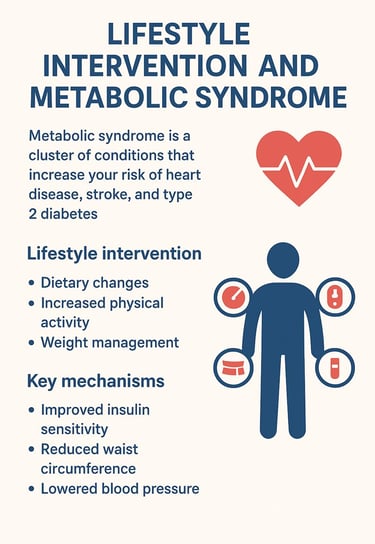
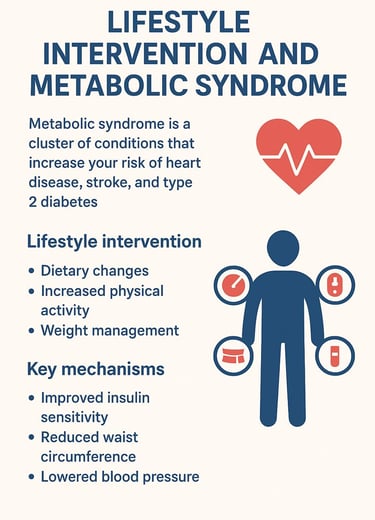
Metabolic syndrome represents one of the most pressing health challenges of our time, affecting millions worldwide. This cluster of conditions—including high blood pressure, high blood sugar, excess body fat around the waist, and abnormal cholesterol levels—significantly increases your risk of heart disease, stroke, and type 2 diabetes. But here's the encouraging news: recent research demonstrates that lifestyle intervention for metabolic syndrome has emerged as a powerful, evidence-based strategy for not just managing but actually reversing this condition.
The latest groundbreaking evidence shows that dietary lifestyle modification combined with behavioral interventions can lead to sustained metabolic syndrome remission (Powell et al., 2025). In this comprehensive guide, we'll explore the latest scientific findings, practical strategies, and actionable steps you can take to transform your metabolic health.
Clinical Pearls
1. Paradigm Shift: Remission, Not Just Management
Pearl: Lifestyle intervention, specifically structured behavioral programs like those studied in the ELM Trial (Powell et al., 2025), is now evidence-based for achieving sustained remission of metabolic syndrome, not merely managing isolated risk factors with chronic medication. This represents a critical shift in the clinical goal from disease control to disease reversal.
2. Habit Over Willpower for Sustainability
Pearl: Long-term metabolic health success depends less on acute willpower and more on the automaticity of habits. Clinical programs focusing on habit-based behavioral change (Anderer et al.,2025) are superior because they bypass the finite nature of willpower, creating self-sustaining metabolic improvements through consistent repetition and environmental design.
3. Modest Weight Loss Yields Significant Metabolic Gains
Pearl: Significant metabolic improvement, including reductions in blood pressure, fasting glucose, and triglycerides, can be achieved with a relatively modest weight loss of 5–10% of initial body weight. This is primarily due to the reduction in visceral adiposity (the dangerous fat surrounding abdominal organs) and subsequent improvement in insulin sensitivity.
4. Group Support Amplifies Adherence and Outcomes
Pearl: Individual counseling alone is often less effective than group-based lifestyle interventions (Mahadzir et al., 2021). The clinical benefit of a group setting lies in the strategic framework components: social support, peer modeling, and accountability, which are powerful predictors of long-term adherence to complex dietary and activity modifications.
5. Synergy of Diet and Exercise for Insulin Sensitivity
Pearl: Dietary modification (improving nutrient quality and reducing processed foods) combined with regular physical activity produces a synergistic effect on metabolic health, particularly in enhancing insulin sensitivity. While diet addresses metabolic function at the cellular level, exercise (especially resistance training) further improves glucose uptake by muscle cells, accelerating the reversal of metabolic dysfunction.
Lifestyle Intervention and Metabolic Syndrome:
Understanding Metabolic Syndrome and Why Lifestyle Matters
Metabolic syndrome isn't a single disease—it's a constellation of interconnected metabolic disorders that occur together, significantly elevating cardiovascular risk. Approximately one-third of adults meet the diagnostic criteria for this condition, making it a critical public health priority.
The traditional approach relied heavily on medication management. However, emerging evidence shows that lifestyle-based interventions address the root causes of metabolic dysfunction, offering lasting benefits that medications alone cannot achieve (Alyafei & Daley, 2025). The shift toward preventive metabolic health represents a fundamental change in how we approach chronic disease management.
Key Research Overview: What the Latest Studies Tell Us
1. Dietary Lifestyle Modification in Chronic Disease Prevention
Alyafei and Daley's (2025) in their comprehensive review provides an essential foundation for understanding how dietary lifestyle changes prevent and manage chronic diseases, including metabolic syndrome. This StatPearls resource emphasizes that nutrition-based interventions form the cornerstone of any successful disease prevention strategy.
Key Takeaways:
Dietary patterns significantly influence metabolic markers including insulin sensitivity and lipid profiles
Lifestyle modification programs should be individualized to account for personal preferences and cultural contexts
Sustained behavior change requires addressing both biological and psychological factors
Prevention through diet is more cost-effective than treating advanced metabolic disease
The research underscores that dietary intervention isn't about restrictive dieting but rather sustainable changes in eating patterns that support long-term metabolic health.
2. The ELM Trial: Revolutionary Evidence for Metabolic Syndrome Remission
The Enhancing Lifestyles in the Metabolic syndrome (ELM) multisite behavioral efficacy trial represents a watershed moment in metabolic health research. The landmark study demonstrates that structured lifestyle intervention can achieve sustained remission of metabolic syndrome (Powell et al., 2025).
Study Details and Design: The ELM trial was a rigorously designed randomized clinical trial examining whether behavioral lifestyle modification could produce long-term metabolic improvements. The study tracked participants through intensive lifestyle intervention programs designed to modify eating habits, increase physical activity, and promote weight loss through sustainable behavioral change.
Remarkable Findings:
Participants engaging in comprehensive lifestyle intervention achieved significantly higher rates of metabolic syndrome remission compared to control conditions
Sustained remission was maintained over extended follow-up periods, demonstrating durability of benefits
The intervention addressed multiple metabolic risk factors simultaneously rather than treating isolated markers
Sustained behavioral changes proved sufficient to achieve and maintain disease remission
Clinical Significance: The American College of Cardiology highlighted these findings, noting that this research provides compelling evidence that lifestyle-based treatment can induce remission rather than merely managing the condition. This paradigm shift—from management to remission—offers unprecedented hope for millions of patients.
3. Habit-Based Lifestyle Programs and Metabolic Transformation
Recent analysis specifically examined the connection between habit-based lifestyle programs and metabolic syndrome remission (Anderer, 2025). This research reveals how changing daily habits creates lasting metabolic improvements.
Key Insights:
Habit formation bypasses reliance on willpower alone, creating automatic behavioral patterns
Lifestyle habit changes produce metabolic benefits that accumulate over time
Evidence-based habit programs show superior adherence compared to traditional interventions
Neurobiological adaptation supports sustained metabolic improvement as behaviors become automatic
The research suggests that successful metabolic syndrome remission depends less on perfection and more on consistent, small behavioral changes that become automatic through repetition.
4. Group-Based Interventions: Harnessing the Power of Community
A comprehensive scoping review examined group-based lifestyle intervention strategies and their effectiveness in treating metabolic syndrome (Mahadzir et al., 2021). This analysis provided a strategic framework for understanding how community-based interventions enhance outcomes.
Strategic Framework Components:
Social support mechanisms strengthen adherence to lifestyle modifications
Group accountability enhances motivation and sustainability of behavioral change
Peer modeling facilitates behavior change more effectively than individual counseling alone
Educational group sessions on nutrition and exercise create lasting knowledge and social cohesion
Practical Application: Organizations implementing metabolic syndrome prevention programs benefit from incorporating group elements, as participants report higher satisfaction and better long-term outcomes. The evidence consistently demonstrates that group-based lifestyle change produces superior engagement compared to isolated interventions.
5. Patient Preferences and Personalized Intervention Design
Research specifically investigating patient preferences for lifestyle management in structured trials underscores a critical principle: interventions must align with what people actually want and can sustain (Iannuzzelli et al., 2025). This important study ensures that evidence-based interventions maximize real-world adherence.
Why This Matters:
Personalized lifestyle intervention approaches increase adherence rates substantially
Understanding patient preferences helps design more effective metabolic health programs
Individual variability in response to different lifestyle modifications is significant
Preference-informed intervention design produces superior real-world outcomes compared to standardized approaches
This research emphasizes that the best metabolic syndrome treatment is one that people will actually follow—making patient input essential in program design.
6. ELM Trial Foundation: Baseline Design and Cohort Characteristics
The foundational work establishing the trial's design and baseline characteristics provides critical context for understanding subsequent findings (ELM Trial Research Group, 2024). This detailed approach ensured the multisite behavioral efficacy trial was structured to maximize intervention effectiveness.
Methodological Strengths:
Diverse participant cohorts across multiple sites ensure generalizability to broader populations
Comprehensive baseline assessment of metabolic markers and lifestyle patterns
Standardized intervention protocols ensure consistency and fidelity across sites
Rigorous outcome measurement tracks sustained metabolic improvement over extended periods
The Science Behind Lifestyle Intervention Success
How Dietary Modification Works
Dietary lifestyle modification operates through multiple mechanisms to reverse metabolic dysfunction. Dietary changes directly impact insulin sensitivity, glucose homeostasis, and lipid metabolism. When you adopt healthier eating patterns, your body's ability to regulate blood sugar improves, reducing metabolic dysfunction at the cellular level.
Weight Management: Sustainable weight loss through lifestyle change reduces visceral adiposity—the dangerous fat surrounding organs that drives metabolic disease. Even modest weight reduction (5-10% of body weight) produces measurable improvements in metabolic markers including blood pressure and triglycerides.
Nutrient Quality: Nutrition-based interventions emphasizing whole foods, fiber, and healthy fats support optimal metabolic function while reducing processed food consumption that contributes to metabolic syndrome development.
The Role of Physical Activity
Beyond diet, regular physical activity amplifies metabolic improvements by increasing insulin sensitivity, improving cardiovascular fitness, and supporting sustainable weight management. The research consistently demonstrates that combining dietary intervention with exercise produces superior outcomes compared to either approach alone.
Behavioral and Psychological Factors
Sustainable behavior change requires more than knowledge—it demands strategies that work with our psychology rather than against it. Habit-based lifestyle programs recognize that willpower is finite, so they focus on creating automatic behaviors through repetition, environmental design, and social support.
Practical Strategies for Implementing Lifestyle Change
Step 1: Assess Your Current Metabolic Health
Begin by understanding your baseline. Work with your healthcare provider to measure the five components of metabolic syndrome: waist circumference, blood pressure, fasting glucose, triglycerides, and HDL cholesterol. This assessment provides your starting point and motivation for change.
Step 2: Adopt a Structured Dietary Approach
The research supports several dietary patterns that effectively treat metabolic syndrome:
Mediterranean-style eating: Emphasizes vegetables, lean proteins, healthy fats, and whole grains
DASH diet: Designed to lower blood pressure and improve metabolic markers
Plant-forward approaches: Increase fiber intake and reduce processed foods
The key is choosing an approach you can sustain rather than pursuing perfection. Dietary flexibility combined with consistent adherence outperforms rigid, unsustainable diets.
Step 3: Build Movement Into Your Daily Routine
Aim for at least 150 minutes of moderate-intensity physical activity weekly, combined with strength training. The evidence shows that regular exercise works synergistically with dietary modification to accelerate metabolic syndrome remission.
Step 4: Develop Sustainable Habits
Rather than dramatic overnight changes, the research supports gradual habit formation. Select one or two lifestyle modifications to implement, practice consistently until they become automatic, then add additional habits. This incremental approach produces lasting change more reliably than comprehensive lifestyle overhauls.
Step 5: Seek Support and Accountability
Whether through group-based interventions, healthcare providers, or social support networks, accountability dramatically improves outcomes. The evidence clearly shows that lifestyle intervention programs incorporating social support achieve better results than solitary efforts.
FAQ: Your Questions About Lifestyle Intervention and Metabolic Syndrome
Q: How quickly will I see results from lifestyle intervention?
A: Initial improvements in blood pressure and blood sugar typically emerge within 2-4 weeks. More substantial metabolic improvements usually become evident within 3-6 months. However, the research emphasizes that sustained metabolic syndrome remission develops over longer periods as lifestyle changes become truly integrated into daily life.
Q: Can lifestyle intervention alone treat metabolic syndrome, or do I need medication?
A: Recent evidence demonstrates that lifestyle-based intervention can achieve metabolic syndrome remission in many individuals (Powell et al., 2025). However, this doesn't mean abandoning medications abruptly. Work with your healthcare provider to determine whether lifestyle modification can replace, reduce, or complement your current medications based on your individual response.
Q: Is it ever too late to benefit from lifestyle intervention?
A: The research included participants across a wide age range, all demonstrating benefits from lifestyle intervention. Age alone is not a barrier to metabolic syndrome treatment success. Individual health status matters more than chronological age.
Q: What if I struggle with adherence to lifestyle changes?
A: The research on habit-based lifestyle programs and group-based interventions specifically addresses this challenge. Work with professionals trained in behavioral change, consider group-based programs for accountability, and focus on making changes as automatic and easy as possible through environmental design.
Q: How long do the benefits of lifestyle intervention last?
A: Studies tracking participants over extended periods documented sustained metabolic improvements and maintained remission status (Powell et al., 2025). When lifestyle modifications become truly integrated into daily life, benefits persist long-term. The key is treating these as permanent lifestyle changes rather than temporary interventions.
Key Takeaways: What You Need to Remember
Metabolic syndrome is reversible: Recent research demonstrates that lifestyle intervention can achieve not just improvement but actual metabolic syndrome remission, offering hope beyond traditional disease management.
Dietary lifestyle modification is foundational: Changes in eating patterns directly address the metabolic dysfunction underlying the condition, making dietary intervention essential to any successful prevention or treatment strategy.
Comprehensive approaches work best: Combining dietary modification with physical activity, behavioral change, and social support produces superior outcomes compared to single-intervention approaches.
Habits trump willpower: Habit-based lifestyle programs that create automatic behaviors prove more sustainable and effective than willpower-dependent approaches, particularly for long-term metabolic syndrome management.
Personalization matters: Patient preferences and individual variability in response to interventions highlight the importance of personalized lifestyle intervention design rather than one-size-fits-all approaches.
Community and social support amplify success: Group-based lifestyle interventions consistently outperform isolated efforts, demonstrating that social support is a powerful tool for achieving sustained behavior change.
Early intervention prevents progression: Lifestyle modification for disease prevention is more effective and easier than attempting remission after advanced disease develops, emphasizing the importance of early action.
The Bottom Line: Your Path to Metabolic Remission
The convergence of recent research provides an empowering message: metabolic syndrome is not a life sentence requiring permanent medication management. Through structured lifestyle intervention combining dietary modification, physical activity, behavioral change, and social support, you can achieve sustained remission and restored metabolic health.
The evidence demonstrates that meaningful transformation is possible. Whether you're seeking to prevent metabolic disease or reverse an existing diagnosis, evidence-based lifestyle intervention offers a science-backed pathway to success.
Call to Action
Don't let metabolic syndrome limit your health and vitality. Take these evidence-based steps today:
Schedule a metabolic health assessment with your healthcare provider to understand your current status
Explore structured lifestyle intervention programs in your community or online that incorporate the evidence-based strategies discussed here
Find your accountability partner or group to support your lifestyle modifications
Start small with one dietary or activity change and build from there, allowing habits to develop naturally
Share this information with friends and family members who might benefit from understanding how lifestyle intervention can transform metabolic health
Remember: The best time to start your metabolic health journey is today. The research is clear, the benefits are proven, and your future self will thank you for taking action now.
Disclaimer: This article is for informational purposes only and does not constitute medical advice. Individual circumstances vary, and treatment decisions should always be made in consultation with qualified healthcare professionals.
Related Articles
Lower Blood Pressure Naturally: Evidence-Based Exercise Guide for Metabolic Syndrome | DR T S DIDWAL
Movement Snacks: How VILPA Delivers Max Health Benefits in Minutes | DR T S DIDWAL
The BMI Paradox: Why "Normal Weight" People Still Get High Blood Pressure | DR T S DIDWAL
How Insulin Resistance Accelerates Cardiovascular Aging | DR T S DIDWAL
What’s New in the 2025 Blood Pressure Guidelines? A Complete Scientific Breakdown | DR T S DIDWAL
The Metabolic Triad: Why Diabetes, Obesity & CVD Are One Epidemic | DR T S DIDWAL
Breakthrough Research: Leptin Reduction is Required for Sustained Weight Loss | DR T S DIDWAL
References
Alyafei, A., & Daley, S. F. (2025). The role of dietary lifestyle modification in chronic disease prevention and management. StatPearls - NCBI Bookshelf. https://www.ncbi.nlm.nih.gov/books/NBK587401/
Anderer, S. (2025). Habit-based lifestyle programs linked to metabolic syndrome remission. JAMA, 334(19), e255900. https://doi.org/10.1001/jama.2025.19747
ELM Trial Research Group. (2024). Enhancing lifestyles in the metabolic syndrome (ELM) multisite behavioral efficacy trial: Design and baseline cohort. American Heart Journal, 270, 136–155. https://doi.org/10.1016/j.ahj.2023.12.016
Iannuzzelli, K., Suzuki, S., Karavolos, K., et al. (2025). Patient preferences for lifestyle management in a multi-site randomized lifestyle trial for remission of the metabolic syndrome. International Journal of Behavioral Medicine, 32, 486–494. https://doi.org/10.1007/s12529-024-10278-2
Mahadzir, M. D. A., Quek, K. F., & Ramadas, A. (2021). Group-based lifestyle intervention strategies for metabolic syndrome: A scoping review and strategic framework for future research. Medicina, 57(11), 1169. https://doi.org/10.3390/medicina57111169
Powell, L. H., Berkley-Patton, J., Drees, B. M., Karavolos, K., Lohse, B., Masters, K. S., Nicklas, J. M., Rothschild, S. K., Yeh, C., Zimmermann, L. J., Suzuki, S., & ELM Trial Research Group. (2025). Lifestyle intervention for sustained remission of metabolic syndrome: A randomized clinical trial. JAMA Internal Medicine, e255900. Advance online publication. https://doi.org/10.1001/jamainternmed.2025.5900