Diet, Longevity Genes & Life Expectancy: How Your Food Choices May Help You Live Longer
Discover how diet interacts with longevity genes to influence life expectancy. Learn the best eating patterns, fasting strategies, and science-backed longevity habits.
NUTRITIONAGING
Dr. T.S. Didwal, M.D.(Internal Medicine)
6/18/202621 min read
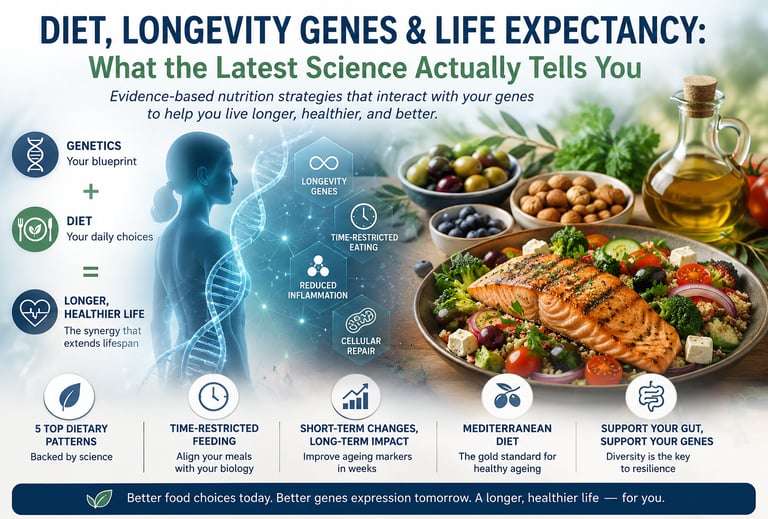
How do diet and longevity genes affect life expectancy?
A 2026 Science Advances study found that healthy dietary patterns + favorable longevity gene variants produce synergistic benefits. Diet activates genes such as FOXO3 and SIRT1 that regulate ageing, while time-restricted eating and Mediterranean foods reduce inflammation and extend healthspan. Diet can partially offset genetic risk.
5 ways diet influences longevity genes for longer life:
Activates FOXO3 & SIRT1: Polyphenols and fasting switch on cellular repair genes
Inhibits mTOR: Time-restricted eating mimics calorie restriction effects
Reduces inflammation: Olive oil and omega-3s suppress NF-κB and IL-6
Protects telomeres: Antioxidants and fiber slow DNA ageing
Improves gut microbiome: 30+ plant foods/week boost SCFA production
Key Takeaways
1. The Synergistic Effect of Diet and Genetics
Takeaway: A 2026 Science Advances study demonstrates that the benefits of a high-quality diet and favorable longevity genes do not just add up—they multiply, exponentially increasing overall life expectancy.
Clinical Pearl: Epigenetics and genetics work in tandem. Advise patients that a healthy lifestyle acts as a force multiplier for good genetics, maximizing their inherent lifespan potential.
2. Whole Foods Act as Molecular Switches
Takeaway: Nutrients derived from whole foods directly influence gene expression, activating critical longevity pathways (such as FOXO3 and SIRT1) and downregulating inflammation-heavy pathways (mTOR) to slow cellular aging.
Clinical Pearl: Shift the patient conversation from simple caloric restriction to nutrient signaling. Food is information; prescribing a colorful, whole-food diet is akin to turning on the body's internal cellular repair machinery.
3. The MedDiet Remains the Gold Standard
Takeaway: The Mediterranean diet continues to hold the strongest clinical evidence for longevity, with a core intake of olive oil, legumes, fish, and vegetables consistently reducing the risk of cardiovascular disease, diabetes, and dementia by 20–30%.
Clinical Pearl: For maximum efficacy, focus patient counseling on the three highest-yield pillars of the Mediterranean diet: extra virgin olive oil (polyphenols), fatty fish (omega-3s), and daily legumes (soluble fiber).
4. Chrono-Nutrition and Metabolic Health
Takeaway: A 2026 Nature Aging animal study reveals that time-restricted feeding extends healthspan across both sexes and increases lifespan in males, proving that when you eat matters just as much as what you eat, even when calorie intake remains identical.
Clinical Pearl: When patients struggle with strict caloric deficits, pivot to early time-restricted feeding (e.g., an 8-to-10-hour daytime eating window). It yields similar metabolic and longevity benefits with much higher long-term compliance.
5. Rapid Biomarker Reversal
Takeaway: According to a 2026 Aging Cell clinical trial, short-term dietary interventions can fundamentally alter systemic inflammation, insulin sensitivity, and biological aging markers in as little as a few weeks.
Clinical Pearl: Use early-stage blood work (e.g., high-sensitivity CRP and fasting insulin) at a 4-to-6-week follow-up to provide patients with tangible, rapid biometric proof that their dietary changes are working.
6. The "30 Plants Per Week" Diversity Target
Takeaway: Consuming 30 or more distinct plant species weekly optimizes gut microbiome diversity, protects telomere length, and significantly lowers all-cause mortality risk.
Clinical Pearl: Simplify the goal for patients by explaining that everything counts: herbs, spices, seeds, nuts, grains, fruits, and vegetables all contribute to the weekly 30-plant threshold for microbiome biodiversity.
7. Ultra-Processed Foods Accelerate Biological Age
Takeaway: High intake of ultra-processed foods (UPFs) triggers rapid telomere shortening, accelerates biological aging, and sharply increases the incidence of aggressive cancers, cardiovascular disease, and type 2 diabetes.
Clinical Pearl: Frame UPF reduction to patients not as a restrictive weight-loss tactic, but as a critical shield against premature cellular decay and systemic chronic disease.
8. Epigenetic Overrides for Family History
Takeaway: A high-quality, nutrient-dense diet possesses the biological leverage to partially compensate for and buffer against unfavorable longevity genes, proving that daily lifestyle choices hold more sway over healthspan than DNA alone.
Clinical Pearl: Use this data to dismantle patient fatalism. When a patient feels defeated by a heavy family history of cardiovascular disease or diabetes, remind them that their fork has the power to silence inherited risks
Introduction
What if the foods on your plate could switch on genes that extend your life? That is no longer the stuff of science fiction. A landmark 2026 prospective cohort study published in Science Advances followed thousands of people over years and found that individuals who consistently ate healthy dietary patterns had significantly longer life expectancy — and the effect was amplified when they also carried favourable longevity gene variants (Lv et al., 2026).
This article breaks down exactly what that means for you — not in abstract genetics terminology, but in actionable, evidence-informed choices you can make today. You will learn which dietary patterns are most strongly linked to longevity, how specific nutrient strategies interact with your genetic blueprint, what time-restricted feeding and short-term dietary interventions actually do to the biological processes of ageing, and how the Mediterranean diet earns its status as a metabolic cornerstone of healthy ageing.
Every claim below is anchored to peer-reviewed research published between 2025 and 2026 — the very cutting edge of longevity nutrition science. Study limitations are noted where they matter clinically, because knowing the boundaries of evidence is just as important as knowing the findings.
1. The New Science of Diet and Longevity Genes
For most of the 20th century, scientists viewed lifespan as the product of two independent forces: genetics and environment. You were handed a genetic deck of cards, and lifestyle choices — including diet — shuffled only the environmental half. That model is now obsolete.
The emerging field of nutritional genomics (also called nutrigenomics) has revealed a far more interactive picture. The foods you eat do not just fuel your cells — they send molecular signals that regulate gene expression, modulate inflammatory pathways, influence telomere maintenance, and alter the epigenetic marks that determine whether longevity-associated genes are switched on or off.
The 2026 Science Advances cohort study by Lv and colleagues is one of the most compelling demonstrations of this interaction to date. The investigators examined healthy dietary patterns alongside a polygenic longevity score derived from genome-wide association studies (GWAS). Their key finding: people with both a high-quality diet and favourable longevity gene variants lived significantly longer than those with only one or neither factor — suggesting that diet and genes do not simply add up; they multiply each other's effects.
Clinical Relevance: Why This Matters Beyond the Lab
The practical implication is profound. Even if you do not know your genetic risk profile, optimising your dietary pattern shifts the odds in your favour — and for those with unfavourable longevity variants, a high-quality diet appears to partially buffer genetic risk. You have more leverage over your lifespan than your DNA alone would suggest.
Importantly, the study used objective dietary indices (such as the Healthy Eating Index and alternative Mediterranean Diet Score), not self-reported "eating well" — a methodological strength that increases confidence in the findings. Limitations include residual confounding from unmeasured lifestyle variables and the predominantly European ancestry of the GWAS cohort used to derive longevity scores, which warrants caution when extrapolating to other populations.
2. What Are Longevity Genes — And Can Diet Influence Them?
"Longevity genes" is an umbrella term for genetic variants associated with extended healthspan and lifespan in epidemiological studies. The most studied include:
• APOE — variants of this gene are linked to cardiovascular disease and Alzheimer's risk; the ε2 allele is associated with longevity
• FOXO3 — a transcription factor that regulates cellular stress resistance, autophagy, and apoptosis; favourable variants are consistently overrepresented in centenarian populations worldwide
• SIRT1/SIRT3 (Sirtuins) — NAD+-dependent deacetylases that regulate energy metabolism, DNA repair, and mitochondrial function
• mTOR (mechanistic Target of Rapamycin) — a nutrient-sensing pathway; its inhibition is one of the most robust life-extension interventions in model organisms
• TERT — encodes telomerase, the enzyme that maintains telomere length; longer telomeres generally correlate with biological youth
How Diet Talks to Your Genes
Based on the provided breakdown, here are the five distinct mechanisms through which diet influences longevity-associated genes:
Caloric Restriction & Nutrient Sensing: Reducing total energy intake or practicing intermittent fasting downregulates the mTOR pathway while activating AMPK and SIRT1, shifting cells from growth mode into a state of maintenance and repair.
Epigenetic Modification: Consuming foods rich in polyphenols (such as resveratrol and quercetin), folate, and B vitamins drives DNA methylation changes that effectively silence pro-aging genes.
Reduction of Oxidative Stress: Eating antioxidant-rich plant foods and omega-3 fatty acids protects telomeres from degradation and reduces the constant activation demands placed on the FOXO3 longevity gene.
Modulation of the Gut Microbiome: A high intake of dietary fiber, fermented foods, and diverse plants fuels the production of beneficial short-chain fatty acids (SCFAs), which systematically lowers body-wide inflammation.
Inflammation Suppression: Adhering to Mediterranean-pattern foods, omega-3s, and turmeric actively inhibits the inflammatory master-switch NF-κB, thereby reducing damaging inflammatory markers like interleukin-6 and TNF-α.
The Clinical Takeaway: Understanding these diverse pathways underscores why a single "superfood" cannot drive longevity. True healthspan extension relies on a comprehensive dietary pattern that consistently delivers a wide variety of these bioactive compounds.
3. The 5 Dietary Patterns Most Linked to a Longer Life
A comprehensive 2025 review in Applied Sciences (Fatima et al., 2025) synthesised evidence across multiple dietary patterns and their association with healthspan and longevity. Here is what the evidence shows, ranked by strength and consistency of evidence:
① Mediterranean Diet
Consistently the most evidence-backed dietary pattern for longevity. Characterised by high intake of olive oil, vegetables, legumes, whole grains, fish, and moderate red wine, with low intake of red and processed meat. Mechanisms include anti-inflammatory lipid profiles, polyphenol-driven epigenetic modifications, and gut microbiome diversity.
Evidence strength: Very high. Multiple large prospective cohort studies and meta-analyses, with consistent dose-response relationships.
② DASH Diet (Dietary Approaches to Stop Hypertension)
Originally designed for blood pressure management, the DASH diet — rich in fruits, vegetables, low-fat dairy, whole grains, and lean protein — has strong evidence for cardiovascular longevity. Its primary longevity mechanism operates through blood pressure normalisation, which reduces the risk of stroke and heart failure, two leading causes of premature death.
③ Plant-Based Dietary Patterns (including Vegan and Flexitarian)
High plant food intake is associated with lower all-cause mortality, largely through fibre-driven microbiome health, antioxidant density, and reduced saturated fat. However, poorly planned plant-based diets risk vitamin B12, zinc, iron, omega-3, and calcium deficiencies — clinical gaps that must be actively managed, especially in older adults.
④ Time-Restricted Eating (TRE) / Intermittent Fasting
Emerging as a powerful nutritional strategy for modulating longevity pathways — particularly mTOR inhibition and autophagy induction — independent of total caloric intake. The science is rapidly evolving (see Section 4).
⑤ Traditional Okinawan Diet
Characterised by very high sweet potato intake (the primary caloric staple), abundant vegetables, moderate soy, small amounts of fish, and extremely low meat, dairy, and sugar. The Okinawan dietary pattern is also calorie-restricted relative to Western norms. Okinawa is one of the world's five original Blue Zones — regions with an extraordinary concentration of centenarians.
4. Time-Restricted Feeding: Animal Evidence, Human Implications
One of the most significant longevity nutrition studies published in 2026 is the Nature Aging paper by Iiams, Skinner, Wight-Carter and colleagues, which demonstrated that time-restricted feeding (TRF) extends both healthspan and lifespan in mice — with important sex-specific findings.
What the Mouse Study Found
In C57BL/6J mice — the most widely used model in ageing research — TRF extended healthspan in both sexes and extended lifespan specifically in males. Healthspan improvements included better metabolic function, improved motor performance, reduced body fat accumulation, and delayed onset of age-related pathologies. The effect was present even when total caloric intake was held constant, implicating the timing of eating — not just quantity — as a biologically active variable.
Mechanisms: Why Meal Timing May Matter
• Circadian alignment: Restricting food intake to active-phase hours synchronises peripheral circadian clocks with the master clock in the suprachiasmatic nucleus, optimising metabolic efficiency
• Autophagy induction: Fasting periods trigger autophagy — cellular "self-cleaning" — which clears damaged proteins and organelles that accumulate with ageing
• mTOR inhibition: Fasting downregulates the mTOR pathway, mimicking the life-extending effect of caloric restriction
• Improved insulin sensitivity: TRF reduces post-prandial insulin spikes and fasting insulin over time
Human TRF trials (typically 16:8, 14:10, or 5:2 protocols) do show improvements in metabolic markers, blood pressure, inflammatory markers, and body composition — but long-term human RCTs with mortality endpoints do not yet exist. The current evidence supports TRF as metabolically beneficial; whether it truly extends human lifespan remains to be established.
5. Short-Term Dietary Interventions: Can You Age Better in Weeks?
One of the most practically encouraging findings from the 2026 literature comes from Andrews and colleagues, publishing in Aging Cell. Their study demonstrated that a short-term dietary intervention — lasting a matter of weeks — produced measurable changes in physiological profiles relevant to ageing. These included shifts in inflammatory biomarkers, metabolic hormones, and markers of cellular stress.
Why Short-Term Dietary Changes Have Long-Term Significance
The clinical implication is both encouraging and nuanced. Encouraging because it means you do not need decades of perfect eating to begin shifting your biological trajectory — meaningful changes in key ageing biomarkers can occur in weeks. Nuanced because biomarker shifts are not the same as lifespan extension. The study measured surrogate endpoints (biomarkers), not clinical outcomes like mortality or disease incidence.
Nevertheless, the biological plausibility is strong. Many ageing-associated pathologies — cardiovascular disease, type 2 diabetes, dementia — have long prodromal (pre-symptomatic) phases during which biomarker-level changes precede clinical disease by years or decades. Intervening at the biomarker level, especially in midlife, may prevent the downstream clinical event.
What Constitutes an "Ageing-Relevant" Physiological Profile?
The study examined several key domains:
• Inflammatory markers: C-reactive protein (CRP), interleukin-6 (IL-6), TNF-alpha — all of which predict cardiovascular and metabolic ageing
• Glucose homeostasis: Fasting glucose, insulin, HOMA-IR — indicators of metabolic flexibility declining with age
• Lipid profile: Total cholesterol, LDL, HDL, triglycerides — cardiovascular ageing proxies
• Body composition markers: Visceral adiposity is a particularly potent driver of the pro-inflammatory, pro-ageing phenotype
6. The Mediterranean Diet as a Metabolic Strategy for Healthy Ageing
While the Mediterranean diet appears throughout this article as the top-ranked dietary pattern, the 2026 review by Vinesh and Altaf in the Journal of Nutritional Physiology provides the most clinically detailed account of how it functions specifically as a metabolic strategy for ageing and non-communicable disease (NCD) prevention.
Metabolic mechanisms and disease risk-reduction data for the Mediterranean diet.
Part 1: The Multi-Pathway Metabolic Cascade
The longevity benefits of the Mediterranean diet are driven by systemic metabolic shifts. Below is how specific food drivers translate into distinct clinical outcomes:
Reversing Insulin Resistance & Optimizing Glucose Control
Food Drivers: Whole grains, legumes, and low-glycemic-index carbohydrates.
Clinical Outcome: Improves $HbA1c$, reduces post-prandial glycemic spikes, preserves metabolic flexibility, and lowers type 2 diabetes risk.
Suppressing Chronic Low-Grade Inflammation
Food Drivers: Olive oil polyphenols (oleocanthal), omega-3 fatty acids from oily fish, and colorful vegetables.
Clinical Outcome: Downregulates the inflammatory master-switch $NF-\kappa B$, directly reducing circulating C-reactive protein (CRP) and interleukin-6 (IL-6).
Mitigating Oxidative Stress & Cellular Aging
Food Drivers: Polyphenol-rich foods including berries, olives, nuts, and fresh herbs.
Clinical Outcome: Protects telomeres from premature shortening and reduces 8-OHdG, a critical biomarker of DNA oxidation.
Cultivating Gut Microbiome Diversity
Food Drivers: High dietary fiber sourced from varied vegetables, legumes, and intact whole grains.
Clinical Outcome: Proliferates short-chain fatty acid (SCFA)-producing gut bacteria while strengthening the gut barrier to reduce intestinal permeability ("leaky gut").
Optimizing Cardiovascular Biomarkers
Food Drivers: Extra virgin olive oil, wild-caught fish, nuts, and moderate resveratrol (e.g., from wine).
Clinical Outcome: Minimizes LDL oxidation, enhances HDL functionality, and naturally lowers systemic blood pressure.
Part 2: Impact on Non-Communicable Diseases (NCDs)
Non-communicable diseases drive roughly 74% of global mortality. High adherence to a Mediterranean dietary pattern demonstrates substantial relative risk reductions across all four major NCD categories:
Cardiovascular Disease: Yields an approximate 30% relative risk reduction in major adverse cardiovascular events (established by the landmark PREDIMED trial).
Type 2 Diabetes: Associated with a 19–23% lower incidence among populations with the highest dietary adherence.
Colorectal Cancer: Shows a strong, consistent inverse risk association across multiple large-scale, long-term cohort studies.
Cognitive Decline & Dementia: High adherence—particularly to the MIND diet (a Mediterranean-DASH hybrid)—is strongly correlated with a reduced risk of developing Alzheimer’s disease.
Clinical Interpretation Note: While these figures represent powerful effect sizes from robust nutritional epidemiology, they denote strong risk associations rather than guaranteed prevention due to inherent lifestyle confounders. However, the tight consistency of these findings across diverse global populations and study designs makes the pattern highly actionable for preventative medicine.
7. Evidence Summary: Key Studies at a Glance
Here is a rewritten, point-by-point breakdown of the recent longevity and dietary studies, organized by clinical confidence levels to give you a quick, digestible reference.
High Confidence Evidence
Lv et al. (Science Advances, 2026)
Study Design: Prospective cohort study.
Key Finding: A healthy diet combined with favorable longevity genes creates a synergistic, multiplying effect on overall lifespan.
Clinical Caveat: Culturally limited; primarily based on European GWAS cohorts. Genetic data is also not yet routinely available in standard clinical settings.
Promising but Preliminary Evidence
Fatima et al. (Applied Sciences, 2025)
Study Design: Comprehensive literature review.
Key Finding: Strong correlation between extended longevity and Mediterranean, DASH, plant-based, TRE, and Okinawan dietary patterns.
Clinical Caveat: Narrative review quality varies across included papers; features highly heterogeneous study populations.
Vinesh & Altaf (J Nutr Physiology, 2026)
Study Design: Mechanistic review.
Key Finding: Establishes the Mediterranean diet as a highly effective, multi-pathway metabolic longevity strategy.
Clinical Caveat: Review-based architecture; complex cellular and molecular mechanisms are extrapolated from multiple varied study types.
Andrews et al. (Aging Cell, 2026)
Study Design: Short-term dietary intervention.
Key Finding: Just a few weeks of targeted dietary improvements are enough to fundamentally shift aging-relevant physiological profiles.
Clinical Caveat: Relies strictly on surrogate biomarker endpoints; utilizes a small sample size with no long-term clinical follow-up.
Needs Human Replication
Iiams et al. (Nature Aging, 2026)
Study Design: Animal RCT (Murine model).
Key Finding: Time-Restricted Feeding (TRF) extends healthspan in both sexes, but selectively extends lifespan only in males.
Clinical Caveat: Animal-to-human translation remains uncertain; sex-specific lifespan divergence is not yet confirmed in human clinical trials.8. Practical Application:
8. Your 7-Day Longevity Meal Framework
The following framework synthesises the evidence across all reviewed studies into a practical, week-long eating structure. It is not a rigid diet plan — it is a pattern template you can adapt to your cultural food preferences, cooking abilities, and health goals.
Core Principles of the Framework
• Eat predominantly whole, minimally processed plant foods — aim for 30+ different plant species per week (a gut microbiome diversity target)
• Make extra-virgin olive oil your primary cooking fat
• Include oily fish (salmon, sardines, mackerel, trout) at least twice per week for marine omega-3s
• Limit eating window to 10–12 hours daily as a minimum TRE protocol (more aggressive 8-hour windows may amplify benefits but require personalised assessment)
• Eliminate ultra-processed foods and refined carbohydrates as a near-absolute rule
• Favour legumes (lentils, chickpeas, black beans, edamame) as your primary protein anchor at 3–5 meals per week
• Include nuts and seeds daily — a small handful (30g) of mixed nuts is associated with cardiovascular risk reduction
Here is the sample weekly menu highlighted by their specific eating windows to ensure circadian alignment:
Monday (12-Hour Window: 8:00 AM – 8:00 PM)
Breakfast: Greek yogurt topped with walnuts, blueberries, and flaxseed.
Lunch: Nutrient-dense lentil soup paired with whole-grain bread and a mixed green salad.
Dinner: Grilled salmon served with a side of roasted vegetables and quinoa.
Tuesday (12-Hour Window: 8:00 AM – 8:00 PM)
Breakfast: Hearty oatmeal mixed with chia seeds, banana slices, and a dash of cinnamon.
Lunch: Fiber-rich chickpea and spinach stew finished with a drizzle of extra virgin olive oil.
Dinner: Lean chicken breast accompanied by a large mixed vegetable plate with olive oil dressing.
Wednesday (10-Hour Window: 9:00 AM – 7:00 PM)
Breakfast: Avocado toast on artisanal sourdough bread, served with eggs and fresh tomato.
Lunch: Mediterranean grain bowl built with farro, olives, feta cheese, and roasted peppers.
Dinner: Baked mackerel alongside steamed broccoli and a baked sweet potato.
Thursday (10-Hour Window: 9:00 AM – 7:00 PM)
Breakfast: Green smoothie blended with spinach, mixed berries, flaxseed, and oat milk.
Lunch: A plant-forward lentil and roasted vegetable wrap enhanced with tahini.
Dinner: Tofu stir-fry loaded with assorted vegetables over a bed of brown rice.
Friday (12-Hour Window: 8:00 AM – 8:00 PM)
Breakfast: Prepped overnight oats combined with mixed berries and creamy almond butter.
Lunch: Classic Niçoise salad featuring tuna, green beans, hard-boiled eggs, and olives.
Dinner: A small portion of lamb kofta served alongside a large tabbouleh salad and hummus.
Saturday (10-Hour Window: 9:00 AM – 7:00 PM)
Breakfast: Fluffy vegetable omelette with a slice of whole-grain toast.
Lunch: Earthy black bean soup paired with fresh avocado and whole-grain crackers.
Dinner: Grilled sea bass served with traditional ratatouille and whole-grain couscous.
Sunday (8-Hour Window: 10:00 AM – 6:00 PM)
Breakfast: Savory smoked salmon on rye bread with a light spread of cream cheese and cucumber slices.
Lunch: Large antioxidant-rich salad of mixed greens, pomegranate seeds, walnuts, and feta.
Dinner: Hearty, slow-cooked vegetable and bean casserole.
📌 Circadian Alignment Tip: While eating windows can be adjusted to fit individual schedules, aiming for day-to-day consistency maximizes the metabolic and longevity benefits of your body's natural circadian rhythms.
Longevity Nutrition Checklist
Use this weekly checklist to track adherence to the core evidence-based principles:
• ☐ 30+ different plant species consumed this week
• ☐ Oily fish eaten at least twice
• ☐ Extra-virgin olive oil used as primary fat at most meals
• ☐ No ultra-processed food consumed
• ☐ Eating window maintained at ≤12 hours daily
• ☐ Legumes consumed at ≥3 meals
• ☐ Handful of nuts consumed daily
• ☐ Alcohol kept to ≤1 unit/day (if consumed at all)
• ☐ Adequate hydration (≥1.5–2L water daily)
9. Common Myths & Mistakes About Diet and Longevity
Myth 1: "My genes are fixed — diet won't make much difference to my lifespan"
False. The Lv et al. (2026) study specifically addressed this: diet quality was independently associated with longevity even after controlling for genetic longevity score. More importantly, high diet quality partially compensated for unfavourable genetic profiles. Your genome sets a range; your diet determines where within that range you land.
Myth 2: "You need to fast for days to get autophagy benefits"
Unnecessary and potentially harmful for most people. Research suggests meaningful autophagy induction begins after approximately 16–18 hours of fasting. A nightly 12–16-hour eating pause achieves this safely for most healthy adults. Multi-day fasts carry risks including muscle loss, electrolyte imbalances, and disordered eating in susceptible individuals.
Myth 3: "The Mediterranean diet only works for people from Mediterranean countries"
Incorrect. The biological mechanisms — anti-inflammatory lipids, polyphenol epigenetics, gut microbiome diversity — are universal. What matters is adherence to the dietary pattern, not cultural origin. Substitute local equivalents: sardines → mackerel or trout; specific olive varieties → any EVOO; traditional bread → any whole grain option. The principle, not the geography, is what matters.
Myth 4: "Supplements can replace dietary patterns for longevity"
Consistently not supported. Isolated supplement RCTs for resveratrol, NMN, NAD+, and other "longevity supplements" have not replicated the mortality benefits seen with whole dietary patterns. The food matrix — the complex synergy of thousands of bioactive compounds in whole foods — appears to be essential. Supplements may have a role in specific deficiency contexts but cannot substitute for dietary quality.
Myth 5: "Short-term dietary changes are too small to matter"
Contradicted by the Andrews et al. (2026) Aging Cell data. Measurable shifts in ageing-relevant biomarkers — inflammatory markers, metabolic hormones — occurred within weeks of dietary intervention. While biomarkers are not mortality endpoints, the evidence suggests that meaningful biological change can begin quickly. Consistency over time amplifies early gains.
10. Frequently Asked Questions
Q1: What is the single most important dietary change I can make for longevity?
If forced to name one: increase dietary diversity of whole plant foods. Targeting 30+ different plant species per week is the single intervention with the broadest mechanism coverage — it improves gut microbiome diversity, increases antioxidant and polyphenol intake, supplies fibre for SCFA production, and reduces reliance on ultra-processed foods by displacement. It is also measurable and achievable.
Q2: Is time-restricted eating safe for everyone?
No. TRE is not appropriate for: pregnant or breastfeeding women; individuals with a history of eating disorders; people with type 1 diabetes or those on insulin or sulphonylureas (hypoglycaemia risk); underweight individuals; children and adolescents. If you have any chronic condition or take medication, consult your doctor before starting TRE.
Q3: How much does genetics versus diet actually contribute to lifespan?
Twin studies historically estimated that genetics accounts for roughly 25–30% of variation in human lifespan, with the remainder attributable to environmental and lifestyle factors. More recent work suggests the genetic contribution to lifespan may be even lower — as low as 16% — when accounting for shared environmental exposures in twins. The Lv et al. (2026) findings are consistent with this: diet quality was a strong independent predictor of life expectancy even after accounting for genetic longevity scores.
Q4: Does the Mediterranean diet work for preventing dementia specifically?
The evidence is promising. The MIND diet (Mediterranean-DASH Intervention for Neurodegenerative Delay) — a hybrid of Mediterranean and DASH diets — is specifically associated with slower cognitive decline and reduced Alzheimer's disease risk in observational studies. Green leafy vegetables, berries, olive oil, fish, and nuts are the components with the strongest brain-health associations. However, no large-scale RCT has yet proven causation for dementia prevention.
Q5: Can I get longevity benefits from the Mediterranean diet if I am vegetarian or vegan?
Yes. The plant food components of the Mediterranean diet — olive oil, vegetables, legumes, whole grains, nuts, seeds, fruits — are the primary drivers of most of its health benefits. Fish provides marine omega-3s (EPA and DHA) and some vitamin B12 and D3 — all of which should be supplemented or obtained from algae-based alternatives on a vegan Mediterranean-pattern diet.
Q6: At what age should I start optimising my diet for longevity?
The evidence does not identify a precise threshold, but the principle is: earlier is always better, and it is never too late. Biomarker improvements from dietary intervention have been demonstrated across age groups, including in older adults. The most critical intervention window may be midlife (40–60), when age-related metabolic changes accelerate but before irreversible disease processes are established. If you are younger, building these habits now compounds their benefit.
Q7: How reliable is the 2026 Science Advances cohort study on diet and longevity genes?
It is among the strongest designs available in nutritional epidemiology: a prospective cohort with objective dietary assessment and genetic data. However, cohort studies cannot establish causation, only association. The polygenic longevity score was derived from a predominantly European GWAS, limiting generalisability to other ancestral groups. Residual confounding from unmeasured lifestyle variables (exercise, sleep, stress) is unavoidable. Overall, the study provides high-quality evidence for a meaningful diet-gene interaction — but should be considered alongside the broader body of evidence, not in isolation.
Q8: Are there any dietary patterns that actually shorten life expectancy?
Yes, with substantial evidence. Ultra-processed food (UPF) consumption is associated with increased all-cause mortality, cardiovascular disease, type 2 diabetes, and several cancers in large prospective cohort studies. The Western dietary pattern — high in refined carbohydrates, saturated and trans fats, red and processed meat, added sugar, and sodium — is consistently linked to accelerated biological ageing, reduced telomere length, and higher mortality risk. The dose-response relationship is clear: the more UPFs dominate the diet, the worse the longevity outcomes.
Q9: What is the role of protein intake in longevity nutrition?
Nuanced and context-dependent. In midlife (roughly 40–65), moderate protein restriction — consistent with plant-forward dietary patterns — is associated with lower IGF-1 levels and reduced cancer risk, possibly via mTOR inhibition. In older adults (65+), adequate protein intake (1.0–1.2g/kg body weight, possibly higher for sarcopenia prevention) becomes a priority as age-related muscle loss (sarcopenia) becomes a major driver of disability and mortality. Protein quality matters: plant proteins (legumes, soy) carry additional longevity benefits beyond the protein itself.
Q10: Is red wine actually good for longevity?
The evidence has been significantly revised in recent years. While resveratrol in red wine has longevity-related mechanisms in cell and animal models, the concentrations achievable through moderate wine consumption are far below those used in laboratory studies. Large-scale Mendelian randomisation studies — which control for confounding better than traditional observational studies — suggest that the 'J-curve' protective effect of moderate alcohol may largely be a statistical artifact of confounding. Current evidence most robustly supports: if you drink alcohol, the Mediterranean-style pattern of no more than one standard drink per day is the least harmful approach. Abstinence from alcohol carries no longevity penalty and likely has a small benefit for cancer risk.
11. Conclusion & Action Steps
The science of dietary patterns and longevity has reached a new level of sophistication. The 2026 research landscape confirms what has been gradually building for decades: what you eat shapes how you age at the genetic, epigenetic, cellular, and systemic levels. The good news is that the same dietary principles that protect against heart disease, diabetes, and cancer are also the ones most strongly associated with longer life — and their effects begin in weeks, not decades.
Your 5 Immediate Action Steps
• Count your plant species: This week, list every different plant food you eat. Aim to reach 20 as a baseline; work toward 30+
• Set your eating window: Choose a daily eating window of 10–12 hours and maintain it consistently for 4 weeks
• Replace one refined carbohydrate meal per day: Swap white rice, white bread, or processed snacks for whole grain alternatives, legumes, or vegetables
• Add oily fish twice this week: Salmon, sardines, mackerel, herring, or trout — cooked simply with olive oil and herbs
• Audit ultra-processed foods: Spend 10 minutes reading the ingredient lists of your regular packaged foods; aim to eliminate any product containing >5 highly processed ingredients
⚠️ Reminder: These evidence-based recommendations are general population guidelines. Individual needs — for age, health status, medications, specific genetic variants, and cultural preferences — may require tailored advice. Always consult a registered dietitian or your healthcare provider for personalised nutrition planning.
Related Articles
Losing Muscle with Age? Here's How Nutrition Can Help Protect Your Strength
Can Cognitive Training Delay Dementia? The Latest Science on Brain Health and Aging
Phytosterols for Cholesterol: 8 Evidence-Based Clinical Facts on LDL Reduction and Heart Health
NOX4 Explained: The Hidden Exercise Enzyme That May Control How Fast You Age
Obesity and Fatty Liver Disease: What Science Says About Risk and Health | DR T S DIDWAL
Intermittent Fasting: Metabolic Health Benefits and the Evidence on Longevity | DR T S DIDWAL
Activate Your Brown Fat: A New Pathway to Longevity and Metabolic Health | DR T S DIDWAL
Leptin vs. Adiponectin: How Your Fat Hormones Control Weight and Metabolic Health | DR T S DIDWAL
References
Andrews, C. J., Ribeiro, R. V., Gosby, A., et al. (2026). Short-term dietary intervention alters physiological profiles relevant to ageing. Aging Cell, 25(5), Article e70507. https://doi.org/10.1111/acel.70507
Brandhorst, S., & Longo, V. D. (2019). Protein quantity and source, fasting-mimicking diets, and longevity. Advances in Nutrition, 10(Suppl 4), S340–S350. https://doi.org/10.1093/advances/nmz079
Buettner, D., & Skemp, S. (2016). Blue Zones: Lessons from the world's longest lived. American Journal of Lifestyle Medicine, 10(5), 318–321. https://doi.org/10.1177/1559827616637066
de Cabo, R., & Mattson, M. P. (2019). Effects of intermittent fasting on health, aging, and disease. New England Journal of Medicine, 381(26), 2541–2551. https://doi.org/10.1056/nejmra1905136
Estruch, R., Ros, E., Salas-Salvadó, J., et al. (2018). Primary prevention of cardiovascular disease with a Mediterranean diet supplemented with extra-virgin olive oil or nuts. New England Journal of Medicine, 378(25), Article e34. https://doi.org/10.1056/nejmoa1800389
Fatima, G., Dalmadi, I., Süllős, G., Takács, K., & Halmy, E. (2025). Dietary patterns for health-span and longevity: A comprehensive review of nutritional strategies promoting lifelong wellness. Applied Sciences, 15(22), Article 12013. https://doi.org/10.3390/app152212013
Guasch-Ferré, M., & Willett, W. C. (2021). The Mediterranean diet and health: A comprehensive overview. Journal of Internal Medicine, 290(3), 549–566. https://doi.org/10.1111/joim.13333
Iiams, S. E., Skinner, N. J., Wight-Carter, M., et al. (2026). Time-restricted feeding extends healthspan in both sexes and lifespan in male C57BL/6J mice. Nature Aging. Advance online publication. https://doi.org/10.1038/s43587-026-01129-8
Levine, M. E., Suarez, J. A., Brandhorst, S., et al. (2014). Low protein intake is associated with a major reduction in IGF-1, cancer, and overall mortality in the 65 and younger but not older population. Cell Metabolism, 19(3), 407–417. https://doi.org/10.1016/j.cmet.2014.02.006
López-Otín, C., Blasco, M. A., Partridge, L., Serrano, M., & Kroemer, G. (2023). Hallmarks of aging: An expanding universe. Cell, 186(2), 243–278. https://doi.org/10.1016/j.cell.2022.11.001
Lv, Y., Song, J., Ding, D., Luo, M., He, F. J., Yuan, C., MacGregor, G. A., Liu, L., & Chen, L. (2026). Healthy dietary patterns, longevity genes, and life expectancy: A prospective cohort study. Science Advances, 12(7), Article eads7559. https://doi.org/10.1126/sciadv.ads7559
Micha, R., Peñalvo, J. L., Cudhea, F., et al. (2017). Association between dietary factors and mortality from heart disease, stroke, and type 2 diabetes in the United States. JAMA, 317(9), 912–924. https://doi.org/10.1001/jama.2017.0947
Morris, M. C., Tangney, C. C., Wang, Y., et al. (2015). MIND diet associated with reduced incidence of Alzheimer's disease. Alzheimer's & Dementia, 11(9), 1007–1014. https://doi.org/10.1016/j.jalz.2014.11.009
Osher, Y., & Belmaker, R. H. (2009). Omega-3 fatty acids in depression: A review of three studies. CNS Neuroscience & Therapeutics, 15(2), 128–133. https://doi.org/10.1111/j.1755-5949.2008.00061.x
Pan, A., Sun, Q., Bernstein, A. M., et al. (2012). Red meat consumption and mortality: Results from two prospective cohort studies. Archives of Internal Medicine, 172(7), 555–563. https://doi.org/10.1001/archinternmed.2011.2287
Sonnenburg, E. D., & Sonnenburg, J. L. (2022). The ancestral and industrialized gut microbiota and implications for human health. Nature Reviews Microbiology, 17(6), 383–390. https://doi.org/10.1038/s41579-019-0191-8
Spector, T. D. (2022). The diet myth: The real science behind what we eat. Weidenfeld & Nicolson.
Vinesh, D. S., & Altaf, R. R. S. (2026). The Mediterranean diet as a metabolic strategy for healthy aging and non-communicable disease prevention. The Journal of Nutritional Physiology, 5, Article 100015. https://doi.org/10.1016/j.jnp.2026.100015
Willett, W. C., Rockström, J., Loken, B., et al. (2019). Food in the Anthropocene: The EAT–Lancet Commission on healthy diets from sustainable food systems. The Lancet, 393(10170), 447–492. https://doi.org/10.1016/S0140-6736(18)31788-4