Activate Your Brown Fat: A New Pathway to Longevity and Metabolic Health
Learn how to activate brown adipose tissue naturally through cold exposure, diet, and exercise. New research reveals BAT’s role in weight loss and metabolic health.
AGINGMETABOLISM
Dr. T.S. Didwal, M.D.(Internal Medicine)
5/10/202614 min read
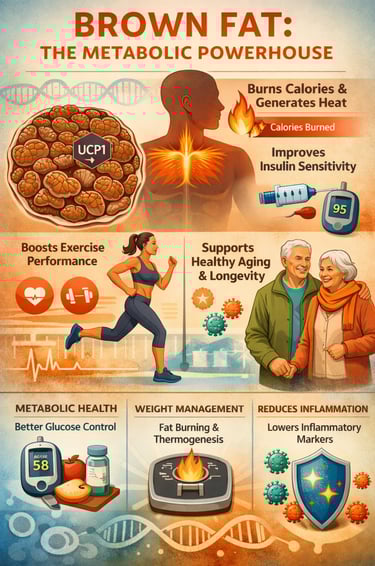
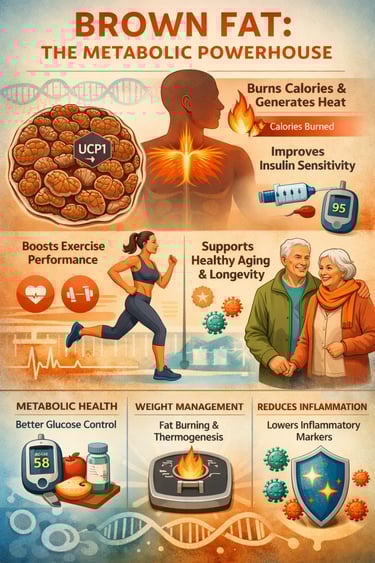
Brown adipose tissue (BAT) is a metabolically active fat that burns calories, improves insulin sensitivity, and supports thermogenesis. Emerging 2025–2026 research shows BAT influences longevity, glucose metabolism, mitochondrial function, and epigenetic adaptation through pathways involving UCP1, BCAAs, haem biosynthesis, and chromatin remodeling.
For decades, body fat was viewed as metabolically harmful—a passive storage depot linked to obesity, insulin resistance, and cardiovascular disease. But modern metabolic science has completely reshaped that narrative. Researchers now recognize that Brown Adipose Tissue, commonly called brown fat, functions as a highly active endocrine and thermogenic organ capable of influencing energy expenditure, glucose metabolism, mitochondrial health, inflammation, and even healthy longevity.
Unlike white fat, which stores excess calories, brown adipose tissue burns energy through a specialized mitochondrial protein known as UCP1 (uncoupling protein-1). This process—called Thermogenesis—allows brown fat to convert calories directly into heat, improving metabolic flexibility and helping regulate blood sugar and lipid metabolism. Emerging evidence suggests that active BAT may protect against obesity, type 2 diabetes, fatty liver disease, and age-related metabolic decline (Cypess et al., 2025).
Science has advanced dramatically in 2025–2026. Recent studies published in Cell Metabolism, Nature, and Nature Metabolism reveal that brown fat is regulated not only by cold exposure and exercise, but also by chromatin remodeling, haem biosynthesis, branched-chain amino acid (BCAA) metabolism, peroxisomal fatty acid oxidation, and hormonal signaling pathways involved in mitochondrial adaptation and cellular energy homeostasis (Zhang et al., 2026; Duerre et al., 2025; Liu et al., 2025).
Researchers now consider brown adipose tissue a central player in Metabolic Flexibility and healthy aging—not merely a calorie-burning curiosity. This article explores the latest evidence on BAT activation, cold-induced thermogenesis, beige fat recruitment, exercise metabolism, nutritional activators such as catechins and capsinoids, and the emerging role of brown fat in metabolic resilience and longevity.
Key Takeaways: What You Need to Know
✓ Brown adipose tissue is active in adults and metabolically significant for overall health
✓ Multiple activation pathways exist—cold exposure, exercise, and emerging pharmaceutical options
✓ Brown fat benefits extend far beyond weight loss, including better glucose control, reduced inflammation, and improved longevity
✓ Your brown adipose tissue works as part of a larger system, with quality of all adipose tissue mattering for metabolic health
✓ Clinical applications are emerging, transforming brown fat from fascinating biology to practical medicine
✓ Personalized approaches work best, as individuals vary in their brown fat responsiveness
What Is Brown Adipose Tissue, and Why Is It Different?
Your body contains at least three types of fat cells:
White adipocytes — store energy as lipid droplets; excess correlates with metabolic disease
Brown adipocytes — burn energy through heat production (thermogenesis) via the mitochondrial uncoupling protein UCP1
Beige adipocytes — white fat cells that can convert into a brown-like, thermogenic phenotype in response to cold or exercise
The key distinction lies in the mitochondria. Brown fat cells are packed with mitochondria—giving them their characteristic brown color—and when activated, those mitochondria uncouple their electron transport chain, releasing chemical energy as heat rather than storing it as ATP. This process, governed by UCP1, is the molecular engine of thermogenesis.
Adults typically carry 50–100 grams of brown fat, concentrated around the neck, supraclavicular regions, and paravertebral spine. Small in volume, enormous in metabolic consequence.
The Latest Science: Eight Studies That Change the Picture
1. Scientific Consensus: BAT Is Metabolically Significant in Adults (Cypess et al., 2025).
This landmark consensus paper unified global brown fat researchers to resolve longstanding debates. The conclusion: BAT plays a meaningful, measurable role in adult human energy expenditure. The paper distinguishes classical brown adipocytes from beige cells emerging within white fat depots, and confirms that cold exposure is only one of many activation pathways—pharmaceutical, nutritional, and hormonal triggers all qualify. Importantly, this review establishes that human research must take priority over mouse models, as interspecies translation has historically misled the field
2. Brown Fat Stays "Hot" in Clinical Research (Clayton & Guertin, 2026)
Published just months ago, this perspective piece confirms that scientific and funding interest in BAT continues to accelerate. Clinical trials of BAT-activating compounds are now underway in human subjects. The authors strike a balanced tone: brown fat is powerful, but it is not a stand-alone cure for obesity. Individual variability—driven by genetics, age, and lifestyle—means that personalized strategies will outperform generic protocols. The message is optimism tempered by scientific rigor (Clayton & Guertin, 2026)
3. A Hormonal Axis Rapidly Rewires Your DNA for Thermogenesis (Zhang et al., 2026).
This is among the most mechanistically exciting discoveries of the year. Researchers identified a conserved hormonal signalling–H2A.Z axis that rapidly reorganizes three-dimensional chromatin interactions during adipocyte thermogenesis. In plain terms: when your brown fat is triggered by cold or hormonal signals, it doesn't just burn more calories—it physically restructures which genes are accessible in the cell's nucleus within minutes to hours.
H2A.Z is a histone variant that acts as a genomic "bookmark," flagging thermogenic genes for rapid expression. This finding reveals that brown fat activation is not merely a metabolic event—it is a gene-regulatory event, with implications for how quickly and durably your brown fat responds to lifestyle triggers It also opens entirely new pharmaceutical targets at the chromatin level.
4. Haem Biosynthesis Links BCAA Metabolism to Brown Fat Thermogenesis (Duerre et al., 2025)
This study uncovers a previously unknown connection between haem (heme) biosynthesis, branched-chain amino acid (BCAA) catabolism, and thermogenesis in brown adipose tissue. BCAAs—leucine, isoleucine, and valine, familiar to athletes and dietitians—are not just muscle fuel. In brown fat, their breakdown is tightly regulated by haem-dependent enzymes that simultaneously support mitochondrial electron transport.
When haem biosynthesis is impaired, BCAA catabolism stalls, thermogenesis declines, and systemic metabolic markers worsen. Conversely, optimizing haem synthesis—through adequate dietary iron, B vitamins (particularly B6), and glycine—may support BAT thermogenic capacity from within. This study reframes protein nutrition as a modulator of brown fat function, not merely muscle metabolism .
5. Peroxisomal Metabolism of Branched Fatty Acids Regulates Energy Homeostasis (Liu et al., 2025).
Published in Nature, this study reveals that peroxisomal oxidation of branched-chain fatty acids—a metabolic pathway previously considered peripheral—plays a major role in systemic energy balance and thermogenesis. Peroxisomes are subcellular organelles that handle fats too structurally complex for standard mitochondrial processing, including the branched fatty acids found in dairy products (phytanic acid from ruminant sources) and certain plant foods.
The researchers demonstrated that disrupting peroxisomal metabolism in mice led to impaired thermogenesis, weight gain, and glucose intolerance—closely mirroring what happens when BAT function is compromised. This means the quality and type of dietary fats you consume may influence how efficiently your brown fat operates at a subcellular level. Branched-chain fatty acids are not inherently harmful; when metabolized correctly via healthy peroxisomes, they appear to contribute to energy homeostasis
6. Brown Fat, Exercise, and Healthy Longevity (Vatner et al., 2024)
This study directly connects BAT activity to exercise performance and healthspan—the number of years lived in functional good health, as distinct from mere lifespan. Individuals with more active brown fat demonstrated greater metabolic flexibility (the ability to switch between glucose and fat as fuel), better cardiovascular function, improved insulin sensitivity, and lower inflammatory markers. Exercise itself stimulates BAT activation, and the relationship is bidirectional: a more active BAT amplifies the metabolic benefits of exercise. Together, they create a reinforcing cycle of metabolic vitality that decelerates biological aging (Vatner et al., 2024)
7. Dietary Activators of BAT (Osuna-Prieto et al., 2019)
This systematic review remains the definitive reference on food-based BAT activation. Capsinoids (non-pungent relatives of capsaicin found in sweet peppers and some chili varieties) and catechins (polyphenols in green tea, particularly EGCG) are the best-studied activators. Capsinoids bind TRPV1 receptors in the gut, triggering sympathetic signalling to BAT. Catechins inhibit catechol-O-methyltransferase (COMT), prolonging norepinephrine signalling in thermogenic tissue. Synergy between these compounds—especially when combined with caffeine—produces additive thermogenic effects greater than either compound alone. Consistent daily intake, not occasional use, is required for measurable BAT activation (Osuna-Prieto et al., 2019)
8. Cold Adaptation Is Trainable—and Has a "Metabolic Memory" (Yoneshiro et al., 2025)
This research validated what many clinicians suspected: brown fat adapts to repeated cold exposure, becoming progressively more responsive over weeks of consistent mild cooling. The mechanism involves the sympathetic nervous system—cold activates β3-adrenergic receptors on brown adipocytes—and epigenetic modifications (consistent with the chromatin remodelling found by Zhang et al., 2026). Remarkably, even adults living in modern, temperature-controlled environments can develop measurable BAT adaptation through brief, regular cool sessions. Genetics matters, but it is not destiny (Yoneshiro et al., 2025).
How It All Connects: The Unified Picture of Brown Fat Biology
When these studies are viewed together, a clear and clinically meaningful picture of Brown Adipose Tissue biology emerges. Brown fat responds to multiple environmental, nutritional, hormonal, and metabolic signals that collectively regulate thermogenesis, energy expenditure, and metabolic health.
Key Drivers of BAT Activation
Cold Exposure
Activates the sympathetic nervous system and β3-adrenergic receptors
Increases UCP1 expression in brown adipocytes
Enhances thermogenesis and promotes “metabolic memory” through repeated adaptation
Capsinoids and Catechins
Stimulate TRPV1 and COMT-related thermogenic pathways
Increase norepinephrine signaling to brown fat
Support diet-induced thermogenesis and calorie expenditure
Exercise
Promotes release of irisin and β-aminoisobutyric acid (BAIBA)
Activates brown fat and recruits beige adipocytes within white fat tissue
Improves Metabolic Flexibility and insulin sensitivity
Haem Biosynthesis and BCAA Metabolism
Supports mitochondrial electron transport and oxidative metabolism
Enhances breakdown of branched-chain amino acids (BCAAs)
Increases thermogenic efficiency and mitochondrial performance
Peroxisomal Fat Metabolism
Facilitates oxidation of branched-chain fatty acids
Maintains cellular energy balance and lipid homeostasis
Supports efficient thermogenic signaling
The Bigger Biological Message
Brown adipose tissue is not controlled by a single pathway or “fat-burning switch.” Instead, it functions as a highly adaptive metabolic organ that integrates signals from:
temperature
nutrition
exercise
hormones
mitochondrial metabolism
amino acid availability
dietary fat composition
epigenetic regulation
Together, these pathways determine how effectively the body regulates thermogenesis, glucose metabolism, inflammation, and long-term metabolic resilience.
Practical Applications: Evidence-Based Strategies You Can Start This Week
1. Mild, Consistent Cold Exposure
Set your air conditioning to 16–19°C (60–66°F) during work or sleep
End your shower with 60–90 seconds of cool water (not ice-cold)
Take outdoor walks in cooler morning air, even in winter months
Target: 5–7 sessions per week; consistency matters more than duration or intensity
If you have cardiovascular disease, Raynaud's phenomenon, or peripheral vascular disease, consult your physician before beginning deliberate cold exposure.
2. Daily BAT-Activating Nutrition Protocol
Morning: Green tea (2–3 cups, brewed 3–4 minutes for maximum catechin extraction)
Meals: Incorporate capsinoid-rich peppers, ginger, turmeric, and black pepper
Protein: Adequate iron-rich foods (lean meat, legumes, dark leafy greens) and B6 sources (chicken, chickpeas, bananas) to support haem biosynthesis and BCAA catabolism in BAT
Dietary fats: Include moderate amounts of dairy fat and ruminant products as natural sources of branched-chain fatty acids, which—when peroxisomal metabolism is healthy—support thermogenic function
Avoid: Ultra-processed, additive-laden foods that may impair mitochondrial and peroxisomal function
3. Strategic Exercise Timing
Exercise in cool environments to stack the thermogenic stimulus
Consume green tea 30–60 minutes before aerobic exercise for synergistic BAT activation
Incorporate both endurance (which releases irisin) and resistance (which elevates BCAA turnover) training
Target: 150+ minutes of moderate aerobic activity per week, with 2 resistance sessions
4. Sleep and Stress Optimisation
Sleep in a slightly cool room (18–20°C) to allow natural nocturnal BAT activity
Prioritise 7–9 hours of quality sleep: chronic sleep restriction impairs BAT responsiveness and metabolic flexibility
Manage cortisol: chronic stress elevates glucocorticoids, which suppress BAT thermogenic capacity; mindfulness, walking, and social connection all help
5. Consider Targeted Supplementation (With Your Doctor)
Magnesium glycinate: supports mitochondrial enzyme function
Iron (if deficient): essential for haem biosynthesis, which Duerre et al. (2025) linked directly to BAT thermogenesis
Vitamin B6: cofactor for BCAA-catabolic enzymes in BAT mitochondria
Always confirm supplementation with a qualified healthcare provider
Frequently Asked Questions (FAQs)
Q1. Does everyone have brown fat as an adult, or does it disappear after childhood?
Adults retain functionally active brown adipose tissue, primarily in the supraclavicular (above the collarbone), cervical (neck), and paravertebral (alongside the spine) regions. While total BAT volume tends to be lower in older adults and those with obesity, the tissue remains present and activatable in the vast majority of people. The goal is to improve the activity and quality of the BAT you have, not necessarily its total mass.
Q2. Is it safe to do cold exposure every day?
For most healthy adults, mild, brief cold exposure—such as cool showers or spending time in a room at 16–19°C—is safe when practised daily. The risks arise with extreme cold (ice baths exceeding 10–15 minutes, water below 10°C), particularly for individuals with cardiovascular conditions, hypertension, or poor cold tolerance. Start with 30–60 seconds of cool water at the end of your shower and gradually build. Listen to your body, and consult your physician if you have any underlying health concerns.
Q3. Can diet alone activate brown fat, without cold exposure or exercise?
Yes—but partially. Dietary compounds like capsinoids and catechins activate BAT through the gut-to-brain sympathetic axis, producing measurable but modest thermogenic effects. They are most effective when combined with cold exposure and exercise. Think of dietary activators as a "base layer" that keeps your BAT primed, while cold and movement deliver the more powerful activation spikes.
Q4. I've heard branched-chain amino acids (BCAAs) are great for muscle building—do they also help my brown fat?
This is one of the most exciting recent findings. BCAAs—leucine, isoleucine, and valine—are essential not only for muscle protein synthesis but also for fuelling thermogenesis in BAT, as demonstrated by Duerre et al. (2025). Their catabolism within brown fat mitochondria is linked to haem biosynthesis and electron transport efficiency. Consuming adequate protein from whole food sources (lean meat, eggs, legumes, dairy) supports this pathway. However, excess BCAA supplementation without exercise may actually worsen insulin resistance, so food-first is always the recommendation.
Q5. What exactly does the H2A.Z chromatin discovery mean for me practically?
The finding by Zhang et al. (2026) reveals that your brown fat doesn't just "burn more" when activated—it rewrites its own gene-expression program within hours, making thermogenic genes easier to activate in the future. Practically, this supports the idea of metabolic memory: the more consistently you activate your BAT (through cold, diet, and exercise), the more durably your cells are "programmed" for thermogenesis at the DNA level. Consistency isn't just a motivational cliché—it is biologically encoded.
Q6. How does brown fat affect blood sugar, and can it help prevent type 2 diabetes?
Active BAT functions as a powerful glucose sink, rapidly clearing circulating blood sugar and triglycerides independently of insulin action. Studies confirm that individuals with highly active BAT demonstrate superior insulin sensitivity and lower fasting glucose. While BAT activation is not a replacement for medical management of established diabetes, it represents a meaningful complementary strategy—particularly when combined with dietary changes and regular exercise. If you have prediabetes or metabolic syndrome, discuss brown fat–activating lifestyle strategies with your doctor.
Q7. Are there pharmaceutical treatments to activate brown fat coming soon?
Yes. Clayton & Guertin (2026) confirm that human clinical trials of BAT-activating compounds are currently underway. Candidate approaches include β3-adrenergic receptor agonists, thyroid hormone analogues, GLP-1/GLP-1R agonists (some of which may have incidental BAT effects), and now—following Zhang et al. (2026)—chromatin-targeted agents that modify H2A.Z dynamics. These are years away from clinical approval in most cases, but the pipeline is real and advancing. For now, lifestyle-based activation remains the most evidence-based and accessible approach.
Clinical pearls
1. The "Beige" Opportunity
While you are born with a set amount of "classical" brown fat, you have the power to create more through a process called browning. When you exercise or experience cold, your standard white fat cells can transform into "beige" cells. These cells act like brown fat, burning energy instead of storing it.
Clinical Pearl: You aren't stuck with the metabolic rate you have; you can "recruit" new thermogenic tissue through consistent lifestyle habits.
2. Quality Over Quantity
In the past, we focused on how much fat a person had. Modern science shows that the health of the tissue is more important. Brown fat acts as a "metabolic sink," soaking up excess glucose and triglycerides from your blood. Even a small amount of highly active brown fat can protect you from type 2 diabetes more effectively than having a low body weight with inactive fat.
Clinical Pearl: Metabolic health is determined by how your fat behaves, not just what the scale says.
3. The "Cold Adaptation" Threshold
You don't need to submerge yourself in an ice bath to see benefits. Research indicates that the "thermogenic sweet spot" for most humans is around 16°C–19°C (60°F–66°F). Consistent exposure to these mild temperatures "teaches" your BAT to stay active, creating a metabolic memory that makes you more resilient to weight gain over time.
Clinical Pearl: Consistency beats intensity—mild, regular coolness is more effective for fat activation than occasional extreme cold. Individuals with cardiovascular conditions should consult a physician before starting deliberate cold exposure
4. Nutrients as "Chemical Cold"
Certain food compounds can trigger the same pathways as cold weather. Capsinoids (found in non-pungent peppers) and catechins (in green tea) bind to receptors in your gut that signal the brain to "turn on the heat" in your brown fat. This is known as diet-induced thermogenesis.
Clinical Pearl: Spicing up your diet and drinking green tea acts as a chemical signal that mimics the metabolic benefits of cold exposure.
5. Synergy of "The Big Three"
The most profound metabolic shifts happen when you combine triggers. For example, exercising in a cool environment or consuming green tea before a walk creates a synergistic effect. This "triple threat" (movement + temperature + nutrition) activates brown fat much more robustly than any single method alone.
Clinical Pearl: To maximize your metabolic "powerhouse," stack your habits—try a brisk walk in the morning air after a cup of green tea.
Author’s Note
As a clinician, researcher, and educator, my goal in writing this article is to translate the rapidly evolving science of brown adipose tissue into practical, evidence-based insights you can use to improve metabolic health. The research on brown fat is expanding at an extraordinary pace, with new findings emerging across endocrinology, physiology, nutrition, and aging science. While this field holds tremendous promise, it is also easy for misinformation and exaggerated claims to spread.
I intend to present a balanced, research-driven perspective—highlighting what the evidence clearly supports, addressing areas of scientific debate, and identifying where future discoveries are still needed. The studies discussed here were selected for their rigor, relevance, and contribution to understanding how brown adipose tissue influences metabolism, exercise performance, glucose regulation, inflammation, and long-term health outcomes.
Whether you are a healthcare professional, a student of medical sciences, or someone navigating your own metabolic health journey, I hope this article helps you make sense of brown fat’s role in modern medicine. As always, continue to approach health information critically, consult clinical guidance when applying strategies, and stay tuned—because the science of brown adipose tissue is still heating up.
This article is for informational purposes only and does not constitute medical advice. Individual circumstances vary, and treatment decisions should always be made in consultation with qualified healthcare professionals.
Related Articles
Is Your Fat Aging Faster Than You? How Adipose Tissue Controls Lifespan and Disease
Your Body Fat Is an Endocrine Organ—And Its Hormones Shape Your Heart Health | DR T S DIDWAL
hsCRP Explained: What Inflammation Means for Your Heart | DR T S DIDWAL
What’s New in the 2025 Blood Pressure Guidelines? A Complete Scientific Breakdown | DR T S DIDWAL
Low-Fat vs. Low-Carb: Which Diet is Best for Weight Loss? | DR T S DIDWAL
5 Steps to Reverse Metabolic Syndrome: Diet, Habit, & Lifestyle Plan | DR T S DIDWAL
The Role of Cholesterol in Health and Disease: Beyond the "Bad" Label | DR T S DIDWAL
Lowering Cholesterol with Food: 4 Phases of Dietary Dyslipidemia Treatment | DR T S DIDWAL
The Best Dietary Fat Balance for Insulin Sensitivity, Inflammation, and Longevity | DR T S DIDWAL
References
Bou Matar, D., Zhra, M., Nassar, W. K., Altemyatt, H., Naureen, A., Abotouk, N., Elahi, M. A., & Aljada, A. (2025). Adipose tissue dysfunction disrupts metabolic homeostasis: Mechanisms linking fat dysregulation to disease. Frontiers in Endocrinology, 16, 1592683. https://doi.org/10.3389/fendo.2025.1592683
Clayton, B. E., & Guertin, D. A. (2026). Brown adipose tissue remains hot. Nature Reviews Endocrinology, 22, 72–73. https://doi.org/10.1038/s41574-025-01225-6
Cypess, A. M., Cannon, B., Nedergaard, J., Kazak, L., Chang, D. C., Krakoff, J., Tseng, Y. H., Schéele, C., Boucher, J., Petrovic, N., Blondin, D. P., Carpentier, A. C., Virtanen, K. A., Kooijman, S., Rensen, P. C. N., Cero, C., & Kajimura, S. (2025). Emerging debates and resolutions in brown adipose tissue research. Cell Metabolism, 37(1), 12–33. https://doi.org/10.1016/j.cmet.2024.11.002
Duerre, D. J., Hansen, J. K., John, S. V., et al. (2025). Haem biosynthesis regulates BCAA catabolism and thermogenesis in brown adipose tissue. Nature Metabolism, 7, 1018–1033. https://doi.org/10.1038/s42255-025-01253-6
Liu, X., He, A., Lu, D., Hu, D., Tan, M., Abere, A., Goodarzi, P., Ahmad, B., Kleiboeker, B., Finck, B. N., Zayed, M., Funai, K., Brestoff, J. R., Javaheri, A., Weisensee, P., Mittendorfer, B., Hsu, F., Van Veldhoven, P. P., Razani, B., Semenkovich, C. F., & Lodhi, I. J. (2025). Peroxisomal metabolism of branched fatty acids regulates energy homeostasis. Nature. https://doi.org/10.1038/s41586-025-09517-7
Magro, B. S., & Martins Dias, D. P. (2024). Brown and beige adipose tissue: New therapeutic targets for metabolic disorders. Health Sciences Review, 10, 100148. https://doi.org/10.1016/j.hsr.2024.100148
Osuna-Prieto, F. J., Martinez-Tellez, B., Sanchez-Delgado, G., Aguilera, C. M., Lozano-Sánchez, J., Arráez-Román, D., Segura-Carretero, A., & Ruiz, J. R. (2019). Activation of human brown adipose tissue by capsinoids, catechins, ephedrine, and other dietary components: A systematic review. Advances in Nutrition, 10(2), 291–302. https://doi.org/10.1093/advances/nmy067
Vatner, D. E., Zhang, J., & Vatner, S. F. (2024). Brown adipose tissue enhances exercise performance and healthful longevity. Aging, 16(22), 13442. https://doi.org/10.18632/aging.206179
Yoneshiro, T., Matsushita, M., Sakai, J., et al. (2025). Brown fat thermogenesis and cold adaptation in humans. Journal of Physiological Anthropology, 44, 11. https://doi.org/10.1186/s40101-025-00391-w
Zhang, Y., Zheng, R., Tsuji, T., et al. (2026). A conserved hormonal signalling–H2A.Z axis rapidly reorganizes 3D chromatin interactions in adipocyte thermogenesis. Nature Metabolism. https://doi.org/10.1038/s42255-026-01510-2