NOX4 Explained: The Hidden Exercise Enzyme That May Control How Fast You Age
Could one exercise-activated enzyme help slow biological aging? Discover the latest evidence linking NOX4 to muscle health, metabolism, and longevity.
EXERCISEAGING
Dr. T.S. Didwal, M.D.(Internal Medicine)
6/18/202623 min read
What is NOX4 and how does it affect aging?
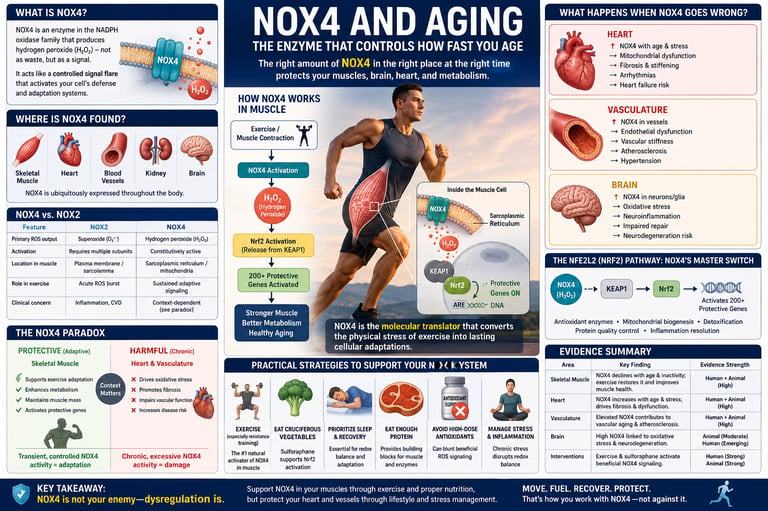
NOX4 is an enzyme in your muscles that controls how well you age. When you exercise, NOX4 releases a controlled burst of hydrogen peroxide that activates over 200 protective genes through the NFE2L2 pathway. These genes improve muscle strength, insulin sensitivity, and mitochondrial health.A 2026 Science Advances study found that NOX4 levels decline with age in human muscle. Mice without muscle NOX4 developed frailty, insulin resistance, and liver disease — even on a normal diet.
The NOX4 Longevity Framework
Resistance training
Aerobic training
Protein optimization
Cruciferous vegetables
Sleep
Avoid excessive antioxidants
Key Takeaways
1. NOX4 is the Muscle’s "Exercise Signal Flare"
When you exercise, NOX4 triggers a localized, controlled burst of hydrogen peroxide. While hydrogen peroxide sounds harmful, in this context, it acts as a critical cellular messenger. This brief spike in oxidative stress signals your body to improve insulin sensitivity, boost metabolism, and build new mitochondria (your cells' powerhouses). Without this vital signal, your body cannot adapt to exercise.
2. Muscle NOX4 Drops Drastically After Age 65
Clinical data shows that muscle NOX4 levels decline sharply in humans after age 65. In animal models, mice completely lacking muscle NOX4 quickly became frail, developed insulin resistance, and suffered from chronic, low-grade inflammation—even when fed a pristine diet. Losing muscle NOX4 effectively deactivates your body's primary defense against age-related muscle wasting (sarcopenia).
3. High-Dose Antioxidants Can Sabotage Your Workout
Taking megadoses of isolated antioxidants—such as Vitamin C, Vitamin E, or N-acetylcysteine (NAC)—immediately before or after a workout can severely blunt your fitness gains. These supplements mop up the beneficial hydrogen peroxide created by NOX4 before your cells can respond to it.
The Takeaway: Obtain your antioxidants from whole foods rather than high-dose supplements around your workout window to avoid muting your body's natural adaptation signals.
4. The NOX4 Paradox: Good for Muscles, Bad for the Heart
You cannot simply take a pill to "boost NOX4" globally across the entire body. While higher NOX4 levels are highly beneficial in skeletal muscle, elevated NOX4 in aging heart tissue and blood vessels causes severe cellular damage. In the cardiovascular system, excess NOX4 leads to cardiac fibrosis (tissue scarring), arterial stiffening, and an increased risk of arrhythmia.
5. NOX4 Triggers the Powerful Nrf2/NFE2L2 Pathway
The health benefits attributed to NOX4 actually stem from a biological process called hormesis—where a small, temporary stressor makes the organism stronger. The hydrogen peroxide generated by NOX4 activates a master regulator protein known as NFE2L2 (commonly called Nrf2). Once flipped on, Nrf2 activates more than 200 genes responsible for cellular repair, detoxification, and endogenous antioxidant production.
6. Sulforaphane Promotes Longevity, But It Isn't Magic
Sulforaphane, a natural compound found abundantly in broccoli sprouts and cruciferous vegetables, is known to stimulate the Nrf2 pathway. In laboratory studies, sulforaphane helped restore cellular health in mice lacking the NOX4 enzyme. While adding cruciferous vegetables to your diet supports overall longevity, current data does not suggest that a supplement can fully replicate or replace the complex cellular benefits of physical movement.
7. Physical Inactivity Ages Cells Faster Than Chronological Aging
The Science Advances research highlights a sobering truth: a sedentary lifestyle may drive the loss of muscle NOX4 far more aggressively than the natural passage of time. Sitting for extended periods cuts off the protective cellular signaling pathway, accelerating frailty, metabolic dysfunction, and systemic inflammation.
8. Structured Exercise Remains the Ultimate Anti-Aging Therapy
There is currently no drug, longevity peptide, or supplement on the market that can replicate the dual action of physical exercise. A strategic combination of resistance training and aerobic exercise safely spikes beneficial NOX4 in skeletal muscle while simultaneously down-regulating harmful NOX4 activity in the heart and arteries.
Summary: The Secret to Healthy Aging is "Good Stress"
To keep your cells resilient as you age, your body requires the temporary, controlled stress that only exercise provides. NOX4 is the catalyst for this process. Attempting to block this stress with synthetic antioxidants, or avoiding it through a sedentary lifestyle, inadvertently accelerates the aging process.
Introduction
What if one enzyme — sitting quietly inside your muscle cells — determined how well you age, how effectively exercise protects you, and whether you develop insulin resistance, frailty, or heart disease decades from now?
That enzyme is NADPH oxidase 4, or NOX4. And according to a landmark study published in Science Advances in June 2026, its decline in aging muscle may be one of the most consequential biological events in the human body.
For years, scientists told us that reactive oxygen species (ROS) — the "free radicals" produced during exercise — were something to be feared and neutralized. Load up on antioxidant supplements, the advice went. Blunt the oxidative stress. But that story, it turns out, was dangerously incomplete.
NOX4 produces ROS on purpose. And those ROS, generated in precisely the right amount at precisely the right time, activate a cascade of over 200 protective genes that keep your muscles strong, your metabolism sensitive, your brain resilient, and your heart healthy. When NOX4 declines — as it does with age and inactivity — this whole protective system collapses.
In this article, you'll learn:
What NOX4 is and why it's so biologically important
How NOX4 levels change with age and what that means clinically
The critical connection between NOX4, exercise, and healthy aging
What happens in the heart, vasculature, and brain when NOX4 goes wrong
The NOX4 paradox: why the same enzyme that protects you in muscle can harm you in the heart
Evidence-based strategies to support your NOX4 system
What the research actually tells us — and where its limits lie
What Is NOX4? A Plain-Language Overview
NOX4 belongs to the NADPH oxidase (NOX) family — a group of seven enzymes whose primary job is to deliberately produce reactive oxygen species. This distinguishes them from the mitochondrial electron transport chain, which generates ROS as an accidental byproduct.
Think of NOX4 as a controlled signal flare. When your muscles contract during exercise, NOX4 fires, releasing hydrogen peroxide (H₂O₂) in a regulated burst. That H₂O₂ is not simply a damaging free radical — it's a signaling molecule that activates your cells' internal defense systems.
Where Is NOX4 Found?
NOX4 is ubiquitously expressed — meaning it's found throughout the body — in contrast to some other NOX family members that are tissue-specific. Key locations include:
Skeletal muscle (sarcoplasmic reticulum, transverse tubules, inner mitochondrial membrane)
Heart muscle (cardiomyocytes, predominantly mitochondria)
Blood vessels (endothelial cells, vascular smooth muscle cells)
Kidney (where it was first discovered)
Brain (neurons and glial cells)
This broad distribution explains why dysregulation of NOX4 has such wide-ranging consequences for aging and chronic disease.
How Does NOX4 Differ From Other NOX Enzymes?
Primary ROS Output:
NOX2: Generates superoxide, a highly reactive free radical.
NOX4: Directly produces hydrogen peroxide, which acts as a more stable, targeted signaling molecule.
Activation Mechanism:
NOX2: Requires the assembly of multiple cellular subunits to switch on.
NOX4: Is constitutively active, meaning it is continuously functioning and regulated primarily by how much of the enzyme is present.
Location Inside the Muscle:
NOX2: Found on the plasma membrane and sarcolemma (the outer sheath of the muscle fiber).
NOX4: Positioned deep inside the cell within the sarcoplasmic reticulum and mitochondria.
Primary Role During Exercise:
NOX2: Responsible for the acute, rapid burst of oxidative stress during intense physical exertion.
NOX4: Drives sustained adaptive signaling, telling the muscle to grow stronger and build more energy over time.
Clinical Concerns:
NOX2: Chronic overactivation is heavily linked to tissue inflammation and cardiovascular disease.
NOX4: Its impact is entirely context-dependent—serving as a protective agent in skeletal muscle but promoting disease (fibrosis) if overactive in the heart.
The NOX4 Paradox: Protective vs. Harmful
Here is where the science becomes critically important — and where oversimplification can mislead.
NOX4 is not simply "good" or "bad." Its effects depend entirely on:
Which tissue it's expressed in
How much is expressed
Whether expression is acute or chronic
The surrounding metabolic context
In skeletal muscle, NOX4 acts as a beneficial sensor and signal generator, activating protective pathways during and after exercise. A decline in skeletal muscle NOX4 — as seen in aging — is harmful.
In the heart and vasculature, however, NOX4 expression increases with age and chronic stress, and this elevation drives mitochondrial oxidative stress, fibrosis, vascular stiffening, and arrhythmia risk.
This apparent contradiction resolves when you understand that:
Controlled, transient NOX4 activity (as in exercising muscle) triggers adaptive responses
Chronic, excessive NOX4 activity (as in aged cardiovascular tissue) overwhelms antioxidant defenses and causes cumulative damage
Clinically, this distinction matters enormously. It means that simply "boosting" or "blocking" NOX4 across the board would likely be counterproductive. Any therapeutic strategy must be tissue-specific and context-aware.
NOX4 in Skeletal Muscle: The Exercise Connection
Why Your Muscles Need ROS
For decades, the biomedical community operated on a simplistic model: exercise generates oxidative stress → antioxidants neutralize it → outcome improves. This led to widespread recommendations to take high-dose vitamin C and E supplements around workouts.
We now know this model was wrong — and potentially counterproductive.
Research from the Tiganis laboratory at Monash University has demonstrated that NOX4 is the primary source of exercise-induced ROS in skeletal muscle — not the mitochondria, as previously assumed. And those ROS are not incidental byproducts to be quenched. They are essential signals for everything exercise is supposed to do for your health.
When you exercise, NOX4 in your muscle cells produces H₂O₂. This H₂O₂ oxidizes specific cysteine residues on a regulatory protein called KEAP-1, releasing a transcription factor called NFE2L2 (also known as Nrf2). NFE2L2 then travels to the cell nucleus, where it switches on over 200 genes responsible for:
Antioxidant enzyme production (superoxide dismutase, catalase, glutathione peroxidase)
Mitochondrial biogenesis (building new mitochondria)
Glucose uptake and glycogen synthesis
Insulin signaling and sensitivity
Protein quality control and repair
In short, NOX4 is the molecular translator that converts the physical stress of exercise into lasting cellular adaptations. Without it, exercise loses most of its health-promoting power.
What Happens When Muscle NOX4 Declines?
Studies using mice engineered to lack NOX4 specifically in skeletal muscle reveal a stark picture. Even at young ages, these animals show:
Reduced exercise capacity and endurance
Impaired antioxidant defense
Reduced mitochondrial biogenesis
Compromised insulin sensitivity
With age, the effects compound dramatically, resulting in overt sarcopenia (severe muscle loss), frailty, systemic inflammation, whole-body insulin resistance, and even advanced liver disease — all on a standard diet.
The critical insight: these outcomes were not caused by excess oxidative stress. They were caused by the absence of the ROS signal that normally triggers the protective response.
The 2026 Breakthrough: What Scientists Just Discovered
Study Overview
In June 2026, Xirouchaki and colleagues published a comprehensive investigation in Science Advances that represents one of the most important contributions to exercise biology and aging science in recent years.
What they found: Skeletal muscle NOX4 levels decline significantly in both aged mice and — critically — in aged humans. RNA sequencing data from the vastus lateralis muscle of men aged 65–71 versus 19–25 showed meaningful reductions in NOX4 expression, accompanied by loss of NFE2L2 adaptive homeostasis and increased markers of oxidative protein damage.
What they did: Using multiple genetic mouse models, the researchers deleted NOX4 specifically from skeletal muscle and tracked the consequences across the lifespan.
Key findings:
Skeletal muscle-specific NOX4 knockout mice developed overt sarcopenia and frailty with aging
These mice showed physical inactivity, increased adiposity, systemic inflammation, whole-body insulin resistance, and advanced liver disease — all on a standard chow diet
The physiological decline could be reversed by either restoring NOX4 via viral gene delivery or by activating NFE2L2 pharmacologically (using sulforaphane, a compound found in cruciferous vegetables)
Clinical Interpretation: What Does This Mean for You?
This study is groundbreaking for several reasons:
First, it establishes a mechanistic link between exercise, NOX4, and the full spectrum of aging-related metabolic decline. It suggests that the well-known benefits of exercise — metabolic health, insulin sensitivity, muscle preservation, reduced inflammation — are at least partially mediated by NOX4.
Second, it provides a plausible molecular explanation for why sedentary aging is so damaging. Low physical activity → low NOX4 → loss of NFE2L2 adaptive homeostasis → accelerated biological aging.
Third, it points to sulforaphane (from broccoli, Brussels sprouts, and other cruciferous vegetables) as a potential NFE2L2 activator that partially compensates for NOX4 decline — an observation with significant translational implications.
Important Limitations to Note
The study does not establish an optimal "target" NOX4 level or define a therapeutic window.
These limitations do not diminish the study's significance, but they counsel against premature clinical translation.
NOX4 and the Heart: A Double-Edged Sword
While declining muscle NOX4 drives frailty, the cardiac story runs in the opposite direction — and it's equally important.
NOX4 Rises in the Aging Heart
Cardiac NOX4 expression increases with age and chronic stress. Research by Ago, Sadoshima, and colleagues (2010) established that NOX4 is localized to mitochondria in cardiomyocytes, where it drives oxidative stress, damages respiratory complex proteins, and triggers a cascade of secondary ROS generation (ROS-induced ROS release).
Unlike the transient, signaling-appropriate ROS bursts in exercising muscle, the chronic mitochondrial NOX4 elevation in the aging heart constitutes uncontrolled oxidative stress — precisely the damaging kind.
NOX4 and Ventricular Arrhythmia
A 2025 study published in Free Radical Biology and Medicine (Ramos Mondragon et al.) demonstrated that mitochondrial NOX4 overexpression in the heart promotes ventricular tachyarrhythmia through:
Shorter action potential duration (due to increased potassium currents)
Ryanodine receptor 2 (RyR2) oxidation, disrupting calcium handling
Extensive ventricular fibrosis
Pro-inflammatory macrophage infiltration (elevated TNF, TGF-β)
Treatment with Setanaxib, a NOX1/NOX4 inhibitor, mitigated fibrosis and reduced arrhythmia susceptibility in these animals — suggesting a potential therapeutic avenue.
Clinical Relevance
For patients and clinicians, this data raises important questions:
Should aging patients with arrhythmia or heart failure be assessed for NOX4-related oxidative stress?
Could NOX4 inhibitors in the cardiovascular compartment be cardioprotective in high-risk patients?
Does the well-documented benefit of exercise on cardiac health involve restraining inappropriate cardiac NOX4 activity while simultaneously enhancing muscle NOX4 activity?
These questions are active areas of research, but definitive clinical guidance awaits larger human studies.
NOX4, Vascular Aging, and Atherosclerosis
NOX4 and Aortic Stiffness
Research from the Madamanchi/Runge laboratory (published in multiple studies spanning 2017–2025) has established that NOX4 expression rises in aging aortas and vascular smooth muscle cells, correlating with aortic stiffness — an independent predictor of cardiovascular mortality.
Transgenic mice with high mitochondrial NOX4 expression in their vasculature developed:
Significant increase in aortic stiffness
Extracellular matrix remodeling and fibrosis
Increased DNA damage in vascular smooth muscle cells
Premature cellular senescence
Elevated pro-inflammatory protein expression
Crucially, treatment with mitochondria-targeted catalase (an enzyme that degrades H₂O₂) significantly blunted aortic stiffening — confirming that mitochondrial ROS from NOX4 was causally responsible, not merely correlated.
NOX4 and Atherosclerosis
A 2017 study in the Journal of Molecular and Cellular Cardiology (Lozhkin et al.) demonstrated that NOX4 promotes vascular inflammation — a key driver of atherosclerotic plaque development. Vascular NOX4 activates pro-inflammatory signaling cascades, promotes endothelial dysfunction, and contributes to plaque instability.
This provides a mechanistic basis for the epidemiological observation that oxidative stress biomarkers predict cardiovascular events — NOX4 may be an upstream driver of that oxidative burden in vascular tissue.
NOX4 in the Brain: Neurodegeneration Risk
A 2024 review in Neural Regeneration Research (Boonpraman & Yi) identified NOX4 as both a biomarker and therapeutic target in neurodegenerative diseases including Alzheimer's disease, Parkinson's disease, and ALS.
In the brain, NOX4-driven oxidative stress contributes to:
Neuroinflammation
Mitochondrial dysfunction in neurons
Protein misfolding and aggregation
Blood-brain barrier disruption
Importantly, brain NOX4 expression increases in neurodegenerative conditions, suggesting that — as in the cardiovascular system — chronic elevation is pathological.
Clinical Takeaway
The neurodegeneration data is still largely preclinical. However, it reinforces the overarching pattern: context-dependent NOX4 regulation is central to tissue health across multiple organ systems. Exercise, which acutely activates beneficial muscle NOX4 signaling while potentially restraining chronic inflammatory NOX4 activity elsewhere, may be protective in part through its effects on this broader NOX4 regulatory network.
The NFE2L2 Pathway: NOX4's Master Regulator
Understanding NOX4's protective role in muscle is impossible without understanding NFE2L2 (Nrf2), the transcription factor it activates.
The KEAP-1/NFE2L2 Axis
Under baseline conditions, NFE2L2 is continuously targeted for degradation by the KEAP-1/Cullin-3 E3 ligase complex. ROS produced by NOX4 during exercise oxidize specific cysteine residues on KEAP-1, disrupting this complex and allowing NFE2L2 to accumulate and translocate to the nucleus.
There, NFE2L2 binds to antioxidant response elements (AREs) in the promoter regions of target genes, activating expression of:
Antioxidant enzymes: SOD1, SOD2, catalase, GPX1, peroxiredoxins
NADPH-generating enzymes: G6PD, malic enzyme, isocitrate dehydrogenase
Glutathione synthesis: GCL catalytic and modifier subunits, glutathione reductase
Mitochondrial biogenesis factors: PGC1α, NRF-1, TFAM
This is adaptive homeostasis — the process by which a transient stress signal produces lasting cellular resilience. It's essentially the molecular basis of the hormesis concept: a small dose of stress makes you stronger.
Why Antioxidant Supplements Can Backfire
This pathway explains a phenomenon that has puzzled researchers for years: high-dose antioxidant supplements often reduce the health benefits of exercise.
By neutralizing the H₂O₂ that NOX4 produces, supplemental antioxidants (vitamin C, vitamin E, N-acetylcysteine at high doses) prevent NFE2L2 activation — effectively intercepting the signal before it can trigger the adaptive response. You're not protecting against damage; you're disabling the alarm system that would have made your cells more resilient.
This is one of the most clinically important and counterintuitive findings in modern exercise science, and it has direct implications for supplement use in athletes and aging individuals.
Evidence Summary: Key Studies at a Glance
Xirouchaki et al. (2026) | Muscle NOX4 & Sarcopenia
Population: Mice and human tissue biopsies.
Key Finding: Muscle NOX4 declines sharply with age. A lack of this enzyme directly drives muscle wasting (sarcopenia), insulin resistance, and physical frailty.
Strength of Evidence: Strong (combines direct animal mechanisms with human correlation data).
Ramos Mondragon et al. (2025) | Heart Rhythm Disruptions
Population: Transgenic mice.
Key Finding: Overexpression of NOX4 specifically within cardiac mitochondria causes ventricular arrhythmia (irregular heartbeats).
Strength of Evidence: Preclinical (animal model).
Boonpraman & Yi (2024) | Neurodegenerative Disease
Population: Comprehensive literature review (human and animal data).
Key Finding: NOX4 serves as a critical biomarker and therapeutic target in brain aging and neurodegeneration.
Strength of Evidence: Moderate (comprehensive review data)
.
Lozhkin et al. (2017) | Vascular Inflammation
Population: Mouse models.
Key Finding: Overactive NOX4 drives inflammation within blood vessels and accelerates the development of atherosclerosis (plaque buildup).
Strength of Evidence: Preclinical (animal model).
Sahoo et al. (2016) | Cardiovascular Disease Review
Population: Literature review.
Key Finding: Identified NOX4 as a master modulator in the development of age-related cardiovascular diseases.
Strength of Evidence: Review (secondary analysis).
Ago et al. (2010) | Cardiac Oxidative Stress
Population: Mouse models and isolated cardiomyocytes (heart cells).
Key Finding: Heart mitochondrial NOX4 levels increase naturally with age, leading to elevated, harmful oxidative stress in the cardiovascular system.
Strength of Evidence: Preclinical (animal/cellular model).
Krause (2007) | The NOX Aging Hypothesis
Population: Theoretical framework.
Key Finding: Revisits the "Free Radical Theory of Aging," proposing that the NADPH oxidase (NOX) family—rather than general metabolic waste—is the primary regulated generator of cellular reactive oxygen species (ROS).
Overall Grade of Evidence
Current Scientific Standing: The vast majority of these findings are preclinical (conducted in animal models) or focus on cellular mechanisms. While human data is beginning to emerge (such as the 2026 Xirouchaki study), it remains limited in scale. Clinical translation and interventions in humans should be approached with caution.
Common Myths and Mistakes About Antioxidants and ROS
Myth 1: "All ROS are damaging and should be neutralized"
Reality: ROS exist on a spectrum. Low-to-moderate, controlled ROS (like H₂O₂ from NOX4 during exercise) act as vital signaling molecules. It is only excessive, uncontrolled, chronic ROS accumulation that causes damage. The location, timing, and concentration of ROS determine whether they are protective or harmful.
Myth 2: "Taking antioxidant supplements will enhance your workout results"
Reality: Multiple randomized controlled trials have shown that high-dose vitamin C and E supplementation blunts training adaptations — including improvements in insulin sensitivity, mitochondrial biogenesis, and antioxidant enzyme upregulation. If you're training consistently, high-dose isolated antioxidant supplements may be counterproductive.
Myth 3: "NOX4 is simply a harmful enzyme that promotes aging"
Reality: The tissue context is everything. Declining NOX4 in muscle accelerates aging; rising NOX4 in the heart accelerates aging. The same molecule, different directions of change, different tissues — both harmful. This nuance is lost in oversimplified summaries.
Myth 4: "Sulforaphane is a proven anti-aging supplement"
Reality: Sulforaphane is a promising NFE2L2 activator with a solid mechanistic rationale. But evidence for its efficacy in naturally aging humans is limited. Its use was specifically studied in mice lacking muscle NOX4 — a very different context from normal aging. Whole-food sources (broccoli, Brussels sprouts, cauliflower) are a reasonable dietary choice, but supplement claims should be viewed skeptically.
Myth 5: "NOX4 testing is available to guide personal health decisions"
Reality: NOX4 is not currently assessed in routine clinical practice. There are no validated blood tests or clinical panels that measure NOX4 expression or activity in a clinically actionable way. Research in this area is active but has not yet translated to clinical biomarker tools.
Practical Strategies: How to Support Your NOX4 System
Given the current evidence, here are the most defensible, science-backed strategies for maintaining healthy NOX4 biology as you age. Consult your healthcare provider before making significant changes, especially if you have existing cardiovascular or metabolic conditions.
1. Exercise — The Most Powerful NOX4 Regulator
Aerobic and resistance exercise remain the primary validated method of maintaining skeletal muscle NOX4 levels and the downstream adaptive responses they trigger. No supplement, drug, or dietary intervention has been shown to fully substitute for exercise in this context.
Practical protocol:
Resistance training: 2–4 sessions per week, progressive overload. Targets type II fibers where NOX4 signaling is particularly important.
Aerobic exercise: 150–300 minutes per week of moderate-intensity activity (brisk walking, cycling, swimming) or 75–150 minutes of vigorous activity.
Consistency over intensity: Regular, sustained exercise is more important than occasional intense bouts for maintaining long-term NOX4 homeostasis.
2. Avoid Counterproductive High-Dose Antioxidants Around Exercise
Based on current evidence, avoid taking high-dose vitamin C (>1g), vitamin E (>400 IU), or N-acetylcysteine in the immediate pre- and post-workout window (within 2 hours). These can blunt the ROS-mediated signaling that drives adaptation.
Whole-food antioxidants from fruits, vegetables, and spices do not appear to have the same effect — possibly because the antioxidant compounds are delivered in lower concentrations alongside other phytonutrients that modulate their activity differently.
3. Emphasize Cruciferous Vegetables
Sulforaphane, found in broccoli (especially broccoli sprouts), Brussels sprouts, cauliflower, kale, and watercress, is the most potent naturally occurring NFE2L2 activator identified to date. Regular consumption supports the downstream pathway that NOX4 feeds into.
Practical tip: Broccoli sprouts contain approximately 50–100 times more sulforaphane than mature broccoli. Lightly steaming broccoli (rather than boiling) preserves the myrosinase enzyme needed to convert glucoraphanin to active sulforaphane.
Dietary Sources of Sulforaphane Precursors
Broccoli Sprouts
Content: Very High
Notes: Hands-down the best dietary source per gram. These 3-to-5-day-old sprouts contain up to 100 times more of the glucoraphanin precursor than mature broccoli.
Mature Broccoli
Content: Moderate
Notes: The most common and widely available option. Cooking it gently (like steaming) helps preserve the myrosinase enzyme needed to convert the precursor into active sulforaphane.
Brussels Sprouts
Content: Moderate
Notes: An excellent alternative that is also highly concentrated in other beneficial organosulfur compounds and glucosinolates.
Cauliflower
Content: Low to Moderate
Notes: A highly versatile, low-carb option that can easily be integrated into meals, though you need to eat a larger volume to get the same precursor payload.
Kale
Content: Low to Moderate
Notes: While lower in sulforaphane precursors compared to sprouts, it makes up for it by providing a massive parallel dose of cellular-protective polyphenols and antioxidants.
4. Maintain Lean Body Mass
Adiposity (especially visceral fat) is associated with chronic low-grade inflammation that promotes pathological NOX4 upregulation in cardiovascular tissue. Maintaining healthy body composition through diet and exercise serves as a systemic buffer against this inflammatory milieu.
5. Prioritize Sleep and Manage Chronic Stress
Chronic psychological stress and sleep deprivation both elevate systemic oxidative stress and inflammation, potentially contributing to the dysfunctional NOX4 patterns seen in aging cardiovascular tissue. Evidence-based stress reduction (adequate sleep, mindfulness, social connection) is not separate from metabolic health — it is part of it.
6. Avoid Excessive Antioxidant Supplementation Without Medical Indication
Unless you have a documented deficiency or a specific medical indication confirmed by your healthcare provider, high-dose antioxidant supplementation is not supported by current evidence for healthy aging. Focus on dietary whole foods first.
FAQs
What is NOX4 and why does it matter for aging?
NOX4 (NADPH oxidase 4) is an enzyme that produces controlled amounts of reactive oxygen species — specifically hydrogen peroxide — in cells throughout the body. In skeletal muscle, NOX4 is a critical mediator of the adaptive responses to exercise, activating over 200 protective genes through the NFE2L2 pathway. As NOX4 levels decline with age and inactivity in muscle, the body loses this protective signaling system, contributing to sarcopenia, insulin resistance, inflammation, and accelerated biological aging.
Does NOX4 cause aging or prevent it?
Both, depending on context. In skeletal muscle, declining NOX4 accelerates aging. In the heart and blood vessels, rising NOX4 activity with age promotes oxidative stress, fibrosis, and cardiovascular disease. The key is not simply "more" or "less" NOX4, but the appropriate level of regulated activity in the right tissue at the right time.
Can I test my NOX4 levels?
Currently, no. NOX4 is not measured in standard clinical blood panels or biomarker tests. Research tools exist to measure NOX4 mRNA and protein in tissue biopsies, but these are not available in clinical settings. This is an active area of research, and validated clinical biomarkers may emerge in the future.
Does exercise increase or decrease NOX4?
Exercise acutely induces NOX4 activity in skeletal muscle, which is beneficial — this is the signal that activates protective adaptations. Conversely, chronic inactivity allows muscle NOX4 levels to decline over time, removing this beneficial signal. Regular exercise is currently the most reliable way to maintain healthy skeletal muscle NOX4 function.
Do antioxidant supplements interfere with NOX4?
Yes, potentially. High-dose antioxidant supplements (particularly vitamin C, vitamin E, and NAC taken around exercise) can neutralize the hydrogen peroxide that NOX4 produces, preventing NFE2L2 activation and blunting training adaptations. Multiple human clinical trials support this concern. Whole-food antioxidants do not appear to have the same negative effect.
Is sulforaphane an effective alternative to exercise for NOX4 benefits?
Not directly. Sulforaphane activates NFE2L2 through a different mechanism than NOX4 does, bypassing NOX4 itself. In mouse studies, sulforaphane restored some of the physiological decline caused by muscle NOX4 loss. However, it was tested in animals engineered to lack muscle NOX4 — not in naturally aging animals or humans. Sulforaphane cannot replicate the full spectrum of exercise benefits, and should be viewed as a dietary complement to exercise, not a substitute.
What role does NOX4 play in heart disease?
In the aging heart, NOX4 expression increases at the mitochondria, driving chronic oxidative stress that promotes cardiac fibrosis, arrhythmia risk, impaired calcium handling, and myocardial remodeling. This is distinct from its beneficial role in exercising muscle. Research suggests that NOX4/NOX1 inhibitors (such as Setanaxib) may have cardioprotective potential, though this remains investigational.
Can NOX4 affect brain aging and dementia risk?
Emerging research suggests yes. NOX4 expression increases in neurodegenerative conditions, including Alzheimer's disease, Parkinson's disease, and ALS, contributing to neuroinflammation and neuronal oxidative damage. However, this field is still largely preclinical and no NOX4-based neuroprotective therapies are currently in clinical use.
Does aging affect NOX4 differently in men vs. women?
The 2026 Xirouchaki study specifically examined male participants and male mice. Sex differences in NOX4 regulation are incompletely characterized. Estrogen has known antioxidant properties and may modulate NOX/ROS signaling differently in premenopausal women. Research on sex-specific NOX4 biology in aging is ongoing.
What is the best diet to support healthy NOX4 function?
No specific "NOX4 diet" exists. However, a dietary pattern that supports the broader NOX4/NFE2L2 system would emphasize: regular cruciferous vegetable consumption (for sulforaphane), adequate protein intake (to support muscle maintenance), whole-food polyphenol sources (berries, dark chocolate, green tea), and avoidance of high-dose isolated antioxidant supplements taken around exercise. A Mediterranean-style dietary pattern broadly aligns with these principles.
Are there pharmaceutical NOX4 modulators in development?
Yes. Several NOX1/NOX4 inhibitors, including Setanaxib (GKT137831), have been investigated in clinical and preclinical studies, primarily for fibrotic diseases, liver disease, and cardiovascular conditions. Results have been mixed in clinical trials to date. Tissue-specific activation or inhibition of NOX4 — given its context-dependent dual role — represents a significant pharmacological challenge.
How long does it take for exercise to restore NOX4 function?
This question remains unanswered by current clinical data. Animal studies suggest that NOX4 expression responds to exercise training over weeks, but specific timelines for humans across different age groups are not well characterized. What is clear is that regular, sustained physical activity — not single bouts — is necessary to maintain adequate muscle NOX4 levels over the long term.
Conclusion and Action Steps
NOX4 sits at the intersection of exercise biology, aging science, and chronic disease prevention. It is neither simply a harmful free radical generator nor a straightforward longevity enzyme — it is a context-dependent regulator whose dysfunction in different tissues and different directions contributes to a wide spectrum of age-related disease.
What makes the 2026 research particularly significant is not just what it found, but what it implies about the mechanism by which exercise protects against aging. If NOX4 is the molecular translator that converts physical activity into cellular resilience, then inactivity is not merely a lifestyle choice — it is the systematic dismantling of a fundamental biological defense system.
Your Practical Action Steps
Exercise consistently. Aim for both aerobic and resistance training weekly. This is the most evidence-based strategy for maintaining healthy muscle NOX4 function. There is no substitute.
Reconsider high-dose antioxidant supplements around exercise. If you're taking large doses of vitamin C, E, or NAC specifically to offset post-workout soreness, you may be inadvertently blunting the adaptations you're training for. Discuss with your healthcare provider.
Eat cruciferous vegetables regularly. Broccoli, Brussels sprouts, cauliflower, and kale are the best dietary sources of sulforaphane, which activates the protective NFE2L2 pathway. Aim for 3–5 servings per week, lightly cooked.
Maintain lean body mass. Muscle is not just for aesthetics or strength. It is a metabolically active organ whose health is central to whole-body aging. Protein intake adequate to support muscle preservation (0.8–1.2g/kg body weight, potentially higher for older adults) is worth discussing with a dietitian.
Don't panic about free radicals. The framing of ROS as uniformly harmful is scientifically outdated. Your body needs some oxidative stress — controlled, appropriate, transient — to stay resilient. Focus on supporting the systems that regulate ROS intelligently rather than trying to eliminate all oxidative activity.
Consult your healthcare provider if you have cardiovascular disease, arrhythmia, or metabolic disease. The cardiac and vascular dimensions of NOX4 biology have potential therapeutic implications that are best evaluated in the context of your individual clinical picture.
Authors Note
As a physician, one of the most common questions I hear from patients is: “Is there a supplement that can slow aging as effectively as exercise?”
The emerging science of NOX4 provides an important answer. Many people think aging occurs simply because harmful molecules called free radicals accumulate over time. However, modern research shows that some oxidative signals are not harmful at all—they are essential biological messages that tell the body to adapt, repair, and become more resilient.
I often think of a typical patient in their late 60s who has gradually become less active after retirement. Over several years, they notice declining muscle strength, increasing abdominal weight, worsening blood sugar control, and reduced stamina. Many assume these changes are an inevitable part of aging. Yet the NOX4 research suggests that inactivity may be disrupting critical molecular pathways that normally help muscles maintain metabolic health and resilience.
What is particularly fascinating is that the same exercise session that feels routine on the surface triggers highly sophisticated cellular signaling beneath it. NOX4-generated hydrogen peroxide acts as a messenger that activates protective pathways, enhances mitochondrial function, improves insulin sensitivity, and helps preserve muscle quality as we age.
For patients, the practical message is reassuring: the most powerful intervention remains remarkably simple. Regular physical activity—especially resistance training combined with aerobic exercise—continues to outperform any currently available anti-aging supplement or drug in its ability to maintain healthy biological function.
The goal is not to eliminate all oxidative stress. The goal is to maintain the body's ability to respond appropriately to stress. In many ways, healthy aging is less about avoiding challenges and more about preserving the biological machinery that allows us to adapt to them.
Disclaimer: This article is for educational purposes only. It does not constitute medical advice. Always consult a qualified healthcare professional before making changes to your exercise regimen, diet, or supplement use, especially if you have existing health conditions.
Related Articles
Beyond Fat Cells: The Hidden Lymphatic Link to Obesity, Insulin Resistance, and Inflammation
How Excess Weight May Be Aging Your Brain Faster Than You Think
The mTOR Switch: Why Your Cells Stopped Listening to Insulin | DR T S DIDWAL
Why Protein After 55 Isn’t Optional — The Science Behind Why the RDA Is Too Low | DR T S DIDWAL
Why Aerobic Exercise Is the Most Powerful ‘Drug’ for Heart, Fat Loss & Longevity | DR T S DIDWAL
Exercise Unlocks a Hidden Glucose Pathway in Muscle — Independent of Insulin | DR T S DIDWAL
References
Ago, T., Matsushima, S., Kuroda, J., Zablocki, D., Kitazono, T., & Sadoshima, J. (2010). The NADPH oxidase Nox4 and aging in the heart. Aging, 2(12), 1012–1016. https://doi.org/10.18632/aging.100261
Boonpraman, N., & Yi, S. S. (2024). NADPH oxidase 4 (NOX4) as a biomarker and therapeutic target in neurodegenerative diseases. Neural Regeneration Research, 19(9), 1961–1966. https://doi.org/10.4103/1673-5374.390973
Dinkova-Kostova, A. T., & Abramov, A. Y. (2015). The emerging role of Nrf2 in mitochondrial function. Free Radical Biology and Medicine, 88, 179–188. https://doi.org/10.1016/j.freeradbiomed.2015.04.036
Gomez-Cabrera, M. C., Domenech, E., Romagnoli, M., Arduini, A., Borras, C., Pallardo, F. V., Sastre, J., & Viña, J. (2008). Oral administration of vitamin C decreases muscle mitochondrial biogenesis and hampers training-induced adaptations in endurance performance. American Journal of Clinical Nutrition, 87(1), 142–149. https://doi.org/10.1093/ajcn/87.1.142
Hecker, L., Kato, K., & Griendling, K. K. (2023). Nox4: From discovery to pathophysiology. In E. Pick (Ed.), NADPH oxidases revisited: From function to structure (pp. 293–322). Springer, Cham. https://doi.org/10.1007/978-3-031-23752-2_12
Itoh, K., Wakabayashi, N., Katoh, Y., Ishii, T., Igarashi, K., Engel, J. D., & Yamamoto, M. (1999). Keap1 represses nuclear activation of antioxidant responsive elements by Nrf2 through binding to the amino-terminal Neh2 domain. Genes & Development, 13(1), 76–86. https://doi.org/10.1101/gad.13.1.76
Krause, K.-H. (2007). Aging: A revisited theory based on free radicals generated by NOX family NADPH oxidases. Experimental Gerontology, 42(4), 256–262. https://doi.org/10.1016/j.exger.2006.10.011
Lambeth, J. D. (2004). NOX enzymes and the biology of reactive oxygen. Nature Reviews Immunology, 4(3), 181–189. https://doi.org/10.1038/nri1312
Lozhkin, A., Vendrov, A. E., Pan, H., Wickline, S. A., Madamanchi, N. R., & Runge, M. S. (2017). NADPH oxidase 4 regulates vascular inflammation in aging and atherosclerosis. Journal of Molecular and Cellular Cardiology, 102, 10–21. https://doi.org/10.1016/j.yjmcc.2016.12.004
Merry, T. L., & Ristow, M. (2016). Do antioxidant supplements interfere with skeletal muscle adaptation to exercise training? Journal of Physiology, 594(18), 5135–5147. https://doi.org/10.1113/JP270654
Ramos Mondragon, R., Wang, S., Stevenson, M. D., Lozhkin, A., Vendrov, A. E., Isom, L. L., Runge, M. S., & Madamanchi, N. R. (2025). NOX4-driven mitochondrial oxidative stress in aging promotes myocardial remodeling and increases susceptibility to ventricular tachyarrhythmia. Free Radical Biology and Medicine, 235, 294–305. https://doi.org/10.1016/j.freeradbiomed.2025.04.046
Ristow, M., Zarse, K., Oberbach, A., Klöting, N., Birringer, M., Kiehntopf, M., & Blüher, M. (2009). Antioxidants prevent health-promoting effects of physical exercise in humans. Proceedings of the National Academy of Sciences, 106(21), 8665–8670. https://doi.org/10.1073/pnas.0903485106
Sahoo, S., Meijles, D. N., & Pagano, P. J. (2016). NADPH oxidases: Key modulators in aging and age-related cardiovascular diseases? Clinical Science (London), 130(5), 317–335. https://doi.org/10.1042/CS20150087
Vendrov, A. E., Stevenson, M. D., Lozhkin, A., Hayami, T., Holland, N. A., Madamanchi, N. R., & Runge, M. S. (2021). Increased mitochondrial NADPH oxidase 4 (NOX4) expression in aging is a causative factor in aortic stiffening. Redox Biology, 48, Article 102186. https://doi.org/10.1101/2021.10.12.464092
Xirouchaki, C. E., García-Domínguez, E., Coughlan, E., McGrath, M. J., Giri, S., Liang, S., Wiede, F., Bigot, A., Sadoshima, J., Gomez-Cabrera, M. C., Philp, A., Moberg, M., Apró, W., Roman, W., Mitchell, C. A., & Tiganis, T. (2026). A decline in skeletal muscle NOX4 abrogates exercise-induced adaptive homeostasis and exacerbates biological aging. Science Advances, 12(24), Article eadz1953. https://doi.org/10.1126/sciadv.adz1953
Xirouchaki, C. E., Jia, Y., McGrath, M. J., Greatorex, S., Tran, M., Favaloro, J., ... & Tiganis, T. (2021). Skeletal muscle NOX4 is required for adaptive responses that prevent insulin resistance. Science Advances, 7(51), Article eabl4988. https://doi.org/10.1126/sciadv.abl4988