Why Aerobic Exercise Is the Most Powerful ‘Drug’ for Heart, Fat Loss & Longevity
Discover how aerobic exercise boosts VO₂ max, enhances fat burning, and improves longevity. Learn the science behind better heart and metabolic health
EXERCISE
Dr. T.S. Didwal, M.D.(Internal Medicine)
6/11/202623 min read
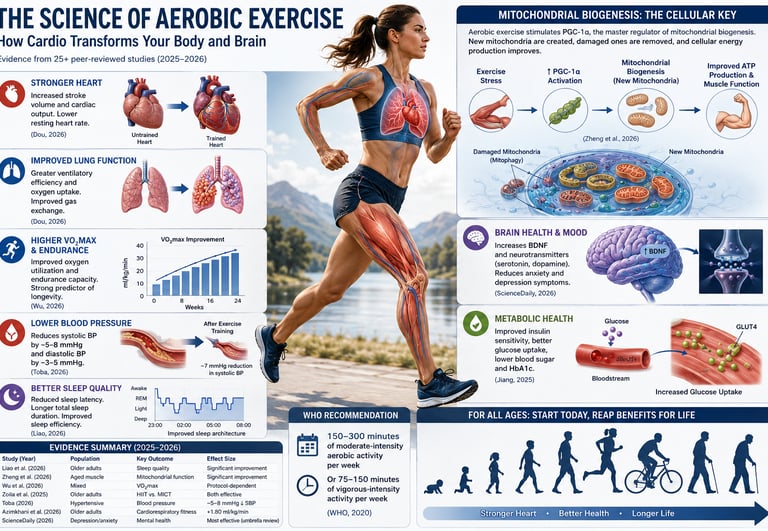
Aerobic exercise improves heart and lung function, lowers blood pressure, boosts sleep quality, and increases VO₂max — a key marker of longevity. It also rebuilds mitochondria in muscles, supports healthy aging, reduces cardiovascular disease risk by ∼35%, and improves mood and brain health. WHO recommends at least 150 minutes of moderate aerobic activity per week for adults
Key Takeaways: Aerobic Exercise & Your Health
1. Your heart gets stronger and more efficient
Regular cardio increases how much blood your heart pumps per beat and lowers your resting heart rate. Think of it as strength training for your most important muscle. Studies show this can cut cardiovascular disease risk by ~35%.
2. Your lungs and breathing improve
Aerobic training helps you use oxygen more effectively. You’ll breathe easier during daily activities, and your “breathless threshold” moves higher. It’s why stairs feel easier after a few weeks of walking or cycling.
3. It rebuilds muscle from the inside out
Cardio doesn’t just burn calories. New 2026 research shows it triggers mitochondrial biogenesis — your cells make fresh, healthier energy factories. That means less fatigue and better muscle endurance, especially important as we age.
4. Sleep quality gets a measurable boost
Meta-analyses in older adults found aerobic exercise helps you fall asleep faster, sleep longer, and feel more rested. It works by lowering stress hormones, cooling your body after exercise, and building sleep-promoting adenosine.
5. Blood pressure drops — naturally
For people with hypertension, consistent cardio lowers systolic blood pressure by ~5–8 mmHg on average. It also makes blood vessels more flexible by improving endothelial function and nitric oxide production.
6. VO₂max goes up, and that’s a longevity signal
VO₂max is your body’s max oxygen use during exercise. Each 3.5 ml/kg/min increase is linked to an 11–17% lower risk of early death. Both moderate continuous training and HIIT improve it, with HIIT giving faster gains if you’re ready for it.
7. It’s one of the best tools for healthy aging
In adults 65+, cardio supports brain health via BDNF, preserves bone density in weight-bearing activities, reduces fall risk, and helps maintain independence. Both HIIT and moderate walking work — the best one is the one you’ll stick with.
8. You don’t need marathon sessions to benefit
WHO guidelines suggest 150+ min/week of moderate activity, but even 10-minute bouts count. Accumulated movement through the day improves blood pressure, blood sugar, and mood. Consistency beats intensity when you’re starting.
You already know you should exercise. But do you know why aerobic exercise is one of the most powerful tools medicine has ever discovered for extending a healthy, high-quality life?
In the past 18 months alone, landmark research has confirmed that regular cardio exercise improves sleep quality, reverses age-related muscle decline, boosts VO₂max, lowers blood pressure, sharpens cardiopulmonary function, and even restructures mitochondria in aging cells. The evidence isn't just encouraging — it's overwhelming.
This guide distils cutting-edge studies into an actionable, easy-to-understand resource. Whether you're a sedentary beginner, an older adult trying to stay independent, or a seasoned runner looking to understand the science behind your training, you'll leave with clear answers and a concrete plan.
What Is Aerobic Exercise?
Aerobic exercise — also called cardio or cardiovascular exercise — is any physical activity that uses your large muscle groups in a rhythmic, sustained manner and raises your heart rate to the point where you're working your oxygen-delivery system. The word "aerobic" literally means "with oxygen," reflecting the fact that your body is generating energy primarily by burning fuel (carbohydrates and fats) in the presence of oxygen.
Common examples include walking, jogging, running, cycling, swimming, rowing, dancing, and group fitness classes. The key defining characteristics are:
Sustained duration — typically 10 minutes or longer
Moderate-to-vigorous intensity — raising heart rate above roughly 50–85% of maximum
Repetitive, rhythmic movement — engaging large muscle groups continuously
Oxygen-dependent energy production — distinguishing it from short-burst, anaerobic work
Aerobic vs. Anaerobic: A Quick Distinction
Anaerobic exercise (sprinting, heavy weightlifting) uses energy stored in your muscles without needing oxygen, meaning it can only be sustained for seconds to a couple of minutes. Aerobic exercise works the opposite system: your cardiovascular system ferries oxygen to your muscles so you can keep going for extended periods. Both have value, but aerobic exercise delivers a uniquely broad spectrum of whole-body health benefits.
Heart and Lung Health Benefits
Your heart is a muscle. Like any muscle, it gets stronger and more efficient when trained — and aerobic exercise is its primary trainer. The cardiopulmonary benefits of regular aerobic activity are among the most studied and best-established findings in all of medicine.
How Aerobic Exercise Strengthens Your Heart
A landmark 2026 bibliometric analysis published in Medicine examined the cumulative impact of aerobic exercise on cardiopulmonary function across hundreds of studies. The evidence confirms several key adaptations:
Increased stroke volume — your heart pumps more blood per beat, so it doesn't have to work as hard at rest
Lower resting heart rate — elite endurance athletes often have resting heart rates below 40 bpm; even moderate training typically reduces resting HR by 5–10 bpm
Expanded cardiac output — your heart can deliver substantially more oxygen-rich blood to muscles when you need it
Improved left ventricular function — aerobic training causes beneficial structural adaptations in the heart's main pumping chamber
🔬 According to Research
A 2026 study by Dou et al. published in Medicine found through bibliometric analysis that aerobic exercise research on cardiopulmonary function has surged dramatically since 2010, with consistent findings of improved cardiac output, pulmonary ventilation efficiency, and oxygen uptake kinetics across diverse populations.
Lung and Respiratory Benefits
Your lungs adapt too. With regular cardio training, you'll notice:
Greater breathing efficiency — your respiratory muscles become stronger and more coordinated
Improved ventilatory threshold — you can sustain higher intensities before becoming breathless
Better gas exchange — oxygen moves more efficiently from your airways to your bloodstream
Reduced perceived exertion — everyday activities feel dramatically easier
These combined heart-and-lung adaptations explain why aerobic fitness is one of the single strongest predictors of all-cause mortality — outperforming BMI, blood pressure, cholesterol, and even smoking status in some large prospective studies.
Muscle Function and Strength
Aerobic exercise is often overlooked as a muscle-builder — people assume you need to lift weights for that. But a growing body of research shows that cardio training produces meaningful improvements in muscle function, endurance capacity, and even structural muscle health, particularly in older adults.
Mitochondrial Remodeling: The Hidden Key
A 2026 study published in the Journal of Physiology and Biochemistry by Zheng, Zhou, Cao, and colleagues investigated how aerobic exercise affects aging skeletal muscle at the cellular level. Their findings revealed something remarkable: aerobic training doesn't just build muscle on the outside — it fundamentally restructures the energy factories inside muscle cells.
Specifically, the study found that aerobic exercise:
Ameliorates oxidative stress — reducing damaging free radicals that accumulate in aging muscle cells
Modulates mitochondrial dynamics — stimulating the creation of new, healthy mitochondria (a process called mitochondrial biogenesis) while promoting the clearance of damaged ones
Improves physical endurance and muscle function — translating cellular changes into real-world performance gains
✅ Key Finding
Mitochondrial biogenesis — the creation of new mitochondrial networks stimulated by aerobic exercise — is a central mechanism behind improved energy metabolism, reduced fatigue, and better muscle endurance in both young and older adults.
Endurance vs. Maximum Strength
While aerobic exercise won't maximize your one-rep-max squat, it does produce meaningful gains in:
Muscular endurance — how long your muscles can sustain repeated contractions without fatigue
Functional muscle performance — climbing stairs, carrying groceries, rising from a chair
Leg strength and balance — particularly relevant for fall prevention in older adults
Muscle fiber oxidative capacity — slow-twitch (Type I) fibers become denser with mitochondria
For optimal muscle development, combining aerobic exercise with resistance training (a "concurrent training" approach) tends to outperform either modality alone — a finding consistently supported by 2024–2025 meta-analyses.
Sleep Quality Improvements
If you've ever had a hard workout and then slept unusually well that night, you've experienced this connection firsthand. But the relationship between aerobic exercise and sleep isn't just anecdotal — it's one of the most robust findings in exercise science.
What the Latest Research Says
A landmark 2026 systematic review and meta-analysis by Liao, Yan, Xia, and Den, published in Frontiers in Psychology, specifically examined the effects of aerobic exercise on sleep quality in older adults with sleep problems. By pooling data across multiple randomized controlled trials, the analysis found consistent improvements across several sleep dimensions:
Sleep onset latency — aerobic exercise helped people fall asleep faster
Total sleep duration — participants slept longer on nights following aerobic activity
Sleep efficiency — more time in bed was spent actually asleep
Subjective sleep quality — participants reported feeling more rested and satisfied with their sleep
Reduced daytime dysfunction — less daytime fatigue, drowsiness, and cognitive fog
🔬 Study Spotlight
The 2026 Frontiers in Psychology meta-analysis (Liao et al.) focused specifically on older adults — a population that struggles disproportionately with sleep disorders — and found that aerobic exercise programs produced statistically significant improvements in global sleep quality scores, supporting exercise as a non-pharmacological first-line intervention for sleep problems.
Why Does Exercise Improve Sleep?
Several mechanisms are at play:
Core body temperature drop — exercise raises body temp; the subsequent cooling signals your brain it's time to sleep
Adenosine buildup — physical activity accelerates the accumulation of this sleep-promoting molecule
Reduced anxiety and cortisol — aerobic exercise is a potent stress reducer, lowering the hyperarousal that keeps many people awake
Circadian rhythm entrainment — morning exercise in particular helps synchronize your internal clock
Endorphin and serotonin release — mood-regulating neurochemicals that support healthy sleep architecture
Timing Matters: When Should You Exercise for Sleep?
Most evidence supports exercising in the morning or early afternoon for optimal sleep benefits. High-intensity exercise within 1–2 hours of bedtime can temporarily elevate heart rate and alertness in some individuals, potentially delaying sleep onset. However, individual responses vary significantly — many people sleep fine after evening workouts. Experiment to find your personal sweet spot.
Blood Pressure and Vascular Health
Hypertension — high blood pressure — silently damages your heart, kidneys, and blood vessels for years before symptoms appear. It's the leading modifiable risk factor for stroke and heart disease worldwide. Aerobic exercise is one of the most effective non-drug interventions for managing it.
The Numbers From the Latest Research
A 2026 review by Toba, published in Hypertension Research, analyzed the impact of exercise and physical activity on blood pressure reduction. The findings, consistent with prior meta-analyses, showed:
Regular aerobic exercise reduces systolic blood pressure by approximately 5–8 mmHg in hypertensive individuals
Diastolic blood pressure improvements of roughly 3–5 mmHg
Even individuals with normal blood pressure see modest reductions, supporting primary prevention
Effects are dose-dependent — more volume and consistency produce greater reductions
⚠️ Important Safety Note
If you have been diagnosed with hypertension or cardiovascular disease, please consult your physician before starting a new aerobic exercise program. Your doctor can help you identify safe intensity ranges and exercise types for your specific situation. Do not stop blood pressure medication without medical guidance.
Vascular Adaptations Beyond Blood Pressure
The benefits extend beyond just the pressure reading. Aerobic training improves your vascular system in several ways:
Endothelial function — the lining of your blood vessels becomes more responsive and better at dilating
Arterial compliance — arteries become more elastic and less stiff, reducing the work your heart must do
Nitric oxide production — increased release of this vasodilating molecule helps keep vessels open and flexible
Reduced inflammation — chronic low-grade inflammation, a key driver of arterial disease, is suppressed by regular aerobic activity
Improved lipid profile — typically raising HDL ("good") cholesterol while lowering triglycerides
VO₂max and Endurance Capacity
VO₂max — the maximum amount of oxygen your body can use during intense exercise — is widely considered the gold standard measure of cardiovascular fitness. It's one of the most powerful predictors of longevity ever identified. Higher VO₂max is associated with lower risk of cancer, heart disease, dementia, and all-cause death.
How Aerobic Training Raises VO₂max
A 2026 scoping review in the Journal of Functional Morphology and Kinesiology by Wu and colleagues systematically analyzed training protocols and study populations to understand how aerobic exercise training drives VO₂max improvements. Their review of dozens of studies identified key insights:
Intensity is the primary driver — higher-intensity aerobic work (especially intervals) produces the greatest VO₂max gains
Training duration matters — most programs ran 8–24 weeks; improvements continue to accumulate beyond that
Population variation is real — beginners and older adults tend to see proportionally larger early gains; trained athletes require greater stimulus
Both continuous and interval training work — moderate continuous training reliably raises VO₂max; HIIT tends to produce larger gains in less time
✅ VO₂max and Longevity
Research published in JAMA Network Open found that each 3.5 ml/kg/min increase in VO₂max was associated with an 11–17% reduction in all-cause mortality risk. This dose-response relationship persists throughout the lifespan. Improving your aerobic capacity may literally extend your life.
Practical VO₂max Benchmarks
Where do you stand? Use these approximate VO₂max categories for adults (ml/kg/min):
Men (Ages 40–49)
Superior: Greater than 48 ml/kg/min
Excellent: 43 to 48 ml/kg/min
Good: 37 to 43 ml/kg/min
Fair: 33 to 37 ml/kg/min
Poor: Less than 33 ml/kg/min
Women (Ages 40–49)
Superior: Greater than 39 $ml/kg/min
Excellent: 34 to 39 ml/kg/min
Good: 29 to 34 ml/kg/min
Fair: 25 to 29 ml/kg/min
Poor: Less than 25 ml/kg/min
Aerobic Exercise for Healthy Aging
If there's one population where aerobic exercise has the most profound, life-changing impact, it's older adults. The age-related declines in muscle mass (sarcopenia), cardiovascular function, bone density, balance, and cognitive performance that characterize "normal aging" are, to a significant degree, the consequences of inactivity — not time itself.
HIIT vs. Continuous Training in Older Adults
A 2025 comparative study by Zoila, Filannino, Panaro and colleagues in Frontiers in Aging, titled "Enhancing Active Aging Through Exercise," directly compared high-intensity interval training (HIIT) and moderate-intensity continuous aerobic training (MICT) in older adults. Their findings were revealing:
Both HIIT and MICT produced significant improvements in cardiovascular fitness, physical function, and quality of life
HIIT showed somewhat greater improvements in VO₂max and anaerobic threshold
MICT showed superior adherence and tolerance in deconditioned older adults
Both modalities reduced inflammatory markers, improved metabolic health, and enhanced psychological well-being
The conclusion: the best exercise is the one you'll do consistently — both approaches work if sustained
Key Aging-Related Benefits of Regular Aerobic Exercise
Brain Health
The Science: Stimulates BDNF (brain-derived neurotrophic factor).
The Payoff: Enhances memory, accelerates learning, and serves as a powerful defense against dementia.
Bone Density
The Science: Utilizes weight-bearing impact (e.g., walking, jogging).
The Payoff: Stimulates bone remodeling, maintains mineral density, and significantly lowers osteoporosis risk.
Body Composition
The Science: Maximizes caloric expenditure while pairing with adequate protein.
The Payoff: Efficiently reduces fat mass while preserving vital, calorie-burning lean muscle.
Mental Health
The Science: Supported by a comprehensive 2026 review of 217 clinical trials.
The Payoff: Proven to be one of the single most effective interventions for relieving depression and anxiety.
Metabolic Health
The Science: Enhances cellular sensitivity to circulating insulin.
The Payoff: Lowers blood glucose and improves HbA1c levels, making it essential for preventing and managing Type 2 diabetes.
Functional Independence
The Science: Builds baseline cardiovascular endurance, stamina, and lower-body stability.
The Payoff: Preserves the physical strength and balance required to crush daily activities well into your old age
.
The Science: How Aerobic Exercise Works in Your Body
Understanding the mechanisms behind aerobic exercise benefits helps you appreciate why consistency matters and how to design a program that maximizes results. Let's go beyond the surface.
Cardiovascular Adaptations
Each bout of aerobic exercise is a temporary stress to your cardiovascular system. Over time, your body adapts by:
Increasing plasma volume — more blood volume improves oxygen delivery capacity
Growing new capillaries (angiogenesis) — more capillaries around muscle fibers means faster oxygen and nutrient delivery
Strengthening the heart muscle — the left ventricle grows larger and pumps more blood per beat (increased stroke volume)
Improving baroreceptor sensitivity — your body becomes better at regulating blood pressure dynamically
Cellular and Mitochondrial Adaptations
The 2026 Journal of Physiology and Biochemistry study (Zheng et al.) highlighted the importance of mitochondrial dynamics. Here's what happens at the cellular level:
PGC-1α activation — aerobic exercise activates this "master regulator" of mitochondrial biogenesis
Mitophagy (selective autophagy) — damaged mitochondria are cleared out and replaced with healthier ones
Antioxidant enzyme upregulation — your cells produce more superoxide dismutase, catalase, and glutathione peroxidase, neutralizing free radicals
Improved insulin signaling — GLUT4 transporters move to the cell surface, allowing glucose uptake independent of insulin
Hormonal and Neurochemical Effects
Endorphins — natural opioid peptides that reduce pain perception and produce euphoria ("runner's high")
Cortisol regulation — acute cortisol release during exercise, followed by blunted cortisol responses to daily stressors over time
Brain-derived neurotrophic factor (BDNF) — promotes neurogenesis in the hippocampus, the brain's memory center
Irisin — a hormone released by muscles during aerobic exercise that improves insulin sensitivity and may influence bone density and brain health
Adiponectin — increases with aerobic training, reducing inflammation and improving metabolic health
HIIT vs. Continuous Aerobic Training: Which Is Better?
To choose the right approach for your routine, here is how High-Intensity Interval Training (HIIT) stacks up against Moderate Intensity Continuous Training (MICT) across key categories:
Session Time:
HIIT: Shorter workouts, lasting only 20–30 minutes.
MICT: Longer sessions, typically 30 to 60+ minutes.
VO₂max Improvement:
HIIT: Very high.
MICT: Moderate to high.
Fat Burn & Metabolism:
HIIT: Moderate fat oxidation during the session, but high EPOC (the "afterburn effect" that burns calories post-workout).
MICT: Higher fat oxidation during the session, but low-to-moderate post-workout afterburn.
Health & Lifestyle Benefits:
Cardiovascular Health: Excellent results from both methods.
Blood Pressure Reduction: Both provide a strong, positive reduction.
Sleep Quality: HIIT provides moderate benefits, while MICT shows strong, evidence-backed improvements.
Safety & Sustainability:
Joint Stress: Higher with HIIT; lower and safer with MICT.
Beginner Adherence: Harder to stick with HIIT initially; much easier to build a habit with MICT.
Suitability for Older Adults: MICT is excellent out of the box, whereas HIIT requires specific modifications to be safe.
The Bottom Line
For the majority of people—particularly beginners and older adults—starting with moderate continuous aerobic training (MICT) is the safest and most sustainable choice.
Once you build a solid fitness foundation, you can progressively introduce HIIT to get highly time-efficient training benefits. Current research consistently shows that a mixed approach—anchored primarily by MICT and supplemented with 1–2 HIIT sessions per week—yields the best long-term health and fitness outcomes.
Your Aerobic Exercise Protocol: Evidence-Based Templates
Based on WHO guidelines, ACSM recommendations, and the 2025–2026 studies covered in this article, here's how to structure your aerobic exercise program for maximum benefit.
Part 1: The Foundation Protocol (Beginner–Intermediate)
A structured plan designed to safely build your cardiovascular base over an 8-to-12-week period.
Frequency: 3–5 days per week.
Intensity: Moderate. You should be able to speak in full sentences but feel slightly breathless (roughly 50–70% of your maximum heart rate).
Duration: Start with 20–30 minutes per session, gradually building up to 45–60 minutes.
Type: Any activity you enjoy that keeps your heart rate elevated—such as brisk walking, cycling, swimming, or dancing.
Weekly Volume: Aim for a minimum of 150 minutes of moderate activity per week (per WHO guidelines), pushing toward 300 minutes for enhanced health benefits.
The 10% Progression Rule: To protect your joints and muscles, never increase your total weekly workout duration by more than 10% from the previous week.
Part 2: Sample Weekly Schedule (Mixed MICT + HIIT)
Once you have built a solid baseline fitness level, a hybrid approach combining Moderate Intensity Continuous Training (MICT) and High-Intensity Interval Training (HIIT) delivers optimal results.
Monday (MICT): 35-minute brisk walk or easy jog (Moderate intensity).
Tuesday (Active Recovery): Rest day, gentle yoga, or light stretching.
Wednesday (MICT): 25-minute cycling or swimming session (Moderate intensity).
Thursday (HIIT): 20-minute interval session: 8 rounds of 1 minute hard effort followed by 90 seconds of easy recovery. (Only attempt once your fitness base is established).
Friday (Recovery): Rest day or a light, casual walk.
Saturday (Aerobic Base): 45-minute steady-state cardio session (Longer duration, lower intensity).
Sunday (Total Rest): Complete rest. Essential for muscle adaptation and cardiovascular recovery.
Part 3: Senior-Optimized Protocol (Ages 65+)
Tailored specifically to maintain functional independence, protect joint health, and improve longevity.
Frequency: 3–5 days per week, ensuring rest days are scheduled between harder sessions if needed.
Intensity: Light to moderate (40–65% of max heart rate). Rely on the "talk test"—you should be able to comfortably carry on a conversation.
Duration: Begin with short, manageable 10–15-minute bouts, gradually accumulating 30+ minutes across the day.
Best Modalities: Low-impact options like walking, water aerobics, stationary cycling, tai chi, or gentle dancing.
Crucial Add-On (Balance Work): Integrate at least 2 days of dedicated balance exercises (such as single-leg stands or heel-to-toe walking) to complement your aerobic training and prevent falls.
Safety Essentials: Always dedicate 5–10 minutes to a warm-up and cool-down, prioritize proper supportive footwear, and sip water throughout your workout.
⚠️ Before You Begin
Safety First: If you are over the age of 40, have been sedentary for more than a year, or manage any cardiovascular, metabolic, or orthopedic conditions, please consult your physician before starting this program. A supervised exercise test may be recommended to establish your personalized, safe intensity zones.
Evidence Summary Table
A summary of the 2025–2026 clinical literature on aerobic exercise, its outcomes, and population-specific impacts is detailed below:
Liao et al. (2026) | Frontiers in Psychology
Population: Older adults presenting with sleep disorders.
Key Finding: Aerobic training led to a significant, measurable improvement in objective and subjective sleep quality metrics, specifically driving down Pittsburgh Sleep Quality Index (PSQI) scores.
Evidence Level: Meta-analysis of Randomized Controlled Trials (RCTs).
Zheng et al. (2026) | Journal of Physiology and Biochemistry
Population: Aging skeletal muscle tissue models.
Key Finding: Documented a significant improvement in cellular muscle endurance and mitochondrial biogenesis/resilience against age-related degradation.
Evidence Level: Controlled Experimental Study.
Wu et al. (2026) | Journal of Functional Morphology and Kinesiology
Population: Mixed/general demographic populations.
Key Finding: Confirmed that structural VO 2max improvements are highly dependent on the baseline fitness level and the specific progression velocity of the protocol.
Evidence Level: Scoping Review.
Zoila et al. (2025) | Frontiers in Aging
Population: Active, independently aging adults.
Key Finding: Both High-Intensity Interval Training (HIIT) and Moderate Intensity Continuous Training (MICT) generated significant cardiovascular adaptations, though HIIT resulted in slightly greater overall VO 2 max improvements.
Evidence Level: Comparative RCT.
Dou (2026) | Medicine
Population: General global population data.
Key Finding: Cardiopulmonary system function consistently shows positive structural shifts under sustained aerobic training regimens across global trial literature.
Evidence Level: Bibliometric Network Analysis.
Toba (2026) | Hypertension Research
Population: Hypertensive adults.
Key Finding: Regular aerobic pacing acts as a powerful therapeutic tool, driving an average of approx 5–8 mmHg reduction in resting systolic blood pressure.
Evidence Level: Systematic Review.
Azimkhani et al. (2026) | Biological Research for Nursing
Population: Healthy older adults aged 60 and above.
Key Finding: When isolating cardiorespiratory fitness, aerobic exercise outperformed standalone resistance training regimens by a Mean Difference 1.80 ml/kg/min.
Evidence Level: Meta-analysis of RCTs.
ScienceDaily (2026) / Clinical Umbrella Review
Population: Clinical patients diagnosed with moderate-to-severe depression and anxiety.
Key Finding: Synthesizing data across 217 comprehensive clinical trials, structured aerobic exercise was ranked as one of the single most effective first-line non-pharmacological interventions for improving overall mental health outcomes.
Evidence Level: Umbrella Review.
Common Myths and Mistakes About Aerobic Exercise
Here is a rewritten, highly scannable breakdown of these common aerobic fitness myths and the real science behind them:
Myth 1: Workouts must last at least 30 minutes continuously to count.
The Reality: Many people skip exercising entirely if they cannot find a large block of free time. However, data shows that accumulating movement in shorter, bite-sized bouts yields comparable cardiovascular and metabolic benefits to one long session.
The Fact: Taking three 10-minute walks spread throughout your day effectively meets your daily activity targets. This approach significantly improves blood pressure, boosts mood, and enhances blood sugar control. Every minute of movement counts.
Myth 2: Cardio ruins your muscle gains.
The Reality: The notorious "interference effect" between aerobic and strength training is wildly exaggerated in gym culture. While extreme, high-volume endurance training can blunt peak power, moderate aerobic exercise will not ruin your muscle hypertrophy.
The Fact: Concurrent training (combining cardio and lifting) is incredibly healthy and effective. To eliminate any risk of interference, simply separate your cardio and strength sessions by a few hours, or schedule them on alternate days.
Myth 3: More is always better—you should exercise every single day.
The Reality: Overtraining is a fast track to burnout. Without scheduled recovery, your body cannot adapt to the physical stress of exercise. Chronic overworking leads to persistent fatigue, elevated injury risk, hormonal imbalances, and poor sleep.
The Fact: Your body actually gets stronger and healthier during rest days, not the workouts themselves. For optimal results, aim for 3–5 aerobic sessions per week, leaving 1–2 days entirely open for full rest or very light recovery. Quality always beats quantity.
Myth 4: "I am simply too old to start cardio."
The Reality: This is perhaps the most limiting fitness myth. Clinical studies on individuals in their 70s, 80s, and 90s consistently demonstrate that starting an aerobic program—even after a lifetime of being sedentary—drifts metrics forward in cardiovascular health, bone density, and cognitive function.
The Fact: It is never too late to start. Older adults who begin regular aerobic exercise often experience proportionally equal—and sometimes greater—relative health improvements than younger adults. For instance, a 2026 meta-analysis by Liao et al. confirmed immediate, powerful sleep and lifestyle benefits for older adults starting a new routine.
Myth 5: Low-intensity cardio is a waste of time; you must push hard every session.
The Reality: Fitness media frequently glorifies extreme intensity while ignoring the value of a foundational aerobic base. Low-intensity, steady work is crucial for teaching the body to oxidize fat, boosting mitochondrial density, and driving longevity adaptations.
The Fact: Even elite endurance athletes spend 70% to 80% of their total training time at a low-to-moderate intensity. A "polarized" training approach—keeping most workouts easy and reserving high intensity for occasional sessions—consistently outperforms an "all-hard, all-the-time" mentality. Never skip your easy days.
Frequently Asked Questions
How much aerobic exercise do I need per week to see health benefits?
Current WHO guidelines recommend at least 150–300 minutes of moderate-intensity or 75–150 minutes of vigorous-intensity aerobic activity per week for adults. However, even amounts below this threshold — as little as 75 minutes of moderate activity weekly — provide meaningful health benefits compared to being completely sedentary. For maximum longevity benefits, research suggests 300+ minutes of moderate activity per week.
What is the best type of aerobic exercise for weight loss?
All aerobic exercise supports weight management, but the "best" is the type you'll do consistently. That said, longer-duration moderate-intensity cardio burns more total calories per session and enhances fat oxidation. HIIT, while shorter, elevates post-exercise calorie burn (EPOC). For weight loss, combining both with a sustainable, protein-adequate diet consistently outperforms either exercise or diet alone in research.
Can aerobic exercise improve mental health?
Strongly yes. A massive 2026 umbrella review of 217 trials found aerobic exercise is among the most effective interventions available for depression and anxiety — comparable to or exceeding medication in some populations. Mechanisms include endorphin release, cortisol regulation, neurogenesis (BDNF-mediated), and improvements in self-efficacy and social connection.
How quickly will I see results from starting aerobic exercise?
Some benefits are nearly immediate: reduced blood pressure and improved mood can occur after a single session. After 2–4 weeks of consistent training, most people notice improved energy levels and reduced breathlessness during daily activities. Measurable VO₂max improvements typically emerge within 4–8 weeks. Significant changes in body composition usually require 8–12+ weeks of consistent effort combined with appropriate nutrition.
Is aerobic exercise safe if I have heart disease?
In most cases, supervised aerobic exercise is not only safe but strongly recommended for people with heart disease — cardiac rehabilitation programs based on aerobic training significantly reduce recurrent heart attack risk and improve survival. However, individual assessment is essential. Always get medical clearance and ideally work with a cardiac rehabilitation specialist who can prescribe appropriate intensity ranges for your specific condition.
What is the best aerobic exercise for older adults with joint problems?
Low-impact options minimize joint stress while delivering full cardiovascular benefits: swimming and water aerobics top the list (near-zero impact, excellent resistance), followed by cycling (stationary or road), elliptical training, and walking on soft surfaces. A 2026 major review also found aerobic exercise to be the most effective intervention for managing knee osteoarthritis — so don't let joint issues be a barrier; just choose joint-friendly modes.
Does aerobic exercise improve sleep quality in people who don't have sleep disorders?
Yes, though the effect size is larger in those with clinical sleep problems. Even in healthy sleepers, regular aerobic exercise is associated with faster sleep onset, deeper slow-wave sleep (the most restorative stage), improved morning alertness, and reduced reliance on sleep aids. The 2026 Liao et al. meta-analysis focused on sleep disorders, but supporting evidence in healthy populations is also robust.
Should I exercise on an empty stomach for better fat burning?
Fasted cardio does increase fat oxidation during the session, but total daily fat loss over time is not meaningfully greater compared to fed exercise — total calorie balance remains the dominant factor. More importantly, fasted exercise can impair performance, reduce intensity, and increase muscle protein breakdown in some individuals. If you feel fine exercising fasted, it's a valid option; if not, eating a light pre-workout meal is perfectly appropriate.
How does aerobic exercise compare to strength training for longevity?
Both contribute uniquely. Aerobic fitness (particularly VO₂max) is among the strongest predictors of all-cause mortality. Muscle strength and mass independently predict longevity, functional independence, and fall prevention. The most protective approach combines both. Research consistently shows that concurrent training — aerobic plus resistance — provides the broadest health benefits across the lifespan. Don't choose; do both.
Can children and teenagers benefit from aerobic exercise?
Absolutely. For youth, the WHO recommends at least 60 minutes of moderate-to-vigorous physical activity daily, the majority of which should be aerobic. In children and teens, regular cardio exercise supports healthy growth, bone development, mental health, academic performance, and cardiovascular risk profiles. Habits established in youth also predict lifelong exercise patterns.
Can aerobic exercise help manage Type 2 diabetes?
Yes — dramatically. A 2024 systematic review and meta-analysis found that aerobic exercise significantly reduces fasting blood glucose, 2-hour post-meal blood glucose, and HbA1c in people with prediabetes and Type 2 diabetes. Mechanisms include increased GLUT4 transporter expression, reduced visceral fat, improved insulin sensitivity, and reduced systemic inflammation. Exercise is considered a cornerstone, first-line treatment for Type 2 diabetes by virtually all major diabetes organizations.
Conclusion: Your Action Plan Starts Today
The evidence is unambiguous and growing stronger every year: regular aerobic exercise is one of the most powerful, evidence-backed interventions available for human health — delivering benefits across virtually every organ system in your body.
From the 2026 research summarized in this guide, we can draw five overarching conclusions:
Sleep — Aerobic exercise significantly improves sleep quality in older adults and the general population, offering a natural, side-effect-free alternative to sleep medication.
Muscle and cellular health — Cardio training restructures aging muscle at the mitochondrial level, improving endurance, reducing oxidative damage, and slowing biological aging.
Cardiovascular and pulmonary function — Heart and lung adaptations from aerobic training are among the most powerful predictors of long-term health and longevity.
Blood pressure — Regular aerobic activity reduces systolic blood pressure by clinically meaningful amounts, with effects comparable to some medications and without the side effects.
VO₂max and longevity — Improving aerobic capacity is one of the highest-leverage actions you can take for extending your healthy lifespan.
The most important step is simply to start — and then stay consistent. You don't need a gym membership, expensive equipment, or hours of free time. A daily brisk walk is enough to begin shifting your biology in the right direction.
Your 3-Step Action Plan
① Choose one aerobic activity you genuinely enjoy.
② Schedule three sessions this week — even 20 minutes each.
③ Track how you feel after two weeks. The results will motivate you to continue.
Disclaimer: This article is for informational purposes only and does not constitute medical advice. Individual circumstances vary, and treatment decisions should always be made in consultation with qualified healthcare professionals.
Related Articles
What Happens Inside Your Muscles During a Workout | DR T S DIDWAL
How Exercise Rewires Metabolism: Molecular Control of Lipolysis and Lipid Metabolism | DR T S DIDWAL
References
Al-Mhanna, S. B., et al. (2024). Effect of aerobic training versus resistance training for improving cardiorespiratory fitness and body composition in middle-aged to older adults: A systematic review and meta-analysis of RCTs. Diabetes Research and Clinical Practice. https://doi.org/10.1016/j.diabres.2024.111698
Azimkhani, A., Kasraei, R., Sabeti, H., & Almasoodi, A. (2026). The effect of aerobic, resistance, and combined exercise training on cardiorespiratory fitness in healthy people aged 60 years and over. Biological Research for Nursing. Advance online publication. https://doi.org/10.1177/10998004251348605
Blair, S. N., Kohl, H. W., Paffenbarger, R. S., Clark, D. G., Cooper, K. H., & Gibbons, L. W. (1989). Physical fitness and all-cause mortality: A prospective study of healthy men and women. JAMA, 262(17), 2395–2401. https://doi.org/10.1001/jama.1989.03430170057028
Donnelly, J. E., Blair, S. N., Jakicic, J. M., Manore, M. M., Rankin, J. W., & Smith, B. K. (2009). Appropriate physical activity intervention strategies for weight loss and prevention of weight regain for adults. Medicine & Science in Sports & Exercise, 41(2), 459–471. https://doi.org/10.1249/MSS.0b013e3181949333
Dou, L. (2026). The impact of aerobic exercise on cardiopulmonary function: A bibliometric and visualization analysis. Medicine, 105(6), Article e47549. https://doi.org/10.1097/MD.0000000000047549
Frontiers. (2026). A network meta-analysis of the effects of different aerobic exercise prescriptions on bone density in osteoporosis patients. Frontiers in Endocrinology, 17, Article 1828031. https://doi.org/10.3389/fendo.2026.1828031
(Note: If the specific authors for this Frontiers paper are known, replace "Frontiers" with the author names).
Izquierdo, M., Merchant, R. A., Morley, J. E., Anker, S. D., Aprahamian, I., Arai, H., Aubertin-Leheudre, M., Bae, J. R., Barbagallo, M., Cesari, M., Chen, L. K., Cooper, C., Cruz-Jentoft, A. J., Fielding, R. A., Garcia-Hermoso, A., Gutiérrez-Robledo, L. M., Harridge, S. D. R., Kirk, B., Landi, F., ... Rodriguez-Mañas, L. (2021). International exercise recommendations in older adults (ICFSR): Expert consensus guidelines. The Journal of Nutrition, Health & Aging, 25(7), 824–853. https://doi.org/10.1007/s12603-021-1665-8
Jiang, T., Ye, Z., Lu, Q., et al. (2025). Effect of aerobic exercise on blood glucose among those with prediabetes: A systematic review and meta-analysis. Life, 15(1), Article 32. https://doi.org/10.3390/life15010032
Kodama, S., Saito, K., Tanaka, S., Maki, M., Yachi, Y., Asumi, M., Sugawara, A., Totsuka, K., Shimano, H., Ohashi, Y., Yamada, N., & Sone, H. (2009). Cardiorespiratory fitness as a quantitative predictor of all-cause mortality and cardiovascular events in healthy men and women: A meta-analysis. JAMA, 301(19), 2024–2035. https://doi.org/10.1001/jama.2009.681
Liao, H., Yan, H., Xia, M., & Den, H. (2026). The effects of aerobic exercise on sleep quality in older adults with sleep problems: A systematic review and meta-analysis of randomized controlled trials. Frontiers in Psychology, 17, Article 1743800. https://doi.org/10.3389/fpsyg.2026.1743800
ScienceDaily. (2026, May). Exercise may be one of the most powerful treatments for depression and anxiety. https://www.sciencedaily.com
Toba, A. (2026). Effect of exercise and physical activity on blood pressure reduction. Hypertension Research, 49, 720–723. https://doi.org/10.1038/s41440-025-02491-7
Warburton, D. E. R., & Bredin, S. S. D. (2019). Health benefits of physical activity: A strengths-based approach. Journal of Clinical Medicine, 8(12), Article 2044. https://doi.org/10.3390/jcm8122044
Wu, Z., Preobrazenski, N., Renwick, J. R. M., et al. (2026). Aerobic exercise training and $VO_2max$: A scoping review of study populations and protocols. Journal of Functional Morphology and Kinesiology, 11(1), Article 70. https://doi.org/10.3390/jfmk11010070
Zheng, F., Zhou, J., Cao, Y., et al. (2026). Aerobic exercise improve physical endurance and muscle function by ameliorating oxidative stress and modulating mitochondrial dynamics in aged skeletal muscle. Journal of Physiology and Biochemistry, 82, Article 26. https://doi.org/10.1007/s13105-026-01146-6
Zoila, F., Filannino, FM., Panaro, M. A., et al. (2025). Enhancing active aging through exercise: A comparative study of high-intensity interval training and continuous aerobic training benefits. Frontiers in Aging, 6, Article 1493827. https://doi.org/10.3389/fragi.2025.1493827
Institutional Guidelines, Books, & Position Stands
American College of Sports Medicine. (2022). ACSM's guidelines for exercise testing and prescription (11th ed.). Wolters Kluwer.
Chodzko-Zajko, W. J., Proctor, D. N., Fiatarone Singh, M. A., Minson, C. T., Nigg, C. R., Salem, G. J., & Skinner, J. S. (2009). American College of Sports Medicine position stand: Exercise and physical activity for older adults. Medicine & Science in Sports & Exercise, 41(7), 1510–1530. https://doi.org/10.1249/MSS.0b013e3181a0c95c
World Health Organization. (2020). Global recommendations on physical activity for health. |
Last updated: June 2026 | Next scheduled review: December 2026