The mTOR Switch: Why Your Cells Stopped Listening to Insulin
Why your cells stop responding to insulin: how mTOR overactivation drives insulin resistance—and how to reverse it naturally
DIABETES
Dr. T.S. Didwal, M.D.(Internal Medicine)
3/22/202611 min read
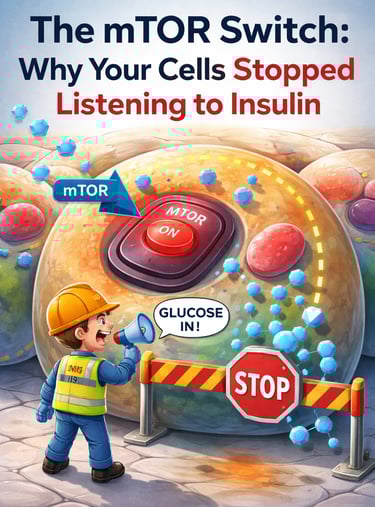
mTOR (mechanistic target of rapamycin) is a nutrient-sensing pathway that becomes overactive in type 2 diabetes. Chronic mTORC1 activation blocks insulin signaling by degrading IRS-1, leading to insulin resistance. Restoring balance through exercise, diet, and fasting can improve metabolic health and glucose control.
What if type 2 diabetes is not simply a disease of “high blood sugar,” but the consequence of a chronically overactivated growth signal that silences the body’s ability to respond to insulin? At the center of this paradox lies mTOR (mechanistic target of rapamycin) — a master regulator designed to sense abundance, but increasingly trapped in a state of relentless activation in modern metabolic disease.
Under normal conditions, mTOR functions like a metabolic switchboard, integrating signals from nutrients, insulin, and cellular energy status to coordinate growth, repair, and fuel utilization. This system evolved for environments defined by intermittent feeding and physical activity. Today, however, constant caloric exposure, excess amino acids, and sedentary behavior keep mTORC1 — its growth-promoting arm — switched “on” far beyond its physiological design (Liu et al., 2024).
The consequences are profound. Persistent mTORC1 activation triggers a self-defeating feedback loop in which insulin signaling is progressively impaired at its earliest stages. Through activation of S6K1, mTORC1 promotes inhibitory phosphorylation and degradation of IRS-1, effectively disconnecting insulin from its downstream metabolic effects (Accili et al., 2025; Stanciu et al., 2024). The result is a state where insulin is abundant, yet ineffective — the hallmark of insulin resistance.
Emerging evidence further suggests that this dysregulated pathway extends beyond glucose metabolism, contributing to beta-cell failure, vascular dysfunction, and the microvascular complications that define advanced diabetes (Amin et al., 2024; Xu, 2025). Understanding mTOR not merely as a growth pathway, but as a central driver of metabolic dysfunction, reframes how we approach prevention and treatment.
Clinical pearls
1. The "Molecular Toggle": AMPK vs. mTOR
Think of your metabolism as a two-way switch. mTOR is the "build and grow" switch, active when you eat. AMPK is the "clean and burn" switch, active when you fast or exercise. In Type 2 Diabetes, the switch often gets stuck in the mTOR (growth) position.
The Pearl: You cannot effectively "clean house" (autophagy) while the growth signal is constantly loud. Creating "quiet time" for your cells through time-restricted eating allows AMPK to flip the switch back to repair mode.
2. Post-Meal Walking: The "Glucose Bypass"
When insulin resistance is high, the "front door" of the cell (the insulin receptor) is essentially jammed. However, muscle contraction during a simple 10-to-15-minute walk opens a "side door" (called GLUT4 translocation) that doesn't require insulin to work.
The Pearl: Walking after a meal isn't just about "burning calories"; it is a mechanical hack that pulls sugar out of the bloodstream even if your insulin signaling is currently broken.
3. The "Leucine Threshold" in Protein
For your aging patients concerned about sarcopenia (muscle loss), protein quality is dictated by an amino acid called leucine. It is the primary spark for mTOR in the muscle.
The Pearl: To trigger muscle protein synthesis, one needs to hit a "leucine threshold" (roughly 2.5–3g of leucine per meal). However, in the context of diabetes, over-sparking this pathway all day long with constant snacking can worsen insulin resistance. Aim for defined "pulses" of high-quality protein rather than constant grazing.
4. Visceral Fat: The "Inflammatory Factory"
Not all fat is created equal. The fat stored around the organs (visceral fat) acts like an active endocrine organ, pumping out inflammatory signals (cytokines) that keep mTORC1 in a state of permanent "overdrive."
The Pearl: Even a modest 5% reduction in body weight can disproportionately lower systemic inflammation. This "cools down" the overactive mTOR signaling, making the remaining insulin your body produces much more effective.
Getty Images
5. Sleep as a Metabolic Reset
Chronic sleep deprivation elevates cortisol, which in turn spikes blood glucose and activates mTORC1 through stress pathways. This mimics the state of constant over-nutrition, even if the patient is dieting.
The Pearl: One night of poor sleep can induce a temporary state of insulin resistance comparable to months of a high-fat diet. Prioritizing a 7-to-9-hour "metabolic dark period" is just as pharmaceutical as metformin for rebalancing the mTOR axis.
Part 1: Understanding mTOR — The Cell’s Nutrient Sensor
What Is mTOR and Why Does It Matter?
mTOR (mechanistic target of rapamycin) is a central regulator of cellular metabolism, functioning as a nutrient and energy sensor that determines whether cells grow, store energy, or initiate repair. It exists in two distinct complexes:
mTORC1 — drives protein synthesis, growth, and inhibits autophagy
mTORC2 — supports insulin signaling through Akt activation
In a metabolically healthy state, mTORC1 is activated after feeding and suppressed during fasting or exercise, allowing the body to maintain metabolic flexibility—the ability to switch between glucose and fat as fuel.
However, in modern environments of chronic caloric excess and inactivity, mTORC1 becomes persistently activated, setting the stage for insulin resistance and metabolic disease (Liu et al., 2024).
Key Takeaway (Liu et al., 2024): mTOR integrates nutrient, hormonal, and energy signals at a central hub; its chronic overactivation is mechanistically upstream of insulin resistance.
mTORC1 vs mTORC2: Why Balance Is Critical
mTORC1 and mTORC2 perform complementary but opposing roles:
mTORC1 overactivation → inhibits autophagy and impairs insulin signaling
mTORC2 activity → maintains Akt phosphorylation and insulin sensitivity
Chronic mTORC1 activation suppresses mTORC2 over time, producing a dual defect in insulin signaling and metabolic control (Accili et al., 2025).
Key Takeaway (Accili et al., 2025): Insulin resistance is a network-level failure, and mTORC1 overactivation is one of the most clinically actionable nodes in this cascade.
Part 2: How mTORC1 Overactivation Causes Insulin Resistance
The Negative Feedback Loop That Silences Insulin Signaling
Under normal conditions:
Insulin → IRS-1 → PI3K → Akt → GLUT4 → Glucose uptake
With chronic mTORC1 activation:
mTORC1 activates S6K1
S6K1 phosphorylates IRS-1 at inhibitory sites
IRS-1 undergoes degradation
Insulin signaling is disrupted
The result is a paradox: high insulin levels but poor cellular response.
Key Takeaway (Stanciu et al., 2024): mTOR dysregulation impairs insulin signaling across muscle, liver, and adipose tissue and contributes to hypertension—making it both a metabolic and cardiovascular risk factor.
mTORC1 and Diabetic Complications: Beyond Glucose
Chronic mTORC1 activation contributes to:
Nephropathy (fibrosis)
Retinopathy (abnormal angiogenesis)
Neuropathy (mitochondrial dysfunction)
Mechanistically, this is driven by:
Suppressed autophagy
Increased ER stress
Chronic inflammation (NF-κB activation)
Key Takeaway (Amin et al., 2024): mTOR activation correlates with both insulin resistance severity and diabetic complications, highlighting its role as a driver—not just a marker—of disease progression.
The Beta-Cell Paradox: When Compensation Becomes Failure
In pancreatic beta cells:
Early mTORC1 activation → increases insulin secretion (compensation)
Chronic activation → induces ER stress, oxidative damage, apoptosis
This leads to progressive beta-cell loss, a hallmark of advanced type 2 diabetes.
Key Takeaway (Xu, 2025): mTORC1 is a double-edged sword—initially adaptive but ultimately destructive, making early intervention critical.
Part 3: AMPK vs mTOR — The Metabolic Toggle Switch
AMPK is the physiological antagonist of mTORC1:
Low energy → AMPK activation → mTOR suppression
High energy → mTOR activation → AMPK inhibition
In insulin resistance, this balance is lost:
mTOR remains chronically active while AMPK is suppressed
Restoring this balance is the foundation of effective metabolic therapy.
Key Takeaway: All effective interventions—exercise, fasting, caloric restriction, and metformin—work by shifting the balance back toward AMPK dominance.
Part 4: Exercise — The Most Potent mTOR Regulator
Exercise rapidly restores metabolic balance by:
Increasing AMP:ATP ratio → activating AMPK
Suppressing mTORC1 via TSC2
Stimulating GLUT4 translocation independently of insulin
This allows glucose uptake even in insulin-resistant cells.
Key Takeaway (Mingzheng & You, 2025): Exercise suppresses mTORC1, restores mitochondrial function via PGC-1α, and reverses metabolic inflexibility—especially in aging muscle.
Additionally, exercise activates SIRT1, reducing beta-cell aging and preserving insulin secretion.
Key Takeaway (Hoseini et al., 2025): Exercise protects pancreatic beta cells by reducing mTOR-driven senescence, extending beyond peripheral insulin sensitivity.
Evidence-Based Exercise Prescription
Resistance training: 2–3x/week
Aerobic exercise: 150 min/week
HIIT: 1–2x/week
Post-meal walking: 10–15 minutes
Avoid prolonged sitting
Key Takeaway: Exercise acts as a direct molecular therapy, not just a calorie-burning tool.
Part 5: Diet Strategies to Suppress mTORC1 Overactivation
Key Nutritional Drivers of mTORC1
mTORC1 is activated by:
Glucose (via insulin signaling)
Amino acids (especially leucine)
Saturated fats (via inflammation)
Key Takeaway: Effective dietary strategies must target all three inputs simultaneously.
Time-Restricted Eating: Resetting mTOR
Time-restricted eating (14–16 hour fasting window):
Suppresses mTORC1
Activates AMPK
Restores autophagy
Improves insulin sensitivity
Key Takeaway: Fasting provides a physiological reset for mTOR signaling, not just caloric restriction.
Anti-mTOR Dietary Framework
Reduce refined carbohydrates
Moderate protein intake (avoid excess BCAAs)
Increase fiber (30–35g/day)
Add omega-3 fatty acids
Include polyphenols
Avoid late-night eating
Key Takeaway: Diet should reduce chronic mTOR activation while supporting AMPK pathways.
Supportive Compounds
Metformin → AMPK activation
Berberine → AMPK + anti-inflammatory
Resveratrol → SIRT1 activation
Curcumin → NF-κB inhibition
Rapamycin → direct mTOR inhibitor (limited use)
Key Takeaway: Pharmacological and nutraceutical strategies support—but do not replace—lifestyle-driven mTOR regulation.
To Summarize
Type 2 diabetes is often mischaracterized as a disease of glucose excess — but at its core, it is a disorder of dysregulated cellular signaling. Central to this dysfunction is mTOR (mechanistic target of rapamycin), a nutrient-sensing kinase that, when chronically overactivated, disrupts metabolic homeostasis at multiple levels (Liu et al., 2024).
mTORC1, the growth-promoting arm of the pathway, is designed for intermittent activation — not continuous stimulation. In modern environments of persistent caloric intake, elevated branched-chain amino acids, and reduced physical activity, mTORC1 remains tonically active, driving an anabolic signal in the absence of physiological demand (Stanciu et al., 2024).
This chronic activation initiates a pathological negative feedback loop that directly impairs insulin signaling. Through S6K1-mediated serine phosphorylation of IRS-1, mTORC1 effectively silences the insulin receptor pathway at its earliest post-receptor step, leading to reduced PI3K/Akt signaling and impaired glucose uptake (Accili et al., 2025).
The clinical consequence is paradoxical: hyperinsulinemia coexisting with intracellular “starvation.” Despite elevated circulating insulin, skeletal muscle and adipose tissue fail to respond appropriately, forcing the pancreas to compensate — a process that ultimately accelerates beta-cell dysfunction and apoptosis (Xu, 2025).
Beyond glycemic control, mTOR dysregulation is increasingly linked to the full spectrum of diabetic complications. Impaired autophagy, mitochondrial dysfunction, and chronic inflammation driven by mTORC1 overactivity contribute to nephropathy, retinopathy, neuropathy, and vascular disease (Amin et al., 2024).
Importantly, mTOR is not inherently pathological — it is context-dependent. The therapeutic goal is not suppression, but restoration of its physiological cycling through targeted activation (e.g., resistance training) and strategic inhibition (e.g., fasting, AMPK activation) (Mingzheng & You, 2025).
This reframing positions mTOR not merely as a molecular pathway, but as a unifying target for metabolic therapy — bridging exercise physiology, nutrition, and endocrinology into a single, actionable framework. / Author
Practical Applications: Your 12-Week mTOR Reset Plan
The science reviewed here converges on a clear set of actionable priorities. The following framework integrates the mechanistic evidence into a realistic lifestyle protocol:
Weeks 1–4: Foundation Phase
• Begin 10-minute post-meal walks after lunch and dinner (immediate AMPK activation, glucose blunting).
• Establish a consistent eating window (12-hour initially, narrowing to 14-hour by week 4).
• Remove ultra-processed foods and sugar-sweetened beverages (eliminate primary mTORC1 drivers).
• Add 2 servings of fatty fish per week (omega-3s begin reducing inflammatory mTOR activation).
Weeks 5–8: Intensification Phase
• Add 2x/week resistance training (compound movements; progressive overload begins expanding GLUT4 density).
• Narrow eating window to 16:8 (longer AMPK-dominant overnight period).
• Shift toward plant-dominant protein sources 4-5 days/week (reduce leucine-mediated mTORC1 activation).
• Target 30g dietary fiber daily (microbiome SCFA production — AMPK pathway support).
Weeks 9–12: Optimization Phase
• Incorporate 1–2 HIIT sessions per week (maximum acute AMPK response).
• Consider evidence-based supplements in consultation with your physician (berberine 500mg twice daily or omega-3 EPA/DHA 2–4g/day).
• Track fasting glucose, 2-hour postprandial glucose, and energy levels weekly — these are the most accessible proxies for mTOR rebalancing.
• Prioritize 7–9 hours of quality sleep: sleep deprivation activates mTORC1 through cortisol and inflammatory pathways and acutely worsens insulin sensitivity.
Frequently Asked Questions (FAQs)
Q: What is mTOR and why does it matter in diabetes?
A: mTOR (mechanistic target of rapamycin) is a protein kinase that acts as the cell's nutrient and energy sensor. In type 2 diabetes, its key complex — mTORC1 — becomes chronically overactive due to nutrient excess, silencing the insulin signaling pathway through a destructive negative feedback loop. Correcting this overactivation is central to restoring insulin sensitivity.
Q: Can you reverse mTOR overactivation without medication?
A: Yes, and lifestyle interventions are currently the most effective tools available. Exercise is the most potent mTOR rebalancer — it activates AMPK (mTOR's molecular antagonist) within minutes of starting a session. Time-restricted eating removes the nutrient inputs that drive mTORC1. Combined, these strategies can produce clinically meaningful reductions in insulin resistance within 8–12 weeks.
Q: How does exercise suppress mTOR overactivation?
A: During exercise, muscle cells burn ATP rapidly, raising the AMP:ATP ratio and activating AMPK. AMPK directly suppresses mTORC1 via TSC2 phosphorylation. Simultaneously, AMPK drives GLUT4 translocation to the cell surface through an IRS-1-independent pathway — allowing glucose uptake even in insulin-resistant cells. Regular exercise also activates SIRT1, which reduces the beta-cell senescence that chronic mTOR overactivation drives.
Q: What foods most strongly activate mTORC1?
A: The three main dietary mTORC1 activators are: (1) rapidly absorbed carbohydrates that spike insulin and glucose; (2) excess branched-chain amino acids (especially leucine) concentrated in red and processed meats; and (3) saturated fatty acids and ultra-processed foods that activate inflammatory NF-kB signaling. A whole-food, plant-forward diet with moderate protein and time-restricted eating addresses all three.
Q: What is the difference between mTORC1 and mTORC2 in insulin resistance?
A: mTORC1 is the pro-growth complex that, when chronically overactive, silences insulin signaling by degrading IRS-1. mTORC2 is the complex that sustains healthy Akt phosphorylation and supports insulin sensitivity. Chronic mTORC1 overactivation gradually suppresses mTORC2 as well, compounding the insulin resistance phenotype. Lifestyle interventions that restore AMPK dominance help rebalance both complexes.
Q: Why does mTOR matter for diabetic complications, not just blood sugar?
A: Amin et al. (2024) demonstrated that mTOR activation levels correlate with microvascular complication burden in T2DM patients. This is because mTOR overactivation suppresses autophagy (cellular cleanup), drives ER stress and inflammation, and promotes the fibrotic and angiogenic responses that underlie nephropathy, retinopathy, and neuropathy. Stanciu et al. (2024) additionally document mTOR's role in hypertension. Addressing mTOR may therefore reduce complication risk beyond glycemic targets.
Q: How long does it take to see improvement in insulin sensitivity after changing lifestyle habits?
A: Research consistently shows that insulin sensitivity begins improving within days of starting regular exercise and reducing refined carbohydrate intake — before meaningful weight loss occurs. Clinically measurable improvements in fasting glucose and HOMA-IR are typically seen within 4–8 weeks of consistent adherence to the combined exercise and dietary changes described in this article. More substantial improvements in HbA1c accumulate over 3–6 months.
Author’s Note: A Clinical Perspective
As a clinician managing patients with type 2 diabetes on a daily basis, one pattern becomes increasingly clear: glycemic control alone does not fully capture the underlying disease process. Many patients achieve acceptable HbA1c levels, yet continue to experience progressive insulin resistance, weight gain, fatigue, and eventual treatment escalation. This disconnect reflects a deeper issue — one that operates at the level of cellular signaling rather than just circulating glucose.
The mTOR pathway provides a useful framework to understand this gap. In clinical practice, we often see the consequences of chronic nutrient excess combined with physical inactivity — a state that persistently activates mTORC1 while suppressing counter-regulatory pathways such as AMPK. Over time, this imbalance contributes not only to insulin resistance, but also to beta-cell stress, visceral adiposity, and the gradual development of microvascular and cardiovascular complications.
What is particularly encouraging, however, is how responsive this system is to targeted intervention. Even modest lifestyle changes — such as postprandial walking, structured resistance training, and time-restricted eating — can produce measurable improvements in glucose variability and insulin sensitivity within weeks, often before significant weight loss occurs. These observations reinforce an important clinical principle: metabolic flexibility can be restored, not just managed.
From a therapeutic standpoint, pharmacological agents like metformin remain valuable, but they should be viewed as part of a broader strategy that includes restoring physiological signaling rhythms. The goal is not to suppress mTOR entirely, but to re-establish its natural oscillation — activating it when needed for repair and growth, and suppressing it during fasting and recovery.
Ultimately, integrating molecular insights such as mTOR into patient care allows for a more precise, mechanism-driven approach — one that moves beyond symptom control toward addressing the root biology of metabolic disease.
Enjoying this content? Share it with someone managing diabetes or prediabetes.
Disclaimer: This article is for educational purposes only and does not constitute medical advice. Always consult a qualified healthcare professional before modifying your medication, diet, or exercise regimen.
Related Articles
AMPK vs mTOR: The Molecular Switch That Controls Muscle, Fat Loss, and Aging | DR T S DIDWAL
Why Protein After 55 Isn’t Optional — The Science Behind Why the RDA Is Too Low | DR T S DIDWAL
Why Aerobic Exercise Is the Most Powerful ‘Drug’ for Heart, Fat Loss & Longevity | DR T S DIDWAL
Exercise Unlocks a Hidden Glucose Pathway in Muscle — Independent of Insulin | DR T S DIDWAL
References
Accili, D., Deng, Z., & Liu, Q. (2025). Insulin resistance in type 2 diabetes mellitus. Nature Reviews Endocrinology, 21, 413–426. https://doi.org/10.1038/s41574-025-01114-y
Amin, N. G., Rahim, A. A., Rohoma, K., Elwafa, R. A. A., Dabees, H. M. F., & Elrahmany, S. (2024). The relation of mTOR with diabetic complications and insulin resistance in patients with type 2 diabetes mellitus. Diabetology & Metabolic Syndrome, 16(1), 222. https://doi.org/10.1186/s13098-024-01450-5
Hoseini, R., Hoseini, Z., & Kamangar, A. (2025). The role of the SIRT1 and mTOR pathways in exercise-induced β-cell senescence reduction in type 2 diabetes mellitus. Cellular and Molecular Life Sciences, 82, 374. https://doi.org/10.1007/s00018-025-05836-0
Liu, X., Guo, B., Li, Q., & Nie, J. (2024). mTOR in metabolic homeostasis and disease. Experimental Cell Research, 441(2), 114173. https://doi.org/10.1016/j.yexcr.2024.114173
Mingzheng, X., & You, W. (2025). AMPK/mTOR balance during exercise: Implications for insulin resistance in aging muscle. Molecular and Cellular Biochemistry, 480(12), 5941–5953. https://doi.org/10.1007/s11010-025-05362-4
Stanciu, S. M., Jinga, M., Miricescu, D., Stefani, C., Nica, R. I., Stanescu-Spinu, I.-I., Vacaroiu, I. A., Greabu, M., & Nica, S. (2024). mTOR dysregulation, insulin resistance, and hypertension. Biomedicines, 12(8), 1802. https://doi.org/10.3390/biomedicines12081802
Xu, P. (2025). mTORC1 is the central regulator in pancreatic β-cells. Nature Reviews Endocrinology, 21, 330. https://doi.org/10.1038/s41574-025-01116-w