mTORC2 Explained: How This Metabolic Thermostat Regulates Insulin Resistance & Aging After 50
Discover how mTORC2 regulates insulin sensitivity, metabolism, and aging. Learn science-backed strategies to improve metabolic health and prevent disease.
DIABETESAGING
Dr. T.S. Didwal, M.D.(Internal Medicine)
6/11/202616 min read
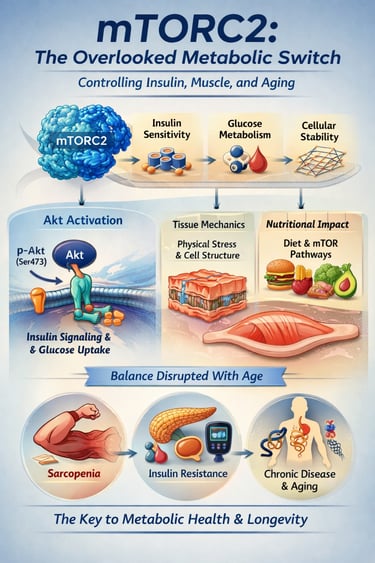
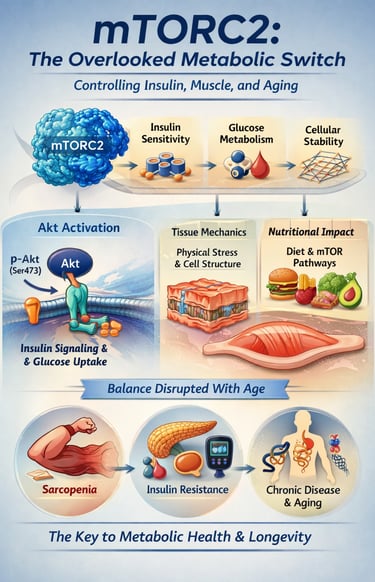
mTORC2 is a key cellular regulator of insulin sensitivity, glucose metabolism, and healthy aging. As mTORC2 activity declines with age, the risk of insulin resistance, sarcopenia, and metabolic dysfunction increases. Resistance training, adequate protein intake, quality sleep, and whole-food nutrition are among the most effective evidence-based strategies for supporting mTORC2 function and maintaining metabolic health after 50.
Key Takeaways: mTORC2, Insulin Sensitivity, and Healthy Aging
mTORC2 is a master regulator of insulin sensitivity.
This cellular signaling complex helps muscles respond to insulin efficiently, allowing glucose to move from the bloodstream into cells where it can be used for energy. When mTORC2 function declines, insulin resistance becomes more likely.Aging often shifts the balance between mTORC1 and mTORC2.
After age 50, mTORC1 tends to become chronically overactive while mTORC2 activity may decline. This imbalance contributes to higher blood sugar, increased body fat, muscle loss, and metabolic dysfunction.Skeletal muscle is your largest glucose-disposal organ.
Healthy muscle tissue removes most of the glucose entering the bloodstream after a meal. Preserving muscle mass through resistance training is one of the most effective ways to support metabolic health and reduce diabetes risk.Resistance training acts as molecular medicine.
Weight training does more than build muscle. Mechanical tension generated during exercise directly activates signaling pathways linked to mTORC2, improving insulin sensitivity and metabolic flexibility.mTORC2 supports both insulin action and insulin secretion.
This pathway helps muscle cells respond to insulin and also assists pancreatic beta cells in releasing insulin properly. Dysfunction can therefore impair glucose control from two different directions.Chronic overnutrition can disrupt metabolic signaling.
Constant snacking, excess calories, and highly processed foods may keep growth pathways activated continuously, promoting insulin resistance over time. Periods of nutritional balance and meal spacing help restore metabolic regulation.Lifestyle factors strongly influence mTORC2 activity.
Regular exercise, adequate protein intake, quality sleep, stress management, and a whole-food dietary pattern work together to support healthy mTOR signaling and improve long-term metabolic outcomes.Healthy aging depends on metabolic flexibility.
The ability to efficiently switch between using carbohydrates and fats for fuel is a hallmark of metabolic health. By supporting mTORC2 through exercise and lifestyle interventions, individuals can improve glucose control, preserve muscle function, and promote healthier aging.
If you’re over 50 and noticing more belly fat, higher blood sugar, or slower recovery, your cells may be losing sensitivity to insulin. The hidden reason is often not just what you eat, but how your cells process signals. Enter mTORC2: a protein complex that acts like your body’s metabolic thermostat.
When mTORC2 works, your muscles soak up glucose like a sponge, your pancreas releases insulin smoothly, and your metabolism stays flexible. When it declines, you get insulin resistance, sarcopenia, and accelerated aging.
This guide breaks down the latest 2023 to 2026 research on mTORC2, including how it links mechanical force to metabolism and why it matters more than mTORC1 for long-term health. You’ll learn exactly how to support mTORC2 with resistance training, whole-food nutrition, sleep, and stress control. Plus, we cover myths, FAQs, and clinical pearls you can use right away.
1. What Is mTORC2 and Why It Matters After 50
mTORC2 stands for mechanistic target of rapamycin complex 2. It is a protein complex found in nearly every cell that fine-tunes how you respond to insulin, nutrients, and physical stress.
Think of mTORC2 as your metabolic thermostat. It doesn’t just turn growth on or off like mTORC1. Instead, it continuously adjusts how sensitive your cells are to insulin and how well they handle glucose.
Why this matters after 50: Research from 2023 to 2024 shows mTORC2 activity naturally declines with age while mTORC1 becomes chronically overactive. This imbalance drives three problems you care about:
1. Insulin resistance: Cells stop responding to insulin, so blood sugar stays high.
2. Sarcopenia: Muscles lose their ability to grow and absorb glucose.
3. Metabolic inflexibility: Your body struggles to switch between burning carbs and fat.
2. mTORC2 vs mTORC1: The Growth vs Balance Switch
Core Overvie
Both complexes share the same core mTOR protein, but they function like two entirely different electrical circuits in your house.
mTORC1
Primary Job: Drives anabolic processes, including muscle building, protein synthesis, and cell growth.
Activation: Turned on by amino acids, insulin, and favorable cellular energy status.
Rapamycin Effect: Acutely inhibited by the drug rapamycin.
Aging Trend: Tendency to become chronically overactive as you age.
Clinical Role: Crucial for building tissue, but excessive, non-stop activity is linked to accelerated aging and cancer.
mTORC2
Primary Job: Regulates homeostatic processes, including insulin signaling, glucose uptake, and overall cell survival.
Activation: Turned on by growth factors, hormones, and mechanical tension.
Rapamycin Effect: Resistant to acute inhibition, though prolonged, chronic use of rapamycin can eventually suppress it.
Aging Trend: Naturally declines and grows weaker with age.
Clinical Role: Essential for metabolic health; insufficient activity is linked to diabetes and physical frailty.
Key Insight
The ultimate goal is not to completely suppress ("crush") mTOR.
Ideal health requires a pulsatile strategy: periodic spikes in mTORC1 to stimulate muscle growth, combined with strong, consistent mTORC2 activity for robust metabolic control.
Leaving mTORC1 chronically activated—driven by constant snacking and physical inactivity—ultimately suppresses and impairs mTORC2.
3. How mTORC2 Regulates Insulin Sensitivity and Glucose Uptake
Your muscles are the largest glucose sink in the body. After a meal, they should absorb 70 to 80% of the blood sugar. mTORC2 makes that happen through one critical step: Akt phosphorylation at Ser473.
The mechanism in plain terms:
1. Insulin binds to your cell.
2. mTORC2 activates Akt.
3. Akt tells GLUT4 transporters to move to the cell surface.
4. GLUT4 opens the door for glucose to enter.
Without mTORC2, the door stays shut. You can have normal insulin levels, but glucose builds up in the blood. That is insulin resistance.
A 2026 structural study by Taylor et al. mapped exactly how mTORC2 binds Akt. This opens the door for new drugs that selectively boost mTORC2 without touching mTORC1.
mTORC2 activates Akt by adding a phosphate group at Ser473. Active Akt moves GLUT4 transporters to the cell membrane, allowing muscle and fat cells to take up glucose from blood.
4. The Mechanosensing Link: Why Lifting Weights Rewires Metabolism
Here’s the 2026 breakthrough: your cells don’t just read hormones. They feel force.
Collins et al. 2026 showed that physical tension from exercise activates SKT kinase, which directly signals mTORC2. Stiff tissues like fibrotic muscle or fatty liver send the wrong signals and impair mTORC2.
Clinical pearl #3: The Mechanosensing Mandate
Resistance training is not just calorie burn. The mechanical load of lifting weights is a “non-pharmacological ligand” for metabolic flux. Your cells literally feel the weight and turn up their metabolic engines.
Practical take: 2 to 3 full-body strength sessions per week generate the cellular tension needed to activate mTORC2. Focus on compound lifts: squats, rows, presses, and hinges.
5. Diet, Overnutrition, and mTOR Balance
mTORC2 responds to every meal. Wang et al. 2025 found that chronic overnutrition keeps mTOR pathways hyperactive, which triggers feedback loops that shut down insulin signaling.
Foods that dysregulate mTOR balance:
Refined carbs + saturated fat combos: pastries, fries, pizza
Constant grazing: no fasting windows, mTORC1 never shuts off
Excess alcohol: impairs Akt signaling
Foods that support mTORC2 balance:
Protein quality: 25 to 40g per meal from fish, legumes, poultry, whey. Helps pulsatile mTORC1 without chronic elevation.
Fiber: Vegetables, berries, oats. Improves insulin sensitivity upstream of mTORC2.
Omega-3s: Fatty fish, flax. May enhance Akt phosphorylation.
Polyphenols: Green tea, olive oil, dark berries. Support mitochondrial health.
A whole-food, predominantly Mediterranean-style diet prevents the “chronic on” signal that breaks mTORC2.
Does intermittent fasting help mTORC2?
Yes, with medical guidance. Fasting periods allow mTORC1 to reset while preserving mTORC2 function. This balance is linked to better insulin sensitivity and autophagy.
6. Aging, Sarcopenia, and the mTORC2 Decline
Zhang et al. 2024 report that aging creates an “mTOR imbalance”: mTORC1 high, mTORC2 low. The result is anabolic resistance. Your muscles need more stimulus to grow and they burn less glucose.
The Sarcopenia-Diabetes Axis
Every pound of muscle lost after 50 is a piece of your glucose disposal engine gone. Maintaining muscle through resistance training is your best insurance against type 2 diabetes.
The fix: Combine 0.7 to 1.0g protein per pound of bodyweight daily with progressive strength training. This restores pulsatile mTORC1 and supports mTORC2.
7. mTORC2 and Insulin Secretion: Your Pancreas Needs Structure
The Hidden Role of mTORC2: Insulin Release
Beyond helping your cells respond to insulin, mTORC2 is actively required for your pancreas to release it in the first place.
Research by Blandino-Rosano et al. (2022) demonstrated that mTORC2 directly controls how the actin cytoskeleton (the cell's structural framework) remodels itself inside pancreatic beta-cells to allow insulin to escape.
The Warehouse Analogy
The Pancreas: A busy shipping warehouse.
Insulin Vesicles: Ready-to-ship boxes of inventory.
Actin Filaments: The forklifts and aisles inside the warehouse.
mTORC2's Role: It acts as the floor manager, keeping the forklift highways clear and moving.
The Failure Mode: When mTORC2 fails, the highways clog. The warehouse cannot rapidly ship out its inventory, causing you to lose first-phase insulin secretion—the rapid spike of insulin needed right when you start eating. As a result, blood sugar spikes sharply after meals.
The Dual-Defect Model
mTORC2 dysfunction creates a worst-case scenario by hitting both ends of glucose regulation simultaneously:
Production Defect: The pancreas cannot efficiently release insulin when food arrives.
Action Defect: Peripheral tissues (like muscle and liver) cannot properly sense insulin to absorb glucose.
Because it sits at the intersection of both insulin supply and demand, mTORC2 is shifting from a background pathway to a central therapeutic target for managing and reversing Type 2 diabetes.
8. The mTORC2–Akt Pathway: Molecular Blueprint for Health
Akt, also called Protein Kinase B, is the master switch for insulin action. Taylor et al. 2026 solved the atomic structure of how mTORC2 activates Akt.
Why this matters for you:
1. Drug development: We can now design mTORC2-specific activators that improve diabetes without cancer risk.
2. Biomarker testing: Future tests may measure mTORC2 activity via phospho-Akt Ser473.
3. Precision: Avoids the “rapamycin paradox” where broad mTOR drugs cause diabetes.
9. Evidence Summary: Key Studies 2022 to 2026
Here is the evidence summary rewritten into clean, scannable bullet points, organized chronologically from the most recent breakthroughs back to 2022:
Finding: Discovered that SKT kinase acts as the direct molecular link connecting physical mechanical force to mTORC2 activation.
Clinical Relevance: Solidifies the concept that resistance training acts directly as "metabolic medicine" at the cellular level.
Finding: Successfully mapped and solved the exact physical structure of the mTORC2–Akt protein complex.
Clinical Relevance: Opens the door for structural biologists to design highly targeted, next-generation drugs for Type 2 diabetes.
Finding: Demonstrated that chronic overnutrition directly dysregulates and unbalances the mTOR signaling pathway.
Clinical Relevance: Highlights why a whole-food diet is uniquely effective at restoring baseline metabolic balance.
Finding: Showed that the biological aging process naturally drives down mTORC2 activity while simultaneously increasing mTORC1 activity.
Clinical Relevance: Provides a clear molecular explanation for why insulin resistance naturally tends to worsen as we get older.
Finding: Published a comprehensive review tracking how mTOR signaling behaves across various chronic diseases.
Clinical Relevance: Positioned mTORC2 dysfunction as a central, unifying driver in the development of diabetes, cardiovascular disease (CVD), and cancer.
Finding: Proved that mTORC2 directly controls the physical secretion of insulin from pancreatic beta cells.
Clinical Relevance: Established the "dual-role" model showing that mTORC2 dictates both how insulin is made and how it is used
10. How to Support mTORC2: 7 Evidence-Based Strategies
1. Resistance Train 2 to Times per Week
The Science: Physical weight-bearing load activates the SKT–mTORC2 signaling pathway, turning exercise into metabolic medicine.
The Method: Use progressive overload (gradually increasing weight or reps over time). Aim for 8 to 12 repetitions per set, ensuring the final 2 reps are highly challenging.
Movement Checklist: Include a squat, a hinge, a push, a pull, and a heavy carry in each training session.
2. Eat Protein in Pulses, Not Drips
The Science: Flooding your body with constant small hits of nutrients keeps mTORC1 permanently turned on, which ultimately suppresses mTORC2.
The Method: Consume 25 to 40 grams of protein per meal. This amount is high enough to trigger a healthy, temporary spike in mTORC1 while protecting your baseline mTORC2 function.
The Rule: Avoid constant, all-day snacking to give the system time to reset.
3. Adopt a Time-Restricted Eating Window
The Science: Giving your digestive system a break helps lower chronic insulin levels and reset overactive mTORC1 pathways.
The Method: Limit your food intake to an 8 to 12-hour eating window each day.
Safety Note: Always consult your physician first if you are currently taking blood sugar or diabetes medications.
4. Prioritize 7 to 9 Hours of Sleep
The Science: Disrupting your circadian rhythm (internal biological clock) directly impairs your body's ability to regulate mTOR pathways.
The Method: Maintain a highly consistent sleep and wake schedule. Keep your bedroom dark, quiet, and cool.
5. Manage Stress Daily
The Science: Chronic stress floods the body with cortisol, which blocks Akt signaling—the crucial downstream pathway that mTORC2 relies on to function.
The Method: Dedicate 10 minutes a day to active stress reduction, such as structured breathwork, outdoor walking, or journaling.
6. Monitor mTOR-Relevant Biomarkers
The Science: You cannot manage what you do not measure; specific blood markers act as a direct report card for your mTORC2 output and metabolic health.
The Method: Ask your doctor to run a panel testing your fasting insulin, HOMA-IR (insulin resistance calculation), HbA1c, and your triglyceride-to-HDL ratio.
7. Avoid Chronic Rapalog Use Unless Prescribed
The Science: While the drug rapamycin is meant to block mTORC1, long-term or unmonitored use can "leak" over and accidentally shut down mTORC2, potentially causing insulin resistance and diabetes.
The Method: Do not take longevity supplements or rapalogs without medical supervision, and carefully track your daily glucose levels if you are prescribed them.
11. Common Myths and Mistakes About mTOR
Here is the rewritten breakdown of the common myths and mistakes regarding mTOR and metabolic health, formatted for quick and impactful reading:
The Myths Exposed
Myth 1: “I should completely block mTOR to live longer.”
The Truth: Total suppression is dangerous. Shutting down all mTOR signaling leads to severe muscle wasting and insulin resistance. Your ultimate goal is a balanced system: pulsatile mTORC1 (short bursts for tissue repair) paired with strong, consistent mTORC2 (for metabolic stability).
Myth 2: “Cardio is the only exercise that matters for blood sugar control.”
The Truth: Cardio is excellent, but resistance training is uniquely critical. Lifting weights triggers mechanical tension that directly activates mTORC2 via cellular mechanosensors—something cardio cannot replicate. This becomes non-negotiable for metabolic health after age 50.
Myth 3: “High protein diets accelerate aging.”
The Truth: Avoid protein to your own detriment. Low protein intake accelerates sarcopenia (muscle wasting) and destroys your body's primary sink for disposing of glucose. The true culprit is chronic, non-stop nutrient overactivation, not protein itself. The fix is to consume protein in distinct pulses rather than grazing all day.
The Critical Mistakes
Mistake 1: Snacking all day “to keep your metabolism fired up.”
The Reality: Constant grazing keeps insulin elevated and locks mTORC1 into the "on" position 24/7. This chronic overactivation ultimately suppresses and disables mTORC2.
The Fix: Shift to 2 to 4 clearly defined meals per day with clean breaks in between to let the system reset.
Mistake 2: Taking rapamycin for longevity without monitoring your glucose.
The Reality: The "rapamycin-induced diabetes" phenotype is a legitimate medical reality. If the drug is taken incorrectly or chronically, it leaks over and shuts down mTORC2, wrecking your insulin sensitivity.
The Fix: Never use rapalogs without strict physician oversight and rigorous, continuous blood glucose tracking
12. FAQs on mTORC2, Insulin Resistance, and Longevity
1. What is the difference between mTORC1 and mTORC2?
Although both complexes contain the same mTOR protein, they perform very different functions. mTORC1 primarily promotes muscle growth, protein synthesis, and cellular expansion in response to nutrients and energy availability. In contrast, mTORC2 regulates insulin sensitivity, glucose metabolism, cell survival, and cytoskeletal organization. A simple way to think about them is that mTORC1 helps the body grow, while mTORC2 helps the body maintain metabolic balance.
2. How does mTORC2 influence type 2 diabetes?
mTORC2 plays a central role in glucose regulation by activating Akt, a key protein involved in insulin signaling. Akt promotes the movement of GLUT4 transporters to the muscle cell surface, allowing glucose to enter the cell. mTORC2 also supports normal insulin secretion from pancreatic beta cells. When mTORC2 function is impaired, both insulin action and insulin release may decline, contributing to the development of type 2 diabetes.
3. Can supplements increase mTORC2 activity?
Currently, no supplement has been proven to directly activate mTORC2 in humans. The strongest evidence supports lifestyle interventions such as resistance training, a nutrient-dense diet, adequate sleep, and stress management. Nutrients such as omega-3 fatty acids and plant polyphenols may indirectly support metabolic pathways linked to mTORC2, but they should not replace proven lifestyle strategies.
4. Does intermittent fasting benefit mTORC2?
Research suggests that appropriately structured intermittent fasting may help restore metabolic balance by reducing chronic mTORC1 activation while preserving mTORC2 function. This can improve insulin sensitivity and metabolic flexibility. However, fasting is not suitable for everyone, particularly individuals with diabetes who use glucose-lowering medications, and should be undertaken with medical guidance.
5. Why is tissue stiffness important for metabolism?
Cells continuously sense and respond to their physical environment. Emerging research indicates that stiff or fibrotic tissues can disrupt mTORC2 signaling and impair cellular energy metabolism. This discovery helps explain why conditions associated with fibrosis, aging, and chronic inflammation are often linked to insulin resistance and metabolic disease.
6. Does mTORC2 activity decrease with age?
Yes. Studies suggest that mTORC2 activity gradually declines in tissues such as skeletal muscle and liver as we age. Reduced mTORC2 signaling is associated with insulin resistance, metabolic dysfunction, and loss of muscle mass. Fortunately, regular exercise, adequate protein intake, and healthy lifestyle habits may help preserve mTORC2 function throughout aging.
7. Is rapamycin beneficial or harmful for metabolic health?
The answer depends on dose, timing, and duration of use. Short-term inhibition of mTORC1 may provide certain health benefits, but prolonged suppression can also inhibit mTORC2. Chronic mTORC2 inhibition has been associated with impaired glucose regulation and insulin resistance. Researchers are currently developing more selective therapies that target mTORC1 while preserving mTORC2 activity.
8. Are there blood tests that measure mTORC2 function?
At present, no routine clinical test can directly assess mTORC2 activity. However, several metabolic markers can provide indirect insight into pathways influenced by mTORC2, including fasting insulin, HOMA-IR, HbA1c, fasting glucose, and the triglyceride-to-HDL cholesterol ratio. These biomarkers help evaluate insulin sensitivity and metabolic health.
9. How quickly can insulin sensitivity improve?
The body responds remarkably quickly to exercise. Improvements in glucose uptake and GLUT4 activity can occur within hours after a single exercise session. More substantial improvements in insulin sensitivity, fasting insulin levels, and HOMA-IR are often observed within several weeks of consistent exercise, healthy nutrition, and weight management.
10. Should carbohydrates be avoided to protect mTORC2?
Not necessarily. The problem is typically excessive intake of refined carbohydrates combined with chronic overnutrition and inactivity. Whole-food carbohydrate sources such as fruits, vegetables, legumes, and minimally processed grains can support exercise performance, muscle recovery, and metabolic health when consumed as part of a balanced diet.
11. Can chronic stress affect mTORC2 signaling?
Yes. Long-term psychological stress elevates cortisol and other stress hormones that can interfere with insulin signaling pathways downstream of mTORC2. Over time, chronic stress may contribute to insulin resistance and metabolic dysfunction. Stress reduction techniques such as exercise, meditation, adequate sleep, and social connection can positively influence metabolic health.
12. What is the most effective exercise for supporting mTORC2?
Progressive resistance training appears to be one of the most powerful lifestyle interventions for stimulating pathways linked to mTORC2. Multi-joint exercises such as squats, deadlifts, rows, presses, and lunges create substantial mechanical tension within muscle tissue, helping improve insulin sensitivity, preserve muscle mass, and support healthy aging.
13. Conclusion and Action Steps
mTORC2 is not secondary biology. It is the central switch for insulin sensitivity, glucose control, and healthy aging after 50. While mTORC1 gets attention for muscle growth, mTORC2 governs the processes that prevent diabetes and frailty.
The imbalance of high mTORC1 and low mTORC2 drives age-related disease. But this pathway is responsive. Resistance training, protein pulses, quality sleep, stress control, and whole-food nutrition are direct levers you can pull today.
Your next steps:
1. Schedule strength training 2 to 3 times this week.
2. Audit your protein: Aim for 30g per meal, 3 meals daily.
3. Book labs: Ask your doctor for fasting insulin and HOMA-IR.
4. Set a sleep anchor: Same bedtime/wake time 7 days/week.
Author’s Note: A Clinical Perspective on mTORC2 and Metabolic Health
In clinical practice, one of the most consistent and concerning patterns I observe is the gradual decline in metabolic resilience—patients who were once metabolically stable begin to develop insulin resistance, gain visceral fat, lose muscle mass, and experience a steady erosion of energy and functional capacity. What is often labeled simply as “aging” is, at a deeper level, a reflection of disrupted cellular signaling—particularly within pathways like mTOR.
While much of the conversation has historically focused on mTORC1 and its role in muscle growth, emerging evidence highlights that mTORC2 is equally—if not more—critical for maintaining metabolic stability. Its role in activating Akt, preserving insulin sensitivity, and maintaining cytoskeletal integrity places it at the center of both glucose regulation and cellular function.
A key insight from both research and patient care is this:
metabolic disease is not just a problem of excess glucose or calories—it is a problem of impaired signaling.
Patients with type 2 diabetes or prediabetes often exhibit a dual defect:
Impaired insulin signaling in muscle and liver (reduced glucose uptake)
Impaired insulin secretion from pancreatic β-cells
mTORC2 sits at the intersection of both processes. When this pathway is compromised, the body loses its ability to respond appropriately to metabolic demands, regardless of caloric intake alone.
Encouragingly, this pathway is highly responsive to intervention. Resistance training, dietary quality, sleep optimization, and metabolic rhythm (feeding–fasting cycles) can meaningfully influence mTORC2 activity. These are not merely lifestyle recommendations—they are targeted, physiology-driven therapies.
Ultimately, preserving metabolic health is not about chasing a single biomarker. It is about restoring the balance and responsiveness of cellular systems—and mTORC2 is a central player in that restoration.
This article is intended for educational purposes only and does not constitute medical advice. Always consult a qualified healthcare professional before making changes to your diet, exercise routine, or medications. DOI links lead to original peer-reviewed sources.
Related Articles
The mTOR Switch: Why Your Cells Stopped Listening to Insulin | DR T S DIDWAL
Why Protein After 55 Isn’t Optional — The Science Behind Why the RDA Is Too Low | DR T S DIDWAL
Why Aerobic Exercise Is the Most Powerful ‘Drug’ for Heart, Fat Loss & Longevity | DR T S DIDWAL
Exercise Unlocks a Hidden Glucose Pathway in Muscle — Independent of Insulin | DR T S DIDWAL
No Time to Train? Science-Backed Workouts That Deliver | DR T S DIDWAL
Sources and References
Collins, M., et al. (2026). Cell-matrix mechanosensing and cellular metabolic demand are linked through SKT and mTORC2. bioRxiv. https://doi.org/10.64898/2026.02.03.702586
Wang, X., et al. (2025). Nutrient regulation of mTOR. Journal of Nutritional Biochemistry, 135, Article 109548. https://doi.org/10.1016/j.jnutbio.2025.109548
Panwar, V., et al. (2023). Multifaceted role of mTOR signaling pathway in human health and disease. Signal Transduction and Targeted Therapy, 8(1), 375. https://doi.org/10.1038/s41392-023-01608-z
Blandino-Rosano, M., et al. (2022). Novel roles of mTORC2 in regulation of insulin secretion by actin filament remodeling. American Journal of Physiology-Endocrinology and Metabolism, 323(2), E133–E144. https://doi.org/10.1152/ajpendo.00076.2022
Zhang, Y., et al. (2024). mTOR signaling and metabolic regulation in disease and aging. Physiology & Behavior, 276, Article 114442. https://doi.org/10.1016/j.physbeh.2024.114442
Taylor, M. S., et al. (2026). Structural basis for the recruitment and selective phosphorylation of Akt by mTORC2. Science, 391(6789), Article eadv7111. https://doi.org/10.1126/science.adv7111
National Institute on Aging. (2024). Exercise and physical activity guide. U.S. Department of Health and Human Services. https://www.nia.nih.gov/health/exercise-physical-activity
American Diabetes Association. (2025). Standards of care in diabetes. Diabetes Care, 48(Suppl. 1).
Laplante, M., & Sabatini, D. M. (2012). mTOR signaling in growth control and disease. Cell, 149(2), 274–293. https://doi.org/10.1016/j.cell.2012.03.017
Saxton, R. A., & Sabatini, D. M. (2017). mTOR signaling in growth, metabolism, and disease. Cell, 168(6), 960–976. https://doi.org/10.1016/j.cell.2017.02.004
Kennedy, B. K., & Lamming, D. W. (2016). The mechanistic target of rapamycin: The grand conducTOR of metabolism and aging. Cell Metabolism, 23(6), 990–1003. https://doi.org/10.1016/j.cmet.2016.05.009
Liu, G. Y., & Sabatini, D. M. (2020). mTOR at the nexus of nutrition, growth, ageing and disease. Nature Reviews Molecular Cell Biology, 21(4), 183–203. https://doi.org/10.1038/s41580-019-0199-y
Ardestani, A., et al. (2018). mTORC1 and mTORC2 regulate insulin secretion through Akt and PKC signaling. Journal of Clinical Investigation, 128(8).
Lamming, D. W., et al. (2012). Rapamycin-induced insulin resistance is mediated by mTORC2 loss. Science, 335(6076), 1638–1643. https://doi.org/10.1126/science.1215135
Schiaffino, S., et al. (2021). The role of mTOR signalling in the regulation of skeletal muscle mass. Nature Reviews Molecular Cell Biology, 22(3).
Hagiwara, A., et al. (2012). Hepatic mTORC2 activates glycolysis and lipogenesis through Akt. Cell Metabolism, 15(5).
Cybulski, N., & Hall, M. N. (2009). TOR complex 2: A signaling pathway of its own. Trends in Biochemical Sciences, 34(12).
Kumar, A., et al. (2010). Fat cell-specific ablation of rictor in mice impairs insulin-regulated fat cell glucose uptake. Diabetologia, 53(4).
Sarbassov, D. D., et al. (2005). Phosphorylation and regulation of Akt/PKB by the rictor-mTOR complex. Science, 307(5712).
Yuan, M., et al. (2012). The role of mTORC2 in the regulation of stem cell function. BMC Cell Biology, 13(1).