No Time to Train? Science-Backed Workouts That Deliver
Short on time but want real results? Discover evidence-based training strategies that boost strength, endurance, and performance—without wasting hours.
EXERCISE
Dr. T.S. Didwal, M.D.(Internal Medicine)
5/12/202610 min read
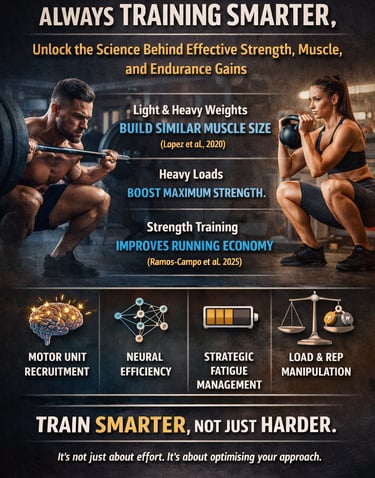
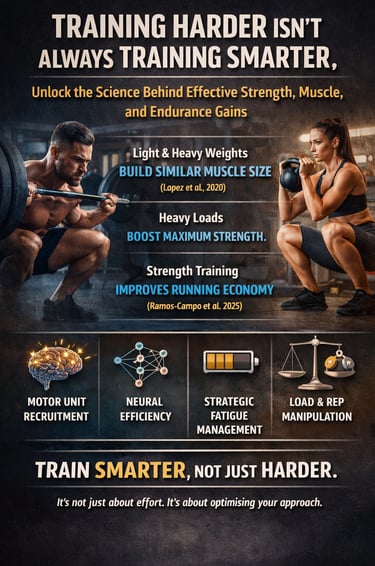
For decades, mainstream fitness culture promoted the idea that optimal health and athletic performance required long hours in the gym, high-volume workouts, and relentless physical exhaustion. “More is better” became the dominant philosophy. Longer workouts, heavier weights, and extreme soreness were treated as proof of effective training. Modern exercise physiology tells a very different story.
Emerging evidence from resistance training science, sports performance research, and neuromuscular physiology now shows that efficient workouts can produce remarkable improvements in muscle hypertrophy, strength development, cardiovascular fitness, metabolic health, insulin sensitivity, and functional longevity when training variables are intelligently programmed (Lopez et al., 2020). The human body does not simply respond to effort. It responds to precise biological signals.
Variables such as:
mechanical tension
motor unit recruitment
training frequency
exercise selection
recovery intervals
movement efficiency
metabolic stress
Neuromuscular adaptation
collectively determines training outcomes far more than workout duration alone.
This emerging science is particularly important in modern society, where lack of time has become one of the biggest barriers to exercise adherence. Many individuals abandon fitness programs because they believe meaningful results require 90-minute gym sessions performed five or six days weekly.
Current evidence suggests otherwise.
Strategically designed 30-minute workouts can substantially improve:
lean muscle mass
maximal strength
muscular endurance
insulin resistance
mitochondrial health
body composition
cardiometabolic fitness
athletic performance
When programming principles are grounded in exercise science rather than fitness mythology. The future of fitness is not maximal exhaustion.
It is intelligent adaptation.
The Biology of Efficient Exercise
Every workout triggers a cascade of physiological responses. Resistance training activates anabolic signaling pathways such as mTOR, stimulates muscle protein synthesis, recruits high-threshold motor units, improves neuromuscular coordination, and enhances skeletal muscle remodeling. Aerobic and interval training influence mitochondrial biogenesis, capillary density, metabolic flexibility, and cardiovascular efficiency. Importantly, these adaptations are not linearly related to exercise duration. Beyond a certain threshold, excessive training volume often produces diminishing returns while increasing fatigue accumulation, cortisol release, recovery demands, and injury risk.
This concept forms the foundation of minimum effective dose training—a growing concept in exercise prescription and performance medicine.
The objective is not simply to do more work. The objective is to create the most effective adaptive stimulus with the least unnecessary fatigue.
This is why elite athletes increasingly emphasize:
training density
recovery optimization
neuromuscular efficiency
exercise specificity
movement quality
strategic overload
rather than endless hours of exercise. Efficient training is therefore not a shortcut. It is applied physiology.
Muscle Hypertrophy: Why Heavy Weights Are Not Always Necessary
One of the most important discoveries in modern resistance training research is that muscle hypertrophy is largely load-independent when sets are performed close to muscular failure (Lopez et al., 2020). A landmark network meta-analysis by Pedro Lopez and colleagues compared low-load, moderate-load, and high-load resistance training protocols and found surprisingly similar hypertrophy outcomes when training was carried close to volitional failure. This finding fundamentally challenged traditional bodybuilding dogma.
For decades, moderate-to-heavy loads were considered essential for skeletal muscle growth. However, modern neuromuscular research suggests that hypertrophy depends primarily on sufficient motor unit recruitment, cumulative fiber fatigue, and mechanical tension—not merely external load.
As fatigue develops during a set, the nervous system progressively recruits larger high-threshold motor units, including type II fast-twitch muscle fibers that possess greater hypertrophy potential.
This means:
Resistance bands can build muscle
Bodyweight training can stimulate hypertrophy
Lighter dumbbells can be effective
Home-based strength training can work remarkably well
provided sets are performed close to failure.
This concept has major implications for:
aging adults
patients with osteoarthritis
beginners intimidated by heavy lifting
individuals recovering from injury
busy professionals training at home
The biological message is clear: Muscle growth depends more on recruitment quality than ego-driven weight selection.
Strength Development Is Primarily Neural
Although hypertrophy can occur across multiple repetition ranges, maximal strength remains strongly load-dependent.
Heavy resistance training improves maximal force production because strength is not solely a muscular phenomenon—it is profoundly neurological.
High-load training enhances:
motor unit synchronization
neural drive
rate coding
intermuscular coordination
force transmission efficiency
These neural adaptations explain why beginners often become dramatically stronger before visible muscle growth occurs. The nervous system essentially becomes better at activating existing muscle tissue.
Research consistently demonstrates that lower repetition ranges with heavier loads produce superior improvements in maximal strength and one-repetition maximum (1RM) performance (Lopez et al., 2020).
This principle is critical for efficient workouts. You do not need dozens of exercises or marathon gym sessions to become stronger. A small number of high-quality compound lifts performed with sufficient intensity can generate substantial neuromuscular adaptation.
The Hidden Science of Running Economy
Many people assume endurance performance depends entirely on increasing aerobic capacity or V̇O₂max. However, modern sports science increasingly recognizes running economy as a major determinant of endurance performance.
An umbrella review by Daniel J. Ramos-Campo and colleagues found that resistance training significantly improves running economy in middle- and long-distance athletes, even without significant changes in maximal oxygen uptake (Ramos-Campo et al., 2025).
Strength training improves:
musculotendinous stiffness
force transfer efficiency
neuromuscular coordination
elastic recoil utilization
movement economy
As a result, athletes expend less energy with each stride. The “engine” may not become substantially larger, but the “machine” becomes more fuel-efficient. This concept extends far beyond competitive athletes.
Improved movement efficiency benefits:
aging adults
recreational runners
patients with obesity
individuals with metabolic syndrome
people recovering from illness
Energy-efficient movement is a universal physiological advantage.
Why “No Pain, No Gain” Is Outdated
Exercise-induced muscle damage (EIMD) has long been viewed as evidence of workout quality. Severe soreness became culturally associated with effective training. Modern exercise science strongly disputes this belief. Research shows that excessive muscle damage is not necessary for hypertrophy or strength adaptation. In fact, excessive soreness may impair progress by reducing training quality, decreasing exercise frequency, and prolonging recovery timelines.
Excessive EIMD can:
impair force production
reduce weekly training volume
increase injury risk
elevate systemic fatigue
interfere with consistency
The body adapts best to recoverable stress. This concept is reinforced by the repeated bout effect, whereby muscles become increasingly resistant to damage from familiar training stimuli over time. Elite training programs, therefore emphasize stimulus management rather than maximal destruction. The goal is adaptation—not punishment.
Motor Unit Recruitment: The Core of Efficient Training
Understanding motor unit recruitment helps explain why short workouts can produce meaningful results.
According to the size principle of neuromuscular physiology, motor units are recruited progressively from:
low-threshold fatigue-resistant fibers
intermediate motor units
high-threshold fast-twitch fibers
Heavy loads immediately require recruitment of large motor units. Lighter loads recruit these fibers progressively as fatigue accumulates.
This explains why:
Heavy loads optimize maximal strength
moderate loads balance hypertrophy and fatigue
Lighter loads can still stimulate muscle growth when taken near failure
Efficient programming manipulates this physiology strategically. The objective is not simply to exhaust muscles. The objective is to maximize productive recruitment while minimizing unnecessary fatigue. Exercise Order and Neuromuscular Efficiency
Exercise sequence significantly influences training outcomes.
Research consistently supports the “priority principle,” which states that the most important and technically demanding exercises should be performed early in the workout when fatigue is lowest.
Compound movements require:
coordination
balance
motor control
neural precision
maximal force production
As fatigue accumulates, movement quality deteriorates.
For this reason:
Squats should precede isolation leg work
Deadlifts should occur before accessory pulling exercises
Olympic lifts should precede conditioning circuits
Plyometrics should occur before exhaustive training
Efficient workouts prioritize high-value movements rather than wasting neurological resources on low-priority exercises.
Training Frequency vs. Marathon Workouts
Modern evidence increasingly suggests that distributing training volume across multiple shorter sessions may outperform infrequent marathon workouts.
Shorter sessions often improve:
movement quality
recovery capacity
exercise adherence
neural performance
weekly consistency
Three focused 30-minute sessions may produce superior long-term outcomes compared with one exhausting two-hour workout followed by several days of fatigue. Consistency is one of the most underestimated variables in exercise science. The best training program is not the most extreme one.
It is the one a person can sustain for years.
Rest Intervals: An Underestimated Training Variable
Rest periods are biologically important components of program design Different rest intervals produce different physiological outcomes.
Short Rest Periods (30–90 Seconds)
These promote:
metabolic stress
lactate accumulation
muscular endurance
cardiovascular demand
Longer Rest Periods (2–5 Minutes)
These optimize:
ATP-phosphocreatine recovery
neural restoration
maximal force production
power output
Efficient programming matches recovery intervals to specific goals. Rest is not wasted time. Rest determines the quality of the next stimulus.
Complex Strength Training and Athletic Efficiency
Complex strength training (CST) combines heavy resistance exercises with explosive plyometric movements in the same session.
Research by Samsudin Salihan and colleagues demonstrated that CST improves:
lower-body power
squat strength
vertical jump performance
neuromuscular activation
athletic explosiveness
Examples include:
squats followed by jump squats
deadlifts followed by broad jumps
heavy presses followed by explosive push-ups
These adaptations are partly explained by post-activation performance enhancement (PAPE), where heavy loading transiently improves neuromuscular excitability and explosive output. For athletes and busy individuals, CST represents an extremely time-efficient training strategy.
The Minimal Effective Dose in Exercise Medicine
One of the most important modern concepts in sports medicine is the minimal effective dose. This refers to the smallest amount of exercise needed to stimulate meaningful physiological adaptation.
Many individuals unknowingly exceed this threshold dramatically.
Excessive training volume can increase:
systemic inflammation
psychological burnout
cortisol levels
injury risk
recovery demands
Efficient exercise prescription seeks the optimal balance between stimulus and recovery. This approach aligns closely with modern preventive medicine and longevity science, where the objective is sustainable healthspan rather than short-term exhaustion.
A Science-Backed 30-Minute Workout Template
Phase 1: Neural Warm-Up (0–5 Minutes)
Goals:
increase neural activation
improve mobility
prepare movement patterns
Components:
light cardio
dynamic mobility drills
progressive warm-up sets
Purpose: prepare the nervous system without generating fatigue.
Phase 2: Primary Compound Lift (5–15 Minutes)
Examples:
squat
deadlift
bench press
overhead press
Prescription:
3–4 working sets
4–6 repetitions
heavy loading
2–3 minutes rest
Purpose:
maximize motor unit recruitment
enhance neural drive
improve maximal strength
Phase 3: Hypertrophy Superset Block (15–25 Minutes)
Examples:
Romanian deadlift + walking lunges
incline press + pull-ups
split squats + rows
Prescription:
moderate loads
8–12 repetitions
shorter rest intervals
Purpose:
increase metabolic stress
stimulate hypertrophy
improve workout density
Supersets enhance efficiency without compromising adaptation quality.
Phase 4: Conditioning or Core Finisher (25–30 Minutes)
Examples:
farmer’s carries
planks
sled pushes
interval cycling
Purpose:
improve work capacity
enhance core stability
increase cardiovascular conditioning
This phase should challenge conditioning while remaining recoverable.
Exercise Adherence: The Most Overlooked Variable
Behavioral science consistently shows that feasibility strongly predicts long-term exercise adherence. The most sophisticated training program is useless if individuals cannot sustain it consistently.
Shorter workouts reduce:
scheduling barriers
psychological resistance
time-related stress
perceived effort burden
Individuals who maintain moderate, consistent exercise often outperform those who alternate between overtraining and inactivity.MAdherence itself is a physiological advantage.
Efficient Training and Healthy Aging
Time-efficient resistance training becomes increasingly important with aging.
Aging is associated with progressive declines in:
muscle mass
bone density
insulin sensitivity
mitochondrial function
neuromuscular performance
Strategically programmed resistance training can help preserve:
functional independence
mobility
balance
metabolic health
skeletal strength
Importantly, older adults often benefit more from intelligent recovery management than excessive training volume. The objective shifts from maximal fatigue to maximal resilience.
Clinical Takeaways
Modern exercise physiology has important implications for preventive medicine and public health.
Evidence-based exercise prescriptions should emphasize:
sustainability
recovery biology
specificity
neuromuscular efficiency
long-term adherence
Patients frequently avoid exercise because recommendations appear unrealistic or excessively time-consuming.
Current evidence suggests that even short, intelligently structured workouts can produce meaningful improvements in:
cardiometabolic health
insulin sensitivity
muscular strength
functional capacity
body composition
longevity biomarkers
This message may profoundly improve population-level exercise participation.
Conclusion
The era of glorifying endless exhaustion is gradually ending. Modern exercise science increasingly demonstrates that adaptation depends not merely on effort, but on intelligent manipulation of physiological variables. Efficient workouts are not shortcuts. They are applications of biological precision.
The body responds to:
strategic overload
effective motor unit recruitment
movement quality
recovery optimization
consistent training exposure
Rather than mindless fatigue accumulation. Training harder may build exhaustion. Training intelligently builds strength, resilience, metabolic health, and longevity.
FAQs
What's the difference between absolute and relative muscular endurance?
Absolute muscular endurance measures repetitions performed with the same external load before and after training, while relative muscular endurance scales the load to the individual's current maximal strength level.
Can I build muscle with light weights?
Yes, research indicates that when training to failure, muscle hypertrophy appears to be load-independent, meaning you can achieve similar muscle growth with lighter weights if sets are taken to volitional failure.
What's the optimal repetition range for strength gains?
Research consistently shows that heavier loads (≤8RM) produce superior strength gains compared to lighter loads, making lower repetition ranges (roughly 1-8 reps) optimal for maximizing strength.
How many sets should I do per muscle group?
Most research suggests that intermediate to advanced trainees benefit from 10-20 weekly sets per muscle group, distributed across multiple sessions, though individual responses vary considerably.
Should endurance athletes include strength training?
Yes, research strongly supports the integration of strength training into endurance training programs, particularly for improving running economy and maintaining performance.
Is muscle damage necessary for growth?
No, significant muscle damage is not required for hypertrophy or strength gains. In fact, excessive damage can impair training quality and frequency, potentially limiting overall progress.
How long should I rest between sets?
Rest periods should match your training goals—shorter rest (30-90 seconds) for hypertrophy and endurance-focused training, longer rest (2-5+ minutes) for maximal strength and power development.
Can I combine different training methods?
Yes, research supports the effectiveness of combined approaches, such as complex strength training (CST), which integrates high-load resistance training with plyometric exercises for enhanced athletic performance.
Author’s Note
As a physician trained in internal medicine and a long-time student of exercise physiology, I have always been fascinated by the gap between what happens in the gym and what happens at the cellular level. Strength training is often reduced to motivational slogans—“no pain, no gain,” “lift heavy or go home”—yet modern research tells a more precise and far more empowering story. Adaptation is not accidental. It is biologically orchestrated.
The purpose of this article is not simply to summarize studies, but to translate high-quality evidence into practical clarity. The findings discussed—ranging from load-independent hypertrophy (Lopez et al., 2020) to the nuanced distinctions between absolute and relative muscular endurance (Hammert et al., 2025), and the performance-enhancing effects of strength training in endurance athletes (Ramos-Campo et al., 2025)—reflect an evolving understanding of neuromuscular adaptation.
Medical Disclaimer
The information in this article, including the research findings, is for educational purposes only and does not constitute medical advice, diagnosis, or treatment. Before starting a exercise program, you must consult with a qualified healthcare professional, especially if you have existing health conditions (such as cardiovascular disease, uncontrolled hypertension, or advanced metabolic disease). Exercise carries inherent risks, and you assume full responsibility for your actions. This article does not establish a doctor-patient relationship.
Related Articles
What Happens Inside Your Muscles During a Workout | DR T S DIDWAL
How Exercise Rewires Metabolism: Molecular Control of Lipolysis and Lipid Metabolism | DR T S DIDWAL
How to Build a Disease-Proof Body: Master Calories, Exercise & Longevity | DR T S DIDWAL
References
Hammert, W. B., Yamada, Y., Kataoka, R., Song, J. S., Spitz, R. W., Wong, V., Seffrin, A., & Loenneke, J. P. (2025). Changes in absolute and relative muscular endurance after resistance training: A review of the literature with considerations for future research. Journal of Strength and Conditioning Research, 39(4), 474–491. https://doi.org/10.1519/jsc.0000000000005084
Ramos-Campo, D. J., Andreu-Caravaca, L., Clemente-Suárez, V. J., & Rubio-Arias, J. Á. (2025). The effect of strength training on endurance performance determinants in middle- and long-distance endurance athletes: An umbrella review of systematic reviews and meta-analysis. Journal of Strength and Conditioning Research, 39(4), 492–506. https://doi.org/10.1519/JSC.0000000000005056
Samsudin, S., Salihan, S., & Kasim, M. F. M. (2025). Narrative review on the impact of complex strength training on lower body strength and power in athletes. International Journal of Academic Research in Progressive Education and Development, 14(1). https://doi.org/10.6007/ijarped/v14-i1/23408
Lopez, P., Radaelli, R., Taaffe, D. R., Newton, R. U., Galvão, D. A., Trajano, G. S., Teodoro, J. L., Kraemer, W. J., Häkkinen, K., & Pinto, R. S. (2020). Resistance training load effects on muscle hypertrophy and strength gain: Systematic review and network meta-analysis. Medicine & Science in Sports & Exercise, 53(6), 1206. https://doi.org/10.1249/MSS.0000000000002585