Aerobic Exercise as Molecular Medicine: Cellular Mechanisms Behind Movement-Based Therapy
Discover how aerobic exercise transforms your body at the cellular level — from mitochondrial biogenesis to immune reprogramming. Backed by the latest 2024–2026 research.
EXERCISE
Dr. T.S. Didwal, M.D.(Internal Medicine)
5/21/202624 min read
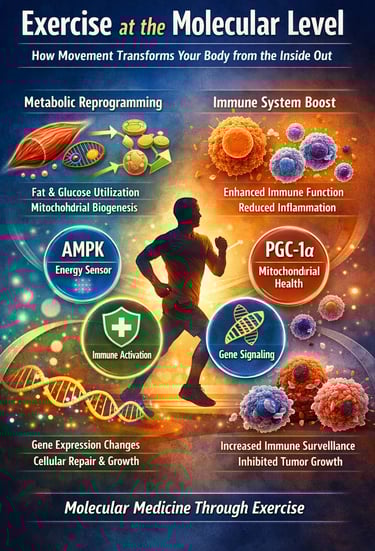
What if every step you take, every muscle you contract, and every breath you deepen is quietly triggering a cascade of microscopic events that transform your health from the inside out?
That's not a metaphor. It's molecular biology.
Modern research now confirms that aerobic exercise operates as a form of molecular medicine — rewiring immune cells within hours, building new mitochondria at a cellular level, fine-tuning how your body handles fuel, and even creating an internal environment that makes it harder for disease to take root. A landmark 2025 review in Nature Reviews Endocrinology summarized two decades of evidence showing that exercise-induced metabolic reprogramming is one of the most powerful biological interventions available to humans — rivalling, and in some cases outperforming, pharmaceutical approaches (Hawley & Hoffman, 2025).
Yet most people still think of a workout as simply "burning calories."
This guide will change that. Whether you're a physician, a fitness enthusiast, or someone navigating a chronic condition, you'll walk away understanding exactly how aerobic exercise reshapes your biology — and how to use that knowledge to exercise smarter, not just harder.
Key Takeaways
1. Aerobic exercise is molecular medicine — It doesn’t just burn calories. A single session rapidly activates AMPK and PGC-1α, triggers mitochondrial biogenesis, rewires immune cells, and creates powerful anti-inflammatory and anti-cancer effects within hours.
2. Zone 2 training is the mitochondrial sweet spot — Exercising at 60–70% of max heart rate (conversational pace) is the most effective intensity for building new mitochondria, improving metabolic flexibility, and enhancing fat burning.
3. Your muscles are a powerful endocrine organ — During aerobic exercise, muscles release myokines (such as irisin, IL-6, and SPARC) that protect the heart, burn fat, reduce inflammation, support brain health, and suppress tumor growth.
4. One workout immediately upgrades your immune system — A single aerobic session rewires thousands of proteins in immune cells, boosts natural killer cells up to 10x, and shifts the body toward reduced chronic inflammation (Walzik et al., 2026).
5. Exercise creates metabolic flexibility — The real benefit of aerobic training isn’t just calorie burn — it’s training your body to efficiently switch between burning fat and carbohydrates, which strongly protects against diabetes, obesity, and metabolic disease.
6. Aerobic exercise powerfully combats aging and cancer — Regular training improves mitochondrial function in aging muscle, reduces oxidative damage, enhances immune surveillance, and creates a metabolic environment hostile to cancer cells (Warburg effect disruption).
In this article, you'll learn:
The five key molecular pathways activated by aerobic exercise
How a single workout immediately changes your immune system's protein landscape
Why "metabolic flexibility" matters more than calorie burn
The latest 2025–2026 research on exercise, mitochondria, aging, and cancer
A practical, evidence-based training framework you can start today
1. What Happens Inside Your Cells When You Exercise?
When you lace up your shoes and start moving, your body doesn't simply burn energy — it activates a sophisticated biological program that has been shaped by millions of years of evolution.
Within the first few minutes of aerobic exercise, the following events unfold simultaneously:
ATP (adenosine triphosphate) demand spikes dramatically in working muscles, shifting the AMP:ATP ratio
Calcium ions flood muscle cells, triggering both contraction and downstream signaling cascades
Reactive oxygen species (ROS) are produced in a controlled, beneficial manner — acting as molecular messengers, not just damaging agents
Lactate and other metabolic byproducts accumulate and function as signaling molecules that communicate with distant organs including the brain, liver, and heart
Mechanical stress on muscle fibers activates mechanosensitive ion channels and structural proteins
These aren't isolated events — they trigger an interconnected web of molecular responses. This is what scientists now call "exercise-induced signal transduction": the process by which a physical stimulus (muscle contraction) is converted into a biochemical language that cells understand.
Key Insight: Exercise doesn't just use your body — it instructs it. Every contraction is a molecular directive that tells your cells how to repair, adapt, and protect themselves.
2. AMPK and PGC-1α: The Master Switches of Exercise Adaptation
At the center of virtually every cellular benefit of aerobic exercise sit two master regulators: AMPK and PGC-1α. Understanding these two molecules is understanding the core of exercise biochemistry.
AMPK: The Energy Sensor
AMP-activated protein kinase (AMPK) is often called the body's "energy gauge." When cellular energy falls — as it does dramatically during exercise — AMP levels rise relative to ATP, and AMPK flips on like a switch.
Once activated, AMPK:
Stimulates glucose uptake in muscle cells, independently of insulin
Activates fatty acid oxidation (fat burning) by inhibiting ACC (acetyl-CoA carboxylase)
Switches on mitochondrial biogenesis programs
Suppresses energy-consuming anabolic pathways to prioritize survival and adaptation
Triggers autophagy — the cellular "self-cleaning" process
According to Hawley and Hoffman's landmark 2025 review in Nature Reviews Endocrinology, AMPK activation is one of the most consistent and reproducible molecular outcomes of aerobic exercise across all studied populations, from sedentary adults to elite athletes.
PGC-1α: The Mitochondrial Architect
PGC-1α (peroxisome proliferator-activated receptor gamma coactivator-1 alpha) is the downstream master of mitochondrial health. When AMPK activates PGC-1α (alongside calcium-mediated CaMKII and SIRT1 pathways), an extraordinary cascade begins:
Mitochondrial biogenesis is switched on — new mitochondria are literally built inside your cells
Antioxidant gene expression increases (superoxide dismutase, catalase, glutathione peroxidase)
Metabolic enzyme production rises, improving the efficiency of fat and carbohydrate oxidation
Fiber-type remodeling begins in muscle, shifting toward more oxidative, fatigue-resistant fibers
A 2026 study published in Sports Medicine and Health Science by Fang and colleagues examined CAV-3 knockout mice (a model for metabolic muscle disease) and found that aerobic exercise powerfully restored mitochondrial structure and function through PGC-1α-dependent pathways — even in genetically compromised muscle tissue. This has significant implications for therapeutic exercise in metabolic and neuromuscular diseases.
SIRT1: The Longevity Link
Sirtuin-1 (SIRT1), often called a "longevity protein," is co-activated alongside PGC-1α during aerobic exercise. SIRT1 deacetylates and thereby activates PGC-1α, amplifying the mitochondrial biogenesis signal. It also modulates:
Inflammatory gene expression (downregulating NF-κB activity)
Circadian rhythm regulation
DNA repair mechanisms under oxidative stress
Clinical Pearl: Aerobic exercise at moderate intensity (Zone 2, described later) is one of the few non-pharmacological ways to reliably activate all three of these master regulators simultaneously.
3. Aerobic Exercise and Mitochondrial Biogenesis
Mitochondria are often described as the "powerhouses" of the cell. But that metaphor undersells them. Mitochondria are dynamic, responsive organelles that fuse, divide, multiply, and are selectively destroyed in response to physiological demand — a process called mitochondrial dynamics.
How Aerobic Exercise Builds New Mitochondria
Mitochondrial biogenesis — the generation of new mitochondria — is one of the most well-documented and health-significant adaptations to regular aerobic exercise. The mechanism is elegant:
Exercise raises AMP:ATP → activates AMPK
AMPK activates PGC-1α (also activated by calcium and ROS signals)
PGC-1α drives expression of NRF1 and NRF2 (nuclear respiratory factors)
These factors upregulate TFAM (mitochondrial transcription factor A), which enters the mitochondria and stimulates replication of mitochondrial DNA
New mitochondrial proteins are synthesized and assembled
The result: more, denser, more efficient mitochondria within muscle cells
A 2026 study by Zheng and colleagues in the Journal of Physiological Biochemistry directly investigated how aerobic exercise ameliorates oxidative stress and improves mitochondrial dynamics in aged skeletal muscle — arguably the most clinically important population for this research. Their findings showed that regular aerobic exercise:
Significantly improved mitochondrial fusion (mediated by MFN1, MFN2, and OPA1 proteins)
Reduced pathological mitochondrial fission (via DRP1 modulation)
Decreased markers of oxidative damage (lipid peroxidation, protein carbonylation)
Restored mitochondrial membrane potential, directly improving cellular energy output
Why This Matters for Aging
After age 40, humans lose approximately 1–2% of skeletal muscle mass per year, a process called sarcopenia. A key driver of this decline is mitochondrial dysfunction — fewer, less efficient mitochondria lead to increased oxidative stress, impaired energy production, and eventual muscle fiber death.
The Zheng et al. (2026) data provides compelling evidence that aerobic exercise is not merely preventive but therapeutic for aging muscle — restoring mitochondrial architecture and reducing oxidative burden in ways that directly counter sarcopenic progression.
Zone 2 Training: The Mitochondrial Sweet Spot
Not all intensities are equal when it comes to mitochondrial adaptation. Current evidence strongly supports Zone 2 training — exercise performed at approximately 60–70% of maximum heart rate, a "conversational pace" — as the optimal stimulus for mitochondrial biogenesis.
Why Zone 2 works best:
Sufficient metabolic stress to activate AMPK and PGC-1α
Low enough intensity to avoid excessive cortisol and ROS that can impair recovery
Preferentially uses fat as the primary fuel, training lipid oxidation enzymes
Can be sustained for longer durations, providing a larger total adaptive stimulus
Practical Zone 2 targets by age (approximate):
Age 30
Estimated Maximum Heart Rate: 190 bpm
Zone 2 Heart Rate Range (60–70%): 114–133 bpm
Age 40
Estimated Maximum Heart Rate: 180 bpm
Zone 2 Heart Rate Range (60–70%): 108–126 bpm
Age 50
Estimated Maximum Heart Rate: 170 bpm
Zone 2 Heart Rate Range (60–70%): 102–119 bpm
Age 60
Estimated Maximum Heart Rate: 160 bpm
Zone 2 Heart Rate Range (60–70%): 96–112 bpm
Age 70
Estimated Maximum Heart Rate: 150 bpm
Zone 2 Heart Rate Range (60–70%): 90–105 bpm
Key Clinical Insight
Zone 2 cardio training is typically performed at 60–70% of maximum heart rate and is strongly associated with improved mitochondrial function, metabolic flexibility, cardiovascular fitness, and long-term healthspan.
4. How Exercise Rewires Your Immune System — Immediately
One of the most striking recent discoveries in exercise science is just how rapidly the immune system responds to a single workout. You don't need months of training to see immunological benefits. The transformation begins within hours.
The 2026 Proteomics Breakthrough
In a landmark study published in Nature Communications, Walzik, Joisten, Metcalfe, and colleagues (2026) used advanced proteomic analysis — essentially mapping every protein inside immune cells — to examine what happens to human immune cells during and after a single bout of acute aerobic exercise.
The findings were extraordinary:
Thousands of proteins were differentially expressed following a single exercise session
Changes were observed across multiple immune cell types, including T cells, natural killer (NK) cells, monocytes, and neutrophils
Inflammatory response pathways were modulated, with a net shift toward reduced harmful inflammation while maintaining protective immune activation
Proteins involved in immune surveillance — the system's ability to detect and target viruses and early cancer cells — were significantly upregulated
Immunological memory pathways showed molecular signatures suggesting enhanced long-term immunity
What makes this study uniquely compelling is its use of proteomics rather than simpler gene expression assays. Because proteins are the actual molecular machines that do the work inside cells, proteomic changes reflect functional immunological reprogramming, not just potential changes in gene transcription.
Key Takeaway: A single 30–60 minute aerobic workout functions as an immediate "software update" for your immune system. Benefits don't wait for weeks of training — they begin with your first session.
The Biphasic Immune Response
It's important to understand that the immune response to exercise is biphasic:
Phase 1 — During and immediately after exercise (0–2 hours):
Dramatic mobilization of NK cells and cytotoxic T lymphocytes into circulation (up to 10× baseline)
Elevated inflammatory cytokines (IL-6, IL-8) — but this is adaptive, not harmful
Heightened immune surveillance and pathogen-clearing activity
Phase 2 — Recovery phase (2–24 hours post-exercise):
Return to baseline lymphocyte counts ("open window" in intense exercise)
Upregulation of anti-inflammatory cytokines (IL-10, IL-1ra)
Net reduction in systemic inflammation markers (CRP, TNF-α)
Consolidation of adaptive immune memory
This biphasic pattern explains why moderate-intensity aerobic exercise enhances immunity, while chronic overtraining or very high-intensity exercise without adequate recovery can transiently suppress it.
5. Metabolic Flexibility: Why Fuel Switching Is the True Fitness Marker
The gold standard of aerobic fitness is not how fast you run or how much weight you lose. According to the most current exercise metabolism science, it is metabolic flexibility — your muscles' ability to seamlessly switch between carbohydrates and fats as fuel sources depending on what the situation demands.
What Is Metabolic Flexibility?
In a metabolically flexible individual:
At rest and low intensities: Muscles preferentially burn fat (free fatty acids), sparing glucose for the brain
At moderate-to-high intensities: Muscles efficiently shift to carbohydrate metabolism as glycolysis and aerobic glucose oxidation ramp up
After meals: Muscles rapidly clear glucose from the blood via insulin-stimulated glucose uptake
In a metabolically inflexible individual (common in type 2 diabetes, obesity, and metabolic syndrome):
Fat oxidation is impaired even at rest
Carbohydrate oxidation is blunted or dysregulated
The system fails to switch fuel sources appropriately, leading to fat accumulation, poor glucose control, and energy inefficiency
Hawley and Hoffman's 2025 review establishes metabolic flexibility as one of the central health outcomes tracked over two decades of exercise metabolism research — directly predicting risk for type 2 diabetes, cardiovascular disease, and all-cause mortality.
How Aerobic Exercise Builds Metabolic Flexibility
Regular aerobic exercise drives metabolic flexibility through several mechanisms:
Increased fat oxidation capacity:
Upregulates CPT-1 (carnitine palmitoyltransferase-1), the rate-limiting enzyme for fatty acid transport into mitochondria
Increases mitochondrial density (more mitochondria = more fat oxidation machinery)
Enhances expression of PPAR-α, a transcription factor regulating lipid metabolism genes
Improved carbohydrate handling:
Increases GLUT4 transporter expression in muscle cell membranes (insulin-independent glucose uptake)
Enhances glycogen synthase activity, improving glycogen storage and resynthesis
Raises pyruvate dehydrogenase activity, improving pyruvate entry into the TCA cycle
Enhanced insulin sensitivity:
AMPK activation during exercise directly phosphorylates AS160, driving GLUT4 to the cell surface
Post-exercise, insulin sensitivity remains elevated for 12–48 hours
Chronic training produces structural improvements in insulin signaling pathways
Bottom Line: Training for metabolic flexibility is training for longevity. The more efficient your cells are at switching fuels, the more protected you are from the most prevalent chronic diseases of our time.
6. Post-Translational Modifications: Exercise's Molecular Language
One of the most exciting frontiers in exercise science is the study of post-translational modifications (PTMs) — chemical changes made to proteins after they are synthesized that alter their function, location, or lifespan.
A 2026 paper by Shen and colleagues in Frontiers in Sports and Active Living provided a comprehensive map of exercise-specific PTM signatures — essentially decoding the molecular language through which exercise instructs cellular adaptation.
Key PTMs Activated by Aerobic Exercise
Phosphorylation: The most studied PTM in exercise science. Kinases (enzymes that add phosphate groups) activated by exercise include AMPK, CaMKII, ERK1/2, and p38 MAPK. These phosphorylation events:
Activate metabolic enzymes
Trigger gene transcription programs
Regulate protein stability and localization
Acetylation: SIRT1, activated during exercise, removes acetyl groups from PGC-1α and FOXO transcription factors — activating programs for mitochondrial biogenesis, autophagy, and stress resistance.
Ubiquitination: Exercise regulates the selective tagging of damaged or misfolded proteins for degradation by the proteasome — a critical quality-control function that declines with aging and sedentary behavior.
SUMOylation: An emerging area showing that exercise modulates SUMO (small ubiquitin-like modifier) attachment to proteins involved in DNA repair and stress response — potentially explaining exercise's epigenetic benefits.
O-GlcNAcylation: A glucose-sensing modification that regulates cardiac function, muscle protein turnover, and metabolic enzyme activity in response to exercise and nutrient status.
Why PTMs Matter Clinically
Shen et al. (2026) argue persuasively that understanding exercise-specific PTM signatures will enable:
Biomarker development — PTM profiles as objective indicators of exercise adaptation
Pharmacological mimicry — developing drugs that partially mimic beneficial PTMs for non-exercising patients
Personalized exercise medicine — tailoring exercise type, intensity, and timing based on individual PTM responses
This research validates the idea that the body has a rich, precise "molecular exercise language" that goes far beyond what can be measured by heart rate or calories. Future exercise prescriptions may involve molecular profiling.
7. Aerobic Exercise, Oxidative Stress, and Aging Muscle
One of the most persistent misconceptions about exercise is that it is inherently damaging because it increases reactive oxygen species (ROS) production. The truth is far more nuanced — and the implications for healthy aging are profound.
ROS: Villain or Villain Turned Hero?
ROS produced during aerobic exercise are not simply damaging agents. At physiological levels generated by moderate exercise, ROS act as redox signaling molecules that:
Activate NRF2, the master regulator of antioxidant gene expression
Stimulate production of superoxide dismutase (SOD), catalase, and glutathione peroxidase — the body's own antioxidant enzymes
Trigger mitochondrial biogenesis via PGC-1α
Activate heat shock proteins (HSP70, HSP90) that serve as molecular chaperones, stabilizing proteins under stress
The 2026 study by Zheng and colleagues directly measured oxidative stress markers in aged skeletal muscle before and after a controlled aerobic exercise program. Their findings:
Malondialdehyde (MDA) — a marker of lipid peroxidation — was significantly reduced in exercised aged muscle
Superoxide dismutase (SOD) activity increased substantially, reflecting enhanced endogenous antioxidant capacity
8-OHdG (a marker of oxidative DNA damage) decreased, suggesting improved DNA protection
Mitochondrial membrane potential was restored toward youthful levels
Crucially, the study found that aerobic exercise reduced pathological oxidative stress while preserving the beneficial, adaptive ROS signaling — a distinction that explains why antioxidant supplements taken during or immediately after exercise can actually blunt adaptation by suppressing these beneficial ROS signals.
The Antioxidant Supplement Paradox
Important clinical note: Several randomized controlled trials have shown that high-dose vitamin C and vitamin E supplementation taken around exercise blunts improvements in insulin sensitivity and mitochondrial biogenesis by quenching adaptive ROS. This does not mean antioxidant-rich foods are harmful — whole foods contain phytochemicals that work synergistically with exercise. The concern applies primarily to high-dose isolated supplements.
8. Exercise and Cancer: The Warburg Hostility Effect
One of the most compelling emerging areas of exercise science concerns the relationship between aerobic exercise and cancer biology.
The Warburg Effect — and How Exercise Exploits It
Cancer cells have an unusual metabolism. Even when oxygen is present — conditions under which healthy cells rely on the efficient mitochondrial oxidative phosphorylation pathway — cancer cells preferentially ferment glucose via glycolysis, a process called the Warburg effect. This creates large amounts of lactate and fuels rapid cell division, but it also represents a potential vulnerability.
Research published in Exercise Immunology Review by He and colleagues (2025) examined how exercise-induced metabolic reprogramming and immune modulation might create an environment hostile to cancer cell survival and proliferation.
Key Mechanisms
1. Improved glucose handling reduces tumor fuel availability By enhancing GLUT4 expression and insulin sensitivity in healthy muscle tissue, aerobic exercise improves systemic glucose clearance — reducing chronically elevated blood glucose and insulin levels that many tumors depend on for growth signals (particularly via the IGF-1/PI3K/Akt/mTOR pathway).
2. Immune surveillance enhancement Exercise-mobilized natural killer (NK) cells and cytotoxic T lymphocytes (CTLs) have enhanced tumor surveillance capacity. Post-exercise proteomic changes (Walzik et al., 2026) include upregulation of proteins involved in immune cell cytotoxicity and target recognition.
3. Reduction in pro-tumorigenic inflammation Chronic low-grade inflammation — driven by excess adipose tissue, sedentary behavior, and metabolic dysfunction — is a recognized cancer promoter (via NF-κB signaling, IL-6/STAT3 pathways). Regular aerobic exercise durably reduces CRP, IL-6, and TNF-α at rest, removing these growth-promoting signals.
4. Myokine signaling Exercise-released myokines including IL-6 (in the acute exercise context), irisin, SPARC, and CXCL1 have demonstrated direct anti-tumorigenic effects in preclinical studies — inhibiting colon cancer, breast cancer, and pancreatic cancer cell growth.
5. Epigenetic reprogramming Exercise modulates DNA methylation and histone modification patterns in ways that may suppress oncogene expression and restore tumor suppressor gene function — an area of active investigation.
The Clinical Evidence
Epidemiological data consistently shows that the most physically active individuals have 10–25% lower risk of developing colon, breast, endometrial, bladder, kidney, gastric, and esophageal cancers compared to sedentary individuals. The dose-response relationship is clear: more exercise, less cancer risk — up to a plateau.
For cancer survivors, exercise is increasingly recognized as a therapeutic intervention. The American College of Sports Medicine (ACSM) now recommends exercise as a standard component of cancer care — not merely a lifestyle suggestion.
Important Note: Exercise does not replace conventional cancer treatment. Always consult your oncologist before beginning or modifying an exercise program during active treatment.
9. Myokines: Your Muscles Are an Endocrine Organ
For most of medical history, skeletal muscle was considered a passive mechanical tissue — simply a machine for generating force. We now know it is a sophisticated endocrine organ that actively communicates with virtually every other tissue in the body.
When muscles contract during aerobic exercise, they secrete a family of signaling proteins called myokines into the bloodstream. These molecular messengers travel to distant organs, exerting systemic effects that help explain exercise's diverse health benefits.
Key Myokines and Their Functions
Myokine Primary Target(s) Key Effect IL-6 (acute) Liver, adipose tissue Stimulates fat oxidation, gluconeogenesis; acute anti-inflammatory Irisin Adipose tissue, brain, bone Converts white fat to brown fat; neuroprotective; improves bone density BDNF Brain Neuroplasticity, memory consolidation, depression prevention SPARC Colon, breast Direct anti-tumorigenic effects; promotes tumor cell apoptosis Meteorin-like (Metrnl) Immune cells, adipose Anti-inflammatory; improves insulin sensitivity FGF21 Liver, adipose tissue Improves lipid metabolism; reduces hepatic fat Apelin Heart, vasculature Cardioprotective; improves vascular endothelial function Musclin (OSN) Heart, bone Cardiac protection; bone formation
The myokine picture illustrates why the benefits of aerobic exercise extend far beyond the muscles themselves — exercise is a whole-body medicine. A 45-minute run doesn't just strengthen your legs; it sends signals to your brain to grow new neurons, your fat cells to shift toward heat-generating brown fat, your liver to regulate glucose, and your colon to suppress cancer cell growth.
Your legs are your body's largest pharmacy. Every contraction dispenses a cocktail of anti-inflammatory, neuroprotective, and metabolic medicine into your bloodstream."
10. Practical Application: The Evidence-Based Exercise Protocol
Understanding molecular science is only valuable if it translates into a protocol you can actually follow. Here is an evidence-based aerobic exercise framework based on the research synthesized in this article.
The Four-Zone Aerobic Framework
Zone 1 — Active Recovery (50–60% max HR)
Light walking, casual cycling, gentle swimming
Promotes blood flow, reduces inflammation, accelerates recovery
Ideal on rest days between harder sessions
Target: 1–2 sessions/week, 20–40 minutes each
Zone 2 — Mitochondrial Base (60–70% max HR)
Brisk walking, easy jogging, cycling at a
conversational pace
Primary stimulus for mitochondrial biogenesis, fat oxidation, and metabolic flexibility
Should constitute ~80% of total aerobic training volume
Target: 3–4 sessions/week, 45–75 minutes each
Zone 3 — Aerobic Development (70–80% max HR)
Moderate jogging, faster cycling, swimming
Bridges the gap between base endurance and high intensity
Use sparingly — limited unique molecular benefits compared to Zone 2 and 4
Target: 0–1 sessions/week if included
Zone 4/5 — High-Intensity Intervals (80–95% max HR)
Running intervals, cycling sprints, high-intensity rowing
Activates cancer-hostile metabolic environment (Warburg effect disruption)
Maximizes VO₂max development, acute immune mobilization
Should constitute ~20% of total aerobic volume
Target: 1–2 sessions/week, 20–35 minutes (including warm-up and recovery intervals)
Weekly Training Blueprint (Beginner to Intermediate)
Monday — Zone 2 Cardio
Duration: 45 minutes
Examples:
Easy jogging
Brisk walking
Cycling at conversational pace
Goal: Improve mitochondrial function, fat oxidation, and aerobic base
Tuesday — Zone 4/5 High-Intensity Intervals
Duration: ~25 minutes
Example Protocol:
6 × 3-minute high-intensity intervals
2-minute recovery between intervals
Goal: Improve VO₂ max, cardiovascular fitness, and metabolic flexibility
Wednesday — Recovery / Zone 1
Duration: 30 minutes
Options:
Light walking
Gentle recovery movement
Full rest if needed
Goal: Promote recovery and autonomic balance
Thursday — Zone 2 Cardio
Duration: 50 minutes
Maintain steady moderate intensity
Goal: Enhance endurance, mitochondrial biogenesis, and metabolic health
Friday — Zone 1/2 Cross-Training
Duration: 40 minutes
Examples:
Swimming
Easy cycling
Elliptical training
Goal: Increase aerobic volume with lower joint stress
Saturday — Long Zone 2 Session
Duration: 60–90 minutes
Intensity: Easy and sustainable pace
Goal: Maximize aerobic adaptations and fat metabolism
Sunday — Full Recovery
Full rest or gentle movement only
Options:
Stretching
Yoga
Mobility work
Goal: Recovery, flexibility, and nervous system restoration
Weekly Aerobic Exercise Volume
Approximate total: 4.5–5.5 hours per week
Aligns with current WHO physical activity guidelines:
150–300 minutes of moderate-intensity activity weekly
OR 75–150 minutes of vigorous activity weekly
Also supports:
Mitochondrial health
Cardiovascular fitness
Metabolic flexibility
Longevity pathways
Getting Started: 4-Week Ramp Protocol
Week 1
Zone 2 Sessions: 3
Duration per Session: 20–30 minutes
HIIT Sessions: None
Focus: Build consistency and tolerance
Week 2
Zone 2 Sessions: 3
Duration per Session: 30–40 minutes
HIIT Sessions: 1 light session
Focus: Gradual cardiovascular adaptation
Week 3
Zone 2 Sessions: 3–4
Duration per Session: 40–50 minutes
HIIT Sessions: 1
Focus: Improve aerobic capacity and endurance
Week 4
Zone 2 Sessions: 4
Duration per Session: 45–60 minutes
HIIT Sessions: 1–2
Focus: Transition toward a sustainable long-term training routine
Safety Note
If you have:
Cardiovascular disease
Hypertension
Diabetes
Obesity
Respiratory disease
Or other chronic medical conditions
consult a qualified healthcare professional before beginning a new exercise program. In some individuals, a supervised exercise stress test may be appropriate before initiating vigorous training.
Tracking Molecular Benefits: What to Monitor
Beyond heart rate, these metrics reflect the molecular adaptations discussed in this article:
Resting heart rate (declining resting HR = improved cardiac and autonomic efficiency)
Heart rate variability (HRV) (rising HRV = improved parasympathetic tone and recovery capacity)
Fasting glucose and insulin (improving = enhanced metabolic flexibility and GLUT4 expression)
HbA1c (declining = better chronic glucose regulation)
Lipid profile (rising HDL, falling triglycerides = improved fat oxidation and metabolic health)
hs-CRP (declining = reduced systemic inflammation — myokine effect)
VO₂max estimate (rising = direct marker of mitochondrial and cardiovascular adaptation)
11. Evidence Summary Table
Key Exercise Metabolism and Molecular Physiology Studies
Hawley & Hoffman (2025) — Nature Reviews Endocrinology
Study Design: 20-year systematic review
Key Finding: Metabolic flexibility emerged as the central adaptation marker of exercise, with AMPK and PGC-1α identified as master molecular regulators
Clinical Relevance: Strongly supports the concept of exercise as “molecular medicine” for obesity, insulin resistance, and metabolic disease
Walzik et al. (2026) — Nature Communications
Study Design: Human proteomic study
Key Finding: A single aerobic exercise session rapidly rewired immune cell protein expression within hours
Clinical Relevance: Demonstrates that even one workout can produce immediate immune and anti-inflammatory benefits
He et al. (2025) — Exercise Immunology Review
Study Design: Scientific review
Key Finding: Exercise-induced metabolic reprogramming may create an anti-cancer environment by disrupting the Warburg effect
Clinical Relevance: Positions exercise as a potential adjunctive strategy in cancer prevention and therapy
Walzik et al. (2024) — Signal Transduction and Targeted Therapy
Study Design: Molecular review
Key Finding: Aerobic exercise activated mitochondrial biogenesis, autophagy, BDNF signaling, and IGF-1 pathways
Clinical Relevance: Provides mechanistic evidence for exercise-driven prevention of neurodegenerative, metabolic, and cardiovascular diseases
Estébanez & Cuevas (2025) — International Journal of Molecular Sciences
Study Design: Special issue editorial
Key Finding: Consolidated the modern molecular exercise science landscape into a unified framework
Clinical Relevance: Reinforces the concept of exercise as a pharmaceutical-grade therapeutic intervention
Zheng et al. (2026) — Journal of Physiological Biochemistry
Study Design: Animal aging model
Key Finding: Aerobic exercise restored mitochondrial dynamics and reduced oxidative damage in aged muscle tissue
Clinical Relevance: Supports aerobic exercise as a powerful anti-aging and sarcopenia-prevention strategy
Shen et al. (2026) — Frontiers in Sports and Active Living
Study Design: Post-translational modification (PTM) review
Key Finding: Exercise generated unique molecular signaling and post-translational modification signatures across multiple cell types
Clinical Relevance: May help establish future molecular biomarkers of exercise responsiveness and adaptation
Fang et al. (2026) — Sports Medicine and Health Science
Study Design: Experimental animal study
Key Finding: Aerobic exercise restored mitochondrial structure and function in CAV-3 knockout mice
Clinical Relevance: Suggests therapeutic potential of exercise for metabolic myopathies and mitochondrial dysfunction disorders
Key Scientific Takeaway
Modern exercise science increasingly shows that physical activity is not merely “calorie burning”—it is a systems-level molecular intervention capable of reshaping metabolism, immune signaling, mitochondrial biology, aging pathways, and disease risk across nearly every organ system.
12. Common Myths and Mistakes
Myth 1: "No pain, no gain — you have to push hard to get benefits."
The science says otherwise. The most powerful mitochondrial adaptations occur in Zone 2 — a pace comfortable enough to hold a conversation. Chronic high-intensity training without sufficient Zone 2 base work elevates cortisol, increases injury risk, and may impair the very immune function you're trying to improve. Eighty percent of your aerobic training should feel easy.
Myth 2: "Cardio is only good for weight loss."
Aerobic exercise induces molecular changes affecting immunity, mitochondrial density, cancer risk, neuroplasticity, and insulin sensitivity — none of which require weight loss as an intermediary. A lean person who exercises regularly and an overweight person who exercises regularly both gain substantial molecular benefits, independent of body weight changes.
Myth 3: "Taking antioxidant supplements after exercise helps recovery."
As discussed, high-dose isolated antioxidants (especially vitamin C and E) taken around exercise can blunt adaptive signaling by neutralizing beneficial ROS. Whole foods rich in polyphenols are preferable. The hormetic ROS signal produced by exercise is part of the adaptive stimulus — suppressing it suppresses adaptation.
Myth 4: "I've missed too many workouts — I've lost all my progress."
Even a single workout produces measurable molecular changes (Walzik et al., 2026). While detraining does occur over weeks, many cellular adaptations — particularly immune cell programming and metabolic enzyme upregulation — can be re-established relatively quickly. Starting again always beats not starting.
Myth 5: "Older people shouldn't do intense exercise."
The Zheng et al. (2026) data shows that aged skeletal muscle retains robust molecular responsiveness to aerobic exercise. Exercise is particularly critical in older adults precisely because mitochondrial dysfunction, immune senescence, and metabolic inflexibility accelerate with age. Both moderate-intensity and appropriately guided high-intensity training benefit older adults. Exercise is medicine for every decade of life.
Myth 6: "Exercise suppresses immunity — I'll get sick more."
Moderate-intensity aerobic exercise enhances immune surveillance. The "open window" hypothesis of temporary immune suppression applies primarily to exhaustive, ultra-endurance events (marathons, triathlons) without adequate recovery — not to routine aerobic exercise. Regular moderate exercise is consistently associated with fewer upper respiratory infections, not more.
13. Frequently Asked Questions
Q: How quickly does aerobic exercise start changing my immune system?
A: According to Walzik et al. (2026), measurable proteomic changes in immune cells — reflecting functional reprogramming — occur within hours of a single exercise session. Natural killer cell counts in circulation can rise tenfold during exercise itself. You don't need weeks of training to begin experiencing immune benefits; they begin with your first workout.
Q: What is the best type of aerobic exercise for mitochondrial health?
A: Current evidence points to a combination of Zone 2 training (60–70% max HR) for building mitochondrial density and Zone 4/5 interval training for pushing mitochondrial quality and VO₂max. Zone 2 should make up roughly 80% of total aerobic volume. Walking, jogging, cycling, swimming, and rowing are all excellent options. Consistency and accumulated volume matter most.
Q: Does aerobic exercise help with type 2 diabetes?
A: Yes — powerfully. Aerobic exercise improves insulin sensitivity through at least three mechanisms: (1) AMPK-driven GLUT4 translocation to the muscle cell surface (insulin-independent glucose uptake during exercise); (2) increased GLUT4 expression chronically; (3) reduced visceral adiposity and systemic inflammation. Multiple meta-analyses show aerobic exercise reduces HbA1c by 0.5–0.7% on average — comparable to some pharmacological agents.
Q: Can aerobic exercise really reduce cancer risk?
A: Epidemiological evidence consistently associates higher physical activity with 10–25% lower risk for multiple cancer types. Proposed mechanisms include improved immune surveillance (He et al., 2025; Walzik et al., 2026), reduced systemic inflammation, improved insulin and glucose handling (starving tumors of growth signals), and anti-tumorigenic myokine secretion (SPARC, irisin). While causation is not definitively established, the signal is robust and biologically plausible.
Q: How much aerobic exercise do I need per week for molecular benefits?
A: The WHO recommends 150–300 minutes of moderate-intensity or 75–150 minutes of vigorous-intensity aerobic activity weekly. Even shorter sessions (20–30 minutes) produce measurable molecular changes. More is generally better up to a point — after which recovery becomes the limiting factor. For most people, 4–5 hours of aerobic exercise per week, appropriately distributed across intensity zones, appears to maximize molecular benefits.
Q: Does the time of day affect the molecular benefits of exercise?
A: The molecular adaptations described in this article occur regardless of time of day, as the core stimulus is physiological (AMPK activation, calcium signaling, etc.), not circadian. However, circadian biology does modulate the hormonal milieu: morning exercise may produce larger cortisol responses, while afternoon exercise may align better with peak body temperature and neuromuscular performance. Consistency matters far more than timing. Exercise when you can adhere to it.
Q: Can older adults (65+) still achieve these molecular adaptations?
A: Absolutely. Zheng et al. (2026) demonstrated that aged skeletal muscle retains the capacity to restore mitochondrial function, reduce oxidative damage, and improve mitochondrial dynamics in response to aerobic exercise. While some adaptations occur more slowly in older adults, the molecular machinery remains responsive to the exercise stimulus. Exercise is arguably more important for older adults because it counteracts multiple aging-related molecular deteriorations simultaneously.
Q: Should I take antioxidants after exercise to help recovery?
A: Use caution with high-dose isolated supplements (vitamin C and E). Multiple studies have shown they can blunt AMPK activation, PGC-1α expression, and mitochondrial biogenesis by neutralizing the beneficial ROS signals that drive adaptation. A diet rich in whole-food sources of antioxidants (colorful vegetables, fruits, berries) is safe and preferable. Timing matters: consuming antioxidant supplements hours before or after exercise — rather than immediately around it — may reduce interference.
Q: Is aerobic exercise effective for mental health?
A: Yes. The myokine BDNF (brain-derived neurotrophic factor), released from muscle during aerobic exercise, crosses the blood-brain barrier and stimulates neurogenesis in the hippocampus, improving memory, learning, and mood. Aerobic exercise is as effective as antidepressants for mild-to-moderate depression in multiple meta-analyses, and it reduces anxiety, cognitive decline risk, and stress reactivity through both BDNF-mediated and neuroendocrine mechanisms.
Q: What is the difference between aerobic exercise and HIIT for molecular benefits?
A: Both activate overlapping molecular pathways, but with differences in emphasis. Zone 2 aerobic training maximizes mitochondrial biogenesis, fat oxidation capacity, and metabolic flexibility — building the cellular foundation. HIIT produces more powerful acute immune mobilization, larger VO₂max gains, greater disruption of the cancer-friendly Warburg metabolic environment, and higher post-exercise caloric burn. The optimal protocol combines both — approximately 80% Zone 2, 20% higher intensity — for comprehensive molecular adaptation.
Q: Can exercise actually replace medications for some conditions?
A: For select conditions and patients, yes. Research shows exercise can be as effective as metformin for prevention of type 2 diabetes, as effective as statins for some cardiovascular risk markers, and comparable to antidepressants for mild-to-moderate depression. However, exercise should typically complement rather than replace evidence-based medical treatment. Always consult your physician before modifying medication regimens.
14. Conclusion and Action Steps
The science is unambiguous: aerobic exercise is molecular medicine. It is not simply a lifestyle choice or a calorie-burning strategy — it is a precisely targeted biological intervention that activates hundreds of molecular pathways, rewires immune cells within hours, builds new mitochondria, creates an internal environment hostile to disease, and delivers anti-inflammatory, neuroprotective, and anti-tumorigenic signals throughout your body with every session.
The 2024–2026 research reviewed here — from proteomics to mitochondrial dynamics to post-translational modification mapping — reveals that we are entering an era of precision exercise medicine, where movement can eventually be prescribed based on individual molecular profiles just as precisely as pharmacological agents.
But the fundamental message is accessible to everyone right now:
Your 5-Step Action Plan2
Start today, at any pace. A single 30-minute brisk walk initiates measurable immune and metabolic molecular changes (Walzik et al., 2026). Waiting for the perfect moment is the only wrong choice.
Build your Zone 2 base first. Aim for 3–4 sessions per week at a conversational pace (60–70% max HR). This is where mitochondrial biogenesis happens most efficiently.
Add 1–2 weekly high-intensity sessions once you've established 4+ weeks of consistent Zone 2 training. Even 4–6 short intervals per session provides the anti-cancer metabolic disruption documented by He et al. (2025).
Track meaningful markers, not just weight: resting heart rate, HRV, fasting glucose, and HbA1c give you a window into your molecular adaptations.
Be consistent over years, not perfect over weeks. Chronic exercise is what produces durable epigenetic, mitochondrial, and immune adaptations. Perfection is the enemy of the molecular medicine your body needs.
Every workout, no matter how modest, is a dose of molecular medicine. Your cells are listening every time you move. Start moving — and let your biology do the rest.
Medical Disclaimer
The information in this article, including the research findings, is for educational purposes only and does not constitute medical advice, diagnosis, or treatment. Before starting any new exercise program, you must consult with a qualified healthcare professional, especially if you have existing health conditions (such as cardiovascular disease, uncontrolled hypertension, or advanced metabolic disease). Exercise carries inherent risks, and you assume full responsibility for your actions. This article does not establish a doctor-patient relationship.
Related Articles
Train Your Brain: How Exercise Boosts Memory & Focus | DR T S DIDWAL
Fasted vs. Fed Exercise: Does Training on an Empty Stomach Really Burn More Fat? | DR T S DIDWAL
How to Build a Disease-Proof Body: Master Calories, Exercise & Longevity | DR T S DIDWAL
Exercise vs. Diet Alone: Which is Best for Body Composition? | DR T S DIDWAL
Movement Snacks: How VILPA Delivers Max Health Benefits in Minutes | DR T S DIDWAL
Anabolic Resistance: Why Muscles Age—and How to Restore Their Growth Response | DR T S DIDWAL
Breakthrough Research: Leptin Reduction is Required for Sustained Weight Loss | DR T S DIDWAL
The Psychology of Strength Training: Building Resilience Beyond the Gym | DR T S DIDWAL
HIIT Benefits: Evidence for Weight Loss, Heart Health, & Mental Well-Being | DR T S DIDWAL
References
Estébanez, B., & Cuevas, M. J. (2025). Special issue "Molecular insights into the role of exercise in disease and health." International Journal of Molecular Sciences, 26(7), 2954. https://doi.org/10.3390/ijms26072954
Fang, S., Zhai, X., et al. (2026). The effect and mechanism of aerobic exercise on mitochondrial structure and function in skeletal muscle of CAV-3 knockout mice. Sports Medicine and Health Science. Advance online publication. https://www.sciencedirect.com/science/article/pii/S266633762600034X
Hawley, J. A., & Hoffman, N. J. (2025). Twenty years of progress in human exercise metabolism research. Nature Reviews Endocrinology. Advance online publication. https://doi.org/10.1038/s41574-025-01181-1
He, A., et al. (2025). Exercise-induced metabolic reprogramming and immune modulation: A novel strategy for cancer therapy. Exercise Immunology Review, 31, 19–35.
Shen, Y., Mao, Z., Chen, H., Zhu, W., Guan, Q., Yang, Y., Liu, J., & Li, L. (2026). Exercise-specific post-translational modification signatures: unveiling precise regulatory mechanisms of molecular exercise language and cellular adaptation. Frontiers in Sports and Active Living, 8, 1765170. https://doi.org/10.3389/fspor.2026.1765170
Walzik, D., Joisten, N., Metcalfe, A. J., et al. (2026). Acute exercise rewires the proteomic landscape of human immune cells. Nature Communications, 17, 130. https://doi.org/10.1038/s41467-025-68101-9
Walzik, D., Wences Chirino, T. Y., Zimmer, P., & Joisten, N. (2024). Molecular insights of exercise therapy in disease prevention and treatment. Signal Transduction and Targeted Therapy, 9(1), 138. https://doi.org/10.1038/s41392-024-01841-0
Zheng, F., Zhou, J., Cao, Y., et al. (2026). Aerobic exercise improves physical endurance and muscle function by ameliorating oxidative stress and modulating mitochondrial dynamics in aged skeletal muscle. Journal of Physiological Biochemistry, 82, 26. https://doi.org/10.1007/s13105-026-01146-6
American College of Sports Medicine. (2022). ACSM's Guidelines for Exercise Testing and Prescription (11th ed.). Wolters Kluwer.
World Health Organization. (2020). WHO guidelines on physical activity and sedentary behaviour. WHO Press. https://www.who.int/publications/i/item/9789240015128
Mootha, V. K., et al. (2003). PGC-1α-responsive genes involved in oxidative phosphorylation are coordinately downregulated in human diabetes. Nature Genetics, 34, 267–273.
Hargreaves, M., & Spriet, L. L. (2020). Skeletal muscle energy metabolism during exercise. Nature Metabolism, 2, 817–828. https://doi.org/10.1038/s42255-020-0251-4
Pedersen, B. K., & Febbraio, M. A. (2012). Muscles, exercise, and obesity: Skeletal muscle as a secretory organ. Nature Reviews Endocrinology, 8, 457–465. https://doi.org/10.1038/nrendo.2012.49
Metsios, G. S., et al. (2019). Exercise and inflammation. Best Practice & Research Clinical Rheumatology, 33(1), 14–25.
Warburg, O. (1956). On the origin of cancer cells. Science, 123(3191), 309–314.
Campbell, K. L., et al. (2019). Exercise guidelines for cancer survivors: Consensus statement from international multidisciplinary roundtable. Medicine & Science in Sports & Exercise, 51(11), 2375–2390. https://doi.org/10.1249/MSS.0000000000002116
Egan, B., & Zierath, J. R. (2013). Exercise metabolism and the molecular regulation of skeletal muscle adaptation. Cell Metabolism, 17(2), 162–184. https://doi.org/10.1016/j.cmet.2012.12.012
Neufer, P. D., et al. (2015). Understanding the cellular and molecular mechanisms of physical activity-induced health benefits. Cell Metabolism, 22(1), 4–11. https://doi.org/10.1016/j.cmet.2015.05.011
Pilegaard, H., Saltin, B., & Neufer, P. D. (2003). Exercise induces transient transcriptional activation of the PGC-1α gene in human skeletal muscle. Journal of Physiology, 546(Pt 3), 851–858.
Krogh-Madsen, R., et al. (2010). A 2-wk reduction of ambulatory activity attenuates peripheral insulin sensitivity. Journal of Applied Physiology, 108(5), 1034–1040.