Stronger at Any Age: Reversing Muscle Loss Despite Your Genes
Sarcopenia is reversible. Learn the latest science on muscle recovery, strength training, protein needs, supplements, and evidence-based strategies to rebuild muscle at any age.
SARCOPENIAAGING
Dr. T.S. Didwal, M.D.(Internal Medicine)
7/2/202618 min read
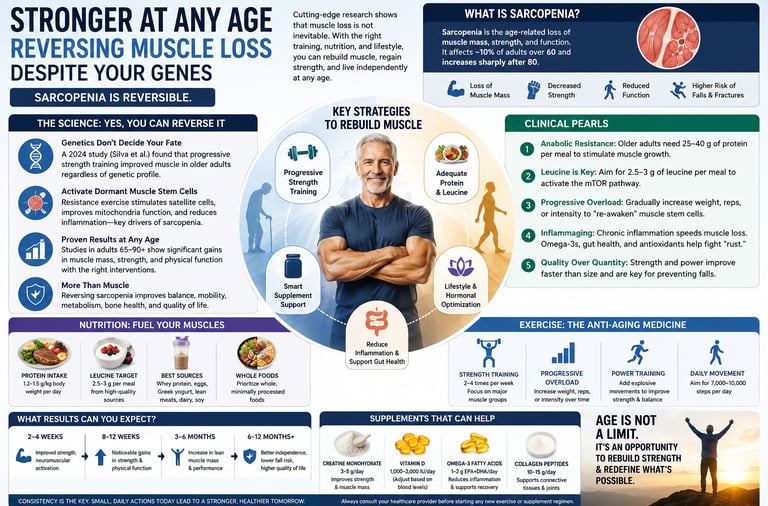
Aging doesn’t have to mean inevitable muscle loss. For decades, the prevailing belief was that as we grow older, our muscles steadily weaken, leaving us frail and dependent. But cutting-edge research is rewriting this narrative. Sarcopenia, the age-related loss of skeletal muscle mass and strength, affects roughly 10% of adults over 60 and accelerates sharply after 80, increasing the risk of falls, fractures, metabolic disorders, and loss of independence (Mao et al., 2025). Yet, the latest studies reveal an empowering truth: muscle loss is not irreversible, and your genes do not dictate your fate. Progressive resistance training, proper nutrition, and targeted supplementation can rebuild muscle, restore strength, and enhance function—even in adults in their 70s, 80s, and 90s (Silva et al., 2024; Liao et al., 2017). Furthermore, molecular insights show that resistance exercise stimulates dormant satellite cells, improves mitochondrial function, and reduces chronic inflammation, effectively counteracting the cellular processes that drive sarcopenia (Mao et al., 2025). With a multi-targeted approach addressing exercise, nutrition, inflammation, and hormonal health, older adults can reclaim vitality, independence, and metabolic health (Cacciatore et al., 2024). In other words, age is not a limit—it’s an opportunity to rebuild strength and redefine what’s possible for your body.
Clinical pearls .
1. The "Anabolic Resistance" Threshold
As we age, our muscles become less sensitive to protein—a phenomenon called anabolic resistance. While a younger person might trigger muscle growth with just 10–15 grams of protein, older adults often need a "threshold dose" of 25–40 grams in a single sitting to flip the switch from muscle breakdown to muscle building. Think of it like a light switch that gets harder to push; you need a bit more "force" (protein) to get the light to turn on.
2. Leucine: The Molecular "Ignition Key"
Not all protein is created equal for reversing muscle loss. The amino acid Leucine acts as the primary chemical signal to the mTOR pathway, which is the body’s master regulator of protein synthesis. To effectively reverse sarcopenia, each meal should contain roughly 2.5 to 3 grams of leucine. This is why high-quality sources like whey protein, eggs, and Greek yogurt are so effective—they are naturally "high-octane" fuel for your muscle’s engine.
3. Progressive Overload is the Only "Anti-Aging" Drug
Muscle won't grow unless it has a reason to. To reverse sarcopenia, you must use Progressive Overload. This means you cannot lift the same 5-pound weight for three years. You must gradually increase the weight, the number of repetitions, or the intensity of the effort. This mechanical stress "re-awakens" dormant satellite cells (muscle stem cells) that help repair and expand your muscle fibers.
4. The "Inflammaging" Factor
Chronic, low-grade inflammation—often called "inflammaging"—acts like "rust" on your muscle tissue, accelerating its breakdown. This is why a multi-pathway approach is vital. By managing inflammation through Omega-3 fatty acids and gut health optimization, you essentially clear the "rust" so that your exercise and protein intake can work more efficiently.
5. "Muscle Quality" vs. "Muscle Quantity"
Sarcopenia isn't just about the size of the muscle; it’s about the power and density. As we lose muscle, fat can begin to infiltrate the muscle tissue (similar to marbling in a steak), which weakens the muscle’s ability to contract. Clinical research shows that strength and power (how fast you can move a weight) often return faster than size, providing immediate protection against falls and fractures even before you see a "bulge" in your biceps.
What Is Sarcopenia and Why Should You Care?
Sarcopenia is the progressive loss of skeletal muscle mass, strength, and function that typically begins around age 30 and accelerates after 60. The term comes from Greek roots: "sarco" (flesh) and "penia" (loss). This isn't just about aesthetics—sarcopenia significantly impacts your quality of life, increasing risks of falls, fractures, metabolic disorders, and loss of independence.
The condition affects approximately 10% of adults over 60, with prevalence increasing dramatically in those over 80. But here's what many people don't realize: muscle loss isn't an inevitable part of aging. With the right interventions, you can not only slow the progression but actually reverse it.
The Science Behind Sarcopenia Reversal: What Research Reveals
Can You Really Reverse Sarcopenia?
The short answer is yes—and the evidence is compelling. Multiple clinical studies demonstrate that targeted interventions can effectively restore muscle mass, improve strength, and enhance physical function in older adults, even those with advanced sarcopenia.
Let's examine the groundbreaking research that's changing how we understand sarcopenia recovery.
Genetics Don't Determine Your Destiny: The Silva Study
Study Overview: Silva et al. (2024) - Progressive Strength Training and Genetic Profile
In a groundbreaking 2024 study, Silva and colleagues investigated whether genetic variations affect the ability to reverse sarcopenia through progressive strength training. This research addressed a critical question: Are some people simply unable to build muscle due to their genes?
The study followed middle-aged and older adults through a structured resistance training program, analyzing both physical outcomes and genetic markers associated with muscle growth and metabolism.
Key Findings:
Progressive strength training reversed sarcopenia stage in participants regardless of genetic profile
Individuals with supposedly "unfavorable" genetic variants still achieved significant muscle mass gains
Strength improvements occurred across all genetic groups, with no significant differences based on genetic markers
The intervention proved effective in both middle-aged and older adults
Sarcopenia stage progression was halted and reversed through consistent training
Key Takeaway: Your genes don't seal your fate when it comes to reversing sarcopenia. This research demolishes the excuse that "I'm just not genetically built to gain muscle." Progressive strength training works for everyone, regardless of genetic predisposition. This is incredibly empowering news for older adults who may have assumed their genetic makeup limited their potential.
The Silva study emphasizes that environmental factors—specifically exercise and training stimulus—can override genetic disadvantages. While genetics may influence the rate or ease of muscle gain, they don't prevent reversal of sarcopenia when proper interventions are applied.
Understanding Sarcopenia at the Molecular Level
Study Overview: Mao et al. (2025) - Sarcopenia in the Musculoskeletal System
Mao and colleagues published comprehensive research in 2025 examining the molecular and cellular mechanisms underlying sarcopenia in the musculoskeletal system. This review synthesized current understanding of how muscle loss occurs and what interventions target these mechanisms.
Key Findings:
Multiple pathways contribute to sarcopenia, including mitochondrial dysfunction, chronic inflammation, and protein synthesis decline
Satellite cell dysfunction plays a critical role in age-related muscle loss—these muscle stem cells become less responsive with age
Neuromuscular junction deterioration contributes to loss of muscle fiber activation
Mechanical loading through exercise can reactivate dormant muscle repair mechanisms
Systemic inflammation (inflammaging) accelerates muscle protein breakdown
Interventions targeting multiple pathways simultaneously show the greatest promise
Key Takeaway: Sarcopenia isn't caused by one factor—it's a multifaceted condition requiring comprehensive treatment approaches. Understanding these mechanisms helps explain why combining exercise, nutrition, and targeted supplementation produces superior results compared to single interventions.
This research reveals that resistance training doesn't just build muscle—it fundamentally changes the cellular environment, reducing inflammation, improving mitochondrial function, and reactivating muscle stem cells. The mechanical stimulus of exercise acts as a powerful signal to reverse the molecular processes driving sarcopenia.
Regenerative Therapies: The Future of Sarcopenia Treatment
Study Overview: Lo et al. (2020) - Current and Regenerative Therapeutic Approaches
Lo and colleagues conducted a comprehensive review of sarcopenia treatments, examining both established interventions and emerging regenerative therapies. This forward-looking research explored cutting-edge approaches that may revolutionize sarcopenia treatment.
Key Findings:
Traditional interventions (exercise and nutrition) remain the most evidence-based treatments
Regenerative medicine approaches show promise, including stem cell therapies and growth factor treatments
Pharmacological agents under investigation include myostatin inhibitors and selective androgen receptor modulators (SARMs)
Gene therapy targeting muscle-specific pathways is in early development stages
Combination therapies integrating multiple modalities demonstrate enhanced effectiveness
Current regenerative approaches are primarily experimental but show encouraging preliminary results
Key Takeaway: While experimental regenerative therapies offer exciting possibilities for the future, proven interventions—resistance training, proper nutrition, and evidence-based supplementation—remain the gold standard for reversing sarcopenia today. However, the therapeutic landscape is rapidly evolving.
This research highlights that we're entering an era where sarcopenia may become highly treatable through targeted biological interventions. For now, lifestyle modifications remain most accessible and effective, but future treatments may dramatically enhance outcomes.
Emerging Targets: Next-Generation Sarcopenia Interventions
Study Overview: Cacciatore et al. (2024) - Emerging Targets and Treatments
Cacciatore and colleagues published a narrative review in 2024 examining novel therapeutic targets for sarcopenia treatment. This comprehensive analysis explored emerging interventions beyond traditional exercise and nutrition approaches.
Key Findings:
Mitochondrial-targeted therapies show promise for improving muscle energy metabolism
Anti-inflammatory interventions may slow sarcopenia progression by reducing chronic inflammation
Gut microbiome modulation emerges as a potential target, with certain probiotics showing benefits
Senolytic agents that remove senescent cells may improve muscle regeneration capacity
Nutritional supplements beyond protein (omega-3 fatty acids, vitamin D, antioxidants) demonstrate synergistic effects
Combination approaches targeting multiple pathways simultaneously appear most effective
Key Takeaway: The future of sarcopenia treatment involves multi-targeted approaches addressing inflammation, cellular aging, gut health, and metabolic function alongside traditional interventions. This research underscores the complexity of sarcopenia and the need for comprehensive treatment strategies.
This emerging research suggests that optimizing gut health, reducing systemic inflammation, and supporting cellular function through targeted supplementation may enhance the effectiveness of exercise and nutrition interventions for reversing sarcopenia.
Resistance Training: The Gold Standard for Muscle Recovery
Study Overview: Liao et al. (2017) - Resistance Training Effects
Researchers Liao and colleagues conducted a systematic review and meta-analysis examining resistance training interventions in older adults with sarcopenia. This comprehensive study analyzed data from multiple randomized controlled trials to determine the effectiveness of strength training programs.
Key Findings:
Resistance training significantly increased muscle mass in sarcopenic older adults
Participants showed measurable improvements in muscle strength across various muscle groups
Physical performance enhanced substantially, with better scores on functional assessments
Effects were consistent across different training protocols and durations
Benefits observed regardless of initial sarcopenia severity
Key Takeaway: Resistance training isn't just beneficial—it's transformative for reversing sarcopenia. The meta-analysis provides robust evidence that structured strength training programs can restore both muscle quantity and quality in older adults.
This research establishes resistance training as the cornerstone of any sarcopenia treatment plan. Whether you're lifting weights, using resistance bands, or doing bodyweight exercises, progressive overload training stimulates muscle protein synthesis and promotes muscle fiber hypertrophy.
Nutrition Meets Exercise: The Powerful Combination
Study Overview: Yoshimura et al. (2019) - Rehabilitation and Nutritional Support
Yoshimura and team investigated a multimodal approach combining rehabilitation with nutritional supplementation in elderly patients with sarcopenia. This Japanese study recognized that exercise alone might not be sufficient—proper nutrition is equally critical.
Key Findings:
Combined exercise and nutritional intervention produced superior results compared to either approach alone
Participants receiving both treatments showed significant improvements in muscle mass
Functional capacity increased markedly, with better mobility and daily living performance
The intervention proved safe and well-tolerated in elderly populations
Synergistic effects observed between exercise stimulus and nutritional support
Key Takeaway: The synergy between protein supplementation and exercise amplifies muscle recovery. Adequate protein intake (especially leucine-rich sources) provides the building blocks your muscles need to respond to training stimulus.
This study underscores that nutrition for sarcopenia isn't optional—it's essential. Consuming 1.2-1.5 grams of protein per kilogram of body weight daily, distributed across meals, optimizes muscle protein synthesis and supports recovery.
Testosterone Replacement: Hormonal Intervention for Men
Study Overview: Snyder et al. (2017) - Testosterone Treatment Trial
The Testosterone Treatment Trial was a landmark multicenter, randomized, double-blind, placebo-controlled study examining testosterone replacement therapy in older men with low testosterone and sarcopenia.
Key Findings:
Testosterone treatment increased lean body mass significantly compared to placebo
Participants experienced improved muscle strength, particularly in leg press and chest press exercises
Walking distance improved, indicating better functional capacity
Benefits were most pronounced in men with the lowest baseline testosterone levels
Side effects required monitoring, emphasizing need for medical supervision
Key Takeaway: For men with confirmed low testosterone (hypogonadism), testosterone therapy can effectively combat sarcopenia. However, this intervention requires medical supervision and isn't appropriate for everyone.
This research highlights the role of hormones in muscle maintenance. Testosterone influences muscle protein synthesis, satellite cell activation, and overall anabolic processes. When levels are clinically low, replacement therapy can restore the hormonal environment necessary for muscle growth.
Vitamin D: The Sunshine Vitamin's Role in Muscle Health
Study Overview: Beaudart et al. (2014) - Vitamin D Supplementation Meta-Analysis
Beaudart and colleagues conducted a systematic review and meta-analysis investigating the effects of vitamin D supplementation on muscle function in older adults. This research examined whether correcting vitamin D deficiency could improve sarcopenia outcomes.
Key Findings:
Vitamin D supplementation improved muscle strength in individuals with baseline deficiency
Effects were most significant when vitamin D levels were raised above 30 ng/mL
Balance and physical performance showed modest improvements
Higher doses (800-1000 IU daily) were more effective than lower doses
Benefits enhanced when combined with calcium and exercise
Key Takeaway: Vitamin D deficiency is remarkably common in older adults and contributes to muscle weakness. Ensuring adequate vitamin D status through supplementation and sun exposure supports muscle function and may enhance response to exercise training.
Vitamin D receptors exist in muscle tissue, and the vitamin plays crucial roles in calcium metabolism, muscle contraction, and protein synthesis. This makes vitamin D optimization a simple yet powerful component of sarcopenia prevention and treatment.
Building Your Sarcopenia Reversal Strategy: A Comprehensive Approach
Based on the scientific evidence, here's a practical, multi-faceted approach to reversing sarcopenia:
1. Implement Progressive Resistance Training
Exercise is non-negotiable for sarcopenia reversal. The Silva (2024) study confirms this works regardless of your genetic makeup. Design a program that includes:
Frequency: Train 2-3 times per week, allowing recovery between sessions
Intensity: Work at 60-80% of your one-repetition maximum (1RM)
Exercises: Focus on compound movements (squats, deadlifts, rows, presses)
Progression: Gradually increase weight, repetitions, or sets over time
Balance: Include both upper and lower body exercises
Consistency: Maintain regular training—the genetic study showed results require sustained effort
Start conservatively, especially if you're new to strength training. Consider working with a certified trainer experienced in older adult fitness. The key is consistency and progressive overload—challenging your muscles slightly more over time.
2. Optimize Your Protein Intake
Protein consumption is the nutritional foundation of muscle recovery:
Total daily intake: Aim for 1.2-1.5g per kilogram of body weight
Distribution: Spread protein across 3-4 meals (25-30g per meal)
Quality: Choose leucine-rich sources (whey protein, eggs, lean meat, fish)
Timing: Consume protein within 2 hours post-exercise
Consistency: Maintain adequate intake daily, not just on training days
Leucine content: Ensure 2.5-3g leucine per meal for optimal muscle protein synthesis
Don't fall into the trap of concentrating protein in one meal (typically dinner). Muscle protein synthesis occurs throughout the day, and distributed protein intake maximizes muscle-building potential.
3. Address Micronutrient Deficiencies
Vitamin D and other micronutrients support muscle function:
Get tested: Check vitamin D levels (aim for 30-50 ng/mL)
Supplement wisely: Take 1000-2000 IU vitamin D3 daily if deficient
Consider magnesium: This mineral supports muscle contraction and energy production
Don't forget calcium: Essential for muscle function and bone health
Ensure adequate B vitamins: Support energy metabolism and protein synthesis
Omega-3 fatty acids: Consider supplementation for anti-inflammatory effects
Many older adults are deficient in these crucial nutrients. A comprehensive blood panel can identify specific deficiencies that may be hindering your muscle recovery.
4. Consider Evidence-Based Supplements
Based on research evidence, these supplements show promise:
Creatine monohydrate: 5g daily, enhances training response
HMB: 3g daily, reduces muscle breakdown
Whey protein: 20-30g post-workout, high-quality protein source
Omega-3 fatty acids: 2-3g daily, may reduce inflammation and support muscle synthesis
Vitamin D3: If deficient, 1000-2000 IU daily
Probiotics: Emerging evidence for gut health and muscle function connection
Always consult with your healthcare provider before starting new supplements, especially if you take medications or have health conditions.
5. Optimize Sleep and Recovery
Recovery is when muscles actually grow:
Sleep duration: Aim for 7-9 hours nightly
Sleep quality: Create a dark, cool, quiet environment
Stress management: Chronic stress elevates cortisol, which breaks down muscle
Rest days: Include at least one full rest day per week
Active recovery: Light walking or stretching on non-training days
Growth hormone, crucial for muscle repair, is released primarily during deep sleep. Chronic sleep deprivation sabotages your muscle-building efforts regardless of how well you train and eat.
6. Address Hormonal Health
For individuals with clinical hormone deficiencies:
Men with low testosterone: Discuss testosterone replacement therapy with your doctor
Consider timing: Address hormone issues early for better outcomes
Monitor regularly: Regular blood tests ensure safe, effective treatment
Comprehensive approach: Hormone therapy works best combined with exercise and nutrition
Medical supervision: Essential for safe hormone replacement
Hormone replacement isn't appropriate for everyone, and it carries risks that must be carefully weighed. However, for those with documented deficiencies, it can be a game-changer.
7. Target Multiple Pathways Simultaneously
Based on Mao et al. (2025) and Cacciatore et al. (2024), the most effective approach addresses:
Mechanical stimulus: Resistance training
Nutritional support: Adequate protein and micronutrients
Inflammation reduction: Anti-inflammatory diet, omega-3s
Gut health: Probiotic-rich foods or supplements
Mitochondrial function: Exercise, antioxidants
Cellular health: Adequate sleep, stress management
This multi-targeted approach recognizes that sarcopenia results from multiple interconnected pathways and requires comprehensive intervention
How Long Does Sarcopenia Reversal Take?
One of the most common questions is: "How quickly can I reverse sarcopenia?"
The timeline varies based on several factors:
Initial severity: Mild sarcopenia responds faster than advanced cases
Age: Younger older adults (60s-70s) typically see faster results than those over 80
Consistency: Adherence to exercise and nutrition protocols significantly impacts timeline
Individual variation: While genetics play a role (Silva, 2024), they don't prevent reversal
Genetic factors: Don't determine outcome but may influence speed of response
Realistic expectations:
4-8 weeks: Noticeable improvements in strength and function
12-16 weeks: Measurable increases in muscle mass (1-2 kg)
6-12 months: Significant reversal of sarcopenia, improved quality of life
Ongoing: Continued maintenance requires sustained effort
Research consistently shows that older adults can build muscle at any age. The Silva (2024) study confirms that genetic profile doesn't prevent reversal—everyone can improve with proper training.
Common Obstacles and How to Overcome Them
"I'm Too Old to Build Muscle"
This is a myth. Studies show muscle protein synthesis can be stimulated effectively in adults well into their 90s. The key is appropriate stimulus and adequate nutrition.
"My Genetics Won't Let Me Build Muscle"
The Silva (2024) study definitively disproves this. Progressive strength training reverses sarcopenia regardless of genetic profile. Your genes may influence how quickly you gain muscle, but they don't prevent reversal.
"Resistance Training Is Dangerous at My Age"
When done properly with appropriate progression, resistance training is extremely safe for older adults. In fact, the risks of NOT strength training (falls, fractures, loss of independence) far outweigh the risks of training.
"I Don't Have Access to a Gym"
You don't need fancy equipment. Bodyweight exercises, resistance bands, and simple dumbbells can be remarkably effective. Many of the studies cited used minimal equipment.
"I Have Joint Pain"
Exercise, when properly programmed, often reduces joint pain by strengthening supporting muscles and improving joint stability. Work with a physical therapist or qualified trainer to modify exercises as needed.
The Bigger Picture: Why Reversing Sarcopenia Matters
Beyond aesthetics and strength, reversing sarcopenia has profound implications for healthspan and quality of life:
Metabolic health: Muscle is metabolically active tissue that helps regulate blood sugar and metabolism
Bone health: Resistance training strengthens bones, reducing osteoporosis risk
Cardiovascular health: Muscle mass correlates with better cardiovascular outcomes
Cognitive function: Physical activity and muscle health support brain health
Independence: Maintaining strength preserves ability to live independently
Longevity: Muscle mass and strength are strong predictors of lifespan
Inflammation reduction: Increased muscle mass helps combat chronic inflammation (Mao et al., 2025)
Sarcopenia isn't just about muscles—it's about maintaining vitality, independence, and quality of life as you age.
Frequently Asked Questions
Q: Can sarcopenia be reversed naturally without supplements or medications?
A: Absolutely. The foundation of sarcopenia reversal is resistance training combined with adequate protein intake. The Silva (2024) study demonstrates that progressive strength training alone can reverse sarcopenia regardless of genetic profile. While supplements like creatine and vitamin D can enhance results, they're not mandatory.
Q: Do my genetics prevent me from reversing sarcopenia?
A: No. The groundbreaking Silva et al. (2024) study definitively shows that progressive strength training reverses sarcopenia regardless of genetic profile. While genetics may influence the rate or ease of muscle gain, they don't prevent reversal when proper interventions are applied.
Q: How much protein do I need daily to reverse sarcopenia?
A: Research suggests 1.2-1.5 grams of protein per kilogram of body weight daily, distributed across 3-4 meals. For a 70kg (154 lb) person, this means 84-105g of protein daily, with approximately 25-30g per meal containing 2.5-3g leucine for optimal muscle protein synthesis.
Q: Is walking enough to prevent or reverse sarcopenia?
A: While walking is excellent for cardiovascular health and general fitness, it's insufficient for reversing sarcopenia. You need resistance training that challenges your muscles with progressive overload. Walking can complement a strength training program but shouldn't replace it.
Q: What's the best time of day to exercise for muscle building?
A: Consistency matters more than timing. Choose a time you can maintain long-term. That said, some evidence suggests training earlier in the day may slightly enhance muscle protein synthesis and adherence rates.
Q: Can women reverse sarcopenia as effectively as men?
A: Yes. While men may experience slightly greater absolute muscle gains due to higher testosterone levels, women respond robustly to resistance training and can effectively reverse sarcopenia. The relative improvements in strength and function are similar between sexes.
Q: What role does inflammation play in sarcopenia?
A: Chronic inflammation (inflammaging) significantly contributes to sarcopenia by accelerating muscle protein breakdown (Mao et al., 2025). Reducing inflammation through exercise, anti-inflammatory nutrition, omega-3 supplementation, and gut health optimization enhances sarcopenia reversal.
Q: Are there medications specifically for sarcopenia?
A: Currently, no medications are FDA-approved specifically for sarcopenia. Testosterone replacement therapy is approved for hypogonadism and can improve muscle mass in men with low testosterone. Several drugs are in development, including myostatin inhibitors and SARMs (Lo et al., 2020), but lifestyle interventions remain the primary treatment.
Q: Can sarcopenia come back after I've reversed it?
A: Yes, if you stop resistance training and adequate protein intake. Muscle maintenance requires ongoing stimulus. However, the good news is that maintaining muscle is easier than building it initially. Reduced training frequency can maintain gains once achieved.
Q: What if I have diabetes, heart disease, or other chronic conditions?
A: Most chronic conditions benefit from resistance training and improved muscle mass. However, you should work with your healthcare team to ensure your exercise program is appropriate for your specific situation. Often, modifications rather than avoidance are needed.
Q: How does gut health affect sarcopenia?
A: Emerging research (Cacciatore et al., 2024) suggests the gut microbiome influences muscle health through several mechanisms, including nutrient absorption, inflammation regulation, and metabolic signaling. Probiotic supplementation and fermented foods may support sarcopenia reversal.
Q: What are senolytic agents and can they help with sarcopenia?
A: Senolytic agents are compounds that remove senescent (aged, dysfunctional) cells from the body. Research suggests these cells accumulate with age and impair muscle regeneration (Cacciatore et al., 2024). While senolytics are experimental, they represent a promising future therapy for sarcopenia.
Take Action: Your Next Steps
Ready to start your sarcopenia reversal journey? Here's what to do today:
Immediate Actions:
Schedule a check-up with your healthcare provider to discuss sarcopenia screening and any concerns
Assess your current protein intake by tracking your diet for 3 days
Find a qualified trainer experienced in working with older adults, or explore evidence-based home exercise programs
Get your vitamin D levels checked if you haven't had them tested recently
Stop using genetics as an excuse—the Silva (2024) study proves training works for everyone
This Week:
Start resistance training with bodyweight exercises or light weights—even one session is a start
Increase protein at one meal to 25-30 grams with leucine-rich sources
Set specific, measurable goals (e.g., "perform 10 bodyweight squats" or "walk up two flights of stairs without fatigue")
Create a sustainable schedule that integrates exercise into your weekly routine
Address inflammation by adding anti-inflammatory foods like fatty fish, berries, and leafy greens
This Month:
Establish consistent training habit—aim for 2-3 resistance training sessions weekly
Optimize your nutrition by ensuring adequate protein at each meal with proper leucine content
Consider appropriate supplements after consulting with your healthcare provider
Track your progress with measurements, photos, or functional assessments
Address gut health by incorporating probiotic-rich foods or supplements
Evaluate sleep quality and make improvements to support recovery
Remember: sarcopenia reversal is a marathon, not a sprint. The research is crystal clear—with consistent effort, proper programming, and adequate nutrition, you can reclaim lost muscle, restore strength, and enhance your quality of life at any age, regardless of your genetic makeup.
Your muscles haven't forgotten how to grow. They're just waiting for the right stimulus and support. The science proves it works for everyone. The time to start is now.
Author’s Note
As a physician and researcher in internal medicine, my goal is to bridge the gap between cutting-edge science and practical strategies that truly improve lives. Sarcopenia—the age-related loss of muscle mass and strength—is often misunderstood as an inevitable consequence of aging. The research clearly shows it is preventable and reversible, even in adults well into their 70s, 80s, and beyond (Silva et al., 2024; Mao et al., 2025).
This article synthesizes decades of clinical studies, molecular research, and emerging therapies to provide a comprehensive, evidence-based roadmap for maintaining and rebuilding muscle. I emphasize a multi-targeted approach—resistance training, optimized nutrition, supplementation, sleep, and hormonal health—because sarcopenia is a multifactorial condition that requires holistic intervention.
My intention is to empower readers, dispelling myths about age and genetics, and offering actionable guidance that can be implemented safely at any stage of life. While emerging regenerative therapies are promising, the foundation of muscle health remains lifestyle-driven and evidence-backed. I encourage readers to take this information, discuss it with their healthcare providers, and start building strength today—it’s never too late.
Disclaimer: This article is for informational purposes only and does not constitute medical advice. Individual circumstances vary, and treatment decisions should always be made in consultation with qualified healthcare professionals.
Related Articles
Can Muscle Loss Be Reversed? Scientists Discover the FoxO-DEAF1-mTOR Pathway Behind Muscle Aging
Sarcopenic Obesity: How to Lose Fat Safely Without Losing Muscle | DR T S DIDWAL
Why We Age: The Hidden Role of Chronic Inflammation in Accelerating Aging | DR T S DIDWAL
Vitamin D Deficiency and Sarcopenia: The Critical Connection | DR T S DIDWAL
How to Prevent Sarcopenia: Fight Age-Related Muscle Loss and Stay Strong | DR T S DIDWAL
Who Gets Sarcopenia? Key Risk Factors & High-Risk Groups Explained | DR T S DIDWAL
Sarcopenia: The Complete Guide to Age-Related Muscle Loss and How to Fight It | DR T S DIDWAL
Best Exercises for Sarcopenia: Strength Training Guide for Older Adults | DR T S DIDWAL
Sarcopenia Treatment Options: Medical and Lifestyle Interventions That Actually Work | DR T S DIDWAL
References
Mao, X., Lv, K., Qi, W. et al. Research progress on sarcopenia in the musculoskeletal system. Bone Res 13, 78 (2025). https://doi.org/10.1038/s41413-025-00455-8
Silva, A. C. D., Mapa, V., Ferreira-Júnior, J. B., Oliveira, E. C., Becker, L. K., Rosse, I., & Coelho, D. B. (2024). Progressive strength training can reverse sarcopenia stage in middle-aged and older adults regardless of their genetic profile. Archives of gerontology and geriatrics, 117, 105182. https://doi.org/10.1016/j.archger.2023.105182
Lo, J. H., U, K. P., Yiu, T., Ong, M. T., & Lee, W. Y. (2020). Sarcopenia: Current treatments and new regenerative therapeutic approaches. Journal of orthopaedic translation, 23, 38–52. https://doi.org/10.1016/j.jot.2020.04.002
Cacciatore, S., Calvani, R., Esposito, I., Massaro, C., Gava, G., Picca, A., Tosato, M., Marzetti, E., & Landi, F. (2024). Emerging Targets and Treatments for Sarcopenia: A Narrative Review. Nutrients, 16(19), 3271. https://doi.org/10.3390/nu16193271
Beaudart, C., Buckinx, F., Rabenda, V., Gillain, S., Cavalier, E., Slomian, J., Petermans, J., Reginster, J. Y., & Bruyère, O. (2014). The effects of vitamin D on skeletal muscle strength, muscle mass, and muscle power: A systematic review and meta-analysis of randomized controlled trials. Journal of Clinical Endocrinology & Metabolism, 99(11), 4336-4345. https://doi.org/10.1210/jc.2014-1742
Bogaerts, A., Verschueren, S., Delecluse, C., Claessens, A. L., & Boonen, S. (2007). Effects of whole body vibration training on postural control in older individuals: A 1 year randomized controlled trial. Gait & Posture, 26(2), 309-C316. https://doi.org/10.1016/j.gaitpost.2006.09.078
Snyder, P. J., Bhasin, S., Cunningham, G. R., Matsumoto, A. M., Stephens-Shields, A. J., Cauley, J. A., Gill, T. M., Barrett-Connor, E., Swerdloff, R. S., Wang, C., Ensrud, K. E., Lewis, C. E., Farrar, J. T., Cella, D., Rosen, R. C., Pahor, M., Crandall, J. P., Molitch, M. E., Resnick, S. M., Budoff, M., … Ellenberg, S. S. (2018). Lessons From the Testosterone Trials. Endocrine reviews, 39(3), 369–386. https://doi.org/10.1210/er.2017-00234