Circuit Training for Longevity: Science-Backed Benefits for Aging Muscles & Heart Health
Recent research shows circuit training reduces arterial stiffness and preserves muscle mass in older adults. Learn how to stay "life strong" with this science-backed approach.
EXERCISEAGING
Dr. T.S. Didwal, M.D.(Internal Medicine)
1/20/202616 min read
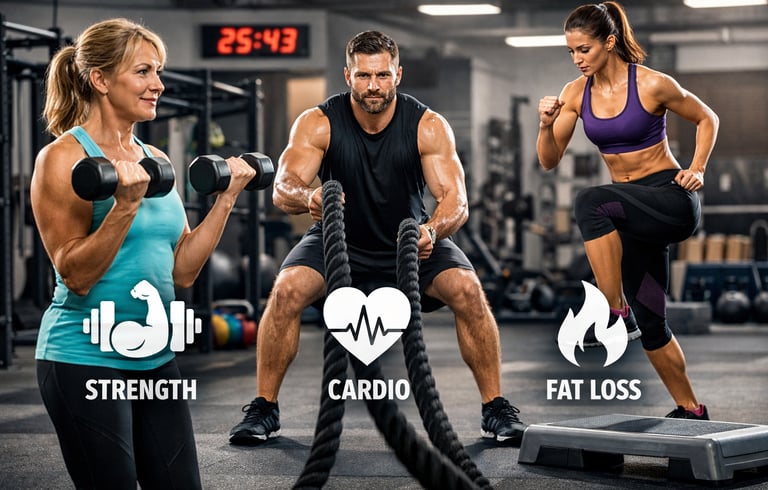
What if you could build strength, burn fat, improve cardiovascular fitness, and boost metabolic health—all in a single workout that takes less than an hour? This isn’t marketing hype. It’s the scientifically validated reality of circuit training, a time-efficient training method that seamlessly integrates resistance exercise, cardiovascular conditioning, and metabolic stress into one powerful fitness protocol. As modern fitness evolves, circuit training is emerging as a science-backed, multifunctional workout strategy proven effective across age groups, genders, and athletic populations.
Recent research indicates that resistance circuit training enhances body composition, improves muscular strength, and optimises cardiorespiratory fitness more effectively than traditional exercise formats. In older adults, circuit-based workouts significantly improve lean muscle mass, aerobic capacity, and metabolic health markers such as glucose control and lipid profiles (Hu et al., 2024). Among trained women, high-intensity circuit training yields strength gains comparable to those of traditional resistance training, while also providing superior cardiovascular adaptations and shorter session durations (Carpenter et al., 2025).
The benefits extend beyond aesthetics. Meta-analyses confirm that circuit training increases VO₂ max, reduces fat mass, elevates resting metabolic rate, and improves overall physiological resilience (Ramos-Campo et al., 2021). For populations facing hormonal transitions—such as pre- and postmenopausal women—circuit-based hydraulic training supports lean mass preservation, improved body composition, and sustainable resistance progression (Socha et al., 2025).
In a fitness world dominated by time constraints, circuit training offers a comprehensive, evidence-based solution that maximizes results while minimizing workout duration. It’s not just efficient—it’s transformational.
Clinical pearls
1. The "Concurrent Training" Efficiency
Scientific Pearl: Circuit training effectively bypasses the "interference effect." Research shows that for most populations, the cardiovascular stimulus in a circuit does not blunt the mechanical tension required for hypertrophy and strength gains.
Patient-Friendly Pearl: You don’t have to choose between a "cardio day" and a "weights day." Circuit training lets you build muscle and improve your heart health at the exact same time, cutting your gym time in half.
2. Vascular Elasticity in Aging
Scientific Pearl: Resistance-based circuits significantly reduce arterial stiffness and systolic blood pressure in community-dwelling older adults, likely through improved nitric oxide bioavailability and shear stress during rapid interval transitions.
Patient-Friendly Pearl: As we get older, our arteries can become stiff like an old garden hose. Circuit training acts like a "tune-up" for your pipes, keeping your blood vessels flexible and helping to lower your blood pressure naturally.
3. The Menopausal Metabolic Shield
Scientific Pearl: For pre- and postmenopausal women, circuit hydraulic weight training provides a variable resistance stimulus that counteracts the estrogen-deficiency-related decline in lean body mass and metabolic rate.
Patient-Friendly Pearl: During menopause, your body naturally wants to lose muscle and gain fat. Think of circuit training as a "shield"—it helps you keep the muscle you have and keeps your metabolism burning hot even when your hormones are changing.
4. Acute Mechanical Programming
Scientific Pearl: Circuit effectiveness is highly dependent on the "acute response." Strategic exercise sequencing (alternating agonists/antagonists or upper/lower body) manages localized fatigue, allowing for higher total volume and mechanical load.
Patient-Friendly Pearl: The order of your exercises matters. By jumping from an upper-body move (like a push-up) to a lower-body move (like a squat), you allow one muscle group to "breathe" while the other works, letting you do more work without burning out too fast.
Shutterstock
5. Functional Agility Transfer
Scientific Pearl: Unlike traditional stationary lifting, circuit training improves multi-directional speed and agility by mimicking the metabolic and mechanical demands of "stop-and-go" sports (like Futsal), enhancing neuromuscular coordination.
Patient-Friendly Pearl: Circuit training doesn't just make you "gym strong"; it makes you "life strong." Because it involves moving quickly between different stations, it improves your balance and your ability to react fast, whether you’re playing a sport or just catching yourself from a trip.
Circuit Training: The Science-Backed Approach to Transforming Your Fitness in Less Time
What Is Circuit Training? Defining the Methodology
Circuit training is a form of body conditioning that combines cardiovascular exercise with resistance training in rapid succession, with minimal rest between exercises. Rather than completing multiple sets of one exercise before moving to the next (traditional strength training), circuit participants move from station to station, performing different exercises targeting various muscle groups.
The beauty of circuit training protocols lies in their adaptability. Participants can adjust intensity, exercise selection, rest periods, and training frequency to match their fitness level and specific goals. This flexibility makes circuit-based training accessible to everyone from beginners to elite athletes.
Key characteristics of effective circuit training workouts include:
Multiple exercises targeting different muscle groups
Minimal rest between stations (typically 15-45 seconds)
Integration of both strength training and cardiovascular conditioning
Customizable intensity and duration
Time-efficient format (usually 30-60 minutes total)
Research Study 1: Comprehensive Effects on Older Adults' Health
Study Overview: Hu et al. (2024) - Resistance Circuit Training and Healthy Aging
Hu, Xia, Zeng, Ye, and Mei (2024) conducted a comprehensive systematic review and meta-analysis examining the effects of resistance circuit training on comprehensive health indicators in older adults. Published in Scientific Reports, this landmark study synthesized evidence from multiple trials to determine whether circuit-based resistance training could meaningfully improve health outcomes in aging populations.
Key Findings and Implications
The research demonstrated that resistance circuit training produces significant improvements across multiple health indicators in older adults, including:
Body composition changes (increased lean mass, reduced fat mass)
Muscular strength improvements (enhanced functional capacity)
Cardiovascular fitness gains (improved aerobic capacity)
Metabolic health markers (better glucose control and blood lipid profiles)
Why This Matters for Older Adults
As we age, maintaining muscular strength and cardiovascular fitness becomes increasingly important for independence, fall prevention, and chronic disease management. Traditional strength training programs often fail to address cardiovascular needs, while dedicated cardio workouts may not preserve muscle mass. Circuit training for older adults elegantly solves this dilemma by simultaneous addressing both concerns.
Key Takeaway: For aging populations, resistance circuit training offers a comprehensive health solution that improves multiple physiological systems simultaneously, making it an efficient use of limited exercise time.
Research Study 2: Circuit Training vs. Traditional Strength Methods
Study Overview: Carpenter et al. (2025) - High-Intensity Circuit vs. Traditional Strength Training
Carpenter, Helms, Pendakur, Hibbert, and Schubert (2025) directly compared the physiological responses to high-intensity circuit training versus traditional strength training in trained women. This recent study, published in the European Journal of Sport Science, provides crucial insights for individuals wondering whether circuit training effectiveness matches conventional strength protocols.
Key Findings and Comparative Analysis
The research revealed that high-intensity circuit training produces comparable or superior outcomes to traditional strength training across several physiological response metrics:
Similar muscular strength gains between modalities
Superior cardiovascular adaptations in circuit training groups
Comparable metabolic hormone responses
Enhanced time efficiency with circuit-based training
Reduced training duration without sacrificing strength outcomes
The Strength-Cardio Integration Advantage
One of the most significant findings from this research is that circuit training doesn't require choosing between strength development and cardiovascular fitness. Trained women achieved strength gains equivalent to those doing traditional resistance training, while simultaneously improving aerobic capacity—a benefit rarely seen with conventional strength protocols.
Key Takeaway: For trained individuals, circuit training effectiveness equals traditional methods for strength while providing superior cardiovascular benefits, making it a time-efficient alternative for comprehensive fitness development.
Research Study 3: Body Composition, Strength, and Cardiorespiratory Outcomes
Study Overview: Ramos-Campo et al. (2021) - Comprehensive Meta-Analysis of Circuit Training Effects
Ramos-Campo, Andreu Caravaca, Martínez-Rodríguez, and Rubio-Arias (2021) conducted a detailed meta-analysis focusing specifically on body composition, strength development, and cardiorespiratory fitness improvements from resistance circuit-based training. Published in Biology, this systematic review synthesized evidence demonstrating the multifaceted benefits of this training approach.
Documented Improvements Across All Fitness Domains
The meta-analysis confirmed that participants engaging in resistance circuit-based training demonstrated:
Meaningful body composition changes (increased muscle mass, decreased adiposity)
Significant strength improvements across major muscle groups
Substantial gains in cardiorespiratory fitness (VO₂ max improvements)
Consistency of results across diverse participant populations
Dose-dependent responses (greater improvements with increased training frequency)
Why Body Composition Changes Matter Beyond Aesthetics
While visible body composition improvements certainly boost confidence and motivation, the metabolic implications are equally important. Increased lean muscle mass elevates resting metabolic rate, improves insulin sensitivity, and reduces chronic disease risk—benefits that extend far beyond appearance. The cardiorespiratory fitness gains documented in this research translate to improved daily function, reduced cardiovascular disease risk, and enhanced quality of life.
Key Takeaway: Circuit training benefits span all three major fitness domains simultaneously, with body composition changes reflecting important metabolic and health improvements, not merely aesthetic transformations.
Research Study 4: Acute Physiological and Mechanical Responses
Study Overview: Hermosilla-Perona et al. (2025) - Circuit Training Structures and Performance
Hermosilla-Perona, Martín-Castellanos, Pereira-Monteiro, and colleagues (2025) conducted a cross-sectional study examining how different circuit training structures influence acute physiological and mechanical performance responses. Published in Scientific Reports, this research provides practical guidance for program design.
Understanding Acute Training Responses
This study investigated immediate responses to training, examining how circuit training workout structure—including exercise order, rest intervals, and intensity—affects performance during individual sessions. Understanding acute responses helps trainers and participants optimize each workout for maximum benefit.
Key Findings on Training Structure Optimization
Circuit structure significantly impacts acute performance (exercise sequence matters)
Rest period duration affects subsequent performance quality
Physiological stress responses vary based on training configuration
Mechanical performance is influenced by fatigue accumulation patterns
Optimized structures can enhance training efficiency and adaptation
Practical Applications for Program Design
These findings suggest that simply throwing exercises together doesn't maximize circuit training benefits. Thoughtful programming—considering which muscles tire first, how fatigue accumulates, and optimal recovery between exercises—substantially improves training outcomes. This research supports evidence-based program design rather than arbitrary exercise selection.
Key Takeaway: Circuit training programs should be strategically structured, not randomly assembled, to optimize physiological stress and mechanical performance for superior adaptation and results.
Research Study 5: Cardiovascular Health in Community-Dwelling Older Adults
Study Overview: Hu et al. (2025) - Blood Pressure, Arterial Stiffness, and Body Composition
Hu, Jiang, Hu, Shen, and Gu (2025) focused specifically on cardiovascular health outcomes, examining how circuit-based resistance training affects blood pressure, arterial stiffness, and body composition in community-dwelling older adults. Published in Frontiers in Physiology, this recent meta-analysis addresses critical health concerns in aging populations.
Why Cardiovascular Health Markers Matter in Aging
Hypertension and arterial stiffness are major cardiovascular disease risk factors in older adults, often leading to heart attacks, strokes, and reduced quality of life. Unlike pharmaceutical interventions, circuit training addresses these issues while simultaneously improving body composition and functional capacity—providing comprehensive health benefits without medication side effects.
Significant Findings for Cardiovascular Protection
The research confirmed that circuit-based resistance training produces:
Meaningful reductions in blood pressure (both systolic and diastolic)
Decreased arterial stiffness (improved vascular health)
Favorable body composition changes (enhanced muscle-to-fat ratio)
Sustained cardiovascular benefits across training duration
Improved cardiovascular function at rest and during activity
The Integrated Health Benefit Model
This research illustrates an important principle: circuit training doesn't create isolated improvements in one system. Instead, the comprehensive physiological stress of combined strength and cardiovascular exercises produces coordinated benefits across multiple systems. Improved blood pressure regulation accompanies increased muscular strength, enhanced body composition, and improved cardiorespiratory fitness.
Key Takeaway: For older adults concerned about cardiovascular health, circuit training benefits extend beyond general fitness to include specific protective effects on blood pressure and arterial function, representing a non-pharmacological approach to cardiovascular disease prevention.
Research Study 6: Gender-Specific Adaptations During Menopause Transition
Study Overview: Socha et al. (2025) - Circuit Hydraulic Weight Training in Pre- and Postmenopausal Women
Socha, Ćwieląg, and Andrzejewski (2025) investigated circuit hydraulic weight interval training effects on body composition and resistance progression in recreationally exercising pre- and postmenopausal women across an 18-week quasi-experimental design. Published in Frontiers in Physiology, this study addresses fitness challenges specific to women navigating hormonal transitions.
Understanding Menopause and Fitness Challenges
The menopausal transition brings profound hormonal changes affecting body composition, muscle retention, bone density, and metabolic rate. Traditional training approaches often fail to address these specific challenges. Circuit hydraulic weight training offers potential advantages through variable resistance and efficient training protocols.
Key Study Findings on Pre- and Postmenopausal Responses
The 18-week research documented that:
Significant body composition improvements in both pre- and postmenopausal groups
Progressive resistance increases throughout the training period
Maintenance or enhancement of lean muscle mass during hormonal transition
Favorable metabolic responses in postmenopausal participants
Sustained adherence and engagement with circuit training protocols
Why This Matters for Women's Health
Women experiencing menopausal transition often face accelerated muscle loss and body composition shifts due to declining estrogen. The evidence that circuit hydraulic weight training produces significant improvements suggests this methodology can effectively counteract age-related and hormone-related fitness declines. The 18-week duration also demonstrates that meaningful changes occur within realistic timeframes.
Key Takeaway: Circuit training benefits for women are particularly pronounced during menopause transition, with circuit hydraulic weight training effectively maintaining muscle mass and improving body composition during a physiologically challenging period.
Research Study 7: Athletic Performance Enhancement
Study Overview: Wang & Anek (2025) - Circuit Strength Training for Futsal Athletes
Wang and Anek (2025) examined how circuit strength training influences muscle strength, speed, and agility in Chinese domestic futsal athletes. Published in the Interdisciplinary Academic and Research Journal, this research demonstrates circuit training effectiveness for sport-specific performance development.
Sport-Specific Performance Demands
Futsal (indoor soccer) demands rapid acceleration, deceleration, directional changes, and sustained effort—requiring simultaneous development of strength, speed, and agility. Traditional strength training programs focusing solely on maximal strength often neglect sport-specific conditioning, while pure conditioning work may sacrifice strength gains. Circuit strength training uniquely addresses all three performance qualities.
Key Findings for Athletic Development
The research demonstrated that circuit strength training produces:
Significant improvements in muscular strength (sport-specific measurement)
Enhanced speed development (linear and multi-directional)
Substantial agility improvements (directional change ability)
Transfer to on-court performance (practical sport relevance)
Efficient training for competitive athletes (time-constrained improvement)
Bridging Laboratory Findings to Real-World Performance
While academic research often measures isolated qualities, this study validated that circuit training benefits transfer to actual sports performance. Athletes didn't simply display laboratory strength gains; they became faster and more agile—exactly the qualities needed for competitive futsal success.
Key Takeaway: For competitive athletes, circuit strength training provides comprehensive performance enhancement across strength, speed, and agility domains simultaneously, offering superior sport-specific conditioning compared to isolated training approaches.
Research Study 8: Comprehensive Analysis of Benefits and Drawbacks
Study Overview: Kumar et al. (2023) - Balanced Assessment of Circuit Training
Kumar, Nara, and Dhull (2023) provided a comprehensive analysis of circuit training benefits and drawbacks across diverse fitness goals. Published in the Journal of Sports Science and Nutrition, this critical examination offers balanced perspective on when circuit training excels and where limitations exist.
Identifying Optimal Use Cases
The analysis revealed that circuit training produces superior outcomes for:
General fitness development (cardiovascular plus strength)
Time-limited training situations (busy professionals)
Metabolic conditioning (improved calorie expenditure)
Health marker improvement (blood pressure, body composition, fitness)
Adherence and sustainability (engaging, varied workouts)
Honest Assessment of Limitations
Pure maximal strength development (traditional methods may exceed results)
Specialized endurance training (sport-specific ultradistance events)
Highly focused single-quality development (when one attribute dominates)
Participants with specific injuries (some circuit configurations problematic)
The Nuanced Reality of Training Methods
This study's contribution lies in avoiding oversimplification. Circuit training isn't universally superior for every person and every goal. Rather, it's an exceptionally effective methodology for the majority of fitness objectives, particularly for healthy individuals seeking comprehensive health improvements within realistic time constraints.
Key Takeaway: Circuit training benefits are substantial and well-documented for most fitness goals, though specialized training objectives sometimes benefit from more focused approaches. For comprehensive health and fitness, circuit training represents an evidence-based, practical solution.
Synthesizing the Evidence: Common Themes Across Research
Examining all eight studies collectively reveals consistent patterns supporting circuit training benefits:
Universal Benefits Across Populations
Whether examining older adults, trained women, menopausal populations, or competitive athletes, circuit training consistently produces meaningful improvements in strength, body composition, and cardiovascular fitness. This consistency across diverse populations strengthens confidence in the methodology's effectiveness.
Time Efficiency Without Quality Compromise
Multiple studies confirm that circuit training's time efficiency doesn't compromise results. Trained women achieved strength gains equivalent to longer traditional workouts. Older adults experienced comprehensive health improvements. This efficiency makes fitness sustainable for realistic human schedules.
Metabolic and Cardiovascular Integration
Beyond isolated strength or cardio improvements, circuit training addresses fundamental health markers—blood pressure, arterial stiffness, body composition, metabolic function. This integration reflects physiological reality: genuine health requires comprehensive adaptation.
Adaptability to Individual Needs
From hydraulic equipment modifications for menopausal women to sport-specific structures for futsal athletes, circuit training protocols adapt to individual needs while maintaining effectiveness. This flexibility extends applicability across ages, abilities, and objectives.
Practical Implementation: Creating Your Circuit Training Program
Program Design Principles
Based on the evidence, effective circuit training programs should include:
Exercise Selection: Choose 6-10 exercises targeting different muscle groups (upper body, lower body, core). Alternate between upper and lower body movements to allow partial recovery.
Intensity Prescription: Use 60-75% of your one-repetition maximum for strength development, or moderate-to-high intensity (RPE 6-8 out of 10) for general fitness.
Rest Intervals: Research supports 20-45 seconds between stations. Longer rest (45+ seconds) emphasizes strength; shorter rest (15-20 seconds) emphasizes metabolic conditioning.
Training Frequency: 2-3 sessions weekly allows adequate recovery while providing sufficient stimulus for adaptation.
Progression Strategy: Following research on progressive overload, increase either weight, repetitions, reduced rest time, or additional rounds every 2-4 weeks.
Sample Beginner Circuit Training Workout
Complete 3 rounds with minimal rest between exercises (30 seconds), 90 seconds between rounds:
Goblet Squats – 12 repetitions
Push-ups – 8-12 repetitions
Dumbbell Rows – 10 per side
Reverse Lunges – 10 per leg
Dumbbell Shoulder Press – 10 repetitions
Plank Hold – 30-45 seconds
Total time: 20-25 minutes
Sample Intermediate Circuit Training Workout
Complete 4 rounds with 30-second rest between exercises, 60 seconds between rounds:
Barbell Back Squats – 8 repetitions
Bench Press – 8 repetitions
Barbell Deadlifts – 6 repetitions
Pull-ups – 6-10 repetitions
Dumbbell Walking Lunges – 30 seconds
Cable Wood Chops – 10 per side
Total time: 30-35 minutes
Frequently Asked Questions About Circuit Training
Q1: Is circuit training suitable for absolute beginners?
A: Yes, with modifications. Begin with bodyweight exercises, minimal rounds, and longer rest intervals. Progress gradually by increasing difficulty, reducing rest, or adding rounds. Always prioritize proper form over speed or intensity.
Q2: How often should I perform circuit training weekly?
A: Research supports 2-3 sessions weekly. This frequency provides sufficient training stimulus while allowing 48 hours between intense sessions for recovery. Some individuals benefit from mixing circuit days with lighter activity days.
Q3: Can circuit training build muscle mass?
A: Yes, but with caveats. Circuit training with moderate-to-heavy weights (60-75% of maximum) and adequate nutrition produces meaningful lean muscle gains. However, those pursuing maximal muscle hypertrophy might benefit from periodically including higher-volume strength phases.
Q4: Is circuit training appropriate for older adults?
A: Absolutely. Research specifically examined older adult populations, documenting significant improvements in strength, body composition, cardiovascular fitness, and important health markers like blood pressure. Always consult healthcare providers before starting any new program.
Q5: How does circuit training compare to CrossFit-style workouts?
A: While related, they differ meaningfully. Circuit training emphasizes systematic progression through stations with controlled variables. CrossFit emphasizes functional movements, high intensity, and competitive elements. Both are effective; the better choice depends on personal preferences and goals.
Q6: What equipment do I need for circuit training?
A: Options range from minimal (bodyweight) to extensive (dumbbells, barbells, machines). Research supports that circuit training effectiveness depends more on consistent training and proper progression than equipment sophistication. Start with what's available and progress as desired.
Q7: Can I do circuit training at home?
A: Definitely. Home circuits use bodyweight exercises (push-ups, squats, lunges, planks) or minimal equipment (dumbbells, resistance bands). Effectiveness depends on consistent training and progressive challenge, not fancy facilities.
Q8: How long before I see results from circuit training?
A: Research documents meaningful improvements within 8-12 weeks. Body composition changes and increased strength often appear within 4-6 weeks with consistent training and proper nutrition. Results vary based on starting fitness level, consistency, and lifestyle factors.
Q9: Is circuit training effective for fat loss?
A: Yes. Circuit training elevates metabolic rate during workouts, increases lean muscle mass (which elevates resting metabolism), and can improve metabolic health markers. Combined with appropriate nutrition, circuit training effectively supports body composition improvements.
Q10: Can circuit training be personalized for specific goals?
A: Absolutely. Sport-specific circuits can enhance speed, strength, and agility. Health-focused circuits emphasize cardiovascular fitness and body composition. Aging-focused circuits prioritize functional strength and fall prevention. The methodology adapts to virtually any legitimate fitness objective.
Key Takeaways: What the Research Really Says
Comprehensive Benefits: Circuit training simultaneously improves strength, cardiovascular fitness, and body composition—unusual among training methodologies.
Evidence-Based Effectiveness: Systematic reviews and meta-analyses consistently document circuit training benefits across diverse populations, lending strong scientific credibility.
Time Efficiency: Circuit training delivers results in 30-45 minute sessions, making it sustainable for busy individuals without sacrificing outcomes.
Population Flexibility: From older adults to competitive athletes, from pre-menopausal to postmenopausal women, from recreationally active individuals to trained athletes, circuit training produces meaningful results.
Health Marker Improvements: Beyond fitness, circuit training improves critical health indicators including blood pressure, body composition, and cardiovascular function.
Practical Implementation: Effective circuit training doesn't require expensive equipment or specialized facilities—proper programming matters more than elaborate equipment.
Sustainable Adherence: The varied, engaging nature of circuit training supports long-term consistency, critical for achieving and maintaining fitness.
Balanced Perspective: While circuit training excels for most objectives, specialized goals sometimes benefit from more focused approaches.
Conclusion: Why Circuit Training Matters Now More Than Ever
In an era where time represents our most precious resource, circuit training offers a legitimate solution to the seemingly impossible choice between strength development and cardiovascular conditioning. The scientific evidence—from peer-reviewed meta-analyses to targeted intervention studies—consistently demonstrates that this training methodology delivers comprehensive benefits across multiple fitness and health domains.
Whether you're a professional juggling career and family responsibilities, an aging adult prioritizing health maintenance and independence, an athlete seeking competitive advantage, or someone experiencing hormonal transitions requiring specific physiological support, circuit training benefits extend to your situation.
The studies examined throughout this article, published in prestigious journals like Scientific Reports, Frontiers in Physiology, and European Journal of Sport Science, represent rigorous scientific evaluation. They document not theoretical possibilities but measured, reproducible results. Circuit training effectiveness isn't marketing hype—it's evidence-based fact.
This doesn't mean circuit training is universally perfect for every goal or person. Some highly specialized objectives benefit from more focused approaches. However, for the vast majority of fitness objectives, circuit training represents an exceptionally effective, time-efficient, adaptable methodology supported by current scientific evidence.
Author’s Note
As a clinician, researcher, and educator, my goal is to translate complex scientific evidence into practical, actionable knowledge that empowers individuals to improve their health. Every insight presented in this article is grounded in peer-reviewed research, clinical experience, and a commitment to scientific accuracy. While exercise science continues to evolve rapidly, the core message remains clear: structured movement—particularly circuit-based resistance training—has transformative effects on strength, metabolic health, and long-term physical resilience.
I encourage readers to approach fitness not merely as a lifestyle choice but as a foundational therapeutic tool supported by decades of evidence. Whether you are an older adult seeking to preserve mobility, an athlete pursuing performance gains, or someone beginning your fitness journey, the science shows that meaningful progress is achievable at any age.
This article is part of a larger body of ongoing work exploring exercise physiology, metabolic health, and evidence-based training strategies. My mission is to bridge the gap between scientific research and real-world application in a way that is accessible, accurate, and deeply practical.
Thank you for taking the time to engage with this work. I hope it inspires you to explore your physical potential and embrace exercise as a lifelong investment in strength, health, and longevity. If you apply these principles consistently, the science is clear—you will change your body, your health, and your future.
Disclaimer: This article is for informational purposes only and does not constitute medical advice. Individual circumstances vary, and treatment decisions should always be made in consultation with qualified healthcare professionals.
Related Articles
Stronger at Any Age: Reversing Muscle Loss Despite Your Genes | DR T S DIDWAL
Vitamin D Deficiency and Sarcopenia: The Critical Connection | DR T S DIDWAL
Muscle Loss and Cardiovascular Disease: The Overlooked Connection You Need to Know | DR T S DIDWAL
How to Prevent Sarcopenia: Fight Age-Related Muscle Loss and Stay Strong | DR T S DIDWAL
Who Gets Sarcopenia? Key Risk Factors & High-Risk Groups Explained | DR T S DIDWAL
Sarcopenia: The Complete Guide to Age-Related Muscle Loss and How to Fight It | DR T S DIDWAL
Best Exercises for Sarcopenia: Strength Training Guide for Older Adults | DR T S DIDWAL
Vitamin D Deficiency and Sarcopenia: The Critical Connection | DR T S DIDWAL
References
Carpenter, S. L., Helms, E. R., Pendakur, R. C., Hibbert, J. E., & Schubert, M. M. (2025). Effects of high intensity circuit versus traditional strength training on physiological responses in trained women. European Journal of Sport Science, 25(5), e12298. https://doi.org/10.1002/ejsc.12298
Hermosilla-Perona, F., Martín-Castellanos, A., Pereira-Monteiro, M. R., et al. (2025). Impact of circuit training structures on the acute response in physiological and mechanical performance: A cross-sectional study. Scientific Reports, 15, 23766. https://doi.org/10.1038/s41598-025-08432-1
Hu, C., Xia, Y., Zeng, D., Ye, M., & Mei, T. (2024). Effect of resistance circuit training on comprehensive health indicators in older adults: A systematic review and meta-analysis. Scientific Reports, 14(1), 8823. https://doi.org/10.1038/s41598-024-59386-9
Hu, Z., Jiang, S., Hu, C., Shen, B., & Gu, J. (2025). The effects of circuit-based resistance training on blood pressure, arterial stiffness, and body composition in community-dwelling older adults: A systematic review and meta-analysis. Frontiers in Physiology, 16, Article 1609013. C
Kumar, D., Nara, K., & Dhull, S. (2023). A comprehensive analysis of circuit training: Assessing the benefits and drawbacks for diverse fitness goals. Journal of Sports Science and Nutrition, 4(1), 190–193. https://doi.org/10.33545/27077012.2023.v4.i1c.194
Ramos-Campo, D. J., Andreu Caravaca, L., Martínez-Rodríguez, A., & Rubio-Arias, J. Á. (2021). Effects of resistance circuit-based training on body composition, strength and cardiorespiratory fitness: A systematic review and meta-analysis. Biology, 10(5), 377. https://doi.org/10.3390/biology10050377
Socha, M., Ćwieląg, P., & Andrzejewski, W. (2025). The effects of circuit hydraulic weight interval training on body composition and progression of resistance in recreationally exercising pre- and postmenopausal women: An 18-week quasi-experimental study. Frontiers in Physiology, 16, Article 1540983. https://doi.org/10.3389/fphys.2025.1540983
Wang, R., & Anek, A. (2025). The effect of circuit strength training on the muscle strength, speed, and agility in Chinese domestic futsal athletes. Interdisciplinary Academic and Research Journal, 5(4), 1081–1094. https://doi.org/10.60027/iarj.2025.287811