Rebuilding Cellular Powerhouses: The New Science of Autophagy, Mitophagy, and Longevity
Discover how autophagy and mitophagy influence aging, brain health, metabolism, and longevity — plus science-backed ways to activate cellular repair naturally.
AGING
Dr. T.S. Didwal, M.D.(Internal Medicine)
5/17/202617 min read
Aging is not merely the passage of time — it is the gradual accumulation of cellular damage. And at the center of that process lies a biological housekeeping system most people have never heard of.
For decades, scientists viewed aging as an unavoidable consequence of time — a slow wearing down of the human body written into our biology. But modern longevity research is revealing something far more dynamic. Aging is not simply the passage of years; it is, in large part, the accumulation of cellular damage that the body gradually fails to repair. Deep inside every cell, an ancient biological system works continuously to prevent that decline by identifying damaged proteins, clearing metabolic waste, and recycling worn-out cellular parts before they become toxic. That system is called autophagy — literally “self-eating” — and it may be one of the most important determinants of how well you age (Bektas et al., 2025).
In youth, this internal cleanup network operates with remarkable efficiency. Damaged mitochondria are removed, defective proteins are dismantled, and cells maintain a delicate balance between growth and repair. But as the decades pass, that housekeeping system begins to slow. The result is a progressive buildup of dysfunctional cellular material linked to fatigue, metabolic disease, cognitive decline, cardiovascular dysfunction, and neurodegeneration (Carosi et al., 2025). Scientists now believe this deterioration in cellular quality control is one of the central biological hallmarks of aging itself.
The encouraging news is that autophagy is not entirely beyond your control. Research increasingly shows that everyday behaviours — including exercise, sleep, fasting patterns, stress exposure, and even specific plant compounds found in foods — can influence how effectively your cells renew and protect themselves (Mundo Rivera et al., 2024; Shan et al., 2025). In many ways, the habits you practice daily are instructions telling your cells whether to preserve themselves or slowly accumulate damage. Like inflammation, autophagy follows a biological Goldilocks principle: too little is harmful, but excessive or chronic activation may also impair tissue repair, muscle maintenance, and hormonal balance.
Imagine your home never got cleaned. Broken furniture piled up in corners. Old appliances leaked toxins into the air. The kitchen overflowed with waste. Eventually, the space that was once your sanctuary would become uninhabitable.
Now scale that image down to the trillions of cells inside your body — and you have a fairly accurate picture of what happens when autophagy fails.
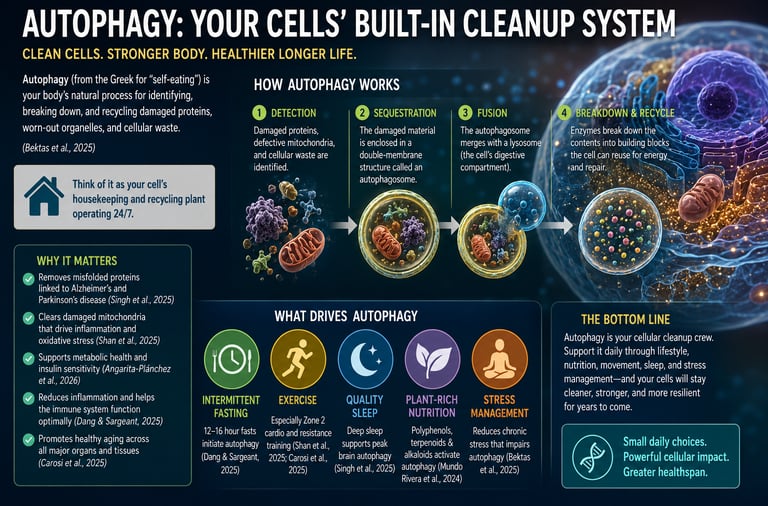
Autophagy (pronounced aw-TAH-fuh-jee, from the Greek for "self-eating") is your body's built-in cellular cleanup system. It is the process by which your cells identify, dismantle, and recycle damaged proteins, worn-out organelles, and metabolic waste — all in real time, all day long. When this system runs efficiently, your cells stay youthful, energized, and resilient. When it breaks down — as it does progressively with age — the consequences ripple across every organ system in the body.
A growing body of research now confirms what longevity scientists have long suspected: impaired autophagy is not just a symptom of aging — it may be one of its primary causes. Understanding this system and knowing how to support it through everyday habits could be one of the most powerful steps you take for your long-term health.
mTOR vs Autophagy
Your body constantly oscillates between growth and repair. Feeding, resistance training, and amino acids activate mTOR — the pathway that builds muscle and tissue. Fasting and energy stress activate autophagy. Healthy aging depends not on maximizing either system continuously, but on maintaining rhythmic flexibility between the two.
What Is Autophagy — And Why Should You Care?
Modern understanding of autophagy advanced rapidly following the groundbreaking work of Yoshinori Ohsumi, whose yeast-cell experiments uncovered the fundamental genetic machinery responsible for cellular self-recycling — discoveries that ultimately earned him the 2016 Nobel Prize in Physiology or Medicine.
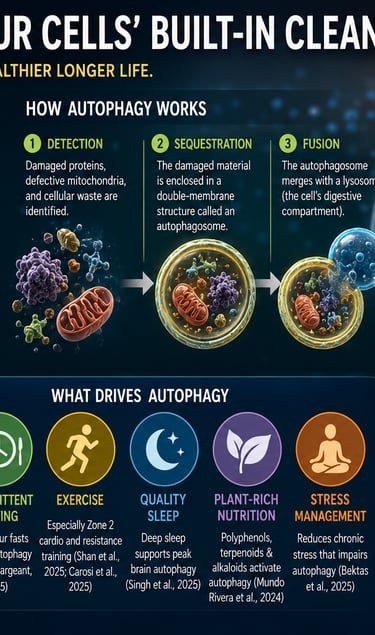
In simple terms, autophagy functions as the cell’s internal maintenance and recycling system. When proteins become damaged, mitochondria lose efficiency, or metabolic waste begins to accumulate, the cell identifies these dysfunctional components and marks them for removal. A specialized double-membrane structure known as an autophagosome then surrounds and isolates the unwanted material. This vesicle subsequently fuses with a lysosome — an enzyme-rich compartment that acts like a microscopic recycling center — where the debris is broken down into reusable building blocks that the cell can repurpose for energy, repair, and renewal.
Think of it as a sophisticated recycling plant operating inside every one of your cells, 24 hours a day.
This process removes:
Misfolded proteins that can aggregate and trigger disease
Dysfunctional mitochondria leaking harmful oxidants
Excess fat stores and cellular debris
Pathogens and foreign invaders
Senescent cellular components that fuel inflammation
When autophagy operates at full capacity, the result is a cellular environment that stays clean, energetically efficient, and inflammation-free. When it slows down — as it inevitably does with age, poor diet, chronic stress, and sedentary behavior — the buildup begins.
A landmark 2025 study published in Aging Cell by Bektas and colleagues at the National Institute on Aging offers compelling evidence that autophagy preservation is not merely associated with healthy aging — it may actively drive it. Their findings suggest that individuals who maintain higher autophagy activity across decades experience measurably better physiological function, lower inflammatory burden, and greater resilience against age-related disease (Bektas et al., 2025). In other words, your cellular cleanup crew is one of your most valuable longevity assets.
The Universal Decline: What Happens When Autophagy Fades
The bad news is this: autophagy efficiency declines with age in virtually every tissue of the body. A comprehensive 2025 investigation by Carosi and colleagues, published in PLOS ONE, systematically compared autophagy activity in young versus old mice across multiple organ systems — including the brain, heart, liver, skeletal muscle, and immune organs (Carosi et al., 2025).
The results were striking. Autophagy capacity dropped across the board. But the rate of decline was not uniform — and that distinction matters enormously for your health strategy.
Brain and cardiac tissues showed the steepest autophagy deterioration of all organs studied. This helps explain why neurodegenerative diseases and cardiovascular conditions become so prevalent in aging populations. When the brain's cleanup system falters, misfolded proteins accumulate — the same protein aggregates seen in Alzheimer's and Parkinson's disease. When the heart's autophagy declines, damaged cellular components accumulate in cardiomyocytes, impairing contractile function and triggering inflammation.
This is not an abstract concern. It is a cellular process playing out silently in your body right now — accelerated or slowed by the choices you make daily.
Autophagy Is Not One-Size-Fits-All: The Cell-Type Revolution
Here is something that surprises many people: autophagy does not work the same way in every cell. A 2025 study by Dang and Sargeant, published in Autophagy Reports, examined autophagy patterns in human leukocytes (white blood cells) — and found that different immune cell populations display dramatically distinct autophagy signatures (Dang & Sargeant, 2025).
What makes these findings especially important for real-world health decisions is who those differences depended on:
Age: Older individuals showed significantly diminished autophagy in immune cells, potentially explaining why aging immune systems become less effective at clearing infections and aberrant cells.
Biological sex: Men and women displayed meaningfully different autophagy patterns, suggesting that optimal fasting windows, exercise intensities, and dietary strategies may differ between sexes.
Nutritional status: Caloric restriction and intermittent fasting triggered distinct autophagy responses across different leukocyte subtypes, connecting diet directly to immune cell renewal.
The clinical implication is significant: generic anti-aging advice ignores the biological individuality of your cells. Women, for instance, may achieve equivalent autophagy benefits with a 12–14 hour overnight fast, whereas men may need slightly longer windows to reach the same cellular response threshold. This is not speculation — it is emerging from rigorous cell biology research.
Mitophagy: The Powerhouse Precision System
If general autophagy is your body's citywide waste management service, mitophagy is the elite specialist team dispatched specifically to handle failing power plants.
Mitochondria — the organelles responsible for generating ATP, your cells' primary energy currency — are central to cellular vitality. But mitochondria are also the cell's primary source of reactive oxygen species (ROS): harmful oxidant molecules produced as a byproduct of energy generation. When mitochondria age or accumulate damage, they begin leaking these oxidants into the surrounding cellular environment, triggering a cascade of oxidative stress and inflammation.
Mitophagy is the targeted recycling process that identifies these "leaky" mitochondria and eliminates them before they cause collateral damage — replacing them with newer, more efficient energy generators through a process called mitochondrial biogenesis.
A 2025 review in Cell Death Discovery by Shan and colleagues makes the case that mitophagy may be even more critical to healthy aging than general autophagy — particularly in high-energy tissues like the brain, heart, and skeletal muscle (Shan et al., 2025). Their analysis showed that:
Aging progressively impairs the cell's ability to recognize and tag damaged mitochondria for removal
Accumulated dysfunctional mitochondria drive the oxidative stress and energy deficits characteristic of aging
Specific interventions targeting the mitophagy pathway — including Zone 2 aerobic exercise and controlled cold exposure — can restore mitochondrial quality in aging tissues
Enhancing mitophagy holds particular promise for preventing neurodegenerative and cardiovascular diseases
Think of mitophagy as "swapping out old batteries." As long as the swap happens reliably, your cells keep producing clean energy. When the swapping mechanism breaks down, you accumulate dead weight — and feel it as fatigue, cognitive fog, and metabolic sluggishness.
Autophagy and Your Brain: A Critical Partnership
Your neurons are among the most metabolically demanding and long-lived cells in the body. Unlike skin or gut cells, which are replaced frequently, most of your neurons must last a lifetime. This makes the brain uniquely dependent on efficient autophagy for long-term function.
A 2025 editorial in Frontiers in Cell and Developmental Biology by Singh, Ito, and Suomi highlights the essential contribution of autophagy to neuronal metabolism — and the profound consequences of its disruption (Singh et al., 2025). Their synthesis of current evidence emphasizes that:
Autophagy maintains synaptic health by clearing damaged proteins at neuronal junctions
Mitophagy in neurons is essential for sustaining the extraordinary energy demands of the brain
Autophagy dysfunction in neurons precedes — and likely causes — the protein aggregation seen in Alzheimer's, Parkinson's, and other neurodegenerative conditions
Supporting neuronal autophagy through lifestyle interventions may represent a meaningful strategy for preserving cognitive function across the lifespan
For everyday readers, the takeaway is this: the habits you adopt to support autophagy today are not just general wellness practices — they are investments in the clarity, memory, and resilience of your brain decades from now.
Autophagy, Obesity, and Type 2 Diabetes: A Complicated Relationship
One of the most nuanced areas of autophagy research concerns metabolic disease. For years, the scientific consensus held that autophagy was universally protective against obesity and type 2 diabetes. A 2026 review in Current Obesity Reports by Angarita-Plánchez and colleagues complicates that picture — in important and practical ways (Angarita-Plánchez et al., 2026).
Their analysis reveals that in the context of obesity and type 2 diabetes, autophagy is impaired — but enhancing it is not always straightforwardly beneficial. In some tissue contexts, excessive or dysregulated autophagy can actually contribute to insulin resistance and pancreatic beta-cell dysfunction.
This finding does not undermine the importance of autophagy. Rather, it underscores a theme that runs through the entire field: balance is everything. The goal is not to maximally activate autophagy through extreme interventions — it is to restore and sustain the natural, rhythmic flux of cellular cleanup that healthy physiology demands.
For individuals living with obesity or type 2 diabetes, this means:
Dietary and lifestyle strategies that restore autophagy gradually are preferable to aggressive fasting regimens
Working with a qualified healthcare provider to individualize any fasting or caloric restriction protocol is essential
The inflammatory burden of chronic metabolic disease itself suppresses autophagy — making lifestyle intervention all the more important, but also all the more in need of careful calibration
Natural Autophagy Activators: What Science Says About Food as Medicine
One of the exciting frontiers in longevity nutrition is the identification of natural compounds that activate autophagy — without pharmaceutical intervention. A comprehensive 2024 review in Cells by Mundo Rivera and colleagues catalogued the most evidence-backed plant-derived autophagy activators currently known (Mundo Rivera et al., 2024).
The findings are encouraging: your spice cabinet and produce drawer contain potent biological signals that can switch on your cells' maintenance systems. Key compounds include:
Polyphenols
EGCG (epigallocatechin gallate) — abundant in green and white tea — activates autophagy through AMPK and mTOR inhibition pathways
Resveratrol — found in red grapes, berries, and dark chocolate — has demonstrated autophagy-enhancing effects in multiple cell types
Curcumin — the active compound in turmeric — activates autophagy while simultaneously reducing inflammatory signaling
Terpenoids
Compounds in cruciferous vegetables (broccoli, Brussels sprouts, cauliflower) trigger autophagy through Nrf2 pathway activation
Alkaloids
Berberine, found in certain herbs, activates autophagy through AMPK stimulation — a mechanism similar to the diabetes drug metformin
The practical implication is clear: a diet rich in deeply pigmented fruits and vegetables, quality teas, and culinary spices is not just pleasant — it is actively communicating with your cells' renewal machinery.
Practical Strategies to Support Your Autophagy Daily
Science is most valuable when it translates into action. Here are seven evidence-based strategies drawn from the research cited in this article:
1. Establish a Consistent Fasting Window. Even a 12–14-hour overnight fast (for example, finishing dinner by 8 PM and eating breakfast after 8 AM) initiates autophagy induction. Research suggests autophagy increases meaningfully after 12–16 hours of caloric restriction, with sex-based variation in optimal window length (Dang & Sargeant, 2025). Start modestly, particularly if you have metabolic conditions, and work with your healthcare provider to individualize your approach (Angarita-Plánchez et al., 2026).
2. Incorporate Zone 2 Cardio Exercise Low-to-moderate aerobic exercise — where you can hold a conversation but are definitely working — is one of the most potent triggers for mitophagy specifically. Aim for 150–180 minutes per week. This level of exertion initiates mitochondrial quality control and biogenesis simultaneously (Shan et al., 2025).
3. Add Resistance Training Skeletal muscle shows significant autophagy decline with age (Carosi et al., 2025). Resistance training counters this by stimulating muscle autophagy and improving insulin sensitivity. Two to three sessions per week of compound movements (squats, deadlifts, rows) is a strong starting point.
4. Eat the Rainbow — Especially the Deep End Prioritise autophagy-activating foods daily: green and white tea, blueberries, cranberries, broccoli, cauliflower, Brussels sprouts, dark chocolate (70%+ cacao), turmeric, ginger, and red onions. These are not superfoods in a marketing sense — they are biochemical signals your cells are designed to respond to (Mundo Rivera et al., 2024).
5. Protect Your Sleep Deep slow-wave sleep is associated with peak autophagy activity in neural tissue (Singh et al., 2025). Chronic sleep deprivation suppresses autophagy and accelerates neuronal protein accumulation. Prioritize 7–9 hours of quality sleep in a cool, dark environment. This is non-negotiable for brain health.
6. Manage Chronic Stress Deliberately. Chronic psychological stress elevates cortisol and suppresses mTOR signaling in ways that impair autophagy. Brief, controlled hormetic stressors — cold showers, HIIT sessions, intermittent fasting — activate autophagy. Chronic, unrelenting stress suppresses it. Mindfulness-based stress reduction, time in nature, and consistent social connection are not luxuries — they are cellular health interventions.
7. Consider Targeted Supplementation Thoughtfully. While food-first approaches are preferable, certain supplements have meaningful mechanistic support: berberine, spermidine (found in wheat germ and aged cheese), and urolithin A (a gut-derived metabolite from pomegranate). These should supplement — not replace — lifestyle foundations, and always in consultation with your physician.
Frequently Asked Questions
Q1: Can autophagy actually reverse aging, or just slow it? Current evidence suggests autophagy supports healthspan — the period of life spent in good health — more than it reverses chronological aging. Research strongly indicates that preserving autophagy capacity through midlife is associated with superior physiological function in later decades (Bektas et al., 2025). Think of it less as reversing aging and more as preventing the cellular accumulation that drives its worst consequences.
Q2: How do I know if my autophagy is low? There is no direct clinical test for autophagy flux in routine medical practice yet. However, indirect markers associated with impaired autophagy include elevated inflammatory markers (CRP, IL-6), insulin resistance, chronic fatigue, cognitive sluggishness, and frequent infections. If several of these apply to you, supporting autophagy through lifestyle is likely beneficial.
Q3: Is intermittent fasting safe for everyone? No — and this is important. People with type 1 diabetes, eating disorder history, pregnancy, low body weight, or certain metabolic conditions should not undertake fasting without medical supervision. The nuanced relationship between autophagy and metabolic disease means that aggressive fasting in someone with obesity or type 2 diabetes requires careful, individualized guidance (Angarita-Plánchez et al., 2026).
Q4: Can women and men follow the same autophagy protocols? The evidence increasingly suggests they should not — at least not identically. Cell-type-specific autophagy research shows significant sex-based differences in how immune cells respond to nutrient restriction (Dang & Sargeant, 2025). Women tend to do well with consistent 12–14 hour fasting windows; men may require slightly longer windows for equivalent cellular benefit. Exercise protocols may similarly benefit from sex-specific adjustment.
Q5: Are "autophagy supplements" worth the money? Most commercially marketed "autophagy supplements" have minimal clinical evidence. However, specific compounds — berberine, spermidine, urolithin A, and EGCG from green tea — have documented mechanistic pathways. The critical point is that supplements work best in the context of an already supportive lifestyle, not as a shortcut around it (Mundo Rivera et al., 2024).
Q6: Does autophagy affect brain health specifically? Yes — profoundly. Neurons are especially dependent on autophagy because they cannot be replaced and carry an enormous metabolic burden throughout life. Impaired neuronal autophagy is directly implicated in the protein aggregation pathology of Alzheimer's and Parkinson's disease. Supporting autophagy through lifestyle is one of the most credible current strategies for preserving cognitive function with age (Singh et al., 2025).
Q7: How long before I notice results from autophagy-supporting habits? Molecular changes — measurable shifts in autophagy signaling — occur within hours of fasting or exercise. Subjective improvements in energy, mental clarity, and digestion are typically reported within 2–4 weeks of consistent practice. Meaningful protection against age-related disease accumulates over months and years. Begin now; the timeline rewards early action.
Call to Action: Start Your 30-Day Cellular Reset
The science is compelling — and the path forward is within your reach right now, without waiting for pharmaceutical breakthroughs or expensive interventions.
Here is your 30-Day Cellular Reset framework:
Week 1 — Foundation
Set a 12-hour overnight fasting window (adjust your dinner time slightly earlier)
Add one serving of deeply pigmented produce to each meal
Begin a 20-minute daily walk
Week 2 — Build
Extend your fasting window to 13–14 hours if tolerated well
Replace one daily beverage with green or white tea
Add two resistance training sessions
Week 3 — Deepen
Incorporate one cold shower per day (start with 30 seconds at the end of a warm shower)
Prioritize sleep hygiene: consistent bedtime, cool room, no screens 60 minutes before bed
Add a curcumin-rich meal (turmeric curry, golden milk) three times per week
Week 4 — Reflect and Sustain
Note changes in energy, mental clarity, digestion, and sleep quality
Identify which changes feel sustainable long-term
Schedule a conversation with your healthcare provider about your personal autophagy strategy
User Engagement Strategy: Track your progress in a simple daily journal — or share your experience in the comments below with #CellularReset. What shifted? What surprised you? Your 30-day experience contributes to a growing community of people investing in cellular health from the ground up. Every habit you build today is a message to your cells: the cleanup crew is still on duty.
Clinical pearls
1. The Dynamic Range of Autophagy (The "Goldilocks" Principle)
Scientific Perspective
Autophagy is not a binary switch to be maxed out; it is a highly regulated homeostatic mechanism. In metabolic pathologies like obesity and Type 2 Diabetes, hyper-activation or dysregulation of autophagy can paradoxically exacerbate insulin resistance and pancreatic beta-cell apoptosis (Angarita-Plánchez et al., 2026). Over-indexing on extreme caloric restriction or aggressive fasting can disrupt this delicate physiological flux.
How to explain it: Think of autophagy like washing your dishes. You want to run the dishwasher when it's full to keep the kitchen clean, but if you run it 24/7 on the intense cycle without stopping, you’ll ruin the plates and skyrocket your electric bill. More is not always better. Instead of extreme, multi-day fasts that can stress your metabolism, focus on consistent, gentle habits that let your body naturally clean house without overdoing it.
2. Sex-Dependent Autophagy Phenotypes
Scientific Perspective
Leukocyte-specific data highlights that autophagy signatures vary significantly by biological sex (Dang & Sargeant, 2025). Hormonal profiles and baseline metabolic rates dictate different sensitivity thresholds for nutrient sensing pathways (like mTOR and AMPK). Consequently, a fasting protocol that induces optimal autophagy in a male patient may trigger an over-activation of the stress response (cortisol elevation) in a female patient.
How to explain it: When it comes to cellular cleanup, men and women are wired a bit differently. Research shows that women’s immune cells are often more sensitive to changes in food intake. While a man might need a 16-hour fast to kickstart his cellular recycling, a woman might get the exact same benefits from a shorter, gentler 12-to-14-hour overnight fast. Personalized health always beats generic internet advice.
3. Tissue-Specific Decay and the Priority of Neuro-Protection
Scientific Perspective
Autophagy capacity declines globally with age, but the rate of decay is steepest in non-mitotic, highly metabolic tissues—specifically cardiac myocytes and neurons (Carosi et al., 2025; Singh et al., 2025). Because neurons cannot easily replicate to dilute metabolic waste, the failure to clear misfolded aggregates directly precedes neurodegenerative cascades. Interventions targeting the blood-brain barrier-permeable pathways (like deep slow-wave sleep and EGCG) must be prioritized to preserve synaptic health.
How to explain it: Your skin and gut cells replace themselves constantly, but most of your brain cells have to last your entire life. Unfortunately, the brain’s cleanup crew retires faster than almost any other organ. When the brain can't clear out its "cellular trash," it leads to the plaque buildup associated with Alzheimer's and Parkinson's. Protecting your sleep and eating deeply colored fruits aren't just general wellness tips—they are direct insurance policies for your long-term memory and mental clarity.
4. Mitophagy Induction via Zone 2 Energetics
Scientific Perspective
General autophagy recycles bulk proteins, but mitophagy specifically targets dysfunctional, "leaky" mitochondria that are actively spilling reactive oxygen species (ROS) and driving systemic inflammation (Shan et al., 2025). To stimulate mitophagy and subsequent mitochondrial biogenesis, patients require the sustained, low-level metabolic stress of Zone 2 aerobic exercise (150–180 minutes/week), rather than short bursts of high-intensity training, which rely heavily on anaerobic glycolysis.
How to explain it: Mitochondria are the power plants of your cells. When they get old, they start leaking "pollution" (oxidative stress) that makes you feel fatigued and sluggish. To force your body to swap out these old, leaky batteries for brand-new ones, you need steady, moderate exercise—like a brisk walk or a light jog where you can still carry on a conversation. Doing this for 30 minutes a day acts as a targeted upgrade for your body's energy grid.
5. Dietary Polyphenols as Xenohormetic Mimics
Scientific Perspective
Natural compounds like curcumin, resveratrol, berberine, and EGCG do not act merely as passive chemical antioxidants; they function as mild cellular stressors (xenohormesis) that activate the AMPK and Nrf2 pathways while inhibiting mTOR (Mundo Rivera et al., 2024). They essentially trick the cell into a perceived state of nutrient scarcity, triggering autophagy signaling without requiring actual caloric deprivation.
How to explain it: Spices like turmeric, green tea, and dark chocolate contain compounds that act like a "fire drill" for your cells. They don't actually harm your body, but they trick your cells into thinking food is scarce. Your cells respond by immediately activating their emergency cleanup crews to find and recycle old parts. Adding these colorful foods to your diet gives you the cellular benefits of fasting without the hunger pangs.
A Clinician’s Perspective
From a clinical standpoint, autophagy and mitophagy are emerging not merely as laboratory concepts, but as central mechanisms linking aging biology to chronic disease. Across cardiometabolic medicine, neurology, and geriatric care, impaired cellular quality control is increasingly recognized as a shared pathway underlying insulin resistance, sarcopenia, neurodegeneration, chronic inflammation, and cardiovascular dysfunction (Bektas et al., 2025; Carosi et al., 2025).
What makes this field particularly relevant for practicing clinicians is that autophagy appears to be highly responsive to lifestyle behavior. Exercise, sleep quality, circadian alignment, nutritional patterns, and controlled metabolic stressors such as time-restricted eating can meaningfully influence cellular repair pathways. However, the goal should not be maximal autophagy activation. Biology functions through balance. Excessive fasting, overtraining, or severe caloric restriction may impair immune function, muscle preservation, hormonal health, and recovery — particularly in older adults or patients with chronic disease.
Clinically, the most effective strategy is likely one that restores physiological rhythm rather than pursuing extreme interventions. Moderate exercise, protein-adequate nutrition, sleep optimization, stress reduction, and individualized fasting protocols appear more sustainable and biologically appropriate than aggressive longevity regimens.
As the science evolves, autophagy may become an important therapeutic target for extending healthspan — not simply lifespan — helping patients preserve functional independence, metabolic resilience, and cognitive vitality as they age..
Disclaimer: This article is for informational purposes only and does not constitute medical advice. Individual circumstances vary, and treatment decisions should always be made in consultation with qualified healthcare professionals.
Related Articles
Cellular Senescence: Why Your Cells Age and What It Means for Your Health | DR T S DIDWAL
Exercise and Longevity: The Science of Protecting Brain and Heart Health as You Age | DR T S DIDWAL
The Science of Healthy Brain Aging: Microglia, Metabolism & Cognitive Fitness | DR T S DIDWAL
The Aging Muscle Paradox: How Senescent Cells Cause Insulin Resistance and The Strategies to Reverse It | DR T S DIDWAL
VO2 Max & Longevity: The Ultimate Guide to Living Longer | DR T S DIDWAL
References
Angarita-Plánchez, M. E., Sánchez-Rodríguez, P., Múnera-Rodríguez, A. M., et al. (2026). Autophagy in obesity and type 2 diabetes: Beyond the protective paradigm. Current Obesity Reports, 15, 39. https://doi.org/10.1007/s13679-026-00716-5
Bektas, A., Schurman, S. H., Candia, J., Santiago-Fernández, O., Kaushik, S., Cuervo, A. M., & Ferrucci, L. (2025). Preservation of autophagy may be a mechanism behind healthy aging. Aging Cell, 24, e70246. https://doi.org/10.1111/acel.70246
Carosi, J. M., Martin, A., Hein, L. K., Hassiotis, S., Hattersley, K. J., Turner, B. J., Fourrier, C., Bensalem, J., & Sargeant, T. J. (2025). Autophagy across tissues of aging mice. PLOS ONE, 20(6), e0325505. https://doi.org/10.1371/journal.pone.0325505
Dang, L. V., & Sargeant, T. J. (2025). Cell type-specific autophagy in human leukocytes: Signatures of aging, sex, and nutrient restriction. Autophagy Reports, 4(1). https://doi.org/10.1080/27694127.2025.2543560
Mundo Rivera, V. M., Tlacuahuac Juárez, J. R., Murillo Melo, N. M., Leyva Garcia, N., Magaña, J. J., Cordero Martínez, J., & Jiménez Gutierrez, G. E. (2024). Natural autophagy activators to fight age-related diseases. Cells, 13(19), 1611. https://doi.org/10.3390/cells13191611
Shan, W., Liu, Y., Tang, R., et al. (2025). Targeting mitochondrial autophagy for anti-aging. Cell Death Discovery, 4. https://doi.org/10.1038/s41420-025-02913-y
Singh, F., Ito, G., & Suomi, F. (2025). Editorial: The contribution of autophagy to neuronal metabolism. Frontiers in Cell and Developmental Biology, 13, 1604307. https://doi.org/10.3389/fcell.2025.1604307