The Science of Healthy Brain Aging: Microglia, Metabolism & Cognitive Fitness
Explore cutting-edge research on brain aging. Understand microglia, metabolism, and multidomain interventions that preserve cognitive vitality
AGING
Dr. T.S. Didwal, M.D.
12/3/202513 min read
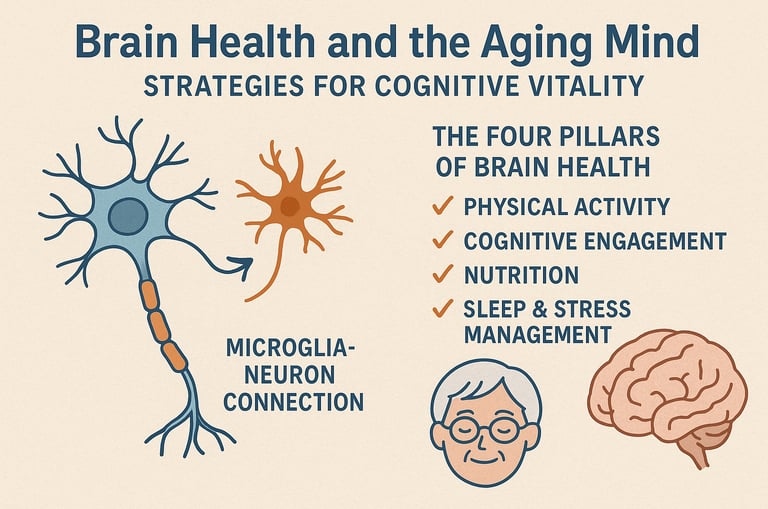
As we age, one of our greatest fears isn't just getting older—it's losing the mental sharpness that defines who we are. The possibility of cognitive decline looms large in the minds of older adults, yet here's the good news: emerging research shows that our brains are far more malleable and responsive to intervention than we once believed. The journey to maintaining brain health and preserving cognitive function throughout our golden years isn't left entirely to genetics or fate. It's something we can actively influence through lifestyle modifications and strategic interventions.
In this comprehensive guide, we'll explore cutting-edge research on aging and cognitive vitality, discover evidence-based strategies to promote cognitive health, and learn how the latest neuroscience reveals the intricate mechanisms behind brain aging. Whether you're in your 50s beginning to notice subtle memory lapses or well into your 80s seeking to maintain your mental edge, this article will equip you with the knowledge and tools to support your brain longevity.
Clinical Pearls
1. The 150-Minute Cognitive Booster
"If a medication existed that offered the same cognitive benefits as aerobic exercise, it would be the most prescribed drug in the world." Prescribe your patients (and yourself) a minimum of 150 minutes per week of moderate-intensity aerobic activity. This is the lowest dose shown to reliably increase hippocampal volume (the brain's memory center) and stimulate BDNF (Brain-Derived Neurotrophic Factor, the brain's "growth fertilizer").
2. The Microglia Rule of Three
Chronic inflammation is the root cause of age-related microglial dysfunction. Remember the three main drivers of this neuroinflammation: (1) Poor Sleep, (2) Uncontrolled Stress/Cortisol, and (3) Sugar/Refined Carbohydrates. Address these three immediately to dampen the inflammatory environment and support the optimal function of the brain's immune cells (microglia).
3. The Novelty Prescription
Cognitive engagement should feel challenging, not just repetitive. Stop recommending only Sudoku. The brain thrives on novelty and complexity. Instead, "prescribe" activities like learning the first 100 words of a new language, taking up a complex musical instrument, or enrolling in a specialized skill class (like advanced chess or coding). These tasks demand new neural pathways and strengthen neuroplasticity more effectively than rote memory games.
4. Sleep: The Brain's Plumbing Hour
Don't view sleep as a passive rest; view it as an active cleaning cycle. The glymphatic system, the brain's waste-clearing mechanism, is primarily active during deep sleep. If a patient is consistently sleeping less than 7 hours or has untreated sleep apnea, they are allowing potentially harmful proteins (like amyloid-beta) to accumulate. Prioritize sleep hygiene as the ultimate anti-Alzheimer's intervention.
5. The Cardiovascular-Cognitive Crossover
"What's good for the heart is good for the head." Never treat cardiovascular risk factors (Hypertension, Diabetes, High Cholesterol) in isolation. Treating a patient's blood pressure or HbA1c is not just about preventing heart attack or stroke; it is a direct intervention for preventing cognitive decline and vascular dementia. Aggressive management of these factors is foundational to brain longevity.
Understanding Cognitive Decline: The Reality and the Hope
Cognitive decline is a natural aspect of aging, but it doesn't have to be inevitable or severe. Our brains undergo physical changes as we grow older—neural connections may thin, certain brain regions can shrink, and chemical messengers like neurotransmitters become less efficient. However, this trajectory isn't written in stone.
The concept of brain plasticity or neuroplasticity—the brain's ability to reorganize itself and form new neural connections—offers tremendous hope (García-García et al., 2023). Recent studies demonstrate that our brains maintain this remarkable capacity well into advanced age. The question isn't whether change is possible, but rather how we can leverage this plasticity to support optimal brain aging.
Understanding the mechanisms that underlie cognitive aging is the first step toward meaningful intervention. Modern neuroscience reveals that brain health depends on far more than just mental stimulation. It involves a delicate interplay of metabolic processes, immune function, cardiovascular health, and lifestyle factors—all of which we have more control over than we might assume.
The Metabolic Foundation: How Microglia and Neurons Keep Your Brain Young
Recent breakthrough research has illuminated a crucial but often overlooked aspect of brain aging: the role of microglia, the brain's resident immune cells, in maintaining cognitive health. A landmark 2025 study in Nature Metabolism reveals that the relationship between microglia and neurons fundamentally shapes whether our brains thrive or decline as we age (Asimakidou et al., 2025).
The Microglia-Neuron Connection
Microglial cells are far more than cleanup crew—they're metabolic hubs that directly influence neuronal function. These specialized brain cells regulate the flow of metabolic fuel to neurons, essentially controlling the energetic efficiency of brain operations. When microglia function optimally, neurons receive precisely what they need to maintain sharp cognitive function. When microglial dysfunction occurs, the consequences ripple through entire neural networks, contributing to age-related cognitive decline.
The research demonstrates that maintaining healthy microglia-neuron interactions is essential for preserving brain aging trajectories. This finding opens new avenues for understanding why certain individuals maintain robust cognitive vitality into advanced age while others experience accelerated decline. The emerging picture suggests that metabolic brain health—the efficiency with which your brain converts fuel into cognitive power—represents one of the most fundamental pillars of brain longevity.
Key Takeaway: The health of your brain's immune cells directly impacts cognitive performance. Supporting microglial health through proper nutrition and lifestyle choices can enhance the brain's metabolic efficiency.
Multidomain Interventions: What the Latest Science Shows About Effective Brain Training
One of the most significant questions in cognitive neuroscience has always been: what actually works for maintaining or improving cognitive function in older adults? The answer, according to a landmark 2025 randomized clinical trial, is more nuanced than simple brain games or memory exercises.
The US POINTER Study: A Game-Changing Approach
The US POINTER study,, represents one of the most comprehensive investigations into cognitive intervention for older adults (Baker et al., 2025). This groundbreaking research compared two approaches to supporting brain health: structured, professionally-guided multidomain lifestyle interventions versus self-guided approaches. The results offer crucial insights for anyone seeking to maintain their cognitive edge.
The study involved hundreds of cognitively normal older adults who received either intensive, structured support or standard educational materials about healthy aging. The structured intervention included personalized goals across multiple life domains: cognitive training, physical activity, nutrition optimization, cardiovascular risk management, and sleep quality. Rather than targeting cognition in isolation, this multidomain approach recognized that brain health emerges from the integrated health of the entire person.
The findings revealed that structured multidomain interventions produced significantly greater improvements in global cognitive function compared to self-guided approaches. This distinction matters profoundly: it suggests that the guidance, accountability, and personalization inherent in structured programs may be essential to achieving meaningful cognitive gains. The research indicates that while general knowledge about healthy habits is valuable, targeted, supervised implementation produces superior outcomes for brain preservation.
Key Takeaway: Structured, professionally-guided lifestyle interventions targeting multiple life domains produce greater cognitive benefits than self-directed efforts, suggesting that guidance and accountability are critical components of effective cognitive health strategies.
The Four Pillars of Brain Health: A Holistic Framework for Cognitive Vitality
Contemporary neuroscience research has converged on a clear consensus: maintaining brain health across the lifespan requires attention to multiple interconnected factors. A comprehensive 2023 review in Neuroscience and Biobehavioral Reviews synthesizes decades of research into a coherent framework for understanding brain aging and cognitive preservation (García-García et al., 2023). Additionally, recent innovations in cognitive health strategies highlight evidence-based approaches that complement traditional interventions (Oberlin et al., 2022).
Pillar One: Physical Activity and Cardiovascular Health
Physical exercise stands as one of the most robust interventions for supporting brain aging. The mechanisms are multifaceted: exercise increases cerebral blood flow, delivering oxygen and nutrients to neural tissue; it stimulates the production of brain-derived neurotrophic factor (BDNF), a protein essential for neuroplasticity; and it reduces neuroinflammation, the chronic low-level immune activation associated with cognitive decline.
The data is compelling. Regular aerobic exercise has been shown to increase the volume of the hippocampus, the brain region critical for memory formation. This isn't merely correlation; it's a dose-dependent relationship where more activity correlates with greater benefits. For optimal cognitive health, research suggests at least 150 minutes of moderate aerobic activity weekly, combined with resistance training.
Cardiovascular health represents the foundation upon which brain health is built. Hypertension, high cholesterol, and diabetes all accelerate brain aging and increase cognitive decline risk. By managing these cardiovascular risk factors, you're directly protecting your brain's structural and functional integrity.
Pillar Two: Cognitive Engagement and Mental Stimulation
While brain training games have been overhyped, cognitive engagement remains genuinely important for brain preservation. The key distinction lies in the type of stimulation. Research suggests that novel, challenging cognitive activities—learning a new language, mastering a musical instrument, engaging in complex problem-solving—produce greater benefits than repetitive, easily-mastered tasks.
The principle underlying this finding relates to neuroplasticity: your brain changes in response to demands placed upon it. When you engage in cognitively challenging activities, you're literally rewiring neural circuits, creating new connections, and strengthening existing pathways. This neural adaptation represents the brain's way of maintaining its capacity for cognitive function.
Importantly, social engagement intertwines with cognitive engagement. Social activities, group learning, and collaborative problem-solving combine cognitive and emotional stimulation, producing synergistic benefits for brain health. This explains why bridge clubs, volunteer work, and group classes often prove more beneficial for cognitive vitality than isolated mental exercises.
Pillar Three: Nutrition and Metabolic Support
Your diet directly shapes your brain's biochemistry and structure. The Mediterranean diet and similar evidence-based eating patterns have demonstrated particular promise for brain aging support. These approaches emphasize omega-3 fatty acids (found in fish and walnuts), antioxidants (from fruits and vegetables), and polyphenols (from olive oil, berries, and tea), all of which support neuronal health and reduce neuroinflammation.
The concept of nutritional neuroprotection highlights how specific nutrients directly protect against age-related damage. B vitamins support myelin (the insulation around nerve fibers) and neurotransmitter production. Vitamin E and vitamin C function as antioxidants, protecting cells from oxidative stress. Calcium and magnesium support synaptic plasticity, the mechanism underlying learning and memory.
Equally important is maintaining stable blood glucose levels. Metabolic dysfunction and insulin resistance accelerate brain aging and increase dementia risk. By choosing whole grains over refined carbohydrates, limiting added sugars, and maintaining appropriate caloric balance, you're supporting your brain's metabolic efficiency.
Pillar Four: Sleep, Stress Management, and Neurological Recovery
During sleep, your brain undergoes essential maintenance processes. The glymphatic system, your brain's waste-clearing mechanism, operates most efficiently during sleep, removing accumulated toxins including amyloid-beta, a protein implicated in cognitive decline. Chronic sleep deprivation impairs this critical cleanup process, accelerating brain aging.
Sleep quality involves more than duration; it requires deep, restorative sleep stages during which memory consolidation occurs and synaptic pruning (eliminating unnecessary connections) takes place. Protecting sleep through consistent schedules, sleep hygiene practices, and addressing sleep disorders directly supports brain preservation.
Chronic stress and elevated cortisol levels promote neuroinflammation, impair hippocampal function, and accelerate cognitive decline. Stress management practices—meditation, mindfulness, deep breathing, nature exposure—aren't luxuries; they're essential interventions for brain longevity. Research demonstrates that regular stress reduction practices enhance cognitive performance and provide structural benefits to brain regions involved in attention and emotional regulation.
Recent Innovations: Emerging Strategies for Cognitive Health
The landscape of cognitive health interventions is rapidly evolving. Recent research has identified several innovative approaches that complement traditional strategies.
Precision Medicine and Personalized Interventions
Emerging research emphasizes personalized approaches to brain health. Rather than one-size-fits-all recommendations, individuals are increasingly being stratified by genetic risk, biomarkers of brain aging, and specific vulnerability profiles. This precision medicine approach acknowledges that the optimal pathway to cognitive vitality may differ significantly from person to person.
Technology and Brain Stimulation
Non-invasive brain stimulation techniques, including transcranial magnetic stimulation and transcranial direct current stimulation, show promise for enhancing cognitive function in older adults. While not yet mainstream, these approaches represent the cutting edge of cognitive enhancement research.
Lifestyle Tracking and Real-Time Feedback
Wearable devices and brain health apps now allow individuals to monitor multiple health parameters simultaneously—sleep quality, physical activity, stress levels, and heart rate variability. This data-driven approach enables optimization of daily habits for maximum brain benefit.
Practical Implementation: Making Brain Health Part of Your Daily Life
Understanding the science is valuable, but translating it into daily practice is where real change occurs. Here's how to implement these evidence-based strategies:
Create a Personalized Brain Health Plan
Begin by assessing your current status across the four pillars. Which areas represent your strengths? Which need attention? A typical effective plan might include:
Physical activity: Schedule 150 minutes of aerobic activity and 2-3 sessions of resistance training weekly
Cognitive engagement: Commit to learning something new—a language, instrument, or complex skill—requiring sustained focus
Nutrition optimization: Adopt a Mediterranean-style diet, prioritizing whole foods and limiting processed options
Sleep and stress: Establish consistent sleep schedules and dedicate 10-20 minutes daily to stress management
Track Progress and Adjust
Use objective markers to monitor your brain health journey. Cognitive assessments, fitness tests, and subjective well-being measures help identify what's working. The beauty of evidence-based interventions is that they produce measurable results.
Seek Structure and Accountability
The research is clear: structured programs with professional guidance outperform self-directed efforts. Consider working with a health coach, joining a cognitive health program, or enrolling in structured exercise classes. This guidance transforms good intentions into sustained behavior change.
Additional Considerations for Brain Aging
Preventive Cognitive & Medical Screening
Regular checks of blood pressure, blood sugar, cholesterol, and thyroid.
Annual cognitive assessments to detect early decline.
Early management of hypertension, diabetes, and atrial fibrillation reduces dementia risk.
Exercise & Mobility Adaptations
Low-impact options: chair exercises, resistance bands, aquatic therapy, tai chi.
Balance and fall-prevention exercises to reduce head injury risk.
Gradually progress intensity based on ability and comorbidities.
Nutrition & Socioeconomic Accessibility
Focus on affordable, brain-healthy foods: vegetables, legumes, whole grains, nuts, fatty fish.
Adapt dietary guidance to local availability and cultural preferences.
Chronic Disease Management for Brain Protection
Managing vascular and metabolic conditions preserves cognitive function.
Lifestyle habits alone are not enough—combine with medical care.
Frequently Asked Questions About Brain Health and Cognitive Vitality
Q: Is it too late to improve my cognitive function if I'm already experiencing age-related changes?
A: Absolutely not. Research demonstrates that the brain maintains its capacity for change throughout life. While earlier intervention may offer advantages, meaningful improvements in cognitive function are achievable at any age. The principle of neuroplasticity means that your brain will respond to new demands and healthy lifestyle choices whenever you implement them.
Q: How much physical activity is really necessary for brain benefits?
A: The research consistently supports 150 minutes of moderate aerobic activity weekly, combined with twice-weekly resistance training. This dosage produces measurable improvements in cognitive function and brain structure. However, more activity generally produces greater benefits, and even modest activity levels provide significant brain protection compared to sedentary lifestyles.
Q: Can brain training games actually improve my cognitive function?
A: Traditional brain training games have shown limited transfer to real-world cognitive function. However, cognitively challenging activities that are novel and complex—learning languages, playing chess, creating art—do support brain health. The key is engagement with genuinely demanding tasks, not repetitive games designed for entertainment.
Q: What's the most important single intervention for brain health?
A: While all four pillars matter, physical activity and sleep quality stand out in research as foundational. If you could prioritize just one change, establishing consistent aerobic exercise produces remarkable benefits. However, the research on multidomain interventions suggests that addressing multiple areas simultaneously produces superior results compared to focusing exclusively on one strategy.
Q: Does diet really make that much difference to my brain?
A: Yes. Your brain is extraordinarily sensitive to nutritional inputs. The Mediterranean diet has been associated with reduced dementia risk and better cognitive aging. Conversely, diets high in processed foods, refined carbohydrates, and unhealthy fats accelerate brain aging. Every meal represents a choice between supporting or undermining your cognitive vitality.
Q: How can I stay cognitively engaged without feeling like I'm "training" my brain?
A: The best cognitive engagement feels like play, not work. Pursue activities you genuinely enjoy that happen to be intellectually challenging. Join a book club, take a dance class, learn to cook complex cuisines, volunteer for roles requiring new skills. The most sustainable cognitive engagement emerges from intrinsic interest, not obligation.
Q: Are there warning signs I should watch for regarding cognitive decline?
A: Occasional forgetfulness is normal aging. However, significant changes warrant professional evaluation: repeatedly forgetting conversations you've had, becoming lost in familiar places, difficulty managing finances or medications, or personality changes. The earlier cognitive concerns are assessed, the more effectively interventions can be implemented.
Key Takeaways: Your Brain Health Action Plan
Understand the science: Brain aging isn't an inevitable decline; it's a process you can actively influence through lifestyle modifications. Recent research reveals that maintaining brain health depends on microglia-neuron interactions, metabolic efficiency, and neuroplasticity.
Embrace multidomain approaches: Research clearly shows that structured multidomain interventions targeting physical activity, cognitive engagement, nutrition, and sleep quality simultaneously produce greater cognitive benefits than single-focus strategies.
Prioritize physical activity: Aerobic exercise represents one of the most powerful interventions for supporting brain health. At minimum, aim for 150 minutes weekly, but recognize that more activity produces greater benefits.
Support your metabolic brain health: Protect your cardiovascular health, maintain stable blood glucose, and consume a Mediterranean-style diet rich in neuroprotective nutrients. These choices directly support your brain's metabolic efficiency.
Engage cognitively: Challenge your brain with genuinely novel and complex activities. Whether it's learning languages, mastering instruments, or engaging in creative pursuits, consistent cognitive engagement maintains neuroplasticity.
Prioritize sleep and stress management: Recognize sleep and stress reduction not as luxuries but as essential components of brain preservation. Protect sleep schedules and implement daily stress management practices.
Seek structure and guidance: If possible, engage with structured programs offering personalization and accountability. Research shows these approaches outperform purely self-directed efforts.
Recognize it's never too late: The brain's capacity for change persists throughout life. Implementing these strategies at any age produces measurable benefits for cognitive function and quality of life.
Call to Action: Start Your Brain Health Journey Today
You've now absorbed comprehensive, science-backed information about supporting your cognitive vitality and maintaining brain health throughout aging. But knowledge alone changes nothing. Transformation occurs through action.
Here's what we encourage you to do today:
Step 1: Self-Assessment (This Week) Evaluate your current status across the four pillars. Rate each area—physical activity, cognitive engagement, nutrition, and sleep/stress—on a scale of 1-10. Identify your strongest area and your greatest opportunity for improvement.
Step 2: Single Priority Focus (This Month) Rather than attempting to overhaul everything simultaneously, select one area for focused attention. If sedentary, start a consistent exercise routine. If stress-overwhelmed, establish a daily meditation practice. If nutritionally adrift, adopt the Mediterranean diet. Small, consistent changes produce remarkable results.
Step 3: Build Your Support System (This Quarter) Enroll in a structured program if possible—a fitness class, cognitive health course, or coaching program. Share your brain health goals with friends or family. Research demonstrates that structured approaches with accountability produce superior long-term outcomes.
Step 4: Track and Celebrate Progress (Ongoing) Monitor measurable markers. How's your energy? Your sleep quality? Your cognitive sharpness? Celebrate improvements, however modest they may seem. Consistency matters more than perfection.
Your brain isn't destined for inevitable decline. With knowledge, intention, and action, you can maintain your cognitive vitality, support your brain health, and enjoy the mental sharpness and clarity you deserve well into your advanced years. The time to start isn't tomorrow or next month—it's today.
Your future self will thank you for the investment you make in your brain longevity starting now.
Disclaimer: This article is for informational purposes only and does not constitute medical advice. Always consult with qualified healthcare providers before making significant dietary changes or starting supplementation, especially if you have existing health conditions or take medications.
Related Articles
Train Your Brain: How Exercise Boosts Memory & Focus | DR T S DIDWAL
Scrambled Brain Proteins? How Diet Can Slow Age-Related Cognitive Decline | DR T S DIDWAL
References
Asimakidou, E., Pluchino, S., Silva, B. A., et al. (2025). The metabolic engine of cognition: Microglia–neuron interactions in health, ageing and disease. Nature Metabolism. https://doi.org/10.1038/s42255-025-01409-4
Baker, L. D., Espeland, M. A., Whitmer, R. A., Snyder, H. M., Leng, X., Lovato, L., Papp, K. V., Yu, M., Kivipelto, M., Alexander, A. S., Antkowiak, S., Cleveland, M., Day, C., Elbein, R., Tomaszewski Farias, S., Felton, D., Garcia, K. R., Gitelman, D. R., Graef, S., Howard, M., & Carrillo, M. C. (2025). Structured vs self-guided multidomain lifestyle interventions for global cognitive function: The US POINTER randomized clinical trial. JAMA, 334(8), 681–691. https://doi.org/10.1001/jama.2025.12923
García-García, I., Donica, O., Cohen, A. A., Gonseth Nusslé, S., Heini, A., Nusslé, S., Pichard, C., Rietschel, E., Tanackovic, G., Folli, S., & Draganski, B. (2023). Maintaining brain health across the lifespan. Neuroscience and Biobehavioral Reviews, 153, 105365. https://doi.org/10.1016/j.neubiorev.2023.105365
Oberlin, L. E., Jaywant, A., Wolff, A., & Gunning, F. M. (2022). Strategies to promote cognitive health in aging: Recent evidence and innovations. Current Psychiatry Reports, 24(9), 441–450. https://doi.org/10.1007/s11920-022-01348-x