Blue Zones Secrets: The 4 Pillars of Longevity for a Longer, Healthier Lifepost
Discover the science-backed secrets from the world's longest-lived people. Learn how to apply the 4 pillars—diet, movement, community, and purpose—to extend your healthspan.
AGING
Dr. T.S. Didwal, M.D.
12/2/202514 min read
What if the secret to living a longer, healthier life wasn't hidden in expensive supplements or cutting-edge medical treatments, but rather in the everyday habits of people living in specific regions around the world? Welcome to the concept of Blue Zones—geographic areas where people live significantly longer than average and experience remarkably low rates of chronic diseases. These fascinating longevity hotspots offer us tangible, science-backed lessons on how to transform our health and extend our lives.
Clinical Pearls
1. Longevity is a Product of Integrated Lifestyle, Not Single Interventions
Exceptional health and lifespan emerge from the synergistic combination of diet, movement, community, and purpose.
There is no single silver bullet or magic pill (e.g., supplement, restrictive diet) that replicates the results of sustained, comprehensive lifestyle practices.
Key takeaway: Focus on making multiple small, consistent changes across all lifestyle dimensions rather than pursuing one extreme change.
2 . Consistent, Incidental Movement is Superior to Sporadic, Intense Exercise
Longevity is supported by daily, low-to-moderate-intensity activity woven into life (e.g., walking, gardening, household labor).
This approach is more psychologically sustainable and prevents the continuous muscle loss, bone density decrease, and cardiovascular deconditioning associated with sedentary living.
Key takeaway: Prioritize making movement natural and regular throughout the day, rather than relying solely on intense, scheduled workouts.
3. Strong Social Bonds Act as a Powerful Health Buffer Against Mortality
Social connection (family, friends, community) is a major predictor of longevity, with loneliness posing a mortality risk comparable to smoking.
Robust social structures, like Okinawa's moai, reduce chronic stress hormones and provide necessary emotional support, strengthening cardiovascular and immune health.
Key takeaway: Actively invest time and effort into strengthening your community ties and social network as a primary health strategy.
4. Plant-Forward Diet Combats Chronic Inflammation
Blue Zone diets are approximately 95% plant-based, emphasizing legumes, whole grains, vegetables, and healthy fats (like olive oil).
This nutritional pattern is inherently rich in fiber and anti-inflammatory compounds, which protect cells from damage and prevent the chronic inflammation underpinning most age-related diseases (heart disease, diabetes, dementia).
Key takeaway: Make legumes, whole grains, and vegetables the foundation of your meals, treating animal products as small, occasional accompaniments.
5. Maintaining a Clear Sense of Purpose Extends Healthspan
A strong "reason for being" (ikigai or Plan de Vida) is consistently linked to lower rates of cardiovascular disease, stroke, dementia, and all-cause mortality.
This sense of purpose provides psychological resilience and stability, ensuring individuals remain engaged and feel needed throughout their lives, even after retirement.
Key takeaway: Reflect on and actively prioritize activities that give your life meaning, as this contributes directly to long-term physical and mental vitality.
What Are Blue Zones? Understanding Global Longevity Hotspots
Blue Zones represent five distinct regions where researchers have documented an unusually high concentration of centenarians—people who live past 100 years old. These areas include Okinawa (Japan), Sardinia (Italy), Nicoya Peninsula (Costa Rica), Ikaria (Greece), and Loma Linda (California, USA). But what makes these places so special? It's not luck or genetics alone; it's a unique combination of lifestyle factors that work synergistically to promote exceptional health and longevity.
The identification of these regions emerged from rigorous demographic research and epidemiological studies. In these areas, not only do people live exceptionally long lives, but they also maintain remarkable quality of life, remaining active and mentally sharp well into their 90s and beyond. Unlike many developed nations where people often spend their final years managing chronic diseases, Blue Zone residents typically experience what researchers call a compression of morbidity—maintaining health and vitality until very close to the end of life.
What's particularly compelling about Blue Zones is that the inhabitants don't attribute their longevity to specific health interventions or trendy wellness protocols. As recent research emphasizes, there is no universal silver bullet or magic pill that explains exceptional longevity (Buettner, 2025). Instead, their extended lifespans emerge naturally from the cultural, environmental, and social structures embedded in their communities. This distinction is crucial: we're not talking about following rigid rules, but rather adopting ways of living that have been organically developed and refined over generations.
The Four Pillars of Blue Zone Longevity
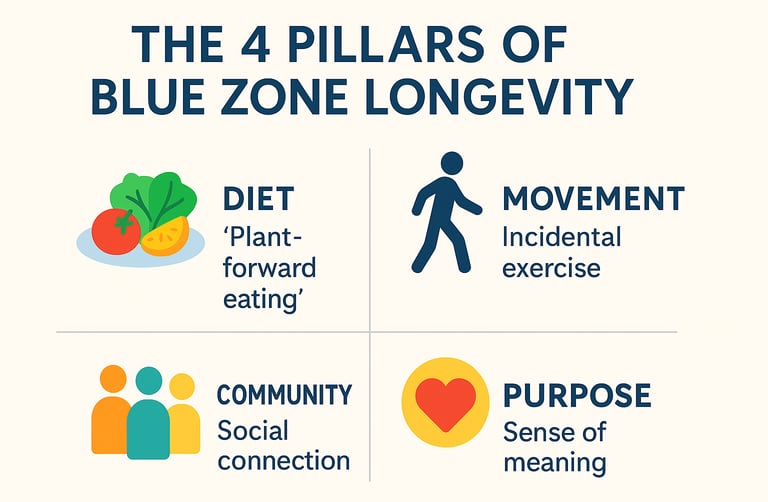
Research into these remarkable communities reveals four interconnected pillars that consistently predict exceptional longevity: diet, movement, community, and purpose. Understanding each pillar and how they interact provides a roadmap for anyone seeking to enhance their health span and lifespan.
The Power of Blue Zone Diets: Nutritional Foundations
The eating patterns in Blue Zones share surprising commonalities despite geographic and cultural differences. Contrary to popular diet trends emphasizing extreme restriction or single macronutrient focus, Blue Zone diets are characterized by simplicity, whole foods, and plant-forward eating patterns. Rather than viewing dietary choices as a one-time decision, emerging research suggests that sustained dietary practices—not isolated interventions—determine longevity outcomes (Pes et al., 2022).
Across these regions, the typical diet consists of approximately 95% plant-based foods. Legumes—including beans, lentils, and chickpeas—form the protein foundation, appearing in nearly every meal. Whole grains provide sustained energy, while seasonal vegetables and fruits deliver micronutrients and phytonutrients essential for cellular health. Healthy fats from olive oil, nuts, and avocados are dietary staples, while red meat appears sparingly, often reserved for special occasions and consumed in modest portions.
The Okinawan diet exemplifies this pattern, with sweet potatoes comprising up to 60% of daily caloric intake, supplemented by leafy greens and minimal animal products. In the Mediterranean regions of Sardinia and Ikaria, olive oil is generously used, legumes are central to meals, and locally-grown vegetables are consumed abundantly. The Nicoya Peninsula residents rely heavily on beans, squash, and corn—a traditional combination providing complete proteins and sustained energy.
Research examining dietary patterns in Blue Zones reveals an important nuance: successful longevity isn't achieved through restrictive approaches but through consistent, sustainable dietary habits that people maintain throughout their lifespans (Pes et al., 2022). The foods weren't engineered by nutritionists; they evolved from geographic availability, cultural traditions, and economic necessity. Residents didn't have access to processed foods, ultra-refined sugars, or industrialized animal products—factors that have become hallmarks of modern disease-promoting diets. Their natural food environments created a built-in health advantage.
The nutritional benefits are substantial. These plant-forward diets are rich in fiber, supporting digestive health and maintaining stable blood sugar levels. They're abundant in antioxidants and anti-inflammatory compounds that protect cells from damage. The mineral content supports bone health, cardiovascular function, and neurological wellness. Perhaps most importantly, these diets prevent the chronic inflammation that underpins most age-related diseases, from cardiovascular disease to dementia.
Movement Without Gym Memberships: Natural Physical Activity
One of the most liberating insights from Blue Zone research concerns physical activity: residents don't achieve exceptional fitness through grueling gym sessions or competitive sports. Instead, movement is woven naturally into daily life. This concept—sometimes called "incidental exercise" or "lifestyle activity"—proves remarkably effective for longevity.
In Okinawa, residents perform gardening, a practice that combines flexibility, strength training, and cardiovascular activity. In Sardinia's mountain villages, shepherds walk vast distances daily, maintaining cardiovascular fitness through necessity rather than discipline. Nicoya Peninsula residents engage in agriculture and manual labor, while Ikarian Greeks walk hilly terrain to access daily activities.
Crucially, this isn't sporadic exercise; it's consistent, daily movement. Blue Zone residents accumulate 30 minutes or more of moderate-intensity activity almost every day—not through structured workouts, but through the organic demands of their lifestyles. They climb stairs regularly, walk to destinations, tend gardens, and engage in manual labor. This consistency prevents the muscle loss, bone density decrease, and cardiovascular deconditioning that plague sedentary populations.
The benefits extend beyond physical fitness. Regular movement supports mental health, enhances cognitive function, improves sleep quality, and maintains the hormonal balance essential for healthy aging. The incidental nature of Blue Zone movement proves psychologically sustainable; people maintain it for life because it doesn't feel like "exercise" but rather the normal rhythm of existence.
Community and Connection: The Social Pillar of Longevity
Perhaps the most underappreciated factor in Blue Zone longevity is the power of social connection and community integration. Research increasingly demonstrates that loneliness represents a mortality risk factor comparable to smoking, while strong social bonds enhance both lifespan and health span.
In Blue Zones, community structures are robust and multi-generational. Extended families live in close proximity or share housing, ensuring constant social interaction. Regular gatherings—whether for meals, celebrations, or daily activities—create frequent points of connection. These aren't isolated incidents but the regular fabric of social life.
This social foundation provides multiple health benefits. Social connection reduces stress hormones, supporting cardiovascular and immune health. It provides emotional support during life challenges, buffering against depression and anxiety. Community involvement creates a sense of belonging and identity, factors strongly associated with mental health and longevity. The social engagement stimulates cognitive function, protecting against dementia and cognitive decline.
Additionally, tight-knit communities often reinforce health behaviors. When your community prioritizes certain foods, regular movement, and healthy practices, you're naturally drawn into these patterns. Conversely, when you live in isolation, unhealthy behaviors become easier to adopt. Blue Zone communities create what researchers call a "culture of health"—an environment where longevity-supporting choices become the default.
Purpose and Meaning: The Psychological Foundation
In Japanese, the concept of "ikigai" translates roughly to "reason for being"—a life purpose that motivates daily action. In Okinawa and throughout Blue Zones, this sense of purpose isn't philosophical luxury; it's an essential component of daily life and a significant predictor of longevity.
Research demonstrates that people with strong sense of purpose live longer, healthier lives. They experience lower rates of cardiovascular disease, stroke, dementia, and mortality from all causes. Purpose provides psychological resilience, helping people navigate life's inevitable challenges while maintaining emotional equilibrium.
In Blue Zones, purpose often derives from family roles, community contribution, or spiritual practice. An Okinawan grandmother derives purpose from maintaining family traditions and caring for grandchildren. A Sardinian shepherd finds meaning in stewarding livestock and contributing to community food supply. An Ikarian elder contributes to village life and maintains cultural practices. These purposes aren't abstract; they translate into daily activities, social interactions, and feelings of significance.
Importantly, purpose continues throughout life in Blue Zones. Unlike modern societies where retirement often strips away occupational identity and social role, Blue Zone cultures maintain meaningful contributions for individuals across all life stages. This continuity of purpose provides psychological stability and maintains the sense of being needed—factors that strongly predict both longevity and life satisfaction.
The Interconnection: Why These Pillars Work Together
While we can examine diet, movement, community, and purpose separately, their true power emerges in how they interact and reinforce each other. The plant-based diet supports the physical energy needed for daily movement. Community structures reinforce dietary practices and encourage regular activity. Purpose motivates people to maintain healthy practices and stay connected with their communities. This synergistic effect creates a powerful longevity system that's far more effective than any single intervention.
Consider how these elements interact in a typical Blue Zone day: An Okinawan woman wakes with purpose—she'll spend the day tending her garden, preparing meals for her extended family, and participating in community activities. Her work involves natural movement—bending, walking, and physical labor. Her diet consists of vegetables from her garden and simple plant-based meals. In the evening, she gathers with family, reinforcing social bonds. Each element supports the others, creating a comprehensive system where health-promoting choices feel natural and inevitable rather than effortful and restrictive.
That's a great idea! Highlighting a specific, memorable cultural practice from each Blue Zone helps illustrate how the four longevity pillars are naturally integrated into their daily lives
Unique Cultural Practices in the Blue Zones
1. Okinawa, Japan (The Longevity Island)
Practice: Moai (pronounced mo-eye)
Description: This is a lifelong social support network of 5 to 10 friends who are committed to each other. They provide social support (emotional and financial) throughout their lives. The group meets regularly, sharing news, discussing problems, and maintaining a strong safety net. This practice directly addresses the Community and Connection pillar.
2. Sardinia, Italy (Highlands of the Centenarians)
Practice: Walking the Shepherd's Path (Natural, daily movement)
Description: Many long-lived Sardinian men, particularly in the mountain villages, were traditionally shepherds. This job requires walking long distances daily over rugged, hilly terrain, providing constant, low-intensity, and highly beneficial Movement that is naturally integrated into their work and culture. They also practice a deep sense of family and community hierarchy that keeps elders respected and engaged. They also consume Cannonau wine in moderation, which is exceptionally rich in antioxidants.
3. Nicoya Peninsula, Costa Rica (The Sunken Place)
Practice: Plan de Vida (Reason for living)
Description: Similar to the Okinawan ikigai, Nicoyans maintain a strong sense of purpose (Plan de Vida), which keeps them engaged and useful throughout their senior years. This often translates to helping with family chores, staying involved in the community, and caring for grandchildren, ensuring they have a reason to get up in the morning and reinforcing the Purpose pillar. They also follow the traditional "three sisters" diet of corn, beans, and squash.
4. Ikaria, Greece (The Island Where People Forget to Die)
Practice: The Mid-Day Siesta (or Pushing Back Bedtime)
Description: Ikarians are known for taking a traditional mid-day nap, or siesta, which helps reduce stress and improve cardiovascular health.They also tend to stay up late, socializing over a small glass of wine or herbal tea with neighbors, which strengthens Community and Connection. Studies have shown that those who nap regularly have lower rates of heart disease.
5. Loma Linda, California, USA (The Seventh-day Adventists)
Practice: The Sabbath Focus (24-Hour Pause)
Description: This community, primarily composed of Seventh-day Adventists, observes the Sabbath from Friday sunset to Saturday sunset. During these 24 hours, they rest, focus on family and social connection, and engage in spiritual practice. They put aside work and daily worries, which serves as a weekly, institutionalized ritual for reducing stress, strengthening Community and Connection, and reinforcing their Purpose through faith. They also adhere to a Bible-based, plant-forward diet.
Key Research Insights: What the Science Reveals
Recent research synthesizing data from Blue Zone populations reveals compelling findings about longevity factors. Multiple longitudinal studies have documented the health advantages of residents in these regions, comparing them with matched populations in developed nations consuming typical Western diets. Importantly, contemporary research emphasizes that there is no single silver bullet for longevity; instead, sustained lifestyle integration across multiple dimensions drives exceptional health outcomes (Buettner, 2025).
Key findings consistently emerge: residents of Blue Zones experience dramatically lower rates of heart disease, cancer, and diabetes. Cognitive function remains sharp into advanced age, with significantly lower dementia prevalence compared with age-matched counterparts in Western countries. Life expectancy extends 10+ years beyond developed nation averages, with this extended time characterized by maintained health rather than chronic disease management.
The research also reveals that migration patterns provide natural experiments. When Blue Zone residents or their descendants move to developed nations and adopt Western lifestyles, their health advantages diminish substantially. Within one or two generations, they experience disease rates approaching those of the general Western population. This demonstrates that longevity in Blue Zones results from lifestyle factors, not immutable genetic inheritance, offering hope that adopting Blue Zone principles can benefit anyone.
A particularly important insight from contemporary research involves the nature of dietary adherence. Rather than treating dietary choices as a temporary fix or singular decision, research on Blue Zone populations suggests that successful longevity depends on sustained, integrated dietary practices that individuals maintain throughout their lives (Pes et al., 2022). This perspective shifts the focus from short-term diet interventions to long-term lifestyle integration, suggesting that the goal isn't dramatic transformation but rather consistent, sustainable practices embedded in daily routines.
Practical Applications: Bringing Blue Zone Wisdom to Your Life
While most of us cannot relocate to Mediterranean islands or Okinawan villages, we can integrate Blue Zone principles into our current lives. The power of these findings lies in their applicability—they're not based on expensive interventions but accessible lifestyle modifications. Importantly, achieving Blue Zone benefits doesn't require perfection or adherence to rigid protocols; instead, it requires consistent integration of these principles into sustainable daily practices (Buettner, 2025).
Dietary Integration
Start by gradually increasing plant-based foods in your diet. Begin with "plant-forward" eating rather than complete veganism—emphasize vegetables, legumes, and whole grains while reducing processed foods and excess animal products. Experiment with legume-based meals: hearty bean soups, lentil dishes, and chickpea-based preparations. Embrace whole grains in their natural state. Incorporate healthy fats through olive oil, nuts, and seeds. Create meals that emphasize vegetables alongside smaller portions of protein, reversing the typical Western plate proportions.
The key is sustainability. Rather than attempting dramatic dietary transformation, gradually modify your eating patterns so they become natural and maintainable long-term (Pes et al., 2022).
Movement Habits
Consider how to weave more natural movement into your daily routine. This requires creativity within modern life structures. Walk or bike for short-distance trips when possible. Take stairs instead of elevators. Do gardening or yard work regularly. Stand during work. Walk during phone calls. The goal isn't marathon-length workouts but consistent, daily movement that accumulates throughout your day.
Community Building
Consciously invest in community connections. Regular family meals become a practice rather than occasional events. Participate in group activities—whether community gardens, volunteer organizations, faith communities, or hobby-based groups. Make social connection a priority rather than a luxury. Recognize that time spent strengthening relationships is time invested in your health.
Purpose Development
Reflect on what provides your sense of purpose and meaning. This might derive from family roles, community contribution, creative expression, spiritual practice, or mentoring others. Once identified, actively prioritize these purpose-driven activities. Recognize that maintaining purpose throughout life—including beyond traditional retirement—supports both longevity and life satisfaction.
Frequently Asked Questions
Q: Do I need to follow a strictly vegan diet to achieve Blue Zone benefits?
A: No. While plant-based foods form the dietary foundation in Blue Zones, most regions include small amounts of animal products, particularly fish and occasionally meat or poultry. The key is emphasizing plants as the base of your diet while treating animal products as occasional accompaniments rather than the meal center.
Q: How much exercise do I need to adopt Blue Zone principles?
A: The research suggests approximately 30 minutes of moderate daily movement is optimal. Crucially, this doesn't require intense workouts—consistent daily movement through normal activities is sufficient. The key is consistency rather than intensity.
Q: Can I achieve Blue Zone health benefits if I'm older?
A: Yes. Research demonstrates that adopting these principles benefits people across all ages. While earlier adoption maximizes benefits, studies show that even people who implement these changes in their 60s, 70s, or beyond experience significant health improvements and extended healthy lifespan.
Q: Are Blue Zone benefits purely from individual lifestyle, or does the environment matter?
A: Both matter significantly. While individual choices are important, environmental design substantially influences behavior. Blue Zone benefits emerge partly from living in communities where healthy choices are easy and cultural default. This suggests that creating supportive environments—whether through community gardens, walking-friendly neighborhoods, or social structures—enhances individual effort.
Q: What if I can't access the specific foods in Blue Zone diets?
A: The principle matters more than specific foods. The goal is eating predominantly whole, plant-based foods available in your region. Most areas offer legumes, seasonal vegetables, whole grains, nuts, and healthy oils—the actual foods available in Blue Zones. Focus on the pattern rather than exact replication.
Q: Is there a single "magic solution" for achieving Blue Zone longevity?
A: No. Contemporary research emphasizes that exceptional longevity emerges from integrated, sustained practices across multiple life dimensions rather than any single intervention (Buettner, 2025). The synergistic combination of diet, movement, community, and purpose—maintained consistently over decades—creates the longevity advantage seen in Blue Zones.
Q: How long does it take to see health benefits?
A: Research shows measurable improvements in cardiovascular markers, blood sugar control, and inflammation within 2-4 weeks of dietary changes. More substantial transformations in weight, fitness, and disease markers typically emerge over 3-6 months with consistent practice.
Key Takeaways
The Blue Zones research offers accessible, evidence-based guidance for extending both lifespan and healthspan. The four pillars—diet, movement, community, and purpose—work synergistically to create exceptional health outcomes. These principles aren't novel or complicated; they represent ways of living refined through generations in these remarkable regions. Importantly, achieving these benefits doesn't require perfection or strict adherence to predetermined protocols; instead, it requires sustained integration of these practices into your daily life (Buettner, 2025).
Research examining dietary practices specifically emphasizes that successful longevity depends on maintaining consistent, sustainable dietary habits rather than pursuing temporary restrictive approaches (Pes et al., 2022). This principle extends to all Blue Zone practices: the goal is sustainable integration, not extreme transformation. The encouraging finding is that you don't need to relocate or make drastic changes. Gradually incorporating these elements creates momentum toward improved health and extended vitality.
The path to longevity isn't found in pharmaceutical interventions or extreme wellness protocols. It's found in daily practices, community connections, purposeful living, and plant-forward eating. By adopting Blue Zone principles—even partially—you're leveraging insights from the world's healthiest, longest-lived populations to enhance your own health trajectory.
Call to Action
Your longevity journey begins with a single step. This week, choose one Blue Zone principle to implement. Whether it's adding one legume-based meal, taking a daily 30-minute walk, scheduling regular connection with loved ones, or clarifying your life purpose, start somewhere. Blue Zone wisdom demonstrates that the accumulation of small, consistent choices creates extraordinary health outcomes.
Ready to transform your health? Begin today by exploring which Blue Zone principle resonates most strongly with you. Document your progress, notice how you feel, and gradually build momentum. In three months, you'll likely notice improvements in energy, mood, and physical vitality. Over years, you'll be building the foundation for an extended, vibrant life.
The world's longest-lived people aren't extraordinary; they're simply living according to principles that support human thriving. Now it's your turn.
Disclaimer: This article is for informational purposes only and does not constitute medical advice. Individual circumstances vary, and treatment decisions should always be made in consultation with qualified healthcare professionals.
.Related Articles
VO2 Max & Longevity: The Ultimate Guide to Living Longer | DR T S DIDWAL
Why Exercise Is the Most Powerful Anti-Aging Therapy: A Research-Driven Guide | DR T S DIDWAL
References
Buettner, D. (2025). Lessons from the Blue Zones: There is no silver bullet (or magic pill) for a long, healthy life. American Journal of Lifestyle Medicine, 15598276251334310. https://doi.org/10.1177/15598276251334310
Pes, G. M., Dore, M. P., Tsofliou, F., & Poulain, M. (2022). Diet and longevity in the Blue Zones: A set-and-forget issue?. Maturitas, 164, 31–37. https://doi.org/10.1016/j.maturitas.2022.06.004