Moderate vs. Vigorous Exercise: Which Intensity Delivers Greater Metabolic and Heart Benefits?
Moderate vs vigorous exercise intensity compared for fat loss, heart health, and longevity. Backed by 2024–2026 research, including 96,000-person studies. Find your optimal intensity today.
EXERCISE
Dr. T.S. Didwal, M.D.(Internal Medicine)
5/25/202625 min read
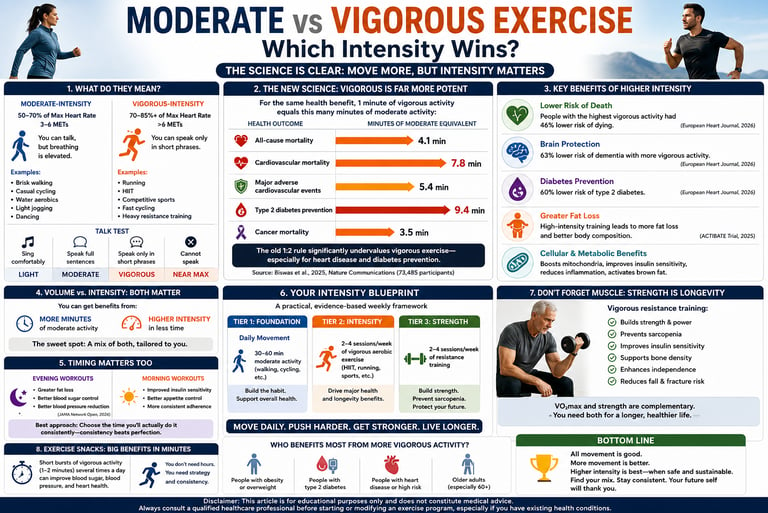
Vigorous exercise provides greater protection against heart disease, type 2 diabetes, dementia, and premature death than moderate exercise alone. Research from 2024–2026 shows that even short bursts of high-intensity activity significantly improve VO₂max, insulin sensitivity, mitochondrial function, fat loss, and longevity when combined with regular movement and strength training.
Am I working hard enough?
You're at the gym, thirty minutes in, wondering: Am I working hard enough? Or maybe you're a brisk walker who just read that you need to be running. The question of exercise intensity — how hard you should actually push — is one of the most debated in modern health science.
And the research community has been busy answering it.
In 2026, a landmark European Heart Journal study of nearly 100,000 people found that people with the highest proportion of vigorous physical activity had a 63% lower risk of dementia, 60% lower risk of type 2 diabetes, and 46% lower risk of dying compared to those who did none. A 2025 Nature Communications study of 73,485 people challenged the long-held "1 minute vigorous = 2 minutes moderate" rule — and found vigorous activity is far more potent than previously believed.
But does that mean moderate exercise is worthless? Not at all. The answer, as this evidence-packed guide will show, is more nuanced — and more empowering — than any simple rule.
In this article, you will learn:
The precise physiological differences between moderate and vigorous exercise
What the latest 2024–2026 research actually says about fat loss, heart health, longevity, and disease prevention
How the timing of your workout affects outcomes (a game-changer for people with obesity)
A practical, evidence-based workout framework you can apply this week
Key Points
1. Intensity Is a Powerful “Metabolic Medicine”
Vigorous exercise does more than burn calories—it improves insulin sensitivity, mitochondrial function, and metabolic flexibility. Even brief high-intensity activity can significantly reduce the risk of type 2 diabetes and cardiovascular disease when performed consistently.
2. Moderate Exercise Builds Health—Vigorous Exercise Expands It
Brisk walking and moderate activity remain foundational for cardiovascular and mental health. However, adding carefully planned vigorous exercise appears to provide additional protection against dementia, premature mortality, and metabolic disease beyond moderate activity alone.
3 The Best Exercise Program Is the One You Can Sustain Safely
Optimal health does not require extreme training. The most effective long-term strategy combines:
daily movement,
moderate aerobic activity,
periodic vigorous exercise,
and progressive resistance training.
Consistency over the years matters far more than perfection for a few weeks.
4. Vigorous exercise delivers more health benefits per minute than moderate exercise.
Recent large-scale studies (2025–2026) show that one minute of vigorous activity can be equivalent to 4–9 minutes of moderate activity for reducing risks of death, heart disease, type 2 diabetes, and dementia. Intensity provides unique metabolic and cellular benefits that moderate exercise alone cannot fully match.
5. Even small amounts of vigorous “exercise snacks” make a big difference.
Brief bursts of vigorous effort (1–2 minutes, 3–4 times daily) — such as sprinting up stairs or carrying heavy bags briskly — are linked to significantly lower mortality and cancer risk. These micro-bouts are especially valuable when time is limited.
6. For people with obesity or type 2 diabetes, evening vigorous exercise may offer extra protection.
Research shows that performing moderate-to-vigorous activity in the evening is associated with the greatest reductions in mortality and cardiovascular risk in this population, likely due to improved insulin sensitivity and circadian alignment.
7. Vigorous exercise is particularly valuable as we age.
While starting gently is important, older adults who safely incorporate vigorous activity experience superior improvements in mitochondrial function, insulin sensitivity, inflammation control, and muscle preservation compared to moderate exercise alone.
8. Safety and progression are key — intensity should be relative to your fitness level.
Use the “talk test”: if you can only speak in short phrases, you’re in the vigorous zone. Begin with a solid moderate base, progress gradually, and always get medical clearance if you have heart disease, hypertension, or other conditions. The goal is a sustainable challenge, not exhaustion.
1. What "Moderate" and "Vigorous" Actually Mean
Before comparing intensities, let's define them precisely, because these terms are often used loosely.
Moderate-intensity exercise is typically defined as activity performed at 50–70% of your maximum heart rate (MHR), or roughly 3–6 METs (metabolic equivalents). At this level, you can hold a conversation, but you're breathing noticeably harder than at rest. Common examples include:
Brisk walking (3.5–4.5 mph)
Recreational cycling on flat terrain
Water aerobics
Light jogging
Dancing
Vigorous-intensity exercise registers at 70–85%+ of MHR, or >6 METs. Conversation becomes difficult; you can speak only in short phrases. Examples include:
Running or jogging
High-intensity interval training (HIIT)
Competitive sports (football, basketball, tennis)
Fast cycling or hill climbing
Heavy resistance training circuits
The "Talk Test" — Your Instant Intensity Check:
The "Talk Test" is a simple, clinically validated tool used to gauge exercise intensity in real time without a heart rate monitor.
Singing Comfortably: Indicates a Light Intensity Level (below the moderate aerobic threshold). Your heart rate is elevated only slightly above your baseline resting level.
Speaking Full Sentences (Slightly Breathless): Signifies a Moderate Intensity Level. You are actively working, but your cardiorespiratory system can still handle full conversations.
Speaking Only in Short Phrases: Confirms a Vigorous Intensity Level. Your body is working hard enough that you must pause for breath after every few words.
Unable to Speak: Indicates a Near-Maximal Intensity Level. Your body has crossed its anaerobic threshold, requiring maximum effort.
Current public health guidelines recommend at least 150–300 minutes of moderate-intensity activity or 75–150 minutes of vigorous-intensity activity per week, or an equivalent combination. But as you'll see, the emerging evidence suggests the ratio of vigorous to total activity deserves more attention than guidelines have historically given it.
2. The New Science: Vigorous Is More Potent Than We Thought
The 1:2 Rule Is Outdated
For decades, exercise guidelines operated on a simple conversion: 1 minute of vigorous-intensity physical activity equals 2 minutes of moderate-intensity activity in health terms. This rule shaped global guidelines, fitness prescriptions, and public health campaigns.
A landmark 2025 study published in Nature Communications has fundamentally revised that estimate.
Biswas et al. (2025) used accelerometer data from 73,485 UK Biobank participants (mean follow-up: 8 years) to calculate the actual equivalence of light, moderate, and vigorous activity for five major outcomes. The results were striking:
The Modern Equivalency Breakdown
Instead of the old rule of thumb that 1 minute of intense exercise equals 2 minutes of moderate exercise, modern data shows that 1 minute of vigorous physical activity provides the same protection as:
9.4 minutes of moderate activity for Type 2 Diabetes Prevention
7.8 minutes of moderate activity for Cardiovascular Mortality Protection
5.4 minutes of moderate activity for preventing Major Adverse Cardiovascular Events (MACE)
4.1 minutes of moderate activity for lowering All-Cause Mortality
3.5 minutes of moderate activity for lowering Cancer Mortality
Why the Old "1:2 Rule" Fails
Undervaluing Intensity: The historic 1:2 conversion factor dramatically underestimates the therapeutic power of hard training.
Diabetes Impact: For metabolic health, 1 minute of high-intensity work is worth nearly 10 minutes of casual, moderate movement.
Heart Protection: To prevent cardiovascular death, a single vigorous minute of exercise matches nearly 8 minutes of moderate effort.
The Core Takeaway: Quality Over Quantity
Intensity Beats Volume: Researchers found that exercise intensity consistently demonstrates greater preventive potential than total training volume.
The Bottom Line: How hard you push yourself during a workout matters significantly more for your long-term health span than how long the workout lasts.
The European Heart Journal's 96,000-Person Study (2026)
The most comprehensive volume-vs-intensity study to date was published in the European Heart Journal in 2026.
Wei et al. examined data from 96,408 participants with device-measured activity (plus 375,730 with self-reported data) and tracked the incidence of eight major chronic diseases. Key findings include:
Compared to no vigorous activity, those with the highest proportion of vigorous activity had:
63% lower risk of dementia
60% lower risk of type 2 diabetes
46% lower risk of dying
Significantly lower risks of heart disease, stroke, and several cancers
These benefits from vigorous activity persisted even when the total amount of time was modest — a few minutes a day still made a meaningful difference
A higher proportion of vigorous activity was more important for some diseases (particularly metabolic and neurological conditions) than others
Importantly, the researchers noted that vigorous activity appears to trigger specific physiological responses — including powerful cardiovascular and metabolic adaptations — that lower-intensity activity cannot fully replicate.
3. Volume vs. Intensity: Which Matters More?
This is the million-dollar question in exercise science, and the 2025–2026 evidence is finally giving us a clear directional answer.
Volume refers to the total amount of physical activity — minutes per week, steps per day, or total energy expended. Intensity refers to how hard you're working during that activity.
For decades, guidelines focused primarily on volume: "get 150 minutes per week." The assumption was that intensity could be freely traded for volume.
The 2026 European Heart Journal study challenges this assumption directly. For certain conditions — particularly type 2 diabetes, dementia, and cardiovascular disease — a higher proportion of vigorous activity was independently associated with better outcomes, over and above total volume. In other words, two people doing the same total minutes of exercise can have dramatically different health outcomes depending on how much of it is vigorous.
However, this doesn't mean volume is irrelevant. The evidence consistently shows:
More total activity is better than less, regardless of intensity
Replacing sedentary time with any movement reduces risk
Adding vigorous bouts to a moderate foundation creates additive and possibly synergistic benefits
For people who are deconditioned, volume comes first — build the base before increasing intensity
The practical takeaway: Think of volume as the floor and intensity as the ceiling. Establish a solid base of daily movement, then strategically elevate intensity to unlock additional protection against metabolic and cardiovascular disease.
4. Heart Health: What the Cardiovascular Evidence Shows
Both Intensities Help — Vigorous Helps More
A 2025 comprehensive review by Radonić in Premier Journal of Cardiology confirmed that both moderate and vigorous physical activity provide significant cardiovascular benefits, but through different mechanisms. Moderate activity builds endurance and improves baseline cardiovascular function; vigorous activity produces more pronounced improvements in heart rate variability and blood pressure regulation.
Reducing Recurrent Heart Events
For people who have already had a cardiovascular event, the stakes of exercise intensity are particularly high. A 2025 prospective cohort study by Lönn et al. (published in International Journal of Cardiology) tracked individuals with coronary heart disease and found that those who increased their moderate-to-vigorous physical activity while simultaneously reducing sedentary time experienced significantly lower rates of recurrent cardiovascular events.
The protective effect was not from rest — it was from progressively moving more and sitting less. This finding is significant: it means cardiac patients should not default to inactivity out of fear. Under medical supervision, increasing exercise intensity is one of the most powerful preventive tools available.
Vigorous Activity and Heart Disease: How Little Is Enough?
A 2022 study in the European Heart Journal (Ahmadi et al.) using accelerometer data from 71,893 UK Biobank participants found a non-linear dose-response relationship between vigorous physical activity and all-cause mortality, with the optimal dose (lowest hazard ratio) observed at approximately 54 minutes per week of vigorous activity. Benefits accrued rapidly at low doses and plateaued at higher volumes — meaning even small amounts of vigorous exercise offer substantial cardiovascular protection.
5. Fat Loss and Body Composition: The ACTIBATE Trial
One of the most rigorous head-to-head comparisons of exercise intensities for body composition comes from the ACTIBATE (Activating Brown Adipose Tissue Through Exercise) randomized controlled trial, published in the International Journal of Sport Nutrition and Exercise Metabolism.
Study design: Young, previously sedentary adults were randomly assigned to either:
Moderate-intensity exercise
Vigorous-intensity exercise
A non-exercise control group
Body composition was carefully tracked throughout the intervention.
Key findings:
Both exercise groups improved body composition compared to controls
The vigorous-intensity group achieved superior results: greater reductions in total body fat and better improvements in lean muscle mass
The vigorous group also showed more significant brown adipose tissue (BAT) activation — a metabolic game-changer (see next section)
What About Aerobic Exercise for Weight Loss More Broadly?
A comprehensive 2024 systematic review and dose-response meta-analysis in JAMA Network Open (Jayedi et al.) synthesized data across supervised aerobic exercise trials to establish the dose-response relationship between aerobic exercise and weight loss. The study confirmed that aerobic exercise produces meaningful weight and fat reduction, with greater doses producing greater effects — and that the intensity of activity influences the magnitude of outcomes beyond raw caloric expenditure.
The key message: If body recomposition is your goal, vigorous-intensity exercise offers clear advantages over purely moderate-intensity training. However, any structured exercise beats inactivity — the best program is one you will actually sustain.
6. The Brown Fat Breakthrough
One of the most exciting findings from the ACTIBATE trial — and a uniquely compelling argument for vigorous exercise — is its effect on brown adipose tissue (BAT).
Most body fat is white adipose tissue, which stores energy. Brown adipose tissue is fundamentally different: it is metabolically active, packed with mitochondria, and burns calories to generate heat. Higher BAT activity is associated with:
Better blood sugar control
Lower body fat percentage
Reduced risk of metabolic syndrome
Improved insulin sensitivity
The ACTIBATE trial found that vigorous-intensity exercise activates brown adipose tissue more effectively than moderate-intensity exercise. This provides an additional metabolic mechanism that partially explains why high-intensity exercisers experience greater improvements in body composition that calorie-burning alone cannot account for.
BAT activation from vigorous exercise may represent one of the most underappreciated benefits of pushing harder — a biological bonus you simply cannot unlock with a gentle stroll.
7. Exercise Timing: When You Work Out Matters Too
The intensity of exercise is not the only variable worth optimizing. A 2024 study published in Diabetes Care (Sabag et al.) introduced a compelling new dimension: when during the day you do your moderate-to-vigorous exercise.
Study design: 29,836 adults with obesity (mean age 62.2 years) from the UK Biobank accelerometry substudy were followed for nearly 8 years. Participants were categorized by when they performed the majority of their aerobic MVPA: morning (6 AM–12 PM), afternoon (12 PM–6 PM), or evening (6 PM–12 AM).
Workout Timing vs. Risk Reduction (The Numbers)
Compared to individuals who complete less than one brisk workout per day, timing your physical activity yields distinct survival advantages:
Morning Workouts: Associated with a 33% lower risk of all-cause mortality and a significant reduction in heart disease.
Afternoon Workouts: Associated with a 40% lower risk of all-cause mortality and a significant reduction in heart disease.
Evening Workouts: Associated with a 61% lower risk of all-cause mortality and the absolute greatest reduction in cardiovascular threats.
The Metabolic Shield of Evening Exercise
For adults with obesity, moving physical activity to the evening window provides the lowest overall risk for:
Cardiovascular Disease (CVD)
Microvascular Diseases (including diabetes-related nerve damage, vision loss, and kidney disease)
Note: This evening survival advantage is even more pronounced in individuals explicitly diagnosed with Type 2 diabetes.
Why Late-Day Movement Wins
Researchers point to three specific biological triggers that make evening exercise superior for metabolic health:
Blood Sugar Crushing: Blood sugar typically spikes to its highest daily levels after dinner; evening exercise spikes insulin sensitivity right when your body needs to clear that glucose.
Circadian Realignment: Late-day activity optimizes your internal clock, aligning metabolic processes for better fat and carb processing overnight.
The Sedentary Circuit-Breaker: An evening workout immediately flushes out and buffers against the negative metabolic consequences of sitting at a desk all day.
The Core Takeaway & Caveat
Population Specific: This massive evening advantage applies specifically to adults with obesity and metabolic conditions.
The Morning Case: For the general population without blood sugar issues, morning workouts remain highly beneficial for building consistent habits, boosting mood, and improving daytime brainpower.
The Golden Rule: Regardless of the data, the absolute best time to exercise is always the time that fits your schedule consistently.
8. Vigorous "Exercise Snacks": Big Benefits in Minutes
One of the most liberating findings in recent exercise science is that vigorous activity does not need to come in long, structured sessions. "Vigorous intermittent lifestyle physical activity" (VILPA) — brief, intense bursts embedded in daily life — can deliver meaningful health protection.
A 2022 study in Nature Medicine (Stamatakis et al.) used wrist accelerometer data to examine the health effects of VILPA — think sprinting to catch a bus, carrying heavy groceries up stairs, or playing high-energy games with children. Even 3–4 bouts of 1–2 minutes of vigorous activity per day were associated with substantially lower all-cause mortality and cancer incidence.
This finding has huge practical implications. If structured workouts are a barrier — due to time, cost, access, or motivation — embedding vigorous moments throughout daily life is a legitimate and evidence-supported strategy.
Practical VILPA ideas:
Take stairs two at a time, briskly
Sprint to the next lamppost during a walk
60-second burpee or jumping jack set between tasks
Walk uphill at maximum effort
Dance vigorously to one song
Carry heavy shopping bags without stopping
A 2026 Nature news feature highlighted the growing body of evidence that "exercise snacks and other forms of everyday movement can greatly reduce the risk of heart disease and death" — validating these micro-bouts of vigorous activity as a legitimate public health strategy.
9. Metabolic Mechanisms: Why Intensity Rewires Your Body
The superiority of vigorous exercise for certain outcomes is not arbitrary — it flows directly from distinct physiological mechanisms that moderate activity cannot fully trigger.
Mitochondrial Biogenesis
Vigorous-intensity exercise creates a profound energy deficit that signals your cells to build more mitochondria — the organelles that convert fuel to ATP. More mitochondria means greater metabolic capacity. A 2025 review by Hawley and Hoffman in Nature Reviews Endocrinology, reflecting on twenty years of exercise metabolism research, highlights that intensity doesn't merely burn calories: it rewires cellular machinery by activating genes responsible for mitochondrial biogenesis and metabolic flexibility.
EPOC: The Afterburn Effect
Vigorous exercise triggers significantly greater excess post-exercise oxygen consumption (EPOC) — the elevated metabolic rate that persists after you stop exercising. The more intense the session, the longer and more substantial the afterburn. A 45-minute vigorous workout can elevate your metabolism for hours afterward, burning additional calories even while you rest.
Hormonal Cascade
High-intensity exercise produces a greater surge of adrenaline, cortisol (acute, beneficial response), and growth hormone compared to moderate-intensity work. This hormonal environment stimulates fat mobilization, muscle protein synthesis, and glycogen replenishment — collectively driving superior body composition changes.
Metabolic Flexibility
Your body's ability to efficiently switch between burning carbohydrates and fats — metabolic flexibility — is strongly tied to exercise intensity. Vigorous activity creates a larger oxygen deficit that trains your mitochondria to access and oxidize fat stores more rapidly. Impaired metabolic flexibility is a hallmark of insulin resistance, type 2 diabetes, and metabolic syndrome.
Anti-Inflammatory Adaptation
Chronic low-grade inflammation underlies cardiovascular disease, type 2 diabetes, neurodegeneration, and cancer. A 2025 meta-analysis by Sheldon et al. in Ageing Research Reviews synthesizing data across multiple studies found that vigorous-intensity physical activity produces superior reductions in chronic inflammatory markers (including IL-6 and TNF-alpha) compared to moderate-intensity exercise — an effect particularly pronounced in aging populations.
10. For Older Adults: Why Vigorous Exercise Becomes More Important with Age
Counterintuitively, the research suggests that vigorous-intensity exercise may be most valuable precisely when we're least likely to do it: as we age.
The 2025 meta-analytic compendium by Sheldon et al. in Ageing Research Reviews — synthesizing data across multiple studies on aging adults — found that vigorous-intensity physical activity generates more robust metabolic adaptations in older populations than moderate-intensity exercise alone, including:
Larger improvements in insulin sensitivity
Better regulation of inflammatory markers
Superior mitochondrial function
Greater preservation of lean muscle mass (critical for preventing sarcopenia)
As we age, maintaining metabolic flexibility becomes increasingly difficult. Age-related mitochondrial decline, increasing insulin resistance, and chronic low-grade inflammation are not inevitable — but they require adequate stimulus to prevent. Gentle walks alone may not provide that stimulus.
Safety first: Older adults should begin with a foundation of moderate-intensity activity and progress to vigorous efforts gradually, ideally under the guidance of a healthcare provider or certified exercise physiologist. The goal is progressive overload, not sudden extremes.
A 2025 stroke rehabilitation RCT (Amanzonwé et al., published in Neurorehabilitation and Neural Repair) further challenged assumptions about intensity in compromised populations. Stroke patients assigned to appropriately calibrated vigorous-intensity protocols showed superior motor recovery compared to standard moderate-intensity rehabilitation, without increased adverse events. Even in acute neurological recovery, intensity matters.
11. Aerobic Exercise and Weight Loss: The Dose-Response Curve
The 2024 dose-response meta-analysis in JAMA Network Open (Jayedi et al.) offers critical insights into the relationship between aerobic exercise and weight management:
Aerobic exercise produces meaningful, dose-dependent reductions in body weight, waist circumference, and body fat
Greater doses — both in volume and intensity — yield greater outcomes
Supervised exercise produces more consistent results than unsupervised activity, likely due to adherence
The relationship is non-linear: early gains are steep, and returns gradually diminish at very high volumes
This meta-analysis reinforces a key principle: some exercise is always better than none, and more (within reason) is better than less. The intensity lever amplifies results within any given time budget.
For time-pressured individuals, this means: 20 minutes of vigorous exercise can produce comparable or superior fat loss outcomes to 40+ minutes of moderate exercise.
12. Special Populations: Heart Disease, Stroke, and Diabetes
Coronary Heart Disease
People with existing coronary heart disease have historically been counseled toward extreme caution with exercise intensity. The 2025 Lönn et al. prospective cohort study overturns the passive approach: increasing moderate-to-vigorous physical activity while reducing sedentary time significantly reduced recurrent cardiovascular event risk. Always work with a cardiologist to determine appropriate intensity progression.
Stroke Rehabilitation
The 2025 RCT by Amanzonwé et al. is groundbreaking: vigorous-intensity exercise protocols during acute stroke rehabilitation produced superior functional recovery without excess adverse events. Intensity calibration is key — "vigorous" for a stroke patient may look very different from vigorous for a healthy adult — but the principle holds.
Obesity and Type 2 Diabetes
The 2024 Sabag et al. Diabetes Care study is essential reading for this population. For adults with obesity — including those with type 2 diabetes — evening vigorous activity was most protective against mortality and microvascular disease. The timing advantage was most pronounced for people with both obesity and T2D. The 2025 Nature Communications equivalence study further confirms that for type 2 diabetes prevention specifically, vigorous activity is nearly 10 times more efficient per minute than moderate activity.
13. Evidence Summary Table
The following breakdown highlights the latest landmark clinical trials, randomized controlled trials (RCTs), and large-scale meta-analyses mapping out the precise health advantages of vigorous physical activity.
Brain Health & Longevity
Wei et al., 2026 (European Heart Journal):
The Data: Analyzed a combined population of over 472,100 participants.
The Finding: Incorporating a higher percentage of Vigorous Physical Activity (VPA) leads to a 63% lower risk of dementia, a 60% lower risk of Type 2 Diabetes, and a 46% lower risk of all-cause mortality.
Stamatakis et al., 2022 (Nature Medicine):
The Data: A general population study focused on small bursts of movement.
The Finding: Performing just 3 to 4 short bursts of vigorous activity (lasting 1 to 2 minutes each) throughout the day results in a substantially lower overall mortality and cancer incidence rate.
Metabolic Health, Weight Loss, & Biomarkers
Biswas et al., 2025 (Nature Communications):
The Data: Evaluated 73,485 UK Biobank participants.
The Finding: Confirmed that 1 minute of vigorous exercise delivers the therapeutic equivalent of 4.1 to 9.4 minutes of moderate activity, depending on the targeted health outcome.
Sheldon et al., 2025 (Ageing Research Reviews):
The Data: Comprehensive meta-analysis focused strictly on aging populations.
The Finding: Vigorous activity produces clear, superior outcomes for improving insulin sensitivity, reducing systemic inflammation, and driving mitochondrial adaptations compared to lower-intensity training.
Amaro-Gahete et al., 2023 (IJSNEM - ACTIBATE Trial):
The Data: Randomized controlled trial evaluating young, untrained adults.
The Finding: High-intensity, vigorous training triggers significantly greater fat loss and higher Brown Adipose Tissue (BAT) activation than standard moderate cardio.
Jayedi et al., 2024 (JAMA Network Open):
The Data: Broad dose-response meta-analysis of adult populations.
The Finding: While aerobic exercise of any speed creates dose-dependent fat loss, increasing your workout intensity drastically amplifies your final metabolic outcomes.
Sabag et al., 2024 (Diabetes Care):
The Data: Tracked 29,836 adults struggling with obesity.
The Finding: Combining vigorous intensity with evening workout timing results in a massive 61% lower mortality risk compared to sedentary control groups.
Lönn et al., 2025 (International Journal of Cardiology):
The Data: Evaluated recovering Coronary Heart Disease (CHD) patients.
The Finding: Successfully increasing Moderate-to-Vigorous Physical Activity (MVPA) while simultaneously limiting daily sitting time resulted in significantly fewer recurrent cardiovascular events.
Radonić, 2025 (Premier Journal of Cardiology):
The Data: Clinical review of general adult populations.
The Finding: Both moderate and intense routines reduce general cardiovascular disease risks, but pushing into a vigorous heart-rate zone yields the greatest overall improvements in Heart Rate Variability (HRV).
Stroke Recovery & Rehabilitation
Amanzonwé et al., 2025 (Neurorehabilitation & Neural Repair):
The Data: Randomized controlled trial involving acute stroke patients.
The Finding: Calibrated, highly intense workout protocols produce superior motor and functional recovery with zero added side effects or adverse medical events.
14. Common Myths and Mistakes
Myth 1: "The fat-burning zone means slow exercise burns more fat." While the percentage of fat burned as fuel is higher at lower intensities, the total fat oxidized is greater during vigorous exercise because of higher absolute energy expenditure and the EPOC afterburn effect.
Myth 2: "Vigorous exercise is only for young, fit people." The meta-analysis evidence in aging populations and the stroke rehabilitation RCT both demonstrate that appropriate vigorous-intensity exercise is not only safe for older and compromised populations — it may be more beneficial for them than moderate exercise alone.
Myth 3: "1 minute vigorous = 2 minutes moderate — so I can always swap." The 2025 Nature Communications equivalence study shows the actual ratio is 4:1 to nearly 10:1 for certain outcomes (particularly diabetes and cardiovascular death), meaning moderate exercise cannot fully substitute for vigorous exercise on a simple time-trade basis.
Myth 4: "I need 30+ minutes of vigorous exercise to benefit." The VILPA research (Stamatakis et al., 2022) shows 3–4 bouts of 1–2 minutes daily are associated with significantly lower mortality. The dose-response relationship is steep at low doses — even small amounts of vigorous activity matter.
Myth 5: "Morning workouts are always best." For adults with obesity and type 2 diabetes, evening vigorous exercise was most protective in the Sabag et al. 2024 study. Individual chronobiology and lifestyle factors matter — the best time is the time you'll consistently show up.
Myth 6: "More exercise is always better." The dose-response relationship is non-linear, with diminishing returns at very high volumes. There is also evidence of a J-shaped curve for extreme endurance exercise (e.g., marathon training daily). Optimal vigorous-intensity appears to be in the range of 54–75 minutes per week for most health outcomes.
15. Practical Framework: Your Intensity Blueprint
Based on the totality of 2023–2026 evidence, here is a practical, tiered approach to exercise intensity optimization:
Tier 1 — Foundation (All Adults)
Goal: Meet minimum activity thresholds, reduce sedentary time
Daily movement: Aim for 7,000–10,000 steps per day from all sources
Moderate activity base: 150 minutes per week of brisk walking, cycling, swimming, or similar
Reduce sitting: Break up sedentary time every 30–60 minutes with movement snacks
Tier 2 — Optimization (Most Adults Ready to Progress)
Goal: Add vigorous intensity to unlock superior metabolic and cardiovascular outcomes
Vigorous sessions: 2–3 sessions per week, each 20–30 minutes
Minimum vigorous target: 75 minutes per week (54 minutes appears to yield substantial benefit based on the non-linear dose-response curve)
Format options: HIIT intervals (e.g., 30 seconds hard / 90 seconds easy × 8), tempo runs, circuit training, vigorous sport participation
Tier 3 — Advanced (Experienced Exercisers Seeking Maximum Benefit)
Goal: Optimize intensity proportion within total activity volume
Target %VPA: Aim for 20–30% of total weekly activity time at vigorous intensity
Periodization: Alternate hard and easy weeks to prevent overtraining
Recovery: Ensure adequate sleep and nutrition to support adaptation
Timing Considerations
Adults with obesity or type 2 diabetes: Prioritize evening sessions when possible, given the robust mortality benefit observed in the Sabag et al. data
General population: Exercise whenever you will be most consistent — morning habit formation and metabolic benefits of evening timing both have evidence to support
The Tier 2 Weekly Breakdown
Monday (Baseline Cardio): Brisk walking for 30 minutes at a Moderate intensity.
Tuesday ( High-Intensity): HIIT intervals for 20 minutes at a Vigorous intensity.
Wednesday ( Flexibility): Yoga or mobility work for 30 minutes at a Light intensity.
Thursday (Baseline Cardio): Brisk walking for 30 minutes at a Moderate intensity.
Friday (Strength & Power): Vigorous circuit training for 25 minutes at a Vigorous intensity.
Saturday (Endurance/Social): Recreational sports or a long walk for 45 minutes at a Moderate intensity.
Sunday (Rest): Active recovery or complete rest at a Light intensity.
Total Weekly Volume
Moderate Activity: ~125 minutes
Vigorous Activity: ~45 minutes
The Bottom Line: This layout safely elevates you well above the minimum clinical threshold required for optimal cardiovascular and longevity benefits.
16. Frequently Asked Questions
Q1: How do I know if I'm at vigorous intensity without a heart rate monitor?
Use the talk test: if you can speak only in short phrases (3–4 words), not full sentences, you're at vigorous intensity. Alternatively, you should feel you're working at 7–8 out of 10 effort. A rough target heart rate is 70–85% of your maximum (roughly: 220 minus your age).
Q2: Is vigorous exercise safe if I have high blood pressure?
Vigorous exercise can temporarily raise blood pressure acutely, but regular vigorous training is associated with lower resting blood pressure over time. However, people with uncontrolled hypertension (systolic >180 mmHg or diastolic >110 mmHg) should avoid vigorous exercise until blood pressure is managed. Always consult your physician.
Q3: Can vigorous exercise damage aging joints?
For most people, the evidence does not support avoiding vigorous exercise due to joint concerns. Impact loading (running, jumping) can be modified with lower-impact vigorous alternatives: rowing, cycling, swimming, elliptical, or vigorous resistance training. The greater risk for aging adults is typically too little vigorous activity, not too much.
Q4: I've heard vigorous exercise raises cortisol — is that bad?
Acute cortisol release during vigorous exercise is normal and beneficial: it mobilizes energy and supports adaptation. Problems arise only with chronically elevated cortisol (from overtraining, stress, or inadequate recovery). With appropriate rest between sessions, cortisol responses from vigorous exercise are health-promoting, not harmful.
Q5: Does vigorous exercise suppress appetite or increase it?
Research is mixed. Vigorous exercise tends to suppress appetite acutely (due to appetite hormone shifts) more than moderate exercise does. Over time, total energy expenditure increases with more vigorous training, so some compensatory eating is normal. For weight management, tracking total energy intake alongside training is advisable.
Q6: What does "vigorous" mean for someone who is very deconditioned?
Intensity is relative to your current fitness. For a highly deconditioned person, a brisk walk up a moderate hill may elicit vigorous-intensity responses. The key is working at 70–85% of your personal maximum — not a textbook standard. As fitness improves, what once felt vigorous becomes moderate, and you can progressively increase the challenge.
Q7: How quickly can I expect to see results from adding vigorous exercise?
Cardiovascular adaptations (improved heart rate at rest, better oxygen uptake) can appear within 2–4 weeks. Metabolic changes (insulin sensitivity, mitochondrial density) show meaningful improvement within 6–8 weeks. Body composition changes typically become visible at 8–12 weeks with consistent effort. Brown fat activation effects are ongoing and cumulative.
Q8: Is vigorous exercise more important than diet for metabolic health?
Both matter, and they work synergistically. However, the 2026 European Heart Journal study and the 2025 Nature Communications data suggest that intensity of exercise provides disease-prevention benefits that diet alone cannot replicate — particularly for dementia, cardiovascular disease, and cancer. The combination of diet and vigorous exercise consistently outperforms either intervention alone.
Q9: What is the minimum effective dose of vigorous exercise for longevity benefits?
Based on the Stamatakis et al. 2022 Nature Medicine VILPA study, even 3–4 bouts of 1–2 minutes of vigorous activity per day were associated with substantially lower mortality. The Ahmadi et al. 2022 European Heart Journal study found significant benefits beginning at very low vigorous volumes, with optimal effects at approximately 54 minutes per week. There is no zero threshold — even a little goes a long way.
Q10: Should I do vigorous exercise if I'm recovering from COVID-19 or another illness?
Return to vigorous exercise after illness should be gradual and progressive. Post-COVID fatigue (long COVID) in particular may be worsened by premature vigorous exertion. Start with light activity and advance based on symptom response. Consult your healthcare provider before resuming vigorous training after any significant illness.
Q11: Is the timing of vigorous exercise relevant for sleep quality?
Some people find vigorous exercise within 2 hours of bedtime disrupts sleep due to adrenaline elevation and elevated core temperature. Others tolerate evening vigorous exercise well. The Sabag et al. 2024 data showed evening exercise most protective for metabolic outcomes in people with obesity, but individual variation in sleep sensitivity matters. Monitor your own sleep quality and adjust timing accordingly.
Q12: Does vigorous exercise protect against cancer?
Yes. The 2026 European Heart Journal study found significant cancer protection associated with higher proportions of vigorous activity. The 2025 Nature Communications equivalence study found 1 minute of vigorous activity equivalent to 3.5 minutes of moderate activity for cancer mortality prevention. The 2022 Nature Medicine VILPA study also found that brief daily vigorous bouts were associated with substantially lower cancer incidence.
17. Conclusion and Action Steps
The science of exercise intensity has matured dramatically in recent years, and the evidence points in a consistent direction: vigorous physical activity is not just an optional upgrade — it is increasingly recognized as a distinct category of health protection that moderate exercise cannot fully substitute.
The 2026 European Heart Journal study of nearly 100,000 people, the 2025 Nature Communications equivalence analysis of 73,485 participants, and the 2025 meta-analysis on aging all converge on the same message: for preventing dementia, type 2 diabetes, cardiovascular disease, and premature death, the intensity of your exercise matters independently of how much time you spend doing it.
That said, the evidence is equally clear that moderate-intensity exercise is enormously valuable, far superior to inactivity, and the essential foundation on which vigorous training should be built.
The optimal approach is a hybrid: a consistent base of daily moderate activity, combined with 75+ minutes per week of vigorous-intensity exercise, strategically timed (consider evening sessions if you have obesity or metabolic disease), and supplemented by brief vigorous "exercise snacks" throughout the day.
Your 5-Step Action Plan
Assess your current intensity: Use the talk test this week to determine whether your exercise is actually reaching moderate or vigorous levels — many people overestimate their effort.
Set a vigorous minimum: Commit to 75 minutes of genuine vigorous activity per week (e.g., three 25-minute sessions).
Add VILPA to your day: Identify 3 moments daily for a 1–2 minute vigorous burst — stairs, a brisk sprint, a high-energy movement break.
Optimize timing if you have metabolic disease: If you live with obesity or type 2 diabetes, consider shifting your most intense activity to the evening hours.
Consult before escalating: If you have cardiovascular disease, hypertension, or other chronic conditions, work with your healthcare provider to safely progress intensity.
The best workout you can do is the one you will do consistently, with gradually increasing challenge. Start where you are. Push a little harder each week. The research is unambiguous: intensity is an investment in longevity — and the returns compound.
Medical Disclaimer
The information in this article, including the research findings, is for educational purposes only and does not constitute medical advice, diagnosis, or treatment. Before starting any new strength training exercise program, you must consult with a qualified healthcare professional, especially if you have existing health conditions (such as cardiovascular disease, uncontrolled hypertension, or advanced metabolic disease). Exercise carries inherent risks, and you assume full responsibility for your actions. This article does not establish a doctor-patient relationship.
Related Articles
Satellite Cells: The Tiny Muscle Stem Cells That Determine How Much Muscle You Build | DR T S DIDWAL
Fasted vs. Fed Exercise: Does Training on an Empty Stomach Really Burn More Fat? | DR T S DIDWAL
How to Build a Disease-Proof Body: Master Calories, Exercise & Longevity | DR T S DIDWAL
Exercise vs. Diet Alone: Which is Best for Body Composition? | DR T S DIDWAL
Movement Snacks: How VILPA Delivers Max Health Benefits in Minutes | DR T S DIDWAL
Anabolic Resistance: Why Muscles Age—and How to Restore Their Growth Response | DR T S DIDWAL
Breakthrough Research: Leptin Reduction is Required for Sustained Weight Loss | DR T S DIDWAL
The Psychology of Strength Training: Building Resilience Beyond the Gym | DR T S DIDWAL
HIIT Benefits: Evidence for Weight Loss, Heart Health, & Mental Well-Being | DR T S DIDWAL
References
Ahmadi, M. N., Clare, P. J., Katzmarzyk, P. T., del Pozo Cruz, B., Lee, I. M., & Stamatakis, E. (2022). Vigorous physical activity, incident heart disease, and cancer: How little is enough? European Heart Journal, 43(46), 4801–4814. https://doi.org/10.1093/eurheartj/ehac572
Amanzonwé, E. R., Noukpo, S. I., Adoukonou, T., et al. (2025). Exercise intensity matters in the rehabilitation of stroke in the acute stage: A randomized controlled trial. Neurorehabilitation and Neural Repair, 39(11), 892–905. https://doi.org/10.1177/15459683251356969
Amaro-Gahete, F. J., Ruiz-Ruiz, M., Cano-Nieto, A., Sanchez-Delgado, G., Alcantara, J. M. A., Acosta, FM., Labayen, I., Ortega, F. B., & Ruiz, J. R. (2023). Effect of moderate versus vigorous exercise intensity on body composition in young untrained adults: The ACTIBATE randomized controlled trial. International Journal of Sport Nutrition and Exercise Metabolism, 33(6), 331–341. https://doi.org/10.1123/ijsnem.2023-0085
Biswas, R. K., Ahmadi, M. N., Bauman, A., Milton, K., Koemel, N. A., & Stamatakis, E. (2025). Wearable device-based health equivalence of different physical activity intensities against mortality, cardiometabolic disease, and cancer. Nature Communications, 16, Article 8315. https://doi.org/10.1038/s41467-025-63475-2
Bull, F. C., Al-Ansari, S. S., Biddle, S., et al. (2020). World Health Organization 2020 guidelines on physical activity and sedentary behaviour. British Journal of Sports Medicine, 54(24), 1451–1462. https://doi.org/10.1136/bjsports-2020-102955
Hawley, J. A., & Hoffman, N. J. (2025). Twenty years of progress in human exercise metabolism research. Nature Reviews Endocrinology, 21(10), 658–659. https://doi.org/10.1038/s41574-025-01181-1
Herrmann, S. D., et al. (2024). 2024 adult compendium of physical activities: A third update of the energy costs of human activities. Journal of Sport and Health Science, 13(1), 6–12. https://doi.org/10.1016/j.jshs.2023.08.001
Jayedi, A., Soltani, S., Emadi, A., Zargar, M., & Najafi, A. (2024). Aerobic exercise and weight loss in adults: A systematic review and dose-response meta-analysis. JAMA Network Open, 7(12), Article e2452185. https://doi.org/10.1001/jamanetworkopen.2024.52185
Lenharo, M. (2026). The surprisingly big health benefits of just a little exercise. Nature, 649(8099), 1092–1094. https://doi.org/10.1038/d41586-026-00237-0
Lönn, A., Carroll, S. J., Niyonsenga, T., Bauman, A., Davey, R., Gallagher, R., & Freene, N. (2025). Associations between change in moderate-to-vigorous physical activity and sedentary behaviour with risk of recurrent cardiovascular events among individuals with coronary heart disease: A prospective cohort study. International Journal of Cardiology, 437, Article 133513. https://doi.org/10.1016/j.ijcard.2025.133513
Radonić, V. (2025). Impact of moderate and vigorous physical activity on cardiovascular health: A review. Premier Journal of Cardiology. https://doi.org/10.70389/pjc.100012
Rey-Lopez, J. P., Sabag, A., Martinez-Juan, M., Rezende, L. F. M., & Pastor-Valero, M. (2020). Do vigorous-intensity and moderate-intensity physical activities reduce mortality to the same extent? A systematic review and meta-analysis. BMJ Open Sport & Exercise Medicine, 6(1), Article e000775. https://doi.org/10.1136/bmjsem-2020-000775
Sabag, A., Ahmadi, M. N., Francois, M. E., Postnova, S., Cistulli, P. A., Fontana, L., & Stamatakis, E. (2024). Timing of moderate to vigorous physical activity, mortality, cardiovascular disease, and microvascular disease in adults with obesity. Diabetes Care, 47(5), 890–897. https://doi.org/10.2337/dc23-2448
Sheldon, M. R., Gan, M. A., Tasong, M. J., et al. (2025). Exercise-induced inflammatory and metabolic adaptations in ageing: A meta-analytic compendium. Ageing Research Reviews, Article 102974. Advance online publication. https://doi.org/10.1016/j.arr.2025.102974
Stamatakis, E., Ahmadi, M. N., Gill, J. M. R., et al. (2022). Association of wearable device-measured vigorous intermittent lifestyle physical activity with mortality. Nature Medicine, 28(12), 2521–2529. https://doi.org/10.1038/s41591-022-02100-x
Wang, Y., Nie, J., Ferrari, G., Rey-Lopez, J. P., & Rezende, L. F. M. (2021). Association of physical activity intensity with mortality: A national cohort study of 403,681 US adults. JAMA Internal Medicine, 181(2), 203–211. https://doi.org/10.1001/jamainternmed.2020.6331
Wei, J., Shen, M., Li, S., Xiao, Y., Luo, D., Ferrari, G., Lee, D. H., Rezende, L. F. M., Gill, J. M. R., Ahmadi, M. N., Stamatakis, E., & Chen, X. (2026). Volume vs intensity of physical activity and risk of cardiovascular and non-cardiovascular chronic diseases. European Heart Journal, 47, Article ehag168. https://doi.org/10.1093/eurheartj/ehag168