Mitohormesis: How Mild Stress Strengthens Your Mitochondria and Promotes Healthy Aging
Discover the science of mitohormesis and how exercise, fasting, sauna use, and cold exposure activate mitochondrial stress-response pathways that improve metabolic health, resilience, and healthy aging.
AGING
Dr. T.S. Didwal, M.D.(Internal Medicine)
6/5/202624 min read
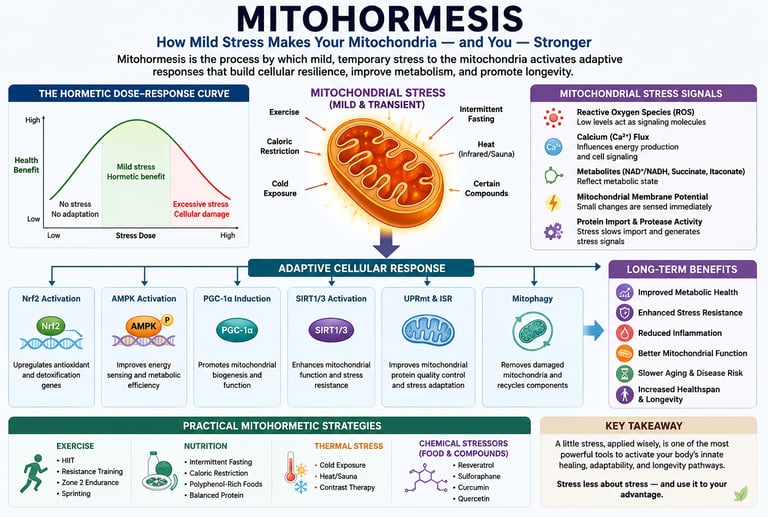
What is mitohormesis?
Mitohormesis is your body’s “cellular workout.” When your mitochondria — the tiny power plants inside your cells — get mild, short-term stress from things like exercise, fasting, or cold exposure, they respond by becoming stronger and more efficient. This triggers your natural repair systems, boosts your own antioxidants, and makes your whole body more resilient to aging and disease.
In short: A little bit of the right stress makes your cells tougher, just like exercise makes muscles stronger
Key Takeaways:
Your body’s built-in “stress workout” for longer, stronger living
- A little stress is good for your cells. Mitohormesis is when mild, short bursts of stress to your mitochondria — your cells’ energy factories — train them to work better. Think of it like weightlifting for your cells. The stress isn’t harmful; it’s the trigger that makes you more resilient.
- The “what doesn’t kill you” idea is real biology. That small stress flips on your body’s own repair and defense systems. It boosts antioxidants you make yourself, clears out damaged cell parts, and even helps build new, healthier mitochondria.
- You already know the best triggers. You don’t need fancy supplements or labs. The strongest mitohormesis activators are: brisk walking or Zone 2 cardio, short high-intensity intervals, strength training, 14–16 hour overnight fasts, cold showers, sauna sessions, and foods like broccoli sprouts, berries, and green tea.
- Recovery is when the magic happens. The benefit doesn’t come during the stress — it comes after, while you rest. Training hard every single day can backfire. 48 hours between tough workouts and 7–9 hours of sleep give your mitochondria time to adapt and get stronger.
- More isn’t better, and antioxidants can backfire. Too much stress becomes damage, not benefit. And taking high-dose vitamins C or E right before/after workouts can actually block the good signal your body needs. Antioxidants from food are fine — it’s the isolated megadoses that get in the way.
- The payoff is real. Research links mitohormesis to better muscle health as you age, improved blood sugar control, stronger hearts, protected brain function, and even longer healthspan — the years you feel good, not just the years you’re alive.
Bottom line for you: You’re built to handle stress — in the right dose. Move your body, get a little hungry sometimes, embrace the cold or heat, eat colorful plants, and then rest. Your mitochondria will thank you by keeping you energized and resilient for years to come
Mitohormesis is the biological phenomenon in which low-level stress to your mitochondria — the powerhouses of your cells — triggers a cascade of protective adaptations that improve energy metabolism, extend healthspan, and build resilience against disease. In other words, a little stress, applied correctly, makes your body fundamentally stronger at the cellular level.
Friedrich Nietzsche wrote, "What doesn't kill you makes you stronger." As it turns out, this is not motivational philosophy — it is precise cellular biology. A landmark 2023 review in Cell Metabolism opened with exactly those words, noting that the mitochondria in your cells appear to operate by this very principle.
You have probably heard that antioxidants are good for you. You've been told to eliminate free radicals, reduce oxidative stress, and protect your cells from damage. What if that picture is incomplete — and, in certain contexts, dangerously wrong?
The emerging science of mitohormesis is rewriting what we thought we knew about stress, aging, and cellular health. In this comprehensive guide, you will learn exactly what mitohormesis is, how it works at a molecular level, which everyday activities trigger it, and how you can use it as a practical strategy for a longer, healthier life.
What Is Mitohormesis? A Clear Definition
Definition & Origins
The Term: A portmanteau of mitochondria (the cell's power plants) and hormesis (the biological phenomenon where low-dose stress triggers a beneficial response).
The Core Concept: It is the process where mild, temporary stress to the mitochondria activates cellular defenses, resulting in a net gain in health and resilience.
The Hormetic Dose-Response Curve
The effectiveness of mitohormesis depends entirely on the "dosage" of the stressor:
No Stress: No adaptation occurs; the system remains at baseline.
Low/Mild Stress: The "Sweet Spot." Triggers beneficial adaptations and strengthens the cell.
Excessive Stress: Overwhelms the cell’s repair capacity, leading to damage and dysfunction.
How It Works
The Trigger: A brief disruption of mitochondrial function (e.g., a temporary spike in free radicals).
The Signal: This disruption sends "distress signals" throughout the cell and to other organs.
The Response: The body reacts by:
Switching on protective genes.
Boosting internal antioxidant defenses.
Improving metabolic efficiency.
Enhancing overall healthspan.
Common Mitohormetic Stressors
Specific activities and environments can "prime" the mitochondria for better performance:
Physical Exercise: High-intensity or endurance training.
Dietary Habits: Caloric restriction or intermittent fasting.
Temperature Extremes: Cold exposure (like ice baths) or heat stress (like saunas).
Phytochemicals: Certain compounds found in plants that trigger mild stress responses.
The Two Golden Rules
For mitohormesis to be successful and avoid becoming toxic, it must meet two criteria:
Appropriate Intensity: The stressor must be strong enough to trigger a response but mild enough not to cause permanent damage.
Adequate Recovery: There must be a "rest phase." Without recovery, the stress becomes chronic, leading to the very mitochondrial decay the process is meant to prevent.
The term mitohormesis was introduced by Michael Ristow's group around 2006 and formally advanced in a 2014 Cell Metabolism review by Yun and Finkel. For many years, evidence was largely confined to invertebrates such as C. elegans and Drosophila. A decade of accelerating mammalian research has since changed that picture dramatically. A sweeping 2025 review in The EMBO Journal now maps the full landscape of mammalian mitohormesis, identifying local, systemic, and inter-organ signaling patterns and making the case that this biology can transform treatment of human disease.
How Your Mitochondria Sense and Respond to Stress
To understand mitohormesis, you first need to appreciate how sophisticated your mitochondria actually are. They are not simply "batteries." They are dynamic signal-processing hubs that monitor the health of the entire cell and broadcast distress signals when under duress.
The Mitochondrial Surveillance Network
According to the 2023 Cell Metabolism review, the signals that allow mitochondria to report on their own health have expanded well beyond what scientists originally understood. They now include:
Reactive oxygen species (ROS) — small molecules produced as byproducts of energy metabolism; at low levels they serve as essential signaling molecules
Calcium (Ca²⁺) flux — changes in calcium inside mitochondria influence energy production and cell survival signals
Metabolites — molecules like NAD⁺/NADH ratio, succinate, and itaconate that reflect the metabolic state
Mitochondrial membrane potential — the electrochemical gradient that drives ATP synthesis; small deviations are sensed immediately
Protein import efficiency — stress slows the import of nuclear-encoded proteins into mitochondria, triggering alarm signals
Protease activity — mitochondrial proteases degrade misfolded proteins and send peptide fragments outward as stress signals
When these sensors detect mild perturbation, they relay distress signals to both the cytoplasm and the nucleus, triggering a coordinated adaptive response. The sophistication of this signaling network is why mitohormesis can produce such far-reaching, body-wide benefits from what begins as a tiny cellular disturbance.
The Key Molecular Mechanisms of Mitohormesis
Three overlapping but distinct mechanisms drive the benefits of mitohormesis in mammals. Understanding these pathways helps explain why specific interventions work — and why getting the dose right matters so much.
1. The Mitochondrial Unfolded Protein Response (UPRmt)
When mitochondria are mildly stressed — by heat, ROS, or protein import blockage — unfolded or misfolded proteins begin to accumulate inside them. This triggers the mitochondrial unfolded protein response (UPRmt), a quality-control cascade that:
Activates chaperone proteins that refold damaged mitochondrial proteins
Upregulates mitochondrial proteases to clear irreparably damaged proteins
Sends retrograde signals to the nucleus, activating hundreds of stress-protective genes
Enhances mitochondrial import machinery to deal with the backlog
A pivotal cell metabolism study showed that mild stress to hypothalamic POMC neurons via partial mitoribosomal inhibition triggers UPRmt in distal adipose tissues — demonstrating that one organ's mitohormetic signal can reshape the physiology of an entirely different tissue. This inter-organ signaling is one of the most exciting frontiers in the field.
2. The Integrated Stress Response (ISR)
The integrated stress response is a more global cellular program that converges inputs from four different stress-sensing kinases onto a single control point: the phosphorylation of the translation factor eIF2α. When eIF2α is phosphorylated, general protein synthesis is temporarily paused, while a select group of stress-response mRNAs are preferentially translated.
The 2025 EMBO Journal review describes the ISR as "essential for managing mitochondrial proteostasis and restoring cellular function, with each [response] being tailored to specific stressors and cellular milieus." The ISR allows cells to rapidly switch their protein production priorities in response to mitochondrial distress — a remarkably precise form of cellular emergency management.
3. ROS Signaling and the Nrf2–Antioxidant Pathway
Perhaps the most counterintuitive element of mitohormesis is the role of reactive oxygen species (ROS). For decades, ROS were viewed purely as villains — the "oxidative stress" that damages DNA, proteins, and cell membranes and accelerates aging. The mitohormesis model offers a critical correction: at low concentrations, ROS are essential second messengers.
A 2019 review in Sports (Musci, Hamilton & Linden) describes the mechanism clearly: mild mitochondrial superoxide production activates Nrf2, a master transcription factor that then switches on a battery of endogenous antioxidant genes including superoxide dismutase, catalase, glutathione peroxidase, and heme oxygenase-1. The result is a more powerful and better-regulated cellular antioxidant system — one that significantly outperforms any supplement you could take.
The Mitohormesis Signaling Cascade is the step-by-step process of how localized mitochondrial stress converts into full-body health. Here is the chain reaction broken down into points:
Step 1: The Trigger (Mild Stressor)
Activities like exercise, fasting, or cold exposure temporarily disrupt the mitochondria.
Step 2: The Warning Signals
This disruption causes a brief spike in ROS (Reactive Oxygen Species/free radicals) and a drop in the mitochondrial membrane potential (the electrical charge required to produce energy).
Step 3: Sensors Activate
Mitochondrial sensors detect this change and sound the alarm, triggering protective cellular pathways:
UPRᵐᵗ (Mitochondrial Unfolded Protein Response) – Fixes misfolded proteins.
ISR (Integrated Stress Response) – Optimizes cell metabolism under pressure.
Nrf2 – Activates the body’s master antioxidant system.
Step 4: Nuclear Reprogramming
These signals travel to the cell's nucleus, rewriting gene expression to prioritize repair, defense, and energy efficiency.
Step 5: Systemic Benefit
The entire body adapts, resulting in enhanced metabolic health, greater cellular resilience, and an extended healthspan.
4. The Calcium Connection: A 2025 Breakthrough
A September 2025 study in Aging Cell (Bresilla et al., Medical University of Graz) added a striking new dimension to mitohormesis biology. The researchers showed that reducing mitochondrial calcium uptake in C. elegans — either genetically or pharmacologically — triggers a transient spike in ROS that activates the FOXO, p38 MAPK, and NRF2 pathways, extending lifespan and preserving mobility into old age.
Crucially, the benefit required early intervention (before day 14 of life in nematodes), and blocking the ROS signal abolished the life-extension effect — confirming that it is the mitohormetic ROS signal, not simply the reduced calcium per se, that drives the benefit. The drug used (mitoxantrone) also produced the same effect in human foreskin fibroblast cells, underlining the translational relevance.
"Our findings suggest that modulation of mitochondrial Ca²⁺ uptake induces mitohormesis through ROS-mediated signaling, promoting improved longevity and healthspan… with possible implications for healthy aging in humans." — Bresilla et al., Aging Cell, 2025
Proven Mitohormesis Triggers: From Exercise to Diet
Multiple well-studied interventions reliably activate the mitohormesis cascade in humans and mammals. The common thread: each delivers a brief, controlled disruption to mitochondrial homeostasis that is followed by adequate recovery.
Aerobic Exercise
The most well-documented mitohormesis trigger. Activates AMPK, PGC-1α, and Nrf2. Drives mitochondrial biogenesis in skeletal muscle.
Cold Exposure
Cold water immersion and cryotherapy temporarily uncouple mitochondria, generating mild ROS and activating UPRmt in brown adipose tissue.
Caloric Restriction & Fasting
Fasting activates AMPK and SIRT1 due to falling NAD⁺ levels, and engages the ISR. Intermittent fasting shows robust mitohormetic effects in rodent and human studies.
Heat Stress / Sauna
Elevates heat shock proteins (HSPs), which overlap with UPRmt chaperones. Regular sauna use is associated with cardiovascular and cognitive benefits in population data.
Hypoxic Preconditioning
Brief exposure to low-oxygen environments (altitude training, hypoxic chambers) activates HIF-1α and mitochondrial quality-control pathways.
Phytochemicals
Sulforaphane (broccoli), resveratrol, curcumin, and EGCG act as mild mitochondrial stressors that activate Nrf2 and the UPRmt at low doses.
A 2024 review in Biological Research (Da, Chen & Shen, West China Hospital, Sichuan University) specifically highlighted mechanical stimulation, intermittent dietary restriction, hypoxic preconditioning, and low-dose phytochemicals as effective mitohormesis triggers for bone and cartilage health — showing that these principles extend even to musculoskeletal tissues often overlooked in longevity discussions.
Health Benefits: What the Research Actually Shows
Longevity and Healthspan Extension
Multiple model organisms — from yeast and C. elegans to fruit flies and mice — show lifespan extension following activation of mitohormesis pathways. The 2023 Cell Metabolism update states plainly that "a number of studies have suggested that manipulating mitohormesis might be effective in prolonging lifespan and extending healthspan."
In the most recent human-relevant evidence, the 2025 Bresilla study demonstrated that pharmacologically reducing mitochondrial calcium uptake in aged nematodes reversed the age-associated fragmentation of mitochondrial networks — restoring them to morphologies characteristic of young animals — and simultaneously restored NAD⁺/NADH ratios and oxygen consumption rates to youthful levels. These are among the most direct markers of mitochondrial vitality yet measured in a longevity context.
Skeletal Muscle Health and Protection Against Sarcopenia
Age-related muscle loss (sarcopenia) affects roughly 10–30% of adults over 60 and is one of the strongest predictors of mortality, disability, and loss of independence. Mitohormesis appears to be the primary mechanism by which aerobic exercise protects against this decline.
The 2019 Sports review by Musci, Hamilton, and Linden lays out the cascade in detail: exercise-induced ROS activates Nrf2, which drives antioxidant gene expression that outpaces the damage; simultaneously, exercise activates AMPK and PGC-1α, which together drive mitochondrial biogenesis — the creation of new, healthy mitochondria in muscle cells. This dual action maintains both the quantity and quality of muscle mitochondria well into old age, preserving strength and function.
Metabolic Health: Obesity, Insulin Resistance, and Type 2 Diabetes
A 2025 paper on SGLT2 inhibitors and T2DM noted that "through mitohormesis, mild and transient increases in ROS levels can trigger antioxidant defenses, strengthen mitochondrial function, and limit chronic inflammation." This has practical implications: certain diabetes drugs may work partly through mitohormetic mechanisms, and lifestyle interventions that activate this pathway — exercise, caloric restriction, ketogenic diets — show overlapping metabolic benefits.
The hypothalamic POMC neuron study from Cell Metabolism (2021) offered a striking demonstration: mild mitoribosomal stress in just a specific population of brain neurons triggered enhanced thermogenesis in distant adipose tissues and conferred resistance to obesity. This inter-organ mitohormesis — where a signal from the brain reshapes fat tissue metabolism — illustrates how powerfully mitochondrial signals can coordinate whole-body physiology.
Bone and Cartilage Protection
The 2024 Biological Research review by Da, Chen, and Shen documents compelling evidence that mitohormesis pathways (particularly ROS-Nrf2 signaling, mitophagy, and mitochondrial-derived peptides) protect against osteoarthritis, osteoporosis, and intervertebral disc degeneration — conditions that affect hundreds of millions worldwide and remain among the most difficult to treat with conventional medicine.
Neuroprotection and Brain Health
Mitochondrial dysfunction is a hallmark of Alzheimer's disease, Parkinson's disease, and ALS. The 2025 EMBO Journal review identifies neuronal mitohormesis as an emerging therapeutic target, noting that interventions activating the ISR and UPRmt in neurons show promise in preclinical models of neurodegeneration. While human clinical evidence is still developing, the mechanistic rationale is strong.
Cardiovascular Benefits
Regular aerobic exercise — one of the cleanest mitohormesis activators — is associated with a 35–50% reduction in cardiovascular mortality in large epidemiological studies. Mitohormetic mechanisms including Nrf2 activation, improved endothelial function, mitochondrial biogenesis in cardiac muscle, and reduced inflammatory signaling are thought to be primary drivers of these benefits, alongside hemodynamic adaptations.
Human Clinical Evidence: What Has Actually Been Proven?
Although much of the mechanistic understanding of mitohormesis comes from animal and cellular research, several mitohormetic interventions have been extensively studied in humans. Current evidence supports the following conclusions:
Improved insulin sensitivity — Strong evidence
Regular exercise and caloric restriction consistently improve insulin action and glucose metabolism.
These benefits are partly mediated through mitochondrial adaptations and stress-response pathways.
Enhanced mitochondrial function — Strong evidence
Aerobic exercise and endurance training increase mitochondrial density, efficiency, and biogenesis in human skeletal muscle.
Activation of AMPK, PGC-1α, and Nrf2 pathways has been demonstrated in human studies.
Improved cardiorespiratory fitness — Strong evidence
Exercise-induced mitohormesis is a major contributor to increases in VO₂max, endurance capacity, and cardiovascular performance.
Reduced cardiometabolic risk — Strong evidence
Exercise, fasting, and caloric restriction reduce risk factors associated with obesity, metabolic syndrome, Type 2 diabetes, and cardiovascular disease.
Healthy aging and healthspan — Moderate evidence
Human studies suggest that mitohormetic interventions improve physical function, metabolic health, and resilience during aging.
However, direct proof of delayed biological aging remains limited.
Neuroprotection — Emerging evidence
Early research indicates that mitochondrial stress-response pathways may help preserve neuronal function and reduce neurodegenerative processes.
Clinical evidence remains preliminary.
Alzheimer's disease prevention — Emerging evidence
Animal studies are encouraging, but large-scale human trials are still lacking.
Lifespan extension — Not proven
No intervention has conclusively demonstrated that mitohormesis extends human lifespan.
Most evidence currently supports improvements in healthspan rather than lifespan.
Key Human Findings
Exercise is the most thoroughly validated human mitohormesis intervention.
Aerobic exercise and resistance training activate ROS-mediated signaling pathways that stimulate:
Nrf2 activation
AMPK signaling
PGC-1α-mediated mitochondrial biogenesis
Endogenous antioxidant defenses
Intermittent fasting and caloric restriction have demonstrated favorable effects on:
Metabolic flexibility
Insulin sensitivity
Mitochondrial function
Biomarkers associated with healthy aging
Regular sauna exposure has been associated with:
Reduced cardiovascular mortality
Improved vascular health
Enhanced stress resilience
Important Limitation
Direct evidence that mitohormesis extends human lifespan is currently unavailable.
Human longevity studies require decades of follow-up, making healthspan and disease-risk reduction the most practical outcomes for current research.
Take-Home Message
Mitohormesis is strongly supported as a strategy for improving:
Metabolic health
Mitochondrial function
Exercise capacity
Stress resilience
Healthy aging
However, claims that mitohormesis definitively extends human lifespan remain scientifically unproven and should be viewed as a promising hypothesis rather than an established fact.
Exercise-Induced Mitohormesis: The Practical Protocol
Exercise is the most evidence-backed, accessible, and dose-controllable mitohormesis trigger available to most people. Here is what the research supports:
Evidence-Based Exercise Protocol for Mitohormesis
Beginner
Zone 2 Cardio
30–45 min, 3×/week at conversational pace (~65% max HR). Builds mitochondrial density steadily without overload.
Moderate
High-Intensity Intervals
4–6 × 4-min efforts at ~85–90% max HR, separated by 3-min recovery. 2×/week maximum. Strong UPRmt and Nrf2 activator.
Moderate
Resistance Training
3–4 sets × 8–12 reps of major compound lifts, 2–3×/week. Particularly protective against sarcopenia via mitohormetic pathways in type IIa muscle fibers.
Advanced
Combined Protocol
Zone 2 on 3 days + HIIT once + resistance training twice. Maximize mitochondrial biogenesis and quality-control signaling. Requires excellent recovery management.
⚠️ Critical: The Recovery Window Matters
The adaptive response of mitohormesis occurs during rest, not during the stressor itself. Exercising every single day at high intensity can suppress the beneficial signaling and lead to chronic mitochondrial stress rather than adaptation. Build in at least 48 hours of lighter activity or rest between hard sessions. This is not optional for mitohormesis — it is mechanistically essential.
A Note on Antioxidant Supplementation and Exercise
This is where mitohormesis science delivers its most counterintuitive and practically important message. High-dose antioxidant supplements — particularly vitamins C and E taken peri-workout — have been shown in controlled trials to blunt the adaptive response to exercise. The ROS signal generated during exercise is the very trigger of the beneficial Nrf2 cascade. Scavenging it with antioxidants before the adaptation can consolidate may effectively cancel the mitohormetic benefit while adding cost and the false security of supplementation.
This does not mean antioxidants from whole foods are harmful — the phytochemical matrix in vegetables includes both mild ROS-generating compounds and their own Nrf2-activating signals that work synergistically. Isolated, high-dose supplements are a different matter entirely.
Dietary Approaches to Activate Mitohormesis
Intermittent Fasting and Time-Restricted Eating
Caloric restriction and its practical cousin, intermittent fasting (IF), activate mitohormesis primarily through AMPK and SIRT1/SIRT3 signaling driven by the fall in cellular energy status (rising AMP:ATP ratio) and the rise in NAD⁺. Both kinases converge on PGC-1α, the master regulator of mitochondrial biogenesis. Time-restricted eating windows of 14–16 hours appear sufficient to engage these pathways without the compliance challenges of more aggressive restriction.
Mitohormetic Phytochemicals: Food Sources
The following compounds act as mild mitochondrial stressors that activate Nrf2 and UPRmt signaling at physiological food doses:
Sulforaphane — broccoli sprouts (highest concentration), broccoli, Brussels sprouts, kale. Eat raw or chew thoroughly before cooking to maximize myrosinase-driven conversion.
Polyphenols — blueberries, dark chocolate (>70%), green tea (EGCG), red wine (resveratrol). Dose from food; high-dose resveratrol supplements have a more mixed evidence base.
Curcumin — turmeric. Poor oral bioavailability; combine with black pepper (piperine) to increase absorption ~2000%.
Quercetin — apples, onions, capers, dill. Also activates AMPK and Nrf2 at food-relevant concentrations.
Spermidine — wheat germ, aged cheese, mushrooms. Activates mitophagy (the selective clearance of damaged mitochondria) through autophagy pathways.
Ketogenic Diet and Ketone Bodies
Emerging evidence suggests that beta-hydroxybutyrate — the primary ketone body produced during carbohydrate restriction — has direct mitohormetic properties. It inhibits histone deacetylases (particularly HDAC1 and HDAC2), upregulating the expression of FOXO3a and MT2 (metallothionein) antioxidant genes, while also modestly increasing mitochondrial ROS in a pattern consistent with hormetic signaling. Ketone bodies have been called "super fuels" partly because they increase the efficiency of mitochondrial electron transport chain coupling.
Scientific evidence for mitohormesis, grouped by health outcomes and the strength of the evidence.
Strong Evidence
Consistent human data or multiple mammalian model studies.
Muscle Health & Sarcopenia Prevention
Intervention: Aerobic exercise.
What it found: Triggers mitohormesis to protect against age-related muscle loss (sarcopenia) in both humans and rodents. (Musci et al., 2019)
Systemic Mammalian Longevity
Intervention: Various mild stressors evaluated across a comprehensive review.
What it found: Confirmed that mitohormesis functions systemically across whole mammalian organisms, not just single cells. (Gunawan et al., 2025)
Lifespan Extension & Late-Life Mobility
Intervention: Reducing mitochondrial calcium intake (via MCU inhibition).
What it found: Extended lifespan and preserved physical mobility in C. elegans (roundworms) and human cell cultures. (Bresilla et al., 2025)
Moderate Evidence
Consistent rodent data or a mix of human and animal studies.
Type 2 Diabetes (T2DM) & Redox Rebalancing
Intervention: SGLT2 inhibitor medications, exercise, and caloric restriction.
What it found: Prospective human studies show these interventions rebalance cellular oxidation levels through mild mitochondrial stress pathways. (Diabetology, 2025)
Obesity Resistance & Metabolic Health
Intervention: Mild mitoribosomal stress (stressing the specialized protein factories inside mitochondria).
What it found: Mouse models showed that mild stress in specific brain neurons (POMC neurons) protected the animals against obesity. (Cell Metabolism, 2021)
Bone & Cartilage Protection
Intervention: Mechanical, dietary, and low-oxygen (hypoxic) stressors.
What it found: Review of human tissue and rodent models indicates these stressors protect joint and bone matrix integrity. (Da et al., 2024)
Emerging Evidence
Promising biological mechanisms, but limited human trials so far.
Neuroprotection & Brain Aging
Intervention: Chemical modulators of the ISR and UPRᵐᵗ stress pathways.
What it found: Preclinical mammalian studies show promise in protecting aging brain cells from cognitive decline. (EMBO J 2025 Review)
Anti-Cancer Strategies (Mitohormesis Disruption)
Intervention: Disrupting advanced glycation end-products (AGEs) that block normal cell signaling.
What it found: Mechanistic cell reviews show that blocking AGEs can restore healthy mitohormetic signaling, potentially offering a tool against cancer progression. (Antioxidants, 2025)
Individuals Who Should Seek Medical Guidance Before Aggressive Mitohormetic Practices
Frail Older Adults
Excessive fasting, cold exposure, or high-intensity exercise may worsen muscle loss, increase fall risk, and impair recovery.
Advanced Cardiovascular Disease
Cold immersion, prolonged sauna use, and intense exercise can increase cardiovascular strain and should be undertaken only under medical supervision.
Uncontrolled Type 1 or Type 2 Diabetes
Extended fasting and ketogenic diets may increase the risk of hypoglycemia, ketoacidosis, or medication-related complications.
Eating Disorders
Intermittent fasting or caloric restriction may exacerbate disordered eating behaviors and should generally be avoided.
Pregnancy and Breastfeeding
Energy restriction and extreme hormetic stressors are not recommended because nutrient requirements are increased during these periods.
Cancer Cachexia or Severe Chronic Illness
Individuals experiencing involuntary weight loss or malnutrition may lack the physiological reserve necessary to benefit from hormetic stress.
The Key Principle
The goal is not to maximize stress but to apply the minimum effective stressor that triggers adaptation while allowing adequate recovery.
Common Myths and Dangerous Mistakes
All antioxidants are good for you, especially around exercise.
Many people take large doses of vitamins C and E before and after workouts, believing this protects muscles from damage and speeds recovery.
High-dose antioxidants may block the very adaptations you're training for.
Controlled trials (Ristow et al., 2009; Paulsen et al., 2014) showed that peri-exercise antioxidant supplementation blunted improvements in insulin sensitivity and muscle mitochondrial biogenesis. The exercise-induced ROS pulse is the signal. Quenching it preemptively may negate the mitohormetic benefit. Whole food antioxidants are a different story — they act synergistically and appear to augment, not diminish, the response.
More exercise is always better for mitochondrial health.
If mild exercise triggers mitohormesis, logic seems to suggest that maximal exercise would deliver maximal benefit.
Excessive exercise causes mitochondrial impairment, not enhancement.
A landmark Cell Metabolism study (Flockhart et al., 2021) found that excessive training caused mitochondrial functional impairment and reduced glucose tolerance in healthy volunteers. The hormetic dose-response is real: too much stress overwhelms the adaptive capacity. Recovery is not optional — it is mechanistically required for the adaptation to occur.
Mitohormesis only happens in exotic supplements or lab interventions.
The term sounds technical, so people assume it requires specialized supplements, cryotherapy tanks, or pharmaceutical agents.
Walking, broccoli, and skipping breakfast all activate mitohormesis.
The mitohormesis cascade is activated by the most ordinary, accessible lifestyle habits — aerobic exercise of any kind, brief fasting, cold water, sulforaphane from vegetables, and even sauna. You don't need pharmaceutical intervention to benefit from this biology. The interventions with the best human evidence are almost universally low-cost and widely available.
Mitohormesis is the same as oxidative stress — both are bad.
Since mitohormesis involves ROS production, and oxidative stress is harmful, the two seem like the same thing.
Mitohormesis is a transient, controlled ROS signal; oxidative stress is chronic, uncontrolled ROS damage.
The distinction is timing, magnitude, and context. A brief ROS pulse from a 30-minute run is a signal that activates Nrf2 and your endogenous antioxidant defenses. Chronic low-grade inflammation combined with poor diet creates unresolved oxidative stress that damages DNA and proteins. The mitohormetic ROS signal actually results in less net oxidative stress over time by upregulating your body's own protective systems far beyond baseline.
Frequently Asked Questions
What is mitohormesis in simple terms?
Mitohormesis is your mitochondria's version of "what doesn't kill you makes you stronger." When your mitochondria experience a brief, mild stress — from exercise, fasting, cold, or certain plant compounds — they send alarm signals that activate your body's own protective systems. The result is improved energy production, better stress resistance, reduced inflammation, and a cellular environment associated with healthier aging. Think of it as cellular exercise for your powerhouses.
Can I trigger mitohormesis without exercise?
Yes — though exercise remains the most evidence-backed trigger. Other proven options include intermittent fasting (14–16 hour eating windows are sufficient for many people), brief cold exposure (cold showers or ice baths of 2–5 minutes), sauna use (15–20 minutes at 80°C, 2–3×/week), and regular consumption of mitohormetic phytochemicals like sulforaphane from broccoli sprouts, EGCG from green tea, and curcumin. Combining several of these approaches appears to produce additive benefits through complementary signaling pathways.
Should I stop taking antioxidant supplements?
The evidence is nuanced. High-dose isolated antioxidants (particularly vitamins C >1000mg/day and E >400 IU/day) taken around exercise sessions have been shown to blunt mitohormetic adaptations in controlled trials. If your goal is to optimize exercise-induced cellular adaptation, the evidence suggests avoiding megadose antioxidant supplements within 2 hours before or after training.
Antioxidants from whole foods (berries, vegetables, green tea) appear to be safe and may even enhance the mitohormetic response through their own Nrf2-activating properties. Multivitamins at RDA levels are unlikely to cause significant blunting. Always discuss supplement changes with your healthcare provider.
How long does it take to see benefits from mitohormesis?
The cellular signaling response begins within minutes of the stressor. However, meaningful adaptive changes — increased mitochondrial density, upregulated antioxidant enzyme activity, improved insulin sensitivity — typically require consistent practice over 4–8 weeks before they become measurable. Subjective improvements in energy and exercise tolerance often appear within 2–3 weeks of consistent aerobic training. The longevity and disease-protective benefits operate over years and decades of consistent practice.
Is mitohormesis safe for older adults?
The 2025 Bresilla study in Aging Cell actually found that the longevity benefits of mitohormesis specifically extended late-life survival and mobility — with particular relevance for aging populations. That said, the study also noted that the benefit required early intervention (before day 14 in their nematode model), suggesting that starting mitohormetic practices earlier in life produces greater cumulative benefit.
For older adults, beginning with lower-intensity exercise (Zone 2 walking), shorter fasting windows (12–14 hours), and dietary mitohormetic foods is a safe starting point. Any significant change in exercise intensity, fasting duration, or supplementation should be discussed with a physician, particularly for individuals with cardiovascular disease, diabetes, or taking medications.
Does cold water swimming or ice baths trigger mitohormesis?
Yes. Cold exposure is a well-characterized mitohormesis trigger, primarily through its effects on brown adipose tissue (BAT) mitochondria and via UCP1-mediated uncoupling that generates mild ROS. Cold also activates the norepinephrine system, which drives PGC-1α expression in multiple tissues. Practically, 2–5 minutes of cold water immersion at 10–15°C appears sufficient to activate these pathways. Important caveat: if you exercise intensely and then take an ice bath immediately afterward, the cold may similarly blunt some adaptive signaling pathways — the optimal timing (hot-to-cold sequence or separating the two by several hours) remains an active area of research
.
What role do mitochondria-derived peptides (MDPs) play in mitohormesis?
Mitochondria-derived peptides are small proteins encoded in the mitochondrial genome that are released during mitochondrial stress as intercellular and inter-organ signals. The best characterized include humanin and MOTS-c. MOTS-c in particular has attracted intense research interest: it translocates to the nucleus during stress and activates the AMPK pathway and Nrf2, producing metabolic and cytoprotective effects similar to exercise. Circulating MOTS-c levels decline with age but increase after exercise. The 2024 Biological Research review identifies MDPs as one of five core effector mechanisms driving mitohormesis in bone and cartilage tissues.
Is metformin a mitohormesis drug?
Partly, yes. Metformin inhibits Complex I of the mitochondrial electron transport chain, gently reducing mitochondrial activity and raising the AMP:ATP ratio — which activates AMPK in a manner reminiscent of exercise. This is thought to be central to its anti-diabetic mechanism and is under investigation for longevity applications (the TAME trial). However, there is an important caveat: some research suggests that metformin, particularly when taken around exercise, may partially blunt exercise-induced mitohormesis by competing with the endogenous AMPK signal. The interaction between metformin and exercise-induced adaptations is an active area of research. Do not adjust any medication without consulting your physician.
Can mitohormesis help prevent Alzheimer's or Parkinson's disease?
The mechanistic case is compelling but clinical evidence in humans is still emerging. Both Alzheimer's and Parkinson's are characterized by mitochondrial dysfunction as an early event. The UPRmt and ISR — core mitohormesis pathways — are specifically impaired in neurons in both diseases. The 2025 EMBO Journal review identifies neuronal mitohormesis as a therapeutic target. In practice, the lifestyle interventions known to activate mitohormesis (aerobic exercise, Mediterranean diet, intermittent fasting) are also consistently associated with reduced dementia risk in epidemiological studies. While this is not direct proof of a mitohormetic mechanism, it is consistent with one.
How does mitohormesis differ from regular hormesis?
Hormesis is the broad principle: low doses of a stressor produce benefit, high doses cause harm. This is observed for everything from radiation to heavy metals to exercise. Mitohormesis is a specific type of hormesis where the initial sensing and response occur at the mitochondrial level. What makes mitohormesis particularly important is the sophisticated signaling machinery of the mitochondria — they can relay local stress into systemic body-wide adaptations (inter-organ mitohormesis), produce hormone-like peptides (MDPs), and coordinate responses across multiple cell types simultaneously. This makes mitochondrial hormesis quantitatively more powerful in its downstream effects than many other forms of hormesis.
Conclusion and Action Steps
Your Mitohormesis Action Plan
The research is clear: deliberately activating mild mitochondrial stress — through the right lifestyle practices, done consistently and with adequate recovery — is one of the most powerful levers available for extending healthspan, protecting muscle, metabolic and cognitive health, and building a body that ages gracefully. Start with one pillar below this week.
The emerging science of mitohormesis represents one of the most important conceptual shifts in longevity biology of the past decade. It explains why exercise works so well beyond the obvious. It explains why fasting has benefits that go beyond simply eating less. It reframes our understanding of antioxidants, ROS, and stress. And it provides a coherent cellular framework for why the ancient practices of activity, restraint, heat, and cold have been associated with health and longevity across cultures for thousands of years.
The 2025 EMBO Journal review by Gunawan, Liparulo, and Stahl describes mammalian mitohormesis research as reaching an inflection point — where the evidence is now sufficient to seriously consider mitohormesis-targeting interventions for therapeutic use in human diseases from metabolic disorders to neurodegeneration. That is a remarkable statement about how far the field has come in just a few years.
Here are your evidence-based action steps, ordered from most accessible to most advanced:
Commit to regular aerobic exercise — 150+ minutes per week at moderate intensity, with 1–2 higher-intensity sessions. This is the single most evidence-backed mitohormesis strategy available.
Add resistance training — 2–3 sessions per week, focusing on compound movements. Specifically protective against sarcopenia via mitohormesis in skeletal muscle.
Practice intermittent fasting — A 14–16 hour overnight fast (e.g., eating 8am–6pm) is sufficient for most people to engage mitohormetic AMPK and SIRT1 signaling.
Eat mitohormetic foods daily — Prioritize broccoli sprouts or cruciferous vegetables, berries, green tea, and extra-virgin olive oil as cornerstones of your diet.
Reconsider high-dose peri-exercise antioxidants — Discuss with your doctor before continuing megadose vitamin C and E supplementation, especially if taken around training sessions.
Build in cold exposure — Cold showers, cool swimming, or deliberate outdoor exposure in cold weather for 3–5 minutes daily. Start gradually.
Use sauna if accessible — 15–20 minutes at 80°C, 2–4×/week, is the protocol associated with cardiovascular and longevity benefits in Finnish population studies.
Prioritize recovery as seriously as training — The adaptive response of mitohormesis is biologically required to occur during rest. Sleep 7–9 hours, manage chronic psychological stress, and build deload weeks into any serious training program.
⚠️ Medical Disclaimer
This article is for educational purposes only. It does not constitute medical advice. Before significantly changing your exercise intensity, fasting duration, or supplement regimen — especially if you have cardiovascular disease, diabetes, kidney disease, are pregnant, or take prescription medications — consult a qualified healthcare provider.
Related Articles
Mitochondria and Aging: The Hidden Engine Behind Energy, Longevity, and Disease | DR T S DIDWAL
Mitochondria and Metabolic Flexibility: The Real Secret to Fat Loss and Longevity
Muscle Insulin Resistance: The Hidden Signaling Failure Behind Metabolic Disease | DR T S DIDWAL
Obesity and Fatty Liver Disease: What Science Says About Risk and Health | DR T S DIDWAL
Intermittent Fasting: Metabolic Health Benefits and the Evidence on Longevity | DR T S DIDWAL
Sources and References
Amar, D., et al. (2024). The mitochondrial multi-omic response to exercise training across rat tissues. Cell Metabolism, 36. https://doi.org/10.1016/j.cmet.2023.12.021
Bhatt, D. L., et al. (2019). SGLT2 inhibitors and cardiovascular outcomes. New England Journal of Medicine.
Bonuccelli, G., et al. (2023). Antibiotics that target mitochondria extend lifespan in C. elegans. Aging (Albany NY), 15. https://doi.org/10.18632/aging.205229
Bresilla, D., Tawfik, I., Hirtl, M., et al. (2025). Enhancing late-life survival and mobility via mitohormesis by reducing mitochondrial calcium levels. Aging Cell, 24, e70247. https://doi.org/10.1111/acel.70247
Da, W., Chen, Q., & Shen, B. (2024). The current insights of mitochondrial hormesis in the occurrence and treatment of bone and cartilage degeneration. Biological Research, 57, 37. https://doi.org/10.1186/s40659-024-00494-1
Diabetology. (2025). Redox balance, mitohormesis, and organ stress in T2DM: Mechanistic insights and the therapeutic role of SGLT2 inhibitors. Diabetology. https://doi.org/10.3390/diabetology6100111
Dillin, A., et al. (2002). Rates of behavior and aging specified by mitochondrial function during development. Science, 298, 2398–2401.
Finkel, T. (2023). Mitohormesis. Cell Metabolism, 38(11).
Flockhart, M., et al. (2021). Excessive exercise training causes mitochondrial functional impairment and decreases glucose tolerance in healthy volunteers. Cell Metabolism, 33(5). https://doi.org/10.1016/j.cmet.2021.02.014
Guan, Y., & Yan, Z. (2022). Molecular mechanisms of exercise and healthspan. Cells, 11(5), 872. https://doi.org/10.3390/cells11050872
Gunawan, A. L., Liparulo, I., & Stahl, A. (2025). Mammalian mitohormesis: from mitochondrial stressors to organismal benefits. The EMBO Journal, 44, 5640–5661. https://doi.org/10.1038/s44318-025-00549-3
Haynes, C. M., Fiorese, C. J., & Lin, Y. F. (2013). Evaluating and responding to mitochondrial dysfunction: the mitochondrial unfolded-protein response. Trends in Cell Biology, 23(7), 311–318.
International Journal of Molecular Sciences. (2026). Mitochondria and aging — redox balance as geroprotective strategy. International Journal of Molecular Sciences, 27(2), 842. https://doi.org/10.3390/ijms27020842
Kim, K. H., Son, JM., Benayoun, B. A., & Lee, C. (2018). The mitochondrial-encoded peptide MOTS-c translocates to the nucleus to regulate nuclear gene expression in response to metabolic stress. Cell Metabolism, 28(3), 516–524.
Laukkanen, T., et al. (2015). Association between sauna bathing and fatal cardiovascular and all-cause mortality events. JAMA Internal Medicine, 175(4), 542–548.
Litonin, D., et al. (2010). Human mitochondrial transcription revisited: only TFAM and TFB2M are required for transcription of the mitochondrial genes in vitro. Journal of Biological Chemistry.
Madreiter-Sokolowski, C. T., et al. (2020). Interrelation between ROS and Ca2+ in aging and age-related diseases. Redox Biology, 36, 101678.
Mattson, M. P. (2008). Hormesis defined. Ageing Research Reviews, 7(1), 1–7.
Mottis, A., Herzig, S., & Auwerx, J. (2019). Mitocellular communication: The language of mitochondria. Science, 366(6462), 165–169.
Musci, R. V., Hamilton, K. L., & Linden, M. A. (2019). Exercise-induced mitohormesis for the maintenance of skeletal muscle and healthspan extension. Sports, 7(7), 170. https://doi.org/10.3390/sports7070170
Palikaras, K., Lionaki, E., & Tavernarakis, N. (2018). Mechanisms of mitophagy in cellular homeostasis, physiology and pathology. Nature Cell Biology, 20(9), 1013–1022.
Paulsen, G., et al. (2014). Vitamin C and E supplementation hampers cellular adaptation to endurance training in humans. The Journal of Physiology, 592(8), 1887–1901.
Ristow, M., et al. (2009). Antioxidants prevent health-promoting effects of physical exercise in humans. Proceedings of the National Academy of Sciences, 106(21), 8665–8670.
Shpilka, T., & Haynes, C. M. (2018). The mitochondrial UPR: mechanisms, physiological functions and implications in ageing. Nature Reviews Molecular Cell Biology, 19(2), 109–120.
Thondamal, M., et al. (2014). Steroid hormone signalling links reproduction to lifespan in dietary-restricted Caenorhabditis elegans. Nature Communications, 5, 4879.
Yun, J., & Finkel, T. (2014). Mitohormesis. Cell Metabolism, 19(5), 757–766. https://doi.org/10.1016/j.cmet.2014.01.011
Zhao, R. Z., et al. (2019). Mitochondrial electron transport chain, ROS generation and uncoupling. International Journal of Molecular Medicine, 44(1), 3–15.
Antioxidants. (2025). Role of AGEs and mitohormesis in cancer development. Antioxidants. https://doi.org/10.3390/antiox14101165