Does Too Much Protein Speed Up Aging? What Science Says About Methionine, mTOR & Longevity
Confused about protein and aging? This evidence-based guide explains methionine restriction, fasting, longevity pathways, and how to optimize protein intake for healthspan.
AGING
Dr. T.S. Didwal, M.D.(Internal Medicine)
6/7/202620 min read
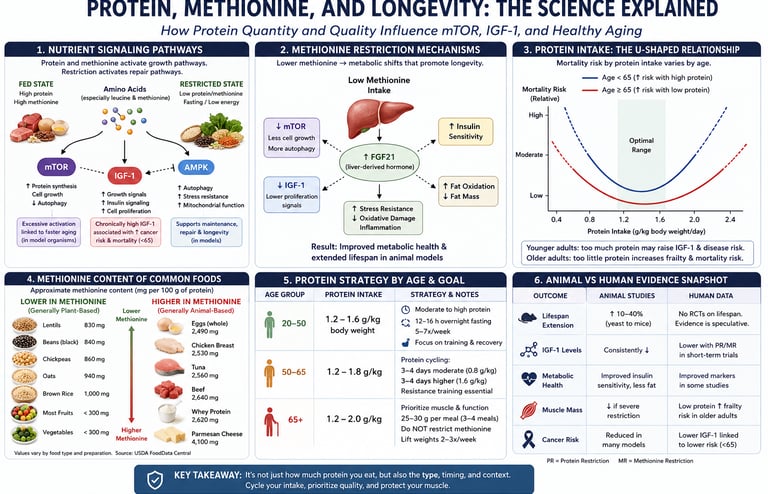
Can eating less protein extend lifespan?
Research in animals shows that protein and methionine restriction can extend lifespan by lowering mTOR and IGF-1 activity, per 2025-2026 studies. In humans, moderate protein may benefit longevity under age 65, but higher protein is linked to lower mortality over 65 due to muscle preservation. There’s no proof of lifespan extension in humans yet.
Key Takeaways: Protein, Methionine & Longevity
1. Your body uses “nutrient sensors” like mTOR and IGF-1 to decide between growth and repair.
When you eat protein — especially the amino acid leucine found in meat, dairy, and eggs — these pathways turn on. That’s good for building muscle and healing. But animal studies show that if these pathways are constantly activated by high protein intake, cells may age faster. The goal isn’t to shut them off completely. It’s to let them cycle: quiet periods for cellular cleanup, active periods for maintenance.
2. Methionine restriction extends lifespan in mice, but human data is missing.
Methionine is an essential amino acid you have to get from food. It’s highest in animal proteins. In rodents, cutting methionine by ~80% extends lifespan and improves metabolic health, even without cutting calories. This works partly by lowering IGF-1 and mTOR. As of 2026, we have no randomized human trials proving the same lifespan benefit. So you shouldn’t try extreme methionine restriction on your own.
3. Age changes how your body handles protein.
Large studies and 2022-2025 reviews show a clear pattern. Under age 65, higher protein intake and higher IGF-1 levels are linked to increased risk of cancer and overall mortality. Over age 65, the risk flips: low protein intake is linked to higher mortality, mainly because of muscle loss and frailty. After 65, getting 1.2-2.0 g of protein per kg of body weight per day supports strength and survival.
4. You don’t need to fear mTOR or IGF-1 — you need to control them.
These pathways are essential. You need mTOR activation to stimulate muscle protein synthesis after exercise. You need IGF-1 for tissue repair. The problem is chronic, uncontrolled activation from constant eating and high animal protein intake. Time-restricted eating, like a 12- to 14-hour overnight fast, naturally gives these pathways a break without malnutrition.
5. Protein quality affects both muscle and longevity signaling.
To build muscle, you need about 2.5-3g of leucine per meal. Whey, dairy, fish, and soy hit this easily. Most plant proteins like rice or wheat don’t, unless you eat more total protein. Animal proteins are also higher in methionine, which drives mTOR more strongly. A practical middle ground: get 70% of protein from high-leucine sources like eggs, Greek yogurt, fish, or soy, and 30% from legumes, nuts, and whole grains.
6. Short-term or intermittent restriction may capture benefits without muscle loss.
A 2025 mouse study found that even short-term methionine restriction improved metabolism on a high-fat diet. Human data is early, but suggests that 1 day per week of lower protein (~15-20g total), or 3-4 days of moderate protein 0.8g/kg, may lower IGF-1 while you still eat enough protein on other days to maintain muscle. This “protein cycling” is safer than chronic severe restriction.
7. Muscle mass is one of the strongest predictors of longevity.
Losing muscle — sarcopenia — increases your risk of falls, hospitalization, and death. If a diet causes you to lose strength, it is not a pro-longevity diet, regardless of what it does to mTOR. After age 50, resistance training 2-3x per week plus adequate protein at meals is non-negotiable for healthy aging.
8. “Methionine mimetics” are being studied, but aren’t available.
A 2025 review in Trends in Endocrinology & Metabolism detailed new drugs in development that mimic methionine restriction. None are FDA-approved or proven safe for humans yet. Be skeptical of any supplement marketed as a “longevity mimetic.”
9. Know when not to restrict protein.
Avoid protein or methionine restriction if you are pregnant or breastfeeding, over 65 with low appetite, recovering from surgery/infection, underweight, or have a history of eating disorders. Signs your intake is too low include fatigue, slow wound healing, hair thinning, frequent illness, and loss of strength.
10. For most adults, the evidence supports a balanced approach.
If you’re 20-65 and healthy: Aim for 1.2- 1.6 g protein/kg/day, spread across meals. Include an overnight fast of 12-14 hours most days. Get protein from a mix of animal/soy and plant sources. If you’re over 65: Prioritize 1.2-2.0g/kg/day and resistance exercise to prevent frailty. This supports both metabolic health and muscle preservation.
Introduction
If you’ve followed longevity science, you’ve heard the buzz: “Too much protein ages you faster.” But cutting protein to live longer sounds extreme — and confusing. Should you go vegan? Avoid chicken? Is whey protein shortening your life?
Here’s the promise: After reading this, you’ll understand exactly how protein, the amino acid methionine, and pathways like mTOR and IGF-1 influence aging. You’ll see what 2025 and 2026 studies in Trends in Endocrinology & Metabolism, Nature Aging, and Annual Review of Nutrition actually show — and what they don’t.
You’ll learn:
- The mechanisms: How protein restriction talks to your cells via mTOR and IGF-1
- The data: What happens in yeast, mice, and humans when you limit protein or methionine
- The nuance: Why protein quality matters more than quantity after age 65
- The practical plan: How to apply this without losing muscle or energy
Let’s separate hype from evidence. No fearmongering. No biohacker extremes. Just the clearest, deepest guide on protein restriction and longevity available online.
Why Protein Became a Longevity Controversy
For decades, high-protein diets were king for fitness, weight loss, and healthy aging. Then longevity research entered the chat.
The conflict: Dietary restriction — eating less without malnutrition — is the most consistent intervention to extend lifespan across species. A 2026 review in Nature Aging confirmed that protein restriction, calorie restriction, and methionine restriction all extend lifespan in model organisms from yeast to mice.
But humans aren’t mice. And losing muscle as you age, called sarcopenia, is itself a major mortality risk. So the question isn’t “Is protein bad?” It’s “What amount, type, and timing of protein optimizes healthspan for you?”
Longevity Pathways 101: mTOR, IGF-1, AMPK Explained Simply
Your body has “nutrient sensors” that decide whether to grow or repair. Three matters most for this topic:
Here is the pathway breakdown and the latest clinical consensus rewritten into highly scannable, targeted bullet points.
The mTOR Pathway
Triggered by: Protein intake (specifically the amino acid leucine) and insulin spikes.
When activated: The fed state, periods of biological growth, and post-workout recovery.
Effect on Ageing: Chronic overactivation accelerates cellular aging and shortens lifespan in model organisms by suppressing cellular cleanup.
Effect on Muscle: Acts as the primary biological switch to stimulate muscle protein synthesis and hyper-trophy (growth).
The IGF-1 Pathway (Insulin-like Growth Factor 1)
Triggered by: Overall protein intake, with a particularly strong response to animal-derived proteins.
When Activated: Periods of high dietary protein abundance and systemic growth phases.
Effect on Aging: Sustained high levels are strongly linked to increased cancer risk and accelerated biological aging in animal models.
Effect on Muscle: Crucial for tissue repair, muscle maintenance, and preventing age-related muscle wasting (sarcopenia).
The AMPK Pathway
Triggered by: Low cellular energy states, physical exercise, and nutrient scarcity.
When activated: Fasting windows, severe calorie restriction, and carbohydrate or protein deprivation.
Effect on Aging: Acts as a longevity promoter by activating cellular repair systems, reducing inflammation, and triggering autophagy (the recycling of damaged cellular parts).
Effect on Muscle: Temporarily halts muscle growth and downregulates protein synthesis to conserve energy in the short term.
FGF21: The Longevity Hormone Triggered by Protein Restriction
One of the most intriguing discoveries in longevity science is the hormone FGF21 (fibroblast growth factor 21). When protein or methionine intake falls, the liver increases FGF21 production. FGF21 appears to improve insulin sensitivity, increase fat oxidation, enhance metabolic flexibility, and promote stress-resistance pathways associated with healthy aging. Many researchers now believe that FGF21 may be one of the key mediators linking protein restriction and methionine restriction to lifespan extension in animal models. Several pharmaceutical companies are also developing FGF21-based therapies for obesity, fatty liver disease, and metabolic dysfunction.
Key Takeaway: FGF21 may act as a biological messenger that translates lower protein intake into beneficial metabolic adaptations.
The Longevity vs. Muscle Paradox (2025–2026 Consensus)
Current research emphasizes that maximizing healthspan isn't about keeping these pathways permanently turned "on" or "off"—it is about metabolic flexibility and cycling.
The Danger of Constant On: Chronic overnutrition keeps mTOR and IGF-1 locked in the active position, which drives cellular exhaustion, prevents cell cleanup, and accelerates aging.
The Danger of Constant Off: Chronic, severe nutrient restriction keeps AMPK locked on, which prevents cellular repair from turning into tissue rebuilding, leading to muscle wasting, frailty, and immune drop-off.
The Ideal Solution: Strategically cycle your state. Induce periods of nutrient scarcity (low mTOR/IGF-1, high AMPK) to trigger deep cellular cleanup, then follow up with targeted protein intake and resistance training to activate mTOR, rebuilding and preserving vital muscle tissue.
What Is Methionine Restriction and How Is It Different?
Methionine is an essential amino acid. You have to get it from food. It’s highest in animal proteins: eggs, fish, beef, chicken, dairy.
Methionine restriction (MR) is a form of protein restriction that specifically limits methionine to ~80% below normal, while keeping total calories normal.
Why focus on methionine? According to a 2025 review in Trends in Endocrinology & Metabolism, MR extends lifespan in rodents even without calorie restriction, improves insulin sensitivity, and reduces fat mass. It works partly by lowering IGF-1, inhibiting mTOR, and increasing FGF21, a hormone linked to longevity.
Methionine restriction vs general protein restriction:
Here is the breakdown of the comparison between overall protein restriction and specific methionine restriction, rewritten into clear, scannable points.
Protein Restriction
Definition: Reducing total dietary protein intake across all twenty amino acids.
Ease of Implementation: Relatively easy to follow—simply requires reducing the total portions of high-protein foods.
Plant-Based Compatibility: Very high. Whole-food, plant-based diets naturally align with lower total protein profiles compared to animal-heavy diets.
Human Clinical Data: Backed by some epidemiological population data, though long-term randomized controlled trials (RCTs) remain limited.
Methionine Restriction
Definition: Specifically targeting and lowering the intake of methionine, an essential sulfur-containing amino acid, without necessarily lowering other nutrients.
Ease of Implementation: Significantly harder—requires meticulous diet design, tracking of amino acid profiles, or utilizing specialized medical foods.
Plant-Based Compatibility: Moderate. While plant proteins are generally lower in methionine than animal proteins, plant foods (like nuts, seeds, and grains) still contain notable amounts.
Human Clinical Data: Minimal. While showing profound longevity and metabolic benefits in animal models, there are almost no human RCTs completed yet
Methionine Content of Common Protein Sources
Methionine is present in almost all protein-containing foods, but some foods contain substantially less than others.
Foods generally lower in methionine include:
Lentils
Beans
Chickpeas
Potatoes
Oats
Most fruits
Non-starchy vegetables
Whole grains
Leafy greens
Foods generally higher in methionine include:
Eggs
Beef
Chicken
Turkey
Tuna and other fish
Whey protein
Parmesan cheese
Most hard cheeses
Processed meats
Here is a detailed rewrite of those key studies from 2022 to 2026. This version expands on the specific biological mechanisms, the clinical implications, and the delicate balance between healthspan benefits and human health risks.
Key Studies 2022–2026: What New Data Shows
While early longevity research focused on general caloric restriction, the last few years have narrowed the spotlight onto specific macronutrient and amino acid pathways. These five landmark papers highlight how our understanding of protein and methionine restriction (MR) has evolved from simple rodent observations into highly nuanced, translation-ready human science.
1. Parkhitko et al., 2025 (Trends in Endocrinology & Metabolism)
The Focus: The Shift Toward Methionine Restriction (MR) Mimetics
The Detail: This comprehensive review acknowledges a major clinical hurdle: strictly restricting methionine through diet is incredibly difficult for humans, as it requires avoiding or heavily limiting staples like meat, fish, dairy, nuts, and legumes.
The Mechanism: Instead of forcing restrictive diets, researchers are developing pharmaceutical "MR mimetics"—small-molecule compounds that target methionine metabolism and degradation pathways directly.
The Takeaway: By pharmacologically mimicking the state of low methionine, these therapies aim to safely trigger upstream cellular cleanup (autophagy) and stress-response pathways. The authors suggest these compounds hold massive therapeutic potential to "ameliorate human aging and disease" without the adherence issues of a hyper-restricted diet.
2. Schmauck-Medina et al., 2026 (Nature Aging)
The Focus: The Ultimate Cross-Species Benchmark & The Frailty Warning
The Detail: Published as the largest cross-species review of dietary restriction regimens to date, this paper analyzes datasets stretching from unicellular yeast and fruit flies to rodents and non-human primates.
The Mechanism: The meta-analysis robustly confirms that cutting back on overall protein—and specifically the sulfur-containing amino acid methionine—consistently extends lifespan across the evolutionary spectrum.
The Takeaway: However, the authors issue a strong, data-backed warning: "translation to humans requires extreme caution." While a mouse in a sterile cage thrives on low protein, a human over-restricting protein faces a high risk of sarcopenia (muscle wasting) and physical frailty, which can rapidly counteract any theoretical longevity benefits.
3. Kim et al., 2025 (Annual Review of Nutrition)
The Focus: Mitigating Metabolic Disaster on High-Fat Diets
The Detail: This paper compiles the metabolic impacts of protein-restricted diets, anchored by a critical 2025 mouse trial investigating the intersection of diet quality and amino acid restriction.
The Mechanism: When rodents were fed a high-fat, obesity-inducing diet alongside short-term methionine restriction, the MR acted as a metabolic shield. It enhanced the secretion of FGF21 (Fibroblast Growth Factor 21), a hormone that ramps up energy expenditure and fat burning.
The Takeaway: Even in the presence of high dietary fat, short-term MR reduced overall adiposity (body fat storage), corrected insulin sensitivity, and dramatically improved glucose tolerance. It suggests MR protocols could eventually be used as targeted, short-term therapeutic interventions to reverse metabolic dysfunction in humans.
4. Liu et al., 2024 (Trends in Food Science & Technology)
The Focus: Protecting the Aging Brain
The Detail: This study looks beyond metabolic organs like the liver and fat tissues to examine how amino acid availability dictates cognitive decline and brain architecture in animal models.
The Mechanism: Methionine restriction was shown to downregulate pro-inflammatory cytokines in the brain while simultaneously upregulating endogenous antioxidants like superoxide dismutase. This dual action significantly lowers oxidative stress in the hippocampus.
The Takeaway: By mitigating chronic neuroinflammation—often referred to as "inflammaging"—MR successfully preserved blood-brain barrier integrity and slowed down cognitive deficits in ageing-accelerated models, positioning amino acid control as a viable strategy for neuroprotection.
5. Green, Lamming & Fontana, 2022 (Nature Reviews Molecular Cell Biology)
The Focus: The Age-Dependent Paradox of Human Protein Intake
The Detail: This landmark molecular review serves as the foundation for modern clinical guidelines on human protein consumption, mapping out exactly how protein interacts with the body's chief growth signaling pathways.
The Mechanism: Restricting protein lowers the circulating levels of IGF-1 (Insulin-like Growth Factor 1) and downregulates mTOR (mechanistic target of rapamycin). Turning down these pathways signals cells to shift out of "growth and division" mode and into "maintenance and repair" mode.
The Takeaway: Crucially, the benefits are entirely dependent on age:
Under Age 65: Lower protein intake translates to lower IGF-1 levels, which strongly correlate with a reduced risk of cancer, diabetes, and overall mortality.
Over Age 65: The math flips. As the human body becomes less efficient at processing protein, low protein intake triggers rapid muscle loss, immune suppression, and an increased risk of mortality.
The 2026 Consensus
The paradigm has officially shifted. While restricting protein and methionine reliably extends lifespan in animal models, it is not a one-size-fits-all fountain of youth for humans. Instead, it is a highly volatile lever where the benefit-to-risk ratio changes dramatically based on your chronological age and current metabolic health. What protects a 45-year-old from metabolic disease may actively endanger a 75-year-old's physical independence.
Protein Quality vs Quantity: The Age 65 Shift
This is the most misunderstood part of the topic.
Under age 65: Data from the NHANES cohort and reviewed by Fontana & Partridge show higher protein intake, especially animal protein, is associated with higher IGF-1 and increased cancer mortality. Moderate protein 0.8-1.0 g/kg/day may be optimal for longevity.
Over age 65: The relationship flips. A 2022 review and 2025 human data show that higher protein intake >1.0-1.2 g/kg/day is associated with lower mortality. Why? Sarcopenia and frailty risk outweigh mTOR concerns. You need amino acids to stimulate muscle protein synthesis.
Protein quality factors:
1. Leucine threshold: Need ~2.5- 3 g leucine per meal to trigger muscle growth. Whey, dairy, and meat are high; wheat and rice are low.
2. Methionine content: Animal proteins higher; legumes/grains are lower but not zero.
3. Digestibility: Animal and soy proteins >90% digested; some plant proteins 70-80%.
Protein Distribution Matters More Than Many People Realize
Recent research suggests that total daily protein intake is only part of the story. How protein is distributed throughout the day may also influence muscle health, metabolic function, and healthy aging. Muscle protein synthesis appears to be maximally stimulated when meals provide approximately 25–40 grams of high-quality protein containing 2.5–3 grams of leucine. Consuming most daily protein at a single evening meal may be less effective than spreading protein evenly across three or four meals. For older adults, even protein distribution may help counteract age-related anabolic resistance and reduce the risk of sarcopenia.
Key Takeaway: Aim for 25–40 g of protein at each main meal rather than consuming most of your protein at dinner.
How to Apply This: Practical Protein Targets by Age & Goal
Ages 20–50: Optimizing Longevity & Muscle Maintenance
Daily Protein Target: Aim for 1.2–1.6 g/kg of bodyweight (roughly 0.7–0.8 g/lb). Scale toward the higher end if you are engaging in heavy resistance training.
Methionine Strategy: Severe methionine restriction is unnecessary at this stage. Instead, focus on mTOR cycling by implementing a 12-to-16-hour overnight fast 5 to 7 times per week to allow for routine cellular cleanup.
Protein Sources: Aim for a balance of 70% high-quality animal protein or soy and 30% other plant sources. This distribution provides adequate leucine for muscle synthesis without overloading the system with excess methionine.
Ages 50–65: Managing Midlife & Perimenopause Changes
Daily Protein Target: Increase intake to 1.2–1.8 g/kg of bodyweight to combat accelerating age-related muscle loss.
The "Protein Cycling" Strategy:
Autophagy Days (3–4 days/week): Consume a moderate protein intake (~0.8 g/kg) to allow for cellular repair and cleanup pathways to activate.
Muscle Days (3–4 days/week): Consume a higher protein intake (~1.6 g/kg) paired directly with resistance training to stimulate muscle preservation.
Methionine Strategy: Limit processed meats. Prioritize fish, dairy, eggs, and legumes over daily red meat consumption to keep your cardiovascular profile clean.
Ages 65+: Preventing Sarcopenia & Frailty
Daily Protein Target: Elevate baseline intake to 1.2–2.0 g/kg of bodyweight.
Distribution Strategy: Spread your protein evenly across 3 to 4 meals, ensuring each meal hits a threshold of 25–30 grams of protein to effectively trigger muscle protein synthesis.
Methionine Strategy: Do not restrict. At this life stage, the clinical risk of muscle wasting (sarcopenia) and frailty heavily outweighs the theoretical longevity benefits of amino acid restriction.
The Non-Negotiable Core: Resistance training 2 to 3 times per week is mandatory. Consuming protein without regular physical stimulus will not protect aging muscle tissue.
⚠️ Universal Safety Directive
If you choose to experiment with strict Methionine Restriction (MR), it should only be approached as a short-term intervention under medical supervision. Never restrict amino acids during pregnancy, active illness, or periods of high psychological or physical stress, as human safety data for long-term restriction does not yet exist.
Evidence Summary: Human vs Animal Data Compared
Here is the data on protein and methionine restriction across different organisms
Lifespan Extension
Yeast & Worms: Exceptional impact, yielding a 100% to 300% increase in lifespan through strict methionine restriction (MR).
Mice: Robust impact, showing a 30% to 40% increase in lifespan through general protein restriction (PR) or targeted MR.
Human Epidemiology: Limited correlation. Showcases associational data only, and the benefits are highly dependent on the individual's age.
Human Clinical Trials (RCTs): None to date. There is zero clinical proof that restricting these nutrients extends human lifespan.
Cancer Risk Reduction
Yeast, Worms, & Mice: Consistently reduced risk across all animal and cellular models.
Human Epidemiology: Population data indicate that lower levels of IGF-1 (Insulin-like Growth Factor 1) are strongly linked to lower cancer risks in individuals under the age of 65.
Human Clinical Trials (RCTs): Promising short-term data. A 6-month protein restriction protocol successfully lowers systemic IGF-1 levels in human participants.
Metabolic Health & Markers
Mice: Marked physical improvements, including enhanced insulin sensitivity and reduced visceral fat accumulation.
Human Epidemiology: Strong correlation. Populations consuming plant-based, lower-protein diets consistently exhibit superior metabolic health markers.
Human Clinical Trials (RCTs): Early positive evidence. A small, 4-week human trial found that strict methionine restriction significantly improved baseline insulin sensitivity.
Muscle Mass & Physical Frailty
Mice: Negative outcome if unmanaged. Severe restriction results in decreased overall muscle mass.
Human Epidemiology: High risk in older demographics. Diets low in protein for individuals over the age of 65 are strongly tied to a higher incidence of physical frailty and mortality.
Human Clinical Trials (RCTs): Definitive consensus. Higher protein interventions are clinically proven to preserve lean muscle tissue and functional mobility in elderly populations.
🎯 The Bottom Line
While animal data on protein and methionine restriction is incredibly strong, human data is far more nuanced. Restricting these nutrients shows clear, short-term benefits for metabolic health and lowers cancer-promoting markers like IGF-1. However, there is still zero proof it extends human lifespan, and the risk of accelerating age-related muscle loss remains a highly critical drawback.
5 Common Myths About Protein and Aging
1. Myth: “All protein activates mTOR, so less is always better.”
Reality: mTOR needs leucine to fully activate. You need spikes for muscle. The goal is cycling, not chronic suppression.
2. Myth: “Vegans live longer because they eat less methionine.”
Reality: Vegans do eat less methionine, but they also eat more fiber, less saturated fat, and smoke less. We can’t isolate methionine as the cause.
3. Myth: “Whey protein will give you cancer.”
Reality: No human study shows this. Whey raises IGF-1 acutely, but so does exercise. Context and total diet matter more.
4. Myth: “Methionine restriction is just calorie restriction.”
Reality: A 2025 mouse study showed MR worked even with high calories, proving independent mechanisms.
5. Myth: “If a little restriction is good, zero protein is better.”
Reality: Essential amino acid deficiency causes rapid muscle wasting, immune dysfunction, and death. This is not a longevity strategy.
Safety, Muscle Loss, and Who Should Not Restrict Protein
Protein or methionine restriction is not for everyone. Avoid or use extreme caution if you are:
- Over 65 or frail: Risk of sarcopenia and mortality increases
- Pregnant or breastfeeding: Methionine is critical for fetal development
- Recovering from surgery, injury, or illness: You need amino acids for repair
- Athletes or heavy resistance trainers: You’ll lose performance and muscle
- History of eating disorders: Restriction can be triggering
- Kidney disease: Protein needs are medically managed. Talk to your nephrologist
Consult your doctor before making major dietary changes, especially if you have medical conditions or take medications. This article is educational and not medical advice.
Red Flags That Your Protein Is Too Low
Fatigue, hair loss, slow wound healing, getting sick often, loss of strength.
FAQs on Protein, Methionine, and Lifespan
1. How Much Does Protein Restriction Extend Lifespan in Humans?
At present, no randomized controlled trial has demonstrated that protein restriction extends human lifespan. Most of the evidence comes from animal studies, where reducing total protein or specific amino acids such as methionine has increased lifespan by 10–40%, depending on the species and study design. Human studies have shown that lower protein intake can reduce circulating IGF-1 levels and improve certain metabolic markers associated with healthy aging, but whether these changes translate into a longer life remains unknown. Researchers caution that humans have much longer lifespans, different disease risks, and greater nutritional needs than laboratory animals. Current evidence suggests that protein restriction may influence pathways linked to aging, but definitive proof of lifespan extension in humans is still lacking.
2. Should I Avoid Eggs and Chicken to Lower Methionine Intake?
Not necessarily. Eggs and chicken are among the richest dietary sources of methionine, but they also provide several nutrients essential for health, including high-quality protein, leucine, vitamin B12, selenium, and choline. Current longevity research does not support completely eliminating these foods. Instead, many experts advocate a balanced dietary pattern that includes a mix of animal and plant protein sources. Reducing excessive intake of methionine-rich foods while increasing legumes, whole grains, vegetables, and other plant proteins may lower methionine exposure without increasing the risk of nutrient deficiencies.
3. Is Plant Protein Better for Longevity?
Many observational studies associate plant-centered dietary patterns with lower rates of cardiovascular disease, type 2 diabetes, and premature mortality. Plant proteins generally contain less methionine than animal proteins and are often accompanied by fiber, polyphenols, antioxidants, and other bioactive compounds that may support healthy aging. However, it is difficult to determine whether the benefits stem specifically from lower methionine intake or from the overall dietary pattern. High-quality plant proteins such as soy, peas, lentils, beans, and chickpeas can provide adequate amino acids while naturally reducing methionine intake compared with many animal-based proteins.
4. Does Fasting Have the Same Effects as Protein Restriction?
Fasting and protein restriction share several biological mechanisms, including reduced mTOR signaling, lower IGF-1 activity, enhanced autophagy, and improved cellular stress resistance. However, they are not identical interventions. Fasting temporarily reduces all nutrient intake, whereas protein restriction selectively lowers amino acid availability while allowing normal calorie consumption. Some researchers believe that combining moderate protein intake with periodic fasting may provide complementary benefits by promoting cellular repair while preserving muscle mass. More human studies are needed to determine the optimal strategy.
5. Is Collagen Protein a Good Way to Reduce Methionine Intake?
Collagen protein contains relatively low amounts of methionine compared with whey, meat, or eggs. However, collagen is also low in several essential amino acids, particularly leucine and tryptophan, making it an incomplete protein source. While collagen may support skin, connective tissue, and joint health, it should not be relied upon as the primary protein source in a longevity-focused diet. Preserving muscle mass requires adequate intake of complete proteins that provide all essential amino acids.
6. Are Methionine Restriction Mimetic Supplements Available?
Not yet. Researchers are actively exploring drugs and compounds that mimic the metabolic effects of methionine restriction without requiring major dietary changes. These so-called "methionine restriction mimetics" aim to influence pathways such as mTOR, IGF-1, and FGF21. Although several promising candidates are under investigation, none have been approved for longevity purposes, and their long-term safety and effectiveness in humans remain unknown. Until more evidence emerges, dietary strategies remain the primary approach.
7. Will Protein Restriction Cause Muscle Loss?
It can, particularly in older adults, sedentary individuals, or anyone consuming insufficient protein for prolonged periods. Muscle tissue requires a continuous supply of essential amino acids to maintain strength and function. Adults over age 50 often experience anabolic resistance, meaning they require more dietary protein to stimulate muscle protein synthesis. Severe or prolonged protein restriction may accelerate sarcopenia, increase frailty risk, and reduce physical performance. Any longevity strategy involving lower protein intake should prioritize preserving muscle mass through resistance training and adequate overall nutrition.
8. How Is Protein Restriction Different From a Low-Carb or Keto Diet?
Protein restriction and carbohydrate restriction target different metabolic pathways. Ketogenic diets primarily reduce carbohydrate intake while often maintaining moderate to high protein consumption. Protein restriction specifically lowers amino acid intake to reduce signaling through mTOR and IGF-1. A person can follow a ketogenic diet while still consuming enough protein to strongly activate growth pathways. Therefore, keto and protein restriction should be viewed as separate nutritional interventions with distinct physiological effects.
9. Is There a Blood Test That Measures mTOR Activity?
Currently, there is no routine clinical blood test that directly measures whole-body mTOR activity. Researchers typically assess mTOR signaling using specialized laboratory techniques that are not available in standard medical practice. Some clinicians use IGF-1 levels as an indirect marker because IGF-1 is closely linked to nutrient signaling and growth pathways. However, IGF-1 levels vary with age, genetics, exercise, health status, and nutritional intake. Rather than focusing on a single laboratory value, experts generally recommend emphasizing lifestyle factors such as diet quality, physical activity, sleep, and metabolic health.
10. Should I Try a Weekly “Protein Fast”?
Some longevity researchers have proposed occasional low-protein days as a way to temporarily reduce mTOR and IGF-1 signaling while minimizing the risk of chronic protein deficiency. Preliminary research suggests that periodic reductions in protein intake may activate cellular maintenance pathways associated with healthy aging. However, human evidence remains limited, and the long-term effects are unknown. Older individuals, physically active, recovering from illness, or trying to build muscle should approach protein restriction cautiously. At present, weekly protein fasting should be considered an experimental strategy rather than an evidence-based recommendation.
Conclusion: Your Action Plan
Emerging longevity research suggests that optimal protein intake may depend on age, genetics, metabolic health, and physical activity. For example, individuals carrying the ApoE4 genotype may respond differently to dietary patterns affecting longevity and cardiovascular risk. Older adults generally require higher protein intakes to preserve muscle mass, while younger adults may tolerate modest protein restriction without adverse effects. Insulin resistance, obesity, menopause, frailty risk, and exercise habits can all influence the balance between longevity signaling and muscle maintenance.
Future nutrition strategies will likely move beyond universal recommendations and instead tailor protein intake to an individual's biological profile.
Key Takeaway: The "best" protein intake depends on your age, genetics, metabolic health, and muscle-preservation needs—not a single number that applies to everyone.*
Protein isn’t “good” or “bad” for aging. It’s a tool. The 2025-2026 research makes one thing clear: context is everything.
Your 4-step action plan:
1. Know your phase: Under 65 and metabolically healthy? Moderate protein 1.2-1.6 g/kg with overnight fasting may optimize longevity pathways. Over 65 or building muscle? Prioritize 1.6-2.0 g/kg and lift weights.
2. Cycle, don’t chronically restrict: Give mTOR/IGF-1 a break with 12-14h fasts or 1 lower-protein day weekly, then stimulate it with protein + training.
3. Prioritize protein quality: Get 25-30g protein with 2.5g+ leucine at most meals. Mix animal, dairy, soy, and legumes.
4. Track muscle, not just labs: Grip strength, chair stands, and energy matter more than chasing low IGF-1.
Longevity isn’t about eating the least protein possible. It’s about giving your body the right signals at the right time.
⚠️ Medical Disclaimer
This article is for educational purposes only. It does not constitute medical advice. Before significantly changing your exercise intensity, fasting duration, or supplement regimen — especially if you have cardiovascular disease, diabetes, kidney disease, are pregnant, or take prescription medications — consult a qualified healthcare provider.
Related Articles
Mitochondria and Metabolic Flexibility: The Real Secret to Fat Loss and Longevity
Muscle Insulin Resistance: The Hidden Signaling Failure Behind Metabolic Disease | DR T S DIDWAL
Obesity and Fatty Liver Disease: What Science Says About Risk and Health | DR T S DIDWAL
Intermittent Fasting: Metabolic Health Benefits and the Evidence on Longevity | DR T S DIDWAL
Sources / References
1. Parkhitko, A. A., et al. (2025). Methionine restriction and mimetics to ameliorate human aging and disease. Trends in Endocrinology & Metabolism. https://doi.org/10.1016/j.tem.2025.00198-5
2. Ching, T. T., & Hsu, A. L. (2025). The impacts of different dietary restriction regimens on aging and longevity. J Biomed Sci, 32, 91. https://doi.org/10.1186/s12929-025-01188-w
3. Schmauck-Medina, T., et al. (2026). Dietary restriction in aging and longevity. Nat Aging, 6, 485–505. https://doi.org/10.1038/s43587-026-01091-5
4. Fan J & Xu Y. (2026). Molecular mechanisms underlying the lifespan and healthspan benefits of dietary restriction. Front. Genet., 17, 1771707. https://doi.org/10.3389/fgene.2026.1771707
5. Kim, S. Q., et al. (2025). Protein-Restricted Diets and Their Impact on Metabolic Health and Aging. Annual Review Nutrition, 45, 269-297. https://doi.org/10.1146/annurev-nutr-121624-114918
6. McGilvrey, M. I., et al. (2025). Short-term dietary methionine restriction with high fat diet counteracts metabolic dysfunction. Physiological Reports, 13, e70405. https://doi.org/10.14814/phy2.70405
7. Liu, Y., et al. (2024). Methionine restriction diets: Unravelling biological mechanisms and enhancing brain health. Trends in Food Science & Technology, 149, 104532. https://doi.org/10.1016/j.tifs.2024.104532
8. Green, C. L., Lamming, D. W., & Fontana, L. (2022). Molecular mechanisms of dietary restriction promoting health and longevity. Nat Rev Mol Cell Biol, 23, 56–73. https://doi.org/10.1038/s41580-021-00411-4
9. Levine, M. E., et al. (2014). Low protein intake is associated with a major reduction in IGF-1, cancer, and overall mortality in the 65 and younger but not older population. Cell Metab, 19(3), 407-417.
10. Fontana, L., et al. (2016). Effects of 2-year calorie restriction on circulating levels of IGF-1, IGFBP-3, and cortisol. Aging Cell, 15(1), 22-27.