Reverse Metabolic Aging: How Exercise Rebuilds Mitochondria and Restores Cellular Energy
Discover how exercise triggers mitochondrial biogenesis, improves cellular energy, and helps reverse metabolic aging through powerful molecular pathways.
EXERCISEAGING
Dr. T.S. Didwal, M.D.(Internal Medicine)
5/11/202610 min read
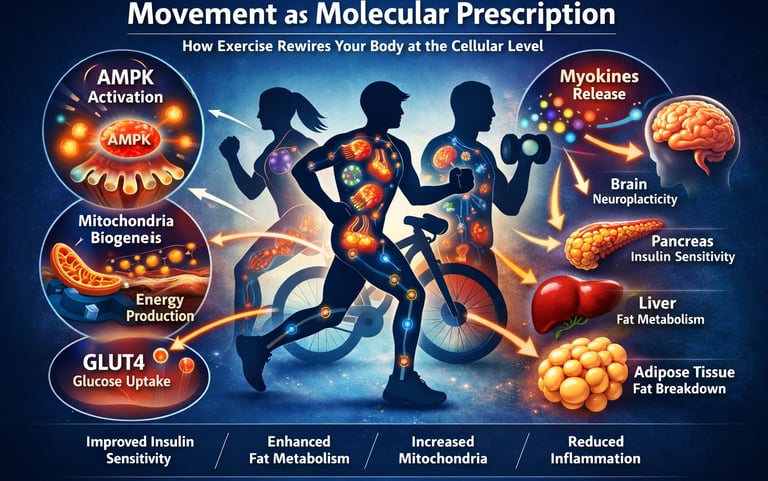
In an era of quick-fix supplements and metabolic drugs, one of the most powerful therapies remains free, accessible, and encoded into our biology for millions of years: movement. Far beyond burning calories, exercise acts as molecular medicine, reprogramming cells at the deepest levels to combat insulin resistance, rebuild energy factories, and reverse aspects of metabolic aging.
This article explores the cutting-edge science showing how every muscle contraction triggers a cascade of signals that enhance energy production, regulate blood sugar, reduce inflammation, and protect against chronic disease.
The Hidden Power of Movement
Most people view exercise through the lens of weight loss or cardiovascular fitness. Yet the real magic happens inside our cells. Skeletal muscle isn’t just for locomotion—it functions as a sophisticated endocrine organ. When muscles contract, they release signaling molecules called myokines that communicate with the liver, pancreas, brain, fat tissue, and immune system. These signals fine-tune metabolism, mood, and inflammation.
At the cellular level, exercise activates master regulators like AMP-activated protein kinase (AMPK), often called the cell’s “energy sensor.” It also drives mitochondrial biogenesis—the creation of new, efficient mitochondria—and triggers insulin-independent glucose uptake. These mechanisms explain why regular physical activity stands as one of the most effective interventions for type 2 diabetes, obesity, cardiovascular disease, and age-related metabolic decline.
“Exercise is the closest thing we have to a polypill,” notes the science, “but the real story is not in how it burns calories. It is in how it reprograms your cells.”
AMPK: The Cell’s Master Energy Switch
Every time you move vigorously enough to slightly deplete cellular energy, the ratio of AMP to ATP rises. This activates AMPK, which acts like a wise financial manager during a budget crunch: it shuts down non-essential energy-consuming processes and ramps up those that generate and conserve energy.
AMPK enhances glucose uptake, stimulates fat burning (fatty acid oxidation), inhibits fat synthesis, and activates downstream pathways involving SIRT1 and PGC-1α. This AMPK-SIRT1-PGC-1α axis forms a core longevity pathway, promoting metabolic flexibility—the ability to efficiently switch between burning carbohydrates and fats.
Landmark research published in Nature Metabolism, Carapeto et al. (2024), revealed that exercise-induced AMPK activation extends beyond muscle and liver. It occurs in pancreatic islets—the cells responsible for insulin production—reducing cellular senescence in both mouse and human tissue. By protecting the pancreas from age-related dysfunction, exercise directly supports long-term blood sugar regulation.
This explains exercise’s broad benefits across metabolic conditions. Activating AMPK during activity doesn’t just provide immediate energy adjustments; it builds resilience that persists with regular training.
Practical Insight: Even moderate activities like brisk walking or stair climbing activate AMPK. The effect strengthens with consistency, as repeated bouts make cells more responsive over time.
Bypassing Insulin Resistance: The GLUT4 Gateway
Insulin resistance lies at the heart of metabolic syndrome and type 2 diabetes. Cells stop responding efficiently to insulin’s signal to absorb glucose, forcing the pancreas to produce more insulin and eventually leading to exhaustion and elevated blood sugar.
Exercise offers a powerful workaround. Muscle contraction triggers the translocation of GLUT4 transporters to the cell membrane through an insulin-independent pathway. This allows glucose to enter muscle cells even when insulin signaling is impaired.
Research by McGee and Hargreaves (2024) highlights how this mechanism supports glucose homeostasis independently of the insulin receptor. A single bout of exercise can lower blood glucose for 24–48 hours, making movement particularly valuable for those with prediabetes or diabetes.
Clinical Pearl: For someone with significant insulin resistance, this “back door” for glucose uptake can produce meaningful improvements from the very first session. Post-meal walks are especially effective at blunting glucose spikes.
Rebuilding the Powerhouses: Mitochondrial Biogenesis
Mitochondria are the tiny organelles that produce ATP, the energy currency of the cell. In metabolic disease and aging, mitochondria become fewer, damaged, and less efficient, leading to fatigue, oxidative stress, and impaired metabolism.
Exercise is the most potent natural stimulus for mitochondrial biogenesis. It upregulates PGC-1α, the master regulator that orchestrates the creation of new mitochondria and improves the function of existing ones. This increases mitochondrial density, enhances oxidative capacity, and reduces damaging reactive oxygen species.
A 2025 systematic review and meta-analysis by Abrego-Guandique et al. confirmed that both aerobic and resistance exercise reliably boost markers of mitochondrial biogenesis in skeletal muscle. Improvements appear within weeks in previously sedentary individuals.
Aerobic training excels at increasing mitochondrial volume and fat-oxidation capacity, supporting endurance and cardiovascular health. Resistance training enhances muscle mass, mitochondrial quality, and overall metabolic rate. The two modalities produce complementary molecular signatures, as detailed in phosphoproteomic and acetylproteomic studies (Pataky et al., 2025). Combining them delivers the most comprehensive benefits.
Real-World Impact: More and better mitochondria translate to sustained energy throughout the day, better exercise tolerance, improved blood sugar control, and slower cellular aging. Individuals often report feeling “recharged” after several weeks of consistent training.
Muscle as an Endocrine Organ: The Myokine Revolution
One of the most profound shifts in exercise science is recognizing contracting muscle as an endocrine organ. It secretes myokines—proteins like irisin, IL-6 (in the acute exercise context), and others—that exert effects far beyond the muscle itself.
Irisin, derived from the cleavage of FNDC5 under PGC-1α control, crosses the blood-brain barrier to stimulate brain-derived neurotrophic factor (BDNF) in the hippocampus. This supports neuroplasticity, mood, memory, and resilience against depression and cognitive decline. Irisin also promotes the “browning” of white fat—turning energy-storing fat into energy-burning beige fat—and benefits bone density.
De Sousa (2026) elegantly maps the integrated AMPK/SIRT1/PGC-1α/Irisin/BDNF axis, showing how physical activity links muscle health to brain function and systemic metabolism.
Even IL-6, often viewed negatively in chronic inflammation, plays beneficial roles when released transiently during exercise: it enhances glucose uptake, fat oxidation, and anti-inflammatory responses.
Key Takeaway: These myokines explain why exercise improves mental health, immune function, and whole-body metabolism simultaneously. The benefits are hormonal and communicative, not merely mechanical.
Molecular Precision: Insights from Phosphoproteomics
Modern techniques allow scientists to map thousands of molecular changes after exercise. Pataky and colleagues (2025) used phosphoproteomics and acetylproteomics to reveal distinct yet overlapping adaptations to aerobic versus resistance training in human skeletal muscle. This “molecular cartography” confirms exercise as a highly nuanced, multi-pathway stimulus—far more complex than any single drug.
Such research underscores why exercise functions as true polypharmacy: it simultaneously targets insulin sensitivity, mitochondrial health, inflammation, and repair mechanisms.
Putting It Into Practice: From Science to Daily Life
Start Where You Are: Cellular benefits begin immediately. AMPK activates within minutes, GLUT4 translocation happens during the session, and myokines are released right away. No elite fitness level is required.
Consistency Over Perfection: Many benefits, including elevated GLUT4 expression and AMPK signaling, last roughly 24–48 hours. Regular activity—daily brisk walking plus strength sessions 2–3 times per week—sustains metabolic improvements.
Combine Modalities: Aim for a mix of aerobic exercise (walking, cycling, swimming) for mitochondrial density and cardiovascular health, and resistance training (weights, bodyweight exercises) for muscle mass and strength. Both support mitochondrial health through slightly different routes.
Timing Tips: A 10–15 minute walk after meals effectively controls postprandial glucose. Morning sessions may favor fat oxidation, but consistency matters most.
Expected Timeline:
Immediate: Better mood, acute glucose control.
2–4 weeks: Noticeable improvements in insulin sensitivity and energy.
4–8 weeks and beyond: Measurable mitochondrial biogenesis, increased muscle mass, and systemic benefits.
Special Considerations: Individuals with prediabetes or early insulin resistance see dramatic returns on investment, as these pathways remain highly responsive before advanced disease sets in. Those with established conditions should work with healthcare providers to integrate exercise safely, potentially reducing medication needs over time under supervision.
Frequently Asked Questions
Q: Can exercise replace diabetes medication?
A: Not entirely on its own, and you should never adjust medications without medical supervision. However, exercise addresses the root causes of type 2 diabetes—insulin resistance, mitochondrial dysfunction, and inflammation—in ways many drugs cannot. Regular training often leads to significant reductions in HbA1c and fasting insulin. In early-stage cases, many patients are able to reduce their medication dosage under their doctor’s guidance thanks to improved GLUT4 function and enhanced mitochondrial health.
Q: Is walking enough, or do I need more structured exercise?
A: Brisk walking is genuinely powerful and should never be underestimated. It effectively activates AMPK, triggers GLUT4 translocation, and stimulates myokine release. For beginners or those with limited mobility, daily walking delivers substantial metabolic benefits. That said, adding resistance training 2–3 times per week maximizes results by increasing muscle mass—the single best predictor of long-term insulin sensitivity and metabolic rate.
Q: How does exercise improve brain health and help with depression or brain fog?
A: Through the irisin-BDNF axis. Irisin, a myokine released from contracting muscle, crosses the blood-brain barrier and stimulates the production of brain-derived neurotrophic factor (BDNF) in the hippocampus. This promotes neuroplasticity, improves mood, enhances memory, and builds resilience against stress. This molecular pathway helps explain why regular exercise is one of the most evidence-based interventions for mild to moderate depression and cognitive clarity.
Q: Does the type of exercise matter for mitochondrial health?
A: Yes, but both major types are beneficial through complementary mechanisms. Aerobic exercise (walking, cycling, swimming) is particularly effective at increasing mitochondrial density and fat-burning capacity. Resistance training excels at improving mitochondrial quality and reducing oxidative stress while also building muscle. The latest research shows that combining both modalities produces the most comprehensive mitochondrial rejuvenation and metabolic improvement.
Q: I have insulin resistance but not full diabetes yet. Is exercise still worth it?
A: This is actually the ideal stage to act. Insulin resistance is highly reversible with consistent movement. Exercise activates AMPK, improves GLUT4 function, and stimulates mitochondrial biogenesis while these pathways are still responsive. Early, regular physical activity can often prevent progression to type 2 diabetes and deliver some of the most dramatic long-term health returns.
Q: What’s the best time to exercise for blood sugar control?
A: Post-meal activity—especially a 10–15 minute brisk walk after eating—stands out as particularly effective because it directly leverages the insulin-independent GLUT4 mechanism to blunt glucose spikes. Morning exercise may offer a slight edge for fat oxidation. Ultimately, the best time is the one that allows you to stay consistent.
Key takeaways
1. Exercise Flips the Body’s Master Metabolic Switch (AMPK Activation)
Every time you move, the rise in AMP/ATP ratio activates AMPK—the cell’s energy sensor. This master regulator boosts glucose uptake, accelerates fat burning, shuts down excess fat storage, and triggers the powerful SIRT1–PGC-1α pathway that drives mitochondrial biogenesis. The result is improved metabolic flexibility and better energy production at the cellular level. Notably, AMPK activation also protects insulin-producing pancreatic beta cells from senescence, offering direct defense against age-related decline in blood sugar control.
2. Muscle Contraction Lowers Blood Sugar Without Needing Insulin
Exercise triggers GLUT4 transporters to move to the muscle cell membrane through an insulin-independent pathway. This mechanism allows skeletal muscle to clear glucose from the bloodstream even in people with significant insulin resistance or type 2 diabetes. A single session can improve glucose control for up to 24–48 hours, making post-meal walks especially effective for blunting blood sugar spikes.
3. Exercise Rebuilds and Upgrades Your Mitochondria
Regular physical activity is the strongest natural stimulus for mitochondrial biogenesis. Through PGC-1α activation, exercise increases both the number and efficiency of mitochondria, enhancing energy output while reducing oxidative stress. Both aerobic and resistance training improve mitochondrial health through complementary mechanisms—making a combination of the two ideal for reversing metabolic aging.
4. Your Muscles Act as a Powerful Endocrine Organ
Contracting muscles release beneficial myokines such as irisin and IL-6 (in the exercise context). These signaling molecules travel throughout the body to improve fat metabolism, reduce harmful inflammation, stimulate BDNF production in the brain for better mood and cognition, and enhance overall metabolic communication between muscle, liver, pancreas, brain, and fat tissue.
5. Consistency Is Essential—Benefits Are Time-Limited
Many of exercise’s metabolic effects—including AMPK activation, GLUT4 expression, and improved insulin sensitivity—typically last 24–48 hours. Regular movement sustains these adaptations, while prolonged inactivity allows them to fade. Even daily brisk walking delivers meaningful benefits, but adding strength training two to three times per week maximizes long-term results.
The Bottom Line: Movement as Foundational Medicine
Exercise is not merely a lifestyle choice—it is a biological necessity that our physiology expects. In a world engineered for sedentary living, intentionally contracting our muscles sends signals that reverse metabolic aging at the cellular level: more efficient mitochondria, better glucose handling, reduced inflammation, and cross-organ communication that supports whole-body vitality.
The science is clear and increasingly detailed. From AMPK activation to myokine signaling and mitochondrial renewal, exercise orchestrates a symphony of adaptive responses no single pharmaceutical can match.
Start today. Lace up your shoes for a walk, pick up some weights, or simply climb the stairs with intention. Your cells are listening—and responding—from the very first movement.
The fountain of youth isn’t a mythical serum. It pulses through your bloodstream every time you choose to move.
Exercise responsiveness varies based on genetics, age, disease burden, sleep, nutrition, and baseline fitness
Medical Disclaimer
The information in this article, including the research findings, is for educational purposes only and does not constitute medical advice, diagnosis, or treatment. Before starting an exercise program, you must consult with a qualified healthcare professional, especially if you have existing health conditions (such as cardiovascular disease, uncontrolled hypertension, or advanced metabolic disease). Exercise carries inherent risks, and you assume full responsibility for your actions. This article does not establish a doctor-patient relationship.
Related Articles
Can High Iron Accelerate Aging? What Ferritin Levels Reveal About DNA Damage | DR T S DIDWAL
No Time to Train? Science-Backed Workouts That Deliver | DR T S DIDWAL
References
Abrego-Guandique, D. M., Aguilera Rojas, N. M., Chiari, A., Luciani, F., Cione, E., & Cannataro, R. (2025). The impact of exercise on mitochondrial biogenesis in skeletal muscle: A systematic review and meta-analysis of randomized trials. Biomolecular Concepts, 16(1), Article bmc-2025-0055. https://doi.org/10.1515/bmc-2025-0055
Carapeto, P., Iwasaki, K., Hela, F., et al. (2024). Exercise activates AMPK in mouse and human pancreatic islets to decrease senescence. Nature Metabolism, 6, 1976–1990. https://doi.org/10.1038/s42255-024-01130-8
De Sousa, R. (2026). Molecular crosstalk for longevity: Exercise and the AMPK/SIRT1/PGC-1α/Irisin/BDNF axis. Molecular Biology Reports, 53, 142. https://doi.org/10.1007/s11033-025-11315-3
McGee, S. L., & Hargreaves, M. (2024). Exercise performance and health: Role of GLUT4. Free Radical Biology and Medicine, 224, 479–483. https://doi.org/10.1016/j.freeradbiomed.2024.09.004
Pataky, M. W., Heppelmann, C. J., Sevits, K. J., et al. (2025). Aerobic and resistance exercise-regulated phosphoproteome and acetylproteome modifications in human skeletal muscle. Nature Communications, 16, 5700. https://doi.org/10.1038/s41467-025-60049-0
Stead, C. A., Mackin, S. T., & Handschin, C. (2024). Exercise-specific adaptations in human skeletal muscle: Molecular mechanisms of making muscles fit and mighty. Free Radical Biology and Medicine, 223, 341–356. https://doi.org/10.1016/j.freeradbiomed.2024.08.010