Mitochondria & Metabolic Flexibility: The Real Secret to Fat Loss and Longevity
Struggling with fat loss despite dieting? Discover how mitochondrial health and metabolic flexibility drive sustainable weight loss, stable energy, and healthy aging.
METABOLISM
Dr. T.S. Didwal, M.D.(Internal Medicine)
4/16/202624 min read
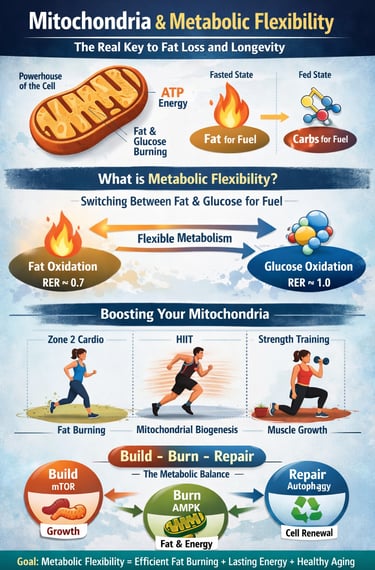
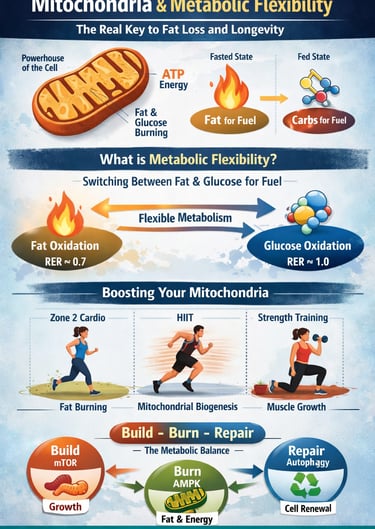
Metabolic flexibility is the body’s ability to efficiently switch between burning fat and carbohydrates for energy, depending on activity and nutritional state. This process is largely driven by mitochondrial health, as mitochondria regulate fuel utilization and energy production at the cellular level.
When metabolic flexibility is high, the body burns fat efficiently during fasting or low-intensity activity and shifts to glucose during high-intensity exercise. Poor metabolic flexibility, often seen in obesity and insulin resistance, leads to reduced fat oxidation, increased fat storage, and unstable energy levels.
The most effective ways to improve metabolic flexibility include:
Regular Zone 2 cardio to enhance fat oxidation
High-intensity interval training (HIIT) to stimulate mitochondrial biogenesis
Resistance training to increase muscle mass and metabolic capacity
Structured meal timing or intermittent fasting to activate cellular repair pathways
Improving mitochondrial function and metabolic flexibility supports sustainable fat loss, stable energy, and healthy aging.
Clinician Perspective
Metabolic flexibility is a stronger predictor of cardiometabolic health than weight alone. Patients with preserved substrate switching often demonstrate better glycemic control, lipid profiles, and lower inflammatory burden—even at similar BMI.
Mitochondrial dysfunction is central to insulin resistance. Reduced oxidative capacity and impaired fatty acid oxidation promote ectopic lipid deposition (liver, muscle), driving lipotoxicity and worsening glucose homeostasis.
Nutritional timing matters as much as composition. Intermittent fasting or structured meal spacing improves mitochondrial turnover (mitophagy) and insulin sensitivity without requiring extreme caloric restriction.
The AMPK–mTOR–autophagy axis should be viewed as a therapeutic triad. Chronic overactivation of mTOR (constant feeding) without periodic AMPK activation (fasting/exercise) accelerates metabolic disease progression.
Aging is, in part, mitochondrial decline. Interventions that preserve mitochondrial quality—exercise, protein adequacy, and circadian alignment—are foundational in preventing sarcopenia and frailty.
Clinical takeaway: Treat mitochondria, not just calories. Sustainable fat loss and longevity emerge from restoring cellular energy efficiency, not simply enforcing energy deficit.
Mitochondria & Metabolic Flexibility: The Real Key to Fat Loss and Longevity
If you’ve ever felt frustrated that “eating less and moving more” just isn’t cutting it for stubborn fat or lasting energy, you’re not alone. The missing piece isn’t willpower or another calorie-tracking app—it’s your mitochondria and your body’s ability to switch fuels efficiently. This is called metabolic flexibility, and it’s emerging as the real driver of sustainable fat loss, stable energy, and a longer, healthier life. In this comprehensive guide, we’ll explore the science step by step, drawing on the latest research, and give you practical, patient-friendly ways to build it. No jargon overload—just clear, actionable insights you can start using today.
1. The Hidden Engine of Metabolism
Calories in versus calories out has dominated fat-loss advice for decades, but it doesn’t explain why some people stay lean effortlessly while others plateau despite perfect diets. The real story happens inside your cells, in tiny powerhouses called mitochondria. These organelles don’t just produce energy—they act as metabolic traffic controllers, deciding whether your body burns glucose (from carbs) or fat for fuel.
Metabolic flexibility is exactly that: the seamless ability to switch between fat oxidation in a fasted state and glucose oxidation after a meal. When this system works well, you feel energized, recover quickly, and store less excess fat. When it falters, you experience fatigue, cravings, insulin resistance, and weight gain that feels impossible to shift. Clinically, poor metabolic flexibility is tightly linked to obesity, type 2 diabetes, and accelerated aging (Ang et al., 2025). The good news? You can train your mitochondria like a muscle.
2. Mitochondrial Biology: Structure and Function
Mitochondria have a double-membrane structure that makes their magic possible. The outer membrane is porous, but the inner membrane folds into cristae, creating a massive surface area packed with the electron transport chain (ETC)—the assembly line for ATP, your cellular energy currency.
Core functions include:
Oxidative phosphorylation: Turning food into usable ATP.
Fatty acid β-oxidation: Breaking down fats inside the mitochondria for fuel.
Apoptosis and ROS signaling: Controlled cell death and reactive oxygen species that act as important messengers, not just damage (Xu et al., 2025).
Beyond energy, mitochondria are signaling hubs. They release metabolites and adjust redox status to communicate with the rest of the cell about energy availability. When mitochondria are healthy and numerous, your metabolism runs smoothly. When they’re sparse or damaged, everything slows down.
3. What Is Metabolic Flexibility?
Simply put, metabolic flexibility is your body’s ability to flip between burning lipids (fasted) and carbohydrates (fed) without metabolic hiccups. Athletes often show high flexibility—they burn fat efficiently during low-intensity activity and switch to glucose during sprints. People with insulin resistance, however, get “stuck” in glucose-burning mode, even when fat is abundant (Ang et al., 2025; Gambardella et al., 2020).
We measure it using the respiratory exchange ratio (RER) via indirect calorimetry. An RER near 0.7 signals fat burning; closer to 1.0 signals carbohydrate burning. Flexible individuals shift smoothly; inflexible ones stay locked in carbohydrate mode, promoting fat storage.
4. Mitochondria and Fat Oxidation
Fat oxidation is a tightly regulated, mitochondria-dependent process that determines the body’s capacity to utilize stored lipids as an energy source. For long-chain fatty acids to be oxidized, they must first be transported from the cytosol into the mitochondrial matrix—a step that represents a key rate-limiting control point.
This transport occurs via the carnitine shuttle system, primarily regulated by carnitine palmitoyltransferase-1 (CPT-1) located on the outer mitochondrial membrane. CPT-1 converts fatty acyl-CoA into acylcarnitine, allowing it to cross the inner mitochondrial membrane via a translocase. Once inside the matrix, CPT-2 reconverts it back to fatty acyl-CoA, making it available for β-oxidation. Importantly, CPT-1 activity is inhibited by malonyl-CoA, a metabolite elevated in the fed state—thereby suppressing fat oxidation when glucose availability is high.
Within the mitochondrial matrix, β-oxidation sequentially cleaves fatty acyl-CoA into two-carbon units, generating acetyl-CoA, along with reducing equivalents (NADH and FADH₂). Acetyl-CoA enters the tricarboxylic acid (TCA) cycle, while NADH and FADH₂ donate electrons to the electron transport chain (ETC), ultimately driving ATP production through oxidative phosphorylation.
Several physiological factors determine the efficiency and capacity of this process:
Mitochondrial density: A higher number of mitochondria per muscle fiber significantly increases total fat oxidation capacity. Endurance-trained individuals exhibit markedly greater mitochondrial content, enabling sustained lipid utilization during prolonged activity.
Enzymatic capacity: The activity of β-oxidation enzymes (e.g., acyl-CoA dehydrogenases) and TCA cycle enzymes dictates how rapidly fatty acids can be processed. These enzymes are upregulated through repeated metabolic stress, particularly aerobic exercise.
Oxygen availability: Fat oxidation is an oxygen-intensive process. Adequate oxygen delivery—determined by cardiovascular fitness, capillary density, and hemoglobin levels—is essential for efficient electron transport and ATP generation.
Hormonal regulation: Low insulin and elevated catecholamines (e.g., during fasting or exercise) promote lipolysis and enhance fatty acid flux into mitochondria, favoring fat oxidation.
In metabolically inflexible states, this system becomes impaired. Reduced mitochondrial content, diminished CPT-1 activity, and lower oxidative enzyme expression limit fatty acid entry and utilization, resulting in incomplete oxidation and accumulation of lipid intermediates.
Conversely, lifestyle interventions—particularly Zone 2 aerobic training, high-intensity interval training (HIIT), and structured fasting periods—enhance mitochondrial biogenesis, upregulate oxidative enzymes, and improve oxygen delivery. These adaptations collectively increase the body’s capacity to oxidize fat efficiently, thereby facilitating sustained fat loss and improved metabolic health (Ang et al., 2025).
5. Mitochondrial Dysfunction and Metabolic Disease
Mitochondrial dysfunction is now recognized as a central pathophysiological feature linking obesity, insulin resistance, and cardiometabolic disease. In metabolically unhealthy states, there is a reduction in mitochondrial density, impaired oxidative phosphorylation, and decreased activity of key enzymes involved in fatty acid β-oxidation. This limits the cell’s capacity to efficiently oxidize substrates, particularly long-chain fatty acids.
As a result, lipid intermediates such as diacylglycerols (DAGs) and ceramides accumulate within skeletal muscle, liver, and cardiac tissue. These bioactive lipids interfere with insulin signaling pathways—particularly via activation of protein kinase C (PKC) isoforms—leading to impaired insulin receptor substrate (IRS-1) function and reduced glucose uptake. This process, commonly termed lipotoxicity, represents a key mechanistic link between mitochondrial dysfunction and insulin resistance.
In parallel, dysfunctional mitochondria exhibit increased production of reactive oxygen species (ROS) due to inefficiencies in the electron transport chain. While physiological levels of ROS serve as signaling molecules, chronic overproduction induces oxidative stress, damaging mitochondrial DNA (mtDNA), proteins, and lipid membranes. This further compromises mitochondrial function, creating a self-perpetuating cycle of damage.
Additionally, mitochondrial dynamics are disrupted. The balance between fusion (which maintains mitochondrial function) and fission (which isolates damaged components) becomes dysregulated. Impaired mitophagy—the selective removal of dysfunctional mitochondria—leads to the accumulation of defective organelles, exacerbating metabolic inefficiency.
Gambardella et al. (2020) demonstrated these processes in the diabetic myocardium, where mitochondria lose their ability to appropriately switch between glucose and fatty acid oxidation. This metabolic rigidity results in an overreliance on fatty acids, increased oxygen consumption, and reduced cardiac efficiency—contributing to diabetic cardiomyopathy.
Importantly, mitochondrial dysfunction is not merely a consequence of metabolic disease but also a driving force in its progression. Reduced oxidative capacity promotes further lipid accumulation, systemic inflammation, and worsening insulin resistance, establishing a vicious cycle that underlies the pathogenesis of type 2 diabetes and related disorders.
From a clinical perspective, interventions that restore mitochondrial function—particularly aerobic exercise, resistance training, and structured nutritional strategies—can reverse many of these abnormalities, improving substrate utilization, insulin sensitivity, and overall metabolic health.
6. Exercise Prescription: Training Your Mitochondrial Engine
Exercise is the single most powerful stimulus for mitochondrial health. Different types of training target complementary adaptations, so a balanced weekly routine works best for most people.
Zone 2 Cardio (Conversational Aerobic Training) Zone 2 is steady-state exercise performed at a moderate intensity where you can comfortably hold a conversation (roughly 60–70% of your maximum heart rate). Think brisk walking, light jogging, cycling, or swimming at a pace that feels sustainable for 45–90 minutes.
This intensity shines because it maximizes fat oxidation while placing a sustained demand on your mitochondria. Over time, Zone 2 training increases mitochondrial density (the number of powerhouses per muscle cell), improves mitochondrial efficiency, and enhances the activity of enzymes involved in β-oxidation. It teaches your body to burn fat more effectively during low-to-moderate activity, preserving glycogen stores and reducing reliance on glucose. Many people notice steadier energy and fewer afternoon slumps within a few weeks.
Aim for 2–4 sessions per week, 45–60 minutes each. Beginners can start with 30-minute brisk walks and gradually build up. If you use a heart-rate monitor, stay in the zone where you’re breathing harder but not gasping. No fancy equipment is needed—outdoor walking or a stationary bike works beautifully. Recent insights confirm that while higher intensities may trigger faster mitochondrial biogenesis signals, consistent Zone 2 remains excellent for building fat-burning capacity and metabolic flexibility, especially for everyday health and longevity.
HIIT (High-Intensity Interval Training) HIIT involves short bursts of hard effort (e.g., 20–60 seconds at near-max effort) alternated with recovery periods. Examples include sprint intervals on a bike, hill sprints, or bodyweight circuits.
HIIT is highly time-efficient and strongly activates AMPK and PGC-1α, the key pathways that drive mitochondrial biogenesis—the creation of new mitochondria. It also improves the ability of your mitochondria to handle both fat and glucose, enhancing overall metabolic flexibility. Studies show HIIT can produce greater improvements in metabolic flexibility markers (such as shifts in respiratory quotient) compared to moderate continuous training, particularly in people with obesity or insulin resistance.
Include 1–2 sessions per week, lasting 20–30 minutes total (including warm-up and cool-down). Start conservatively if you’re new to intense exercise—begin with shorter intervals and longer recovery. Always prioritize good form and listen to your body to avoid overtraining.
Resistance Training Lifting weights or doing bodyweight strength work (squats, push-ups, rows, deadlifts, etc.) is essential. While it doesn’t directly target mitochondria as intensely as cardio, it builds muscle mass—which naturally contains more mitochondria—and improves mitochondrial respiratory capacity in muscle tissue. Stronger muscles raise your resting metabolic rate and support better insulin sensitivity. Resistance training also complements the build–burn–repair cycle by stimulating mTOR for muscle growth while pairing well with fasting or Zone 2 sessions for autophagy and mitochondrial cleanup.
Aim for 2–4 sessions per week, focusing on full-body or major muscle groups with progressive overload (gradually increasing weight or reps). Even moderate loads taken close to fatigue can support mitochondrial adaptations without interfering with muscle gains.
Sample Weekly Routine (Flexible for Busy Schedules)
Monday & Thursday: 45–60 min Zone 2 walk or cycle (ideally fasted in the morning).
Tuesday: Full-body resistance training (45–60 min).
Wednesday: 20–25 min HIIT.
Friday or Saturday: Resistance training or lighter Zone 2.
Rest or active recovery on other days (gentle walking, yoga).
Start with 2–3 sessions total if you’re new, and increase gradually. The combination of these modalities creates synergy: Zone 2 builds the foundation of fat-burning efficiency, HIIT adds new mitochondria and power, and resistance training supports muscle and long-term metabolic health.
7. Molecular Regulation of Mitochondrial Adaptation
Your mitochondria don’t adapt by chance—they respond to precise molecular signals triggered by exercise, fasting, and energy stress. Several key pathways work together like a well-coordinated team to sense low energy, turn on repair and growth programs, and ultimately create more efficient mitochondria. The star players in this process are AMPK, PGC-1α, and the SIRT1/NAD⁺ system. They form a powerful feedback loop that translates lifestyle choices into real cellular improvements.
AMPK: Your Cell’s Energy Sensor
AMP-activated protein kinase (AMPK) acts as the body’s primary fuel gauge. When cellular energy drops—such as during exercise (when muscles burn ATP rapidly) or fasting (when glucose and nutrients are scarce)—the ratio of AMP to ATP rises. This activates AMPK almost immediately.
Once switched on, AMPK does two important things: it shuts down energy-consuming processes (like fat storage and excessive protein synthesis) and turns on energy-producing pathways. Critically, it promotes mitochondrial biogenesis (the creation of new mitochondria) by directly phosphorylating (activating) key proteins and by increasing levels of NAD⁺, which then feeds into the next part of the pathway. In simple terms, AMPK says, “Energy is low—let’s make more power plants and improve how we burn fuel.” This is why even a single bout of exercise or an overnight fast can start improving your metabolic flexibility.
PGC-1α: The Master Regulator of Mitochondrial Biogenesis
PGC-1α (peroxisome proliferator-activated receptor gamma coactivator 1-alpha) is often called the “master regulator” of mitochondrial formation and function. Think of it as the conductor of an orchestra that coordinates hundreds of genes involved in building new mitochondria, enhancing fatty acid oxidation, and improving overall energy metabolism.
When activated, PGC-1α travels to the cell’s nucleus and works with other transcription factors to ramp up the production of mitochondrial proteins—from the electron transport chain components to enzymes used in β-oxidation. It also helps mitochondria become more efficient at using both fat and glucose. Exercise and energy stress strongly increase PGC-1α activity, which explains why consistent training leads to more mitochondria and better fat-burning capacity over time.
SIRT1 and NAD⁺: Linking Nutrient Status to Mitochondrial Health
SIRT1 is an NAD⁺-dependent enzyme (a sirtuin) that fine-tunes cellular responses to energy availability. NAD⁺ (nicotinamide adenine dinucleotide) is a vital coenzyme whose levels rise during energy-deficient states like fasting or prolonged exercise. Higher NAD⁺ activates SIRT1, which then removes acetyl groups from target proteins—including PGC-1α.
This deacetylation “unlocks” PGC-1α, making it far more active at driving mitochondrial biogenesis and improving metabolic gene expression. SIRT1 essentially acts as a nutrient sensor: when food is scarce, it helps shift the cell toward efficiency, repair, and longevity programs. That’s why strategies known to raise NAD⁺ levels—such as regular exercise, time-restricted eating, or certain lifestyle practices—support better mitochondrial function. The three players form a beautiful positive feedback loop: AMPK raises NAD⁺ → SIRT1 becomes more active → PGC-1α is fully activated → more and better mitochondria are built, which further improves energy handling and reinforces the whole system.
In everyday life, this means that combining movement (which strongly activates AMPK) with sensible meal timing (which sustains NAD⁺/SIRT1 signaling) creates the ideal environment for your mitochondria to adapt, become more numerous, and switch between fat and glucose burning more smoothly. These molecular changes don’t happen overnight, but with consistency, they translate into noticeable benefits: steadier energy, easier fat loss, and greater resilience as you age.
This elegant AMPK–SIRT1–PGC-1α axis is one of the main reasons why exercise and fasting are such potent “mitochondrial medicines.”
8. Nutrition Strategy: Fueling Mitochondrial Adaptation Without Overcomplicating
Nutrition supports mitochondrial function by influencing which fuel your body prefers and by creating the right signals for repair and efficiency. The goal is balance—not perfection.
Protein Intake Aim for approximately 1.6 g of protein per kg of body weight per day (about 0.7–0.8 g per pound). For a 70 kg (154 lb) person, that’s roughly 110–120 g daily. Spread it across 3–4 meals (25–40 g per meal) to support muscle repair and mitochondrial turnover. Good sources include eggs, dairy, poultry, fish, legumes, Greek yogurt, and whey or plant-based protein if needed.
Higher protein helps preserve lean muscle during fat loss or aging and does not appear to suppress autophagy in healthy people when consumed in normal amounts after fasting or training. It provides amino acids that support mitochondrial enzyme production and overall cellular health.
Carbohydrates and Fats in Fuel Selection Don’t fear carbs or fats—timing and context matter. Include quality carbohydrates (whole grains, fruits, vegetables, potatoes) around workouts to replenish glycogen and support high-intensity performance. In lower-activity periods or between meals, your body naturally shifts toward fat oxidation when glycogen is lower. Healthy fats (avocados, olive oil, nuts, fatty fish) provide building blocks for mitochondrial membranes and support hormone health. A balanced plate—protein + vegetables + moderate carbs or fats—helps maintain metabolic flexibility rather than forcing one fuel source exclusively.
Meal Timing and Structured Fasting Windows: Avoid constant grazing. Allow 4–6 hours between meals and aim for a consistent 12–16 hour overnight fast (e.g., finish dinner by 7 pm and eat breakfast at 9–11 am). This gentle time-restricted eating pattern activates AMPK, promotes mitophagy (clearing damaged mitochondria), and improves insulin sensitivity without extreme restriction.
Early time-restricted eating (finishing meals earlier in the day) may offer extra metabolic advantages by aligning with your circadian rhythm when insulin sensitivity is higher. Recent human studies on fasting-mimicking diets (both lower- and higher-protein versions) show improvements in cardiometabolic health and autophagy markers. You don’t need multi-day fasts—consistent daily rhythms are powerful and sustainable.
Practical Nutrition Tips You Can Apply Immediately
Prioritize protein at every meal (e.g., eggs and veggies for breakfast, chicken salad for lunch, fish with greens for dinner).
Use the “plate method”: half vegetables, quarter protein, quarter carbs or healthy fats.
Stop eating 2–3 hours before bed to support the overnight fast and better sleep.
If exercising fasted (especially Zone 2), keep sessions moderate at first and refuel with protein + carbs afterward.
Stay hydrated and include electrolyte-rich foods or drinks if you’re active or fasting longer windows.
Together with exercise, this nutrition approach creates the ideal environment for mitochondrial adaptation: energy deficit signals (from fasting/exercise) turn on repair pathways, while adequate protein and nutrients support building new, efficient mitochondria.
9. Mitochondria, Aging, and Longevity
As we get older, our mitochondria gradually lose their youthful efficiency—a process that plays a central role in how we age. Mitochondrial DNA (mtDNA) damage accumulates over decades because mitochondria lack the robust repair systems found in the cell nucleus. At the same time, production of reactive oxygen species (ROS) increases, and the efficiency of the electron transport chain declines. The result is lower ATP production, poorer energy output, and a growing burden of dysfunctional mitochondria inside our cells.
This mitochondrial decline directly contributes to many hallmarks of aging. One of the most noticeable effects is sarcopenia—the progressive loss of muscle mass and strength that begins in our 40s and accelerates after 60. Because skeletal muscle is packed with mitochondria, when these powerhouses become less effective, muscles weaken, recovery slows, and daily activities become more tiring. Over time, this can lead to frailty, reduced mobility, falls, and loss of independence.
Healthy, flexible mitochondria are now widely recognized as a powerful biological age marker—often a better predictor of how “old” your body is functioning than chronological age alone. People who maintain strong mitochondrial function tend to enjoy better energy, preserved muscle mass, sharper cognition, and lower risk of age-related diseases. Research shows that strategies capable of preserving or restoring mitochondrial health can meaningfully slow aspects of the aging process (Caicedo & Singh, 2024; Zhang et al., 2025).
The encouraging news is that while some decline is inevitable, it is far from fixed. Regular exercise, sensible meal timing, and lifestyle habits that activate repair pathways can help protect existing mitochondria, stimulate the creation of new ones, and improve their overall quality—even well into later life.
10. The Integration: Mitochondria, AMPK, and mTOR
Your body is constantly balancing two fundamental needs: growth and building versus energy production and repair. At the center of this balance sit two key pathways—AMPK and mTOR—that work like opposing but complementary switches, with mitochondria and autophagy acting as the bridge between the
mTOR (mechanistic target of rapamycin) is the primary “builder” pathway. It is strongly activated by nutrients (especially amino acids from protein) and insulin during feeding. When active, mTOR drives protein synthesis, muscle growth, and cell proliferation—essentially telling the body “now is the time to build and grow.”
In contrast, AMPK is the “energy deficit” sensor. It rises during exercise, fasting, or any state where cellular energy is low. Instead of building, AMPK shifts the cell toward energy conservation and production: it promotes fat burning, stimulates mitochondrial biogenesis, and activates autophagy—the cell’s internal recycling system. A specialized form of autophagy called mitophagy selectively identifies and removes damaged or inefficient mitochondria, making room for healthier, newer ones.
The beauty of human physiology lies in how these pathways alternate in a healthy rhythm. During and after meals, mTOR dominates so your body can repair tissues and build muscle. During periods of energy deficit (exercise or fasting), AMPK takes the lead, enhancing mitochondrial function and triggering cleanup. This creates an elegant unified model:
Build — mTOR-driven protein synthesis and muscle growth (fed state)
Burn — Enhanced mitochondrial fat oxidation and energy production (AMPK)
Repair — Autophagy and mitophagy for cellular housekeeping (energy-deficit states)
Recent research has revealed even finer tuning: during exercise, lactylation of mTOR (a chemical modification) can actually enhance autophagy in skeletal muscle, helping the system stay balanced even when mTOR is partially active. This prevents excessive growth signals from interfering with necessary repair (Li et al., 2025).
Balanced signaling between mTOR and autophagy is especially critical for muscle health. When the axis is dysregulated—either too much constant mTOR activation (from chronic overfeeding) or insufficient autophagy—muscle quality declines and metabolic flexibility suffers. Studies emphasize that proper cycling between these pathways supports not only muscle maintenance but also overall energy metabolism and resilience against disease (Han et al., 2023; Zorzano et al., 2020).
In practical terms, this means your daily and weekly routine should include both “feast” phases (nutrient-rich meals with adequate protein after training) and “famine” phases (exercise and overnight fasting windows). By respecting this natural rhythm, you train your mitochondria to burn fuel efficiently while keeping the build–burn–repair cycle working in harmony.
Exercise Prescription (doable for busy lives):
Zone 2 cardio: 2–4 sessions/week, 45–60 minutes (e.g., brisk walking, cycling).
HIIT: 1–2 sessions/week, 20–30 minutes.
Resistance training: 2–4 sessions/week, full-body focus.
Nutrition Strategy:
Protein: ~1.6 g/kg body weight daily (spread across meals).
Avoid constant grazing—allow 4–6 hour gaps between meals.
tructured meal timing: Consider 12–16-hour overnight fasts or time-restricted eating.
Lifestyle Factors:
Prioritize 7–9 hours of sleep and consistent circadian rhythms.
Manage stress—chronic cortisol impairs mitochondrial function.
Practical Applications You Can Start This Week
Mito Monday — One 45-minute Zone 2 walk after an overnight fast.
Protein pacing — Hit ~1.6 g/kg daily, spread across meals.
Exercise–fast synergy — Do 2–3 Zone 2 or resistance sessions in a mildly fasted state.
Track how you feel — Monitor energy, cravings, sleep, and workout performance rather than just the scale.
These lifestyle changes compound over weeks and months, leading to easier fat loss, steadier energy, and better long-term health.
Yang et al. (2026) highlight combined metabolic activators (targeting multiple mitochondrial pathways) as promising adjuncts, but lifestyle remains the foundation.
11. Special Populations
Metabolic flexibility looks different depending on your starting point, age, and activity level. The good news is that targeted lifestyle changes can meaningfully improve mitochondrial function and fuel-switching ability in every group. Here’s how to approach it thoughtfully and safely.
Obesity and Type 2 Diabetes: Rebuilding Flexibility from a Challenging Starting Point
People living with obesity or type 2 diabetes often experience severe metabolic inflexibility. Their mitochondria tend to be less efficient at oxidizing fat, leading to greater reliance on glucose even when fat stores are plentiful. This contributes to persistent fatigue, blood sugar swings, and difficulty losing fat despite calorie control (Ang et al., 2025).
The key is a gentle, progressive reintroduction of movement and structured meal timing rather than jumping into intense routines. Start with low-impact activities such as brisk walking, swimming, or stationary cycling for 20–30 minutes, 3–5 days per week. Focus on Zone 2 efforts where you can still talk comfortably—this builds fat-oxidation capacity without overwhelming the system. Adding resistance training 2–3 times weekly (using body weight, bands, or light weights) helps improve insulin sensitivity and muscle glucose uptake.
For nutrition, begin with consistent meal timing: aim for 12–14 hour overnight fasts (for example, finishing dinner by 7 pm and eating breakfast around 9 am) and avoid constant snacking. Combine this with balanced plates that include adequate protein (~1.6 g/kg body weight) and plenty of vegetables. These small, sustainable steps help reduce lipotoxicity, gradually restore mitochondrial efficiency, and improve the body’s ability to switch between fuels. Many people notice better energy and steadier blood sugar within weeks, with fat loss becoming easier over time as metabolic flexibility returns (Ang et al., 2025).
Work with your healthcare provider to monitor blood glucose and adjust medications as needed when increasing activity.
Aging Individuals: Protecting Muscle and Mitochondrial Health Against Sarcopenia
With advancing age, mitochondrial function naturally declines—mitochondrial DNA damage accumulates, energy production slows, and the ability to burn fat efficiently weakens. This process accelerates sarcopenia (age-related loss of muscle mass and strength), contributing to frailty, reduced mobility, and lower quality of life (Caicedo & Singh, 2024; Zhang et al., 2025).
The most effective strategy combines resistance training and Zone 2 cardio. Resistance exercises (squats, lunges, push-ups, rows, or light weight training) performed 2–3 times per week help preserve and even rebuild muscle tissue, which houses a large portion of your mitochondria. Focus on progressive overload—gradually increasing resistance or repetitions—to stimulate both muscle growth (via mTOR) and mitochondrial adaptations.
Pair this with 2–3 sessions of Zone 2 cardio per week (brisk walking, cycling, or swimming at a conversational pace for 30–45 minutes). This combination improves mitochondrial density and efficiency while countering the age-related drop in fat oxidation. Even modest increases in physical activity can largely offset many declines seen with normal aging
On the nutrition side, maintain protein intake around 1.6 g/kg (or slightly higher for older adults) spread across meals to support muscle repair. Gentle time-restricted eating (12–14 hours overnight) promotes autophagy and mitochondrial cleanup without excessive restriction. These habits help slow biological aging by keeping mitochondria healthier and more flexible.
Consistency matters more than intensity—start slowly, prioritize recovery, and celebrate improvements in strength, balance, and daily energy.
Athletes: Fine-Tuning Fuel Switching for Peak Performance
Endurance and strength athletes often already possess good baseline metabolic flexibility, but optimizing it further can enhance performance, recovery, and resilience.
The goal here is to train the ability to switch efficiently between fat and carbohydrate metabolism. Mix high-intensity interval training (HIIT) or race-pace efforts (which rely heavily on glucose) with longer Zone 2 endurance sessions (which maximize fat oxidation). This “train low, compete high” approach—occasionally performing Zone 2 or resistance work in a fasted or low-glycogen state—strengthens mitochondrial capacity and fat-burning enzymes while preserving the ability to handle high-intensity demands when needed.
Incorporate resistance training 2–4 times weekly to maintain or build muscle mass, supporting overall metabolic rate and power output. Periodize your training: include blocks focused on building aerobic base (more Zone 2) and blocks emphasizing intensity and speed.
Nutritionally, strategically time carbohydrates around high-intensity or long sessions to support performance, while allowing lower-carb or fasted periods during easier training days to enhance fat adaptation. Adequate protein remains essential for recovery and mitochondrial protein turnover.
Athletes who master this fuel flexibility often report better endurance without “bonking,” faster recovery, and improved body composition during training phases.
No matter which group you belong to, the underlying principle is the same: progressive, consistent stimuli (exercise + smart meal timing) train your mitochondria to become more efficient and adaptable. Small, realistic changes compound into meaningful improvements in energy, fat loss, and long-term health.
12. Emerging Research (2025–2026)
Scientists are exploring mitochondrial dynamics (fusion/fission), exercise-induced exerkines, personalized profiling via wearables, and targeted activators (Yang et al., 2026; Xu et al., 2025).
13. Limitations and Research Gaps
We still lack simple, standardized clinical tools for routine mitochondrial assessment. Long-term human trials are ongoing, and individual responses vary based on genetics, age, and starting fitness.
Clinical pearls
1. The "Engine" Capacity Rule
Fat oxidation is primarily limited by mitochondrial density and the functional integrity of the electron transport chain (ETC), rather than a simple caloric deficit. Without sufficient mitochondrial volume, fatty acids undergo incomplete oxidation, leading to lipotoxicity.
Think of your body like a car. A calorie deficit is like having less fuel in the tank, but your mitochondria are the engine. If your engine is tiny or rusty, it doesn't matter how much fuel you cut—you won’t go fast. To burn fat, you need to "upgrade the engine," not just skip the gas station.
2. Metabolic Flexibility as a Survival Metric
The Respiratory Exchange Ratio (RER) is a superior predictor of long-term cardiometabolic health compared to BMI. A rigid RER near 1.0 in a fasted state indicates metabolic inflexibility and a high risk for Type 2 Diabetes.
Being "metabolically flexible" means your body can switch between burning sugar and burning fat effortlessly. If you get "hangry" or shaky two hours after eating, your body is stuck in sugar-burning mode. Training your body to switch fuels is more important for your health than the number on the scale.
3. Zone 2: The Foundation of Biogenesis
Low-intensity steady-state exercise (Zone 2) specifically targets Type I muscle fibers, stimulating mitochondrial biogenesis via the PGC-1α pathway without inducing the excessive systemic cortisol response seen in overtrained states.
You don't always have to "crush it" at the gym to see results. Brisk walking or light cycling (where you can still hold a conversation) tells your cells to build more powerhouses. It’s the "slow and steady" work that actually builds your body’s ability to burn fat while you sleep.
4. The Autophagy "Cleaning" Cycle
The balance between mTOR (growth) and AMPK (energy sensing) governs cellular proteostasis. Chronic nutrient surplus suppresses mitophagy (the recycling of damaged mitochondria), leading to cellular senescence and accelerated biological aging.
Your cells have a built-in recycling system. When you eat all day, that system stays off. By giving your body breaks from eating (like a 12-hour overnight fast), you give your cells a chance to "take out the trash" and repair your internal power plants.
5. Muscle as a Metabolic Sink
Skeletal muscle is the primary site for postprandial glucose disposal. Increasing lean muscle mass enhances the total mitochondrial pool, providing a larger "sink" for glucose and fatty acids, thereby improving systemic insulin sensitivity.
Muscle is your body's biggest "sponge" for sugar and fat. The more muscle you have, the more "buffer" you have when you eat a big meal. Lifting weights isn't just about looking fit; it’s about giving your metabolism a bigger place to store and burn energy safely.
Frequently Asked Questions
1. What is the expected time course for improvements in metabolic flexibility?
Early physiological adaptations—such as improved substrate utilization and reduced glycemic variability—may be observed within 2–4 weeks of consistent aerobic training and structured meal timing. More substantial changes, including enhanced mitochondrial density, increased fat oxidation capacity, and measurable body composition shifts, typically occur over 8–12 weeks, depending on baseline metabolic status and adherence.
2. Are specialized diagnostic tests required to assess metabolic flexibility?
While indirect calorimetry measuring the respiratory exchange ratio (RER) remains the gold standard for assessing substrate utilization, it is not routinely required in clinical practice. Surrogate markers—such as fasting insulin levels, glycemic stability, exercise tolerance, and heart rate variability—can provide practical insights into metabolic adaptability.
3. Is intermittent fasting necessary to improve metabolic flexibility?
Prolonged fasting is not essential; however, structured feeding–fasting cycles (e.g., 12–16 hour overnight fasts) can enhance AMPK activation, promote mitophagy, and improve insulin sensitivity. The metabolic benefits appear to be mediated more by periodic energy restriction and circadian alignment than by extreme caloric deprivation.
4. What is the role of nutritional supplements in mitochondrial function?
Although certain compounds (e.g., NAD⁺ precursors, polyphenols, and combined metabolic activators) have shown potential in modulating mitochondrial pathways, current evidence supports lifestyle interventions—particularly exercise, sleep optimization, and dietary structure—as the primary drivers of mitochondrial adaptation. Supplementation may serve as an adjunct but not a substitute.
5. Can metabolic flexibility be improved in older adults?
Yes. Aging-associated mitochondrial decline can be attenuated through targeted interventions, particularly resistance training combined with aerobic exercise. These modalities improve mitochondrial biogenesis, preserve skeletal muscle mass, and enhance insulin sensitivity, thereby mitigating sarcopenia and functional decline.
6. How does metabolic flexibility influence insulin resistance?
Impaired metabolic flexibility is a central feature of insulin resistance, characterized by reduced capacity to oxidize fatty acids and inappropriate reliance on glucose metabolism. Enhancing mitochondrial oxidative capacity and substrate switching improves lipid handling, reduces ectopic fat accumulation, and contributes to improved insulin signaling over time.
7. What strategies support long-term adherence to metabolic interventions?
Sustainable adherence is optimized by focusing on measurable physiological outcomes—such as energy stability, sleep quality, and exercise performance—rather than weight alone. Incremental behavioral changes, individualized programming, and alignment with circadian biology further enhance long-term compliance and metabolic outcomes.
Author’s Note
This article reflects an evolving shift in how we understand metabolism—not as a simple equation of calories, but as a dynamic, cellular process governed by mitochondrial health and metabolic flexibility. As a clinician and researcher, I’ve seen firsthand that patients who focus solely on calorie restriction often struggle with fatigue, plateaus, and relapse. In contrast, those who improve their metabolic flexibility—through structured exercise, intelligent nutrition, and recovery—experience more sustainable fat loss, better energy, and meaningful long-term health improvements.
The science presented here is drawn from contemporary research in mitochondrial biology, exercise physiology, and metabolic medicine. However, it’s important to recognize that human metabolism is complex and individualized. What works optimally for one person may require adjustment for another based on age, baseline fitness, metabolic status, and comorbidities.
This guide is intended to bridge the gap between cutting-edge science and practical, real-world application. It is not about perfection, but about consistency—small, repeatable habits that gradually restore mitochondrial efficiency and metabolic resilience.
Ultimately, the goal is not just to lose fat, but to build a physiology that supports energy, function, and longevity over decades.
Start your 14-Day Metabolic Flexibility Challenge today:
Days 1–7: Add one 45-minute Zone 2 walk after an overnight fast.
Days 8–14: Add protein pacing (30–40 g per meal) and finish dinner by 7 pm.
Disclaimer: This article is for informational purposes only and does not constitute medical advice. Individual circumstances vary, and treatment decisions should always be made in consultation with qualified healthcare professionals.
Related Articles
Mitochondria and Metabolic Flexibility: The Real Secret to Fat Loss and Longevity
Muscle Insulin Resistance: The Hidden Signaling Failure Behind Metabolic Disease | DR T S DIDWAL
Obesity and Fatty Liver Disease: What Science Says About Risk and Health | DR T S DIDWAL
Intermittent Fasting: Metabolic Health Benefits and the Evidence on Longevity | DR T S DIDWAL
References
Ang, J. C., Sun, L., Foo, S. R., Leow, M. K., Vidal-Puig, A., Fontana, L., & Dalakoti, M. (2025). Perspectives on whole body and tissue-specific metabolic flexibility and implications in cardiometabolic diseases. Cell Reports Medicine, 6(9), Article 102354. https://doi.org/10.1016/j.xcrm.2025.102354
Burns, L., Cooper, S., Sarmad, S., Funke, G., Di Mauro, A., Gaitanos, G. C., & Tsintzas, K. (2025). Effects of fasting-mimicking diets with low and high protein content on cardiometabolic health and autophagy: A randomized, parallel group study. Clinical Nutrition, 52(Suppl C), 299–312. https://doi.org/10.1016/j.clnu.2025.08.004
Caicedo, A., & Singh, K. K. (2024). Mitochondria makeover: Unlocking the path to healthy longevity. Expert Opinion on Therapeutic Targets, 28(6), 477–480. https://doi.org/10.1080/14728222.2023.2277240
Deleyto-Seldas, N., & Efeyan, A. (2021). The mTOR–autophagy axis and the control of metabolism. Frontiers in Cell and Developmental Biology, 9, Article 655731. https://doi.org/10.3389/fcell.2021.655731
Gambardella, J., Lombardi, A., & Santulli, G. (2020). Metabolic flexibility of mitochondria plays a key role in balancing glucose and fatty acid metabolism in the diabetic heart. Diabetes, 69(10), 2054–2057. https://doi.org/10.2337/dbi20-0024
Han, X., Goh, K. Y., Lee, W. X., Choy, S. M., & Tang, H.-W. (2023). The importance of mTORC1-autophagy axis for skeletal muscle diseases. International Journal of Molecular Sciences, 24(1), Article 297. https://doi.org/10.3390/ijms24010297
Li, Y., Xue, L., Wang, F., Wang, Y., Sun, Y., Niu, Z., ... Wang, L. (2025). Lactylation of mTOR enhances autophagy in skeletal muscle during exercise. Cell Chemical Biology, 32(11), 1367–1380.e5. https://doi.org/10.1016/j.chembiol.2025.08.008
Singh, S., Fourrier, C., Hattersley, K. J., Hein, L. K., Gore, J., Martin, A., ... Sargeant, T. J. (2025). High protein does not change autophagy in human PBMCs after 1 hour. JCI Insight, 10(16), Article e188845. https://doi.org/10.1172/jci.insight.188845
Xu, X., Pang, Y., & Fan, X. (2025). Mitochondria in oxidative stress, inflammation and aging: From mechanisms to therapeutic advances. Signal Transduction and Targeted Therapy, 10, Article 190. https://doi.org/10.1038/s41392-025-02253-4
Yang, H., Kong, X., Liao, X., Turkez, H., Boren, J., Uhlen, M., Altay, O., & Mardinoglu, A. (2026). Targeting mitochondrial metabolism with combined metabolic activators. Trends in Endocrinology & Metabolism. Advance online publication. https://doi.org/10.1016/j.tem.2026.01.018
Xinyan, C., Yajie, W., Shangfan, H., Yuefei, Y., Junwei, L., Jiaqiao, Z., & Huiming, J. (2025). mTOR-autophagy axis regulation by intermittent fasting promotes skeletal muscle growth and differentiation. Nutrition & Metabolism, 22(1), Article 109. https://doi.org/10.1186/s12986-025-01001-3
Zhang, X., Gao, Y., Zhang, S., et al. (2025). Mitochondrial dysfunction in the regulation of aging and aging-related diseases. Cell Communication and Signaling, 23, Article 290. https://doi.org/10.1186/s12964-025-02308-7
Zorzano, A., Liesa, M., & Palacín, M. (2020). Self-eating for muscle fitness: Autophagy in the control of energy metabolism. Developmental Cell, 54(2), 268–281. https://doi.org/10.1016/j.devcel.2020.06.030