Leucine and Insulin: How Protein Controls Blood Sugar and Muscle Growth
Discover how leucine, a key amino acid in protein, stimulates insulin, regulates blood sugar, and supports muscle growth. Learn the science behind protein’s metabolic effects, ideal intake, and what it means for diabetes, fat loss, and long-term health.
DIABETESNUTRITION
Dr. T.S. Didwal, M.D.(Internal Medicine)
6/13/202625 min read
How does leucine affect insulin?
Leucine directly stimulates insulin release from pancreatic β-cells by increasing ATP, closing potassium channels, and triggering calcium influx — the same pathway glucose uses. It works without carbs, but has the strongest effect when combined with carbohydrates. A dose of 2.5–3 g per meal is needed to trigger this response.
The Science of Leucine and Insulin: Key Takeaways for Muscle and Metabolism
1. Leucine Directly Triggers Insulin Release (Without Carbs)
Leucine acts as a direct chemical messenger to your pancreas. When you consume leucine, its metabolism inside pancreatic $\beta$-cells increases ATP production, closes ATP channels, and triggers a calcium influx—the same cellular pathway that glucose uses to release insulin. Additionally, leucine activates the enzyme glutamate dehydrogenase, further accelerating ATP production and insulin secretion.
Patient Note: This is why a high-protein meal can raise your insulin levels even if you skip the carbs entirely. If you are taking diabetes medications, it is highly recommended to consult your doctor before making major changes to your protein intake.
2. There is a Minimum "Leucine Threshold" Per Meal
To get the metabolic benefits of leucine, you have to hit a specific dose. Research indicates that a threshold of 2.5 to 3.0 grams of leucine per meal is required to meaningfully activate the muscle-building pathway known as mTORC1 and stimulate insulin release. Anything below this threshold fails to trigger a strong enough signal.
Furthermore, adults over the age of 60 require a higher threshold—around 3.5 to 4.0 grams—to overcome age-related anabolic resistance.
Quick Sources to Hit Your Leucine Goal:
1 scoop of high-quality whey protein
150g of chicken breast
200g of cottage cheese
Patient Note: Hitting your leucine target doesn’t require eating massive, overwhelming portions. Incorporating just one of the common whole-food options listed above into a single meal will easily get you there.
3. Leucine and Carbs Create a Powerful Synergistic Effect
When you combine leucine and glucose (carbohydrates), you create a metabolic multiplier. Presenting both nutrients to the body simultaneously amplifies insulin release far beyond what either could achieve on its own. This heightened insulin response helps rapidly shuttle both glucose and amino acids directly into muscle tissue.
Patient Note: This synergy is the foundational science behind the classic post-workout meal. Pairing a protein source with a carbohydrate—like chicken with rice, or a whey protein shake with a banana—primes your body to use those nutrients for muscle recovery rather than fat storage
.
4. Chronic Leucine Activation Can Backfire
While leucine directly activates the mTORC1 pathway to stimulate muscle protein synthesis (even when insulin is low), too much of a good thing can cause issues. If mTORC1 is kept permanently "switched on" by constant protein consumption throughout the day, it triggers a negative feedback loop that can actually make your cells less sensitive to insulin over time.
Patient Note: Think in terms of "peaks, not drips." Structuring your day around three to four distinct, protein-rich meals is far more effective for your metabolism than constantly sipping on protein shakes or amino acid supplements all day long.
5. Your Activity Level Dictates How Leucine Behaves
Leucine is highly adaptable, and its impact on your health depends largely on how much you move:
In active individuals, extra branched-chain amino acids (BCAAs) and leucine are efficiently burned for fuel or utilized to repair damaged muscle tissue.
In sedentary individuals: In the context of overeating and lack of movement, circulating BCAAs can accumulate, creating toxic metabolic byproducts that interfere with healthy insulin signalling.
Patient Note: If you are planning to increase your daily protein intake, it is crucial to pair it with regular movement. Even a brisk 20-minute walk after your largest meal helps your body process and utilize leucine correctly.
6. High Blood BCAAs are a Warning Sign, Not Always the Cause
Clinical data often show that individuals with insulin resistance or type 2 diabetes have elevated levels of circulating BCAAs in their bloodwork. However, this is largely because insulin-resistant cells lose the ability to break down BCAAs efficiently. The elevated level is primarily a symptom of a sluggish metabolism, rather than a direct consequence of eating too much dietary protein.
Patient Note: If a lab panel reveals high BCAA levels, do not panic and restrict your protein intake. Talk to your healthcare provider. High BCAAs usually mean your metabolism requires targeted exercise and structured, balanced meals rather than strict nutritional deprivation.
7. Timing is Everything: Prioritize Pulses Over Grazing
To maintain optimal insulin sensitivity, focus on meal timing. Consuming distinct "pulses" of 2.5 to 4.0 grams of leucine at set meal times creates definitive "start" and "stop" metabolic signals. Conversely, a continuous, low-level protein intake keeps the mTOR/S6K1 pathway chronically activated, which can blunt your overall insulin sensitivity.
Patient Note: Aim for distinct, solid meals rather than all-day snacking. Your body functions best when given clear physiological signals: a dedicated time to digest and build, followed by a dedicated time to rest.
8. Strategic Leucine Intake Benefits Specific Target Groups
Because of how leucine interacts with insulin and muscle tissue, it is uniquely beneficial for three specific demographics:
Older Adults: Higher leucine doses per meal help combat age-related sarcopenia (muscle loss).
Early Type 2 Diabetics: Using leucine’s natural insulin-stimulating effect can help manage post-meal glucose control.
Athletes & Fitness Enthusiasts: Pairing leucine with carbohydrates post-workout maximizes muscle glycogen replenishment and accelerated recovery.
Patient Note: Nutritional needs are never one-size-fits-all. If you fall into one of these categories and want to focus on hitting your leucine targets—especially via supplementation—be sure to loop in your healthcare team to tailor the strategy to your personal health profile.
Introduction
Most people think insulin is triggered only by sugar. But there's a powerful protein signal your body uses every time you eat a meal rich in leucine — and understanding it could change how you approach blood sugar control, muscle building, and metabolic health.
Leucine, a branched-chain amino acid (BCAA) found in whey protein, eggs, chicken, and dairy, does something remarkable: it directly stimulates insulin secretion from the pancreas, activates the muscle-building pathway mTOR, and — when used correctly — helps partition nutrients into muscle rather than fat.
Whether you're managing type 2 diabetes, trying to preserve muscle as you age, or optimizing post-workout nutrition, the leucine-insulin connection offers scientifically grounded, actionable leverage.
In this evidence-based guide, you'll learn:
Exactly how leucine triggers insulin release (the cellular mechanisms)
How much leucine per meal actually makes a difference
How exercise transforms leucine from a potential metabolic burden into a powerful tool
Who benefits most — and who should be cautious
How to build a practical leucine strategy for your specific goals
Let's start with the science.
1. What Is Leucine and Why Does It Matter?
Leucine is one of nine essential amino acids — meaning your body cannot synthesize it and must obtain it from food. It belongs to a subgroup called branched-chain amino acids (BCAAs), alongside isoleucine and valine.
What sets leucine apart from the other BCAAs is its exceptional potency as a metabolic signal. It's not merely a building block for protein; it functions as an active regulator that tells your body when and how aggressively to:
Build new muscle protein (via mTOR activation)
Release insulin from pancreatic beta cells
Shuttle glucose and amino acids into muscle tissue
Quick Fact: Among all amino acids, leucine is the most potent activator of mTORC1 — the central controller of muscle protein synthesis.
This dual role — as both an insulin secretagogue and an anabolic trigger — makes leucine uniquely important in clinical nutrition, sports performance, diabetes management, and healthy aging.
2. How Leucine Stimulates Insulin: The Cellular Mechanisms
To understand why leucine matters for blood sugar, you need to know what happens inside pancreatic beta cells when leucine arrives after a meal.
Mechanism 1: The ATP–Potassium Channel Pathway
When leucine is metabolized inside a beta cell, it generates ATP — the cell's energy currency. This rise in ATP causes potassium channels (K_ATP channels) to close. Channel closure shifts the electrical charge across the cell membrane in a process called depolarization, which then opens voltage-gated calcium channels.
Calcium floods into the cell. That calcium influx is the direct trigger for insulin granule release.
This is the same fundamental pathway that glucose uses to stimulate insulin — which explains why leucine can act as an independent insulin secretagogue even in the absence of carbohydrates.
Mechanism 2: Glutamate Dehydrogenase (GDH) Activation
Leucine has a second, subtler mechanism. It allosterically activates an enzyme called glutamate dehydrogenase (GDH), stimulating the conversion of glutamate to alpha-ketoglutarate. Alpha-ketoglutarate enters the TCA (Krebs) cycle, producing more ATP — which amplifies insulin secretion further.
The practical result: leucine doesn't just trigger insulin once. It feeds the engine that keeps the insulin signal going, especially when glucose is also present.
Mechanism 3: The "Dual Key" Effect
Think of insulin release as a door with two keyholes. Glucose is the primary key. Leucine is the secondary key. Either can partially open the door. But when you insert both keys simultaneously, the door opens much wider — producing a stronger insulin response than either alone.
This is clinically important: protein-rich meals don't cause the sharp insulin spike of refined carbohydrates, but they're far from metabolically inert.
3. The Leucine–Glucose Synergy: Why Mixed Meals Work Best
Leucine alone produces only a moderate insulin response. Its real metabolic power emerges when combined with carbohydrates.
When leucine and glucose are both present:
GDH activation by leucine amplifies glucose-stimulated insulin secretion (GSIS)
The insulin response is significantly greater than with either alone
Nutrient uptake into muscle is maximized
This is the biochemical rationale for post-exercise meals that combine protein with moderate carbohydrates — not just a gym bro myth. The science supports it clearly.
Here is the breakdown of how meal composition dictates your insulin response and muscle-building (anabolic) potential, rewritten into quick, scannable points:
Carbohydrates Alone:
Insulin Response: High spike, followed by a rapid decline.
Anabolic Effect: Minimal.
Takeaway: This combination delivers fast energy but offers few muscle-building benefits, increasing the likelihood of energy crashes or fat storage if the energy isn't immediately burned.
Protein (Leucine) Alone:
Insulin Response: Moderate and sustained.
Anabolic Effect: Moderate.
Takeaway: Amino acids—specifically leucine—directly trigger muscle repair and steady insulin release without needing a single gram of sugar or carbs.
Protein + Carbohydrates:
Insulin Response: Strong and sustained.
Anabolic Effect: Maximized.
Takeaway: The ultimate synergistic combination. The carbs amplify the insulin signal, which acts as a cellular gateway to rapidly shuttle the protein's amino acids directly into your muscles for recovery.
High-Fat, Low-Protein:
Insulin Response: Low to baseline.
Anabolic Effect: Minimal.
Takeaway: This combination keeps blood sugar and insulin exceptionally stable, prioritizing fat burning (oxidation) rather than muscle building
.
Clinical Pearl: After resistance training, your muscles express elevated GLUT4 transporter activity — the protein that moves glucose from the bloodstream into cells. Leucine-stimulated insulin at this window acts as a "nutrient partitioning agent," directing glucose and amino acids into muscle rather than fat.
4. How Much Leucine Per Meal? The Dose–Response Threshold
One of the most clinically useful concepts in leucine research is the leucine threshold — the minimum amount needed per meal to trigger meaningful insulin secretion and mTOR activation.
Research consistently points to 2.5 to 3 grams of leucine per meal as the anabolic floor for young, healthy adults.
What Happens Below and Above the Threshold?
Below 2.5g: Insulin and mTOR signals are suboptimal — muscle protein synthesis is not meaningfully activated.
2.5g–3g: The "sweet spot" for most adults — a robust insulin and anabolic response.
Above 4g: Diminishing returns. The excess leucine is oxidized for energy rather than providing additional muscle-building benefit.
The Threshold Shifts With Age
Adults over 60 experience anabolic resistance — a blunted response to the same protein dose that works for younger adults. Research suggests older adults may need 3.5 g to 4 g of leucine per meal to achieve equivalent mTOR activation and insulin response.
Think of it this way: aging muscles become "hard of hearing" to the leucine signal. You simply need to speak louder — meaning larger or leucine-enriched protein servings.
Leucine Content of Common Protein Sources
Here is the dietary breakdown of leucine content per standard serving, rewritten into direct, scannable points and grouped by food type:
Animal-Based Proteins (High Density)
These options easily clear or closely approach the 2.5–3.0g anabolic threshold in a single standard meal:
Chicken Breast (150g): ~3.3g leucine – Exceeds the target threshold; highly efficient.
Salmon (150g): ~2.8g leucine – Hits the sweet spot for muscle building and recovery.
Cottage Cheese (2% / 200g): ~2.5g leucine – A premier dairy source for meeting your threshold.
Greek Yogurt (Plain / 200g): ~1.8g leucine – Moderate; requires a topping like chia or hemp seeds to bridge the gap.
Whole Eggs (3 Large): ~1.5g leucine – Moderate; you would need roughly 5 whole eggs to cross the 2.5g mark on eggs alone.
Supplemental Protein Powders (Concentrated)
Fast-digesting, isolated sources that provide a dense payload of amino acids:
Whey Protein Isolate (25g scoop): 2.5–3.0g leucine – The most efficient, fast-acting source to trigger the mTORC1 pathway.
Soy Protein Isolate (30g scoop): ~2.2g leucine – High for a plant source; increasing the scoop slightly (to ~35g) hits the target.
Pea Protein Isolate (30g scoop): ~1.8g leucine – Moderate; requires a slightly larger serving size (~42g) to reach full threshold efficacy.
Plant-Based Whole Foods (Lower Density)
These sources require larger serving volumes or strategic food pairing (e.g., combining with grains or seeds) to achieve a robust anabolic signal:
Lentils (Cooked / 200g): ~1.3g leucine – Requires doubling the portion or pairing with a protein supplement.
Black Beans (Cooked / 200g): ~1.1g leucine – Lower density; needs to be combined with other leucine-rich sources to reach the target.
Leucine values are approximate and vary by brand and preparation method.
5. Leucine and mTOR: Building Muscle Without Insulin
One of leucine's most remarkable properties is that it can activate mTORC1 — the master regulator of muscle protein synthesis — independently of insulin.
This means that even in a fasted state, with minimal circulating insulin, leucine can still initiate anabolic processes in muscle tissue. This is why high-protein diets support muscle preservation even during caloric restriction.
How mTOR and Insulin Interact
When both leucine and insulin are elevated simultaneously — as in a post-workout meal with protein and carbohydrates — the anabolic response is maximized through two synergistic pathways:
Leucine → mTORC1 (direct amino acid sensing)
Insulin → Akt/PI3K → mTORC1 (growth factor signaling)
Both pathways converge on mTORC1, amplifying the signal to initiate muscle protein synthesis, ribosome production, and cell growth.
The mTOR Feedback Problem
Here's where the science becomes nuanced. While acute mTOR activation is beneficial, chronic overactivation — particularly of the downstream kinase S6K1 — can paradoxically impair insulin sensitivity.
The mechanism: sustained S6K1 activation phosphorylates and inhibits insulin receptor substrate-1 (IRS-1), a critical node in the insulin signaling cascade. This creates a negative feedback loop that blunts the cell's response to insulin — the very definition of insulin resistance.
This is not a reason to avoid leucine. It's a reason to structure your protein intake wisely: distinct meals with clear high-protein peaks rather than constant protein grazing throughout the day.
6. The Dark Side: When High BCAAs Cause Insulin Resistance
Elevated circulating BCAAs — sometimes called "BCAA dyslipidemia" — have been consistently associated with insulin resistance and increased type 2 diabetes risk in large epidemiological studies.
But this association is frequently misinterpreted. Here's what the science actually shows:
The Sedentary Overflow Problem
In physically inactive individuals who chronically overeat protein:
BCAAs flood the bloodstream faster than muscle can use them
Mitochondria become overloaded attempting to oxidize excess BCAAs
Toxic metabolic intermediates accumulate (including acylcarnitines and branched-chain keto acids)
These intermediates inhibit IRS-1 signaling → insulin resistance develops
A landmark 2023 review by De Bandt and colleagues published in Nutrients provided mechanistic clarity: the harm is not from leucine itself, but from the combination of excess BCAA intake and sedentary behavior. The metabolic "sink" provided by exercise — which burns BCAAs for fuel and increases BCAA uptake into muscle — is the essential protective factor.
BCAAs as a Marker, Not Just a Cause
McGarrah and White (2023), writing in Nature Reviews Cardiology, emphasized an important nuance: elevated circulating BCAAs in insulin-resistant individuals likely reflect impaired BCAA catabolism — a consequence of metabolic dysfunction — rather than simply a primary cause of it.
In other words, high BCAAs may be a symptom of a sick metabolism as much as a driver of further damage.
Bottom line: In active individuals who exercise regularly and eat within their caloric needs, elevated BCAA intake is not associated with insulin resistance. The risk is concentrated in sedentary, overfed populations.
7. Acute vs. Chronic Effects: A Critical Distinction
1. Single Leucine-Rich Meal (Active Individual)
The Effect: Triggers robust pancreatic insulin secretion, accelerates skeletal muscle glucose uptake, and directly activates the mTOR muscle-building pathway.
Clinical Implication: Highly positive. Consuming structured, high-protein meals at regular intervals supports both metabolic health and lean tissue maintenance.
2. Post-Exercise Protein + Carbs
The Effect: Maximizes the synergistic anabolic drive and forces accelerated blood glucose clearance into depleted muscle cells.
Clinical Implication: Strongly beneficial. Prioritizing this specific nutritional window speeds up recovery and maximizes glycogen replenishment.
3. Chronic High BCAAs (Sedentary, Overfed Individual)
The Effect: Causes mitochondrial overload and leads to the inhibition of Insulin Receptor Substrate 1 (IRS-1), directly driving insulin resistance.
Clinical Implication: Highly problematic. This underscores that physical movement is the essential modifier that determines whether leucine acts as a tool or a metabolic burden.
4. Older Adult with Anabolic Resistance
The Effect: Results in a blunted mTOR muscle-building response when standard, lower doses of leucine are consumed.
Clinical Implication: Requires adjustment. Older adults must intentionally elevate their leucine intake to 3.5 to 4.0 grams per meal to successfully overcome this resistance and prevent sarcopenia (muscle loss).
5. Early-Stage Type 2 Diabetes
The Effect: Acts as an additional, non-glucose signal to stimulate insulin release (insulin secretagogue) while simultaneously helping preserve vital muscle mass.
Clinical Implication: Potentially beneficial. This strategy can aid in post-meal glycemic control, but it should always be implemented with tailored medical guidance.
6. Advanced Insulin Resistance (Sedentary Individual)
The Effect: Yields mixed clinical evidence because the cellular machinery required for branched-chain amino acid (BCAA) breakdown is already functionally impaired.
Clinical Implication: Requires caution. Protein and amino acid intake should be individualized and carefully coordinated with a healthcare provider.
The Clinical Crux (Jiang et al., Frontiers in Endocrinology):
Research confirms that leucine supplementation and physical exercise produce distinct, complementary improvements in systemic insulin sensitivity. Exercise is fundamentally not optional; it is the necessary physiological mechanism required to unlock and realize leucine’s metabolic benefits.
8. Who Benefits Most From Leucine?
Athletes and Active Individuals
For anyone exercising regularly, the leucine-insulin connection is directly actionable:
Consume 25–40g of high-quality protein post-exercise, ensuring at least 2.5–3g of leucine
Pair with 30–50g of moderate-glycemic carbohydrates to amplify insulin and glycogen replenishment
The insulin response acts as a "nutrient delivery signal" — directing amino acids and glucose into muscle when cells are most receptive
Older Adults (60+)
Sarcopenia — age-related muscle loss — is one of the most serious and underappreciated threats to metabolic health and independence. Leucine supplementation is among the best-studied nutritional interventions for combating anabolic resistance.
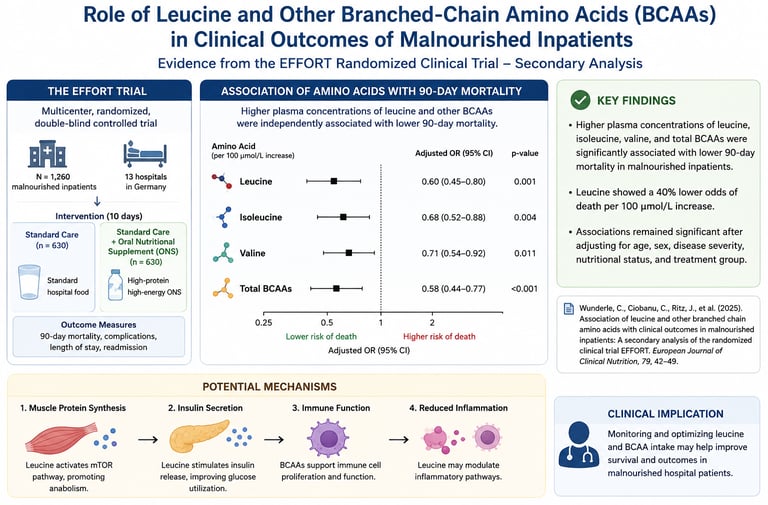
A 2025 secondary analysis of the EFFORT randomized controlled trial (Wunderle et al.) examined BCAAs in malnourished hospitalized patients and found associations between BCAA status and clinical outcomes — reinforcing that leucine adequacy matters not just for gym performance, but for survival and recovery in vulnerable populations.
Practical guidance for older adults:
Target 3.5–4g leucine per meal
Distribute protein across 3–4 meals (not one large meal)
Combine with resistance training at least 3x per week
Whey protein is especially beneficial due to rapid digestion and high leucine content
Individuals Managing Type 2 Diabetes
Leucine's ability to stimulate insulin secretion — without the glycemic load of carbohydrates — makes it a clinically interesting tool in diabetes nutrition. A 2024 randomized controlled trial (Pathak et al., European Journal of Clinical Nutrition) investigated the impact of leucine supplementation on body composition and glucose tolerance following energy restriction and found meaningful improvements in adults at metabolic risk.
However, a 2025 path analysis from the BALANCE program (Almeida et al., European Journal of Nutrition) found that insulin resistance mediates the association between leucine intake and diabetes risk — meaning the benefit of leucine depends heavily on the person's baseline metabolic state and insulin sensitivity. Early-stage diabetes likely benefits; advanced insulin resistance requires more individualization.
⚠️ Safety Note: If you take insulin or sulfonylureas, discuss any significant protein intake changes with your doctor. Leucine-stimulated insulin secretion could theoretically amplify hypoglycemia risk in certain medication scenarios.
People Trying to Lose Body Fat
Leucine-rich protein diets offer a metabolic advantage in fat loss:
High satiety without large caloric load
Moderate, sustained insulin response (better nutrient partitioning than high-carb approaches)
Preservation of lean muscle during caloric restriction (protecting metabolic rate)
mTOR activation maintains muscle even in a calorie deficit
9. Leucine Across Different Diets
High-Protein Omnivore Diets
Naturally high in leucine through animal proteins. Meeting the 2.5–3g threshold per meal is straightforward with standard servings of chicken, fish, dairy, or eggs. The main risk — chronic excess in sedentary individuals — is mitigated by regular exercise.
Plant-Based Diets
Plant proteins generally contain 6–8% leucine by weight (e.g., soy), compared to ~11% in whey protein. This means plant-based eaters must consume 20–30% more total protein volume or use specific strategies to meet the leucine threshold:
Best plant leucine sources: Soy protein isolate, pea protein isolate, edamame, tempeh
Complementary combinations: Rice + peas, soy + oats (improves amino acid profile)
Leucine fortification: Some plant protein powders are now leucine-enriched for this exact reason
Volume approach: A 200g serving of edamame + soy protein shake can reach the threshold
Practical tip for plant-based eaters: Aim for 30–40g total plant protein per meal rather than 25g, and prioritize soy- or pea-based proteins as your primary sources.
Intermittent Fasting
During an extended fast, insulin is low and cells become highly sensitized to nutrient signals. When you break a fast with a leucine-rich protein source, the insulin and mTOR response can be unusually robust — making this a high-leverage nutritional moment.
Key considerations:
Still must meet daily protein targets (fasting doesn't compensate for chronic under-eating)
Combine protein with moderate carbohydrates at the first meal for maximum effect
Avoid a very high-protein first meal if you're new to IF — digestive tolerance varies
10. Leucine Content by Food Source: Reference Table
Animal Protein: Dairy
Whey Protein Isolate (25g): 2.7g leucine | ✅ Yes — Exceeds the muscle-building threshold efficiently.
Cottage Cheese (2% / 200g): 2.5g leucine | ✅ Yes — An excellent whole-food dairy source to hit the target.
Greek Yogurt (Plain / 200g): 1.8g leucine | ❌ No — Borderline; requires a topping like hemp or chia seeds to cross the line.
Whole Milk (300ml): 1.4g leucine | ❌ No — Falling short on its own; best used as a base for protein powder.
Animal Protein: Meat, Fish, & Eggs
Chicken Breast (150g): 3.3g leucine | ✅ Yes — High density, comfortably clearing the anabolic target.
Lean Beef (150g): 3.0g leucine | ✅ Yes — Reliably hits the target for muscle protein synthesis.
Salmon Fillet (150g): 2.8g leucine | ✅ Yes — Provides an optimal dose along with healthy omega-3 fats.
Tuna (Canned / 150g): 2.5g leucine | ✅ Yes — A convenient, budget-friendly option that meets the threshold.
Whole Eggs (3 Large): 1.5g leucine | ❌ No — You would need to bump the serving up to 5 whole eggs to meet the 2.5g threshold on eggs alone.
Plant-Based Proteins
Soy Protein Isolate (30g): 2.2g leucine | ❌ Nearly — The highest plant source; adjusting to a slightly larger 35g scoop hits the target.
Pea Protein Isolate (30g): 1.8g leucine | ❌ No — Requires a larger serving size (roughly 42g) to reach full threshold efficacy.
Edamame (200g): 1.8g leucine | ❌ No — Moderate for a whole plant source; best paired with a grain or seed.
Tofu (Firm / 200g): 1.4g leucine | ❌ No — Requires doubling the portion or combining with other dense protein sources.
Lentils (Cooked / 200g): 1.3g leucine | ❌ No — Lower density; must be paired with grains or a supplemental powder.
Black Beans (Cooked / 200g): 1.1g leucine | ❌ No — Requires strategic food pairing to create a robust anabolic signal.
Values approximate; consult USDA FoodData Central for specific brands.
11. Study Evidence Summary
1. The Synergistic Power of Activity (Jiang et al., 2021 | Frontiers in Endocrinology)
Study Population: Animal model (mice).
Intervention: Leucine supplementation paired with or without exercise.
Key Finding: Leucine combined with exercise significantly improved systemic insulin sensitivity, whereas leucine supplementation alone showed limited efficacy.
2. The Sedentary Overfed Dilemma (De Bandt et al., 2023 | Nutrients)
Study Population: Comprehensive review across human and animal data.
Intervention: Branched-chain amino acid (BCAA) and dietary profile analysis.
Key Finding: High circulating BCAAs drive insulin resistance primarily when paired with a sedentary lifestyle and a chronic caloric surplus (overfeeding).
3. BCAAs as a Metabolic Dashboard (McGarrah & White, 2023 | Nature Reviews Cardiology)
Study Population: High-level clinical review.
Intervention: Tracking circulating BCAA concentrations.
Key Finding: Elevated blood levels of BCAAs serve as independent biomarkers for cardiometabolic risk, largely arising as a consequence of existing cellular metabolic dysfunction rather than being its sole root cause.
4. Improving Body Composition under Restriction (Pathak et al., 2024 | European Journal of Clinical Nutrition)
Study Population: Randomized Controlled Trial (RCT) involving adults at high metabolic risk over 8 weeks.
Intervention: Strategic leucine intake combined with energy (caloric) restriction.
Key Finding: The combination yielded marked improvements in overall body composition (preserving lean mass) and significantly enhanced glucose tolerance.
5. Critical Importance in Vulnerable Demographics (Wunderle et al., 2025 | European Journal of Clinical Nutrition)
Study Population: Secondary analysis of the EFFORT trial targeting malnourished medical inpatients.
Intervention: Evaluation of systemic BCAA status.
Key Finding: Circulating BCAA levels directly correlated with patient clinical outcomes, underscoring that maintaining leucine adequacy is vital for vulnerable, catabolic populations.
6. The Glycemic Index Link (Almeida et al., 2025 | European Journal of Nutrition)
Study Population: Adults with established cardiovascular disease enrolled in the BALANCE program.
Intervention: Evaluating the intersection of daily leucine intake and the overall glycemic index of the diet.
Key Finding: Underlying insulin resistance acts as the primary mediator linking leucine intake to diabetes risk, proving that the metabolic benefits of leucine are entirely context-dependent.
7. Dual-Amino Acid Therapeutics (Dash & Mishra, 2026 | Molecular Biology Reports)
Study Population: Type 2 Diabetes (T2D) Drosophila models.
Intervention: Joint administration of leucine and glutamine.
Key Finding: The specific combination of leucine and glutamine successfully reduced hyperglycemia and mitigated oxidative stress; however, human translation requires direct clinical investigation.
12. Seven Common Myths — Corrected by Science
Myth 1: "Leucine spikes insulin the same way sugar does."
Reality: False. Leucine produces a moderate, sustained insulin response — not the sharp spike of high-glycemic carbohydrates. The "mixed meal effect" (leucine + glucose together) produces a stronger combined response, but leucine alone is a much gentler insulin signal. This is actually an advantage for blood sugar management.
Myth 2: "BCAAs are a direct cause of insulin resistance."
Reality: Oversimplified. High circulating BCAAs in insulin-resistant individuals largely reflect impaired BCAA catabolism — a downstream consequence of metabolic dysfunction rather than the primary cause. In active people, BCAAs are efficiently oxidized and used for muscle repair. Exercise is the critical modifier.
Myth 3: "Dietary protein has no effect on insulin levels."
Reality: Completely false. Leucine-dense proteins like whey, eggs, chicken, and dairy are highly insulinogenic — they meaningfully stimulate insulin secretion. This is physiologically desirable: insulin acts as a nutrient delivery signal, helping amino acids enter muscle cells. The difference from carbs is magnitude and speed, not the presence or absence of insulin response.
Myth 4: "More leucine = more muscle."
Reality: There's a clear ceiling. The "leucine trigger" operates as a threshold effect, not a linear dose-response. Once you hit ~2.5–3g (or ~3.5–4g for older adults), consuming more in one sitting doesn't build more muscle. The excess is simply oxidized for energy. Spreading protein across multiple meals is more effective than loading it all at once.
Myth 5: "Leucine supplementation alone is a shortcut to metabolic health."
Reality: Context-dependent. Leucine is a metabolic "key," but exercise determines how wide the door opens. Chronic high-dose leucine intake without regular physical activity can overactivate the mTOR/S6K1 pathway and paradoxically contribute to insulin resistance over time in sedentary individuals.
Myth 6: "All protein sources trigger the same muscle-building and insulin response."
Reality: Highly variable. The response depends on leucine density and absorption speed. Whey protein is rapidly digested and exceptionally leucine-rich, making it significantly more insulinogenic and anabolic than slower-digesting or leucine-poor proteins like collagen, wheat protein, or some plant proteins.
Myth 7: "Plant-based eaters can't meet leucine needs without supplements."
Reality: Achievable with planning, but requires deliberate strategy. By combining higher volumes of soy/pea protein, using complementary sources, and potentially using leucine-enriched plant protein blends, plant-based individuals can reliably meet the leucine threshold. It's not effortless, but it's entirely possible.
13. Your Practical Leucine Protocol
For General Metabolic Health
Target: 25–35g high-quality protein per meal, distributed across 3–4 meals daily
Leucine goal: 2.5–3g per meal minimum
Best food sources: Chicken, salmon, cottage cheese, Greek yogurt, eggs (3–4), or whey protein
Exercise: Resistance training 3x/week minimum — this is non-negotiable for optimizing leucine metabolism
For Post-Workout Recovery (Athletes)
Within 30–60 minutes after resistance training:
Protein: 25–40g high-quality protein (whey is optimal for speed)
Leucine: Ensure ≥3g (one standard scoop of whey protein typically delivers this)
Carbohydrates: 30–50g moderate-glycemic carbs (banana, oats, white rice) to amplify insulin and replenish glycogen
Optional addition: 5g creatine monohydrate — synergistic with leucine for muscle protein synthesis
For Older Adults (60+) Targeting Muscle Preservation
Leucine per meal: 3.5–4g (one larger chicken breast, 200g cottage cheese + whey topper, or leucine-enriched supplement)
Meal frequency: 4 meals per day — don't skip meals or concentrate protein in one sitting
Resistance training: 3x/week, compound movements (squats, rows, presses)
Consider: Leucine-enriched protein supplements if food-based targets are difficult to reach consistently
For Type 2 Diabetes Management
Prioritize protein in every meal to moderate post-meal glucose response
Pair protein with non-starchy vegetables and moderate-GI carbohydrates — the mixed meal effect supports insulin without large glucose spikes
Leucine-rich breakfast: Greek yogurt with cottage cheese and eggs provides a strong leucine-insulin signal that helps stabilize morning blood sugar
Exercise: Non-negotiable. Even a 20-minute walk after meals dramatically amplifies leucine's insulin-sensitizing effect
⚠️ Consult your doctor before making significant protein intake changes if you're on insulin or sulfonylureas
For Plant-Based Eaters
Daily checklist:
[ ] Aim for 30–40g plant protein per main meals (not 25g like for whey)
[ ] Use soy or pea protein as primary sources (highest leucine density in plants)
[ ] Combine complementary proteins where possible (rice + peas, oats + soy)
[ ] Consider leucine-enriched plant protein blends if you're not meeting targets
[ ] Track leucine intake for 1–2 weeks using a food app to identify gaps
14. FAQs
Does leucine raise insulin as much as carbohydrates?
No. Leucine produces a moderate, sustained insulin response — considerably smaller in magnitude than high-glycemic carbohydrates. However, it is not metabolically neutral. The response is amplified significantly when leucine is consumed alongside carbohydrates in a mixed meal (the "synergy effect"). Leucine alone does not trigger the sharp, rapid insulin spike associated with sugar or refined starch.
Is leucine safe for people with type 2 diabetes?
For most people with type 2 diabetes, leucine-rich whole foods (chicken, fish, dairy, eggs) are safe and potentially beneficial — they support insulin secretion, preserve lean muscle, and moderate post-meal glucose. However, isolated BCAA supplements in the context of advanced insulin resistance warrant discussion with a healthcare provider, especially if you're on medications that lower blood sugar.
Can leucine improve insulin sensitivity?
Research (Jiang et al., 2021) shows that leucine combined with exercise improves systemic insulin sensitivity. Leucine alone, without regular physical activity, is less likely to provide this benefit and may even be counterproductive in sedentary, overfed individuals. Exercise is the essential co-factor — it creates the "metabolic sink" that lets leucine work properly.
Is whey protein the best source of leucine?
Whey protein isolate is among the richest and most bioavailable sources of leucine, with approximately 10–12% leucine by weight. It also has the fastest digestion rate of any protein, making it ideal for post-exercise use when rapid amino acid delivery matters. For plant-based alternatives, pea and soy protein isolates are the best options, though they deliver less leucine per gram.
Should I take leucine with or without carbohydrates?
It depends on your goal. Without carbohydrates: leucine still produces a modest insulin response and activates mTOR independently — useful for muscle-building during a low-carb diet. With carbohydrates: the insulin and anabolic response is significantly enhanced — optimal for post-exercise recovery and glycogen replenishment. The synergy is well-established and clinically meaningful.
Do plant-based diets provide enough leucine for muscle building?
With careful planning, yes. Soy and pea protein isolates are the highest-leucine plant options. Plant-based eaters typically need to consume 20–30% more total protein volume to reach the same leucine threshold as animal protein eaters. Combining complementary protein sources and potentially using leucine-enriched plant protein blends can bridge the gap effectively.
Do older adults need more leucine per meal?
Yes. Anabolic resistance — the age-related blunting of muscle protein synthesis in response to protein — means that adults over 60 typically require 3.5g to 4g of leucine per meal (compared to 2.5g for younger adults) to achieve equivalent mTOR activation. Spreading protein across 4 meals per day and pairing with resistance exercise are the key strategies for preserving muscle in older age.
Can I take leucine as a supplement?
Free-form leucine supplements exist and can be useful for older adults or those who struggle to meet per-meal targets through food. However, whole-food sources and high-quality complete protein supplements (like whey or soy protein) are generally preferable — they provide a full spectrum of amino acids alongside leucine. Isolated BCAA supplements without regular exercise may have limited benefit and potential drawbacks in sedentary individuals.
How often should I eat protein to maximize leucine's effects?
Research supports pulsatile protein intake — 3 to 4 distinct high-protein meals per day — rather than constant protein grazing. This approach creates clear "start" and "stop" signals that maintain cellular sensitivity to leucine and insulin. Constant low-level protein consumption throughout the day may lead to chronic mTOR/S6K1 activation that blunts insulin signaling over time.
What happens if I eat too much leucine?
Above the threshold of roughly 3–4g per meal, additional leucine provides diminishing returns for muscle building — the excess is simply burned for energy. Chronically very high BCAA intake in sedentary individuals may, over time, contribute to the metabolic intermediates associated with insulin resistance. For active people eating within their caloric needs, this risk is minimal. The more practical concern is simply that excess protein calories contribute to overall caloric intake.
15. Conclusion and Action Steps
Leucine is not just a building block for muscle. It's a sophisticated metabolic signal that tells your body when to build, when to store, and how to handle blood sugar — all triggered by what and how you eat.
The key principles to carry forward:
Leucine activates insulin and muscle building through distinct but synergistic pathways — and it works best in combination with carbohydrates and, above all, exercise.
There's a threshold, not a linear dose: hitting 2.5–3g leucine per meal (3.5–4g for older adults) is the target. More doesn't proportionally help; spread it across meals instead.
Exercise is not optional. It transforms leucine from a potential metabolic burden into a powerful anabolic and insulin-sensitizing tool. Without it, the benefits shrink and the risks grow.
Context determines outcome. The same leucine intake that benefits an active 35-year-old can be metabolically problematic in a sedentary, overfed state. Your lifestyle is the variable that matters most.
Your 5-Step Action Plan
Calculate your leucine intake using a food tracking app for 3–5 days — identify whether you're consistently hitting 2.5–3g per meal
Structure protein into 3–4 meals rather than grazing or loading it all in one sitting
Pair your largest protein meal with moderate carbohydrates — especially on training days — to maximize the leucine-insulin synergy
Prioritize resistance exercise at least 3 times per week — this is the single most important modifier of leucine metabolism
Discuss this framework with your healthcare provider if you have type 2 diabetes, sarcopenia, or metabolic syndrome — especially before adding leucine supplements
Share this guide with someone managing blood sugar or focused on healthy aging — the leucine-insulin connection is one of the most underappreciated tools in metabolic nutrition.
This article is intended for educational purposes only and does not constitute medical advice. Always consult a qualified healthcare provider before beginning a new exercise or nutrition program, especially if you have an existing medical condition.
Related Articles
You’re Missing This: Why mTOR Activation Is the Real Goal of Strength Training | DR T S DIDWAL
The mTOR Switch: Why Your Cells Stopped Listening to Insulin | DR T S DIDWAL
Why Aerobic Exercise Is the Most Powerful ‘Drug’ for Heart, Fat Loss & Longevity | DR T S DIDWAL
References
Dash, K., & Mishra, M. (2026). Combined supplementation of leucine and glutamine acts as a novel therapeutic approach to alleviate hyperglycemia and oxidative stress by targeting insulin signalling genes in a Drosophila model of type 2 diabetes. Molecular Biology Reports, 53, 8. https://doi.org/10.1007/s11033-025-11171-1
De Bandt, J.-P., Coumoul, X., & Barouki, R. (2023). Branched-chain amino acids and insulin resistance, from protein supply to diet-induced obesity. Nutrients, 15(1), 68. https://doi.org/10.3390/nu15010068
Jiang, X., Zhang, Y., Hu, W., Liang, Y., Zheng, L., Zheng, J., Wang, B., & Guo, X. (2021). Different effects of leucine supplementation and/or exercise on systemic insulin sensitivity in mice. Frontiers in Endocrinology, 12, 651303. https://doi.org/10.3389/fendo.2021.651303
McGarrah, R. W., & White, P. J. (2023). Branched-chain amino acids in cardiovascular disease. Nature Reviews Cardiology, 20, 77–89. https://doi.org/10.1038/s41569-022-00760-3
Wunderle, C., Ciobanu, C., Ritz, J., et al. (2025). Association of leucine and other branched chain amino acids with clinical outcomes in malnourished inpatients: A secondary analysis of the randomized clinical trial EFFORT. European Journal of Clinical Nutrition, 79, 42–49.
Pathak, K., Newsholme, P., Sherriff, J., Soares, M. J., Zhao, Y., Calton, E. K., & James, A. P. (2024). The impact of leucine supplementation on body composition and glucose tolerance following energy restriction: An 8-week RCT in adults at risk of the metabolic syndrome. European Journal of Clinical Nutrition, 78(2), 155–162. https://doi.org/10.1038/s41430-023-01360-1
Almeida, A. P., Lopes, L. J., Bersch-Ferreira, Â. C., et al. (2025). Insulin resistance mediates the association between leucine intake, dietary glycemic index, and type 2 diabetes in secondary cardiovascular prevention: Path analysis from the Brazilian Cardioprotective Nutritional (BALANCE) program. European Journal of Nutrition, 64, 140. https://doi.org/10.1007/s00394-025-03653-6
Anthony, J. C., Yoshizawa, F., Anthony, T. G., Vary, T. C., Jefferson, L. S., & Kimball, S. R. (2000). Leucine stimulates translation initiation in skeletal muscle of postabsorptive rats via a rapamycin-sensitive pathway. Journal of Nutrition, 130(10), 2413–2419.
Churchward-Venne, T. A., Burd, N. A., Mitchell, C. J., West, D. W., Philp, A., Marcotte, G. R., ... & Phillips, S. M. (2012). Supplementation of a suboptimal protein dose with leucine or essential amino acids: Effects on myofibrillar protein synthesis at rest and following resistance exercise in men. Journal of Physiology, 590(11), 2751–2765.
Kolterman, O. G., Insel, J., Saekow, M., & Olefsky, J. M. (1980). Mechanisms of insulin resistance in human obesity: Evidence for receptor and postreceptor defects. Journal of Clinical Investigation, 65(6), 1272–1284.
Newgard, C. B., An, J., Bain, J. R., Muehlbauer, M. J., Stevens, R. D., Lien, L. F., ... & Svetkey, L. P. (2009). A branched-chain amino acid–related metabolic signature that differentiates obese and lean humans and contributes to insulin resistance. Cell Metabolism, 9(4), 311–326.
Norton, L. E., & Layman, D. K. (2006). Leucine regulates translation initiation of protein synthesis in skeletal muscle after exercise. Journal of Nutrition, 136(2), 533S–537S.
Patti, M. E., Brambilla, E., Luzi, L., Landaker, E. J., & Kahn, C. R. (1998). Bidirectional modulation of insulin action by amino acids. Journal of Clinical Investigation, 101(7), 1519–1529.
Tremblay, F., Lavigne, C., Jacques, H., & Marette, A. (2007). Role of dietary proteins and amino acids in the pathogenesis of insulin resistance. Annual Review of Nutrition, 27, 293–310.
Wolfe, R. R. (2017). Branched-chain amino acids and muscle protein synthesis in humans: Myth or reality? Journal of the International Society of Sports Nutrition, 14, 30.