Zone 2 Cardio & AMPK: The “Easy” Workout That Builds Fat-Burning Metabolism Better Than Sprints
Zone 2 cardio improves mitochondrial function, insulin sensitivity, and heart health via AMPK activation. Evidence-based guide with protocol.
EXERCISE
Dr. T.S. Didwal, M.D.(Internal Medicine)
7/10/202615 min read
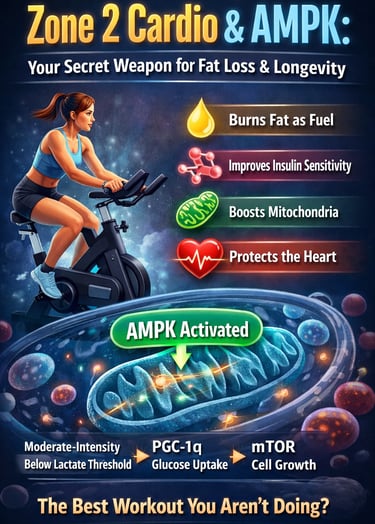
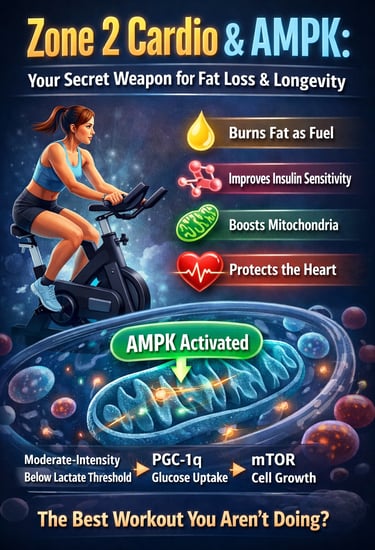
Zone 2 cardio is moderate-intensity exercise performed below the lactate threshold, where fat becomes the primary fuel source, and AMPK is activated. This improves mitochondrial function, insulin sensitivity, and cardiovascular health—making it one of the most effective training methods for long-term fat loss and metabolic fitness.
Key Points
Zone 2 cardio trains your metabolism—not just your muscles.
This is where fat burning becomes efficient, not exhausting.
AMPK activation turns easy cardio into metabolic therapy.
If you can talk comfortably, you’re likely in the most powerful fat-burning zone.
Zone 2 builds mitochondria—the engines that drive energy, fat loss, and longevity.
Most people train too hard to get the benefits of training easy.
Fat loss doesn’t start with intensity—it starts with efficiency.
Zone 2 is where your body learns to burn fat, not depend on sugar.
Low intensity, high impact: the paradox of metabolic health.
Train slower today to perform stronger tomorrow.
Clinical Pearls
1. The "Metabolic Switch" Threshold
Scientific: Chronic Zone 2 training increases mitochondrial density and oxidative enzyme activity (e.g., Citrate Synthase), effectively shifting the Maximal Fat Oxidation (MFO) point to a higher power output. This preserves glycogen and delays the onset of metabolic acidosis.
Think of Zone 2 as "upgrading your engine." It teaches your body to burn fat for fuel even when you're moving faster, saving your "high-octane" sugar fuel for when you truly need it. You’re becoming a more fuel-efficient hybrid vehicle.
2. The Insulin-Independent Glucose Rescue
Scientific: Activation of AMPK during moderate-intensity aerobic work triggers the translocation of GLUT4 transporters to the sarcolemma via pathways independent of the insulin receptor. This bypasses systemic insulin resistance to acutely lower blood glucose.
If your body is struggling to process sugar because of insulin resistance, Zone 2 acts like a "back door" into your cells. It lets your muscles pull sugar out of your blood without needing extra insulin. It’s essentially a natural, needle-free dose of glucose control.
3. Volume over Intensity for Biogenesis
Scientific: Mitochondrial biogenesis via the AMPK–PGC-1α axis is primarily sensitive to the duration of the calcium signal and the ATP/AMP ratio. High-intensity bursts (HIIT) provide a potent stimulus, but the total "area under the curve" for signaling is often greater in sustained Zone 2 sessions.
When it comes to building "cellular power plants," time matters more than sweat. Thirty slow minutes beats ten "all-out" minutes because you are keeping the "growth signal" turned on for three times as long. Consistency and duration are the secret ingredients here, not pain.
4. Protecting the "Stressed" Heart
Scientific: Emerging data suggests that Zone 2-intensity exercise activates the AMPK–KLF4–FMO2 axis, which provides a "molecular shield" against cardiotoxicity and dysfunction caused by chronic sympathetic nervous system (fight-or-flight) overstimulation.
Zone 2 isn't just a leg workout; it’s a shield for your heart. It activates a special cleaning and repair crew that protects your heart muscle from the damaging effects of daily stress and "adrenaline overload." It’s like a soothing balm for a stressed-out cardiovascular system.
5. The "Interference Effect" Management
Scientific: To maximize the divergent adaptations of mTOR (hypertrophy) and AMPK (oxidative capacity), a minimum 6-hour refractory period is recommended. However, if performed concurrently, low-intensity Zone 2 has a significantly lower "interference footprint" on strength gains compared to high-intensity conditioning.
You can build muscle and endurance at the same time, but they don't like to talk to each other. If you lift heavy weights and then do an easy walk, your body can handle both. But if you try to do a "hard" run right after lifting, your body gets confused about whether it should be building size or building endurance. Keep the cardio easy to keep your gains.
Zone 2 isn't just exercise science — it's mitochondrial medicine. Here's the evidence
What if the most effective way to burn fat, reverse insulin resistance, and improve long-term cardiovascular health wasn’t high-intensity workouts—but a slower, more controlled form of exercise that most people underestimate?
Zone 2 cardio is emerging as one of the most powerful yet underutilised tools in metabolic medicine. Defined as moderate-intensity aerobic exercise performed just below the first lactate threshold (LT1), this training zone represents a unique physiological state where fat oxidation is maximized, lactate remains stable, and mitochondrial efficiency begins to improve (Sitko et al., 2025). Unlike high-intensity interval training, which relies heavily on glucose and produces rapid fatigue, Zone 2 primarily trains the body to use fat as a sustainable fuel source—making it foundational for long-term metabolic health (Storoschuk et al., 2025).
At the cellular level, the benefits of Zone 2 cardio are driven by activation of AMP-activated protein kinase (AMPK), a master regulator of energy balance. When activated, AMPK enhances glucose uptake independent of insulin, increases fatty acid oxidation, stimulates mitochondrial biogenesis through PGC-1α signaling, and suppresses energy-consuming processes such as mTOR-driven anabolism (Fan et al., 2024; Zhang et al., 2025). This makes Zone 2 not just a form of exercise—but a targeted intervention for conditions like Type 2 diabetes, obesity, and cardiovascular disease.
Emerging evidence also suggests that these AMPK-mediated adaptations extend beyond skeletal muscle. Exercise-induced AMPK activation has been shown to protect cardiac tissue, reduce oxidative stress, and improve functional recovery following myocardial injury (Fan et al., 2024; Zhang et al., 2025). In this context, Zone 2 cardio represents more than fitness—it is a form of mitochondrial and cardiometabolic therapy.
Quantitative Effect Sizes
HbA1c Reduction:
Regular moderate-intensity aerobic training (including Zone 2) is associated with an average ~0.5–1.0% reduction in HbA1c over 12–24 weeks in individuals with Type 2 diabetes.VO₂max & Mitochondrial Adaptation:
VO₂max: Typically improves by ~10–20% in previously untrained individuals within 8–16 weeks
Mitochondrial enzymes (e.g., citrate synthase): Increase by ~20–40%, reflecting enhanced oxidative capacity
Clinical takeaway: These changes translate into meaningful improvements in glycaemic control, aerobic fitness, and metabolic efficiency with consistent Zone 2 training.
What Exactly Is Zone 2 Training?
Despite its growing popularity, “Zone 2” has historically been defined inconsistently across different training models. However, recent expert consensus has clarified its physiological meaning. Zone 2 is best described as moderate-intensity, continuous aerobic exercise performed just below the first lactate threshold (LT1)—the point at which lactate begins to accumulate slightly above baseline but remains stable because clearance keeps pace with production.
In practical terms, Zone 2 reflects a distinct metabolic state, not just a subjective sense of “easy” effort. You can identify it using several reliable markers:
Talk Test: You should be able to speak in full, comfortable sentences. If conversation becomes strained, intensity is likely too high.
Heart Rate: Typically ~60–70% of maximum heart rate (estimated as 220 − age), though individual variation exists.
Lactate Levels: Blood lactate remains low, generally below ~2 mmol/L—consistent with efficient aerobic metabolism.
Fuel Utilization: Fatty acids serve as the primary energy source, with minimal reliance on glycolysis.
Crucially, Zone 2 is not simply “going slow.” It represents a precisely regulated physiological zone where mitochondrial respiration, fat oxidation, and metabolic efficiency are optimized. When sustained for sufficient duration, this state drives key cellular adaptations, including improved mitochondrial density and enhanced metabolic flexibility (Sitko et al., 2025; Storoschuk et al., 2025).
Common Mistake
Most recreational exercisers unconsciously drift into Zone 3 or higher — feeling like they're doing "easy cardio" when they're actually above their aerobic threshold. This blunts the very adaptations Zone 2 is meant to produce. Use a heart rate monitor to stay honest.
Meet AMPK: Your Cellular Energy Regulator
Think of AMPK as your body's internal fuel gauge and energy regulator, all in one. When your cells detect that their ATP (energy currency) is running low relative to AMP, they activate AMPK as an emergency response system. Once switched on, AMPK orchestrates a remarkable series of downstream events:
Pulls glucose into muscle cells by triggering GLUT4 transporters to move to the cell surface — no insulin required. This is a major reason Zone 2 is powerful for people with diabetes or insulin resistance.
Ramps up fat burning by inhibiting ACC (acetyl-CoA carboxylase), which opens the gate for fatty acids to enter mitochondria via CPT-1.
Builds new mitochondria by activating PGC-1α — the master regulator of mitochondrial biogenesis.
Suppresses unnecessary anabolism by inhibiting mTOR, clearing the stage for cellular clean-up (autophagy) and energy conservation.
Emerging cardiac research confirms these pathways extend well beyond skeletal muscle. Two 2024–2025 studies demonstrated that exercise training protects the heart through AMPK-dependent mechanisms — one showing an AMPK–KLF4–FMO2 axis that shields cardiac tissue from excessive sympathetic nervous system stress, and another demonstrating how AMPK activation improves heart function after myocardial infarction by promoting protective signalling pathways (Zhang et al., 2025)
"Zone 2 doesn't just burn fuel — it builds the engines that burn the fuel."
How Zone 2 Activates AMPK Differently Than Other Exercise
This is where Zone 2 training becomes particularly important from a metabolic perspective. While all forms of exercise activate AMPK, the pattern, duration, and downstream effects of that activation differ significantly between training modalities.
Key Differences: Zone 2 vs High-Intensity Exercise
AMPK Activation Pattern
Zone 2: Sustained, steady activation (30–90 minutes)
HIIT/Sprints: Short, sharp spikes followed by rapid decline
Blood Lactate Levels
Zone 2: Low (<2 mmol/L), stable aerobic metabolism
HIIT: High (4–12+ mmol/L), reflecting glycolytic stress
Primary Fuel Source
Zone 2: Predominantly fat oxidation (lipid metabolism)
HIIT: Primarily glucose utilization (glycolysis)
Hormonal Stress Response
Zone 2: Minimal cortisol and sympathetic activation
HIIT: Significant cortisol and catecholamine surge
Mitochondrial Adaptations
Zone 2: Strong, durable increases in mitochondrial density and efficiency
HIIT: Moderate improvements, more variable depending on protocol
Recovery Demand
Zone 2: Low; can be performed frequently or even daily
HIIT: High; typically requires 24–48+ hours recovery
Suitability
Zone 2: Safe and accessible for beginners and clinical populations
HIIT: Requires caution in untrained or high-risk individuals
Why This Matters Physiologically
Zone 2 creates a prolonged energy deficit at the cellular level, leading to sustained AMPK activation.
This favors:
Mitochondrial biogenesis (via PGC-1α)
Enhanced fat oxidation
Improved metabolic efficiency
In contrast, HIIT produces:
Rapid metabolic stress
Mixed signaling (AMPK + anabolic pathways)
Greater reliance on carbohydrate metabolism
Key insight:
Duration of AMPK activation—not just intensity—is critical for mitochondrial adaptation.
What the Evidence Says
A 2025 narrative review in Sports Medicine (Storoschuk et al., 2025) evaluated the impact of Zone 2 training on mitochondrial capacity and cardiorespiratory fitness in general populations.
Key conclusion:
Mechanistic rationale is strong
Evidence in non-athletes is promising but still evolving
More high-quality, long-term trials are needed
The Mitochondrial Medicine Perspective: Why Zone 2 Matters for Long-Term Health
Mitochondria are often described as the “powerhouses of the cell,” but this simplification misses their broader biological importance. Beyond energy production, mitochondria play central roles in cell signaling, oxidative balance, inflammation, apoptosis, and the regulation of aging pathways.
A growing body of evidence now links mitochondrial dysfunction to the pathogenesis of major chronic diseases, including Type 2 diabetes, obesity, cardiovascular disease, neurodegenerative disorders such as Alzheimer’s disease, and accelerated biological aging.
Zone 2 cardio directly targets this dysfunction at its root. Through sustained activation of the AMPK–PGC-1α signaling axis, it promotes a range of adaptive responses that collectively improve mitochondrial quantity, quality, and efficiency.
Key Mitochondrial Adaptations with Zone 2 Training
Increased Mitochondrial Density
Regular Zone 2 training stimulates mitochondrial biogenesis, leading to a higher number of mitochondria within skeletal muscle fibers. This expands the body’s capacity for aerobic ATP production and improves endurance at lower energy cost.Reduced Oxidative Stress
Efficient mitochondria generate fewer reactive oxygen species (ROS) per unit of ATP produced. Over time, this reduces oxidative damage to cellular structures and contributes to improved metabolic resilience.Enhanced Metabolic Flexibility
Zone 2 training improves the ability of cells to switch seamlessly between fat and glucose oxidation based on energy demand. This flexibility is a defining feature of metabolic health and is often impaired in insulin resistance.Cardiovascular Protection
AMPK-mediated signaling pathways extend beyond skeletal muscle, exerting protective effects on cardiac tissue. Emerging research shows these pathways help reduce ischemic injury, limit adverse remodeling, and buffer the effects of chronic sympathetic activation (Fan et al., 2024; Zhang et al., 2025).
Why This Matters Clinically
From a medical perspective, Zone 2 cardio is not simply an exercise modality—it represents a targeted intervention for mitochondrial health. By improving mitochondrial function, it addresses a shared underlying mechanism across multiple chronic diseases.
This is why Zone 2 is increasingly being viewed not just as fitness training, but as a form of metabolic and mitochondrial medicine.
Zone 2 Cardio for Specific Health Conditions
Type 2 Diabetes and Insulin Resistance
One of the most clinically relevant benefits of Zone 2 training is its ability to improve glucose regulation through insulin-independent mechanisms. Activation of AMPK stimulates GLUT4 translocation, allowingn individuals with insulin resistance—where this pathway is impaired—Zone 2 exercise acts as a metabolic bypass, restoring glucose uptake and improving glycaemic control.
Regular training has been associated with:
Improved HbA1c levels
Reduced glycaemic variability
Decreased hepatic glucose output
From a therapeutic standpoint, this positions Zone 2 as a foundational intervention in metabolic disease management.
Cardiovascular Disease and Heart Health
The cardiovascular benefits of Zone 2 extend far beyond simple improvements in heart rate or endurance. At the molecular level, exercise-induced AMPK activation exerts direct cardioprotective effects.
Recent mechanistic research has shown that:
Exercise training attenuates cardiac dysfunction caused by excessive sympathetic activation via the AMPK–KLF4–FMO2 signaling axis
AMPK activation post-myocardial infarction supports recovery of cardiac function and reduces adverse ventricular remodeling
Collectively, these findings suggest that Zone 2-intensity exercise may serve as a low-risk, scalable strategy for cardiac rehabilitation and long-term cardiovascular protection.
Obesity and Body Composition
Zone 2 training promotes a gradual but meaningful shift in metabolic physiology. By enhancing mitochondrial capacity and fat oxidation, it reprograms the body toward greater reliance on lipid metabolism.
Over time, this leads to:
Increased utilization of stored fat as a primary fuel source
Improved metabolic efficiency at rest and during activity
Greater long-term sustainability of fat loss
Importantly, this process reflects a change in metabolic flexibility, not just short-term calorie expenditure—making it more durable than purely high-intensity approaches.
Aging and Longevity
AMPK activation also plays a central role in regulating autophagy, the cellular process responsible for removing damaged proteins and organelles. Declining autophagy is a recognized hallmark of aging and contributes to the accumulation of cellular dysfunction.
By consistently activating AMPK through Zone 2 training, you stimulate:
Cellular repair and renewal processes
Improved mitochondrial quality control
Reduction in age-related metabolic decline
From a longevity perspective, Zone 2 represents one of the most accessible, evidence-aligned strategies to target biological aging at the cellular level.
Practical Guide: Your Zone 2 Training Protocol — Starting Today
Implementing Zone 2 training does not require complex programming. The key is consistency, correct intensity, and sufficient duration to drive meaningful metabolic adaptations.
Frequency
Aim for 3–5 sessions per week.
Even at the lower end (3 sessions), measurable improvements in mitochondrial function and metabolic efficiency can occur within 6–8 weeks.Duration
Target 30–60 minutes per session.
Shorter sessions (<20 minutes) are unlikely to produce sustained AMPK activation or meaningful mitochondrial signaling, particularly in untrained individuals.Best Modalities
Choose activities that allow continuous, rhythmic aerobic effort, such as:
Brisk walking
Cycling
Swimming
Rowing
Elliptical training
The goal is to maintain a steady physiological state, not fluctuating intensity.
Fasted vs. Fed Training
Fasted sessions (e.g., morning before breakfast):
May enhance AMPK activation and increase fat oxidation due to lower glycogen availability.Fed sessions:
Better suited for longer durations and may improve adherence in some individuals.
Both approaches are effective—selection should be individualized based on tolerance, goals, and schedule.
Sample Weekly Structure
Monday: Zone 2 (45 min)
Tuesday: Resistance training
Wednesday: Zone 2 (45 min)
Thursday: Resistance training
Friday: Zone 2 (60 min)
Saturday: Resistance training
Sunday: Rest or light walking
This structure provides a balanced combination of aerobic base development and anabolic stimulus.
Best Time to Do Zone 2 for AMPK
Fasted morning sessions → maximize AMPK activation and fat oxidation (low glycogen state)
Post-meal (light activity) → improves glucose disposal (GLUT4-mediated uptake)
Bottom line: Fasted = stronger AMPK signal; fed = better glucose control. Consistency matters more than timing.
How Long Before Zone 2 Improves Metabolism (Very Brief)
1–2 weeks: Improved insulin sensitivity (acute effects)
4–6 weeks: Increased fat oxidation, better endurance
6–8+ weeks: Mitochondrial adaptations (↑ density, enzymes)
Bottom line: Meaningful metabolic change begins within weeks, but structural adaptations require ~6–8 weeks of consistent training.
AMPK–mTOR Balance: Programming Insight
Zone 2 training (AMPK-driven) and resistance training (mTOR-driven) activate complementary but partially opposing pathways.
To optimize both:
Separate sessions by at least 6 hours when possible
A practical approach:
Morning: Zone 2
Evening: Strength training
This minimizes pathway interference while preserving both metabolic and structural adaptations.
Key Takeaways
“Zone 2 builds mitochondria; high intensity tests them.”
“AMPK activation depends more on duration than intensity.”
“Metabolic health is built on aerobic efficiency—not just calorie expenditure.”
“A fasted Zone 2 walk is one of the simplest, lowest-risk metabolic interventions available.”
“Consistent Zone 2 training may be one of the most scalable tools for cardiometabolic and cardiac rehabilitation.”
Frequently Asked Questions
Is Zone 2 cardio the best exercise for fat loss?
Zone 2 is the best exercise for building the metabolic machinery that makes fat loss sustainable long-term. It maximises fat oxidation per unit of exercise and improves metabolic flexibility. For acute calorie burn, HIIT may edge ahead — but Zone 2 produces durable adaptations. The ideal approach combines both
How long should a Zone 2 cardio session be?
A minimum of 30 minutes is generally recommended for meaningful AMPK signalling and mitochondrial adaptation. Sessions of 45–60 minutes appear optimal for most people. Elite endurance athletes often train 60–90 minutes, but this is not necessary for general health benefits
Can you do Zone 2 cardio every day?
Yes — Zone 2's low lactate and cortisol response means recovery demand is minimal. Many elite athletes perform Zone 2 daily as their base. For beginners, 3–4 sessions per week is a sensible starting point, with rest days as needed. Listen to your body; persistent fatigue suggests accumulated stress from other sources
Will Zone 2 cardio interfere with muscle building?
At moderate volumes (3–5 sessions/week, 30–60 min), interference with muscle building is minimal — especially when sessions are timed away from heavy resistance training. The key concern is excessive volume. Properly dosed Zone 2 may actually improve muscle recovery by enhancing mitochondrial capacity and aerobic base in muscle tissue.
Is a brisk walk really Zone 2?
For many people — especially beginners, older adults, or those who are deconditioned — yes. A brisk walk that keeps heart rate in the 60–70% max zone and allows full conversation qualifies perfectly. Don't underestimate it. It is one of the most accessible and evidence-supported Zone 2 modalities available
Does Zone 2 cardio benefit heart health specifically?
Yes — and the mechanisms go beyond general cardiovascular fitness. Emerging research shows that exercise at Zone 2-compatible intensities activates AMPK pathways that directly protect cardiac muscle from stress-induced dysfunction and support recovery after myocardial infarction. Zone 2 also improves endothelial function, reduces resting blood pressure, and lowers triglycerides.
How do I know if I'm actually in Zone 2?
The most practical method is the "talk test" — you should be able to speak in complete sentences comfortably. A heart rate monitor calibrated to 60–70% of your estimated maximum heart rate (220 − age) adds precision. For athletes or those with specific conditions, formal lactate threshold testing provides the most accurate Zone 2 boundary
What is Zone 2 cardio, and why is it important?
Zone 2 is moderate-intensity, continuous exercise performed just below your first lactate threshold (LT1). At this intensity, your body primarily uses fat and oxygen to create energy.
Why it matters: It is the "sweet spot" for building mitochondrial density. While high-intensity workouts "test" your engine, Zone 2 "builds" the engine. It improves insulin sensitivity, lowers resting heart rate, and creates the metabolic foundation for all other physical activities.
Does Zone 2 cardio burn more fat than HIIT?
In a single 30-minute session, HIIT may burn more total calories, but Zone 2 burns a higher percentage of calories from fat (lipid oxidation).
The Long Game: HIIT relies heavily on glucose (sugar). Zone 2 trains your mitochondria to become "fat-adapted." Over time, this shifts your baseline metabolism so that you burn more fat even while sitting at your desk or sleeping. It is the superior tool for building metabolic flexibility.
Author’s Note: What I Tell My Patients About Zone 2 Cardio
In clinical practice, one of the most common misconceptions I encounter is this: patients believe that exercise must feel intense to be effective. They equate sweating, breathlessness, and exhaustion with results. But when it comes to long-term metabolic health, this assumption is often counterproductive.
What I tell my patients is simple:
“If your goal is to improve your metabolism, protect your heart, and build lasting energy—not just burn calories—then you need to slow down.”
Zone 2 cardio is not about pushing your limits; it’s about training your physiology at a level where your body becomes more efficient. This is where your muscles learn to use fat as fuel, where your mitochondria expand in number and function, and where key metabolic pathways—particularly AMPK activation—begin to work in your favor.
For patients with insulin resistance, prediabetes, or Type 2 diabetes, this becomes even more important. I often explain that during Zone 2 exercise, glucose can enter muscle cells without relying heavily on insulin. In practical terms, this means your body regains a degree of metabolic control that disease has taken away.
For those recovering from cardiac issues or dealing with chronic fatigue, Zone 2 provides a safe and scalable entry point. It improves cardiovascular efficiency without excessive strain, allowing consistent training without burnout.
My standard advice is this:
Start with 30 minutes of brisk walking, 3–4 times per week
Use the talk test—if you can’t speak comfortably, slow down
Stay consistent for 6–8 weeks before judging results
The most important shift is psychological.
You are not “taking it easy.”
You are training one of the most powerful biological systems in your body.
This article is intended for educational purposes only and does not constitute medical advice. Always consult a qualified healthcare provider before beginning a new exercise or nutrition program, especially if you have an existing medical condition.
Related Articles
The mTOR Switch: Why Your Cells Stopped Listening to Insulin | DR T S DIDWAL
Why Aerobic Exercise Is the Most Powerful ‘Drug’ for Heart, Fat Loss & Longevity | DR T S DIDWAL
Exercise Unlocks a Hidden Glucose Pathway in Muscle — Independent of Insulin | DR T S DIDWAL
No Time to Train? Science-Backed Workouts That Deliver | DR T S DIDWAL
References
[1] Sitko, S., Artetxe, X., Bonnevie-Svendsen, M., Galán-Rioja, M. Á., Gallo, G., Grappe, F., Leo, P., Mateo, M., Mujika, I., Sanders, D., Seiler, S., Zabala, M., Valenzuela, P. L., & Viribay, A. (2025). What is "Zone 2 Training"?: Experts' viewpoint on definition, training methods, and expected adaptations. International Journal of Sports Physiology and Performance, 20(11), 1614–1617. https://doi.org/10.1123/ijspp.2024-0303
[2] Storoschuk, K. L., Moran-MacDonald, A., Gibala, M. J., et al. (2025). Much ado about Zone 2: A narrative review assessing the efficacy of Zone 2 training for improving mitochondrial capacity and cardiorespiratory fitness in the general population. Sports Medicine, 55, 1611–1624. https://doi.org/10.1007/s40279-025-02261-y
[4] Fan, S., Zhao, M., Wang, K., Deng, Y., Yu, X., Ma, K., Zhang, Y., & Xiao, H. (2024). Exercise training attenuates cardiac dysfunction induced by excessive sympathetic activation through an AMPK–KLF4–FMO2 axis. Journal of Molecular and Cellular Cardiology, 197, 136–149. https://doi.org/10.1016/j.yjmcc.2024.10.015
[5] Zhang, X., Zhao, Y., Guo, D., Luo, M., Zhang, Q., Zhang, L., & Zhang, D. (2025). Exercise improves heart function after myocardial infarction: The merits of AMPK. Cardiovascular Drugs and Therapy, 39(5), 1153–1161. https://doi.org/10.1007/s10557-024-07564-2