Which Intermittent Fasting Protocol Is Best? 16:8, AMPK Activation & Autophagy Explained
Compare intermittent fasting protocols like 16:8 and 5:2, and learn how they activate AMPK and autophagy to improve fat loss, insulin sensitivity, and metabolic health.
METABOLISM
Dr. T.S. Didwal, M.D.(Internal Medicine)
3/29/202616 min read
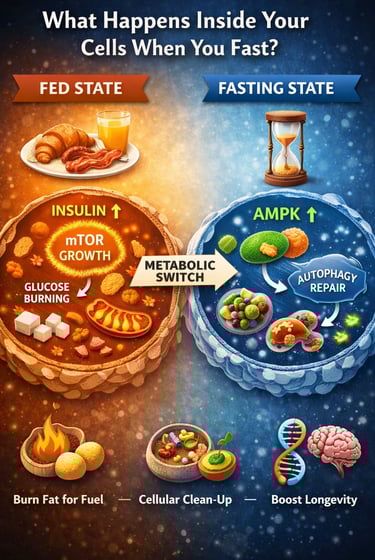
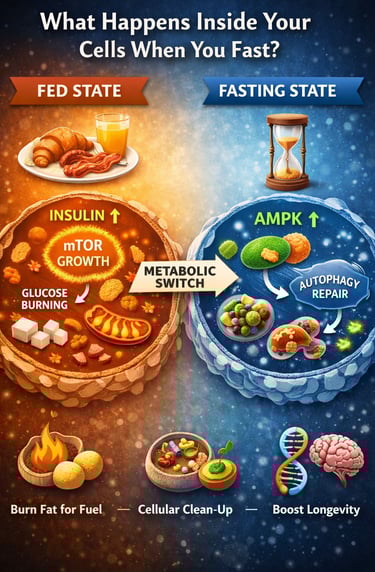
When you go without food for a period of time, your body switches from “storage mode” to “repair mode.” Instead of constantly processing incoming calories, it starts using stored fat for energy and activates powerful internal systems that improve your health.
One of these systems is AMPK, often called your body’s “metabolic master switch.” It helps your body burn fat, lower blood sugar, and improve how your cells respond to insulin. At the same time, fasting triggers autophagy—a natural “cellular cleanup” process where your body removes damaged proteins and worn-out cell parts, making way for healthier, more efficient cells.
Together, these changes improve energy levels, support weight loss, reduce inflammation, and may even slow aspects of aging.
In simple terms, intermittent fasting gives your body the time it needs not just to burn fuel—but to repair,
Clinical pearls
1. The "Insulin-Independent" Glucose Door
Scientific Perspective: AMPK activation promotes the translocation of GLUT4 (glucose transporters) to the cell membrane via pathways that bypass the insulin receptor. This is critical for reversing the pathology of Type 2 Diabetes.
Fasting allows your body to clear sugar from your blood using a "back door." Even if your body has become "deaf" to insulin (insulin resistance), fasting creates a secondary way to fuel your muscles and lower your blood sugar naturally.
2. Mitophagy: The Mitochondrial "Oil Change"
Scientific Perspective: Fasting-induced mitophagy selectively degrades dysfunctional mitochondria that leak reactive oxygen species (ROS). This reduces systemic oxidative stress and improves the efficiency of adenosine triphosphate ($ATP$) production.
Think of your cells like an old car. Over time, the "engines" (mitochondria) get soot-clogged and smoky. Fasting acts like a cellular oil change, breaking down the smoky engines and replacing them with clean, high-performance ones that give you steadier energy.
3. The "Switch" vs. The "Scale"
Scientific Perspective: The primary benefit of Intermittent Fasting (IF) is the improvement of metabolic flexibility—the transition from glucose oxidation to fatty acid beta-oxidation—rather than simple caloric deficit.
Weight loss is a side effect, not the only goal. The real "win" is teaching your body how to switch between burning sugar and burning fat. Once you are "fat-adapted," you stop having energy crashes and "hanger" because your body can easily tap into its own fuel stores.
4. Autophagy is a "Pulse," Not a "State"
Scientific Perspective: Autophagy is a highly regulated, transient process. Chronic, deep starvation can lead to excessive protein degradation, whereas intermittent pulses of nutrient scarcity optimize cellular proteostasis without compromising lean tissue.
You don't need to fast for days to see results. Short, consistent "pulses" of fasting (like 16 hours) act like a daily cleaning crew. It’s better to have a reliable cleaning crew come in every day than a massive renovation once a year that leaves you exhausted.
5. The "Growth vs. Repair" Signaling Conflict
Scientific Perspective: mTOR (growth) and AMPK (repair) are mutually inhibitory. You cannot effectively optimize cellular cleanup while constantly stimulating the PI3K/Akt/mTOR pathway through frequent snacking or high-protein boluses.
Your body has two modes: "Build" and "Clean." Every time you eat a snack, you flip the switch to "Build." If you eat all day, your body never gets the signal to "Clean." Fasting is simply giving your body the uninterrupted time it needs to take out the trash.
6. Electrolytes: The "Electrical" Requirement
Scientific Perspective: As insulin levels drop during a fast, the kidneys undergo natriuresis (excretion of sodium). This can lead to a secondary loss of intracellular potassium and magnesium, potentially causing the "keto flu" or cardiac palpitations.
Most people feel "sick" during a fast, not because they are hungry, but because they are dehydrated. When you stop eating, your body flushes out salt and water. Adding a pinch of high-quality salt or an electrolyte supplement to your water can instantly stop headaches and fatigue.
Fasting as a Metabolic Signal, Not Just Calorie Restriction
What if skipping your first meal of the day did more than reduce calories—what if it activated a deeply conserved cellular program designed to repair, recycle, and rejuvenate your body from within? Intermittent fasting is increasingly understood not as a dietary trend, but as a metabolic signal—one that shifts the body away from constant nutrient processing and toward cellular maintenance and resilience (Lange et al., 2024).
In the fed state, human physiology is dominated by insulin signalling, glucose oxidation, and anabolic pathways such as mTOR, which promote growth and energy storage. But when food intake pauses, a fundamental transition occurs. Falling insulin levels and declining cellular energy availability increase the AMP:ATP ratio, activating AMP-activated protein kinase (AMPK)—a master regulator of energy balance that reprograms metabolism toward fat oxidation, mitochondrial biogenesis, and glucose uptake independent of insulin (Li et al., 2023). Simultaneously, suppression of mTOR removes the inhibitory brake on autophagy, a lysosome-mediated recycling process that clears damaged proteins and dysfunctional mitochondria—mechanisms central to cellular longevity and metabolic health (Vergara Nieto et al., 2025).
This coordinated shift—often described as a “metabolic switch”—is not merely theoretical. Emerging clinical and translational evidence suggests that intermittent fasting can improve insulin sensitivity, reduce visceral adiposity, and modulate inflammatory pathways implicated in cardiometabolic disease (Semnani-Azad et al., 2025; Barve et al., 2025). Beyond metabolism, these pathways intersect with neurobiology, influencing oxidative stress, mitochondrial quality control, and even neuroimmune signalling relevant to aging and neurodegeneration (Zhang et al., 2024).
In a world of constant feeding, intermittent fasting reintroduces a powerful biological rhythm—one that may hold the key to restoring metabolic flexibility, enhancing cellular repair, and redefining how we approach chronic disease prevention and longevity.
"Fasting is not starvation. It is a structured, evidence-based metabolic intervention — one your cells have been designed to respond to for millions of years."
AMPK: The Master Metabolic Switch
AMP-activated protein kinase (AMPK) functions as the body’s primary energy regulator, continuously monitoring the intracellular AMP: ATP ratio. When energy availability declines—during fasting, exercise, or caloric restriction—AMPK is activated, initiating a global shift in metabolism (Li et al., 2023).
Key Effects of AMPK Activation
Increases glucose uptake
Enhances GLUT4 translocation in skeletal muscle independent of insulin—critical for improving insulin resistancePromotes fat oxidation
Inhibits acetyl-CoA carboxylase (ACC), reducing malonyl-CoA and facilitating mitochondrial fatty acid transportSuppresses lipogenesis
Downregulates SREBP-1c and fatty acid synthase, reducing hepatic fat accumulationInhibits mTOR signalling
Shifts the cell from growth (anabolic) to repair (catabolic), enabling autophagy activation
Importantly, fasting amplifies AMPK activity by lowering insulin levels. Since insulin suppresses AMPK via the PI3K/Akt pathway, reduced insulin removes this inhibition, allowing full activation of metabolic repair pathways.
Even short fasting durations of 12–16 hours can produce measurable AMPK activation and metabolic benefits.
Autophagy: The Cellular Repair and Recycling System
Autophagy—literally “self-eating”—is a highly regulated process through which cells degrade and recycle damaged components. It is a cornerstone of cellular quality control and longevity, recognized by the 2016 Nobel Prize in Physiology or Medicine.
Types of Autophagy Relevant to Metabolic Health
Macroautophagy
Bulk degradation of protein aggregates and organelles via autophagosomesMitophagy
Selective removal of dysfunctional mitochondria, reducing oxidative stress and improving energy efficiency
AMPK activates autophagy through:
Direct phosphorylation of ULK1 (initiation pathway)
Inhibition of mTOR (removal of suppression)
This dual mechanism enables efficient cellular cleanup, recycling damaged proteins and organelles while providing substrates for energy production during fasting (Vergara Nieto et al., 2025).
Autophagy is not a state of deprivation—it is a highly controlled process of cellular renewal and optimisation.
Clinical Relevance
Impaired autophagy is implicated in:
Type 2 diabetes
Neurodegenerative diseases (e.g., Alzheimer’s, Parkinson’s)
Atherosclerosis
Aging-related cellular dysfunction
Enhancing autophagy through intermittent fasting may therefore represent a non-pharmacological strategy for disease prevention and longevity.
When Does Autophagy Begin? (Evidence-Based Insight)
Animal studies: measurable autophagy increases at 24–48 hours of fasting
Human data: still limited due to lack of validated biomarkers
Current evidence suggests that early autophagy signalling may begin earlier, but precise timelines in humans remain an active research area (Vergara Nieto et al., 2025).
The Metabolic Timeline of Fasting
Phase 1: The Postprandial State (0–4 Hours)
Metabolic Shift: The body is in the "fed state," primarily utilizing exogenous glucose (from your last meal) for energy through glucose oxidation.
Hormonal Profile: Insulin levels rise to facilitate glucose uptake into cells and inhibit the breakdown of fat. Growth and storage pathways are dominant.
Phase 2: The Early Fasting State (4–12 Hours)
Metabolic Shift: As blood glucose normalizes, the body transitions to glycogenolysis. The liver begins breaking down stored glycogen to maintain stable blood sugar levels.
Hormonal Profile: Insulin begins to drop while Glucagon rises, signaling the body to stop storing energy and start mobilizing it.
Phase 3: The Metabolic Switch (12–18 Hours)
Metabolic Shift: Liver glycogen becomes depleted, triggering the activation of AMPK (the cellular energy sensor). The body shifts toward $\beta$-oxidation, utilizing stored body fat as the primary fuel source.
Hormonal Profile: Catecholamines (Adrenaline and Noradrenaline) increase to further drive lipolysis (fat breakdown). Insulin stays low, allowing the "metabolic switch" to flip.
Phase 4: The Repair & Ketogenic State (18–24 Hours)
Metabolic Shift: The liver begins producing ketone bodies (acetoacetate and $\beta$-hydroxybutyrate). Autophagy—the cellular self-cleaning process—is upregulated as the body identifies and recycles damaged proteins and organelles.
Hormonal Profile: Growth Hormone (GH) pulses significantly increase to protect lean muscle mass. Insulin remains at a baseline low.
Phase 5: Deep Ketosis & Systematic Renewal (24+ Hours)
Metabolic Shift: The body enters deep ketosis, where ketones become a major fuel source for the brain. Autophagy reaches higher levels of activity, and gluconeogenesis (creating glucose from non-carbohydrate sources) stabilizes.
Hormonal Profile: Glucagon and GH dominance continues, maintaining a state of high fat-burning and cellular repair.Unlike simple calorie restriction, intermittent fasting induces a hormonal environment that actively promotes fat oxidation and metabolic repair (Lange et al., 2024).
Metabolic Flexibility: The Core Benefit of Fasting
A key therapeutic goal in modern metabolic medicine is to restore metabolic flexibility—the ability to switch efficiently between glucose and fat as fuel sources.
In insulin resistance:
The body becomes metabolically inflexible
Fat oxidation is impaired
Glucose dependence persists even during fasting
Intermittent fasting retrains this system by repeatedly activating AMPK and promoting mitochondrial adaptation.
AMPK and Mitochondrial Function
AMPK stimulates PGC-1α, leading to:
Increased mitochondrial biogenesis
Improved oxidative phosphorylation efficiency
Reduced reactive oxygen species (ROS) production
Enhanced fatty acid transport into mitochondria
This has direct implications for:
Type 2 diabetes
Non-alcoholic fatty liver disease (NAFLD)
Sarcopenia (Li et al., 2023)
Clinical Applications of Intermittent Fasting
1. Type 2 Diabetes
Improves insulin sensitivity
Enhances glucose uptake via insulin-independent pathways
Reduces hepatic glucose production
2. Obesity and Fat Loss
Promotes lipolysis and fat oxidation
Regulates appetite hormones (ghrelin, leptin)
Reduces visceral adiposity
Network meta-analysis data confirm clinically meaningful reductions in body weight and waist circumference (Semnani-Azad et al., 2025).
3. Cardiovascular Health
Reduces LDL cholesterol, triglycerides, and blood pressure
Improves endothelial function and inflammation markers (Barve et al., 2025)
4. Aging and Brain Health
Enhances autophagy-mediated protein clearance
Reduces neuroinflammation
Supports mitochondrial quality control (Zhang et al., 2024)
Which Intermittent Fasting Protocol Is Best?
12:12 (Circadian Fasting)
Effectiveness: Mild. Primarily prevents late-night snacking and aligns with natural circadian rhythms.
Best For: Beginners, those looking for weight maintenance, or individuals with high activity levels who need more frequent fueling.
Clinical Value: A low-barrier entry point to improve sleep quality and metabolic health.
16:8 (The "Leangains" Protocol)
Effectiveness: Moderate to Strong. Sufficient to reliably trigger the metabolic switch and initiate early-stage autophagy.
Best For: Most adults, patients with Type 2 Diabetes (T2DM), and those looking for long-term weight loss.
Clinical Value: Widely considered the "Gold Standard" because it balances cellular repair with social sustainability.
5:2 (Periodic Restriction)
Effectiveness: Moderate. Involves five days of normal eating and two non-consecutive days of very low-calorie intake (approx. 500–600 calories).
Best For: Individuals with highly variable schedules who prefer not to restrict themselves every single day.
Clinical Value: Effective for calorie control, though it may not trigger the same consistent daily AMPK activation as time-restricted feeding
.
Alternate Day Fasting (ADF)
Effectiveness: Strong. Alternating between "feast" days and "fast" days (or <500 calories).
Best For: Short-term therapeutic interventions and breaking through weight-loss plateaus.
Clinical Value: Highly effective for rapid metabolic shifts, though long-term adherence can be challenging for many patients.
24-Hour Fasting (OMAD - One Meal A Day)
Effectiveness: Very Strong. Deeply engages autophagy and significantly increases Growth Hormone pulses.
Best For: Advanced fasters or specific clinical cases under medical supervision.
Clinical Value: Excellent for systemic "recycling" and insulin sensitivity, but requires careful monitoring of electrolytes and nutrient density during the eating window.
Why 16:8 is the Recommended "Sweet Spot"
For the majority of people, the 16:8 protocol offers the best balance of three critical factors:
Efficacy: It provides a long enough window for insulin to drop and AMPK to activate.
Sustainability: It is easily integrated into a standard workday and allows for family dinners.
Clinical Outcomes: Most randomized controlled trials (RCTs) show significant improvements in HbA1c, blood pressure, and visceral fat reduction with this specific window.
A Note on Early Time-Restricted Feeding (eTRF)
While the 16:8 protocol is the most popular, Early Time-Restricted Feeding (eTRF)—where the eating window starts and ends earlier in the day (e.g., 8:00 AM to 4:00 PM)—offers distinct physiological advantages by aligning with our circadian biology.(Črešnovar et al., 2025).
Superior Insulin Sensitivity: Human metabolism is naturally optimized for nutrient processing in the morning. Research shows that eTRF improves insulin sensitivity and β-cell function more effectively than late-window fasting
Lower Oxidative Stress: Eating earlier reduces systemic inflammation and oxidative stress markers, as the body isn't processing a heavy thermic load during sleep.
Autophagy Synchronization: By finishing your last meal by mid-afternoon, you enter the deep "repair mode" (AMPK activation) exactly when your body’s natural melatonin-driven repair signals begin at night.
The Takeaway: If your lifestyle allows, shifting your 8-hour window "left" to finish eating by 4:00 PM or 5:00 PM can significantly amplify the metabolic benefits of the fast.
Safety, Risks, and Patient Selection
Avoid Intermittent Fasting In:
Insulin-dependent diabetes (risk of hypoglycaemia)
Active eating disorders
Pregnancy and breastfeeding
Frail elderly or those with sarcopenia
Underweight individuals (BMI <18.5)
Use With Caution In:
Patients on glucose-lowering medications
Individuals on metformin (GI intolerance possible)
Athletes in high-performance phases
Most adverse effects are mild and transient (fatigue, headache), particularly during the adaptation phase (Barve et al., 2025).
Practical Implementation: Evidence-Based Strategy
Start with 12:12 fasting, progress to 16:8
Prioritize high-protein meals to preserve lean mass
Combine fasting with Zone 2 cardio for AMPK synergy
Perform resistance training in the fed state
Monitor:
Fasting glucose
Insulin
HOMA-IR
Lipid profile
The "Metabolic Reset" Implementation Guide
Phase 1: Establish a 12:12 Baseline
Action: Close the kitchen at 8:00 PM and eat breakfast at 8:00 AM.
Benefit: This simple habit eliminates late-night snacking and gently shifts your metabolism into a repair state without disrupting your professional or social life.
Phase 2: Adopt a Protein-First Eating Window
Action: Begin every meal with high-quality protein (eggs, legumes, fish, or poultry).
Benefit: Protein protects lean muscle mass during fasting periods and significantly blunts post-meal glucose spikes, reducing the subsequent insulin surge.
Phase 3: Implement Fasted Morning Movement
Action: Perform a 20–30 minute fasted walk or Zone 2 session before breaking your fast.
Benefit: This creates a "double activation" of AMPK by combining the energy deficit of fasting with the increased energy demand of exercise.
Phase 4: Proactive Electrolyte Management
Action: Ensure adequate intake of sodium, potassium, and magnesium during fasting hours.
Benefit: Most "fasting fatigue" or headaches are electrolyte-driven rather than a lack of calories; maintaining mineral balance keeps the cellular "electrical" system functioning optimally.
Phase 5: Schedule Resistance Training in the Fed State
Action: Perform strength training sessions within your eating window.
Benefit: This harnesses mTOR activation (the anabolic growth signal) when nutrients are available, allowing you to build muscle while keeping the fasting period dedicated exclusively to cellular repair.
Phase 6: Track Objective Metabolic Markers
Action: Measure fasting glucose, fasting insulin, HOMA-IR, and a full lipid panel at baseline and at the 3-month mark.
Benefit: This provides objective evidence of metabolic improvement and allows for data-driven adjustments to your specific fasting protocol.
FAQs about common patient anxieties regarding Intermittent Fasting (IF) and the AMPK-Autophagy axis.
1. Does drinking coffee or tea "break" the fast and stop autophagy?
Pure black coffee and plain green tea contain polyphenols (like EGCG) that may actually synergize with fasting to stimulate AMPK. As long as there are no calories (no sugar, cream, or collagen), the metabolic "switch" remains flipped to repair mode.
The Takeaway: Stick to "clean" fasting—water, black coffee, and tea—to keep the cellular cleaning crew working.
2. Will I lose muscle mass if I fast for 16 hours?
Short-term IF is muscle-sparing due to a compensatory rise in Growth Hormone (GH), which protects lean tissue. Muscle loss (sarcopenia) typically occurs only when total daily protein intake is too low or if resistance training is absent.
The Takeaway: You won't "eat" your muscles during a 16-hour window. Just ensure you hit your protein targets (approx. 1.2–1.5g per kg of body weight) during your eating hours.
3. How long do I actually need to fast to trigger autophagy?
Autophagy is a sliding scale, not an "on/off" switch. While deep macro-autophagy peaks around 24–48 hours in animal models, human data suggests that "micro-pulses" of cellular cleanup begin as liver glycogen depletes, usually between 14 and 16 hours.
The Takeaway: You don't need a 3-day fast to benefit. A consistent 16:8 schedule provides daily "maintenance" cleaning for your cells.
4. Can I take my supplements or medications while fasting?
Fat-soluble vitamins (A, D, E, K) and certain minerals like magnesium are best absorbed with food. However, most medications should be taken according to their clinical prescription.
The Takeaway: Take water-soluble vitamins and electrolytes during the fast. Save fat-soluble supplements and medications that cause GI upset for your eating window. Always consult your physician before changing medication timing.
5. Why do I get headaches when I start Intermittent Fasting?
This is often "Natriuresis of Fasting." As insulin drops, your kidneys release stored water and sodium. This shift in fluid balance and electrolytes is the primary cause of headaches and "brain fog," not a lack of sugar.
The Takeaway: Add a pinch of sea salt to your water or use a sugar-free electrolyte powder during your fasting window to stay hydrated and headache-free.
6. Does fasting affect women differently than men?
Some women may be more sensitive to the signaling of kisspeptin neurons, which monitor energy availability for reproductive hormones. Extreme fasting can occasionally disrupt the LH/FSH balance in some individuals.
The Takeaway: Most women thrive on a 14:10 or 16:8 protocol. If you experience menstrual irregularities or extreme fatigue, "crescendo fasting" (fasting only 2–3 non-consecutive days a week) may be a better fit.
7. Is "Zone 2" exercise better than HIIT during a fast?
Both activate AMPK, but Zone 2 (steady-state aerobic) exercise relies heavily on fat oxidation (beta oxidation). Doing Zone 2 while fasted forces the mitochondria to become more efficient at burning fat without the massive cortisol spike associated with fasted HIIT.
The Takeaway: A 30-minute brisk walk or light cycle before your first meal is the "gold standard" for boosting metabolic flexibility.
8. Will fasting help if I already have Type 2 Diabetes?
Yes, by lowering systemic insulin and activating AMPK, fasting improves insulin sensitivity. However, for those on insulin or sulfonylureas, fasting significantly increases the risk of hypoglycemia (dangerously low blood sugar).
The Takeaway: IF is a powerful tool for T2DM, but it must be done under medical supervision to safely down-titrate medications as your blood sugar improves.
9 .What Is a “Metabolic Reset”?
Not detox
Not starvation
A shift from:
Insulin-dominant → AMPK-dominant physiology
Glucose dependence → Fat oxidation
Growth signaling (mTOR) → Repair signaling (autophagy)
To Summarize
AMPK activation is insulin-independent: even in advanced insulin resistance, fasting can restore glucose uptake through alternate pathways.
Mitophagy clears dysfunctional mitochondria, reducing oxidative stress in adipose tissue — a direct mechanism for reducing visceral fat inflammation.
IF's cardiometabolic benefits in the Barve et al. (2025) trial appeared within 6 months, suggesting clinically relevant timelines for motivated patients.
Autophagy-mediated protein quality control is the bridge between metabolic health and longevity — the same pathways protect against both metabolic disease and neurodegeneration.
Intermittent fasting doesn’t just burn fat—it activates cellular repair pathways that improve metabolic health.
When you fast, your body switches from glucose burning to fat oxidation, driven by AMPK activation.
AMPK is your body’s master energy sensor, turning on fat burning and turning off fat storage.
Autophagy during fasting acts like a cellular recycling system, clearing damaged proteins and mitochondria.
Intermittent fasting improves insulin sensitivity and mitochondrial efficiency, key drivers of longevity.
Fasting lowers insulin and activates pathways that reduce inflammation and visceral fat.
The 16:8 fasting method is often the most sustainable and clinically effective protocol.
Combining fasting with Zone 2 cardio amplifies AMPK activation and fat metabolism.
Intermittent fasting may help reverse metabolic inflexibility, a root cause of obesity and type 2 diabetes.
Author’s Note (Clinician’s Perspective)
As a clinician, one of the most striking shifts in modern metabolic medicine is the transition from viewing nutrition purely through the lens of calories to understanding it as a powerful regulator of cellular signalling pathways. Intermittent fasting represents this paradigm shift. It is not simply about eating less—it is about strategically engaging endogenous mechanisms such as AMPK activation and autophagy that are fundamental to human physiology.
In clinical practice, I routinely encounter patients with insulin resistance, type 2 diabetes, non-alcoholic fatty liver disease, and early cardiovascular dysfunction—conditions that share a common root: metabolic inflexibility and chronic nutrient excess. Traditional approaches often rely heavily on pharmacotherapy, which, while effective, may not fully address the underlying cellular dysfunction. Intermittent fasting offers a complementary, mechanism-driven intervention that targets these root causes by restoring metabolic switching, improving mitochondrial efficiency, and reducing inflammatory burden.
However, it is critical to emphasise that intermittent fasting is not a one-size-fits-all solution. Patient selection, medication adjustment, nutritional adequacy, and lifestyle context must be carefully considered. In individuals with advanced diabetes on insulin or sulphonylureas, for example, fasting without supervision may increase the risk of hypoglycaemia. Similarly, in older adults at risk of sarcopenia, fasting protocols must be balanced with adequate protein intake and resistance training.
From a therapeutic standpoint, I view intermittent fasting as part of a broader metabolic framework—one that integrates circadian biology, exercise (particularly Zone 2 and resistance training), and nutrient quality. When applied judiciously, it can serve as a low-cost, scalable intervention with meaningful impact on cardiometabolic health.
Ultimately, the goal is not prolonged deprivation, but metabolic resilience—the ability to efficiently transition between fuel states while maintaining cellular integrity. Intermittent fasting, when implemented thoughtfully and individualised to the patient, can be a powerful tool in achieving that objective.
Medical Disclaimer
This article is for informational and educational purposes only and does not constitute medical advice, diagnosis, or treatment. While based on current clinical research, metabolic interventions like intermittent fasting can significantly impact blood glucose, electrolyte balance, and medication efficacy.
Individuals should consult their primary healthcare provider before beginning any new fasting protocol, particularly those who:
Are you pregnant or breastfeeding?
Have a history of disordered eating.
Are managed for Type 1 or Type 2 Diabetes (risk of hypoglycemia).
Are you taking medications for hypertension or cardiovascular disease.
Related Articles
AMPK vs mTOR: The Molecular Switch That Controls Muscle, Fat Loss, and Aging | DR T S DIDWAL
Intermittent Fasting: Metabolic Health Benefits and the Evidence on Longevity | DR T S DIDWAL
Activate Your Brown Fat: A New Pathway to Longevity and Metabolic Health | DR T S DIDWAL
Leptin vs. Adiponectin: How Your Fat Hormones Control Weight and Metabolic Health | DR T S DIDWAL
References
Vergara Nieto, Á. A., Diaz, A. H., Hernández, M., et al. (2025). A narrative review about metabolic pathways, molecular mechanisms and clinical implications of intermittent fasting as an autophagy promotor. Current Nutrition Reports, 14, 78. https://doi.org/10.1007/s13668-025-00666-9
Li, X., Zhang, Y., Wang, J., Liu, Y., & Chen, H. (2023). AMPK activation and autophagy regulation in metabolic diseases: Mechanisms and therapeutic implications. Metabolism, 147, 155643. https://doi.org/10.1016/j.metabol.2023.155643
Semnani-Azad, Z., Khan, T. A., Chiavaroli, L., et al. (2025). Intermittent fasting strategies and their effects on body weight and other cardiometabolic risk factors: Systematic review and network meta-analysis of randomised clinical trials. BMJ (Clinical Research Ed.), 389, e082007. https://doi.org/10.1136/bmj-2024-082007
Zhang, A., Wang, J., Zhao, Y., He, Y., & Sun, N. (2024). Intermittent fasting, fatty acid metabolism reprogramming, and neuroimmuno microenvironment: Mechanisms and application prospects. Frontiers in Nutrition, 11, 1485632. https://doi.org/10.3389/fnut.2024.1485632
Barve, R. A., Veronese, N., Bertozzi, B., et al. (2025). Cardiometabolic and molecular adaptations to 6-month intermittent fasting in middle-aged men and women with overweight: Secondary outcomes of a randomized controlled trial. Nature Communications, 16, 11370. https://doi.org/10.1038/s41467-025-66366-8
Lange, M. G., Coffey, A. A., Coleman, P. C., Barber, T. M., Van Rens, T., Oyebode, O., et al. (2024). Metabolic changes with intermittent fasting. Journal of Human Nutrition and Dietetics, 37, 256–269. https://doi.org/10.1111/jhn.13253
Črešnovar, T., Habe, B., Mohorko, N., Kenig, S., Jenko Pražnikar, Z., & Petelin, A. (2025). Early time-restricted eating with energy restriction has a better effect on body fat mass, diastolic blood pressure, metabolic age and fasting glucose compared to late time-restricted eating with energy restriction and/or energy restriction alone: A 3-month randomized clinical trial. Clinical Nutrition, 49, 57–68. https://doi.org/10.1016/j.clnu.2025.04.001