Which Fats Are Best for Heart Health? What Modern Cardiometabolic Science Reveals
Discover which fats are best for heart health. Explore the latest science on saturated, unsaturated, and personalized fat recommendations.
NUTRITIONHEART
Dr. T.S. Didwal, M.D.(Internal Medicine)
5/1/202616 min read
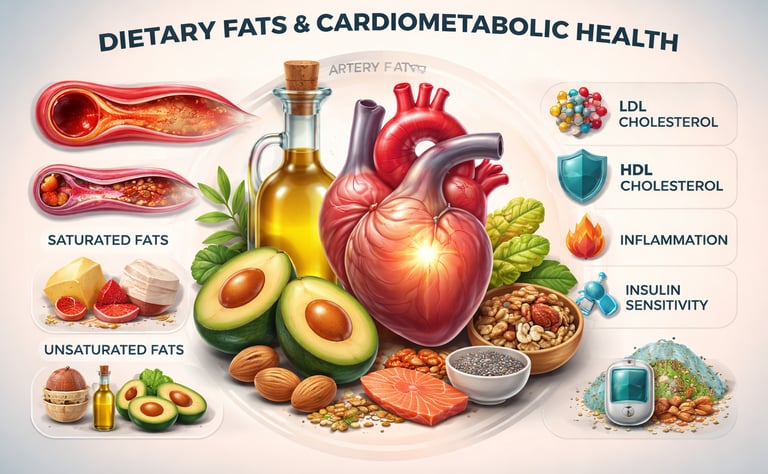
1.Which fats are best for heart health?
The best fats for heart health are unsaturated fats, especially monounsaturated fats (olive oil, avocados, nuts) and omega-3 fatty acids (fatty fish like salmon and sardines). These fats lower LDL cholesterol, reduce inflammation, and improve vascular function. Saturated fats can be consumed in moderation from whole foods, but trans fats and ultra-processed fats should be avoided. The most effective approach is a Mediterranean-style diet rich in whole, minimally processed foods.
Best fats: Monounsaturated fats (olive oil, avocado), omega-3 fats (fatty fish)
Moderate: Natural saturated fats (dairy, unprocessed meat—context matters)
Avoid: Trans fats and ultra-processed fats
Key principle: Replace saturated fats with unsaturated fats—not refined carbohydrates
Most effective pattern: Mediterranean-style diet
2.Saturated vs Unsaturated Fats: What’s the Difference?
Saturated Fats
Tend to increase LDL cholesterol (response varies by individual)
Neutral to mildly pro-inflammatory in excess, especially from processed sources
Common sources: butter, red meat, processed meats
Cardiovascular impact is context-dependent (food source and overall diet matter)
Unsaturated Fats
Help lower LDL cholesterol and improve lipid profile
Reduce inflammation and support endothelial function
Common sources: olive oil, nuts, seeds, fatty fish
Protective against cardiovascular disease when replacing saturated fats
Key Takeaway
Replacing saturated fats with unsaturated fats—not refined carbohydrates—provides the greatest
3.Food Matrix Concept
Whole foods modify how fats are absorbed
Cheese ≠ processed meat despite similar fat content
Nutrients + structure influence metabolic response
4.How to Choose the Right Fat for You
If LDL cholesterol is high: Replace saturated fats with MUFA/PUFA
If triglycerides are high: Reduce refined carbs, increase omega-3 intake
If insulin resistance is present: Focus on whole-food fats + reduce ultra-processed foods
If APOE4 positive: Limit saturated fat more strictly
The Fat Paradox — From Villain to Nuanced Variable
For decades, dietary fat has occupied a paradoxical position in medicine—first demonized as the primary driver of heart disease, then partially rehabilitated, and now reconsidered through the lens of metabolic individuality. The once-simple public health directive to “eat less fat” has given way to a far more sophisticated question: which fats, in which contexts, and for whom? Emerging evidence suggests that the cardiometabolic effects of dietary fat depend less on total quantity and far more on molecular structure, food source, metabolic phenotype, and replacement nutrient (Forouhi et al., 2018; Wu et al., 2019).
Large prospective cohort analyses and mechanistic studies now demonstrate that replacing saturated fatty acids (SFA) with polyunsaturated fatty acids (PUFA) lowers LDL cholesterol and reduces cardiovascular risk, whereas replacing SFA with refined carbohydrates confers no such benefit (Forouhi et al., 2018). Meanwhile, long-running population studies such as the Framingham Offspring cohort continue to reveal meaningful heterogeneity in individual lipid and metabolic responses to common fats and oils (Zhou et al., 2025). This variability has catalyzed a paradigm shift toward precision nutrition—an approach that integrates lipid profiling, insulin sensitivity, inflammatory markers, and genetic predisposition into dietary guidance (Lovegrove, 2025).
Adding further complexity, contemporary clinical guidance emphasizes that food processing, oxidative stability, and overall dietary pattern may influence cardiometabolic outcomes independently of fat class alone (Miller et al., 2026). In other words, the modern science of dietary fats no longer asks whether fat is “good” or “bad.” Instead, it asks a more biologically meaningful question: how do different fats interact with individual physiology to shape long-term cardiovascular and metabolic health?
Part 1: Why "Eat Less Fat" Was Never the Whole Story
The foundational error in decades of dietary guidance was treating fat as a monolith. In reality, dietary fats are a molecularly diverse group — saturated fatty acids (SFAs), monounsaturated fatty acids (MUFAs), polyunsaturated fatty acids (PUFAs), and artificial trans fats — each with distinct effects on lipid profiles, inflammation, endothelial function, and insulin sensitivity.
The seminal review by Forouhi et al. (2018), published in The BMJ, clarified a critical insight: replacing saturated fat with refined carbohydrates confers no cardiovascular benefit whatsoever. This finding explains why the low-fat dietary era, which drove consumers toward low-fat cookies, white bread, and sugary yogurts, failed to reduce heart disease rates. The replacement nutrient matters as much as what's being replaced.
The mechanistic case was built out powerfully by Wu, Micha, and Mozaffarian (2019) in Nature Reviews Cardiology. Their work demonstrated that:
Saturated fats raise LDL cholesterol more than any other dietary fat, though the magnitude varies by individual.
Unsaturated fats (both MUFA and PUFA) promote favorable shifts in lipoprotein particles, reduce systemic inflammation, and improve endothelial function.
Trans fats (partially hydrogenated oils) increase LDL while simultaneously lowering HDL — a dual harm with no safe threshold.
Omega-3 PUFAs activate anti-inflammatory pathways and modulate vascular reactivity at a molecular level.
Understanding these mechanisms empowers a fundamentally different conversation: one about biology, not just calorie counts.
Part 2: The Food Matrix — It's Not Just the Fat, It's the Whole Food
Perhaps the most paradigm-shifting concept in modern fat science is the "food matrix effect." This refers to the complex physical and chemical structure of a whole food — and how that structure determines how its fats behave in the body.
Consider cheese. It is high in saturated fat, yet multiple studies show it has a neutral or even protective effect on LDL cholesterol and cardiovascular disease risk. Why? Because cheese also contains calcium, phosphorus, bioactive peptides, and a fermentation-derived microbial profile that collectively modulate how its fats are absorbed and metabolized. The fat in natural cheese is not the same biological event as the fat in a processed sausage, even if the saturated fat content on the label looks similar.
This concept was prominently highlighted by Mizuno (2025) in JMA Journal, who argued that clinicians and patients alike need to move beyond label-reading and toward whole-food thinking. Saturated fat from grass-fed dairy, coconut, or unprocessed red meat operates differently from saturated fat in ultra-processed fast food — due not just to fatty acid chain length and saturation, but to the food system in which those fats are embedded.
A wedge of real cheese is not the same as a processed cheese slice. The whole food carries protective compounds that isolated fat — or fat in a manufactured product — simply does not.
Part 3: The Framingham Evidence — Individual Variation Is the New Normal
The Framingham Offspring cohort is one of the longest-running cardiovascular studies in history, and its 2025 analysis (Zhou et al., 2025) delivered some of the most clinically relevant fat-specific findings to date.
The study identified monounsaturated fats — found predominantly in olive oil, avocados, and nuts — as showing the strongest associations with improved cardiovascular outcomes and favorable metabolic markers. Polyunsaturated fats also showed protective effects, particularly when derived from whole-food plant sources rather than refined oils.
But perhaps most importantly, the Framingham data revealed substantial individual variation in lipid and metabolic responses to the same dietary fat. Two people eating identical amounts of olive oil or butter did not show identical lipid responses. This is not noise in the data — it is a signal that personalization is clinically meaningful.
This supports the growing discipline of precision nutrition, defined by Lovegrove (2025) in the Nutrition Bulletin as a transition from population-level "one for all" dietary guidance to individualized "all for one" approaches that integrate:
Lipid profiling (LDL particle size, HDL function, triglyceride levels)
Insulin sensitivity and glucose metabolism
Inflammatory biomarkers (hsCRP, IL-6)
Genetic predispositions (particularly the APOE gene variant)
The APOE4 allele, carried by approximately 25% of the population, makes individuals significantly more sensitive to dietary saturated fat and cholesterol. In APOE4 carriers, even modest increases in saturated fat intake can produce pronounced LDL elevation — whereas non-carriers may tolerate the same intake with minimal lipid disruption. Applying a universal "10% of calories from saturated fat" ceiling to both groups is, scientifically speaking, a crude approximation.
Clinical implication: Your optimal dietary fat intake is not your neighbor's optimal intake. Personalized assessment — including lipid particle testing, fasting insulin, and if possible, genetic profiling — should now be considered a standard component of cardiometabolic counseling.
Part 4: The 2026 Evidence — What the AHA and JACC Are Saying Right Now
Two landmark publications from 2026 anchor the most current clinical guidance available.
American Heart Association Scientific Statement (Lichtenstein et al., 2026)
The updated AHA statement, published in Circulation, reinforces several core positions while introducing important nuance:
Minimize trans fats — the scientific consensus here is absolute and unambiguous.
Reduce saturated fat — but contextualize within food source, not just quantity.
Emphasize unsaturated fats from whole foods — olive oil, fatty fish, nuts, seeds, and avocados.
Ultra-processed food consumption — now identified as an independent cardiometabolic risk factor, regardless of fat type.
The AHA's updated framing acknowledges that dietary patterns matter more than any single nutrient. A diet built on ultra-processed foods with "heart-healthy" fat claims on the label is not equivalent to a Mediterranean or DASH dietary pattern, even if the macronutrient ratios look similar on paper.
JACC: Advances Clinician's Guide (Miller et al., 2026)
The multi-author clinical guide published in JACC: Advances directly addresses the most hotly debated fat-related controversies in 2026:
On seed oils: The guide encourages nuanced thinking. Cold-pressed, minimally refined seed oils — particularly those used in place of saturated fats — continue to show cardiovascular benefit in large randomized trials and meta-analyses. However, the guide notes that repeated high-heat processing and industrial oxidation of PUFA-rich oils can generate lipid oxidation products that warrant consideration. The evidence-based position: whole seeds and minimally refined oils, yes; repeatedly reheated, industrially refined oils — limit.
On fructose: High fructose from added sugars and sweetened beverages correlates with metabolic dysfunction, elevated triglycerides, and non-alcoholic fatty liver disease. Fructose from whole fruits, embedded in fiber, micronutrients, and phytochemicals, does not carry the same risk. The source matters.
On ultra-processed foods: Independent of their fat content, ultra-processed foods now carry their own cardiometabolic risk signal — likely mediated through additives, emulsifiers, disrupted food matrices, and displacement of whole foods. This finding should reshape how clinicians counsel patients: food quality and processing level must be assessed alongside macronutrient composition.
Part 5: Omega-3 Fatty Acids — The Most Underutilized Cardiovascular Tool
Among all dietary fat categories, omega-3 polyunsaturated fatty acids — particularly the long-chain marine forms EPA (eicosapentaenoic acid) and DHA (docosahexaenoic acid) — have accumulated the most consistent evidence for cardiovascular benefit.
Wu et al. (2019) demonstrated that omega-3s activate anti-inflammatory pathways, reduce triglycerides, improve endothelial function, and modulate cardiac rhythm. The Framingham analysis (Zhou et al., 2025) corroborated these associations in real-world dietary patterns.
A critical distinction, however: plant-sourced ALA (alpha-linolenic acid), found in flaxseeds, chia seeds, and walnuts, is biologically essential — but its conversion to EPA and DHA in humans is inefficient, typically less than 5–10%. For individuals seeking cardiovascular benefit from omega-3s, particularly those in secondary prevention or with elevated triglycerides, marine-sourced omega-3s (from fatty fish like salmon, sardines, and mackerel) or high-quality algae-based supplements offer a far more bioavailable alternative.
Practical guidance:
Aim for fatty fish 2–3 times per week.
If fish is not feasible, high-quality algae-based omega-3 supplements (providing EPA + DHA) are evidence-based alternatives.
Plant omega-3 sources (flax, chia, walnuts) remain nutritionally valuable — but should not be relied upon as the sole source of omega-3 benefit for cardiovascular protection.
Part 6: Practical Applications — What to Eat, What to Limit, and How to Think
Fats to Emphasize (Heart-Healthy Choices)
Extra-virgin olive oil
Rich in oleocanthal (an anti-inflammatory compound)
Strongest evidence for cardiovascular protection
Avocados & avocado oil
High in monounsaturated fats (MUFA)
Supports HDL and improves endothelial function
Fatty fish (salmon, sardines, mackerel)
Excellent source of marine omega-3s (EPA, DHA)
Lowers triglycerides and systemic inflammation
Nuts (almonds, walnuts, pistachios)
Provide MUFA, PUFA, and fiber
Improve LDL particle size and overall lipid profile
Seeds (chia, flax, hemp)
Rich in ALA (plant-based omega-3)
Beneficial as part of a diverse dietary pattern
Fermented dairy (yogurt, cheese)
Demonstrates food matrix effect
Neutral to potentially beneficial for cardiovascular risk
Fats to Limit or Avoid
Artificial trans fats (partially hydrogenated oils)
Increase LDL and lower HDL
No safe level of intake
Repeatedly reheated cooking oils
Produce oxidation products
Promote inflammation and vascular damage
Saturated fats in ultra-processed meats
Lack protective food matrix
Associated with higher cardiovascular risk
Refined seed oils in processed foods
Often oxidized during industrial processing
Stripped of natural antioxidants
Fats to Approach With Personalized Guidance
Coconut oil
High in medium-chain triglycerides (MCTs)
Metabolic effects differ from long-chain saturated fats
Generally acceptable in moderation, but may raise LDL in some individuals
Grass-fed butter and ghee
Improved fatty acid profile compared to conventional butter
Can be included in small amounts within a whole-food diet
Saturated fat from whole-food animal sources
Effects vary based on food matrix and individual metabolism
Requires context-specific evaluation rather than blanket restriction
Key Takeaway
Prioritize unsaturated fats from whole foods
Avoid industrial and ultra-processed fat sources
Apply personalized nutrition for saturated fat intake based on metabolic profile
Part 7: Your Cardiometabolic Fat Assessment — A Practical Checklist
Before adjusting your fat intake, consider assessing:
Standard lipid panel — LDL-C, HDL-C, triglycerides
Advanced lipid testing — LDL particle number and size (NMR lipoprofile)
Fasting insulin and HOMA-IR — insulin sensitivity assessment
hsCRP — inflammatory burden
APOE genotype — if available, to assess fat sensitivity
Dietary quality score — proportion of whole vs. ultra-processed foods
Omega-3 index — erythrocyte EPA + DHA status (if accessible)
This profile enables genuinely personalized fat recommendations — not generic population averages applied to individuals who may sit at the extremes of metabolic response.
The Bottom Line: What All This Research Means for Your Diet
1. Source Matters More Than Category Not all saturated fats are identical. Saturated fats from coconut oil behave differently from those from grass-fed butter, which differ from those in processed meats. Similarly, polyunsaturated fats from wild salmon are not equivalent to those in seed oils heated to high temperatures.
2. Quality Trumps Quantity While total fat intake remains important for energy balance, the distinction between 25% and 35% of calories from fat is less critical than ensuring those calories come from high-quality fat sources. A diet with 35% calories from high-quality monounsaturated fats may be superior to a diet with 25% from refined polyunsaturated oils.
3. Individual Variability Is Real Your genetics, metabolic profile, and existing health status influence how your body responds to different fat types. The most effective dietary fat approach is personalized based on your unique characteristics, not simply copied from popular diet trends.
4. Processing Matters Substantially Heat-processed vegetable oils, partially hydrogenated oils, and highly refined fats behave very differently from minimally processed alternatives. Cold-pressed oils, whole-food fat sources, and naturally-occurring fats align better with cardiovascular health.
5. Overall Diet Context Is Critical The cardiometabolic health impact of dietary fats depends heavily on what they're replacing and what accompanies them. Monounsaturated fats in a Mediterranean diet rich in vegetables and whole grains provide greater benefit than monounsaturated fats in a diet high in refined carbohydrates.
6.The 4-Factor Fat Framework
A practical model to individualize dietary fat recommendations based on four key determinants:
Type – Distinguish between saturated, monounsaturated (MUFA), and polyunsaturated fats (PUFA), as each has distinct effects on lipids and inflammation.
Source – Whole-food sources (e.g., olive oil, nuts, fish) behave differently from ultra-processed foods, even with similar fat content.
Processing – Degree of refinement and heat exposure influences oxidation, inflammation, and metabolic impact.
Phenotype – Individual factors (lipid profile, insulin resistance, genetics such as APOE) determine personal response to dietary fats.
Clinical takeaway: Optimal fat intake is not universal—it must be personalized across these four dimensions for effective cardiometabolic risk reduction.
7.Clarification on Seed Oils and Evidence Strength
It is important to distinguish between mechanistic concerns and clinical outcome data when discussing refined seed oils. While high-heat processing and oxidation of certain polyunsaturated fatty acid (PUFA)-rich oils may raise theoretical concerns regarding oxidative stress and lipid peroxidation, large randomized controlled trials and meta-analyses consistently demonstrate that replacing saturated fatty acids (SFA) with polyunsaturated fats lowers LDL cholesterol and reduces cardiovascular events.
Landmark analyses published in journals such as BMJ and Nature Reviews Cardiology support the position that PUFA substitution for SFA improves cardiometabolic outcomes at the population level. Thus, current evidence does not justify blanket avoidance of seed oils, particularly when they replace saturated fats in minimally processed dietary patterns.
The more evidence-based concern lies not in PUFA itself, but in the broader dietary context—especially ultra-processed foods, repeated high-temperature oil reuse, and overall dietary quality.
Frequently Asked Questions (FAQs)
1. Are all saturated fats bad for heart health?
No. Current evidence shows that the cardiometabolic impact of saturated fat depends on its food source, the individual's genetic makeup, and what it replaces in the diet. Saturated fat from fermented dairy operates very differently from saturated fat in processed meats (Mizuno, 2025; Forouhi et al., 2018). For APOE4 carriers, saturated fat sensitivity is heightened; for others, it may be considerably less pronounced (Lovegrove, 2025).
2. Is dietary cholesterol still something I need to worry about?
For most people, dietary cholesterol from food has a modest effect on blood cholesterol — the body compensates by adjusting endogenous cholesterol synthesis. However, for individuals with familial hypercholesterolemia or APOE4 status, dietary cholesterol remains a relevant variable. Personalized assessment is more informative than population-wide restriction (Forouhi et al., 2018).
3. Are seed oils harmful?
The evidence does not support blanket avoidance of seed oils. Large randomized controlled trials confirm that replacing saturated fat with PUFA from seed oils reduces LDL and cardiovascular events. The legitimate concern is with industrial processing quality — repeated high-heat use, oxidation, and ultra-processed food vehicles — not PUFA per se (Miller et al., 2026; Forouhi et al., 2018).
4. Is the Mediterranean diet still the gold standard?
Among established dietary patterns, the Mediterranean diet carries the strongest and most consistent evidence base for cardiometabolic health — a position affirmed across all five studies reviewed here (Lichtenstein et al., 2026; Lovegrove, 2025; Zhou et al., 2025). However, even this pattern benefits from individual tailoring based on metabolic phenotype and lipid response.
5. Should I take omega-3 supplements?
Whole food sources — fatty fish 2–3 times weekly — remain the gold standard for omega-3 delivery (Zhou et al., 2025). When whole-food intake is insufficient, high-quality EPA + DHA supplements (marine-derived or algae-based) are an evidence-based alternative, particularly for secondary cardiovascular prevention and triglyceride management (Wu et al., 2019).
6. What if I have high cholesterol or high triglycerides?
These are distinct metabolic phenotypes requiring distinct approaches. High LDL often responds to replacing saturated fats with unsaturated fats; high triglycerides frequently respond to reducing refined carbohydrates and added sugars (not necessarily fat restriction). Advanced lipid profiling — not just a standard cholesterol panel — enables targeted intervention (Miller et al., 2026).
7. Does cooking method affect the healthiness of fats?
Yes, significantly. Heating oils beyond their smoke point generates oxidation products and degraded fatty acids that can promote inflammation. Extra-virgin olive oil is more thermally stable than often assumed, but should be used at low-to-medium heat for optimal preservation of its polyphenols. Avoid repeatedly reheating cooking oils (Miller et al., 2026).
Clinical Pearls
1. The "Matrix" Over the Macronutrient
Scientific Perspective: Cardiometabolic risk is dictated more by the food matrix—the complex physical and chemical structure of a food—than by its total saturated fatty acid (SFA) content. Fermented dairy (e.g., cheese and yogurt) shows a neutral or even protective effect on LDL-C and CVD risk despite high SFA levels, likely due to the presence of calcium, phosphorus, and bioactive peptides.
Don't just count fat grams; look at the whole food. For example, the fat in a piece of natural cheese doesn't affect your heart the same way the fat in a processed sausage does. Some "fatty" foods like yogurt can actually be part of a heart-healthy plan because of how the nutrients work together.
2. Isocaloric Substitution and "Replacement Value"
Scientific Perspective: The clinical benefit of reducing SFA is entirely dependent on the replacement macronutrient. Substituting SFA with refined carbohydrates (high glycemic index) yields no reduction in CVD risk; however, replacing SFA with polyunsaturated fats (PUFA) or monounsaturated fats (MUFA) from plant sources significantly improves lipid profiles and endothelial function.
If you take the butter out of your diet but replace it with white bread or sugary snacks, your heart health won't improve. To see a real difference, replace those solid fats with "liquid golds" like olive oil or fats from walnuts and fatty fish.
3. Precision Nutrition: The "APOE" and Metabolic Phenotype
Scientific Perspective: Inter-individual variability in lipid response is significant. Genetic polymorphisms, such as the APOE4 allele, can make certain patients "hyper-responders" to dietary cholesterol and saturated fat. Personalized nutrition should move toward assessing a patient’s unique metabolic phenotype rather than applying a universal 10% SFA ceiling to all populations.
Everyone’s body processes fat differently—it's in your DNA. While your neighbor might thrive on a higher-fat diet, your specific genetics might mean your cholesterol spikes easily. Your diet should be "tailor-made" for your bloodwork and history, not a one-size-fits-all rule.
4. Oxidative Stress and Processing Quality
Scientific Perspective: Beyond the fatty acid profile, the degree of processing and thermal stability are critical. Refined seed oils subjected to high-heat industrial processing may contain oxidation products that promote systemic inflammation. Clinicians should prioritize cold-pressed, minimally refined oils (e.g., EVOO) to support better inflammatory markers.
Not all vegetable oils are the same. Highly processed oils used in deep frying can cause "stress" (inflammation) in your body. Stick to oils that are "cold-pressed" or "extra-virgin," as these keep the natural antioxidants that protect your arteries.
5. Essentiality of Omega-3 Bioavailability
Scientific Perspective: While ALA (alpha-linolenic acid) from plant sources is essential, its conversion rate to EPA and DHA is inefficient in humans (<5-10%). For secondary prevention of CVD and triglyceride management, clinicians should prioritize marine-sourced omega-3s or high-quality algae supplements to ensure adequate serum levels of long-chain fatty acids.
Plant fats like flaxseeds are great, but your heart specifically craves the types of Omega-3s found in fish like salmon or sardines. If you don't eat fish, a high-quality supplement is often better than relying on seeds alone to get the "heart-shielding" fats you need.
Author’s Note
As a physician trained in internal medicine, I have witnessed firsthand how public understanding of dietary fat has oscillated between extremes—first vilified, then celebrated, and often oversimplified in both directions. The science, however, has always been more nuanced than the headlines.
This article was written to clarify—not sensationalize—the evolving evidence surrounding dietary fats and cardiometabolic health. It synthesizes findings from large cohort studies, randomized controlled trials, and mechanistic research to provide a balanced, clinically grounded perspective. Where consensus exists—such as the harms of trans fats or the benefits of replacing saturated fats with polyunsaturated fats—it is clearly acknowledged. Where uncertainty remains—such as individual variability in lipid responses or emerging questions about processing and oxidation—it is presented with appropriate scientific caution.
Nutrition science is complex because human metabolism is complex. Genetics, insulin sensitivity, lipid particle dynamics, inflammatory pathways, and lifestyle factors all shape how an individual responds to dietary fat. For this reason, modern cardiometabolic care must move beyond rigid dogma toward evidence-based personalization.
My goal is not to promote a specific dietary ideology, but to encourage informed decision-making rooted in physiology, clinical evidence, and long-term sustainability. I hope this article empowers readers—clinicians and patients alike—to approach dietary fat not with fear or trend-driven enthusiasm, but with scientific literacy and metabolic awareness.
Disclaimer: This article is for informational purposes only and does not constitute medical advice. Individual circumstances vary, and treatment decisions should always be made in consultation with qualified healthcare professionals.
Related Articles
How Dietary Fat Impacts Insulin Sensitivity: What to Eat and When for Better Blood Sugar
How Dietary Fats Reprogram Your Metabolism and Your Heart Risk: New Science Explained
Can Plant-Based Polyphenols Lower Biological Age? | DR T S DIDWAL
Time-Restricted Eating: Metabolic Advantage or Just Fewer Calories? | DR T S DIDWAL
Can You Revitalize Your Immune System? 7 Science-Backed Longevity Strategies | DR T S DIDWAL
Exercise and Longevity: The Science of Protecting Brain and Heart Health as You Age | DR T S DIDWAL
Light and Longevity: Can Sunlight Slow Cellular Aging? | DR T S DIDWAL
References
Forouhi, N. G., Krauss, R. M., Taubes, G., & Willett, W. (2018). Dietary fat and cardiometabolic health: Evidence, controversies, and consensus for guidance. BMJ, 361, k2139. https://doi.org/10.1136/bmj.k2139
Lichtenstein, A. H., Khera, A., Anderson, C. A. M., Appel, L. J., DeSilva, D. M., Gardner, C., Hu, F. B., Jones, D. W., Petersen, K. S., et al. (2026). Dietary guidance to improve cardiovascular health: A scientific statement from the American Heart Association. Circulation. https://doi.org/10.1161/CIR.0000000000001435
Lovegrove, J. A. (2025). Dietary fats and cardiometabolic health — From public health to personalised nutrition: 'One for all' and 'all for one'. Nutrition Bulletin, 50(1), 132–141. https://doi.org/10.1111/nbu.12722
Miller, M., Aggarwal, M., Allen, K., Bhattacharya, R., Dastmalchi, L. N., Kris-Etherton, P. M., Klodas, E., Mozaffarian, D., Ostfeld, R. J., Petersen, K. S., Reddy, K. R., & Freeman, A. M. (2026). A clinician's guide for trending cardiovascular nutritional controversies in 2026. JACC: Advances, 5(3), 102591. https://doi.org/10.1016/j.jacadv.2026.102591
Mizuno, A. (2025). There is more than meets the label: Rethinking saturated fat and cardiovascular health. JMA Journal, 8(2), 408–410. https://doi.org/10.31662/jmaj.2025-0120
Wu, J. H., Micha, R., & Mozaffarian, D. (2019). Dietary fats and cardiometabolic disease: Mechanisms and effects on risk factors and outcomes. Nature Reviews Cardiology, 16, 581–601. https://doi.org/10.1038/s41569-019-0206-13
Zhou, X., Yiannakou, I., Yuan, M., Singer, M. R., & Moore, L. L. (2025). Associations of common fats and oils with cardiometabolic health outcomes in the Framingham Offspring cohort. European Journal of Clinical Nutrition, 79(9), 904–911. https://doi.org/10.1038/s41430-025-01601-5
Last updated: 01 May 2026