Can Plant-Based Polyphenols Lower Biological Age?
Explore the latest studies on how plant-based polyphenols combat cellular senescence and mitochondrial decline. Learn the science of slowing biological aging through targeted nutrition.
NUTRITIONAGING
Dr. T.S. Didwal, M.D.(Internal Medicine)
5/13/20269 min read
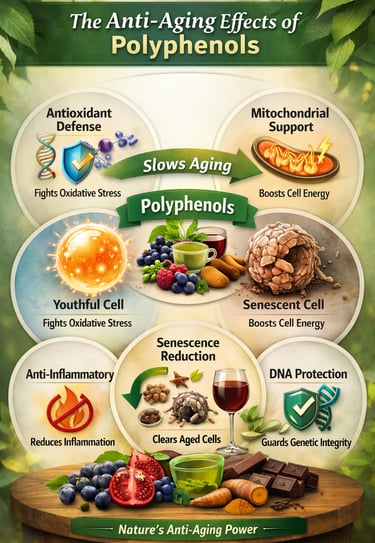
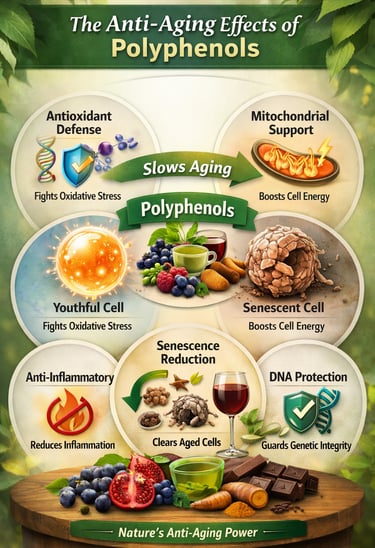
For decades, aging was considered an unavoidable biological process driven largely by genetics and the passage of time. Wrinkles, fatigue, muscle loss, metabolic slowdown, cardiovascular disease, and cognitive decline were viewed as inevitable consequences of growing older. However, advances in modern longevity science and nutritional geroscience are reshaping that perspective. Emerging evidence now suggests that biological aging is not entirely fixed and may be influenced by lifestyle interventions, particularly diet, exercise, sleep quality, and metabolic health (Carlberg et al., 2025).
One of the most exciting areas of anti-ageing research involves plant-based polyphenols—bioactive compounds found in berries, green tea, cocoa, olives, legumes, herbs, spices, coffee, and colourful vegetables. Once regarded merely as antioxidants, polyphenols are now recognized as potent signaling molecules capable of influencing cellular senescence, mitochondrial function, chronic inflammation, oxidative stress, epigenetic pathways, and metabolic resilience (Centonze et al., 2025).
In practical terms, this means that nutrition may influence not only how long people live, but also how well they age.
Modern aging research increasingly focuses on healthspan rather than lifespan alone. Healthspan refers to the number of years lived free from chronic disease, disability, frailty, and cognitive impairment. Scientists now believe that slowing the underlying mechanisms of biological aging may help preserve vitality, metabolic flexibility, cardiovascular health, brain function, and muscle integrity well into later decades of life (Liu et al., 2024).
Among dietary interventions, polyphenol-rich nutrition has emerged as one of the most promising evidence-based strategies for healthy aging.
The central question is no longer whether nutrition influences aging. The more compelling scientific question is:
Can plant-based polyphenols slow biological aging at the cellular level?
Current evidence suggests they may.
Understanding Biological Aging
Aging is not caused by a single process. Instead, it results from a network of interconnected biological mechanisms that progressively impair cellular function over time. Researchers describe these mechanisms as the hallmarks of aging, which include:
Cellular senescence
Oxidative stress
Chronic low-grade inflammation (“inflammaging”)
Mitochondrial dysfunction
Genomic instability
Epigenetic alterations
Telomere shortening
Loss of proteostasis
Stem-cell exhaustion
These processes interact continuously. For example, chronic inflammation damages mitochondria, dysfunctional mitochondria generate excess reactive oxygen species (ROS), oxidative stress damages DNA, and damaged cells enter senescence, further amplifying inflammation (Liu et al., 2024).
This vicious cycle contributes to:
Cardiovascular disease
Type 2 diabetes
Neurodegenerative disorders
Sarcopenia
Frailty
Immune aging
Metabolic dysfunction
Plant polyphenols appear uniquely important because they target multiple aging pathways simultaneously rather than influencing only one mechanism (Centonze et al., 2025).
What Are Plant-Based Polyphenols?
Polyphenols are naturally occurring phytochemicals produced by plants to defend against environmental stressors such as ultraviolet radiation, pathogens, and oxidative damage. When humans consume these compounds, they interact with molecular pathways involved in cellular protection, stress resistance, inflammation control, and energy metabolism.
Major classes of dietary polyphenols include:
Flavonoids — found in berries, onions, apples, tea, and citrus fruits
Phenolic acids — abundant in coffee and whole grains
Catechins — concentrated in green tea and cocoa
Anthocyanins — found in blueberries, blackberries, and purple vegetables
Curcuminoids — derived from turmeric
Stilbenes — including resveratrol in grapes and red wine
Lignans — found in flaxseeds and legumes
Importantly, polyphenols do far more than neutralize free radicals. Modern research shows that they function as cellular signaling molecules, activating pathways linked to longevity and stress adaptation (Zhang et al., 2025).
The Hormesis Effect: Why Mild Stress Promotes Longevity
One of the most important concepts in longevity medicine is hormesis—the idea that mild biological stress can strengthen cellular resilience.
Exercise is hormetic. Intermittent fasting is hormetic. Polyphenols appear to work similarly.
Rather than acting only as direct antioxidants, many plant polyphenols create a low-level adaptive stress response that stimulates endogenous defense systems. This phenomenon, known as mitohormesis, activates pathways involved in mitochondrial repair, antioxidant production, and metabolic resilience (Zhang et al., 2025).
Key longevity pathways influenced by polyphenols include:
AMP-activated protein kinase (AMPK)
Sirtuins (SIRT1)
Nuclear factor erythroid 2-related factor 2 (Nrf2)
FOXO transcription factors
PGC-1α-mediated mitochondrial biogenesis
These pathways collectively improve:
Cellular energy production
Stress resistance
DNA repair
Metabolic flexibility
Mitochondrial efficiency
In essence, polyphenols may help “train” cells to better withstand aging-related stressors.
Cellular Senescence and the “Zombie Cell” Problem
One of the most important discoveries in aging biology is the role of cellular senescence.
Senescent cells are damaged cells that stop dividing but refuse to die. Instead, they remain metabolically active and release inflammatory chemicals known as the senescence-associated secretory phenotype (SASP). These dysfunctional cells accumulate with age and contribute to tissue degeneration, chronic inflammation, insulin resistance, vascular dysfunction, and immune aging (Centonze et al., 2025).
Because they persist while spreading inflammatory signals, senescent cells are often referred to as “zombie cells.”
A landmark 2025 review published in Nutrients by Centonze and colleagues examined how dietary plant polyphenols influence cellular senescence pathways. The authors reported that compounds such as fisetin, quercetin, curcumin, and resveratrol may suppress inflammatory SASP signaling and reduce the accumulation of senescent cells (Centonze et al., 2025).
This is clinically important because chronic low-grade inflammation—often called inflammaging—is considered a major driver of biological aging and age-related disease.
Polyphenols appear capable of reducing:
NF-κB inflammatory signaling
Oxidative stress
Mitochondrial injury
Pro-inflammatory cytokine release
By dampening these pathways, polyphenols may help preserve tissue integrity and metabolic function across the lifespan.
Mitochondrial Health: Aging at Its Energetic Core
Mitochondria are the energy-producing organelles responsible for generating ATP, the primary fuel source for cellular activity. As humans age, mitochondrial function declines progressively, contributing to fatigue, muscle loss, insulin resistance, neurodegeneration, and metabolic disease (Zhang et al., 2025).
A comprehensive 2025 review in Frontiers in Aging highlighted how dietary phenolics and exercise work synergistically to delay aging “at its source” through mitochondrial preservation (Zhang et al., 2025).
The interaction is particularly powerful:
Exercise stimulates mitochondrial biogenesis (creation of new mitochondria)
Polyphenols protect mitochondria from oxidative injury and improve efficiency
Together, they enhance:
Cellular bioenergetics
Fat oxidation
Insulin sensitivity
Muscle performance
Metabolic resilience
This may partly explain why physically active populations consuming Mediterranean-style or plant-forward diets consistently demonstrate healthier aging patterns and lower chronic disease risk.
Polyphenols, Epigenetics, and Longevity Genes
Another revolutionary area of aging science involves epigenetics—chemical modifications that regulate gene expression without altering DNA sequences themselves.
Environmental exposures such as nutrition, exercise, sleep, stress, and toxins can influence whether certain genes are activated or suppressed. Polyphenols appear capable of influencing these epigenetic pathways (Carlberg et al., 2025).
Research suggests polyphenols may:
Activate longevity-associated genes
Improve DNA repair mechanisms
Reduce inflammatory gene expression
Support metabolic signaling
Preserve genomic stability
Compounds such as resveratrol and EGCG have been shown to influence sirtuin pathways associated with metabolic health and healthy aging (Liu et al., 2024).This means nutrition may act not merely as fuel, but as molecular information capable of influencing biological aging itself.
Precision Nutrition and Personalized Anti-Aging Diets
Not everyone responds to nutrition in the same way. Genetics, gut microbiota composition, insulin sensitivity, metabolic health, sleep quality, medications, and physical activity all influence how polyphenols are absorbed and metabolized.
Carlberg and colleagues (2025) emphasized the growing role of precision nutrition in longevity medicine. Their systems-biology approach suggests future anti-aging interventions may become individualized according to:
Genetic polymorphisms
Microbiome diversity
Inflammatory biomarkers
Epigenetic aging clocks
Metabolic phenotype
This emerging field of nutrigeroscience aims to develop personalized dietary strategies capable of optimizing biological aging trajectories.
For example:
One individual may respond strongly to anthocyanin-rich berries
Another may benefit more from catechin-rich green tea
Others may derive greater benefit from curcumin or olive polyphenols
The future of anti-aging nutrition may therefore become increasingly personalized rather than universally prescriptive.
The Gut Microbiome: The Missing Link in Polyphenol Biology
One of the most overlooked aspects of polyphenol science is the role of the gut microbiome.
Many polyphenols are poorly absorbed in their original form and require gut bacteria to convert them into smaller bioactive metabolites. For example:
Ellagitannins from pomegranates can become urolithin A
Soy isoflavones can convert into equol
Tea catechins undergo microbial transformation into active compounds
This means microbiome diversity directly influences the anti-aging effects of plant-based nutrition (Zhang et al., 2025).
Interestingly, polyphenols also nourish beneficial gut bacteria, creating a mutually beneficial cycle:
Gut microbes activate polyphenols
Polyphenols support microbial diversity
This microbiome-polyphenol interaction may explain why fiber-rich dietary patterns consistently correlate with longevity and metabolic health.
Bioavailability: Why Absorption Matters
A major challenge in polyphenol science is bioavailability—the extent to which these compounds are absorbed and utilized by the body.
Curcumin, quercetin, and resveratrol are known for relatively poor absorption. Consequently, consuming high amounts does not always translate into biological activity (Zhang et al., 2025).
Several strategies can improve polyphenol bioavailability:
Combine Polyphenols with Healthy Fats
Many polyphenols are fat-soluble.
Examples include:
Turmeric with olive oil
Polyphenol-rich vegetables with avocado
Herbs and spices combined with nuts or seeds
Emphasize Whole-Food Synergy
Whole foods provide fibers, vitamins, minerals, and phytochemicals that improve absorption and metabolic effects.
Preserve Polyphenols During Cooking
Light steaming or sautéing may preserve more bioactive compounds than prolonged boiling.
Support Gut Health
A diverse, fiber-rich diet enhances microbial conversion into active metabolites.
Bioavailability ultimately determines whether dietary polyphenols exert meaningful physiological effects.
Best Food Sources of Anti-Aging Polyphenols
Berries
Blueberries, blackberries, strawberries, and raspberries are rich in anthocyanins associated with vascular protection, cognitive support, and reduced oxidative stress.
Green Tea
Green tea provides catechins such as EGCG linked to mitochondrial health, metabolic regulation, and anti-inflammatory activity.
Extra Virgin Olive Oil
A cornerstone of the Mediterranean diet, olive oil contains hydroxytyrosol and oleuropein with potent cardiometabolic benefits.
Cocoa and Dark Chocolate
Rich in flavanols that improve endothelial function and blood flow.
Coffee
Coffee is one of the largest dietary sources of polyphenols worldwide and is associated with lower all-cause mortality in observational studies.
Herbs and Spices
Turmeric, cinnamon, cloves, oregano, and rosemary are extraordinarily polyphenol-dense despite small serving sizes.
Legumes and Whole Grains
These provide polyphenols alongside fiber, resistant starch, and metabolic benefits.
Why Dietary Diversity Matters
One of the biggest misconceptions in longevity nutrition is the search for a single “superfood.”
Healthy aging is biologically complex. Different polyphenols target different hallmarks of aging:
Anthocyanins support vascular health
Catechins influence mitochondria
Curcumin modulates inflammation
Quercetin influences senescence pathways
This is why experts increasingly advocate a “rainbow diet” rich in diverse plant foods rather than excessive reliance on isolated supplements.
Dietary diversity provides broader biochemical coverage across multiple longevity pathways simultaneously.
Can Polyphenols Actually Lower Biological Age?
Although no dietary compound can stop aging, accumulating evidence suggests polyphenol-rich diets may positively influence biomarkers associated with biological age.
Studies demonstrate improvements in:
Oxidative stress markers
Inflammatory pathways
Mitochondrial efficiency
Insulin sensitivity
Endothelial function
Epigenetic aging signatures
Animal studies also show lifespan extension with several polyphenol interventions (Liu et al., 2024).
However, researchers caution against viewing polyphenols as miracle molecules. Their effects depend heavily on:
Overall dietary quality
Exercise habits
Sleep
Stress management
Gut microbiome health
Long-term adherence
The strongest evidence supports polyphenols as part of a comprehensive lifestyle strategy rather than isolated interventions.
Practical Applications for Healthy Aging
Build a Polyphenol-Rich Plate
Prioritise colourful vegetables, berries, legumes, herbs, spices, olive oil, tea, and whole grains.
Combine Nutrition with Exercise
Exercise and polyphenols synergistically support mitochondrial function and metabolic resilience.
Include Healthy Fats
Healthy fats improve absorption of fat-soluble phytochemicals.
Support Microbiome Diversity
Consume fiber-rich foods to enhance microbial metabolism of polyphenols.
Focus on Consistency
Healthy aging results from long-term dietary patterns rather than short-term extremes.
Key Clinical Takeaways
Plant-based polyphenols influence multiple hallmarks of aging, including oxidative stress, inflammation, mitochondrial dysfunction, and cellular senescence.
Cellular senescence modulation may represent one of the most promising anti-aging mechanisms associated with dietary polyphenols (Centonze et al., 2025).
Polyphenols and exercise work synergistically to improve mitochondrial health and cellular bioenergetics (Zhang et al., 2025).
Gut microbiota are essential for converting many polyphenols into biologically active metabolites.
Polyphenol bioavailability depends on food combinations, dietary fats, and microbiome health.
Precision nutrition may eventually personalize anti-aging dietary interventions based on genetics and metabolism (Carlberg et al., 2025).
Long-term dietary diversity appears more important than isolated “superfood” strategies for longevity and health.
Author’s Note
This article was written to translate advancing research in nutritional geroscience rapidly into clinically meaningful, practical insights. While aging is often framed as an inevitable and uniform process, emerging evidence suggests that biological aging is modifiable through targeted lifestyle and dietary interventions. Plant-based polyphenols—once viewed primarily as antioxidants—are now recognized as bioactive signaling molecules capable of influencing fundamental hallmarks of aging, including cellular senescence, mitochondrial function, inflammation, and epigenetic regulation.
The perspectives presented here are grounded in peer-reviewed research published between 2024 and 2025, with emphasis on mechanistic reviews and systems-biology approaches rather than isolated findings. This article does not promote supplements as a substitute for whole foods, nor does it advocate extreme dietary patterns. Instead, it highlights the importance of dietary diversity, consistency, and metabolic context in realizing the potential benefits of polyphenol-rich nutrition.
Disclaimer: This article is for informational purposes only and does not constitute medical advice. Individual circumstances vary, and treatment decisions should always be made in consultation with qualified healthcare professionals.
Related Articles
Time-Restricted Eating: Metabolic Advantage or Just Fewer Calories? | DR T S DIDWAL
Can You Revitalize Your Immune System? 7 Science-Backed Longevity Strategies | DR T S DIDWAL
Exercise and Longevity: The Science of Protecting Brain and Heart Health as You Age | DR T S DIDWAL
Light and Longevity: Can Sunlight Slow Cellular Aging? | DR T S DIDWAL
References
Carlberg, C., Blüthner, A., Schoeman-Giziakis, I., & et al. (2025). Modulating biological aging with food-derived signals: A systems and precision nutrition perspective. npj Aging, 11, Article 76. https://doi.org/10.1038/s41514-025-00266-5
Centonze, M., Aloisio Caruso, E., De Nunzio, V., Cofano, M., Saponara, I., Pinto, G., & Notarnicola, M. (2025). The antiaging potential of dietary plant-based polyphenols: A review on their role in cellular senescence modulation. Nutrients, 17(10), Article 1716. https://doi.org/10.3390/nu17101716
Jain, P. K., Parashar, A. K., & Shrivastava, V. (2025). A review on exploring the health benefits and antioxidant properties of bioactive polyphenols. Discovery Food, 5, Article 367. https://doi.org/10.1007/s44187-025-00637-7
Jalouli, M., Rahman, M. A., Biswas, P., Rahman, H., Harrath, A. H., Lee, I.-S., Kang, S., Choi, J., Park, M. N., & Kim, B. (2025). Targeting natural antioxidant polyphenols to protect neuroinflammation and neurodegenerative diseases: A comprehensive review. Frontiers in Pharmacology, 16, Article 1492517. https://doi.org/10.3389/fphar.2025.1492517
Liu, Y., Fang, M., Tu, X., Mo, X., Zhang, L., Yang, B., Wang, F., Kim, Y.-B., Huang, C., Chen, L., & Fan, S. (2024). Dietary polyphenols as anti-aging agents: Targeting the hallmarks of aging. Nutrients, 16(19), Article 3305. https://doi.org/10.3390/nu16193305
Zhang, H., Wang, F., Wang, L., Du, J., & Li, Y. (2025). Plant polyphenols delay aging: A review of their anti-aging mechanisms and bioavailability. Food Research International, 218, Article 116900. https://doi.org/10.1016/j.foodres.2025.116900
Zhang, J., Zhu, W.-W., Huang, Y.-Y., & Tang, C.-H. (2025). Dietary phenolics and exercise complementation to delay aging at its source: A comprehensive review highlighting mitochondrial function. Frontiers in Aging, 6, Article 1693043. https://doi.org/10.3389/fragi.2025.1693043