Whey Protein vs Other Proteins: Which Builds More Muscle & Controls Insulin Best?
Whey protein delivers the strongest muscle-building and insulin response. Learn how leucine, digestion speed, and protein type impact metabolism, diabetes, and aging.
NUTRITION
Dr. T.S. Didwal, M.D.(Internal Medicine)
3/31/202619 min read
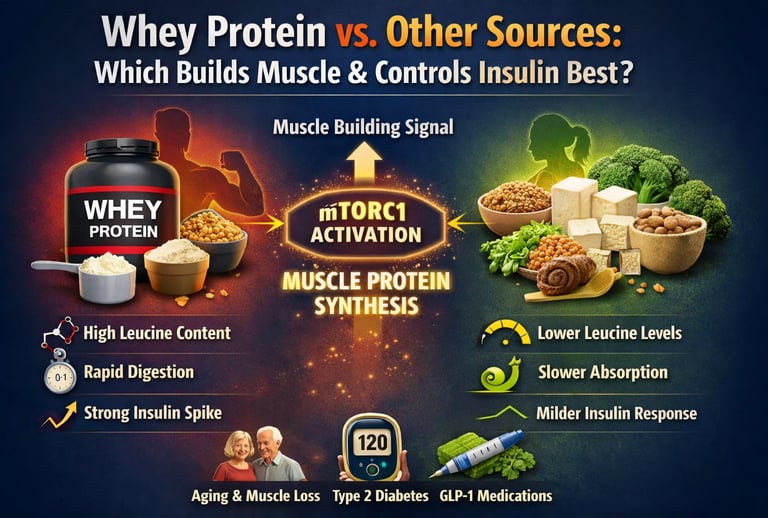
Whey protein delivers the strongest muscle-building and insulin response among all protein sources due to its high leucine content and rapid absorption. Research shows that reaching the leucine threshold (~2.5–3 g per meal) is essential to activate muscle protein synthesis (MPS), and whey achieves this more efficiently than casein or plant proteins. Unlike carbohydrates, protein-induced insulin release is balanced by glucagon, supporting muscle growth without promoting fat gain. A deep dive into leucine density, digestion speed, insulinogenic rankings, and practical strategies for every health goal
Whey protein triggers the strongest, fastest insulin and muscle-protein-synthesis response of all protein sources
The amino acid leucine is the master switch — you need roughly 2.5–3 g per meal to activate muscle building
Protein-induced insulin is not the same as carbohydrate-induced insulin — it does not cause fat gain
Plant proteins can be optimized through blending and higher doses, but need strategic planning
Older adults, people with diabetes, and those on incretin-based medications have specific protein needs that differ from those of younger, healthy athletes
Clinical pearls
1. The "Anabolic Resistance" Gap
Scientific Perspective: As we age, the muscle's sensitivity to amino acids decreases. Research (Li et al., 2024) shows that older adults require a higher "bolus" of leucine to trigger the same mTORC1 signaling as a 20-year-old.
Patient Perspective:"I’m eating the same way I always have, but I’m losing strength."
The Pearl: Don't spread your protein thin. For patients over 60, one 40g protein meal is significantly more effective for muscle preservation than four 10g snacks.
2. Protein-Induced Insulin vs. Glucose-Induced Insulin
Scientific Perspective: Protein stimulates insulin via amino acid-sensing pathways in the $\beta$-cells and gut incretins (GLP-1). Unlike carbs, protein also triggers glucagon, which prevents blood sugar from crashing (Nagy et al., 2026).
Patient Perspective: "I heard insulin makes you fat, so I'm scared of whey protein spikes."
The Pearl: Protein-induced insulin is a "building signal," not a "storing signal." In healthy individuals, it facilitates muscle repair without the fat-storage risks associated with high-sugar insulin spikes.
3. The "Leucine Trigger" for Plant-Based Diets
Scientific Perspective: Most plant proteins are ~6–8% leucine, whereas whey is ~12%. To hit the $2.5g$ "leucine trigger" required to start Muscle Protein Synthesis (MPS), the volume of plant protein must be higher.
Patient Perspective: "I drink a vegan shake with 20g of protein, so I’m covered, right?"
The Pearl: For plant-based goals, volume matters. A vegan patient likely needs 35–40g of a pea/rice blend to get the same muscle-building "spark" that 25g of whey provides.
4. The Whey "Preload" for Type 2 Diabetes
Scientific Perspective: Consuming whey 15–30 minutes before a meal stimulates the release of endogenous GLP-1 and GIP. This primes the pancreas to handle the incoming carbohydrates more efficiently.
Patient Perspective: "My blood sugar always shoots up after dinner."
The Pearl: Think of a small whey shake (15–20g) as "nutritional insulin." Taking it before a high-carb meal can significantly flatten the post-meal glucose curve.
5. Muscle Preservation During GLP-1 Therapy
Scientific Perspective: Rapid weight loss from medications like Semaglutide often results in 25–40% of that weight coming from lean mass (Barana et al., 2026).
Patient Perspective: "I’m losing weight fast, but I feel weak and 'skinny-fat'."
The Pearl: When appetite is suppressed, every bite must count. Prioritizing high-leucine, fast-digesting proteins (like whey isolate) is the best insurance policy against "muscle wasting" during medical weight loss.
6. The Overnight "Window" (Casein vs. Whey)
Scientific Perspective: Muscle breakdown happens most aggressively during the overnight fast. Casein protein clots in the stomach, providing a "slow-drip" of amino acids for 6–8 hours.
Patient Perspective: "I workout in the evening; what should I eat before bed so I'm not sore tomorrow?"
The Pearl: Use the "Slow-Fast" rule. Use Whey immediately after the gym for a quick recovery "hit," but use Casein (or cottage cheese) before sleep to keep the muscle-building machinery running all night.
A deep dive into leucine density, digestion speed, insulinogenic rankings, and practical strategies for every health goal
Most people think protein is simple: eat enough of it, and your muscles will grow. But modern metabolic science tells a very different story. Two meals with the same amount of protein can produce dramatically different effects on muscle growth, insulin response, and long-term metabolic health—depending entirely on the type of protein you choose.
At the center of this difference is a single amino acid: leucine. Often called the “trigger” for muscle building, leucine activates a key cellular pathway known as mTORC1, which initiates muscle protein synthesis (MPS). However, this process is not linear—it operates on a threshold. Research shows that you need approximately 2.5–3 grams of leucine per meal to fully activate this anabolic switch; anything less results in a significantly blunted muscle-building response (Jeong et al., 2026). This means that not all protein sources are equally effective, even if total protein intake appears adequate.
Whey protein stands out because it delivers this leucine threshold rapidly and efficiently. Its fast digestion leads to a sharp rise in blood amino acids and a potent stimulation of insulin and incretin hormones, including GLP-1 and GIP, which enhance nutrient utilization (Nagy et al., 2026). Importantly, this protein-induced insulin response differs fundamentally from carbohydrate-driven insulin spikes. It is accompanied by glucagon secretion, creating a balanced metabolic environment that supports muscle repair without promoting fat storage.
These distinctions are not just relevant for athletes. They are critically important for older adults facing anabolic resistance, for individuals with type 2 diabetes managing postprandial glucose, and for patients using incretin-based therapies where preserving lean muscle mass is a growing clinical concern (Barana et al., 2026).
In short, protein quality is not a detail—it is the difference between simply eating protein and strategically using it to transform metabolism
Why Protein Type Matters More Than You Think
Total protein intake matters — but the quality of that protein determines what your body actually does with it.
Think of dietary protein as a delivery vehicle. What matters is not just how much you send, but how fast it arrives, what it carries inside, and how completely the body can use it. Two people consuming 30 grams of protein — one from whey, one from a plant-based blend — will experience measurably different hormonal, anabolic, and metabolic responses.
Three factors govern this difference: leucine content, digestion speed, and amino acid profile completeness. Together, these determine whether a protein meal triggers robust muscle protein synthesis (MPS) or leaves your muscles under-stimulated — even if the calorie math looks identical.
This distinction has real-world consequences for populations far beyond gym-goers. It matters deeply for older adults at risk of sarcopenia (age-related muscle loss), for people with type 2 diabetes managing postprandial glucose, and — as newer 2026 research shows — for individuals on incretin-based medications such as GLP-1 receptor agonists.
The Leucine Threshold: Your Muscle's Master Switch
Among all amino acids, leucine holds a uniquely privileged position in muscle biology. It is the primary activator of mTORC1 (mechanistic target of rapamycin complex 1) — the intracellular signaling hub that tells your muscle cells to start building new proteins.
Here is the critical concept: there is a leucine threshold. Research consistently shows that a meal needs to deliver approximately 2.5 to 3 grams of leucine to robustly activate mTORC1 and initiate meaningful MPS. Below that threshold, the anabolic signal is blunted — regardless of how much total protein you consumed.
A 2026 randomized controlled trial found that combining resistance exercise with essential amino acid supplementation — which includes leucine — significantly improved the follistatin-to-myostatin ratio in older women, a key indicator of favorable muscle remodeling (Jeong et al., 2026). This finding matters beyond athletes: it suggests that leucine-adequate protein is a therapeutic tool for maintaining muscle mass in aging populations.
Clinical Insight
Older adults experience "anabolic resistance" — their muscles require a higher leucine stimulus to achieve the same MPS response as younger individuals. This means that simply meeting a protein gram target is not enough; leucine density per meal becomes the critical metric.
To hit the critical 2.5g leucine threshold—the "master switch" for muscle building—you must adjust your serving size based on the protein's leucine density.
Here is the breakdown of how much you need to consume per serving
Whey Isolate (10–12% Leucine): The most efficient source. You only need 25–30g per serving to trigger muscle protein synthesis.
Casein (8–9% Leucine): A high-quality, slow-digesting source. You need roughly 30–35g to hit the threshold.
Egg White (8.5% Leucine): A solid whole-food standard. Aim for 30–35g (approx. 8–10 egg whites) per serving.
Soy Protein (7–8% Leucine): The highest-quality single plant source. You need 35–40g to reach the necessary leucine levels.
Plant Blends (6–7% Leucine): Usually a mix of pea, rice, or hemp. Because these are less leucine-dense, you need a larger dose of 35–45g per serving.
The Bottom Line
Plant proteins are effective, but they aren't a 1:1 swap for whey in terms of volume. If you are using a plant-based blend, you should increase your scoop size by roughly 30–50% to ensure your muscles receive the same anabolic signal as they would from a standard scoop of whey.
How Protein Triggers Insulin — And Why That Is Not a Bad Thing
The fear that protein "spikes insulin" is widespread — and largely misunderstood.
Dietary protein does stimulate insulin secretion, but through mechanisms entirely different from carbohydrates. Key pathways include:
Direct β-cell stimulation: Amino acids like leucine and arginine directly depolarize pancreatic beta cells, prompting insulin release. Incretin amplification: Protein intake stimulates gut hormones — GLP-1 and GIP — that amplify insulin secretion in a glucose-dependent manner. This means protein-driven insulin release is self-regulating: it diminishes as blood glucose falls, preventing hypoglycemia in healthy individuals.
A critical 2026 review confirmed that protein intake increases both insulin and glucagon simultaneously, which maintains glucose balance and does not produce the fat-storing environment that a carbohydrate-only insulin spike can create (Nagy, Turner, & Riddell, 2026). Glucagon counterbalances insulin, directing amino acids toward muscle repair rather than fat storage.
For people with type 1 diabetes, the picture is more complex. A landmark 2025 study in Diabetes Care showed that protein ingestion produces a delayed and moderate glycemic effect — different from carbohydrate, but not negligible for those relying on precise insulin dosing (Dao et al., 2025). This clinical nuance is important: protein is not "free" from a blood glucose management standpoint in type 1 diabetes, though its impact is far smaller and slower than carbohydrate.
Important for Diabetes Management
If you have type 1 or type 2 diabetes and are adjusting insulin doses or meal plans, discuss your protein intake strategy with your healthcare provider. The glycemic impact of protein is real but manageable with proper guidance. Whey protein does stimulate insulin, but this effect is beneficial and different from carbohydrate-induced insulin spikes. It enhances muscle protein synthesis and improves nutrient utilization without causing fat gain.
The Science of Amino Acid Kinetics: Fast vs. Slow Proteins
To build muscle effectively, each meal should provide about 2.5–3 grams of leucine—the key amino acid that activates muscle growth pathways. Whey protein reaches this threshold more efficiently than most other protein sources.
The speed at which your body absorbs protein determines the "anabolic window" and how long your muscles stay in a building state.
Whey Isolate (The Sprinter):
Absorption Speed: Fastest available.
Leucine Peak: Hits the bloodstream in 60–90 minutes.
Metabolic Impact: Triggers the highest insulin response for rapid nutrient transport.
Best Use Case: Immediate post-workout recovery or breaking an overnight fast.
Whey Concentrate (The Fast All-Rounder):
Absorption Speed: Fast (90–120 minutes).
Best Use Case: Post-workout or between meals for general muscle maintenance.
Egg & Soy Protein (The Mid-Range):
Absorption Speed: Moderate (2–3 hours).
Metabolic Impact: Balanced insulin and amino acid delivery.
Best Use Case: Standard meal replacement or dietary protein topping.
Casein (The Marathoner):
Absorption Speed: Slowest (5–7 hours).
Leucine Peak: Low but sustained.
Best Use Case: Before sleep to prevent "overnight catabolism" (muscle breakdown).
Plant-Based Blends (The Steady Climber):
Absorption Speed: Slow-to-Moderate (2–4 hours).
Best Use Case: Throughout the day to maintain a steady amino acid pool.
Insulinogenic & Anabolic Rankings: Which Protein Wins?
Not all proteins signal muscle growth with the same intensity. This ranking is based on Muscle Protein Synthesis (MPS) stimulation and the hormonal response.
Whey Protein (Rank: 1/5)
Anabolic Score: ★★★★★ (10/10)
Why it wins: It triggers a "triple threat" response: rapid digestion, high leucine density (12%), and a strong boost to GLP-1 and GIP hormones.
Casein (Rank: 2/5)
Anabolic Score: ★★★★☆ (8/10)
Why it wins: While it lacks a "spike," it provides the longest duration of muscle protection, making it superior for long-term recovery.
Egg Protein (Rank: 3/5)
Anabolic Score: ★★★★☆ (8/10)
Why it wins: Often considered the "gold standard" for whole foods due to its complete and highly bioavailable amino acid profile.
Soy Protein (Rank: 4/5)
Anabolic Score: ★★★☆☆ (6/10)
Why it ranks here: Good leucine content, but slightly lower digestibility compared to dairy-based proteins.
Plant Blends (Rank: 5/5)
Anabolic Score: ★★☆☆☆ (4/10)
Why it ranks here: Requires significantly higher dosing (35g+) to reach the same anabolic "trigger" as whey.
Key Takeaway
For maximum muscle growth, Whey Protein remains the undisputed leader due to its ability to clear the mTORC1 threshold faster and more effectively than any other source. However, for 24-hour muscle preservation, a combination of Fast (Whey) and Slow (Casein) proteins is the optimal clinical strategy.
Not all proteins are equal. Whey protein produces a faster and stronger anabolic and insulin response than casein, egg, or plant proteins, making it the most effective option per gram for muscle growth and recovery.
Whey and Sarcopenia: Preserving Muscle as You Age
Sarcopenia — the progressive loss of muscle mass and strength with aging — affects an estimated 10–27% of adults over 60 and is a leading contributor to frailty, falls, and loss of independence. Whey protein has emerged as one of the most evidence-backed nutritional interventions against it.
A comprehensive 2024 systematic review and meta-analysis of randomized controlled trials found that whey protein supplementation significantly improved muscle mass, strength, and physical performance in older adults, with even greater benefits when combined with resistance training (Li et al., 2024). The mechanism is clear: whey's rapid leucine spike overcomes the "anabolic resistance" that older muscle displays, delivering the threshold signal needed to rebuild muscle proteins.
The emerging 2026 data on essential amino acids and the follistatin/myostatin ratio reinforces this picture (Jeong et al., 2026): targeting the hormonal environment of muscle — not just protein grams — is the next frontier in precision nutrition for aging adults.
Practical Takeaway for Older Adults
Older adults should aim for at least 30–40 g of high-quality protein per meal (not spread thinly across many small servings) to reliably cross the anabolic threshold. Leucine-rich proteins like whey, eggs, or fish are the most efficient choices to achieve this.
Plant Proteins: The Honest Truth and How to Optimize Them
Plant proteins are not inferior by nature — they are simply different and require strategic use. The limitations are real: lower leucine density, incomplete amino acid profiles (most plant proteins are low in one or more essential amino acids), and reduced digestibility due to antinutrients like phytates and tannins.
However, these limitations are largely solvable:
Blend strategically: Combining pea protein (rich in lysine, low in methionine) with rice protein (richer in methionine) creates a near-complete amino acid profile that rivals animal sources. Increase the dose: To hit the leucine threshold, plant protein users typically need 20–30% more protein per serving than whey users. This means 35–45 g of a plant blend versus 25–30 g of whey. Consider leucine fortification: Adding 2–3 g of free-form leucine to a plant protein shake can bridge the threshold gap effectively.
For individuals on plant-based diets for ethical, environmental, or health reasons, these strategies allow you to achieve comparable anabolic outcomes — it just requires more intentional planning.
Whey Before Meals: A Glucose Control Strategy
One of the most practically powerful — and underused — applications of whey protein is its effect on postprandial blood glucose. Consuming a small whey protein preload (approximately 20 g) before a carbohydrate-containing meal stimulates a rapid insulin and incretin response that blunts the blood sugar spike from that meal.
This is especially relevant for people with type 2 diabetes or prediabetes. The 2026 review by Nagy, Turner, and Riddell highlights how protein-triggered glucagon and insulin dynamics interact with carbohydrate metabolism — offering a natural, food-first approach to postprandial glucose management.
Additionally, with the explosive growth of GLP-1 receptor agonist medications (semaglutide, tirzepatide), a key clinical concern is preserving lean muscle mass during the often-dramatic weight loss these drugs produce. A 2026 narrative review in Nutrients emphasized that adequate protein intake — particularly leucine-rich, rapidly absorbed sources like whey — combined with resistance training is critical to ensure that weight lost is primarily fat, not precious muscle (Barana et al., 2026).
Note for GLP-1 Medication Users
If you are taking semaglutide, tirzepatide, or similar incretin-based medications, prioritizing leucine-rich protein at each meal and maintaining resistance exercise is one of the most evidence-backed strategies to prevent muscle loss alongside fat loss. Discuss with your care team.
To make these strategies easier to implement, here is the breakdown of protein applications and dosing requirements organized by specific health and fitness goals.
Best Whey Protein Types: Quick Guide
Whey Isolate (WPI)
~90%+ protein, very low lactose and fat. Fast absorption with high leucine density—best for post-workout, fat loss phases, and lactose sensitivity.Whey Concentrate (WPC)
~70–80% protein, contains some lactose and bioactive compounds. Slightly slower than isolate—cost-effective option for general fitness and daily use.Whey Hydrolysate (WPH)
Pre-digested (partially hydrolyzed), absorbed fastest. May produce a sharper insulin response—useful for clinical settings, rapid recovery, or digestive issues, but typically more expensive and less palatable.
Bottom line: For most people, isolate offers the best balance of purity, speed, and efficacy, while concentrate suits budget-friendly use, and hydrolysate is a niche, fast-acting option.
Strategic Protein Applications by Goal
Muscle Gain (Hypertrophy): How much protein per meal to build muscle?
Primary Source: Whey Isolate.
Strategy: Prioritize hitting the leucine threshold (2.5–3g) at every meal to keep the anabolic switch "on."
Frequency: Aim for 3–4 high-protein meals distributed evenly throughout the day.
Timing: Consume 25–30g of whey immediately post-workout to maximize recovery.
Fat Loss (Muscle Preservation)
Primary Source: Whey + Whole Food Proteins (Eggs, Lean Meats).
Strategy: Use high protein intake to maintain lean mass while in a caloric deficit.
Benefit: Whole food proteins provide higher satiety, while whey ensures leucine needs are met around training sessions.
Blood Sugar Control (Metabolic Health): Best protein for muscle growth and diabetes
Primary Source: Whey Pre-meal.
Strategy: Consume a "whey preload" roughly 15–30 minutes before eating carbohydrate-rich meals.
Benefit: Improves postprandial (post-meal) glucose levels and enhances long-term insulin sensitivity.
Overnight Recovery (Catabolic Protection)
Primary Source: Casein.
Strategy: Take Casein or slow-digesting dairy (like cottage cheese) shortly before sleep.
Benefit: Provides a sustained "slow-drip" of amino acids to prevent muscle breakdown during the overnight fast.
Healthy Aging (Sarcopenia Prevention)
Primary Source: Whey + Resistance Exercise.
Strategy: Use higher per-meal doses (35–40g) to overcome "anabolic resistance."
Benefit: High leucine density is required for aging muscles to respond to building signals.
Plant-Based Diet (Optimization)
Primary Source: Pea + Rice Blend.
Strategy: Increase total protein dose by 25–30% compared to animal sources.
Pro-Tip: Consider fortifying with free-form leucine powder if Muscle Protein Synthesis (MPS) is the top priority.
Dosing Strategy: The Numbers You Need
Use the following data to calculate your specific serving sizes:
General Fitness
Dose: 25–30g Whey Isolate.
Leucine Delivered: ~2.5–3.6g.
Frequency: 3–4 meals per day.
Aging / Sarcopenia
Dose: 35–40g Whey or Egg Protein.
Leucine Delivered: ~3.5–4.8g.
Frequency: 4 meals per day.
Plant-Based Goals
Dose: 38–48g Pea/Rice Blend.
Leucine Delivered: ~2.5–3.2g.
Frequency: 3–4 meals per day.
Overnight Recovery
Dose: 30–40g Casein.
Leucine Delivered: ~2.4–3.6g.
Frequency: 1 serving at bedtime.
Glucose Control
Dose: 20g Whey (Preload).
Leucine Delivered: ~2.0–2.4g.
Frequency: Before your largest carbohydrate-containing meals.
Summary
Protein quality—not just quantity—determines metabolic outcomes.
Two identical 30 g protein meals can produce vastly different effects on muscle protein synthesis (MPS), insulin dynamics, and recovery depending on amino acid composition and digestion kinetics.Leucine is the master regulator of muscle anabolism.
A threshold of ~2.5–3 g leucine per meal is required to activate mTORC1 and initiate robust MPS. Sub-threshold intake leads to a muted anabolic response despite adequate total protein (Jeong et al., 2026).Whey protein is metabolically superior per gram.
With ~10–12% leucine and rapid absorption, whey delivers a sharp aminoacidemia peak, triggering the strongest known nutritional activation of MPS and insulin secretion among whole proteins.Protein-induced insulin is physiologically distinct from carbohydrate-induced insulin.
Amino acids stimulate both insulin and glucagon, creating a balanced metabolic environment that promotes nutrient partitioning toward muscle rather than fat storage (Nagy et al., 2026).Digestion speed defines anabolic timing.
Fast proteins (whey) maximize post-exercise recovery, while slow proteins (casein) sustain overnight amino acid availability and reduce muscle breakdown.Aging muscle requires a stronger signal.
“Anabolic resistance” in older adults necessitates higher per-meal protein doses and leucine density to achieve comparable MPS responses seen in younger individuals.Plant proteins are viable—but require precision.
Lower leucine density and incomplete amino acid profiles necessitate higher dosing, strategic blending (e.g., pea + rice), or leucine fortification to match anabolic efficiency.Whey has emerging therapeutic roles beyond muscle.
Pre-meal whey ingestion improves postprandial glycemia, and in the era of GLP-1 receptor agonists, it plays a critical role in preserving lean mass during weight loss (Barana et al., 2026).Clinical takeaway:
Optimal protein strategy is not “eat more protein”—it is hit the leucine threshold, choose fast vs. slow proteins strategically, and match intake to physiological context.
Frequently Asked Questions
1. Does whey protein cause insulin resistance because it "spikes" insulin?
The Answer: No. While whey protein is highly insulinogenic (meaning it triggers a rapid insulin release), it actually improves insulin sensitivity over time. Unlike sugar, which causes a spike and a subsequent "crash" in blood glucose, protein-induced insulin is accompanied by glucagon. This balance helps regulate blood sugar and promotes muscle repair rather than fat storage. Clinical studies in 2026 continue to show that whey preloads actually lower average daily blood glucose in type 2 diabetics.
2. Is plant protein really "inferior" for muscle building?
The Answer: Not inferior, just less efficient per gram. To get the same 3g of leucine (the "muscle-building switch") found in 25g of whey, you would need roughly 40g of a pea or soy protein blend. If you are plant-based, the "fix" is simple: increase your serving size by about 30% or add a 2-3g leucine supplement to your shake to bridge the gap.
3. I’m on a GLP-1 (like Semaglutide); why is protein more important now?
The Answer: These medications suppress appetite so effectively that patients often eat very little protein, leading to sarcopenic weight loss (losing muscle instead of fat). Because your total food intake is lower, the quality of your protein must be higher. Whey isolate is ideal here because it provides a high leucine density with very few calories, helping to "signal" your body to keep its muscle while burning the fat.
4. Can't I just get all my protein from whole foods like chicken or beef?
The Answer: You certainly can, but digestion speed matters depending on your goal. Whole food proteins take 3-5hours to fully digest. If you are an older adult trying to overcome "anabolic resistance" or an athlete in a post-workout window, the rapid 60-90 minute amino acid delivery of whey provides a more powerful "anabolic spark" than a slow-digesting steak.
5. Does the "Leucine Threshold" apply to women the same as men?
The Answer: Yes, though the absolute dose may vary slightly based on total lean mass. However, the 2026 Jeong et al. study specifically highlighted that older women significantly improved their muscle remodeling (follistatin/myostatin ratio) by hitting these essential amino acid targets. The biological "switch" for muscle synthesis (mTORC1) requires a 2.5-3g leucine concentration regardless of gender.
6. Is it true that whey protein is bad for the kidneys?
The Answer: In individuals with healthy kidney function, high protein intake (up to 2.2g per kg of body weight) has not been shown to cause damage. However, for patients with pre-existing Chronic Kidney Disease (CKD), protein intake must be strictly managed. Always consult your nephrologist if you have a history of kidney issues, as the rapid nitrogen load from whey can be taxing on compromised kidneys.
7. Why should I take Casein at night instead of Whey?
The Answer: Think of it as "Fast vs. Slow" fueling. Whey is a "fast" protein—great for a quick spike but gone in 2 hours. Casein "gels" in the stomach, creating a slow-release drip of amino acids that lasts 6-8 hours. Taking Casein before bed prevents your body from entering a "catabolic" (muscle-wasting) state during your overnight fast, which is critical for recovery and aging adults.
Author’s Note
Protein is often reduced to numbers—grams per day, calories per meal—but in clinical practice, it is far more than a macronutrient. It is a signaling tool. The emerging science around leucine, mTORC1 activation, and protein-induced insulin dynamics reinforces a fundamental shift in how we should think about nutrition: not just as fuel, but as targeted metabolic therapy.
This article was written to bridge a persistent gap between research and real-world application. Much of the current discourse around protein—especially on social media—oversimplifies complex physiology into binary narratives: “high protein is good,” “insulin is bad,” or “plant vs. animal.” The truth, as always in medicine, is more nuanced. Different protein sources behave differently in the body, influencing not only muscle protein synthesis but also glycemic control, hormonal responses, and long-term metabolic health.
For clinicians, this represents an opportunity. Protein quality and timing can be leveraged as practical, evidence-based interventions for sarcopenia, type 2 diabetes, obesity, and even in patients undergoing treatment with incretin-based therapies. For patients, it offers a sense of control—small, consistent dietary choices that meaningfully impact strength, function, and healthspan.
Importantly, no single protein source is “perfect” for everyone. Cultural preferences, dietary patterns, sustainability concerns, and medical conditions all play a role. The goal is not rigid prescription, but informed personalization.
If there is one principle to carry forward, it is this: the effectiveness of protein lies not just in how much you consume, but in how intelligently you use it.
Track Your Leucine Intake This Week
Try logging 3 days of meals with a focus on leucine content. You may discover exactly where your protein quality gaps are — this single insight can transform your results.
Ready to Optimize Your Protein Strategy?
This article is designed for you — not just to read once, but to return to as your goals evolve. Here is how to get the most from it:
Bookmark & Revisit
Your protein needs change with age, health status, and fitness goals. Save this page and re-read the "Practical Applications" section every 3–6 months.
Share with Your Care Team
If you have diabetes, sarcopenia concerns, or are on GLP-1 medications, share this evidence summary with your dietitian or physician to inform a personalized protein plan.
Leave a Comment
Questions about your specific situation? Drop them in the comments. Real questions inspire future evidence-based articles tailored to this community.
Run Your Own 4-Week Test
Pick one strategy from the Goal Cards above, implement it for 4 weeks, and track how you feel. Simple self-experimentation with evidence-based tools is powerful.
This article is intended for educational purposes only and does not constitute medical advice. Always consult a qualified healthcare provider before beginning a new exercise or nutrition program, especially if you have an existing medical condition.
Related Articles
Leucine and Muscle Health: The Essential Amino Acid for Fighting Sarcopenia | DR T S DIDWAL
Leucine Foods Chart: Exactly How Much You Need Per Meal for Muscle Growth | DR T S DIDWAL
Leucine and Insulin: How Protein Controls Blood Sugar and Muscle Growth | DR T S DIDWAL
You’re Missing This: Why mTOR Activation Is the Real Goal of Strength Training | DR T S DIDWAL
The mTOR Switch: Why Your Cells Stopped Listening to Insulin | DR T S DIDWAL
References
Jeong, D., Valentine, R. J., Jeong, H., Sung, J. Y., Lim, H., & Kang, S. (2026). Combined resistance exercise and essential amino acid intake enhance follistatin/myostatin ratio and muscle fitness in older women: A randomized controlled trial. Journal of the International Society of Sports Nutrition, 23(1). https://doi.org/10.1080/15502783.2026.2646626
Nagy, S., Turner, L. V., & Riddell, M. C. (2026). Effects of protein intake on glucagon, insulin, and glucose dynamics: Implications for diabetes. Frontiers in Clinical Diabetes and Healthcare, 6, 1712506. https://doi.org/10.3389/fcdhc.2025.1712506
Dao, G. M., Kowalski, G. M., Bruce, C. R., O'Neal, D. N., Smart, C. E., Zaharieva, D. P., Hennessy, D. T., Zhao, S., & Morrison, D. J. (2025). The glycemic impact of protein ingestion in people with type 1 diabetes. Diabetes Care, 48(4), 509–518. https://doi.org/10.2337/dci24-0096
Li, M. L., Zhang, F., Luo, H. Y., Quan, Z. W., Wang, Y. F., Huang, L. T., & Wang, J. H. (2024). Improving sarcopenia in older adults: A systematic review and meta-analysis of randomized controlled trials of whey protein supplementation with or without resistance training. The Journal of Nutrition, Health & Aging, 28(4), 100184. https://doi.org/10.1016/j.jnha.2024.100184
Barana, L., De Fano, M., Cavallo, M., Manco, M., Prete, D., Fanelli, C. G., Porcellati, F., & Pippi, R. (2026). Nutrition and physical activity in optimizing weight loss and lean mass preservation in the incretin-based medications era: A narrative review. Nutrients, 18(1), 131. https://doi.org/10.3390/nu18010131