The Science of Longevity Nutrition: Microbiome, Mitochondria, and Biological Aging
Explore recent research on diet and multimorbidity to learn how healthy eating patterns reduce age-related disease risk and support cellular energy
NUTRITIONAGING
Dr. T.S. Didwal, M.D.(Internal Medicine)
5/11/202615 min read
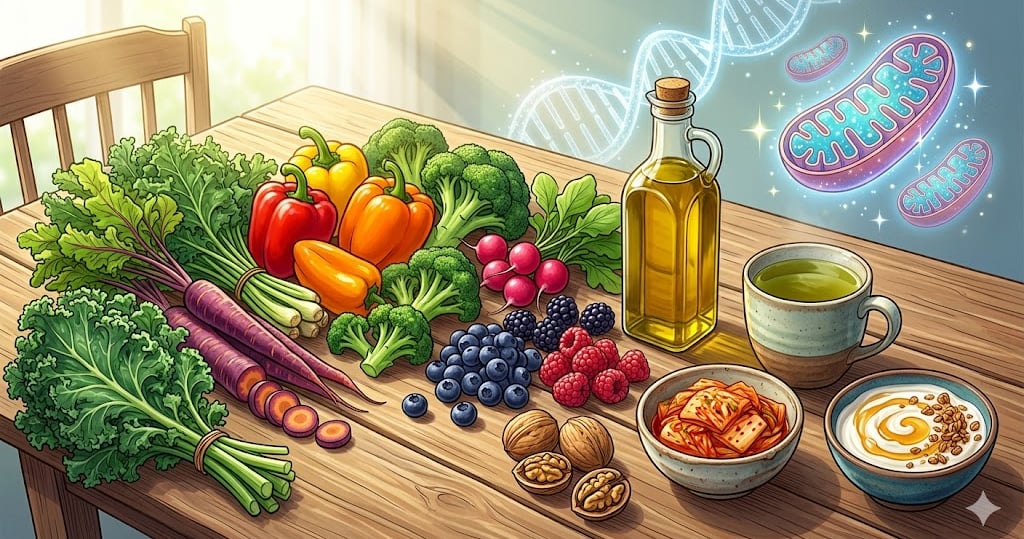
Research from 2024–2026 shows that healthy aging is strongly associated with plant diversity, Mediterranean-style eating, fermented foods, mitochondrial-supportive polyphenols, and reduced ultra-processed food intake.
Healthy Aging Nutrition: Key Takeaways
Research published between 2023 and 2026 shows that healthy aging is strongly associated with:
Mediterranean-style dietary patterns
High dietary diversity (30+ plant foods weekly)
Reduced ultra-processed food intake
Regular intake of fermented foods
Polyphenol-rich foods that support mitochondrial health
Combining nutrition with regular physical activity
These dietary strategies are linked to lower inflammation, healthier gut microbiome diversity, improved metabolic resilience, slower biological aging, and reduced risk of multimorbidity (Shan et al., 2023; Tessier et al., 2025; Walters, 2025).
For decades, aging was viewed as an unavoidable biological decline—something written into our genes and largely beyond our control. But modern longevity science is rapidly dismantling that assumption. Research published between 2023 and 2026 now suggests that one of the most powerful influences on how well we age is not found in an expensive supplement, biohacking device, or anti-aging drug. It is found on our plates every single day (Walters, 2025; Tessier et al., 2025).
Scientists studying healthy aging increasingly focus not just on lifespan—the number of years lived—but on healthspan, the years spent physically active, cognitively sharp, metabolically healthy, and free from chronic disease. Emerging evidence shows that dietary patterns rich in diverse plant foods, fiber, polyphenols, healthy fats, and fermented foods can influence key biological pathways involved in aging, including inflammation, mitochondrial function, gut microbiome diversity, insulin sensitivity, oxidative stress, and even biological age itself (Liao & Li, 2024; Zhang et al., 2025).
At the same time, diets dominated by ultra-processed foods, refined sugars, and nutrient-poor calories are increasingly linked to accelerated biological aging, cardiometabolic disease, frailty, and multimorbidity—the coexistence of multiple chronic diseases that commonly develop with age (Abbad-Gomez et al., 2025). In other words, aging is not simply about getting older; it is deeply connected to the cumulative metabolic signals generated by everyday food choices.
What makes the latest research especially compelling is that healthy aging does not appear to require extreme dieting or expensive interventions. Instead, the strongest evidence consistently supports sustainable whole-food dietary patterns such as the Mediterranean diet, plant-forward nutrition, dietary diversity, and microbiome-supportive eating habits (Shan et al., 2023; Walters, 2025).
Part 1: The Big Picture — Dietary Patterns Are the Fundamental Unit of Longevity Science
Moving Beyond "Superfoods"
For decades, popular nutrition media chased individual nutrients—vitamin C, omega-3 fatty acids, resveratrol—as if longevity could be bottled in a single pill. The 2025 landmark perspective published in Nature Aging by Walters definitively reframes this conversation. As Walters (2025) establishes, what matters is not any single food or nutrient but the overall pattern of eating—the coherent dietary ecosystem you build over months and years.
This paradigm shift is reinforced by Tessier and colleagues (2025) in Nature Medicine, whose analysis of optimal dietary patterns for healthy aging demonstrated that adherence to whole-food, plant-forward dietary patterns—including the Mediterranean diet, the Healthy Eating Index, and plant-based diet scores—was associated with substantially better aging outcomes across multiple health domains. Crucially, no single pattern dominated; what unified the most protective approaches was their shared emphasis on dietary quality over dietary rigidity.
Further anchoring this perspective, Shan and colleagues (2023) published a landmark analysis in JAMA Internal Medicine examining healthy eating patterns and total mortality risk. Their large-scale cohort study found that greater adherence to established healthy eating indices was associated with significantly lower risk of total and cause-specific mortality—including cardiovascular disease, cancer, and respiratory disease. The takeaway is sobering and hopeful in equal measure: how you eat, consistently, over time, is predictive of how long and how well you live.
The Molecular Architecture Beneath the Plate
Why do food patterns work better than isolated nutrients? Menichetti, Barabási, and Loscalzo (2024) offer one of the most scientifically sophisticated answers in their Annual Review of Nutrition paper introducing the concept of the "Foodome." The foodome refers to the full network of tens of thousands of bioactive molecules present in whole foods—polyphenols, flavonoids, terpenoids, alkaloids, and hundreds of others—that interact with each other and with your body's molecular networks in ways that no supplement can replicate.
Think of it this way: a blueberry contains not one but over 200 bioactive compounds. These compounds interact synergistically—some enhancing each other's absorption, others amplifying signaling pathways—in ways that are lost when any single compound is extracted and isolated. This is why food matrix matters. Eating for longevity means engaging the full complexity of whole foods, not shortcutting it.
Part 2: Dietary Diversity — The Anti-Aging Strategy Most People Overlook
Your Gut Microbiome as a Longevity Organ
Liao and Li (2024), writing in Frontiers in Medicine, provide compelling evidence that dietary diversity directly delays biological aging. Biological age—the functional age of your cells, measured through markers like telomere length and epigenetic clocks—can diverge dramatically from your chronological age. Two 65-year-olds can have biological ages of 55 and 75, respectively, depending largely on their health behaviors. Diet is one of the most potent determinants.
The mechanism runs substantially through the gut microbiome. A diverse diet—one that draws from at least 30 different plant sources per week—cultivates a richly varied microbial community. This diversity trains and calibrates your immune system, reducing the chronic low-grade inflammation known as "inflammaging"—a term used to describe the slow-burning inflammatory state that drives atherosclerosis, neurodegeneration, insulin resistance, and many cancers. A diverse gut microbiome is, in a very real sense, your body's internal security and repair department.
Practical insight: Dietary diversity does not require exotic foods. It means rotating your vegetable choices weekly, swapping between different legumes (lentils, chickpeas, black beans, kidney beans), experimenting with different whole grains (oats, barley, farro, millet), and incorporating a variety of nuts, seeds, herbs, and spices. Color diversity on your plate is one of the easiest proxies for chemical diversity in your cells.
Part 3: Mitochondria, Phenolics, and the Cellular Engine of Aging
Why Your Cellular Energy Factories Matter
Zhang and colleagues (2025) published a comprehensive review in Frontiers in Aging that has significant implications for anyone interested in combating age-related fatigue and frailty at its biological source. Their focus: dietary phenolics and mitochondrial function.
Mitochondria are the organelles responsible for producing adenosine triphosphate (ATP)—the energy currency of every cell in your body. As mitochondria age, they accumulate damage, produce energy less efficiently, and generate excess reactive oxygen species (oxidative stress). This mitochondrial decline underlies much of what we experience as ageing: reduced stamina, slower recovery, cognitive fog, and increased vulnerability to disease.
Dietary phenolics—a broad category of plant compounds that includes polyphenols, flavonoids, and catechins—appear to interrupt this decline by supporting mitochondrial repair, reducing oxidative stress, and even stimulating the production of new mitochondria (a process called mitochondrial biogenesis). These compounds are not rare. They are found in:
Dark berries: blueberries, raspberries, blackberries, açaí
Green and black tea: particularly rich in catechins like EGCG
Extra virgin olive oil: a cornerstone of the Mediterranean diet
Dark chocolate (≥70% cacao)
Walnuts and pecans
Red grapes and moderate red wine
Coffee
Herbs and spices: turmeric, rosemary, oregano, cloves
Critically, Zhang et al. (2025) highlight a synergistic relationship between dietary phenolics and physical exercise. Exercise increases the uptake and utilization of these compounds at the cellular level, while phenolics prime muscles to respond more effectively to physical activity. Neither intervention alone achieves what both together accomplish. This is one of the most actionable findings in recent longevity science.
Part 4: Preventing the Domino Effect — Diet and Multimorbidity
The Chronic Disease Cascade
Abbad-Gomez and colleagues (2025), also writing in Nature Aging, tackle one of the most pressing challenges of aging populations: multimorbidity—the simultaneous presence of two or more chronic conditions. In older adults, multimorbidity is the rule, not the exception. Type 2 diabetes often co-occurs with hypertension, which co-occurs with kidney disease, which co-occurs with cardiovascular complications. Each condition amplifies the burden of the others.
Their research demonstrates that specific dietary patterns are associated with accelerated multimorbidity, while protective dietary patterns—characterized by whole foods, high plant-based nutrition, healthy fats, and minimal ultra-processed foods—significantly reduce this risk. Importantly, the protection is not disease-specific; rather, it is systemic. Healthy dietary patterns simultaneously address multiple disease pathways—metabolic, inflammatory, vascular, and neuroendocrine—providing comprehensive disease resilience that no drug regimen can fully replicate.
The Ultra-Processed Foods Problem
The implicit and explicit message across multiple studies in this review is that ultra-processed foods represent a fundamental threat to healthy aging. Products engineered for palatability and shelf-stability—containing refined sugars, seed oils, artificial flavors, emulsifiers, and preservatives—disrupt gut microbiome diversity, promote inflammation, impair mitochondrial function, and erode the metabolic flexibility that characterizes resilient aging. Reducing their presence in your diet is not a cosmetic change; it is a structural one.
Part 5: Emerging Frontiers — Fermented Foods, Polysaccharides, and Nutritional Personalization
Fermented Foods: Ancient Wisdom, Modern Validation
Mu and colleagues (2025), writing in Aging and Health Research, provide a comprehensive review of the role of fermented foods in healthy longevity. Fermented foods—yogurt, kefir, kimchi, sauerkraut, miso, tempeh, and kombucha—deliver a unique combination of live microorganisms (probiotics), bioactive peptides produced during fermentation, and enhanced nutrient bioavailability. Collectively, these properties support gut microbiome diversity, reduce systemic inflammation, improve immune regulation, and may contribute to extended healthspan.
The research by Mu et al. (2025) adds an important dimension to the gut-longevity relationship: it is not only about what you feed your microbiome (prebiotics from fiber) but also about actively replenishing it (probiotics from fermented foods). Incorporating one or two servings of fermented foods daily is an evidence-informed, affordable strategy to support the microbial ecosystem that underlies so much of healthy aging.
Natural Polysaccharides: The Anti-Aging Power of Plant Fibers
Teng and colleagues (2025) in Trends in Food Science & Technology document the anti-aging properties of natural polysaccharides—complex carbohydrates found in foods such as oats, mushrooms, sea vegetables, legumes, and certain fruits. Their review shows that these compounds exert anti-inflammatory, antioxidant, and immune-modulating effects, influencing multiple molecular pathways associated with cellular aging. The structural diversity of polysaccharides—shaped by the food source—determines their specific biological effects, underscoring once again why dietary variety is irreplaceable.
Personalized Nutrition: The Next Frontier
Castelli and colleagues (2026), writing in Molecules, synthesize current evidence and map future directions in nutritional strategies for aging. Their review highlights the growing importance of personalized nutrition—the recognition that genetic variation, gut microbiome composition, metabolic phenotype, and lifestyle factors all interact to determine how any individual responds to a given diet. While the general principles reviewed in this article apply broadly, the future of longevity nutrition is precision-based, accounting for individual variation in ways that blanket dietary guidelines cannot.
Castelli et al. (2026) also emphasize the importance of nutritional adequacy across aging, noting that older adults face specific risks of micronutrient insufficiency—including vitamins D, B12, and folate; calcium; zinc; and magnesium—even on otherwise healthy diets. Regular nutritional assessment becomes increasingly important with age.
Ahn, Wu, and Kim (2025) in Nutrients further delineate the relationship between dietary management and prevention of specific age-related diseases—including sarcopenia (muscle loss), osteoporosis, cognitive decline, and cardiometabolic disease—providing disease-specific dietary targets that can be discussed with healthcare providers.
Part 6: Five Practical Dietary Pillars for Healthy Aging
These evidence-informed strategies synthesize the research reviewed above into actionable daily habits.
1. Build a Diverse Plate — Aim for 30 Plant Sources Per Week
Rotate vegetables, fruits, legumes, whole grains, nuts, seeds, herbs, and spices. Track color diversity as a simple proxy for chemical diversity. This fuels microbiome richness, supplies the full spectrum of bioactive compounds, and—as Liao and Li (2024) demonstrate—directly delays biological aging.
2. Make Phenolic-Rich Foods a Daily Habit
Incorporate berries, green tea, extra virgin olive oil, walnuts, dark chocolate, and colorful herbs at least once daily. These foods support mitochondrial function at the cellular level (Zhang et al., 2025) and are accessible in any grocery store or market.
3. Commit to a Coherent Dietary Pattern
Rather than chasing dietary trends, align with a well-researched whole-food pattern. The Mediterranean diet has the strongest and most consistent evidence base for healthy aging, supported by Tessier et al. (2025), Shan et al. (2023), Walters (2025), and Abbad-Gomez et al. (2025). A flexitarian or plant-forward whole-food diet is an equally valid alternative.
4. Add Fermented Foods Daily
Include one to two servings of yogurt, kefir, kimchi, sauerkraut, miso, or tempeh each day. This actively replenishes your gut microbiome, reducing inflammaging and supporting immune resilience (Mu et al., 2025).
5. Pair Nutrition with Regular Movement
The synergistic relationship between dietary phenolics and exercise is among the most actionable findings in the 2025 literature (Zhang et al., 2025). Even 30 minutes of moderate walking daily enhances the cellular uptake and efficacy of the bioactive compounds you consume. Nutrition and movement are not two separate boxes to check—they amplify each other.
Scientific Limitations and Individual Variability
Although the evidence supporting healthy dietary patterns and longevity is increasingly robust, much of nutritional aging research remains observational. This means researchers can identify strong associations but cannot always prove direct causation. Additionally, genetic background, gut microbiome composition, socioeconomic factors, physical activity, sleep, and medication use all influence aging trajectories and dietary responses.
Nevertheless, the consistency of findings across epidemiological studies, mechanistic research, and clinical investigations strongly supports the role of whole-food dietary patterns in promoting healthy aging and reducing chronic disease risk (Walters, 2025; Tessier et al., 2025; Shan et al., 2023
Frequently Asked Questions
Q1. Is it too late to change my diet if I am already in my 60s or 70s? Not at all. Cellular renewal is continuous throughout life. Your gut microbiome responds to dietary changes within days. Studies including Tessier et al. (2025) demonstrate meaningful aging-related benefits from dietary improvement at any adult age. The best time to start is always now.
Q2. Do I need to follow a strict vegan diet to age well? No. The research does not require strict veganism. What the evidence consistently supports is a plant-predominant eating pattern—one where vegetables, fruits, legumes, whole grains, and healthy fats form the foundation. Moderate amounts of fish, eggs, dairy, and lean poultry are compatible with healthy aging. Ultra-processed foods and excessive red or processed meat are the clearest evidence-based targets for reduction.
Q3. What is the difference between biological age and chronological age, and why does it matter? Chronological age is simply how many years you have lived. Biological age is a measure of how old your cells and tissues function—assessed through markers like telomere length and epigenetic clocks. Two people of identical chronological age can have biological ages differing by 10–15 years. Diet, as Liao and Li (2024) demonstrate, is one of the most powerful influences on biological age.
Q4. Are dietary supplements a valid substitute for whole foods? No. The foodome research by Menichetti et al. (2024) makes clear that whole foods contain a complex molecular network of interacting bioactive compounds that supplements cannot replicate. Supplements may address specific documented deficiencies—particularly relevant for older adults, as Castelli et al. (2026) note—but they do not substitute for the pattern-level protection of a varied, whole-food diet.
Q5. How important are fermented foods, and what if I do not like them? The research by Mu et al. (2025) supports fermented foods as a meaningful addition to a longevity-oriented diet, primarily through their impact on gut microbiome diversity. That said, the prebiotic fiber from diverse plant foods is equally important. If you dislike traditional fermented foods, start with mild options like yogurt or kefir. The broader diversity of your plant-based diet remains the most important variable.
Q6. How quickly will dietary changes produce noticeable results? Some changes are rapid—improved energy, better digestion, and reduced bloating can occur within one to three weeks of improving dietary quality. Gut microbiome changes are detectable within days. Biological aging markers, cardiometabolic improvements, and protection against multimorbidity accumulate over months and years. Think of nutritional improvement as a long-term investment with compounding returns.
Q7. Is eating for longevity expensive? No. The foundation of a longevity-supporting diet—beans, lentils, oats, seasonal vegetables, frozen berries, olive oil, eggs, and yogurt—is affordable in virtually every market context. Dietary diversity does not require exotic or expensive items; it requires rotation and variety from ordinary sources. Strategic meal planning and cooking from whole ingredients further reduces cost.
Call to Action: Your 7-Day Longevity Diet Starter Plan
You do not need to overhaul your entire diet overnight. Research consistently shows that small, consistent improvements compound into meaningful health outcomes over time. Here is how to begin:
Day 1 — Audit Your Plate: Write down everything you ate yesterday. How many different plant foods did you include? What proportion of your calories came from ultra-processed sources?
Day 2 — Add One Phenolic-Rich Food: Add a handful of mixed berries to your breakfast or swap your morning beverage for green tea.
Day 3 — Try a Fermented Food: Add a tablespoon of kimchi or sauerkraut to a meal, or include yogurt with live cultures as a snack.
Day 4 — Diversify Your Legumes: If you normally eat chickpeas, try lentils or black beans. Each variety offers a distinct microbiome and polysaccharide profile.
Day 5 — Move and Eat Phenolics Together: Have a small serving of walnuts or dark chocolate before or after a 30-minute walk. Let the synergy work.
Day 6 — Build a Color-Diverse Plate: Aim for at least 4 different colours among your vegetables and fruits today.
Day 7 — Plan Your Diversity for the Week: List 30 different plant foods you will incorporate into the coming week. This one exercise alone begins to transform your gut microbiome and your biological age trajectory.
Clinical pearls
1. Biological Age is "Malleable," Not Fixed
While your chronological age only moves in one direction, your biological age—the functional state of your cells—is surprisingly flexible. Research shows that switching to a diverse, nutrient-dense diet can actually "slow the clock" at a cellular level. It is helpful to think of your DNA as a piano; while you can’t change the keys (your genes), your diet acts as the sheet music that determines which songs are played (which genes are expressed).
2. The "Diversity Quotient" is Your Gut’s Security System
In the past, we focused on "superfoods." The 2025 data suggests that diversity is the true superpower. Consuming over 30 different types of plants per week creates a robust gut microbiome. This diversity acts like a security system, training your immune system to distinguish between real threats and harmless triggers, which significantly lowers the "inflammaging" (age-related chronic inflammation) that drives most diseases.
3. Mitochondria Require "Chemical Cleaners"
Your mitochondria are like tiny cellular engines that produce energy, but like any engine, they create "exhaust" (oxidative stress). Dietary phenolics—found in dark berries, olive oil, and green tea—act as specialized cleaners that help the mitochondria burn fuel more cleanly and repair themselves. Without these compounds, your cellular engines "gum up," leading to the fatigue and frailty often associated with aging.
4. Synergy: The 1+1=3 Effect of Diet and Exercise
A critical 2025 clinical insight is that nutrition and movement are not just additive; they are synergistic. For example, the phenolic compounds in colorful vegetables actually prime your muscles to respond better to physical activity. Conversely, exercise increases the "uptake" of these nutrients into your cells. Doing one without the other is like having a car with fuel but no wheels—you need both to move the needle on longevity.
5. Patterns Protect Better Than Nutrients
Science has moved away from "magic pills" (like vitamin C or E alone) because the body recognizes food patterns, not isolated chemicals. A Mediterranean or whole-food plant-forward pattern provides a "matrix" where fiber, healthy fats, and antioxidants work together. This pattern-based approach is the most effective way to prevent multimorbidity—the "domino effect" where one chronic condition leads to another as we age.
Author’s Note
Nutrition is one of the few modifiable factors that can meaningfully influence how we age, yet it is often reduced to oversimplified advice or short-lived diet trends. This article was written to translate high-quality, contemporary aging research into clear, practical insights for readers who want to understand why food matters—not just what to eat.
The studies discussed here reflect a growing scientific consensus: healthy aging is shaped by overall dietary patterns, dietary diversity, and bioactive compounds that act at the cellular and mitochondrial level. Importantly, the goal is not extreme restriction or perfection, but consistency—choosing nutrient-dense, largely unprocessed foods that support metabolic health, resilience, and functional independence as we age.
As a physician, I have seen how small, sustainable dietary changes can improve energy, cardiometabolic health, and quality of life, even later in life. I hope this article empowers readers to view food not as a source of anxiety, but as a powerful, evidence-based tool for preserving vitality and reducing the burden of age-related disease.
Healthy aging is not determined by a single superfood, supplement, or restrictive diet. The strongest scientific evidence supports a sustainable whole-food dietary pattern rich in plant diversity, fermented foods, healthy fats, fiber, and polyphenol-rich foods combined with regular physical activity. These nutrition strategies influence gut microbiome health, mitochondrial function, inflammation, metabolic resilience, and biological aging itself. Small dietary improvements practiced consistently over time can meaningfully extend healthspan and reduce the risk of age-related chronic disease.
Disclaimer: This article is for informational purposes only and does not constitute medical advice. Individual circumstances vary, and treatment decisions should always be made in consultation with qualified healthcare professionals.
Related Articles
Eat to Live Longer – 5 Evidence-Based Dietary Habits for Healthy Aging
Time-Restricted Eating: Metabolic Advantage or Just Fewer Calories? | DR T S DIDWAL
Exercise and Longevity: The Science of Protecting Brain and Heart Health as You Age | DR T S DIDWAL
Light and Longevity: Can Sunlight Slow Cellular Aging? | DR T S DIDWAL
The Science of Healthy Brain Aging: Microglia, Metabolism & Cognitive Fitness | DR T S DIDWAL
You Are What You Eat: 5 Science-Backed Ways to Optimize Your Diet Now | DR T S DIDWAL
References
Abbad-Gomez, D., Carballo-Casla, A., Beridze, G., Lopez-Garcia, E., Rodríguez-Artalejo, F., Sala, M., Comas, M., Vetrano, D. L., & Calderón-Larrañaga, A. (2025). Dietary patterns and accelerated multimorbidity in older adults. Nature Aging, 5(8), 1481. https://doi.org/10.1038/s43587-025-00929-8
Ahn, B., Wu, X., & Kim, Y. (2025). Dietary management and nutritional strategies for preventing age-related diseases. Nutrients, 17(9), 1450. https://doi.org/10.3390/nu17091450
Castelli, S., Aiello, G., Aiello, V., Massimino, E., Pieri, M., Amoah, I., Lombardo, M., Tripodi, G., & Baldelli, S. (2026). Nutritional strategies and aging: Current evidence and future directions. Molecules, 31(5), 756. https://doi.org/10.3390/molecules31050756
Liao, W., & Li, M. Y. (2024). Dietary diversity contributes to delay biological aging. Frontiers in Medicine, 11, 1463569. https://doi.org/10.3389/fmed.2024.1463569
Menichetti, G., Barabási, A. L., & Loscalzo, J. (2024). Decoding the foodome: Molecular networks connecting diet and health. Annual Review of Nutrition, 44(1), 257–288. https://doi.org/10.1146/annurev-nutr-062322-030557
Mu, H., et al. (2025). The role of fermented foods in healthy longevity: A review. Aging and Health Research, Article 1003314. https://doi.org/10.1016/j.ahr.2025.1003314
Shan, Z., Wang, F., Li, Y., Baden, M. Y., Bhupathiraju, S. N., Wang, D. D., Sun, Q., Rexrode, K. M., Rimm, E. B., Qi, L., Tabung, F. K., Giovannucci, E. L., Willett, W. C., Manson, J. E., Qi, Q., & Hu, F. B. (2023). Healthy eating patterns and risk of total and cause-specific mortality. JAMA Internal Medicine, 183(2), 142–153. https://doi.org/10.1001/jamainternmed.2022.6117
Teng, H., Xiao, H., Li, X., Huang, J., Zhang, B., & Zeng, M. (2025). Recent advances in the anti-aging effects of natural polysaccharides: Sources, structural characterization, action mechanisms and structure–activity relationships. Trends in Food Science & Technology, 160, 105000. https://doi.org/10.1016/j.tifs.2025.105000
Tessier, A. J., Wang, F., Korat, A. A., et al. (2025). Optimal dietary patterns for healthy aging. Nature Medicine, 31, 1644–1652. https://doi.org/10.1038/s41591-025-03570-5
Walters, H. (2025). Healthy diets for healthy aging. Nature Aging, 5, 726. https://doi.org/10.1038/s43587-025-00871-9
Zhang, J., Zhu, W.-W., Huang, Y.-Y., & Tang, C.-H. (2025). Dietary phenolics and exercise complementation to delay aging at its source: A comprehensive review highlighting mitochondrial function. Frontiers in Aging. https://doi.org/10.3389/fragi.2025.1693043