Eat to Live Longer: 5 Science-Backed Dietary Habits for Longevity and Healthy Aging

Explore recent research on diet and multimorbidity to learn how healthy eating patterns reduce age-related disease risk and support cellular energy

NUTRITIONAGING

Dr. T.S. Didwal, M.D.(Internal Medicine)

1/6/202610 min read

Eat to Live Longer: 5 Evidence-Based Dietary Habits That Promote Healthy Aging

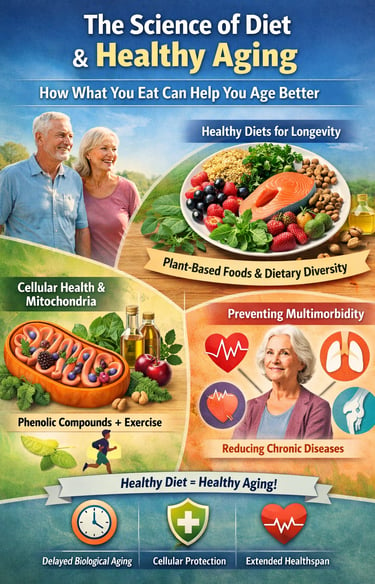
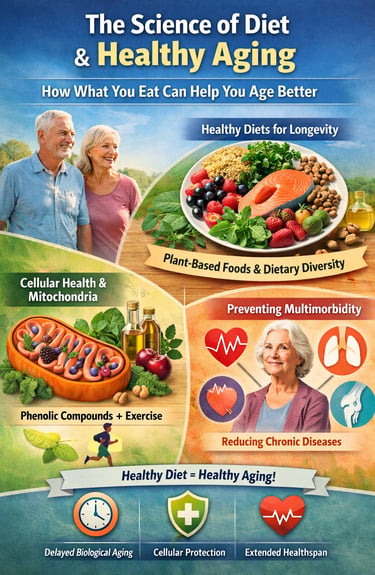
Aging well is not simply about living longer—it is about maintaining health, vitality, and independence as the years advance. A growing body of research now shows that diet is one of the most powerful, modifiable determinants of healthy aging, influencing cellular function, metabolic health, and the risk of chronic disease (Walters, 2025). Rather than focusing on isolated nutrients, modern longevity science emphasizes the importance of overall dietary patterns.

Large population studies demonstrate that diets rich in plant-based foods, healthy fats, and minimally processed ingredients are associated with slower biological aging and better health outcomes (Abbad-Gomez et al., 2025). Importantly, dietary diversity—regularly consuming a wide range of foods—has been shown to delay biological aging, the measure of how old our cells truly are compared with our chronological age (Liao & Li, 2024). This diversity supplies a broad spectrum of bioactive compounds that protect against cellular damage.

At the cellular level, research highlights the role of dietary phenolics, naturally found in foods such as berries, tea, olive oil, and nuts, in supporting mitochondrial function—the energy centers of our cells (Zhang et al., 2025). When combined with regular physical activity, these compounds may help slow aging at its biological source. Together, this evidence sends a hopeful message: improving diet at any age can enhance healthspan and reduce the burden of age-related disease.

Clinical pearls

1. Biological Age is "Malleable," Not Fixed

While your chronological age only moves in one direction, your biological age—the functional state of your cells—is surprisingly flexible. Research shows that switching to a diverse, nutrient-dense diet can actually "slow the clock" at a cellular level. It is helpful to think of your DNA as a piano; while you can’t change the keys (your genes), your diet acts as the sheet music that determines which songs are played (which genes are expressed).

2. The "Diversity Quotient" is Your Gut’s Security System

In the past, we focused on "superfoods." The 2025 data suggests that diversity is the true superpower. Consuming over 30 different types of plants per week creates a robust gut microbiome. This diversity acts like a security system, training your immune system to distinguish between real threats and harmless triggers, which significantly lowers the "inflammaging" (age-related chronic inflammation) that drives most diseases.

3. Mitochondria Require "Chemical Cleaners"

Your mitochondria are like tiny cellular engines that produce energy, but like any engine, they create "exhaust" (oxidative stress). Dietary phenolics—found in dark berries, olive oil, and green tea—act as specialized cleaners that help the mitochondria burn fuel more cleanly and repair themselves. Without these compounds, your cellular engines "gum up," leading to the fatigue and frailty often associated with aging.

4. Synergy: The 1+1=3 Effect of Diet and Exercise

A critical 2025 clinical insight is that nutrition and movement are not just additive; they are synergistic. For example, the phenolic compounds in colorful vegetables actually prime your muscles to respond better to physical activity. Conversely, exercise increases the "uptake" of these nutrients into your cells. Doing one without the other is like having a car with fuel but no wheels—you need both to move the needle on longevity.

5. Patterns Protect Better Than Nutrients

Science has moved away from "magic pills" (like vitamin C or E alone) because the body recognizes food patterns, not isolated chemicals. A Mediterranean or whole-food plant-forward pattern provides a "matrix" where fiber, healthy fats, and antioxidants work together. This pattern-based approach is the most effective way to prevent multimorbidity—the "domino effect" where one chronic condition leads to another as we age.

The Science of Diet and Healthy Aging: How What You Eat Can Help You Live Better Longer

This comprehensive guide explores cutting-edge research on how diet quality, dietary diversity, and specific nutritional compounds work together to support successful aging and reduce age-related diseases.

Study 1: Foundational Insights on Healthy Diets for Healthy Aging

Walters' recent publication in Nature Aging (Walters, 2025) provides foundational insights into the relationship between healthy eating patterns and aging biology. This landmark perspective emphasizes that nutritional interventions aren't merely about living longer—they're about living better.

Key Takeaway: The study underscores that dietary choices represent one of the most modifiable factors in aging, offering hope that it's never too late to optimize your nutrition for better health outcomes.

Why This Matters

What makes this research particularly important is its focus on practical nutrition for real people. Rather than discussing theoretical concepts, Walters highlights how accessible lifestyle modifications—beginning with what you put on your plate—can meaningfully improve your health span (the number of years you live in good health).

The implications are significant: if you're concerned about age-related health decline, chronic disease prevention, or simply maintaining vitality in older age, dietary optimization offers scientifically-backed hope.

Study 2: Dietary Diversity as an Anti-Aging Strategy

Liao and Li's 2024 research in Frontiers in Medicine takes a deeper dive into biological aging, revealing how dietary diversity directly contributes to delaying biological aging (Liao & Li, 2024). This research is crucial because it distinguishes between chronological age (how many years you've lived) and biological age (how old your cells actually are).

The Diversity Advantage

The study demonstrates that eating a varied diet isn't just about getting different nutrients—it's about activating multiple protective mechanisms in your body simultaneously. When you consume foods from diverse categories, you're essentially giving your cells multiple tools to repair damage and slow cellular aging.

Key Takeaway: Dietary diversity emerged as a significant predictor of delayed aging, suggesting that the variety on your plate may be just as important as the individual nutrients themselves.

What does dietary diversity actually look like? Think about incorporating foods across different color categories (red tomatoes, orange carrots, green leafy vegetables, purple berries, white garlic), various plant families, and multiple protein sources. This natural variety ensures you're consuming a broader spectrum of bioactive compounds and essential nutrients.

Study 3: Phenolics, Exercise, and Mitochondrial Aging

Zhang and colleagues (2025) published groundbreaking research in Frontiers in Aging that focuses on dietary phenolics and their role in supporting mitochondrial function—the powerhouse of your cells. Their comprehensive review highlights a critical insight: aging at its source means addressing what happens inside your cells, particularly in the mitochondria.

Why Mitochondria Matter for Aging

Your mitochondria are responsible for producing the energy your cells need to function. As we age, mitochondrial function naturally declines, contributing to fatigue, weakness, and increased disease susceptibility. Dietary phenolics (compounds found in plants like berries, tea, and nuts) appear to help maintain and even restore mitochondrial health.

Key Takeaway: The combination of dietary phenolics and exercise creates a complementary effect—each helps the other work better. This suggests that anti-aging nutrition works best when paired with physical activity.

Research highlighted in this study focuses on compounds such as polyphenols, flavonoids, and catechins, naturally found in:

  • Green and black tea

  • Berries (blueberries, raspberries, blackberries)

  • Red grapes and wine

  • Dark chocolate

  • Nuts and seeds

  • Coffee

  • Extra virgin olive oil

These aren't exotic superfoods—they're accessible items that can become part of your regular routine.

Study 4: Dietary Patterns and Prevention of Multimorbidity

The Multimorbidity Crisis in Aging

Abbad-Gomez and collaborators (2025) published critical research in Nature Aging examining how dietary patterns influence multimorbidity—the simultaneous presence of multiple chronic conditions that often comes with aging (Abbad-Gomez et al., 2025).

This research is particularly significant because it shifts the conversation from single diseases to the realistic scenario most older adults face: managing multiple conditions simultaneously. Accelerated multimorbidity (where chronic conditions develop faster than expected) represents one of the greatest health challenges in aging populations.

Connecting Diet to Disease Prevention

The study reveals that certain dietary patterns significantly increase the risk of accelerated multimorbidity, while others provide substantial protection. This isn't about preventing one disease—it's about maintaining overall health resilience and reducing the cascade of age-related conditions.

Key Takeaway: Your dietary pattern (the overall way you eat) matters more than individual food choices. A coherent approach to healthy eating can address multiple disease pathways simultaneously, offering comprehensive disease prevention benefits.

Rather than obsessing over individual nutrients, this research emphasizes whole dietary patterns such as the Mediterranean diet, plant-based approaches, or whole-food diets rich in unprocessed foods. These patterns share common features: high plant-based nutrition, healthy fats, whole grains, and minimal ultra-processed foods.

How These Studies Work Together: The Complete Picture

While each study focuses on different aspects of diet and aging, together they paint a comprehensive picture of how to eat for longevity.

  • Layer 1 - Foundation: Walters establishes that healthy diets fundamentally support healthy aging across multiple domains.

  • Layer 2 - Diversity: Liao and Li show that dietary variety amplifies these benefits by engaging different biological protective mechanisms.

  • Layer 3 - Cellular Action: Zhang and colleagues reveal the cellular mechanisms through which dietary compounds (particularly phenolics) work, especially when combined with exercise.

  • Layer 4 - Real-World Protection: Abbad-Gomez demonstrates that these principles translate to meaningful disease prevention and protection against the multimorbidity that challenges aging populations.

Practical Strategies for Eating to Age Better

  • 1. Prioritize Dietary Diversity

    Aim to eat foods from at least 30 different plant sources per week. Include various vegetables, fruits, whole grains, legumes, nuts, and seeds. This diverse approach ensures you're capturing the full spectrum of bioactive compounds.

  • 2. Emphasize Phenolic-Rich Foods

    Since dietary phenolics appear especially important for mitochondrial function, deliberately incorporate:

    • Colorful berries (fresh or frozen)

    • Tea (especially green tea)

    • Herbs and spices (turmeric, oregano, thyme)

    • Nuts, particularly walnuts

    • Dark leafy greens

  • 3. Follow a Coherent Dietary Pattern

    Rather than jumping between different diet trends, commit to a consistent dietary pattern that emphasizes whole foods, plant-based nutrition, and healthy fats. The Mediterranean diet is particularly well-researched for healthy aging.

  • 4. Combine Nutrition with Movement

    Remember Zhang's research: dietary phenolics work synergistically with exercise. The combination is more powerful than either alone. Aim for both nutritional optimization and regular physical activity.

  • 5. Limit Ultra-Processed Foods

    The Abbad-Gomez research implicitly highlights the danger of ultra-processed foods. Minimizing these foods reduces the risk of developing the dietary patterns associated with accelerated multimorbidity.

Common Questions About Diet and Aging

FAQ 1: Is It Too Late to Change My Diet and See Benefits?

The Short Answer: No. While early nutrition matters, research consistently shows that dietary improvements at any age can meaningfully improve health outcomes. Your cells are constantly renewing themselves, and better nutrition can support that renewal process regardless of your current age.

FAQ 2: Do I Need to Become Vegetarian or Vegan to Age Healthily?

The Short Answer: Not necessarily. While plant-based nutrition is emphasized throughout the research, what matters most is the overall dietary pattern. You can include lean proteins, fish, and moderate amounts of poultry while still following a healthy eating pattern. The key is ensuring that plant foods dominate your plate.

FAQ 3: What's the Difference Between Biological Age and Chronological Age?

The Short Answer: Chronological age is how many years you've lived. Biological age reflects how old your cells and tissues actually are. Two 65-year-olds can have very different biological ages based on their health behaviors, including diet. Good nutrition can keep your biological age younger than your chronological age.

FAQ 4: Are Supplements Better Than Food?

Answer: Food is superior. While supplements can fill specific gaps, whole foods contain complex combinations of compounds that work together in ways we don't fully understand. The bioactive compounds in food—like those phenolics discussed in Zhang's research—work best in their natural food matrix.

FAQ 5: How Quickly Will I See Benefits from Dietary Changes?

Answer: Some benefits appear quickly (improved energy, better digestion, clearer thinking). Others take longer. Cellular changes and protection against disease development unfold over months and years. Think in terms of healthy aging as a long-term investment, not a quick fix.

FAQ 6: Is It Expensive to Eat for Healthy Aging?

Answer: It doesn't have to be. While some foods are pricey, the foundation of healthy eating—beans, lentils, seasonal vegetables, frozen berries, nuts, and whole grains—can be very affordable. Dietary diversity doesn't require exotic foods; it requires variety from ordinary sources.

Moving Forward: Your Action Plan

This Week

  • Audit your current diet: Notice your eating patterns without judgment. Which food groups are you emphasizing? Which are you neglecting?

  • Add one new food: Pick one new vegetable, fruit, or plant-based food to try. This small step begins increasing your dietary diversity.

  • Identify one phenolic-rich food to emphasize: Whether it's berries, tea, or nuts, choose one to add to your routine.

This Month

  • Design your baseline pattern: Decide which dietary pattern (Mediterranean, plant-based, whole-food) resonates with you and aligns with your values.

  • Plan for variety: Map out ways to incorporate different food colors and types throughout your week.

  • Pair nutrition with movement: If not already exercising, establish a modest physical activity routine to complement your dietary improvements.

Ongoing

  • Track what works for you: Notice how you feel, your energy levels, and your health markers as you optimize your diet.

  • Stay curious: Nutrition science evolves. Keep learning about foods and compounds that support healthy aging.

  • Celebrate progress: Focus on what you're adding to your diet rather than just what you're removing.

Author’s Note

Nutrition is one of the few modifiable factors that can meaningfully influence how we age, yet it is often reduced to oversimplified advice or short-lived diet trends. This article was written to translate high-quality, contemporary aging research into clear, practical insights for readers who want to understand why food matters—not just what to eat.

The studies discussed here reflect a growing scientific consensus: healthy aging is shaped by overall dietary patterns, dietary diversity, and bioactive compounds that act at the cellular and mitochondrial level. Importantly, the goal is not extreme restriction or perfection, but consistency—choosing nutrient-dense, largely unprocessed foods that support metabolic health, resilience, and functional independence as we age.

As a physician, I have seen how small, sustainable dietary changes can improve energy, cardiometabolic health, and quality of life, even later in life. I hope this article empowers readers to view food not as a source of anxiety, but as a powerful, evidence-based tool for preserving vitality and reducing the burden of age-related disease.

This content is intended for educational purposes and should complement, not replace, individualized medical advice. Dietary needs vary, and readers are encouraged to discuss personalized nutrition strategies with qualified healthcare professionals.

Disclaimer: This article is for informational purposes only and does not constitute medical advice. Individual circumstances vary, and treatment decisions should always be made in consultation with qualified healthcare professionals.

Related Articles

Time-Restricted Eating: Metabolic Advantage or Just Fewer Calories? | DR T S DIDWAL

Exercise and Longevity: The Science of Protecting Brain and Heart Health as You Age | DR T S DIDWAL

Light and Longevity: Can Sunlight Slow Cellular Aging? | DR T S DIDWAL

Can Stem Cells Slow Aging? Cutting-Edge Research on Regeneration, Senolytics, and Immune Therapy | DR T S DIDWAL

The Science of Healthy Brain Aging: Microglia, Metabolism & Cognitive Fitness | DR T S DIDWAL

You Are What You Eat: 5 Science-Backed Ways to Optimize Your Diet Now | DR T S DIDWAL

References

Abbad-Gomez, D., Carballo-Casla, A., Beridze, G., Lopez-Garcia, E., Rodríguez-Artalejo, F., Sala, M., Comas, M., Vetrano, D. L., & Calderón-Larrañaga, A. (2025). Dietary patterns and accelerated multimorbidity in older adults. Nature Aging, 5(8), 1481. https://doi.org/10.1038/s43587-025-00929-8

Liao, W., & Li, M. Y. (2024). Dietary diversity contributes to delay biological aging. Frontiers in Medicine, 11, 1463569. https://doi.org/10.3389/fmed.2024.1463569

Walters, H. (2025). Healthy diets for healthy aging. Nature Aging, 5, 726. https://doi.org/10.1038/s43587-025-00871-9

Zhang, J., Zhu, W.-W., Huang, Y.-Y., & Tang, C.-H. (2025). Dietary phenolics and exercise complementation to delay aging at its source: A comprehensive review highlighting mitochondrial function. Frontiers in Aging. https://doi.org/10.3389/fragi.2025.1693043