Targeting Skeletal Muscle in Type 2 Diabetes: A New Paradigm in Cardiometabolic Therapy
Discover why skeletal muscle is the primary therapeutic target in Type 2 Diabetes and cardiometabolic disease. Learn how resistance training, protein strategies, and drugs like Metformin and Semaglutide impact insulin sensitivity, glucose control, and long-term metabolic health.
DIABETESMETABOLISM
Dr. T.S. Didwal, M.D.(Internal Medicine)
7/12/202617 min read
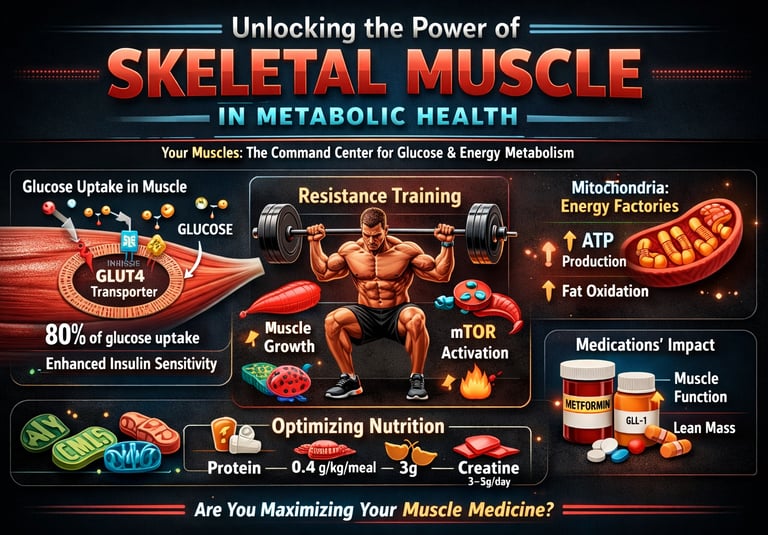
Skeletal muscle is the primary site of glucose disposal, accounting for nearly 80% of insulin-stimulated uptake. In Type 2 Diabetes, targeting muscle through resistance training, protein optimization, and therapies like Metformin significantly improves insulin sensitivity and metabolic health.
Your muscles control up to 80% of glucose metabolism—making them the most powerful target in Type 2 Diabetes.
Resistance training isn’t just exercise—it’s a metabolic therapy that directly improves insulin sensitivity.
Skeletal muscle is the missing link in treating Insulin Resistance and cardiometabolic disease.
Most diabetes treatments ignore muscle—yet it’s where the majority of glucose is actually used.
Muscle may be more important than losing weight for long-term metabolic health.
The "Muscle as Medicine" Power Metrics
80%: The amount of insulin-stimulated glucose disposal that occurs in skeletal muscle.
48 Hours: The duration of the "insulin sensitivity afterburn" following a single resistance session.
0.4 g/kg: The "Pulse Feeding" protein dose required per meal to overcome anabolic resistance.
3.0 g: The "Leucine Trigger" threshold needed to flip the mTOR switch for muscle repair.
Clinical pearls .
1. The "Insulin-Independent" Glucose Door
Scientific Pearl: Resistance training triggers GLUT4 translocation via the AMPK and calcium-signaling pathways, bypassing the need for insulin-receptor activation to clear blood glucose.
Lifting weights opens a "secret side door" for sugar to leave your blood and enter your muscles. Even if your body’s main key (insulin) isn't working well, exercise clears blood sugar using a completely different system.
2. The 48-Hour Metabolism "Afterburn"
Scientific Pearl: A single bout of high-intensity resistance exercise enhances whole-body insulin sensitivity for 24 to 48 hours post-exercise, primarily through increased glycogen synthase activity.
One solid workout doesn't just burn calories while you’re doing it—it makes your metabolism "sharper" for two full days. To keep your blood sugar stable around the clock, you only need to hit the weights every other day.
3. Overcoming the "Leucine Threshold"
Scientific Pearl: To trigger Muscle Protein Synthesis (MPS) in the presence of anabolic resistance, a bolus of 2.5–3g of leucine is required to saturate the mTORC1 signaling complex.
Think of leucine as the "ignition switch" for muscle repair. If you only eat a little protein, the engine never starts. You need a specific "dose" (about 30g of high-quality protein) at one time to flip the switch and start building muscle.
4. GLP-1 "Muscle Insurance"
Scientific Pearl: GLP-1 receptor agonists can induce a catabolic state in lean mass; concurrent resistance training and a protein intake of ≥1.6g/kg are necessary to preserve the skeletal muscle-to-adipose ratio.
New weight-loss drugs are incredibly effective, but they can't tell the difference between burning fat and burning muscle. To make sure you're losing the "bad" weight and keeping the "good" muscle, you must eat extra protein and lift weights while taking them.
5. Creatine as a "Metabolic Sponge"
Scientific Pearl: Creatine monohydrate supplementation increases intramuscular phosphocreatine, which enhances the capacity for glycogen resynthesis and improves glucose uptake through osmotic and signaling mechanisms.
Creatine isn't just for bodybuilders. It turns your muscles into a better "sponge" for carbohydrates. By taking a small daily dose, you help your muscles soak up more sugar from your bloodstream and store it as healthy energy.
6. The "Muscle-First" Medication Timing
Scientific Pearl: While Metformin is a potent insulin sensitizer, its activation of AMPK may antagonize the mTOR pathway if taken in close temporal proximity to resistance exercise.
Your diabetes medication and your workout are both powerful, but they sometimes speak different languages. If you take Metformin, try to time it several hours away from your workout so the drug and the exercise don't "interfere" with each other’s signals.
A science-backed guide to resistance training prescriptions, protein strategies, creatine and leucine supplementation, and the pharmacology of drugs like Metformin, GLP-1 agonists, and SGLT2 inhibitors—through the lens of skeletal muscle biology.
Skeletal muscle is no longer just a structural tissue for movement—it is now recognised as the central metabolic organ governing glucose disposal, insulin sensitivity, and systemic energy balance. In fact, nearly 80% of postprandial glucose uptake occurs in skeletal muscle, positioning it at the core of modern strategies for managing Type 2 Diabetes and Insulin Resistance (Deutz et al., 2023; Li et al., 2024). Yet, despite this overwhelming physiological importance, most treatment paradigms continue to prioritise weight loss and pharmacotherapy over muscle-centric interventions.
This represents a critical gap in cardiometabolic care. When skeletal muscle becomes metabolically impaired—through physical inactivity, aging, or chronic overnutrition—key pathways such as GLUT4 translocation, mitochondrial oxidative capacity, and mTOR signalling begin to deteriorate. The result is a progressive decline in glucose uptake, lipid oxidation, and metabolic flexibility, ultimately driving hyperglycaemia and ectopic fat accumulation (Li et al., 2024). Importantly, this dysfunction precedes overt disease, making skeletal muscle not just a victim of metabolic disorders, but an early driver.
Resistance training emerges here not merely as exercise, but as a precision metabolic therapy. By activating insulin-independent glucose uptake pathways and stimulating muscle protein synthesis, it directly counteracts the pathophysiology of metabolic disease. Concurrently, targeted nutritional strategies—particularly optimal protein distribution (0.4 g/kg/meal), leucine-mediated mTOR activation, and creatine-supported bioenergetics—enhance these adaptations, overcoming anabolic resistance in high-risk populations (Phillips et al., 2023; Li et al., 2024).
Crucially, even widely prescribed medications such as Metformin and Semaglutide exert significant effects on skeletal muscle physiology—sometimes beneficial, sometimes counterproductive—highlighting the need for an integrated, muscle-focused treatment model.
In the evolving field of metabolic medicine, the question is no longer whether muscle matters—but whether we are fully leveraging its therapeutic potential.
I. Resistance Training as a Metabolic Prescription
Skeletal muscle accounts for approximately 80% of insulin-stimulated glucose disposal in the human body. This single fact reframes how we think about exercise. Resistance training (RT) is not just for building aesthetics—it is a pharmacological-grade intervention for metabolic disease, and like any drug, it has a dose, a frequency, and a mechanism of action (Tabone, 2025).
Mechanical Transduction: How Lifting Weights Rewires Metabolism
\When you perform a resistance exercise, mechanical tension activates a signalling cascade inside muscle fibres involving mTORC1 (mechanistic target of rapamycin complex 1). This pathway promotes muscle protein synthesis and—critically—triggers the translocation of GLUT4 glucose transporters to the cell surface, independent of insulin. In practical terms, this means that even if you are insulin-resistant, a single bout of resistance training can still drive glucose into your muscles through a completely separate door (Tabone, 2025). This is why exercise remains one of the most powerful tools, even when insulin signalling is compromised.
Hypertrophy vs. Metabolic Efficiency: Optimizing Resistance Training for Metabolic Health
Not all resistance training programs deliver equal metabolic benefits. The two most important variables—training intensity and volume—determine whether the primary adaptation is muscle hypertrophy or metabolic conditioning.
High-Load vs. Low-Load Training: Clinical Comparison
High-Load Training (≥75% 1RM)
Maximizes myofibrillar hypertrophy and strength
Produces robust GLUT4 upregulation
Drives significant glycogen depletion, especially in fast-twitch fibres
Best suited for sarcopenia, aging populations, and insulin resistance reversal
Recommended frequency: 2–3 sessions/week
Low-Load Training (30–50% 1RM)
Enhances metabolic conditioning and muscular endurance
Provides moderate-to-high GLUT4 activation
Engages mixed fibre populations with moderate glycogen use
Ideal for beginners and patients with cardiovascular risk
Recommended frequency: 3–4 sessions/week
The Insulin Sensitivity “Afterburn Effect”
A key principle in exercise metabolism is the post-exercise insulin sensitivity window. Following a resistance training session, insulin sensitivity increases significantly and remains elevated for 24–48 hours.
Training once weekly is insufficient for sustained metabolic benefit
Optimal strategy: train every 48 hours (~3 sessions/week)
This maintains a near-continuous state of enhanced glucose uptake
The Fast-Twitch Fibre Advantage
Type II (fast-twitch) muscle fibres are metabolically superior in the context of glucose handling:
Higher glycogen storage capacity
Greater GLUT4 transporter density
More responsive to hypertrophy stimuli
In Type 2 Diabetes, these fibres are often underdeveloped, contributing to impaired glucose disposal.
Best exercises for recruitment:
Squats
Deadlifts
Romanian deadlifts
Bench press
Bent-over rows
These compound movements effectively expand the body’s glucose storage “sink”, improving metabolic flexibility.
Practical Prescription for Clinicians & Patients
Perform 3 resistance training sessions per week, spaced ~48 hours apart
Include at least two compound lower-body exercises per session
Target 3–4 sets of 8–12 repetitions
Use ≥65% of maximum effort (moderate-to-high intensity)
This protocol maximises GLUT4 translocation, insulin sensitivity, and Type II fibre hypertrophy
Protein & Amino Acid Strategies: Overcoming Anabolic Resistance
Even with optimal training, poor protein strategies can blunt metabolic outcomes. In conditions like Insulin Resistance, anabolic resistance reduces the muscle’s responsiveness to dietary protein (Li et al., 2024).
The Anabolic Window: Evidence-Based Perspective
The traditional “30-minute anabolic window” is overstated. Instead:
Exercise increases muscle blood flow for 2–3 hours post-training
This enhances amino acid delivery and uptake
Timing matters more in older adults and metabolic disease
Key takeaway: Total daily protein intake and distribution matter more than exact timing
Protein Distribution: Bolus vs. Pulse Feeding
Bolus feeding (1–2 large meals):
Suboptimal for muscle protein synthesis (MPS)
Pulse feeding (3–4 evenly distributed meals)
Maximizes MPS and metabolic response
Evidence-based target:
0.4 g/kg protein per meal
Across 3–4 meals daily
Example (75 kg individual):
30 g protein at breakfast, lunch, and dinner
Essential Amino Acids & Sarcopenic Obesity
Essential amino acids (EAAs), particularly leucine, are potent stimulators of MPS:
Directly activate mTOR signalling pathways
Help overcome anabolic resistance
Especially beneficial in:
Older adults
Sarcopenic Obesity
Hospitalised or immobile patients
Clinical Insight
Li et al. (2024) comprehensively reviewed amino acid mechanisms in skeletal muscle metabolism, confirming that leucine, in particular, acts not merely as a building block but as a direct signalling molecule for the mTOR pathway—making it metabolically unique among all amino acids.
Targeted Nutraceuticals: Evidence-Based Supplementation
In a crowded supplement landscape, two compounds stand out for their robust clinical and mechanistic evidence:
nalling Molecule
Leucine: The mTOR Switch
Directly activates mTORC1, triggering muscle protein synthesis
A minimum dose of ~2.5–3g is needed to cross the "leucine threshold" for mTOR activation
Older adults and insulin-resistant individuals require higher doses to achieve the same response
Found abundantly in whey protein, eggs, beef, and soya (leucine-enriched)
Can be taken as a standalone supplement (2–3g with meals) for anabolic resistance
Metabolic Amplifier
Creatine Monohydrate: Beyond the Gym
Increases intramuscular phosphocreatine stores—the fuel for explosive muscle contractions
Upregulates GLUT4 expression, enhancing basal and exercise-induced glucose uptake
Increases intramuscular glycogen storage capacity by up to 20%
Supports cellular hydration, a key marker of anabolic state
Emerging evidence on neuro-metabolic benefits (cognition, neuroprotection)
Dose: 3–5g/day creatine monohydrate; no loading phase required
Together, leucine and creatine address two distinct yet complementary mechanisms: leucine pulls the mTOR trigger for protein synthesis, while creatine replenishes the energy currency and expands glucose storage capacity. In clinical populations—particularly older adults with type 2 diabetes—this combination, paired with resistance training, represents one of the most cost-effective and evidence-supported interventions available (Phillips et al., 2023; Tabone, 2025).
Important Note for Patients: While leucine and creatine are generally safe and well-tolerated, always consult your physician or registered dietitian before starting supplementation—especially if you have kidney disease, are on dialysis, or are managing complex polypharmacy. Creatine slightly increases serum creatinine levels, which can be misread as kidney dysfunction without proper clinical context.
Pharmacology: What Your Medications Do to Your Muscles
The intersection of pharmacology and skeletal muscle biology is one of the most clinically underappreciated areas in metabolic medicine. Three drug classes that millions of patients use daily—Metformin, GLP-1 receptor agonists, and SGLT2 inhibitors—have profound, and sometimes paradoxical, effects on muscle tissue.
Metformin
The debate: Metformin activates AMPK, which may partially blunt mTORC1-mediated hypertrophy from resistance training
The benefit: Simultaneously promotes mitochondrial biogenesis and fat oxidation in muscle
Clinical nuance: The hypertrophic interference appears modest in most studies; metabolic benefits generally outweigh muscle growth concerns
Strategy: Time Metformin away from post-exercise windows (e.g., take at breakfast if you train in the evenings)
GLP-1 Receptor Agonist
Ozempic / Wegovy (Semaglutide)
The concern: Rapid weight loss with GLP-1RAs can result in significant lean mass (muscle) loss alongside fat loss
Magnitude: Up to 25–40% of total weight lost may come from lean tissue without targeted intervention
Evidence base: Suzuki et al. (2025) tracked longitudinal outcomes in T2D patients on GLP-1RAs, noting functional implications, including fall risk
Counterstrategies: Concurrent resistance training + adequate protein (≥1.6g/kg/day) are essential while on GLP-1 therapy
SGLT2 Inhibitor
Empagliflozin / Dapagliflozin
Fuel switching: By causing glucosuria (glucose loss in urine), SGLT2i promote ketone utilisation in skeletal muscle—a metabolic shift with anti-inflammatory properties
Microvasculature: May improve capillary density and muscle perfusion in T2D
Dual therapy context: Ma et al. (2026) confirmed in a systematic review that SGLT2i added to Metformin produces superior glycaemic outcomes vs. other add-on agents
Muscle risk: Some evidence of modest lean mass reduction; combine with RT and protein optimisation
Key Clinical Takeaway: The emerging consensus is that no metabolic medication should be prescribed in isolation. Each drug class—Metformin, GLP-1RAs, and SGLT2i—interacts with skeletal muscle biology in ways that require compensatory lifestyle strategies (resistance training, protein nutrition, targeted supplementation) to achieve optimal outcomes and prevent lean mass erosion.
Precision Medicine: Your Muscle, Your Blueprint
The future of metabolic medicine is not a single protocol applied to everyone—it is a personalised architecture built around your unique biology, genetics, and real-time physiology. Precision medicine for skeletal muscle is moving from the research lab into clinical practice, and here is what that looks like today.
Genetics and Myotypes: Why Some People Don't Respond
Roughly 15–20% of individuals show minimal muscle or metabolic response to standard resistance training protocols—a phenomenon called "non-response." This is not a failure of willpower; it is a biological reality rooted in genetic variation in pathways involving ACTN3 (the "speed gene"), IGF-1 receptor sensitivity, and myosin heavy chain isoform distribution. Identifying genetic non-responders—increasingly possible via consumer-facing genomic panels—allows clinicians to prescribe higher-volume, higher-frequency training protocols or pivot to alternative modalities like high-intensity interval training (HIIT) to achieve similar metabolic outcomes.
Biomarkers of Muscle Health
Three biomarkers are emerging as practical clinical tools for monitoring muscle-metabolic health:
Myostatin: A muscle-growth inhibitor; elevated levels predict sarcopenia risk and blunted training response. Emerging pharmacological agents (myostatin inhibitors) are in clinical trials.
Follistatin: Myostatin's natural antagonist. Higher follistatin-to-myostatin ratios correlate with greater muscle mass and insulin sensitivity. Resistance training and dietary protein both raise follistatin.
Irisin: A myokine released by muscle during exercise that drives adipose tissue "browning" (fat-burning conversion). Low irisin levels are associated with insulin resistance, and regular resistance training is one of the most reliable ways to elevate them
.
The Digital Twin: Wearables as Metabolic Navigators
Perhaps the most exciting development in precision metabolic medicine is the integration of continuous glucose monitors (CGMs) with accelerometers and heart rate wearables to create a real-time metabolic map. By layering glucose response curves with movement data, it is now possible to observe—in real time—how a specific workout, meal, supplement, or medication affects your muscle glucose uptake. This creates a feedback loop that allows for dynamic prescription adjustment: if a CGM reveals post-meal glucose spikes despite medication, the clinician can prescribe a targeted 10-minute
resistance training walk immediately after meals as a pharmacological alternative.
Controversy in Muscle-Centric Metabolic Therapy
Metformin vs. Muscle Hypertrophy
Metformin activates AMPK, which can theoretically inhibit mTORC1 signaling and blunt resistance training–induced muscle hypertrophy. However, clinical data suggest this effect is modest and context-dependent, with overall metabolic benefits (improved insulin sensitivity, mitochondrial function) generally outweighing concerns—especially in patients with Type 2 Diabetes.Semaglutide: Fat Loss vs. Muscle Loss Trade-off
GLP-1 receptor agonists drive significant weight loss, but 25–40% of this may come from lean mass without intervention. This raises concerns about sarcopenia, reduced metabolic rate, and long-term frailty risk. The solution is not avoidance, but co-prescription of resistance training and high-protein intake to preserve muscle while optimizing fat loss.
Practical Applications: Where to Start Today
The science is compelling, but science without action is just information. Here is a structured, actionable roadmap you can begin implementing immediately.
Audit Your Protein Distribution: Track three days of eating with a free app (Cronometer, MyFitnessPal). If you are eating less than 30g of protein at any meal—especially breakfast—start there. Add eggs, Greek yoghurt, cottage cheese, or a whey/plant protein shake to your morning meal.
Begin a 3-Day-a-Week Resistance Training Programme. You do not need a gym membership. Bodyweight squats, lunges, push-ups, and hip hinges performed with sufficient effort (you should be fatigued by rep 12) activate GLUT4 and AMPK pathways. Progress to loaded exercises as capacity allows.
Add Creatine Monohydrate (3–5g/day). Mix it into water, juice, or a protein shake. Unflavoured creatine monohydrate is the cheapest and most evidence-backed form. Effects on glycogen capacity and GLUT4 expression accumulate over 4–6 weeks of consistent use.
Optimise Leucine Intake at Every Meal. Ensure each protein serving contains at least 2.5–3g of leucine. Whey protein isolate (~10–11% leucine by weight) and eggs are among the best sources. If using plant proteins, combine sources or consider a standalone leucine supplement.
Discuss Medication Timing with Your Doctor. If you are on Metformin, ask your physician whether adjusting the timing (e.g., taking it with breakfast rather than post-workout) might reduce any potential interference with resistance training adaptation. Do not alter medication independently.
Use a CGM for 2–4 Weeks (If Eligible). Many endocrinologists and metabolic physicians now prescribe short-term CGM use for diagnostic insight in pre-diabetic and T2D patients. This 14-day data window can reveal your personal glucose response to specific foods, exercise types, and medication timing.
Request a Muscle Health Biomarker Panel. Ask your healthcare provider about testing myostatin, follistatin, and irisin levels as part of a metabolic health workup. While not yet universal, these markers are increasingly available at specialist metabolic clinics and can guide personalised intervention strategies.
Editorial: Skeletal Muscle as the Primary Target in Metabolic Medicine
Skeletal muscle is the dominant metabolic organ, responsible for ~80% of insulin-stimulated glucose disposal, making it central to the pathophysiology and treatment of Type 2 Diabetes and Insulin Resistance (Deutz et al., 2023).
Modern metabolic care is disproportionately weight-centric, often neglecting muscle biology despite its critical role in glucose uptake, mitochondrial function, and metabolic flexibility.
Resistance training (RT) functions as a pharmacological intervention, activating insulin-independent pathways such as GLUT4 translocation and enhancing glycogen storage capacity—mechanisms that remain effective even in insulin-resistant states (Li et al., 2024).
Muscle quality, not just quantity, determines metabolic health—mitochondrial density, capillarisation, and fibre-type composition (Type II fibres) directly influence glycaemic control and lipid oxidation.
Anabolic resistance is a key clinical barrier, particularly in aging and obesity, requiring strategic protein distribution (~0.4 g/kg/meal) and leucine threshold dosing (~2.5–3 g) to effectively stimulate muscle protein synthesis (Phillips et al., 2023).
Creatine monohydrate emerges as a metabolic adjunct, enhancing phosphocreatine availability, GLUT4 expression, and intracellular hydration—factors that synergise with RT to improve insulin sensitivity.
Pharmacotherapy interacts with muscle in complex ways:
Metformin may modestly blunt hypertrophy via AMPK activation, yet improves mitochondrial efficiency.
Semaglutide is associated with significant lean mass loss without concurrent RT and protein optimisation.
Empagliflozin promotes fuel switching but may reduce lean mass in some patients.
Muscle must be co-targeted alongside pharmacology, not treated as an afterthought—this represents a paradigm shift toward integrated metabolic therapy.
Precision medicine is redefining muscle health, incorporating biomarkers (myostatin, irisin), genetics (ACTN3), and digital tools like CGM to personalise interventions.
The future of cardiometabolic care is muscle-centric, where exercise, nutrition, and pharmacology converge to optimise metabolic resilience rather than merely control symptoms.
Frequently Asked Questions
1. How much resistance training do I actually need to improve insulin sensitivity?
Research supports a minimum of two to three sessions per week, spaced roughly 48 hours apart. This spacing is critical because insulin sensitivity peaks 24–48 hours after a session and then declines. Even two weekly sessions significantly outperform zero, but three sessions maintains a near-constant state of enhanced insulin sensitivity. Each session should include at least two compound lower-body exercises and total at least 6–9 working sets per muscle group. Importantly, quality of effort—training close to muscular fatigue—matters as much as session count.
2. I'm on Ozempic and losing weight quickly. Am I losing muscle?
This is a legitimate and urgent concern. Studies indicate that without deliberate muscle-preserving strategies, up to 25–40% of weight lost on GLP-1 receptor agonists like semaglutide can come from lean (muscle) tissue rather than fat. Suzuki et al. (2025) documented functional implications of this lean mass loss, including increased fall risk. The solution is proactive, not passive: begin or maintain resistance training throughout your GLP-1 therapy, ensure daily protein intake of at least 1.6g per kg of body weight, and consider leucine and creatine supplementation. Discuss this directly with your prescribing physician.
3. Can I take creatine if I have type 2 diabetes or kidney concerns?
Creatine is generally considered safe for people with well-controlled type 2 diabetes, and its ability to upregulate GLUT4 expression and expand glycogen storage capacity is actively beneficial in this population. However, creatine supplementation does cause a modest rise in serum creatinine—a routine kidney function marker—which can be falsely interpreted as kidney damage. If you have existing chronic kidney disease (CKD), this distinction becomes clinically important. Always disclose creatine use to your healthcare team and request that kidney function assessments use cystatin-C rather than creatinine-only metrics for more accurate evaluation.
4. Does Metformin interfere with muscle building from exercise?
This is one of the most actively debated questions in exercise pharmacology. Metformin activates the enzyme AMPK, which promotes energy efficiency and mitochondrial function—but AMPK can partially suppress mTORC1, the primary driver of muscle protein synthesis and hypertrophy. In practice, several studies suggest the hypertrophic interference is real but modest, and does not negate the overall metabolic benefits. A pragmatic strategy is to avoid consuming Metformin immediately before or after a resistance training session; taking it with a meal that is temporally distant from your workout may reduce interference. Always consult your physician before adjusting medication timing.
5. What is "anabolic resistance" and how do I overcome it?
Anabolic resistance is the reduced responsiveness of skeletal muscle to protein intake—a defining feature of ageing, obesity, type 2 diabetes, and sedentary behaviour. Normally, consuming 20–25g of high-quality protein triggers a robust muscle protein synthesis response. In anabolic resistance, the muscle's "hearing aid" for protein signals is turned down, requiring significantly higher doses (often 35–40g per meal) and specific amino acid compositions to achieve the same effect. The most evidence-backed strategies to overcome anabolic resistance are: increasing leucine content per meal, distributing protein evenly across 3–4 meals rather than front- or back-loading the day, engaging in resistance training (which independently sensitises muscle to protein), and considering EAA supplementation between meals.
6. What biomarkers should I ask my doctor to test for muscle health?
Beyond standard metabolic panels (HbA1c, fasting glucose, lipids), muscle-specific biomarkers are gaining clinical traction. Ask about: Myostatin (elevated = risk of sarcopenia, impaired hypertrophy), Follistatin (myostatin's natural inhibitor; higher is better), Irisin (exercise-induced myokine that promotes fat metabolism; low levels correlate with insulin resistance), and DEXA scan for appendicular lean mass index (ALMI)—the gold standard for diagnosing sarcopenia. Additionally, grip strength measurement is a powerful, low-cost proxy for overall muscle function and mortality risk. These assessments are increasingly available at metabolic medicine and sports medicine clinics.
7. Can I get the benefits of resistance training if I have joint pain or mobility limitations?
Absolutely—and this is critically important, because people with joint pain are among those who most need the metabolic benefits of muscle activation. Several adaptations make resistance training accessible regardless of mobility: seated resistance exercises (seated leg press, cable rows, seated chest press), aquatic resistance training (water's buoyancy reduces joint load while providing significant resistance), blood flow restriction (BFR) training (using low loads—20–30% of maximum—with partial occlusion of blood flow to produce significant hypertrophy stimulus), and electrical muscle stimulation (EMS) in extreme mobility limitations. Work with a physiotherapist or exercise physiologist to design a joint-friendly RT protocol that still adequately recruits Type II fibres.
Author’s Note (Clinician’s Perspective)
As a clinician working at the intersection of internal medicine, metabolism, and lifestyle therapeutics, I have increasingly come to view skeletal muscle not as a passive tissue, but as a dynamic endocrine and metabolic organ—one that fundamentally determines how our patients process glucose, respond to therapy, and age over time. In daily practice, I see patients with Type 2 Diabetes and Insulin Resistance whose treatment plans are heavily centered on pharmacology, often overlooking the profound therapeutic potential of muscle.
Medications such as Metformin, Semaglutide, and Empagliflozin have undeniably transformed outcomes in metabolic disease. However, their full benefits—and limitations—can only be understood in the context of skeletal muscle biology. I have observed that patients who combine these therapies with structured resistance training and adequate protein intake consistently demonstrate superior glycaemic control, improved functional capacity, and, importantly, preservation of lean mass.
One of the most underappreciated clinical challenges today is iatrogenic muscle loss, particularly in patients undergoing rapid weight reduction with GLP-1 receptor agonists. Without deliberate strategies—resistance training, protein optimisation, and where appropriate, creatine supplementation—patients may achieve weight loss at the cost of metabolic resilience. This has direct implications for long-term outcomes, including frailty, falls, and relapse of metabolic dysfunction.
From a practical standpoint, the shift is clear: we must move from a drug-centric model to a muscle-centric framework of care. This means prescribing exercise with the same precision as medication, monitoring protein intake as carefully as glycaemic indices, and recognising muscle health as a vital sign in metabolic medicine.
Ultimately, the goal is not simply to normalise blood glucose, but to restore metabolic function at its physiological core—and skeletal muscle is where that restoration begins.he first step today.
Share with Your Doctor
Save to Reading List
Disclaimer: This article is for educational purposes only and does not constitute medical advice. Always consult a qualified healthcare professional before making changes to your exercise, nutrition, or medication regimen.
Related Articles
The Cardiometabolic Cascade: How Disease Starts—and How to Reverse It (2026 Science) | DR T S DIDWAL
Bone as an Endocrine Organ: Does Osteocalcin Influence Weight Regulation? | DR T S DIDWAL
References
Tabone, M. (2025). Muscle mechanics in metabolic health and longevity: The biochemistry of training adaptations. BioChem, 5(4), 37. https://doi.org/10.3390/biochem5040037
Li, G., Li, Z., & Liu, J. (2024). Amino acids regulating skeletal muscle metabolism: Mechanisms of action, physical training dosage recommendations and adverse effects. Nutrition & Metabolism (London), 21, 41. https://doi.org/10.1186/s12986-024-00820-0
Phillips, B. E., Breen, L., & Atherton, P. J. (2023). A focus on leucine in the nutritional regulation of human skeletal muscle protein synthesis. Clinical Nutrition, 42(11), 2305–2313. https://doi.org/10.1016/j.clnu.2023.08.030
Deutz, N. E. P., Bauer, J. M., Barazzoni, R., Biolo, G., Boirie, Y., Bosy-Westphal, A., Cederholm, T., Cruz-Jentoft, A., Krznarić, Ž., Nair, K. S., Singer, P., Teta, D., Tipton, K., & Calder, P. C. (2023). Protein intake and exercise for optimal muscle function with aging: Recommendations from the ESPEN Expert Group. Clinical Nutrition, 42(11). https://doi.org/10.1016/j.clnu.2023.10.xxx
Suzuki, Y., Suzuki, H., Maruo, K., et al. (2025). Longitudinal association of SGLT2 inhibitors and GLP-1RAs on falls in persons with type 2 diabetes. Scientific Reports, 15, 9178. https://doi.org/10.1038/s41598-025-91101-0
Ma, Y., Lin, Y., Ding, X., & Peng, Y. (2026). Comparing SGLT2i and other oral antidiabetic drugs as dual therapy add-on to Metformin in type 2 diabetes: A systematic review and meta-analysis. Endocrinology, Diabetes & Metabolism, 9(2), e70176. https://doi.org/10.1002/edm2.70176