The Circadian Diet: Why When You Eat Matters More Than Calories for Weight Loss & Metabolic Health
Discover the circadian diet and how meal timing impacts metabolism, insulin sensitivity, and weight loss. Learn why eating earlier in the day improves blood sugar control, boosts fat burning, and reduces cardiometabolic risk—backed by the latest chrono-nutrition research.
OBESITYMETABOLISM
Dr. T.S. Didwal, M.D.(Internal Medicine)
3/26/202618 min read
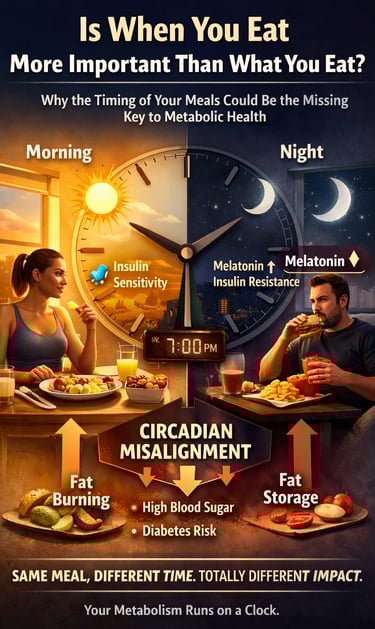
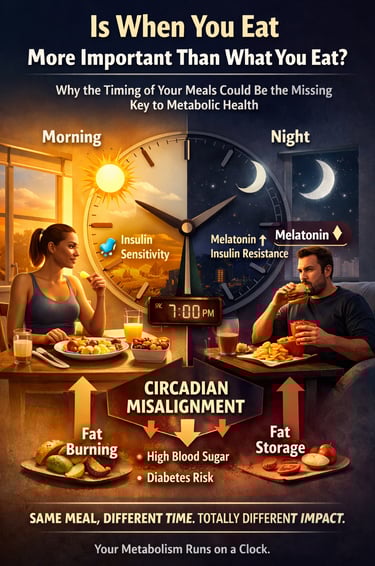
The circadian diet is a science-based approach that aligns meal timing with your body’s internal biological clock to optimize metabolism, insulin sensitivity, and weight regulation. Research shows that eating earlier in the day—when insulin sensitivity and metabolic efficiency are highest—leads to better blood sugar control, increased calorie burning (thermogenesis), and reduced fat storage compared to late-night eating. This concept, known as chrono-nutrition, highlights that when you eat may be as important as what you eat, making early time-restricted eating (eTRF) one of the most effective strategies for improving metabolic health and preventing obesity, type 2 diabetes, and cardiovascular disease
.Best Meal Timing Strategy for Optimal Metabolism:
Eat your largest meals early
Consume 60–70% of daily calories before mid-afternoon to match peak insulin sensitivity.Follow a 10–12 hour eating window
Example: 7 AM – 5 PM or 8 AM – 6 PM for optimal circadian alignment.Avoid late-night eating
Stop food intake at least 3 hours before sleep to prevent melatonin-induced insulin resistance.Prioritize protein at breakfast
30–40g of protein in the morning improves satiety and stabilizes glucose throughout the day.Time carbohydrates earlier in the day
Insulin sensitivity is highest in the morning and early afternoon.Maintain consistent meal timing daily
Regular eating patterns help synchronize peripheral clocks and improve metabolic efficiency.
Clinical pearls
1. Morning Metabolism and Postprandial Thermogenesis
The Science: Clinical studies show that Postprandial Thermogenesis (the energy required to digest and process food) is significantly higher in the biological morning than in the evening.
Your "metabolic oven" runs 20–30% hotter during breakfast hours. By front-loading your calories, you burn more energy simply by processing your meal, reducing the likelihood of fat storage.
2. Melatonin, MTNR1B Receptors, and Late-Night Spikes
The Science: The pancreas contains MTNR1B receptors that respond to melatonin (the sleep hormone). When melatonin rises at night, it directly suppresses insulin secretion to prepare the body for a fasting state.
Eating late is like asking a "groggy," half-asleep pancreas to work overtime. Because insulin is suppressed, blood sugar lingers in the bloodstream longer, leading to systemic inflammation and increased fat accumulation.
3. Resetting Ghrelin Rhythms to Stop Cravings
According to Khaira & Sulastri (2026), the hunger hormone Ghrelin follows a circadian rhythm that is entrained by consistent meal timing. Irregular eating patterns desynchronize this rhythm.
The Takeaway: Evening cravings are rarely a lack of willpower; they are often a hormonal rhythm disruption. By shifting your eating window earlier and staying consistent, you can "re-train" your ghrelin levels to peak during the day and drop off before bed.
4. The Circadian Rhythm of the Gut Microbiome
The Science: Hu et al. (2025) demonstrated that gut bacteria populations cycle in a 24-hour pattern. These microbes have specific "active" and "rest" phases for nutrient metabolism and gut-barrier maintenance.
Your gut bacteria effectively "clock out" at night. Late-night feeding disrupts these microbial rhythms, which can alter signals sent to the brain and promote low-grade metabolic inflammation.
5. Personalizing Nutrition to Your Chronotype
The Science: Research by Franzago et al. (2023) highlights that chrono-nutrition is more effective when personalized to an individual’s internal clock (Morning Larks vs. Night Owls) rather than following generic calorie restriction.
There is no "one-size-fits-all" window. Understanding whether you are a morning or evening person allows you to find the specific "metabolic sweet spot" where your body is most primed to handle glucose and nutrients.
The Circadian Diet: When You Eat May Matter More Than What You Eat
You’re doing everything right—or so it seems. Calories tracked. Protein optimized. Carbs controlled. And yet, your metabolic outcomes don’t match your effort. Weight loss stalls. Post-meal glucose spikes persist. Evening cravings feel almost biologically driven. What if the missing variable isn’t nutritional composition—but temporal biology?
Emerging evidence from circadian science suggests that metabolism is not a static, 24-hour process but a time-dependent, hormonally orchestrated system governed by internal biological clocks. The central pacemaker in the hypothalamus coordinates daily rhythms in insulin sensitivity, energy expenditure, and substrate utilization, while peripheral clocks in the liver, pancreas, muscle, and adipose tissue respond directly to feeding signals (Hu et al., 2025). In this framework, food is not just fuel—it is a potent circadian signal capable of resetting metabolic timing.
This has profound clinical implications. Identical meals consumed at different times of day can produce markedly different metabolic responses. Controlled human studies demonstrate that postprandial glucose excursions, insulin efficiency, and diet-induced thermogenesis are significantly more favorable in the morning compared to the evening—even when caloric intake and macronutrient composition are identical (McHill & Butler, 2024). Late eating, particularly in the biological night, occurs in a state of rising melatonin, which directly suppresses pancreatic insulin secretion via MTNR1B receptor signaling—effectively creating a predictable state of transient insulin resistance (Peters et al., 2024).
Over time, this misalignment between feeding behavior and circadian physiology—termed circadian misalignment—has been linked to increased risk of obesity, type 2 diabetes, and cardiometabolic disease independent of total calorie intake (Reytor-González et al., 2025). In other words, the same diet can be metabolically beneficial or harmful depending on when it is consumed.
Chrono-nutrition reframes metabolic health with a deceptively simple premise: your metabolism runs on a clock—and timing may be as powerful as nutrients themselves.
Biological Morning vs. Biological Evening: The Chrono-Metabolic Comparison
Understanding how your body’s internal clock—the circadian rhythm—changes throughout the day is the first step toward optimizing your health. Research in chrono-nutrition confirms that your body operates on two distinct "modes" depending on the position of the sun.
1. Insulin Sensitivity & Glucose Disposal
Biological Morning (High Performance): Your body is in its most insulin-sensitive state. Skeletal muscle and the liver are primed to clear glucose efficiently from the bloodstream, minimizing fat storage.
Biological Evening (Maintenance Mode): As darkness falls, melatonin levels rise, which naturally suppresses insulin secretion. This creates a state of "nocturnal insulin resistance," making late-night sugar and carbs harder for the body to process.
2. Calorie Burn & Diet-Induced Thermogenesis (DIT)
Biological Morning: The "metabolic oven" is at its peak. Postprandial thermogenesis (the energy used to digest food) is roughly 20–30% higher in the morning.
Biological Evening: Your metabolic rate slows to a baseline level. Processing a large meal at night requires more effort from the body but yields less "burn," often leading to higher caloric retention.
3. Gut Motility & Digestive Efficiency
Biological Morning: Your gastrointestinal tract is active and efficient. Gastric emptying, bile production, and enzyme secretions are all synchronized to handle a high nutrient load.
Biological Evening: The gut enters a nocturnal "slow-down" phase. Motility decreases as the body shifts resources away from digestion and toward systemic recovery.
4. Primary Biological Goals
Biological Morning: The primary goal is Energy Utilization. Your hormones (like cortisol and insulin) are geared toward fueling physical activity and cognitive performance.
Biological Evening: The primary goal shifts to Cellular Repair & Autophagy. This is the "self-cleaning" phase where the body repairs damaged cells and balances inflammatory markers—a process that is often interrupted by late-night feeding.
Understanding Your Body's Two Clocks
Before we talk about meal timing, we need to understand circadian architecture — the biological scaffolding that makes meal timing matter in the first place.
Deep within the hypothalamus sits a cluster of neurons called the Suprachiasmatic Nucleus (SCN) — your body's "master clock." This structure responds primarily to light and dark signals, coordinating nearly every physiological process over a roughly 24-hour cycle: hormone secretion, body temperature, immune function, and critically, metabolic rate. But the SCN doesn't work alone.
Every organ in your body — your liver, pancreas, gut, adipose tissue, and even your skeletal muscle — contains its own peripheral circadian clock, driven by clock genes (CLOCK, BMAL1, PER, and CRY). These peripheral clocks are synchronized to the master SCN clock primarily through two signals: light and food timing.
As comprehensively reviewed by Hu et al. (2025) in their landmark paper published in eFood, food intake is one of the most powerful zeitgebers (time-givers) for peripheral clocks — meaning that when you eat actively sets the internal time of your organs, sometimes overriding the master SCN signal entirely. When your eating schedule conflicts with the light-dark cycle your brain expects, the result is circadian misalignment — a state in which your peripheral clocks and your master clock fall out of synchrony. The metabolic consequences of this misalignment are profound and far-reaching (Hu et al., 2025).
While meal timing powerfully influences metabolic outcomes independent of calories, it works best alongside appropriate total energy intake and high-quality food choices. Chrono-nutrition enhances—not replaces—foundational dietary principles
Key Concept
Circadian Misalignment — when your eating schedule conflicts with your biological clock — is now recognized as an independent driver of insulin resistance, weight gain, and inflammation, even when total calorie intake is held constant.
The Melatonin–Insulin Conflict: Why Late-Night Eating Damages Your Metabolism
As darkness falls, melatonin rises and binds to MTNR1B receptors on pancreatic beta cells, actively suppressing insulin secretion. This is an evolutionary adaptation to promote fasting overnight. In modern life, late-night eating collides with this signal, creating transient nocturnal insulin resistance. The result: the same meal eaten at 8 AM versus 8 PM produces higher postprandial glucose, lower fat oxidation, and greater inflammatory potential (McHill & Butler, 2024; Peters et al., 2024).
The same 500-calorie breakfast produces a meaningfully different metabolic response than a 500-calorie dinner — not because the food is different, but because the body receiving it is operating under an entirely different hormonal and enzymatic program.
Peters et al. (2024) further established in Frontiers in Endocrinology that late meal timing is associated with higher BMI, impaired glucose tolerance, and dysregulated appetite hormones — independent of dietary quality and total energy intake. Their analysis places meal timing firmly in the category of a primary, modifiable risk factor for obesity and metabolic syndrome (Peters et al., 2024).
The Gut's Internal Timer: Microbiome, Motility, and the Metabolic Hotline
Your gut is not merely a passive conduit for nutrients. It is a sophisticated timing organ with its own circadian rhythms — and disrupting those rhythms has consequences that ripple all the way to the brain.
Gastric Motility and Digestive Slowdown
After sunset, gastrointestinal motility naturally decelerates. Gastric emptying slows, bile acid secretion drops, and enzyme production decreases. Eating a large meal when your digestive tract is in "night mode" not only impairs nutrient absorption but also forces your liver to process a metabolic load it is biologically unprepared to handle.
Your Microbiome's Curfew
Perhaps the most fascinating frontier in chrono-nutrition is the discovery that gut bacteria themselves operate on circadian rhythms. The composition, activity, and metabolite production of your gut microbiome fluctuate across a 24-hour cycle in a time-structured manner. When you eat late at night — disrupting the microbiome's expected fasting window — you alter the types of short-chain fatty acids and signaling molecules your bacteria produce. These microbial metabolites communicate directly with the hypothalamus through what researchers now call the "Metabolic Hotline" — the gut-liver-brain axis (Hu et al., 2025).
Reytor-González et al. (2025), writing in the journal Nutrients, provide a comprehensive review of how chrono-nutrition intersects with energy balance, noting that disrupted meal timing impairs not just peripheral metabolism but also central appetite regulation through altered gut-brain signaling pathways (Reytor-González et al., 2025).
Early Time-Restricted Feeding: The Most Powerful Metabolic Protocol You're Not Using
Early Time-Restricted Feeding (eTRF) — compressing your eating window to align with the biologically active, metabolically primed morning and midday hours — is emerging as one of the most evidence-supported dietary interventions in metabolic medicine.
The Morning Metabolic Advantage
Insulin sensitivity peaks in the morning and declines progressively throughout the day under the influence of the circadian clock. This means that carbohydrates, proteins, and fats are processed with considerably greater efficiency in the first half of the day. Postprandial thermogenesis — the energy your body expends processing and storing a meal — is significantly higher at breakfast than at dinner, a phenomenon documented across multiple controlled feeding studies (McHill & Butler, 2024).
Autophagy and Overnight Fasting
A 12–14 hour overnight fasting window does more than prevent late-night calorie accumulation. It activates autophagy — the cellular "self-cleaning" process — in hypothalamic neurons. This matters enormously for neuroendocrine health because hypothalamic inflammation and cellular debris are increasingly recognized as upstream drivers of leptin resistance and impaired appetite regulation. The overnight fast is, in effect, a maintenance cycle for your brain's hunger-control circuitry.
eTRF vs. Late-TRF: The Evidence
Clinical comparisons between eTRF (eating window approximately 8:00 AM – 4:00 PM) and late TRF (eating window approximately 1:00 PM – 9:00 PM) consistently favor the early window. Improvements in HOMA-IR (insulin resistance index), systolic blood pressure, fasting glucose, and triglycerides are substantially greater with eTRF even when calorie intake between groups is matched. Franzago et al. (2023), in a comprehensive review published in the International Journal of Molecular Sciences, highlighted how chrono-nutrition personalized to an individual's chronotype and circadian profile offers superior metabolic outcomes compared to calorie restriction alone (Franzago et al., 2023).
Takeaway
Eating the same food in the morning versus at night is not the same metabolically. Your morning body runs on a "high-performance" hormonal program. Your nighttime body is in maintenance mode — and it shows in your blood sugar, your fat storage, and your next-day hunger levels.
Ghrelin, Appetite, and the Chrononutritional Weight Regulation Loop
The conversation about meal timing and metabolic health is incomplete without addressing ghrelin — the primary hunger hormone that rises before meals and falls after eating. What most people don't realize is that ghrelin secretion is also deeply circadian in nature.
Khaira and Sulastri (2026), in a newly published study in Chronobiology International, present compelling evidence that meal timing directly modulates ghrelin rhythms in a way that has downstream implications for appetite regulation and weight management. When meals are consumed consistently at biologically appropriate times, ghrelin follows a predictable, controlled rhythm that supports satiety and discourages overconsumption. When meal timing is irregular or shifted to the evening, ghrelin rhythms become dysregulated — producing an internal hormonal environment that actively drives hunger, particularly for calorie-dense foods (Khaira & Sulastri, 2026).
This finding has profound implications for anyone struggling with evening cravings, night eating, or an inability to feel satisfied despite adequate caloric intake. The problem may not be willpower — it may be a disrupted ghrelin rhythm created by chronically mistimed meals.
Blue Light, Cortisol, and Digital Hunger
No discussion of modern circadian disruption is complete without addressing blue light exposure from screens. Blue light in the 480nm wavelength range is the most potent suppressor of melatonin onset, effectively signaling to your brain that it is still daytime — even at midnight.
The downstream consequences for metabolism are significant. Suppressed melatonin means delayed sleep onset. Delayed sleep reduces the overnight fasting window. Reduced fasting means reduced autophagy and elevated inflammatory markers. Additionally, late-night light exposure has been shown to drive a cortisol spike that primes the reward circuitry of the brain to crave dopamine-rich, hyper-palatable foods — creating a neurobiological loop that makes late-night snacking extraordinarily difficult to resist through willpower alone.
The solution is a "Darkness Fast" — treating light cessation as a form of metabolic hygiene, just as important as the food fasting window itself. Stopping artificial light exposure 2 hours before bed allows melatonin to rise naturally, insulin suppression to occur appropriately, and the gastrointestinal system to enter its nocturnal maintenance mode undisturbed.
Chrono-Nutrition: The Missing Pillar of Metabolic Medicine ( Editorial)
1. Metabolism Is Rhythmic, Not Continuous
Metabolic processes follow circadian oscillations regulated by central and peripheral clocks. Insulin sensitivity, mitochondrial efficiency, and substrate oxidation are time-dependent, peaking in the biological morning and declining toward the night—challenging the calorie-centric model of metabolism.
2. “Same Calories” ≠ “Same Metabolic Outcome”
Controlled feeding studies consistently show that identical meals produce lower glucose excursions, higher thermogenesis, and improved insulin action in the morning versus evening intake (McHill & Butler, 2024). Timing is not a modifier—it is a determinant.
3. The Melatonin–Insulin Axis Is Clinically Underappreciated
Evening melatonin rise suppresses pancreatic β-cell insulin secretion via MTNR1B signaling, creating a predictable state of nocturnal insulin resistance (Peters et al., 2024). Late-night eating is therefore a biologically mismatched behavior, not merely a lifestyle issue.
4. Circadian Misalignment Drives Disease Independent of Calories
Shift work models and human trials demonstrate that misaligned eating patterns increase risk of obesity, type 2 diabetes, and cardiometabolic disease, even when caloric intake remains constant (Reytor-González et al., 2025). This reframes metabolic disease as partly a disorder of timing.
5. The Gut Microbiome Is a Circadian Organ
Microbial composition and metabolite production exhibit diurnal cycling. Late eating disrupts this rhythm, altering short-chain fatty acid signaling and impairing gut–brain communication—contributing to inflammation and appetite dysregulation (Hu et al., 2025).
6. Early Time-Restricted Feeding (eTRF) Is a High-Impact Intervention
eTRF aligns feeding with peak metabolic efficiency, improving HOMA-IR, blood pressure, and lipid profiles beyond calorie restriction alone. It represents a low-cost, scalable therapeutic strategy.
7. Appetite Hormones Follow the Clock
Ghrelin rhythms adapt to meal timing. Irregular or late eating shifts hunger signaling, biologically driving evening hyperphagia, often misinterpreted as poor adherence (Khaira & Sulastri, 2026).
8. Clinical Practice Must Evolve Beyond Macronutrients
Dietary prescriptions that ignore circadian biology are incomplete. Meal timing should be integrated alongside caloric quality and quantity in metabolic care algorithms.
9. Chrono-Nutrition Enables Precision Medicine
Individual chronotype, sleep timing, and lifestyle patterns can be leveraged to personalize eating windows—moving toward circadian-aligned nutrition therapy.
10. The Future of Metabolic Health Is Temporal
The next frontier is not just what patients eat—but when their biology is prepared to handle it. Aligning nutrition with circadian physiology may be one of the most powerful, underutilized tools in preventive and therapeutic medicine.
Circadian Alignment for Busy Lifestyles: Social Compromises & Shift Work Strategies. The Social Compromise:
Managing the 7:30 PM Family Dinner
We live in a culture built around the evening meal. If a 5:00 PM cutoff isn't feasible, apply the "Inverse Pyramid" strategy: make dinner your smallest, lowest-carb meal of the day (focused on lean protein and fibrous greens) to minimize the insulin demand. Follow it with a 15-minute "Glucose Walk" immediately after the last bite; physical activity recruits non-insulin-dependent glucose transporters (GLUT4), helping clear blood sugar even while your pancreas is in "night mode."
Shift Work Sidebar: The "Life-Preserver" Protocol
For those working against the sun, the goal is anchored consistency: try to maintain a fixed 8-to-10-hour eating window even on transition days, and use "blue-blocker" glasses during your commute home to prevent morning light from crashing your melatonin. When working a night shift, eat your "main" meal before the shift starts (in your biological afternoon) rather than at 3:00 AM, when metabolic efficiency is at its absolute nadir.
Faqs
1. Does the same meal really have more calories at night?
The Science: No, the physical caloric content of the food remains identical. However, the metabolic cost of processing that food (Diet-Induced Thermogenesis, or DIT) changes. Research shows that DIT is significantly higher in the morning. When you eat a 500-calorie meal at 8:00 AM, your body may expend 60–80 calories just to digest and assimilate it. At 9:00 PM, that expenditure drops by roughly 20–30%. Furthermore, late-night eating shifts the body’s fuel preference away from fat oxidation (burning fat) toward glucose storage, meaning you are more likely to store those calories as adipose tissue rather than utilizing them for immediate energy.
2. How does melatonin "sabotage" insulin at night?
The Science: Melatonin is not just a sleep signal; it is a metabolic regulator. Pancreatic beta cells express MTNR1B receptors. When melatonin levels rise in the evening, they bind to these receptors and actively inhibit the release of insulin. This is an evolutionary safeguard to prevent hypoglycemia during the long overnight fast. If you introduce a high-carbohydrate load (like a late-night snack) while melatonin is high, your pancreas cannot secrete enough insulin to clear the glucose efficiently. This results in prolonged postprandial hyperglycemia and elevated free fatty acids in the blood.
3. Can "Black Coffee" during the fast disrupt circadian rhythms?
The Science: Pure black coffee (no cream or sugar) generally does not "break" a metabolic fast in terms of insulin secretion. However, from a chrono-biological perspective, caffeine is a potent zeitgeber. Caffeine can delay the master clock in the Suprachiasmatic Nucleus (SCN) by interfering with adenosine receptors. If consumed late in the day, it delays the onset of melatonin, which pushes the entire metabolic window later into the night. While it may not trigger an insulin spike, it can cause "circadian phase-delay," making your body think it is earlier than it actually is.
4. Why is Early Time-Restricted Feeding (eTRF) superior to Late-TRF?
The Science: Both protocols restrict the eating window, but eTRF (e.g., 8:00 AM – 4:00 PM) aligns with the peak of the human insulin sensitivity curve. Skeletal muscle and liver cells are most receptive to glucose in the morning due to the high expression of clock-controlled genes like GLUT4. In Late-TRF (e.g., 1:00 PM – 9:00 PM), the bulk of caloric intake occurs during the "metabolic twilight" when insulin sensitivity is declining and the gut microbiome is transitioning into its nocturnal state, leading to poorer glycemic control despite the shortened window.
5. Does meal timing affect the gut microbiome's "cleaning" cycle?
The Science: Yes. The gut microbiome follows a rhythm of biogeographical oscillation. During the fasting state, specifically at night, the "Migrating Motor Complex" (MMC) acts as a biological broom, clearing undigested food and bacteria from the small intestine. Late-night eating halts the MMC. Furthermore, specific beneficial bacteria like Akkermansia muciniphila, which support the gut barrier, thrive during the fasting phase. Constant late-night feeding suppresses these populations, potentially leading to increased intestinal permeability and systemic low-grade inflammation.
6. What is the "Metabolic Hotline" between the gut and the brain?
The Science: This refers to the vagus nerve and hormonal signaling (the gut-liver-brain axis). When we eat, the gut releases peptides like CCK, GLP-1, and PYY. In a synchronized circadian state, these signals reach the hypothalamus and effectively shut down hunger. However, circadian misalignment (eating at the "wrong" time) blunts the sensitivity of these signals. This causes a breakdown in communication where the brain no longer receives the "satiety" message effectively, leading to the leptin resistance often seen in chronic late-night eaters.
7. Can I fix my metabolism just by changing my light exposure?
The Science: While light is the "Master Zeitgeber" for the brain (SCN), food is the "Master Zeitgeber" for the peripheral organs (liver, gut, muscle). To achieve full metabolic entrainment, you must align both. Artificial blue light (480nm) at night suppresses melatonin and creates a "digital hunger" by elevating evening cortisol. Correcting light exposure (using amber filters or "Darkness Fasting") allows the hormonal cascade to function, but without correcting meal timing, the peripheral clocks remain desynchronized. Optimal health requires "Photobio-Nutritional" alignment—matching your light and your bites.
The Chrono-Nutrition Alignment System: A Step-by-Step Protocol
Implementing a circadian-aligned eating schedule is one of the most effective ways to reset your metabolism. Follow these six evidence-based steps to synchronize your nutrition with your biological clock.
1. Front-Load Your Daily Caloric Intake
The Strategy: Aim to consume 35–40% of your total daily calories at breakfast and another 35–40% at lunch. Keep your dinner light and protein-modest. The Science: This distribution mirrors your natural insulin sensitivity curve and maximizes postprandial thermogenesis (the calories burned during digestion), which is highest in the first half of the day.
2. Establish a 10–12 Hour Eating Window
The Strategy: Compress your daily food intake into a consistent 10-to-12-hour window. For maximum metabolic benefit, shift this window earlier (e.g., 7:00 AM – 5:00 PM or 8:00 AM – 6:00 PM). The Science: Shortening the window prevents late-night insulin spikes. Even a modest 12-hour window (7:00 AM – 7:00 PM) offers superior metabolic protection compared to eating past 9:00 PM.
3. Master the "3-2-1 Rule" Before Bed
For optimal metabolic hygiene and sleep quality, follow this countdown every night:
3 Hours Before Sleep: No more food. This protects the melatonin-insulin cascade.
2 Hours Before Sleep: No screens or bright blue light. This allows melatonin to rise naturally.
1 Hour Before Sleep: No liquids (except water) to ensure uninterrupted rest and kidney recovery.
4. Prioritize a High-Protein Morning
The Strategy: Consume 30–40g of high-quality protein within 30–60 minutes of waking up. The Science: Early protein intake activates POMC (satiety) neurons and stabilizes ghrelin rhythms. This sets a "metabolic thermostat" for the day, significantly reducing afternoon and evening cravings.
5. Strategize Complex Carbohydrate Timing
The Strategy: Schedule your complex carbohydrates (whole grains, legumes, starchy vegetables) between 8:00 AM and 2:00 PM. The Science: Your body’s ability to dispose of glucose (blood sugar) is at its peak during these hours. Shifting toward healthy fats and lean proteins in the evening prevents the sugar from lingering in your bloodstream during sleep.
6. Prioritize Consistency Over Perfection
The Strategy: Eat at the same clock times every day, even on weekends. The Science: Your peripheral circadian clocks in the liver and gut rely on predictable feeding signals. Regular meal times "entrain" these clocks to the master clock in your brain, ensuring your enzymes and hormones are ready for food before the first bite.
Getting Started: Two Simple Challenges
The 7-Day Window Audit: Log your "first bite" and "last bite" for one week. Most people are surprised to find their window is actually 14–16 hours wide.
The One-Hour Shift: Don't overhaul your life overnight. Simply move your last meal one hour earlier this week. Research shows even this small shift improves morning insulin sensitivity.
Author’s Note — A Clinician’s Perspective
In day-to-day clinical practice, one of the most frustrating patterns is this: patients who are disciplined, informed, and adherent to dietary advice—yet fail to achieve expected metabolic outcomes. They count calories, prioritize protein, avoid ultra-processed foods, and still struggle with persistent hyperglycemia, central adiposity, or evening hunger that feels disproportionate to intake. For years, we have attributed this to adherence gaps or genetic predisposition. Increasingly, the science suggests a different explanation: we have been overlooking the temporal dimension of metabolism.
Chrono-nutrition offers a clinically meaningful shift in how we interpret metabolic dysfunction. It explains why two patients on identical diets can have markedly different outcomes—and why the same patient may respond differently depending on when they eat. The concept of circadian misalignment is particularly relevant in modern clinical populations: late dinners, irregular meal patterns, prolonged eating windows, and chronic light exposure are now the norm rather than the exception.
What makes this paradigm powerful is its practicality. Unlike pharmacotherapy, aligning meal timing with circadian biology is low-cost, scalable, and immediately actionable. In my experience, even modest interventions—such as advancing the last meal by 60–90 minutes or establishing a consistent eating window—can produce measurable improvements in fasting glucose, postprandial variability, and appetite regulation within weeks.
However, implementation requires nuance. Chronotype, occupational constraints, cultural eating patterns, and comorbid conditions must all be considered. Chrono-nutrition is not about rigid rules; it is about biological alignment within real-world constraints.
As clinicians, we are trained to focus on what patients eat. The next evolution in metabolic medicine is to give equal weight to when they eat. Ignoring circadian biology is no longer tenable—because the evidence is no longer theoretical. It is clinical, measurable, and increasingly, transformative.
Related Articles
Is Your Muscle Insulin Resistant? 2026 Update | DR T S DIDWAL
Activate Your Brown Fat: A New Pathway to Longevity and Metabolic Health | DR T S DIDWAL
Leptin vs. Adiponectin: How Your Fat Hormones Control Weight and Metabolic Health | DR T S DIDWAL
References
Franzago, M., Alessandrelli, E., Notarangelo, S., Stuppia, L., & Vitacolonna, E. (2023). Chrono-nutrition: Circadian rhythm and personalized nutrition. International Journal of Molecular Sciences, 24(3), 2571. https://doi.org/10.3390/ijms24032571
Hu, J., Ye, H., Wang, M., et al. (2025). The effects of food on circadian rhythm: A comprehensive review. eFood, 6, 1–23. https://doi.org/10.1002/efd2.70092
Khaira, F., & Sulastri, D. (2026). Meal timing and ghrelin: A chrononutritional perspective on weight regulation potential. Chronobiology International, 1–8. https://doi.org/10.1080/07420528.2026.2624753
McHill, A. W., & Butler, M. P. (2024). Eating around the clock: Circadian rhythms of eating and metabolism. Annual Review of Nutrition, 44(1), 25–50. https://doi.org/10.1146/annurev-nutr-062122-014528
Peters, B., Vahlhaus, J., & Pivovarova-Ramich, O. (2024). Meal timing and its role in obesity and associated diseases. Frontiers in Endocrinology, 15, 1359772. https://doi.org/10.3389/fendo.2024.1359772
Reytor-González, C., Simancas-Racines, D., Román-Galeano, N. M., Annunziata, G., Galasso, M., Zambrano-Villacres, R., Verde, L., Muscogiuri, G., Frias-Toral, E., & Barrea, L. (2025). Chrononutrition and energy balance: How meal timing and circadian rhythms shape weight regulation and metabolic health. Nutrients, 17(13), 2135. https://doi.org/10.3390/nu17132135