Physical Activity, Adiposity, and Metabolic Health: What Science Reveals
Stop obsessing over the scale. Cutting-edge science reveals how consistent physical activity boosts metabolic health, cardiovascular function, and longevity—even if you don't lose weight.
EXERCISE
Dr. T.S. Didwal, M.D.
12/9/202510 min read
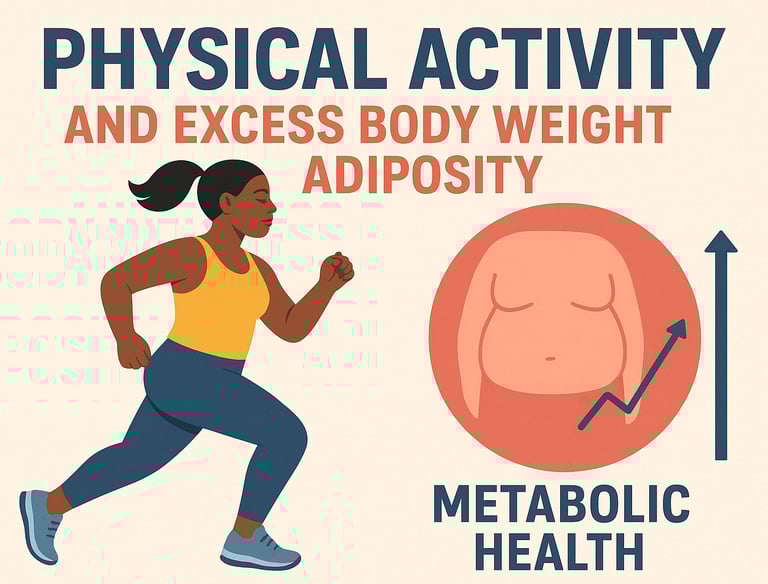
If you've ever wondered whether hitting the gym actually makes a difference beyond what the scale shows, you're asking the right question. The relationship between physical activity, excess body weight, and adiposity (the amount of body fat you carry) is far more complex and nuanced than most fitness trends suggest. Recent scientific consensus reveals that the benefits of movement extend far beyond simple weight loss—they're fundamental to your metabolic health, disease prevention, and longevity.
Clinical Pearls
1. Activity Outweighs Scale Weight for Longevity
The Pearl: An active individual with excess body weight (obesity) often has better cardiovascular health and lower mortality risk than a sedentary individual at a normal weight.
Clinical Relevance: When counseling patients, emphasize that the goal of movement is immediate disease risk reduction and improved metabolic function, independent of weight loss. They are "winning" even if the scale doesn't immediately move (Tian et et al., 2025).
2, Metabolic Change Precedes Weight Change
The Pearl: Physical activity produces rapid and profound metabolic benefits (improved insulin sensitivity, better blood pressure, favorable cholesterol profiles) that occur within weeks of starting a consistent program, often before significant changes in weight or appearance.
Clinical Relevance: Use objective health markers (e.g., blood glucose, HbA1c, blood pressure) as primary motivators and feedback, rather than relying solely on the scale. This helps maintain adherence during the initial phase when weight loss is modest.
3. Resistance Training is Non-Negotiable
The Pearl: Optimal management of excess adiposity and body composition requires combining aerobic activity (cardio) and resistance training (weights). Resistance training preserves lean muscle mass, which is key to maintaining a healthy resting metabolic rate (RMR) and preventing metabolic slowdown during weight management.
Clinical Relevance: Recommend a combined approach: 150−300 minutes of moderate cardio plus 2−3 sessions of resistance training per week targeting major muscle groups (Jakicic et al., 2024).
4. Consistency Beats Intensity
The Pearl: For long-term adherence and sustainable health benefits, consistency in moderate, enjoyable activity (lifestyle integration) trumps sporadic, intense exercise that leads to burnout or injury.
Clinical Relevance: Focus on the patient's preferences and capabilities. The "best" program is the one they will actually do regularly (Johnson et al., 2021). Start with small, achievable goals (e.g., 10 minutes of walking, three times a day) rather than an overwhelming, formal gym routine.
5. Adiposity, Not Just BMI, is the Target
The Pearl: Health is determined by body composition (the ratio of fat to muscle, or adiposity), not just total body weight or BMI. Physical activity can lead to significant fat loss and muscle gain, resulting in minimal scale movement but massive health improvements.
Clinical Relevance: Counsel patients that the scale can be misleading. A 2 kg weight change on the scale that results from 8 kg of fat loss and 6 kg of muscle gain is a transformative health success. Encourage tracking non-scale victories, such as clothing fit, endurance, and strength.
Physical Activity and Excess Body Weight and Adiposity
Understanding the Fundamentals: Physical Activity, Body Weight, and Adiposity
Before we explore the research, it's important to clarify what we're actually talking about. Physical activity encompasses all movement—from walking your dog to intense resistance training. Excess body weight refers to having weight above what's considered healthy for your height and age. Adiposity, however, is the specific measure of your body's fat content, which is often a better health indicator than weight alone (Jakicic et al., 2024).
Here's the critical insight: you can be active and still carry excess adiposity, or conversely, achieve a lower weight without meaningfully improving your body composition or health markers. This distinction matters tremendously when evaluating how movement affects your body and longevity.
Key Research Findings: What Recent Studies Show
Study 1: Tian et al. (2025) – Physical Activity Across Obesity Levels
Research Overview: Tian and colleagues conducted groundbreaking research examining how physical activity influences cardiovascular disease and mortality outcomes across different obesity levels. This study, published in the EPMA Journal, challenges the traditional assumption that heavier individuals can't achieve health benefits from exercise.
Key Findings: The research demonstrates a striking discovery: individuals with excess body weight who maintain adequate physical activity levels show significantly better health outcomes than sedentary individuals at lower weights (Tian et al., 2025). In other words, being active matters more than the number on the scale. The study identified a phenomenon where physically active obese individuals exhibited mortality rates comparable to or better than their normal-weight sedentary counterparts.
Takeaway for You: This research suggests that if you're currently carrying excess weight, starting a physical activity program today can meaningfully extend your life and reduce cardiovascular disease risk—regardless of whether you immediately lose weight. The "fit and fat" hypothesis has legitimate scientific support.
Study 2: Jakicic et al. (2024) – ACSM Consensus Statement
Research Overview: The American College of Sports Medicine (ACSM) brought together leading experts to create a comprehensive consensus statement specifically addressing physical activity and excess body weight management in adults. This represents the current scientific consensus on what works.
Key Findings: The ACSM consensus identifies several crucial points about physical activity for managing adiposity:
Moderate-intensity aerobic activity (150-300 minutes weekly) combined with resistance training produces optimal results for reducing excess adiposity (Jakicic et al., 2024)
Physical activity alone, without dietary modification, produces modest weight loss (typically 2-3 kg), but dramatically improves metabolic health markers even without substantial weight reduction
The combination of cardiovascular exercise and strength training is superior to either modality alone for improving body composition and reducing visceral fat (the dangerous fat surrounding organs)
Physical activity benefits persist across all age groups and fitness levels, making it never too late to start
Takeaway for You: You don't need extreme measures or perfection in either exercise or diet to see meaningful health improvements. The consensus emphasizes realistic, sustainable physical activity patterns combined with modest dietary changes as the foundation for managing excess body weight and adiposity.
Study 3: Jakicic et al. (2025) – Exercise Within Obesity Treatment Context
Research Overview: A more recent investigation by Jakicic and team explores physical activity and exercise as essential components of obesity treatment, emphasizing health benefits that extend far beyond weight loss. This represents an important shift in how we should think about movement.
Key Findings: This research fundamentally reframes obesity treatment, suggesting that (Jakicic et al., 2025):
Physical activity produces improvements in insulin sensitivity, blood pressure, and cholesterol profiles independent of weight loss
Regular exercise enhances metabolic flexibility (your body's ability to efficiently use different fuel sources), which improves long-term weight management success
Structured physical activity programs reduce inflammation markers and improve immune function, independent of changes in body weight
The psychological benefits of regular physical activity—improved mood, reduced anxiety, better sleep—significantly enhance treatment adherence and long-term success
Takeaway for You: Think of physical activity not as a means to an end (weight loss), but as a primary therapeutic intervention in itself. Even if the scale doesn't budge dramatically, your body is undergoin significant positive changes at the cellular and systemic levels.
Study 4: Johnson et al. (2021) – Position Statement from Exercise and Sport Science Australia
Research Overview: Exercise and Sport Science Australia provided a comprehensive position statement on physical activity for obesity management in adults, drawing on extensive evidence to guide practical recommendations.
Key Findings: This position statement emphasizes (Johnson et al., 2021):
Consistency in physical activity matters more than intensity for long-term weight management and health
Resistance training twice weekly is essential for preserving lean muscle mass during weight loss, which prevents metabolic slowdown
Lifestyle-integrated physical activity (activity woven into daily routines) proves more sustainable than formal exercise alone for most adults
Physical activity should be personalized to individual preferences and capabilities; adherence trumps following a "perfect" program
Takeaway for You: The best physical activity program for managing excess body weight and adiposity is the one you'll actually do consistently. Sustainability beats intensity in the long game.
Breaking Down the Benefits: How Physical Activity Works on Your Body
Metabolic Health Improvements
When you engage in regular physical activity, your muscles become more sensitive to insulin—meaning they take up glucose more efficiently. This is particularly important for adiposity management because improved insulin sensitivity reduces fat storage and enhances fat mobilization.
Physical activity also increases your resting metabolic rate, meaning you burn more calories even at rest. This effect is particularly pronounced with resistance training, which builds metabolic tissue (muscle).
Body Composition Changes
Here's a critical distinction: physical activity can improve your body composition (the ratio of muscle to fat) without significant changes in total weight. You might lose 10 pounds of fat while gaining 8 pounds of muscle, resulting in only a 2-pound scale change—but transformative improvements in health and appearance.
This is why the research emphasizes adiposity measurements (often assessed through DEXA scans or bioelectrical impedance) rather than relying solely on the scale or even BMI, which doesn't distinguish between muscle and fat.
Cardiovascular and Disease Prevention Benefits
The Tian et al. research particularly highlights that physical activity provides cardiovascular benefits independent of weight changes. Regular movement strengthens your heart, improves blood vessel function, reduces blood pressure, and improves cholesterol profiles—all crucial for preventing the conditions that actually impact lifespan.
Psychological and Metabolic Resilience
Beyond the physical, regular physical activity improves emotional regulation, reduces depression and anxiety, and enhances cognitive function. These psychological benefits aren't secondary; they're primary drivers of sustainable lifestyle change and long-term health maintenance.
Practical Applications: What This Means for You
The Minimum Effective Dose
Based on the research consensus, here's what you actually need for meaningful health benefits:
150 minutes of moderate-intensity aerobic activity weekly (roughly 30 minutes, five days per week)
Resistance training 2-3 times weekly, hitting major muscle groups
Reducing extended sedentary periods through lifestyle-integrated physical activity
This isn't extreme. It's genuinely achievable for most adults with various schedules and preferences.
Quality Over Perfection
The consensus research emphasizes that missing workouts occasionally doesn't erase benefits. Physical activity produces cumulative benefits, so consistency matters more than perfection. Starting with 3 days per week and building from there beats waiting for the perfect program that fits your unrealistic standards.
Combining Modalities Matters
While any physical activity is better than none, combining aerobic exercise and resistance training produces superior outcomes for managing excess body weight and improving metabolic health. This combination addresses cardiovascular fitness, metabolic health, and body composition simultaneously.
Personalization is Key
The Johnson et al. research specifically notes that individual preferences determine adherence. Someone who loves swimming will see better results with a swimming-focused program they'll actually do than with a "superior" program they hate. Physical activity adherence matters more than theoretical optimality.
Addressing Common Misconceptions
Myth #1: "I have to lose weight before exercise helps." Reality: The research clearly shows health benefits from physical activity occur independently of weight loss, sometimes before meaningful weight reduction occurs.
Myth #2: "If I exercise, diet doesn't matter." Reality: Physical activity alone produces modest weight loss. Combined with dietary modification, results are substantially better. Neither replaces the other.
Myth #3: "Once I lose the weight, I can stop exercising." Reality: Maintaining weight loss requires sustained physical activity. This isn't punishment—it's simply how your body maintains composition long-term.
Myth #4: "I'm too overweight to exercise safely." Reality: With appropriate guidance, physical activity is safe and beneficial at all weight levels. Start conservatively and progress gradually; safety comes from smart progression, not avoidance.
Frequently Asked Questions
Q: How quickly will I see results from physical activity? A: Health markers like insulin sensitivity improve within 2-4 weeks, often before significant weight changes. Visible body composition changes typically appear within 6-8 weeks with consistent effort.
Q: Do I need a gym membership to benefit from physical activity? A: Not at all. Brisk walking, bodyweight resistance exercises, and cycling are equally valid. The best program is one you'll do consistently.
Q: Is it ever too late to start physical activity? A: The research shows benefits across all age groups. While starting earlier offers advantages, starting today is infinitely better than starting tomorrow.
Q: Should I do cardio or weights for excess body weight management? A: Both. Cardiovascular activity addresses heart health and calorie expenditure. Resistance training preserves muscle and improves metabolic health. Combined, they're superior to either alone.
Q: Can I achieve results without changing my diet? A: Physical activity alone produces modest weight loss and significant health improvements. Adding dietary improvements amplifies results substantially.
Q: How much physical activity is too much? A: The consensus suggests 300+ minutes weekly of moderate activity remains safe and beneficial for most adults, though diminishing returns may appear. Excessive exercise without adequate recovery can increase injury risk.
Key Takeaways
Physical activity provides health benefits independent of weight loss, including improved cardiovascular health, metabolic function, and longevity—this is perhaps the most important finding from recent research.
Body composition matters more than scale weight; you can meaningfully improve your health and appearance while the scale barely moves, through changes in adiposity and muscle mass.
Combining aerobic activity with resistance training produces superior outcomes compared to either modality alone for managing excess body weight and adiposity.
Consistency beats intensity; sustainable moderate activity produces better long-term results than sporadic intense efforts.
Physical activity works better when combined with modest dietary improvements, but alone still produces meaningful health benefits.
The best physical activity program is one you'll actually do; sustainability matters more than theoretical perfection.
Health benefits appear quickly—within weeks for metabolic markers, making it easier to maintain motivation.
Taking Action: Your Next Steps
The research is clear: physical activity is not optional for managing excess body weight, improving adiposity profiles, and extending healthy lifespan. The scientific consensus also makes clear that you don't need to be perfect or extreme.
Start where you are. If you're currently sedentary, commit to 150 minutes of moderate activity weekly—that might be brisk walking, cycling, swimming, or any movement you enjoy. Add resistance training 2-3 times weekly.
Don't wait until January 1st. Don't wait for perfect circumstances. Today is the ideal time to start because physical activity's health benefits begin immediately, even before visible changes appear.
Consider consulting with a healthcare provider or exercise professional to ensure your program suits your individual circumstances. They can provide personalized guidance that the research shows improves both safety and adherence.
Your future self—five, ten, twenty years from now—will be grateful for the physical activity you start today. The science makes this clear.
Disclaimer: This article is for informational purposes only and does not constitute medical advice. Individual circumstances vary, and treatment decisions should always be made in consultation with qualified healthcare professionals.
Related Articles
Lower Blood Pressure Naturally: Evidence-Based Exercise Guide for Metabolic Syndrome | DR T S DIDWAL
Exercise vs. Diet Alone: Which is Best for Body Composition? | DR T S DIDWAL
Movement Snacks: How VILPA Delivers Max Health Benefits in Minutes | DR T S DIDWAL
The BMI Paradox: Why "Normal Weight" People Still Get High Blood Pressure | DR T S DIDWAL
How Insulin Resistance Accelerates Cardiovascular Aging | DR T S DIDWAL
What’s New in the 2025 Blood Pressure Guidelines? A Complete Scientific Breakdown | DR T S DIDWAL
The Metabolic Triad: Why Diabetes, Obesity & CVD Are One Epidemic | DR T S DIDWAL
Breakthrough Research: Leptin Reduction is Required for Sustained Weight Loss | DR T S DIDWAL
References
Jakicic, J. M., Apovian, C. M., Barr-Anderson, D. J., Courcoulas, A. P., Donnelly, J. E., Ekkekakis, P., Hopkins, M., Lambert, E. V., Napolitano, M. A., & Volpe, S. L. (2024). Physical activity and excess body weight and adiposity for adults. American College of Sports Medicine consensus statement. Medicine and Science in Sports and Exercise, 56(10), 2076–2091. https://doi.org/10.1249/MSS.0000000000003520
Jakicic, J. M., Behrens, C. E., Deemer, S. E., Forseth, B., Katsanos, C. S., Nickerson, B. S., Prado, W. L., Wang, X., Deru, L. S., & Rogers, R. J. (2025). Physical activity and exercise within the context of obesity treatment: Enhancing health beyond weight loss. Journal of Sport and Health Science, 101097. Advance online publication. https://doi.org/10.1016/j.jshs.2025.101097
Johnson, N. A., Sultana, R. N., Brown, W. J., Bauman, A. E., & Gill, T. (2021). Physical activity in the management of obesity in adults: A position statement from Exercise and Sport Science Australia. Journal of Science and Medicine in Sport, 24(12), 1245–1254. https://doi.org/10.1016/j.jsams.2021.07.009
Tian, Q., Chen, S., Liu, S., et al. (2025). Physical activity, cardiovascular disease, and mortality across obesity levels. EPMA Journal, 16, 51–65. https://doi.org/10.1007/s13167-025-00397-5